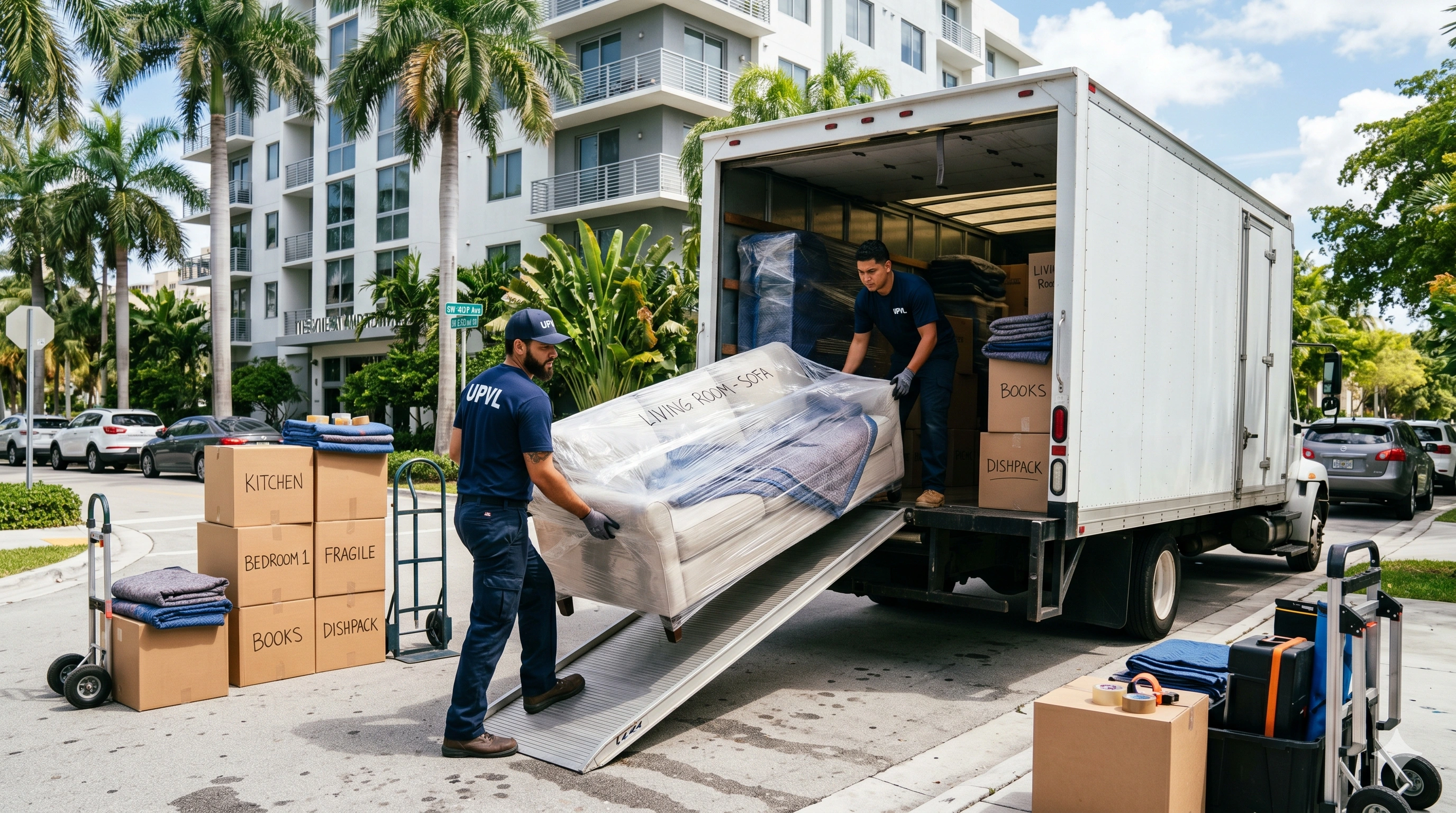
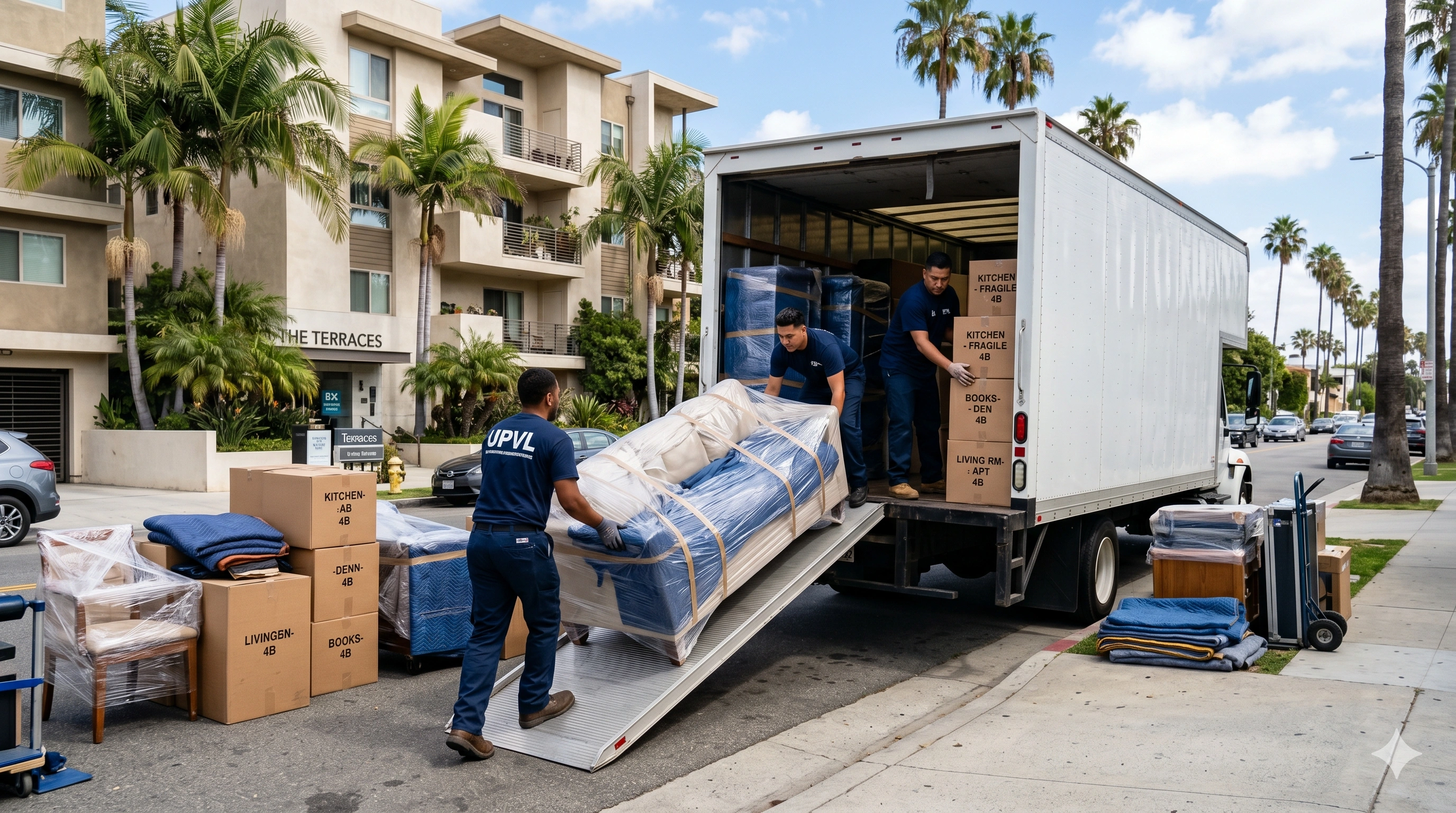
You don’t need to be a detective to spot a bad mover. Usually, they give themselves away before they even touch a box. If you see any of these signs during the quote process, run.
1. The "Sight Unseen" Lowball Quote This is the #1 trap in Los Angeles. You call, list a few items over the phone, and they immediately give you a price that sounds amazing—maybe half of what other companies quoted.
- The Reality: A legitimate mover cannot give you an accurate binding price without seeing what you have (either in person or via video). If they don't look, they don't know. They will change the price on moving day.
2. No Local Address (or a Residential One) Google the address on their website.
- Is it a house? A PO Box? A shared WeWork office?
- The Reality: Real movers have warehouses, trucks, and a yard. If they don’t have a physical footprint, they might just be a broker selling your job to the lowest bidder—someone you’ve never met.
3. The "Cash Only" Demand If a mover demands a large cash deposit upfront or says they only accept cash on delivery to "save you tax," be very careful.
- The Reality: Legitimate companies take credit cards. Credit cards give you protection (chargebacks). Cash gives you none.
4. The Generic Phone Greeting When you call, do they answer with "United Prime Van Lines" or just "Movers" or "Moving Company"?
- The Reality: Scammers often operate under five or six different names to dodge bad reviews. If they won't say their name, they are hiding it.
The "Hostage" Situation: The Nightmare Scenario
We hate talking about this, but it’s real. This is the bait-and-switch that gives our industry a bad name.
How it works:
- They quote you a low price (e.g., $1,500).
- They load everything you own onto their truck.
- Once the doors are locked, they hit you with the "real" bill ($4,500), claiming you had "more cubic feet" or "extra packing" than expected.
- They refuse to unload or deliver until you pay the inflated price in cash.
How to prevent it: NEVER sign a contract that is partially blank or doesn't have the total price clearly listed. If the "Not To Exceed" box is empty, do not let them load.
How to Verify a Legit Mover in LA (The "Paper Trail")
In California, moving is heavily regulated. A real company will have specific government license numbers that you can look up. If a company can't provide these, they are likely operating illegally.
1. For Local Moves (Within California) Every legal mover in California must have a Cal-T (CPUC) number.
- Where to check: The California Public Utilities Commission (CPUC) website.
- What to look for: Is their license "Active"? Is their insurance on file?
2. For Long-Distance Moves (Crossing State Lines) If you are moving out of state (e.g., LA to Texas), the mover must have a USDOT Number and an MC (Motor Carrier) Number.
- Where to check: The FMCSA SAFER System (federal database).
- What to look for: Look for "Authorized for HHG" (Household Goods). If it says "Not Authorized," they legally cannot move your home.
Transparency Check: You can look us up right now.
How United Prime Van Lines Does It Differently
We built our process specifically to kill the stress of "what if I get scammed?" Here is what a transparent booking looks like with us:
- Video or In-Home Walkthroughs: We see exactly what you have so there are no surprises on move day.
- Written, Binding Estimates: We explain every potential charge upfront. You will know the price before the truck starts the engine.
- No Blank Documents: You get copies of everything you sign.
- Real Trucks, Real Crew: We don’t sell your job to a stranger. When you hire us, you get us.
Moving is stressful enough without having to worry about who has your stuff. If you want a move that’s by the book, honest, and safe, give us a call.
The Most Common Moving Scams We See Around LA
Let’s start with what actually happens on the ground here. These are the scams we hear about most from clients who come to us after a bad experience (or a close call).
1. The Lowball Estimate That Doubles on Moving Day
This is the classic.
You get a quote that’s way cheaper than everyone else. They say, “Don’t worry, we’ll take care of everything.” No detailed inventory. No in‑home or virtual walkthrough. Just a quick phone call and a too‑good‑to‑be‑true price.
Then, on moving day:
- They show up and claim you have “more stuff than expected.”
- They add “stairs fees,” “long carry fees,” “fuel charges,” “shuttle fees,” or other vague line items.
- Suddenly your $1,500 move is now $3,800, and your life is already on the truck.
In some cases, they won’t unload until you pay.
How to avoid it:
- Never accept a “final” quote without a detailed inventory.
- Be suspicious of any quote that’s much lower than the others.
- Get the estimate in writing, with all fees clearly listed.
2. Holding Your Belongings Hostage
This is one of the most stressful situations we’ve seen.
Here’s how it usually goes for LA–to–out‑of‑state or long‑distance moves:
- You pay a deposit.
- They pick up your belongings.
- Your delivery date keeps getting pushed.
- When they finally say they’re ready to deliver, they demand extra money for “Storage fees,” “Additional weight,” or “Reweigh charges.”
And they say flat out: “If you don’t pay, we won’t deliver.”
In California and across state lines, this is not just unethical — it’s illegal. But by the time you’re in that situation, you’re already stuck arguing with people who don’t care.
How to avoid it:
- Work only with licensed, insured carriers.
- Avoid companies that ask for huge deposits or full payment upfront.
- Make sure your contract clearly explains how charges are calculated (weight, volume, services, etc.).
3. Fake “Brokers” Posing as Real Movers
In the LA area, we see this a lot with online leads.
You fill out a form. You get a call from a “moving specialist.” They sound polished and friendly. They send you a quote fast. They might even show you a flashy website. But they’re not actually a moving company. They’re a broker.
Some brokers are legit and use real licensed carriers. Others:
- Sell your job to the cheapest bidder.
- Disappear after they collect their “booking fee.”
- Leave you dealing with a company you never spoke to — often the kind that pulls every trick in the book.
How to avoid it:
- Ask directly: “Are you a carrier or a broker?”
- Look up their DOT and MC numbers.
- If their name doesn’t match the name on the official record, walk away.
4. Cash-Only and “Truck with Three Guys” Specials
There are plenty of honest small movers and labor‑only crews in LA, but there are also people with rented trucks and zero insurance, or crews that disappear after damage happens.
These operations often:
- Only accept cash or apps like Zelle/Venmo.
- Refuse to give a written contract.
- Don’t provide a bill of lading (the legal document that should accompany every move).
How to avoid it:
- Always insist on a written agreement.
- Don’t pay the entire amount in cash upfront.
- Confirm they have proper licensing and insurance.
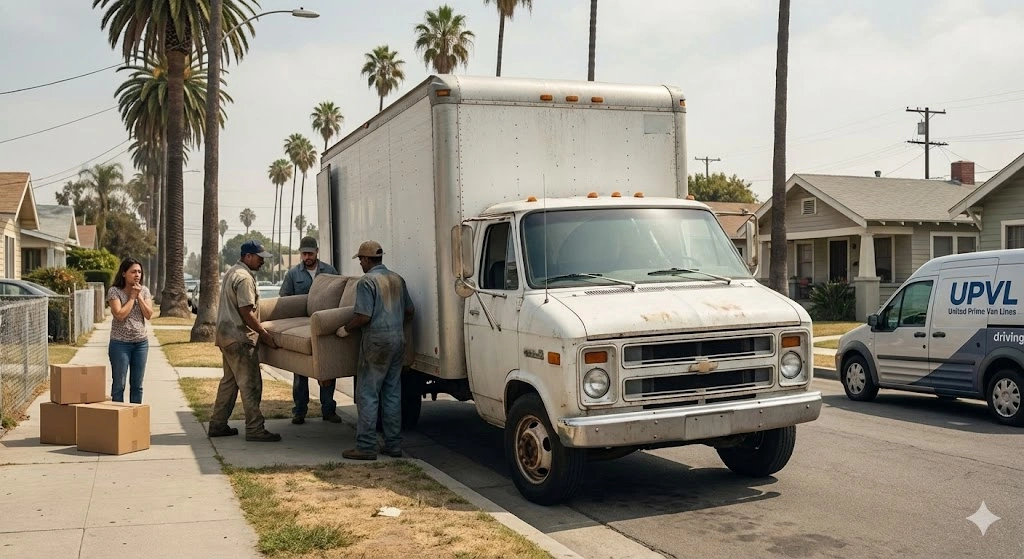
How to Check If an LA Moving Company Is Legit (Step by Step)
Now let’s get practical. Here’s how we’d vet a mover if we were in your shoes.
Step 1: Look for a Real Physical Presence
Don’t stop at a website and phone number.
- The Check: Drop their address into Google Maps or Apple Maps.
- What you want to see: A warehouse, an office, or a yard with trucks.
- What you don't want to see: A random house, a mailbox store, or an empty lot.
A legitimate mover working the Los Angeles area should not be hiding where they operate.
Transparency Example: With United Prime Van Lines, we’re clear about where we are:
- 221 W Hallandale Beach Blvd, Hallandale Beach, FL 33009
We serve the Los Angeles area regularly for cross-country and long-distance moves, and we’re always transparent about who we are, where we’re based, and how we operate.
Step 2: Verify Licensing (The Numbers Game)
The requirements change depending on where you are going.
If you’re moving WITHIN California (Local/Intrastate): You want to look for a CPUC (California Public Utilities Commission) license number.
If you’re moving TO or FROM another state (Interstate): You want to see a U.S. DOT number and an MC (Motor Carrier) number.
- Verify it here: FMCSA SAFER System
- The Check: Make sure the company name matches exactly, the status is “Active,” and they are listed as a Carrier (unless you specifically want a broker).
If they refuse to give you these numbers or say “You don’t need that,” that’s your cue to move on.
Step 3: Check Reviews — But Read Between the Lines
Don’t just stare at the star rating—actually read the content.
Red Flags in Reviews:
- Tons of 5‑star reviews with generic one-liners (“Great job!”) all posted in the same week.
- A pattern of 1-star reviews mentioning price hikes after pickup or hostage situations.
Green Flags:
- Detailed, human‑sounding stories.
- Mentions of specific challenges (tight streets in the Valley, elevator moves in DTLA, long carries).
- Consistency over years, not just months.
Step 4: Ask the Right Questions Before You Book
Here’s what we’d ask any mover working in the Los Angeles area:
- “Are you a carrier or a broker?”
- “Will you be the company actually moving my items, start to finish?”
- “Can you email me a written estimate with all fees included?”
- “Do you offer binding or binding-not-to-exceed estimates?” (Crucial for long‑distance).
- “What kind of valuation coverage or insurance options do you provide?”
Their answers should be clear and patient. If they get defensive or pressure you for a deposit before seeing your stuff, hang up.
Spotting Red Flags Before They Touch a Single Box
Let’s list out some warning signs that should, frankly, make you back away from a mover immediately.
Red Flag #1: No On-Site or Virtual Survey
If you’re moving a studio down the block, a phone quote might work. But if you have a 1+ bedroom home or are moving long-distance, a reputable mover needs to see it.
- The Risk: If they don't see it, they are guessing. And guesswork is where “unexpected charges” are born on moving day.
- The Standard: We always do a detailed inventory or video survey for serious moves. It protects you and us.
Red Flag #2: Vague, One-Page “Agreements”
A legitimate moving contract (Bill of Lading) is specific. It should list:
- Pick-up and delivery windows.
- What’s included: Loading, unloading, mileage, fuel, stairs, long carry, assembly.
- Valuation coverage options.
Avoid: Any company that gives you a blank or generic one-page form that just says “Move: $X” and “Deposit: $Y” with no fine print.
Red Flag #3: Huge Upfront Deposits
Reasonable deposits to lock in a date are normal. Massive ones are not.
- Be cautious if: They want 40–50% upfront, or insist on Zelle/Cash App/Wire Transfer only.
- Our Approach: We use deposits to secure your spot on the schedule, but we’re transparent about it. It’s never a “gotcha” fee we hold over your head.
Red Flag #4: No Branding, No Paper Trail
- Trucks with no logo (or a taped-on paper sign).
- Crew with no uniforms or ID.
- No copies of signed documents provided.
If they don't look like a real business, it's because they might not be one tomorrow.
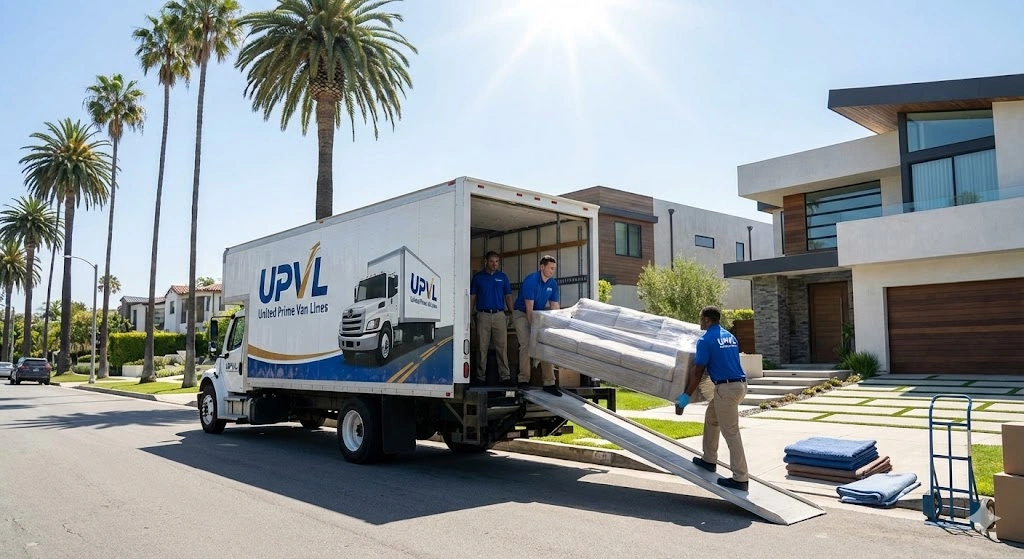
Protecting Yourself on Moving Day in Los Angeles
Even if you’ve chosen a good company, there are steps you can take on moving day to stay in control and avoid surprises.
1. Confirm the Company Name When the Truck Arrives
When the crew pulls up, look at the truck and listen to their greeting.
- The Check: Does the name on the truck match the name on your contract and the website you booked through?
- The Warning Sign: If they show up under a totally different name and say, “We’re the local partner,” stop. Call the office you booked with immediately. Do not let them load until you have clarity.
2. Review the Paperwork Before They Start Loading
You should be handed a Bill of Lading (the official contract) and a copy of your estimate.
Check these three things instantly:
- Is the price structure the same as what you agreed on?
- Are there new fees you didn’t discuss (fuel surcharge, materials, stairs)?
- Does it clearly show Binding vs. Non-Binding pricing?
If something doesn’t look right, pause everything and ask questions. Once your items are on the truck, you lose most of your leverage.
3. Take Photos and Keep a Simple Inventory
You don’t need a spreadsheet (unless you want to), but you should:
- Snap photos/video of furniture before it gets wrapped, especially high-value items like TVs and glass tables.
- Photograph existing damage so you have proof of the condition before the move.
- Keep a rough count of boxes and key items (mattresses, dressers).
This evidence is your best friend if you need to file a damage claim later.
4. Be Smart About Payment
- Avoid paying 100% upfront.
- Use traceable methods: Credit cards are safest. Avoid cash if possible.
- Get a final invoice that matches what you were told.
If they suddenly change the price at the door and say, “We can’t unload unless you pay this new amount,” do not pay it blindly. Call their headquarters, check your contract, and stand your ground.
Special Considerations for Long-Distance Moves To/From Los Angeles
LA long‑distance moves are their own beast. If you’re moving from Los Angeles to Florida, Texas, or anywhere across the country (or vice versa), you need to be extra careful.
Ask for a Binding or “Not-to-Exceed” Estimate
For cross‑country moves, we always recommend:
- Binding Estimate: The price is locked in based on the listed items/weight.
- Binding-Not-To-Exceed Estimate: The Gold Standard. If your actual weight is lower, you pay less—but you never pay more than the quoted cap.
Avoid: "We'll weigh it later and let you know the price." Unless you have a specific reason to trust them, this is risky.
Understand Delivery Windows
With long‑distance moves, same‑day pickup and delivery is almost impossible.
What you should see in writing:
- A pickup date (or small window).
- A delivery window (e.g., “7–14 business days”).
Be cautious if: They promise an exact delivery date (e.g., "We will be there Tuesday at 2 PM") for a cross-country move. Traffic, weather, and regulations make that nearly impossible to guarantee weeks in advance. Legitimate movers give realistic windows.

What to Do If You Think You’re Being Scammed
If you’re already in the middle of a bad situation, you still have options. It’s not fun, but here’s where to start.
1. Document Everything
Save every scrap of communication.
- Keep: Emails, texts, and call logs.
- Photograph: The truck, license plates, and the crew (discretely if needed).
- Copy: All contracts, estimates, and receipts.
- Write Down: Names given, dates/times of conversations, and specific threats or price changes.
2. Try to Negotiate Calmly — But Don’t Agree to Anything You Can’t Afford
If they’re demanding more money than agreed:
- Ask for a written, itemized explanation of every extra charge.
- Ask them to show where in your contract those fees are allowed.
- Stay calm, even if you’re furious.
Sometimes, just letting them know you are documenting everything and asking for contract references makes them back off a bit.
3. Contact the Authorities and File Complaints
If they are holding your items hostage or clearly violating the contract, you can:
- File a complaint with:
- FMCSA (for interstate moves).
- CPUC (for intrastate California moves).
- The Better Business Bureau (BBB).
- Consider contacting:
- Local police if there is outright theft or threats.
- Your state Attorney General’s office.
Is it a quick fix? Usually not. But complaints help build a record that can stop scammers from continuing to operate.
How We Approach Moves in the Los Angeles Area Differently
We’re not going to pretend we’re the only honest mover out there—LA has plenty of good companies doing things the right way. But we can tell you exactly how we handle things at United Prime Van Lines so you can use that as a benchmark.
Here’s how we try to keep you out of trouble—with us or anyone.
Clear, Detailed Quotes — No “Mystery Fees”
When someone calls us about a move involving the Los Angeles area, we:
- Take the time to go through all your items (often via virtual or in-home survey).
- Explain how pricing is calculated and what’s included.
- Put it all in writing so there are no surprises later.
Real People, Real Contacts
From the first call, you get a dedicated point of contact or a small team that knows your file. You get honest guidance—even if that means saying, “You don’t need that service,” or, “That might not be worth the extra cost.”
We know you’re putting your entire life on that truck. We treat it that way.
Professional Crews and Real Accountability
We work hard to send professional, trained crews—not just whoever’s available that morning.
- They show up on time.
- They handle your items with care.
- They are used to LA realities (tight streets, elevators, HOA rules).
And if something does go wrong, you’re not chasing a burner phone—you have a company to call, a paper trail, and a process.
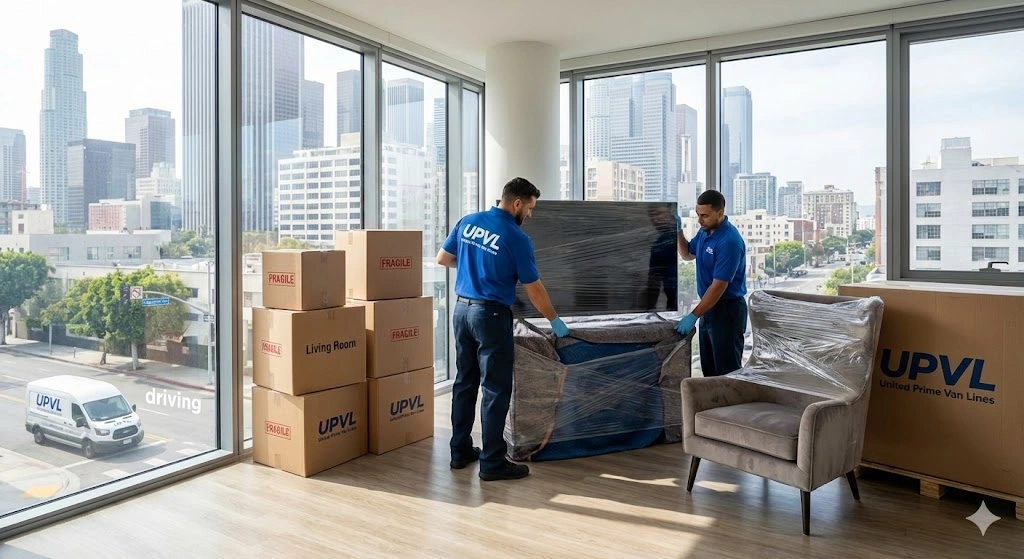
Building a Scam-Proof Moving Plan for Your LA Move
Let’s pull this all together into a simple checklist you can actually use when planning your move in the Los Angeles area.
Before You Book
- Get at least 2–3 quotes from licensed movers.
- Verify Licensing:
- Interstate (Out of State): Check for USDOT and MC numbers.
- Intrastate (Within CA): Check for CAL T numbers.
- Confirm Identity:
- Ask: "Are you a carrier or a broker?"
- Check: Do they have a real physical address?
- Insist on:
- A written estimate.
- An inventory list or walkthrough for bigger moves.
Before Moving Day
- Read your contract. Look for extra fees, delivery windows, and valuation coverage.
- Clarify payment. How much is due? When? (Avoid cash-only deals).
On Moving Day
- Confirm the company name on the truck matches your contract.
- Review paperwork before loading starts.
- Take photos of your items and keep a light inventory.
- Trust your gut. Don’t be afraid to pause the move if something feels off.
A Note from United Prime Van Lines
We aren't afraid of these questions—we welcome them. At United Prime Van Lines, we handle long‑distance and interstate moves involving the Los Angeles area all the time. Our entire approach is built around transparency.
You can verify us right now:
- Company: United Prime Van Lines Corp.
- Address: 221 W Hallandale Beach Blvd, Hallandale Beach, FL 33009
- USDOT: 3516414
- MC: 1336618
You don’t have to become an expert overnight to avoid moving scams in LA. You just need a simple plan, a few smart questions, and a mover who respects you enough to answer them honestly.