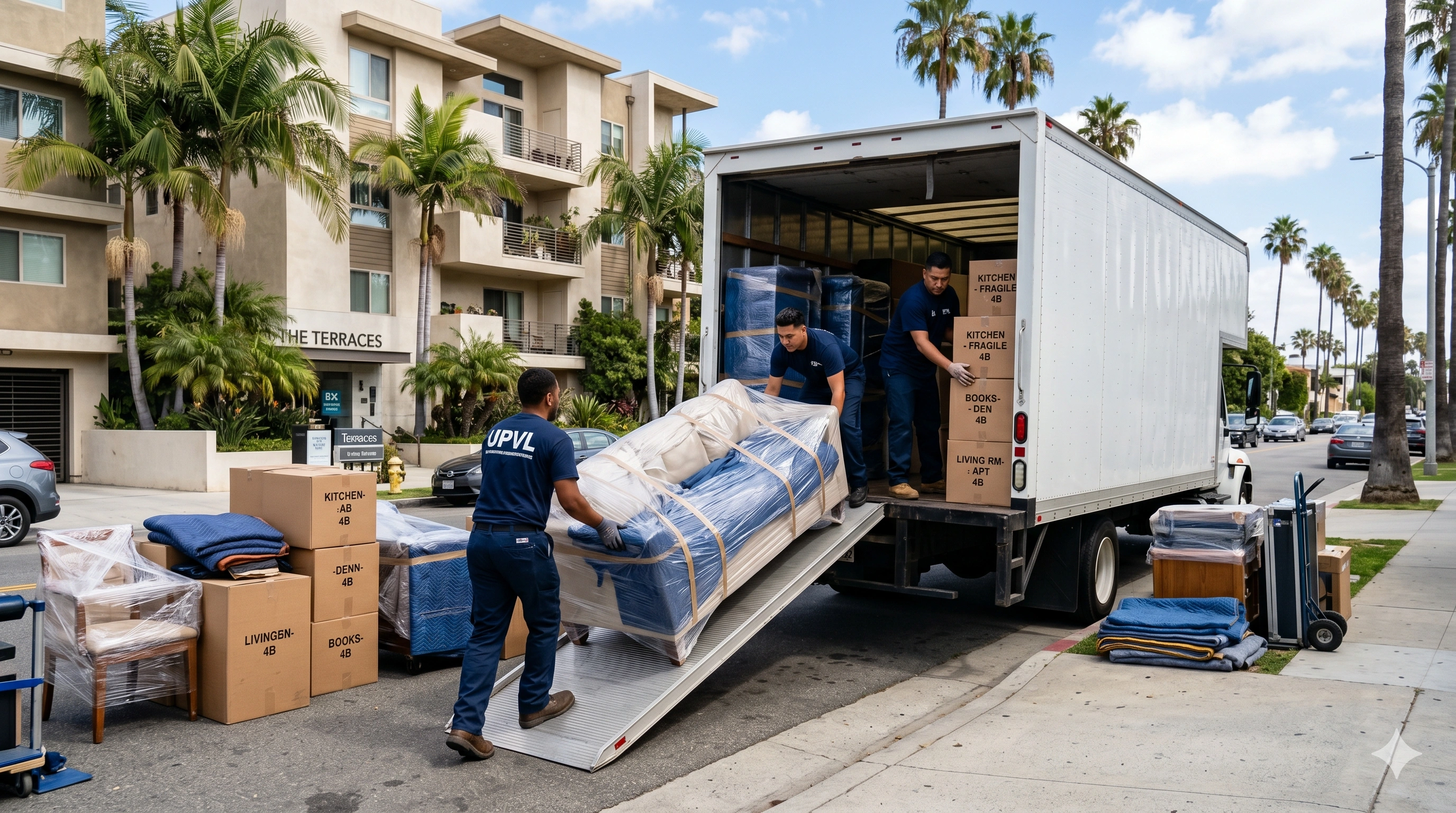
If you’ve heard horror stories about moving scams in South Florida, you’re not imagining it.
Between the constant in-and-out flow of people, tons of "discount movers," and a lot of companies that exist only as a website and a burner phone, our region is a perfect storm for shady operators.
The Local Reality Check: We move families and businesses all over South Florida every week — from Hallandale Beach to West Palm — and we’ve seen up close how ugly it gets when someone falls into the hands of a predator.
- We've seen the "Hostage Load" (where they lock the truck until you pay double).
- We've seen the "Ghost Truck" (where a broker takes your deposit and no one ever shows up).
That’s exactly why we’re very open about how real moving scams work and how you can protect yourself, whether you move with us at United Prime Van Lines or not.
Let’s walk through it step-by-step, like we would if you were sitting in our office on Hallandale Beach Blvd asking, “Okay, how do I NOT get ripped off?”
Why South Florida Is a Hotspot for Moving Scams
South Florida is unique. The same things that make it exciting also make it attractive to predators.
The Perfect Storm:
- High Turnover: People are constantly relocating in and out of the area (Transient Population).
- The "Out-of-Towner" Factor: Many folks move here from New York or New Jersey and don’t know the local players or regulations.
- The "Man with a Van" Economy: There are tons of small operators with a rental truck, a magnetic logo, and zero insurance.
- Seasonal Pressure: Snowbirds and students create desperate "I need to move TOMORROW" situations.
The "Re-Branding" Trick (A Hallandale Special)
One specific reason South Florida is tricky is the "Burn and Churn" tactic.
- How it works: A shady company racks up terrible reviews and consumer complaints.
- The Move: Instead of fixing it, they simply dissolve the LLC, repaint the truck, and open a "New" company the next week with a pristine Google Maps profile.
- The Result: You think you're hiring a fresh startup, but you're actually hiring the same guys who held someone's furniture hostage last month.
Scammers count on three things:
- You’re in a rush. (Panic leads to bad decisions).
- You’re overwhelmed. (You don't read the fine print).
- You want to save money. (You ignore the red flags because the price is so good).
If they can hook you on those three, they can pretty much do whatever they want with your price, your schedule, and unfortunately, sometimes your belongings.
Our Goal: Our whole goal with this guide is to flip the script. Once you know the red flags, scam movers stop being scary and just become easy to spot—and avoid.
The Most Common Moving Scams We See in South Florida
Let’s start with what the scams actually look like. These aren’t theoretical. This is what customers tell us in our office after the damage is already done.
1. The “Ghost Quote” (The Phone-Only Estimate)
How it works:
- You call a mover you found on Google (often an "Ad" at the top of the page).
- In 3–5 minutes, they give you a super low “all-inclusive” quote over the phone.
- The Red Flag: They don’t ask to see the furniture. They definitely don’t ask for a video walk-through. They just ask, "How many bedrooms?"
- The Trap: On moving day, the foreman walks in, looks around, and says, "Wow, you have way more stuff than the sales guy listed. The price just doubled."
Typical excuses on move day:
- “You have a 'Long Carry' (walking more than 75 feet) that wasn't in the quote.”
- “Your boxes are 'Large,' but we quoted 'Medium.'”
- “The elevator requires a 'special handling fee.'”
Suddenly, that $1,800 quote becomes $4,500, and your stuff is already half-loaded on their truck.
How to Protect Yourself:
- The "Visual" Rule: Never trust a binding price unless they have seen your stuff—either in person or via a FaceTime/Zoom video walk-through. If they say they "don't need to see it," hang up.
- The "110% Rule" (Your Legal Shield):
- Federal Law (for interstate moves) states that a mover cannot demand more than 110% of a non-binding estimate at the time of delivery to release your goods.
- How to use it: If they try to hold your stuff hostage for double the price, you can cite this regulation. They can bill you for the overage later, but they must release your furniture if you pay 110% of the original quote.
- Note: Scammers hate when you know this rule.
How United Prime Van Lines Does It: We slow things down on purpose. We ask for a video walk-through or do an in-home visit. We check if your building has elevator reservations or strict hours. It’s less “sexy” than a 2-minute cheap quote, but the price we give is the price you pay.
2. The "Hostage Load" Nightmare
This is the scenario everyone fears, and unfortunately, it is the most damaging.
How it works:
- The Trap: The movers give you a low quote and load everything onto the truck.
- The Pivot: Once the doors are locked and your house is empty, the foreman stops.
- The Demand: They demand significantly more money (often in cash) to drive to the new location or to open the doors.
- The Threat: If you refuse, they threaten to drive away and store your items in an undisclosed warehouse, charging you "storage fees" every day until you pay.
Technically, this is extortion. But chasing them down through the courts can take months. Meanwhile, your furniture (and your leverage) is gone.
Red Flags on Move Day:
- The "Blank Document": The foreman hands you a tablet or a piece of paper that isn't fully filled out and says, "Just sign here to acknowledge we started." NEVER sign a blank or partial document.
- The "Cash Before Unload" Rule: Legitimate movers might ask for payment before opening the doors at the destination, but if they demand extra cash that wasn't in the estimate before they leave the pickup, that is a major red flag.
How to Protect Yourself:
- Check the "IM" Number: In Florida, every legitimate mover MUST be registered with the Florida Department of Agriculture and Consumer Services (FDACS). They must display an "IM Number" (e.g., IM12345) on their truck and contract.
- The Test: If the truck is unmarked or they can't produce their registration, do not let them load.
- Know Who to Call:
- Local Moves: Call the FDACS Hotline (1-800-HELP-FLA). They regulate intrastate movers and can sometimes intervene.
- Interstate Moves: Call the FMCSA (Federal Motor Carrier Safety Administration).
- The Police: Often, police will say this is a "civil matter." However, if you have a binding estimate and they are demanding more, show the officer the contract and the federal "110% Rule."
The United Prime Reality: We’ve had people call our office in tears saying, “My movers drove away with everything we own, can you help?” The hardest part is, at that point, we can’t fix what already happened. That’s why we talk about this upfront—to stop you from getting into that truck in the first place.
3. The “We’re Just Brokers” Surprise
This is the most confusing scam for customers because it happens before the truck even arrives.
The Difference Matters:
- A Carrier (Like Us): We own the trucks. We employ the movers. We are liable for your stuff.
- A Broker: They are a sales call center. They own zero trucks. They sell your "lead" to the lowest bidder.
The "South Florida" Reality: Broward and Palm Beach counties are home to hundreds of moving brokers. They have slick websites with stock photos of happy families, but they are just a room full of people with headsets.
How the Scam Feels:
- The Switch: You book with "Best USA Movers." On moving day, a beat-up rental truck arrives with a magnetic sign that says "Bob’s Moving" (or no sign at all).
- The Denial: You call the person you booked with. They say, “Oh, we just arranged the logistics. You have to deal with the driver now.”
- The Price Hike: The driver has never seen your contract. He looks at your stuff and says, “The broker quoted you wrong. The price is actually double.”
How to Protect Yourself:
- Ask the "Hard" Question: “Are you a Carrier or a Broker? Will the truck that shows up have YOUR logo painted on the side?”
- Check the DOT Number: Go to the FMCSA Safer Web site. Look up their DOT number.
- If it says "Authorized for Property": They are a Carrier.
- If it says "Authorized for Broker": They are just salespeople.
- The "Rental Truck" Red Flag: If a company claims to be a big professional mover but shows up in a generic Enterprise or Penske rental truck, be very suspicious.
The United Prime Promise: We are a Carrier, not a broker. When you book with United Prime Van Lines, it’s our truck, our crew, and our insurance. We don't hand you off to a stranger the moment you sign the contract.
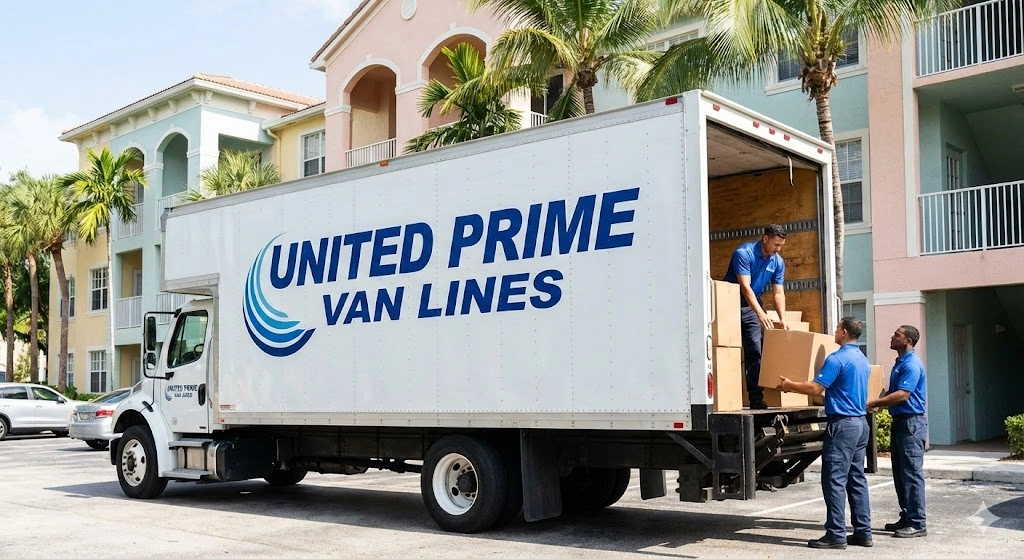
4. Fake Reviews, Fake Address, Fake Company
A lot of scam movers in South Florida are technically “pop-up” companies. They exist for 6 months, rip off 50 people, close down, and reopen under a new name.
The "Pop-Up" Playbook:
- The Website: It looks polished, but the photos are clearly stock images (smiling models in blue uniforms that don't match any real local logo).
- The Address: They list a generic location like "123 Ocean Drive, Miami" that doesn't actually exist, or points to a mailbox rental store.
- The Reviews: They have 500 reviews, but they are all from the last 3 months, and they all sound identical ("Best mover ever," "God bless this team," etc.).
How to Spot Them (The "Google Street View" Test): Before you book, take their address and put it into Google Street View.
- If it shows: A warehouse with trucks parked outside → Likely Legit.
- If it shows: A UPS Store, a strip mall mailbox center, or an empty lot → SCAM.
- Real movers have a yard for their trucks. Scammers have a P.O. Box.
The "Florida License" Check (Crucial): In Florida, every mover doing local work MUST register with the Florida Department of Agriculture (FDACS).
- Look for the "IM Number": It should look like IM12345.
- The Law: This number must be on their website, their contract, and painted on their truck.
- If they don't have an IM number, they are operating illegally.
The United Prime Reality: We’re very easy to find. You can walk right into our office at 221 W Hallandale Beach Blvd, see our trucks, meet our team, and look us in the eye. That’s how it should be.
5. Endless “Extra” Fees (The "Nickel and Dime" Attack)
This is the "slow bleed" version of a scam. The quote looks cheap, but the final bill is a disaster.
The Pattern:
- You’re quoted a nice, clean price ($1,200).
- On moving day, the crew starts adding fees for things that should have been discussed:
- “Stair Fee”: (Even though you told them there were stairs).
- “Long Carry Fee”: (Because they parked 76 feet away instead of 75 feet).
- “Bulky Item Fee”: (Suddenly your standard fridge is "oversized").
- “Shuttle Fee”: (Claiming their truck is "too big" for your street and they need to rent a smaller van).
The "Packing Material" Trap (Crucial Warning): This is the most common trick in South Florida.
- The Scam: The contract says, "Packing materials not included." You assume they will just use a few blankets.
- The Reality: They shrink-wrap everything. They tape everything. Then they charge you $35 per roll of tape and $50 per cardboard box.
- We have seen customers hit with a $2,000 "Packing Material" bill on a $1,500 move.
How to Protect Yourself:
- Ask for the "Accessorial Sheet": Every legal mover has a tariff sheet listing the exact cost of "Long Carry," "Stairs," and "Elevators." Ask to see it before booking.
- The "Packing" Question: Ask specifically: "Is shrink wrap and tape included in the price? If not, what is the cost per roll?"
- Google Maps Your Street: If you live on a tight street in Hollywood or Hallandale, ask: "Can your 26-foot truck fit here, or will you charge me for a Shuttle?"
The United Prime Approach: Surprises are fun at birthdays, not on moving day. If you have a 4th-floor walkup or a tricky high-rise in Brickell with a 100-yard walk to the loading dock, we talk about it upfront. We build those costs into the quote so the price we give you is the price you actually write on the check.
Here is the edited text for "The Legal Side" section.
I have transformed this from a general overview into a Step-by-Step Action Plan. I specifically highlighted the "IM Number" for Florida moves, because most people don't even know this number exists, yet it's the single most important proof of legality in the state.
The Legal Side: What a Legit South Florida Mover Must Have
You don’t need to be a lawyer to do a quick background check. You just need 3 minutes and an internet connection.
1. For Local Moves (Within Florida)
If you are moving from Hallandale to Weston, or Miami to Fort Lauderdale, the Federal government doesn't regulate that. The State of Florida does.
The "IM Number" Rule:
- Every legitimate intrastate mover MUST register with the Florida Department of Agriculture and Consumer Services (FDACS).
- They are assigned an "IM Number" (e.g., IM12345).
- The Law: This number must be displayed on their truck, their website, and your contract.
How to Check It:
- Go to the FDACS License Search tool.
- Type in the company name.
- Green Flag: Status says "Registered."
- Red Flag: No record found, or status says "Pending" or "Revoked."
2. For Interstate Moves (Crossing State Lines)
If you are moving from Hallandale to New York or Georgia, the rules change. Now they need Federal authority.
The "DOT" & "MC" Check:
- Go to the FMCSA SAFER System website (just Google "FMCSA Company Snapshot").
- Type in their USDOT Number or MC Number (found at the bottom of their website).
- Check "Entity Type": Does it say "Carrier" (Good) or just "Broker" (Middleman)?
- Check "Operating Status": It must say "AUTHORIZED."
- Warning: If it says "Active" but NOT "Authorized," their insurance might be cancelled.
3. The "Insurance" Verification
Having a license is great, but having insurance is what protects you.
- Cargo Insurance: Pays if the truck flips over and destroys your furniture.
- Liability Insurance: Pays if the truck hits a parked car or damages your condo building.
- The Test: Ask them to email you their "COI" (Certificate of Insurance). If they hesitate, or if the policy name doesn't match the moving company name, walk away.
The United Prime Reality: We’re fully licensed and insured for both local moves (Florida IM) and interstate relocations (Federal DOT). When you ask us for our registration details, we give them happily—we want you to check.
6. The "Insurance" Lie (Read the Fine Print)
Scam movers love to say, "Don't worry, we are fully insured!" What they don't tell you is that their "insurance" covers their truck, not your furniture.
The Reality of "Valuation" vs. "Insurance": Real movers provide "Valuation," not insurance. There are two levels, and you need to know the difference before you sign.
Option A: "Released Value" (The Free Minimum)
- The Cost: Free.
- The Coverage: 60 cents per pound per article.
- The Math: If the movers drop your $2,000 flat-screen TV (which weighs 50 lbs), they owe you $30 ($0.60 x 50 lbs).
- Scam Alert: Shady movers will tell you this is "Standard Insurance" and imply it covers everything. It does not.
Option B: "Full Value Protection" (The Upgrade)
- The Cost: Usually an extra premium (e.g., 1% of total value).
- The Coverage: If they break it, they must repair it, replace it, or pay you cash for its current market value.
- Our Advice: If you have expensive art, marble tables, or high-end electronics, ask specifically for a "Full Value" quote.
The "COI" Check (Hallandale Specific): If you live in a condo like The Beach Club or Diplomat, your building requires a Certificate of Insurance (COI).
- The Test: Ask the mover: "Can you email a COI to my management office today?"
- The Red Flag: If they say "We don't do that" or "That costs extra," DO NOT HIRE THEM. They likely don't have active liability insurance.
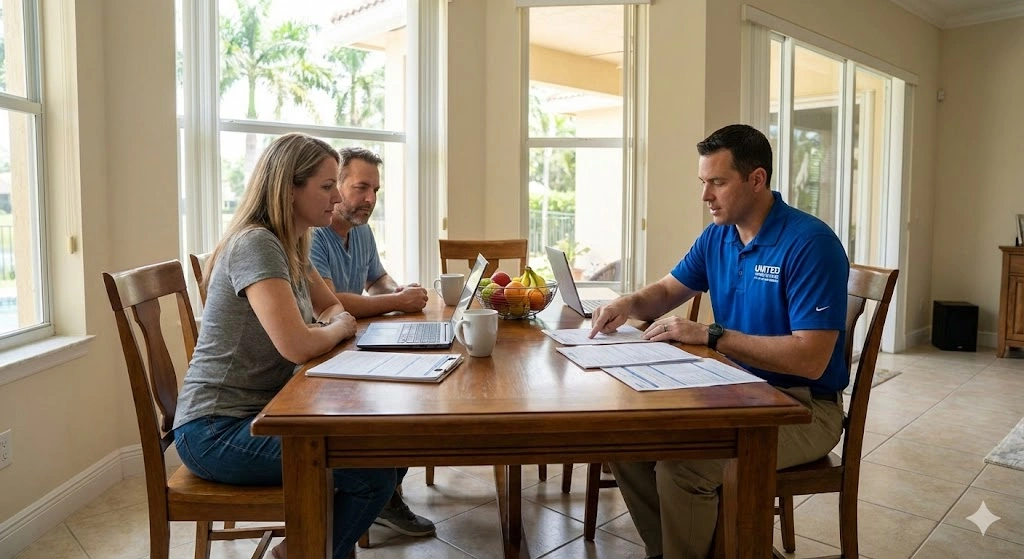
Practical Ways to Protect Yourself Before You Book
Let’s get very concrete. If you were our close friend asking for advice, this is exactly how we would tell you to research a mover in South Florida.
1. Spend 20 Minutes on Research (The "Background Check")
Most people spend more time researching a $50 toaster on Amazon than a $3,000 moving company. Don't be that person. Spending 20 minutes now can save you thousands later.
The "Search Term" Hack: Don't just Google the company name. Search for:
- “[Company Name] + scam”
- “[Company Name] + complaints”
- “[Company Name] + hostage”
- “[Company Name] + bait and switch”
How to Read Reviews Like a Pro:
- Ignore the 5-Star Reviews (At First): Scammers buy these.
- Read the 1-Star and 2-Star Reviews: This is where the truth lives. Look for patterns. If five different people say "They held my stuff hostage until I paid more," that is not a coincidence; it’s a business model.
- Check the Dates: If a company has 50 glowing 5-star reviews all posted within the same week, they likely paid a "reputation management" firm to write them. Real reviews come in sporadically over time.
Where to Check:
- Google Maps: Filter by "Lowest Rating."
- Better Business Bureau (BBB): Look for the rating, but more importantly, look at the "Complaints" tab.
- FMCSA (for Interstate Moves): Check their safety record and if their license was ever revoked.
Our Stance: We encourage prospective clients to do this with us, too. Go ahead—Google United Prime Van Lines. We want you to feel good about the decision, not pressured.
2. Demand a Detailed Written Estimate (The "Paper Trail")
This is where a lot of scams fall apart. If they can't put it in writing, it doesn't exist.
What a Real Estimate Looks Like: It shouldn't be a text message or a generic email saying "Move: $1,200." A legal estimate must include:
- Company Details: Full legal name, physical address, and their IM (State) or DOT (Federal) license numbers.
- The "Scope of Work":
- Packing: Is it included or extra?
- Access: Did they note the stairs or elevator?
- Distance: Is the "Long Carry" charge included?
- The Inventory: A detailed list of every single item to be moved.
- Red Flag: If the estimate says "40 boxes" but doesn't list your sofa, bed, or dresser, do not sign it.
Know Your Estimate Types (Crucial for Long Distance):
- Non-Binding: The price is just a guess. The final price is based on the actual weight or volume on the truck. (Riskier for you).
- Binding: The price is fixed for the items listed. If you don't add more stuff, the price cannot change.
- Binding Not-To-Exceed: The Gold Standard. You pay the quoted price, but if your weight is lower than estimated, the price goes down.
The "Cubic Feet" Warning: Many scammers quote by "Cubic Feet" (volume) rather than weight for long-distance moves.
- The Trick: Volume is subjective. They can stack your boxes loosely to make them take up more space, then charge you double.
- The Fix: If they quote by cubic feet, demand a "Binding" price so the volume doesn't matter once the contract is signed.
The United Prime Way: We prefer clarity over surprises. We walk through your estimate line-by-line so you understand exactly what is covered (and what isn't). You will know the price of the tape, the boxes, and the labor before we lift the first chair.
3. Be Careful with Deposits (Follow the Money)
This is the easiest way to spot a scammer: Look at how they ask for money.
The "Normal" vs. "Scam" Deposit:
- Normal: A legitimate mover might ask for a small deposit (usually $50–$200 or roughly 10–15%) to secure your slot on the calendar. This is standard practice to prevent last-minute cancellations.
- Scam: A scammer will demand 30% to 50% upfront. They are not reserving a slot; they are funding their operation with your cash.
Red Flags (The "Run Away" Signs):
- The "Zelle/CashApp" Demand: If a company insists on Zelle, CashApp, Venmo, or Wire Transfer for the deposit, do not do it. These methods are treated like cash—once you hit "Send," the money is gone and you cannot get it back.
- The "Personal Name" Trick: If they ask you to write a check to "Bob Smith" instead of "Bob’s Moving Company, LLC," that is a massive red flag.
- The "Urgency" Tactic: “I have three other people wanting this date. If you don’t Zelle me $500 right now, you lose it.” (This is a high-pressure sales tactic, not a logistics reality).
Safer Practices:
- Credit Card is King: Always pay your deposit with a credit card (Visa/Amex/Mastercard).
- Why: If the movers don't show up, you can file a chargeback with your bank. Scammers hate credit cards for this exact reason.
- Get a Receipt: Ensure the email confirmation clearly states: "Deposit Paid: $100. Remaining Balance Due: $1,100."
The United Prime Policy: We keep our deposit policy reasonable, and it’s always clear in writing. We accept major credit cards because we have nothing to hide. You’ll never hear us say, “You must Zelle us cash today or lose your spot.”
Red Flags on Moving Day (The "Driveway" Test)
Let’s say you did the best you could with research, but something still feels "off" when the truck arrives. Trust that feeling. This is your last chance to pull the plug before your items are held hostage.
When the Truck Pulls Up
What to Look For (The Green Flags):
- The Truck: It should have the company name and logo painted on the side. If it's a rental (which happens in peak season), it must have a magnetic sign with the company name and DOT/IM License Numbers clearly visible.
- The Crew: Uniformed movers who introduce themselves.
- The Paperwork: The foreman hands you a "Bill of Lading" that matches your estimate exactly.
The "Walk Away" Signals (Red Flags):
- The "Ghost Truck": A completely unmarked, beat-up rental truck with zero signage.
- Why it's bad: If the police stop them, there is no record of who owns the cargo inside.
- The "Confused" Crew: The driver asks, "So, where are we moving to again?" or doesn't have a copy of your inventory.
- The "Refusal to Sign": If they start grabbing boxes before giving you the paperwork to sign, yell "STOP."
- The Scam: They load the truck, then present a new contract with higher prices once you are stuck.
Your Power Move: You are allowed to say, “Stop. Do not touch my stuff. This isn’t what I booked.”
- It is 1000% easier to fire a shady mover while your furniture is still in your living room than it is to get your stuff back once the truck doors are locked.
The United Prime Standard: When our truck pulls up, you'll know it's us. Our team wears the uniform, our truck has the logo, and the foreman will review the contract with you before lifting a single box.
4. Paperwork You Should See Before They Start Loading
This is the moment of truth. If the paperwork isn't right, the move doesn't happen.
The "Holy Trinity" of Documents: You should be holding three things in your hand before a single box enters the truck:
- The Estimate: The price you agreed to originally.
- The Order for Service: The confirmation of the date, time, and services.
- The Bill of Lading (BOL): This is the legal contract for the transport. It is the most important document you will sign.
The "Blank Document" Trap (CRITICAL):
- The Scam: The foreman hands you a tablet or a paper form that is mostly empty and says, "Just sign here so we can get started; I'll fill in the weights later."
- The Reality: You just signed a blank check. They can write any weight or any price in those empty boxes later.
- The Rule: NEVER sign a document that has empty fields for price or weight. If they say they can't fill it out yet, tell them you can't sign it yet.
If They Show Up With a Different Contract:
- Compare It: Does the logo on the paper match the logo on your quote?
- Ask Why: If the price jumped from $1,500 to $2,200 because of "surcharges," demand an explanation immediately.
- The "Office Call": Do not trust the foreman if you feel pressured. Call the main office number (from the website, not the number the driver gives you). If the office sounds sketchy or doesn't answer, cancel the move.
The United Prime Standard: Our crews don’t start moving a single box until the paperwork is confirmed, explained, and signed. If you have questions, we answer them on the spot—we don't hide the numbers until the truck is loaded.
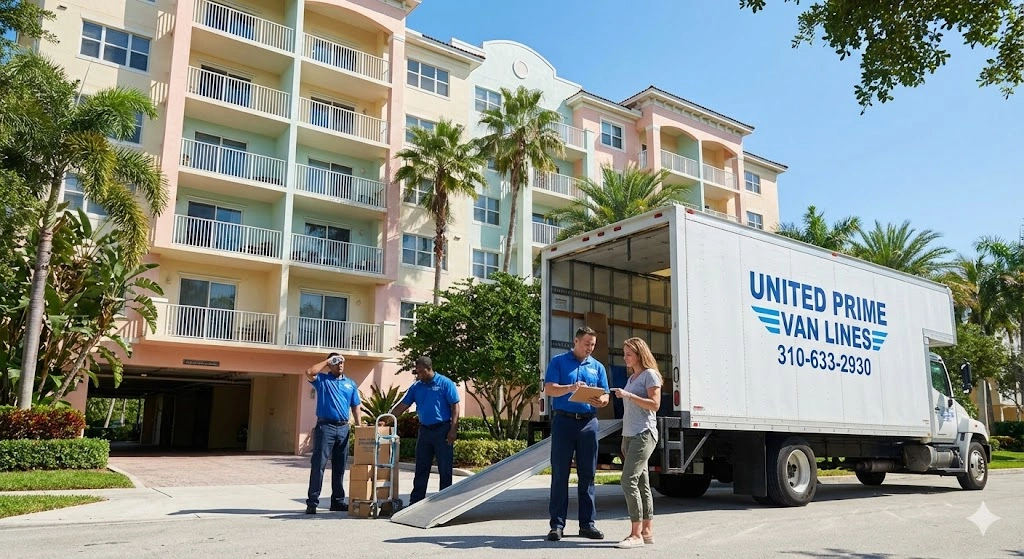
5. During the Move: Stay Present and Involved
You don’t have to hover over their shoulders, but you shouldn’t disappear to Starbucks either. The best defense against a scam is an observant customer.
Smart Things to Do:
- The "Personal Stash": Keep your phone, wallet, keys, and important documents (passports/leases) in your own car. Never put these in a moving box.
- The "Before" Evidence: Take a 30-second video of your furniture before they wrap it. If they scratch your dresser later and say "it was already like that," you have proof.
- The "Driver Contact" Rule: Before the truck pulls away, ask the driver: "What is your direct cell phone number?" Do not rely on the main office number once the truck is on the road.
The "Bingo Sheet" (Inventory) Warning: For long-distance moves, every item gets a colored sticker with a number. You will get a "Bingo Sheet" listing every number.
- At Pickup: Make sure every item leaving your house gets a sticker.
- At Delivery (Crucial): You must check off the numbers as they come off the truck.
- The Scam: If you sign the "Bingo Sheet" at delivery without checking the numbers, you are legally signing that "Everything arrived." If you find a box missing an hour later, the claim will be denied.
Ask Questions: A legitimate mover won’t get annoyed when you care about your own belongings. With our crews at United Prime Van Lines, we appreciate when clients stay engaged. We’d rather answer 20 questions now than have one misunderstanding later that ruins your experience.
What to Do If You Suspect You’re Being Scammed (Emergency Protocol)
Ideally, you avoid this entirely by vetting your mover. But if things go wrong while the truck is in your driveway, you need to act fast.
1. Before the Truck Leaves Your Home (The "Stop" Button)
This is your moment of highest leverage. Once they drive away with your stuff, your power drops to zero.
If the Price Suddenly Doubles:
- The "Show Me" Rule: Ask for a written explanation of the new charges. Ask them to point to the specific line in your original contract where these fees are listed.
- Call the Headquarters: Do not just argue with the foreman. Call the main office number immediately. If no one answers, that is a massive red flag.
If They Threaten to Leave:
- Let Them Go: If they say, "If you don't pay this extra $1,000, we are leaving," call their bluff. Tell them to leave.
- The "Fire" Option: You can say, “Stop. Unload my items immediately. You are fired.” It is stressful to find a new mover last minute, but it is infinitely better than having your life held hostage in a warehouse for months.
When to Call the Police:
- Note: Police often call moving disputes a "civil matter" and won't get involved in pricing.
- The Exception: If you fire them and they refuse to leave your property or refuse to unload your items back onto your driveway, that is now a potential crime (Trespassing or Theft). Call the non-emergency line and state clearly: "I have fired a contractor, and they are refusing to leave my property and refusing to return my possessions."
The United Prime Reality: We’ve had last-minute calls from people who kicked shady movers out of their driveway and needed urgent help. We try our best to squeeze these "rescue moves" into our schedule. It’s a stressful day, but trust us: It’s better than the alternative.
6. Crisis Management: If Your Belongings Are Already on the Truck
This is the hardest scenario. If the truck is locked and the driver is demanding more money to release your goods, you are in a "Hostage Load" situation.
Immediate Steps to Take:
- Document Everything: Do not just argue. Take photos of the truck’s license plate, the "DOT Number" on the door, and the driver’s face if possible. Keep copies of all paperwork.
- The "110% Rule" (Federal Law):
- If this is an Interstate Move (e.g., Florida to New York), remind them of the FMCSA 110% Rule.
- The Law: They MUST deliver your goods if you pay 110% of the original non-binding estimate. They can bill you for the rest later, but they cannot hold your goods hostage.
- Do NOT Pay Cash:
- If you hand over cash, it is gone forever.
- If you must pay to get your life back, use a Credit Card. You can file a dispute (chargeback) later, arguing "Services not rendered as described" or "Extortion."
Who to Call (The "Nuclear Option"):
If they refuse to release your items, file complaints immediately with these agencies. The more paper trail you create, the faster they might fold.
JurisdictionAgencyContactFlorida MovesFDACS (FL Dept. of Ag)1-800-HELP-FLA (1-800-435-7352)Interstate MovesFMCSA (Federal Gov)1-888-DOT-SAFT (1-888-368-7238)GeneralBetter Business BureauFile a complaint at BBB.org
The United Prime Reality:
It’s not a fun process. But the more documentation you have, the better your chances. If you’re in this situation and end up needing to re-move with us later, we’ll walk through ways to protect yourself going forward so this never happens to you again.
How We Handle South Florida Moves to Keep You Safe
We’re not perfect—no moving company is—but we have built our entire process specifically to avoid the nightmare stories you hear about South Florida movers.
Here is the United Prime Difference:
- We Take Time on the Front End: We don’t give "magic" quotes in three minutes. We ask detailed questions, we encourage video walk-throughs, and we build a plan that actually fits your life. We would rather lose a job because we were honest about the price than win a job by lying about it.
- Our Paperwork is Boring (And That’s Good): Before moving day, you know exactly what is included, what isn't, and what might cost extra (like packing materials). There are no "gotcha" clauses hidden in fine print.
- We Show Up As Ourselves: We are a Carrier, not a broker. When you hire us, you get our trucks, our crews, and our supervisors. If we ever partner with another carrier for a long-distance route, we tell you in advance and in writing—never as a surprise on moving day.
- We Are Physically Here: Our office at 221 W Hallandale Beach Blvd is a real place, not a P.O. Box or a virtual mailbox. You can call us, visit us, and talk to us face-to-face. That alone filters out 90% of the shady operators.
- We Want You to "Grill" Us: If you call and ask, “What’s your DOT number? Can I see your insurance? What happens if you break a lamp?” — we respect that. In fact, we love it. Smart customers are our best customers.
The Bottom Line: You should feel comfortable with whoever you choose. If your gut says, “Something’s off,” listen to it. There are enough honest movers in South Florida that you don’t have to gamble with everything you own.
Summary: A Simple Checklist to Keep You Out of Trouble
If you remember nothing else from this guide, keep this quick mental checklist handy when you’re hiring a mover in South Florida.
1. The "Company Check"
- [ ] Real Address: Does Google Maps show a warehouse/office, or a UPS Store/empty lot?
- [ ] Active License: Did you check their IM Number (State) or DOT Number (Federal)?
- [ ] Real Reviews: Do the 1-star reviews show a scary pattern of "hostage" situations?
2. The "Estimate Check"
- [ ] The "Visual" Rule: Did they see your items (video or in-person) before giving a price?
- [ ] The Paperwork: Is the estimate written, detailed, and clear about what is not included?
- [ ] The "Extra Fees": Did they explain the cost of packing materials and long carries upfront?
3. The "Moving Day" Check
- [ ] The Truck: Does the logo on the truck match the company you hired?
- [ ] The Crew: Are they wearing uniforms and introducing themselves?
- [ ] The Vibe: Do you feel respected, or are you being pressured/rushed to sign blank papers?
The Bottom Line: If any of these pieces are missing, PAUSE. You deserve to feel safe, informed, and in control of your move.
And if you want a team that takes all of this seriously—from Hallandale Beach condos to Broward townhomes to Miami high-rises—we’re right here. At United Prime Van Lines, we’d rather earn your trust slowly than impress you with a cheap number we can’t stand behind later.