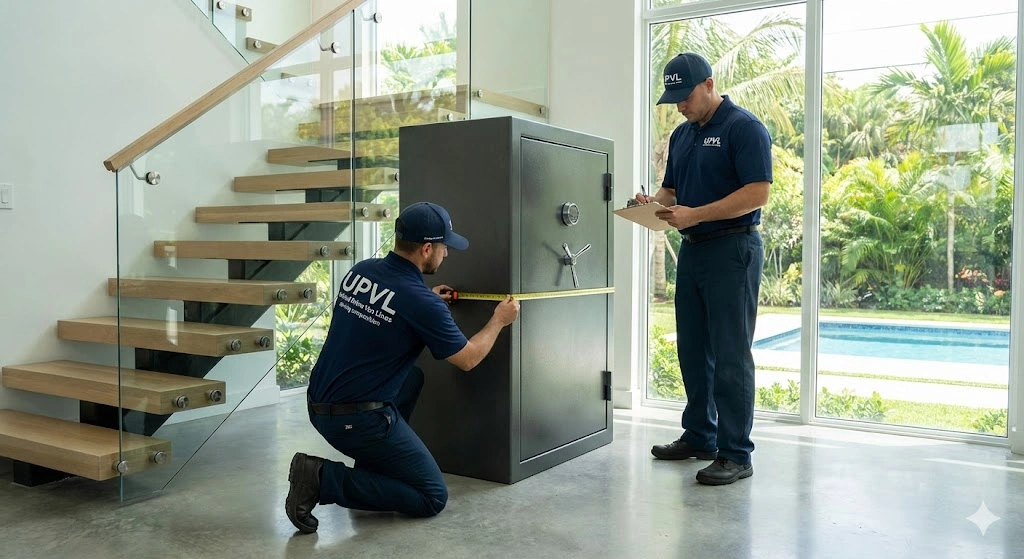
This is the most common misunderstanding we see. A binding estimate is a contract, but it’s a specific one. It binds the price to the specific list of items and services in the agreement.
It does not mean you can add "just a few more boxes" or "that extra patio set" on moving day for free.
The price can (and will) change if:
Our advice: To keep a binding estimate truly binding, be 100% honest during the survey. Open every closet, check the garage, and don’t “forget” the heavy gym equipment. The more accurate the list, the more rock-solid the price.
A non-binding estimate is essentially a professional projection.
“Based on what we see, we think your move will cost around $3,500. But the final price will depend on the actual weight of the truck and the actual services used.”
In this scenario, the price on the paper is not the final price.
It sounds risky, but non-binding estimates can be good in specific situations:
This is where scams happen. A shady mover gives you a deliberately low non-binding estimate ($2,000) just to get the job. Then, on moving day, they weigh the truck and say, “Wow, it’s actually heavier! Now you owe $5,000.”
Since it was "non-binding," they aren't technically breaking the contract—even though they misled you.
This is the third option, and for many families, it’s the best of both worlds. You might see it called “Guaranteed Not-To-Exceed” or “Price Protection.”
It works like a Binding Estimate, but with a safety net for you, not the mover.
It eliminates the fear of a price hike while still letting you save money if you decide to leave the treadmill behind at the last minute.
When you’re looking at quotes from United Prime Van Lines or anyone else, use this quick cheat sheet to decide what’s right for you.
Estimate:
We generally prefer Binding or Not-To-Exceed estimates for long-distance moves. Why? Because we’ve found that most customers value certainty over gambling on weight.
We put in the work upfront—doing the video surveys, asking the detailed questions about the attic and the garage—so we can give you a number you can actually write a check for, without crossing your fingers.
Still not sure which one you’re looking at?
If you have a quote in hand (from us or a competitor) and can’t tell if it’s binding or not, send it over. We’ll help you decode the fine print so you know exactly where you stand.
There is actually a third choice, and it’s often the best one for customers. You might see it called “Guaranteed Not-To-Exceed” or “Price Protection.”
Think of this as a Binding Estimate with a safety net for you.
It eliminates the fear of a price hike while still letting you save money if you decide to sell that heavy treadmill at the last minute. At United Prime Van Lines, we love this option because it’s fair to everyone—but not every mover offers it because it puts the risk on them.
If you do choose a Non-Binding estimate for an interstate (state-to-state) move, you have a federal protection you need to know about. It’s called the 110% Rule.
Here is the nightmare scenario people fear: The estimate was $3,000. The movers arrive at your new house and say, “Actually, the weight was huge. You owe us $6,000, or we won’t open the truck.”
Here is the law: Under federal regulations, the mover must deliver your goods if you pay 110% of the original non-binding estimate at the time of delivery.
The Catch: This doesn’t mean the rest of the debt disappears. The mover can still bill you for the remaining balance ($2,700) typically 30 days later. But they cannot hold your belongings hostage on the truck for that extra amount right then and there.
When you look at a quote, don't just look at the bottom-line number. Look at the type of estimate.
At United Prime Van Lines, we believe you shouldn't have to be a lawyer to hire a mover. Whether you’re moving from Hallandale Beach to Hollywood, FL, or Chatsworth to Chicago, we’ll explain exactly which type of estimate we’re giving you—and why—so you can sign with confidence.
Now that you know the difference, how do you decide which one to ask for? Here is how we guide our own customers at United Prime Van Lines.
No matter which type you choose, an estimate is only as good as the information you give us. To avoid price hikes on moving day, follow these three rules:
We don’t like "gotcha" moments. Whether you are moving from Hallandale Beach, Chatsworth, or anywhere in between, our goal is to give you a number you can trust.
If you’re looking at a quote from another company and can’t tell if it’s binding or non-binding, send it to us. We’ll help you decode it—no strings attached.
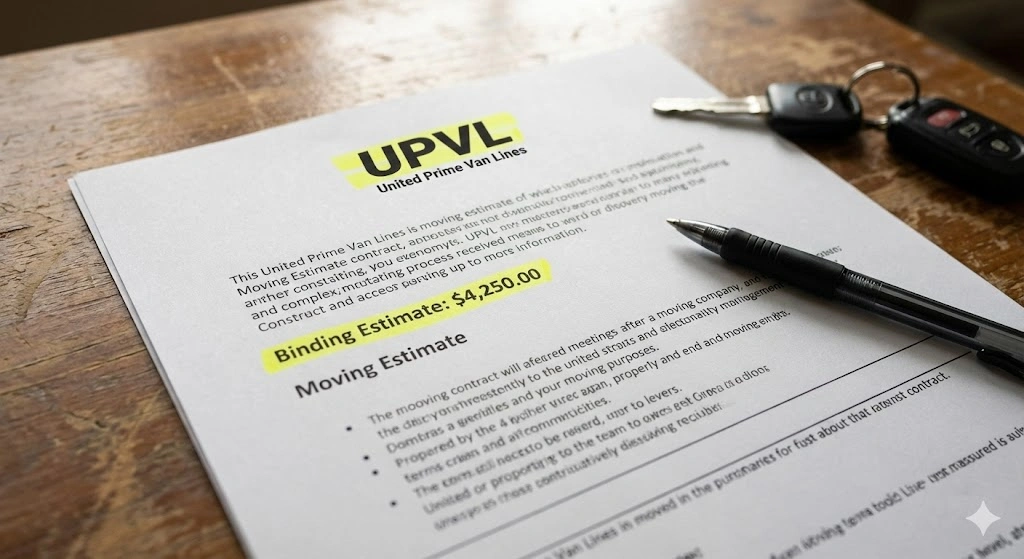
If you remember nothing else from this guide, remember this rule:
Certainty costs effort.
If you want a Binding Price (a locked number), you have to put in the effort to give us a perfect inventory. We can’t lock the price if we don’t know about the attic or the extra 50 boxes in the garage.
If you choose a Non-Binding Estimate, you are trading certainty for flexibility. It might be cheaper, or it might cost you thousands more.
Our Final Advice at United Prime Van Lines:
Still confused? If you’re staring at a quote from another company and can’t tell if it’s binding, non-binding, or just a sophisticated guess, send it to us. We’ll review it for free and tell you exactly where the risks are hiding. We want you to move with confidence, even if it’s not with us.
Whether you go binding or non-binding, there are some things that should make you pause.
If your quote looks like: “2-bedroom move – $2,300” with nothing else written, that’s a problem.
You want to see:
If the paperwork is vague, your final cost will probably be a surprise.
If someone says:
Run. A good mover doesn’t need to rush you. We are happy to send everything in writing and give you space to think.
For anything beyond a small studio, beware of companies that give “all-inclusive quotes” after a two-minute phone call.
Without seeing your home, they are guessing. Guessing and binding don’t mix well.
Let’s break this down based on the most common situations we see.
The Setup: You’re moving from Hallandale Beach, FL to Charlotte, NC. You have a set budget and aren't adding last-minute furniture.The Choice: Binding Estimate. You trade a tiny chance of overpaying (if weight is light) for a huge reduction in stress. You need a locked number.
The Setup: You’re in Chatsworth, CA, moving to a smaller place. You are selling/donating half your furniture and don't know yet what stays.The Choice: Non-Binding Estimate (initially). Start with a ballpark while you decide. Once the pile is finalized, convert it to a Binding Estimate closer to move day.
The Setup: Moving 20 miles within South Florida.The Choice: Non-Binding (Hourly). The final bill is based on time. The risk of a "weight surprise" is low because the truck isn't crossing state lines.
Here’s a quick script you can read off when you’re talking to any moving company (including us):
If they answer clearly and back it up in writing, you’re on the right track.
If you’re moving soon and all of this still feels a little abstract, we can help.
We can:
Whether you’re moving out of a condo in Hallandale Beach, a single-family home in South Florida, or a townhome in Chatsworth, United Prime Van Lines will lay out your options so you know exactly what to expect. No games, no last-minute surprises.