Moving doesn’t have to mean mountains of trash bags, piles of broken boxes and a guilt trip every time you look at the recycling bin.
With a bit of planning, you can pack for a move and stay (relatively) kind to the planet at the same time.
Eco-friendly packing is not about being perfect. It is about:
- using reusable boxes and containers where you can,
- choosing sustainable materials over wasteful ones, Eco-Friendly Packing: Reusable Boxes & Sustainable Moving Materials
- cutting down on single-use plastic and pointless trash,
- making smarter decisions about what you even move in the first place.
In this guide, we’ll walk through practical, real-life ways to pack greener, save money and still keep your belongings safe — without turning your move into a full-time environmental project.
What “Eco-Friendly Packing” Actually Means (In Real Life)
Eco-friendly moving doesn’t mean you can’t use tape or cardboard. It means you:
- reuse as much as possible,
- reduce unnecessary materials,
- replace wasteful products with better alternatives,
- responsibly dispose of what you do use.
Think less “zero waste perfection,” more “better choices where it counts.”
A green approach to packing should:
- protect your items properly (no one wants to re-buy broken stuff),
- not explode your budget,
- be realistic for your time and energy.
If a choice checks those boxes and creates less trash, you’re heading in the right direction.
Reusable Boxes: The Core of Eco-Friendly Packing
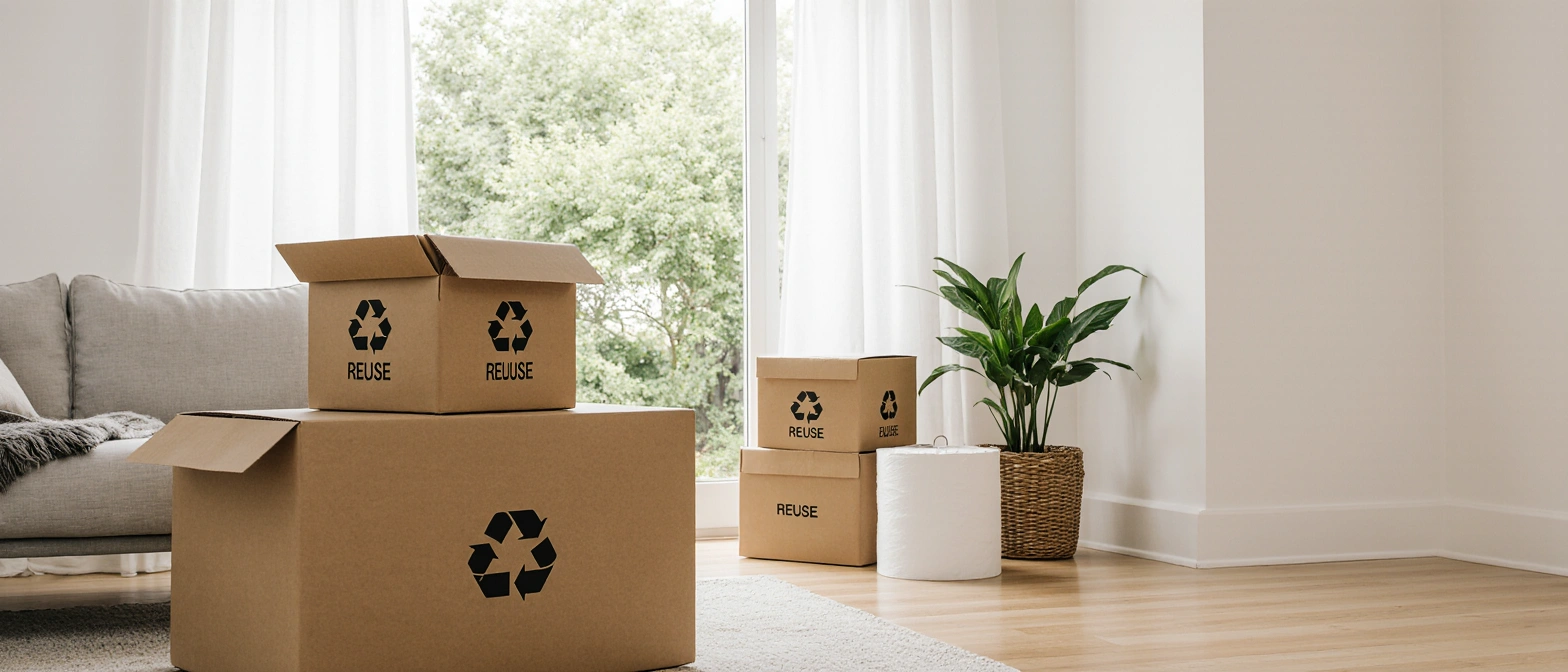
The easiest way to cut waste is to stop treating boxes as disposable.
You have three main reusable options:
- plastic moving crates,
- high-quality cardboard boxes that get reused,
- containers you already own (bins, suitcases, baskets).
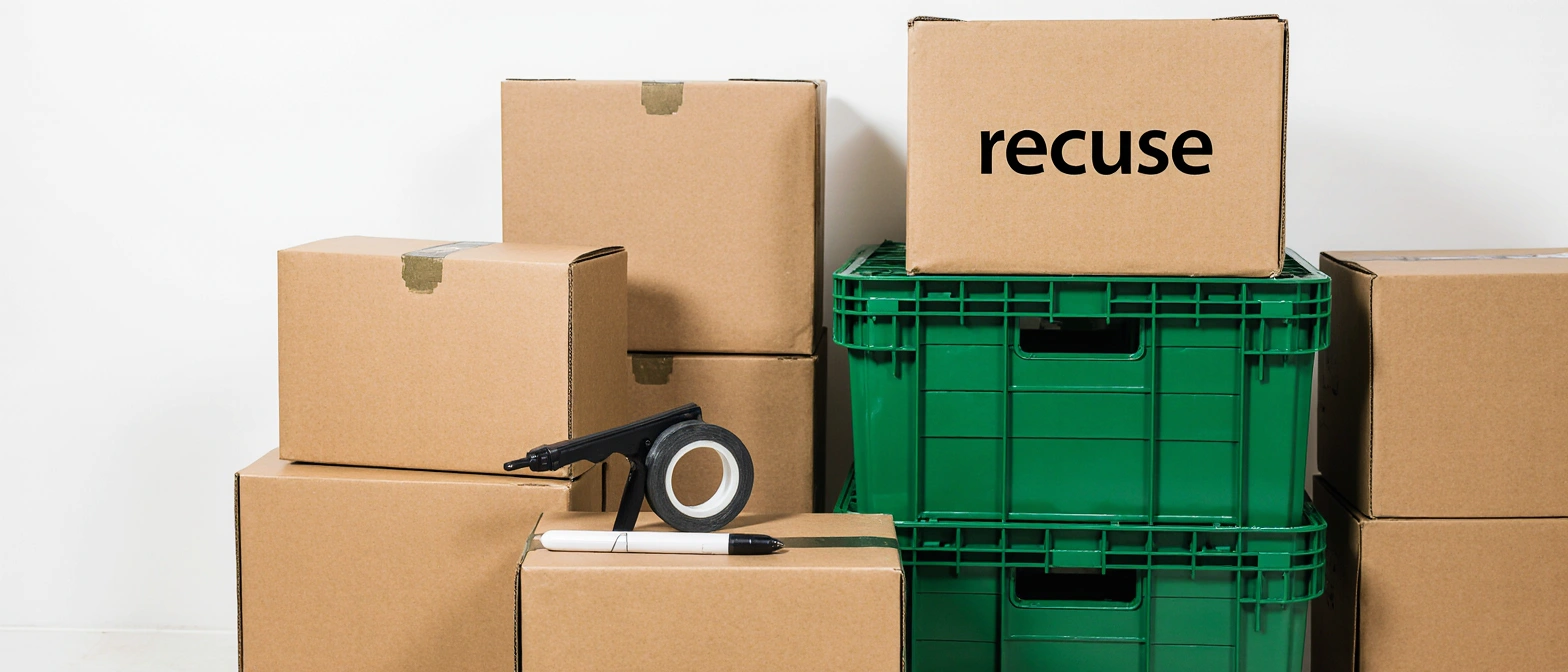
Option 1 – Renting reusable plastic moving crates
Reusable plastic crates are:
- stackable and uniform in size,
- sturdier than most cardboard,
- easy to carry with built-in handles,
- water-resistant and more protective.
They’re especially great for:
- city moves,
- apartment moves with elevators,
- short-distance moves where you can return them quickly.
Typical process:
- A crate rental company drops off a set of empty crates.
- You pack, move and unpack.
- They pick the crates up from your new place.
Pros:
- no last-minute box hunting,
- less tape and plastic,
- boxes don’t collapse or split.
Cons:
- you pay a rental fee,
- less flexible timing if you’re a slow unpacker,
- may not be available in every area.
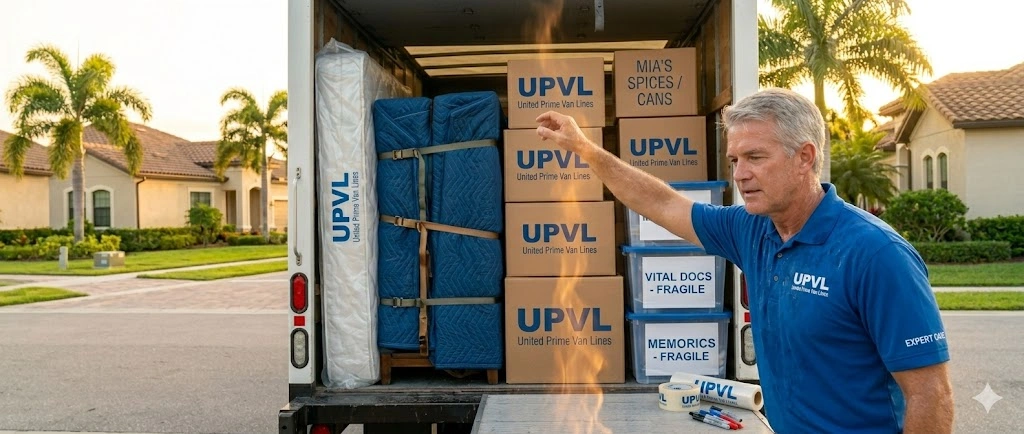
If you’re moving with our team at United Prime Van Lines, you can ask about using or combining reusable crates with standard materials. We can help you figure out how many containers you really need so you don’t over-order.
Option 2 – Reusing strong cardboard boxes (the right way)
Cardboard isn’t automatically wasteful — as long as it gets used more than once and recycled properly at the end.
You can collect boxes by:
- asking friends or neighbors who just moved,
- checking local community groups or marketplace listings,
- asking at bookstores or office supply stores for clean, sturdy boxes.
Look for boxes that are:
- not crushed or torn,
- dry and free of spills or stains,
- not smelling like food, chemicals or mold.
Use these reused boxes for:
- bedding and linens,
- clothes,
- toys,
- light household items.
Reserve your new, strongest boxes for:
- fragile kitchen items,
- heavy books,
- electronics,
- anything that will go into storage long-term.
When you’re done moving, pass good boxes on again or list them as “free moving boxes” instead of sending them straight to the dumpster.
Option 3 – Using what you already own as “boxes”
You’re moving them anyway, so put them to work:
- suitcases (especially rolling ones) for books and heavy items,
- duffel bags and backpacks for clothes and personal items,
- plastic bins and baskets for toys, linens or decor,
- drawers (wrapped) for light clothing if structure allows.
Just remember to label them like any other box so your movers know where to put them. A suitcase with no label doesn’t magically teleport itself to the right room.
Sustainable Packing Materials: Better Choices, Less Waste
You don’t have to wrap everything in layers of fresh plastic. There are plenty of ways to protect your belongings with more planet-friendly options — and still keep them safe.
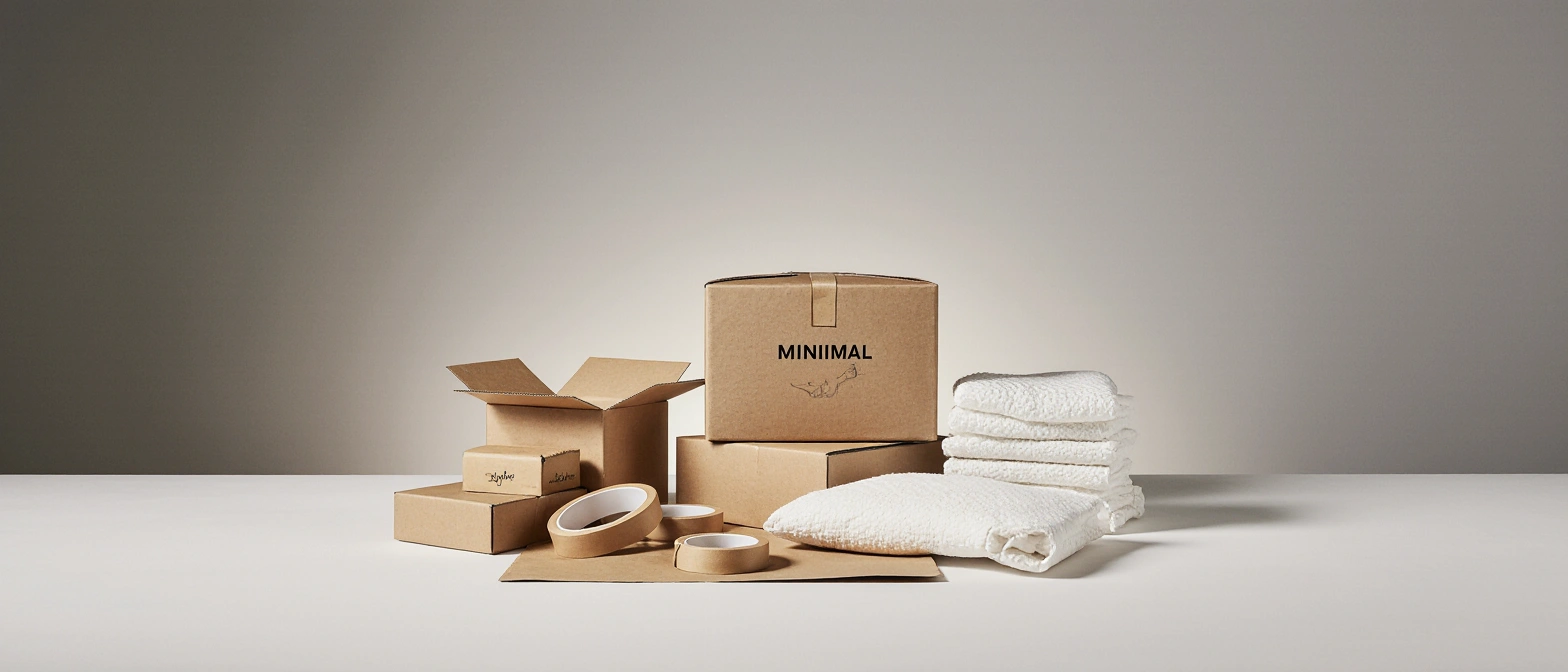
Recycled and recyclable packing paper
Standard packing paper (kraft or newsprint) is already one of the more eco-friendly options:
- it’s recyclable,
- it’s often made from recycled content,
- it breaks down much faster than plastic.
Use it to wrap:
- plates and bowls,
- glasses and mugs,
- small decor,
- kitchen items.
Try to avoid printed newspaper directly on dishes — the ink can transfer and may require heavy washing.
h3: Paper tape vs plastic tape (where it makes sense)
Paper-based packing tape:
- uses a paper backing instead of plastic,
- can be more recyclable when used on cardboard,
- often comes with a water-activated adhesive for super strong seals.
If you want to go greener:
- use paper tape on boxes that aren’t extremely heavy,
- still keep some strong plastic packing tape for very heavy boxes or where you need extra reinforcement.
You don’t need to be 100% plastic-free to make a difference; even switching half your boxes to paper tape reduces plastic waste.
Biodegradable or recyclable cushioning
Instead of traditional plastic-only bubble wrap everywhere, try mixing in:
- recycled packing paper for most wrapping and gap-filling,
- corrugated cardboard inserts or dividers for glasses and bottles,
- molded pulp inserts (often reused from electronics or bottles),
- biodegradable packing peanuts (labeled as such, not traditional Styrofoam).
Bubble wrap still has its place for:
- highly fragile items,
- screens and electronics,
- mirrors and glass-heavy decor.
But you can:
- use it sparingly,
- reuse bubble wrap from previous packages,
- keep it separate at the end and drop it at a plastic film recycling point if available in your area.
Using textiles you already own as padding
One of the easiest eco-friendly moves: let your soft stuff do double duty.
Use:
- towels around framed art and mirrors,
- blankets as padding in large boxes or around furniture,
- hoodies and sweaters to wrap vases or decor,
- thick socks to protect glasses or small bottles.
Just keep some common sense:
- don’t wrap greasy kitchen items in your nicest clothes,
- bag any leak-prone items separately before padding them.
This approach drastically cuts down on how much fresh bubble wrap or foam you need to buy.
Decluttering First: The Greenest “Packing Hack”
The most eco-friendly packing material is the one you never need because you didn’t move the item at all.
Before you dive into boxes and supplies:
- walk room by room,
- decide what you truly use,
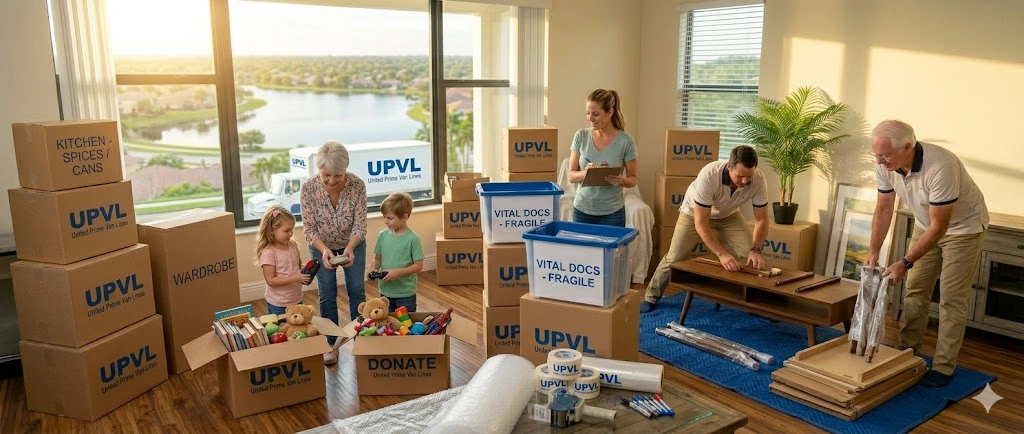
- separate items into: keep, donate, sell, recycle, trash.
Good options for a greener cleanup:
- donate usable items to local charities or community groups,
- sell furniture and decor online or in yard sales,
- recycle electronics at e-waste centers instead of tossing them,
- use textile recycling programs for clothes that are too worn to donate.
When you move less stuff, you:
- use fewer boxes and materials,
- need a smaller truck (or less time),
- spend less on the move itself,
- and avoid just shifting clutter from one home to another.
If you’re planning your move with United Prime Van Lines, you can tell our team you’re actively decluttering. We can help you estimate a more accurate volume, so you don’t overbook truck space or labor.
Room-by-Room Eco-Friendly Packing Ideas
Let’s connect this to real rooms in your home, so it’s not just theory.
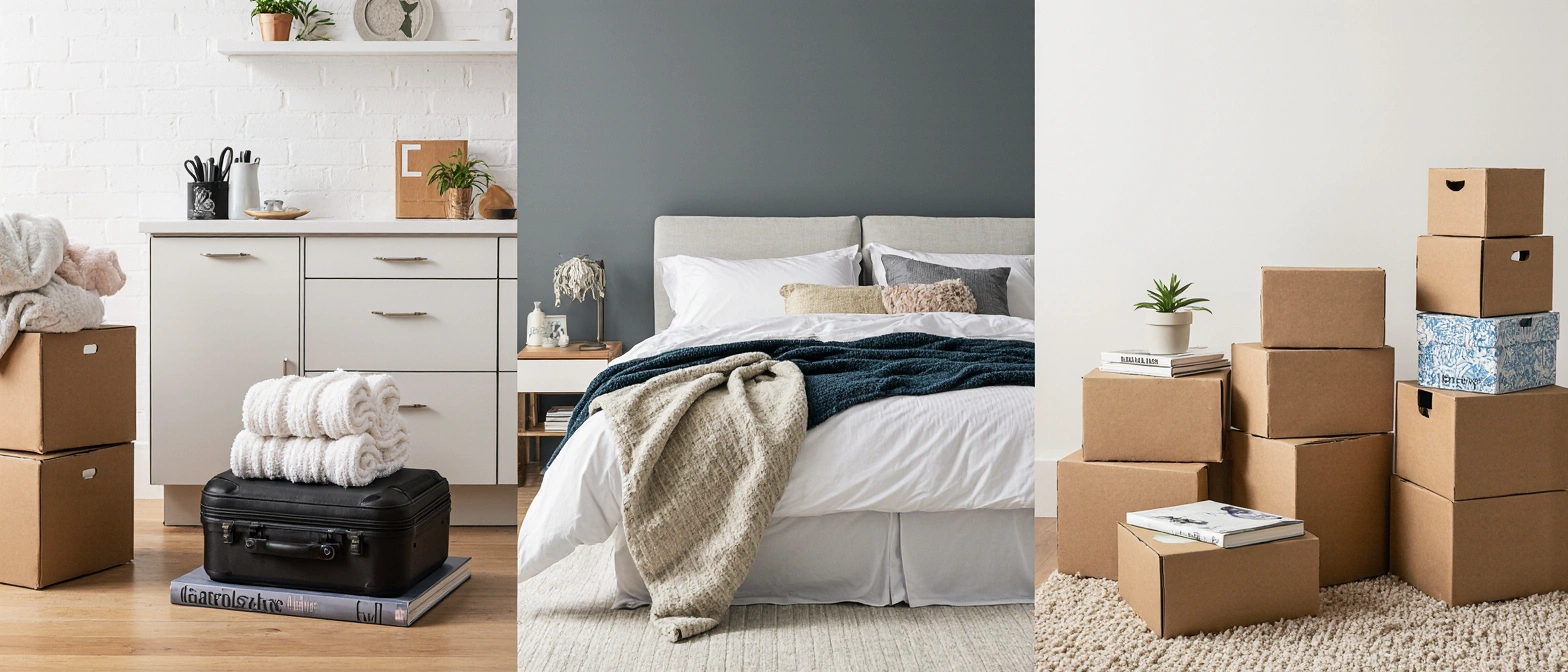
Kitchen
Green moves you can make:
- Use recycled packing paper instead of plastic-only cushioning for most dishes.
- Reuse bottle and jar dividers from wine or beverage boxes.
- Wrap pots and pans in dish towels or cloth napkins.
- Avoid cheap, flimsy boxes that might collapse under heavy kitchen items.
Living room
- Wrap framed art in blankets and then secure gently with stretch wrap instead of multiple layers of plastic-only wrap.
- Pack books into reused small boxes or rolling suitcases.
- Use existing baskets and bins to move remotes, cables and small decor.
Bedroom
- Pack folded clothes into suitcases, duffel bags and reusable bins.
- Use pillowcases and extra sheets to cushion delicate decor or frames.
- Use mattress bags that can be reused again for storage instead of flimsy single-use covers.
Bathroom
- Group toiletries in reusable toiletry bags or sturdy containers.
- Put liquids into reusable leak-proof bags or containers instead of disposable ones where possible.
- Use a single, well-packed box for heavier items (like bottles) instead of many half-empty ones.
Garage / Storage areas
- Use sturdy plastic bins that can later serve as long-term storage in your new home.
- Wrap tools and hardware in old rags or shop towels.
- Sort items now so you don’t carry unused junk into a new space.
After the Move: What to Do With Boxes & Materials
Eco-friendly packing doesn’t end when the truck is unloaded. What you do with your supplies afterward matters too.
Ideas:
- Flatten and save the best boxes for another move or for friends.
- List free boxes online (local community groups, marketplace, moving groups).
- Take clean cardboard to recycling instead of throwing it in general trash.
- Separate bubble wrap and plastic films for drop-off at a recycling location (if available).
- Keep reusable crates, bins and strong containers for future storage.
A 10–15 minute “materials cleanup” after you unpack can prevent a huge pile of trash and give your packing supplies a second or third life.
h2: How United Prime Van Lines Can Support a Greener Move
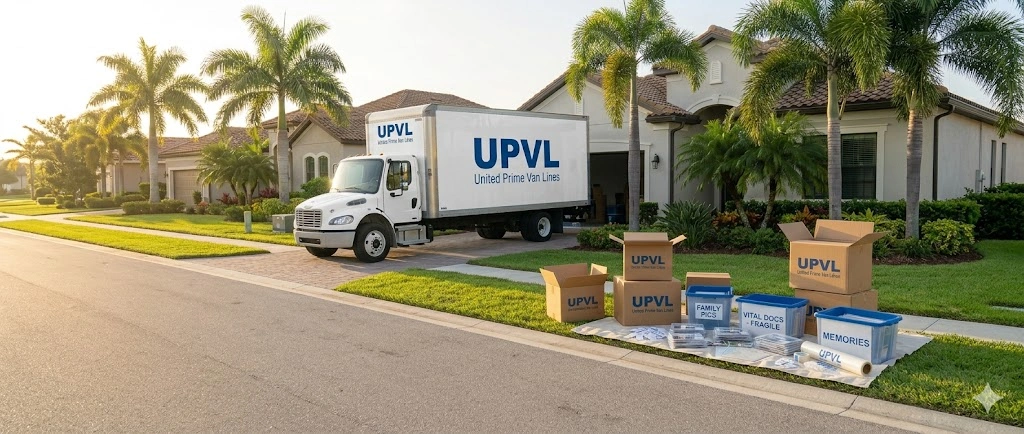
You don’t have to figure out all the eco-friendly details alone. When you plan your move with United Prime Van Lines, you can:
- ask for guidance on how many boxes and materials you really need (so you don’t overbuy),
- combine reusable crates with traditional materials in a smart way,
- let our crew handle the most delicate items using best-practice protection (so nothing gets wasted on trial and error),
- get a move plan that fits your budget, timing and sustainability goals.
You can reuse what you already have, choose better materials for what you don’t, and still protect your belongings properly — while we focus on safe loading, transport and unloading.
Quick Eco-Friendly Packing Checklist
Use this as a simple reference while you prepare:
- I’ve decluttered so I’m not moving unnecessary items.
- I’m using reusable crates, strong cardboard boxes or containers I already own.
- I chose recycled/ink-free paper and mixed fillers over all-plastic cushioning.
- I’m using towels, linens and clothes as padding where it makes sense.
- I kept some high-quality boxes for fragile or heavy items.
- I have a plan to reuse, donate or recycle my boxes and materials after the move.
Perfect? No. Better than a mountain of one-use trash bags and broken boxes? Absolutely.
Thoughtful choices multiplied across an entire move add up. And if you want a crew that respects both your belongings and your preferences, our team at United Prime Van Lines can help you move in a way that feels a little kinder — to your stuff, your budget and the planet.