1. The “City Tax” vs. The “Suburb Savings” (Access & Parking)
The biggest hidden cost in moving isn't always the miles—it's the difficulty of the pickup and drop-off.
Your ZIP code is a cheat code for us to guess what kind of building you live in.
- The "Vertical" ZIPs (High-Rises & Condos): If you type in a ZIP for Sunny Isles Beach, Brickell, or Downtown LA, our system flags it. We know this likely means:
- Elevators (which take longer).
- Long hallways (long carries).
- Strict parking rules (we might need a parking permit).
- The Cost: This usually adds labor hours or a "long carry" fee because the move takes twice as long as a ground-floor house.
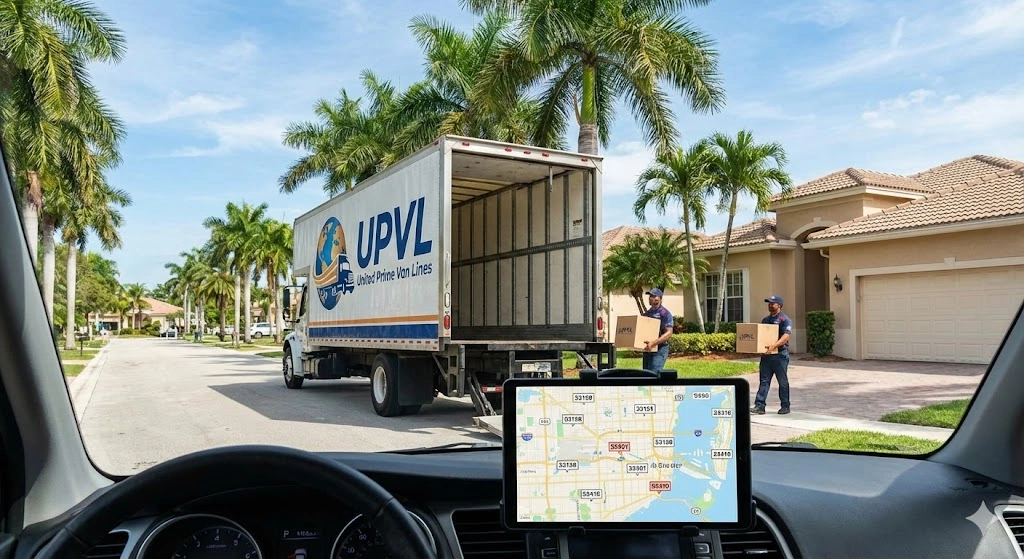
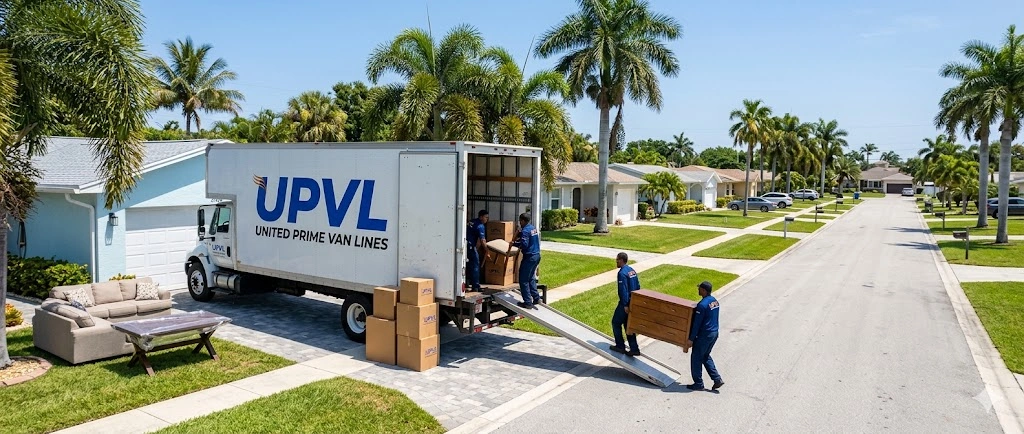
- The "Horizontal" ZIPs (Suburbs & Single-Family Homes): If you enter a ZIP for Parkland, Weston, or Simi Valley, we picture a driveway.
- We can back the truck right up to the garage.
- No elevator reservations.
- The Cost: These moves are faster and physically easier, often resulting in a lower hourly total or a better flat rate.
2. Distance Isn't Just Miles—It's Time (The Traffic Factor)
In the moving world, Time = Money.
If you are moving locally (charged by the hour), your ZIP code tells us how much of your budget is going to vanish just sitting in traffic.
- The "Gridlock" ZIP: Moving 10 miles from Santa Monica to West Hollywood at 8:00 AM isn't a "short drive." It’s an hour of labor time. The same logic applies to I-95 in Miami during rush hour. We have to factor that "windshield time" into your estimate.
- The "Open Road" ZIP: Moving 10 miles between two rural towns might take 15 minutes. That’s money in your pocket because the crew is spending their time moving boxes, not staring at brake lights.
3. The "Truck Route" Problem (Can We Even Fit?)
This is something most people never think about until the truck arrives.
Google Maps vs. Truck Maps: You drive a car. You can take shortcuts, go under low bridges, and zip down narrow tree-lined streets. Our semi-trucks (or even large box trucks) cannot.
- Weight Limits & Low Bridges: Some ZIP codes are notorious for having historic bridges or weight-restricted roads. If we see those ZIPs, we know we have to take a longer, roundabout route to get to you legally.
- Shuttle Requirements: Some ZIP codes (like tight beach communities or winding canyon roads in Chatsworth) are physically impossible for a big rig to enter.
- The Consequence: If we see a "tight access" ZIP, we might have to plan for a Shuttle Service—parking the big truck miles away and using a smaller van to ferry your stuff back and forth. That is a significant extra cost, but knowing it upfront prevents a disaster on move day.
4. Supply and Demand (The "Hot" ZIPs)
Believe it or not, moving has "fashionable" seasons and locations.
- Inbound vs. Outbound: If everyone is moving out of a specific ZIP code (like New York City or San Francisco during certain years) and nobody is moving in, it costs us more. Why? Because the truck has to drive back empty.
- The "Backhaul" Discount: Conversely, if you are moving to a ZIP code where we have another customer waiting for a pickup, you might get a better rate because you are helping us fill an empty truck.
At United Prime Van Lines, we check all of this automatically. We aren't judging your neighborhood—we're just trying to figure out if we need extra men, a smaller truck, or a lot of patience for traffic.
The "Remote Delivery" Factor (Are You Off the Grid?)
For long-distance moves, not all miles are created equal.
The trucking industry runs on major lanes (think of them like arteries). These are the big interstates connecting major hubs like Miami, New York, Los Angeles, and Chicago.
- The "Main Artery" Discount: If you are moving from Miami (33132) to Los Angeles (90012), you are moving between two massive hubs. Our trucks are going there anyway. This often results in competitive pricing because we can easily fill the truck and find a return load.
- The "Remote" Surcharge: If you are moving from Miami to a small town in Montana or the mountains of West Virginia, you are "off the grid."
- Why it costs more: Once the driver drops off your stuff, they might have to drive 300 miles empty ("deadhead") to find the next paying customer. That cost gets factored into your quote.
- The ZIP Code Clue: When we type in a rural ZIP code, our system automatically flags it as a "Remote Delivery Area," which can add a surcharge or extend the delivery window.
The "Shuttle" Trigger: When the Big Truck Can't Fit
This is one of the most common—and frustrating—surprises for customers, but your ZIP code helps us predict it.
Long-distance moves are typically done in 53-foot tractor-trailers (the massive 18-wheelers you see on the highway). These trucks need wide turns and high clearance.
ZIP Codes that Scream "Shuttle Service Required":
- Historic Districts: Old towns with cobblestone streets or low tree canopies.
- Mountain ZIPs: Winding, narrow roads with steep grades (like parts of Chatsworth or Topanga Canyon).
- Beach Towns: Tight streets in Hollywood Beach or Key West where a semi physically cannot turn.
- Dense Urban Cores: Downtown areas with strict "No Truck" zones.
If your ZIP flags a shuttle requirement: We have to park the big rig at a local depot or wide street, rent a smaller box truck, unload your stuff from the big truck into the small truck, and then deliver it to your door. This is double the labor, and it adds a Shuttle Fee to your quote.
How to Use Your ZIP Code to Save Money
Now that you know how we use ZIP codes, here is how you can use that knowledge.
- Check the "Neighbor" ZIP: If you are looking for storage or a temporary apartment, check the ZIP codes nearby. Sometimes moving into a facility right off the highway (Easy Access ZIP) is cheaper than one deep in a congested city center.
- Be Honest About Access: If you know you live in a "tough" ZIP (narrow street, steep hill), tell us upfront.
- Why? If we know beforehand, we can plan for a shuttle or bring the right equipment. If we find out on move day, it causes delays and emergency fees.
- Ask About "Terminal-to-Terminal" Options: If you live in a very remote or difficult ZIP, ask if you can pick up your goods at our local terminal instead of having them delivered to your door. This cuts out the "remote delivery" or "shuttle" cost entirely.
At United Prime Van Lines, we don't use ZIP codes to profile you—we use them to protect you from surprise costs. By understanding the road ahead, we can give you a quote that actually sticks.
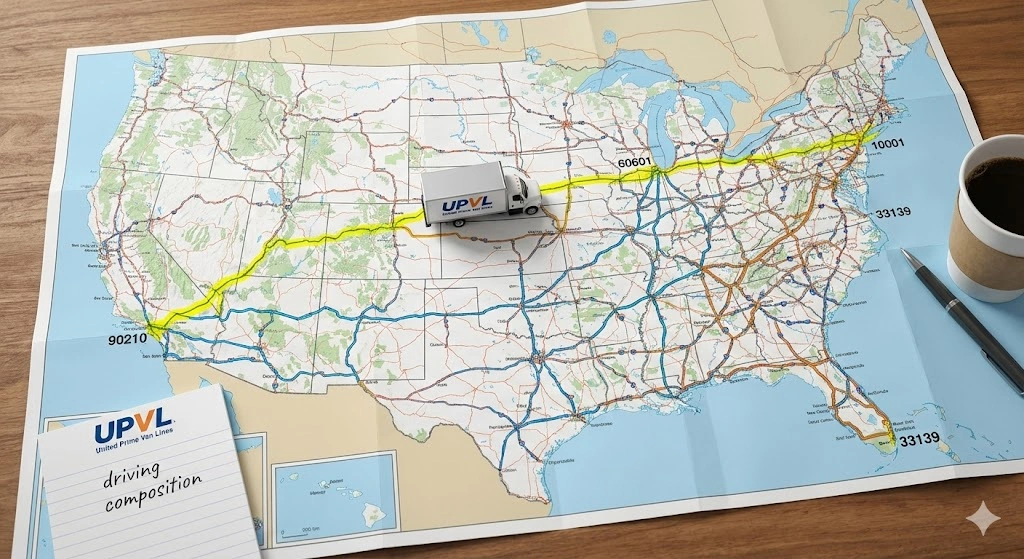
The “Shuttle” Factor: When the Big Truck Can’t Fit
This is one of the most frustrating surprises in moving, but your ZIP code helps us predict it so you aren't blindsided.
For long-distance moves, we typically use 53-foot tractor-trailers. These trucks are massive. They need wide turning radiuses and high clearance.
ZIP Codes That Trigger "Shuttle Service":
- Historic Districts: If your ZIP is in a historic part of town with cobblestone streets or low-hanging oak trees, a semi-truck often legally (or physically) cannot enter.
- Canyon or Mountain Roads: In places like Chatsworth or the Hollywood Hills, winding roads with steep grades are unsafe for heavy rigs.
- Beach Islands: Tight access bridges or narrow coastal roads in places like Key West or barrier islands often ban 18-wheelers.
The Cost Impact: If your ZIP flags a shuttle requirement, we have to:
- Park the big truck at a local depot or large parking lot.
- Rent a smaller "box truck."
- Move your items from the big truck to the small truck (double handling).
- Deliver to your door.
This adds a Shuttle Fee to the quote. It’s better to know this upfront than to have the driver arrive and say, “I can’t get down your street.”
Remote Delivery Charges (Living "Off the Grid")
If you are moving to a major city, you are likely near a freight hub. If you are moving to the middle of nowhere, you are in a "Remote Delivery" zone.
How ZIPs Determine This:
- Major Hubs (Cheaper): Moving from Miami (33132) to Dallas (75201) is efficient. Trucks run that lane constantly.
- Remote Areas (More Expensive): Moving to a rural ZIP code 75 miles from the nearest interstate means the driver has to go way off-route.
- Once they deliver your stuff, they might have to drive "deadhead" (empty) for hours to get back to a paying route.
- Movers often add a Remote Area Surcharge or Delivery Area Surcharge (DAS) for these ZIPs.
How to Use This to Your Advantage
You can’t change your ZIP code, but you can change how you prepare.
- Check Access Yourself: Look at your street. If you rarely see 18-wheelers, or if the garbage truck struggles to turn around, tell us. We might be able to plan a "direct delivery" with a smaller truck from the start, avoiding the shuttle fee double-handling.
- Ask About "Terminal" Options: If you live in a very remote ZIP with high delivery fees, ask if you can pick up your items at the nearest carrier terminal. It’s more work for you, but it can slash the price.
- Verify the ZIP: Typing 33009 (Hallandale Beach) vs 33020 (Hollywood) might seem close, but one might have different tax rates or insurance requirements. Always be exact.
At United Prime Van Lines, we don’t use ZIP codes to judge your neighborhood—we use them to build a realistic battle plan for your move. The more accurate the plan, the more accurate your price.
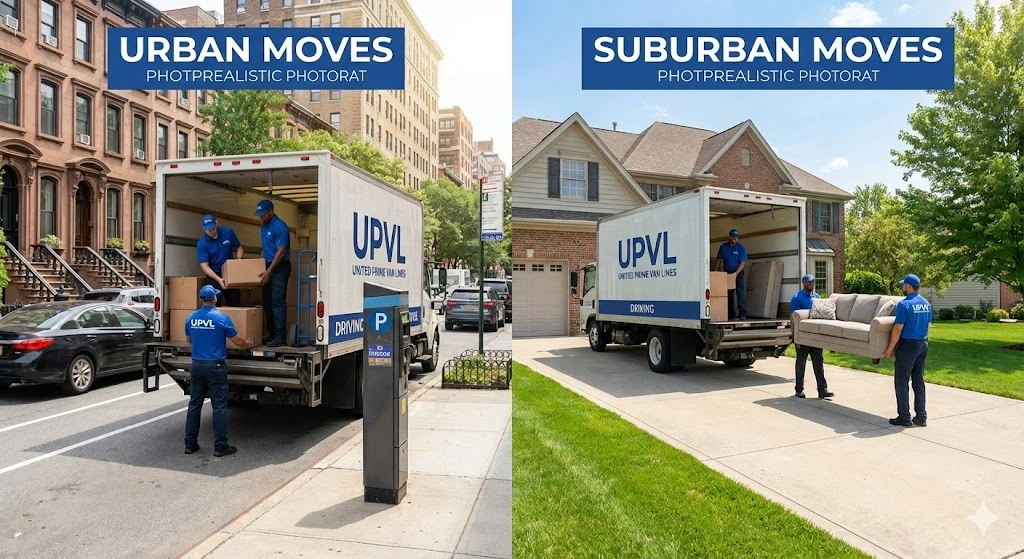
The Bottom Line: Accurate ZIPs = Accurate Quotes
At the end of the day, we don't ask for your ZIP code just to send you junk mail. We ask because it's the GPS coordinate for your entire move's logistics.
Your ZIP code helps us predict:
- How long the drive will actually take (traffic vs. open road).
- Whether we need a big truck or a small shuttle.
- If we need extra crew for elevators or stairs.
- If you are moving into a remote area or a busy hub.
The best way to get an accurate price? Be specific. Don't just say "Miami" or "Los Angeles." Give us the exact ZIP code (e.g., 33139 vs. 33176, or 90012 vs. 91311).
At United Prime Van Lines, we use that data to build a plan that works—so when our truck pulls up, we have the right equipment, the right crew, and the right price.
Why Two People With “The Same Move” Get Different Prices
We hear this one a lot: “My friend moved a 2-bedroom from one city to another and paid X. Why is my price different?”
Let’s translate that into what movers actually see. On paper, it might sound like the same move: “2-bedroom, 900 miles.” But the ZIP codes reveal the truth:
Move A:
- Origin: Second-floor walk-up in a tight urban ZIP (no driveway).
- Destination: Downtown high-rise with elevator reservations and a 3-hour loading dock limit.
- The Reality: High difficulty, high labor hours, potential shuttle fee.
Move B:
- Origin: One-story house with a wide driveway in a suburban ZIP.
- Destination: Another one-story house with easy access.
- The Reality: Back the truck up to the door. Fast load, fast unload.
Same size? Yes. Same move? Not even close.
How to Get a More Accurate (and Fair) Moving Quote
You can use ZIP codes to your advantage to avoid "mystery charges" later.
1. Always Give Both Origin and Destination ZIPs
A quote with only your origin ZIP is a rough guess. A quote with both is a real estimate.
- Why: It allows us to map the exact route, calculate realistic mileage, and see tolls or regional labor costs.
2. Tell Us About Your Access (Before We Ask)
ZIP codes give us a hint, but you know the details.
- “We’re in a high-rise in Hallandale Beach with a service elevator.”
- “Our house in Chatsworth is on a hill with a long driveway.”
- “The new place is in a gated 55+ community with strict hours.” The Result: A locked-in quote with no surprises on move day.
3. Be Flexible With Dates
Certain ZIPs are slammed on the 1st and 30th of the month. If you are flexible, we can sometimes suggest a date with less traffic or better truck availability for your specific route.
How We Handle ZIP-Based Pricing at United Prime Van Lines
We know pricing feels mysterious. Here is exactly how we use your ZIP codes:
- We plug in both ZIPs: To get distance and route.
- We check the area type: Urban (traffic?), Suburban (easy?), or Rural (remote?).
- We ask the questions your ZIP can't answer: Stairs? Elevators? Long walks?
- We explain the "Why": If your ZIP requires a shuttle or extra travel time, we tell you directly.
Our job is to make the process clear enough that you always know what you’re paying for and why.
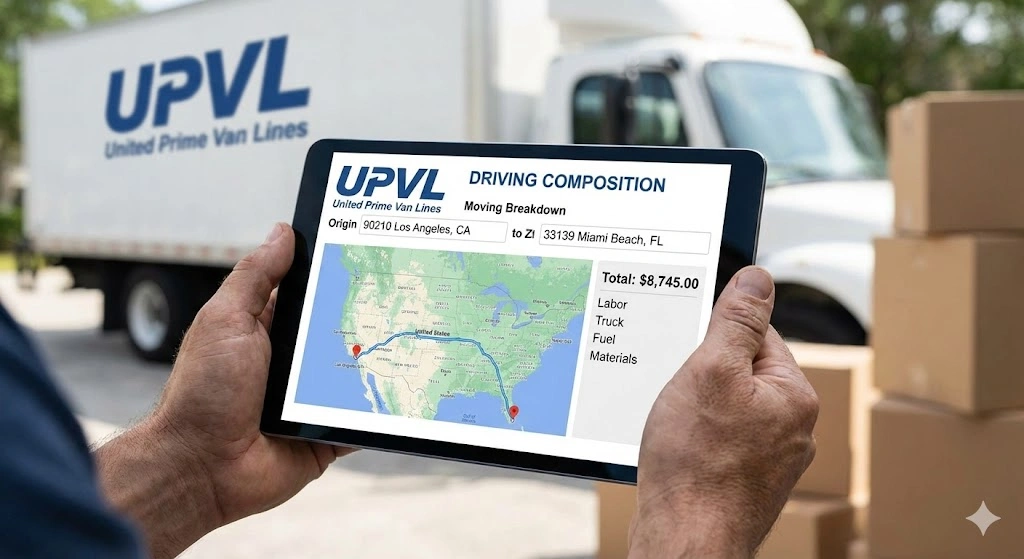
Putting It All Together: What Your ZIP Really Means for Your Move
When you strip away all the industry layers, your ZIP codes mainly affect your moving price because they determine:
- How far we drive.
- How long it realistically takes.
- How hard the access is at both ends.
- How expensive the region is (labor, fuel, tolls).
- How busy that area is when you want to move.
If you keep that in mind, you can look at your quote and say, “Okay, this actually makes sense,” instead of feeling like numbers came out of thin air.
And if something doesn’t make sense? Ask us. We’d rather walk you through each line item than let you sign something you’re not comfortable with.
If you’re planning a move to or from Hallandale Beach, anywhere in South Florida, Chatsworth, CA, or another U.S. city, we’re happy to:
- Look at your ZIPs.
- Explain how they affect your price.
- Help you tweak dates or details to bring the cost down when possible.
That’s literally what we do every day at United Prime Van Lines — take something that feels confusing and turn it into a clear plan you can trust.