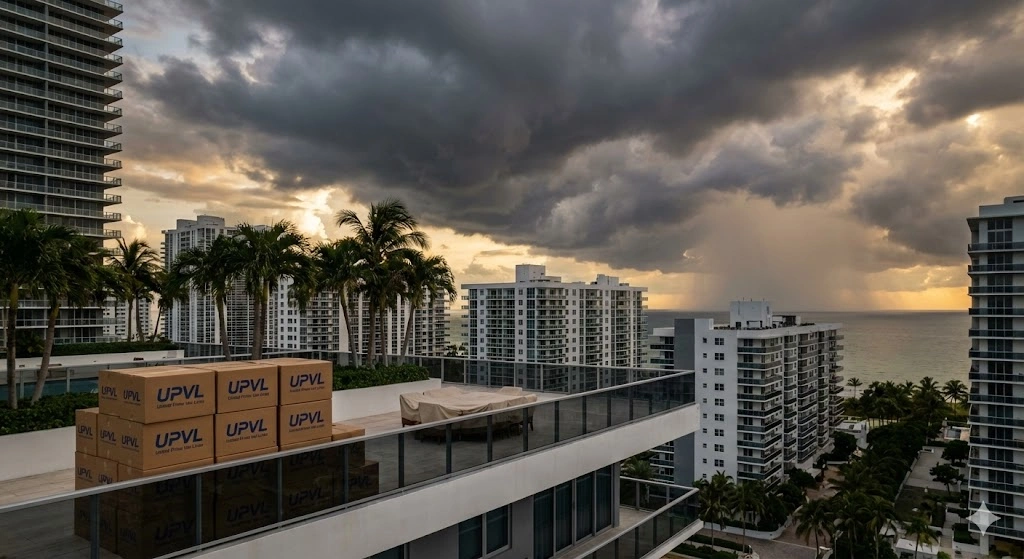
If you’ve lived in Miami for more than one summer, you know the drill: blue skies in the morning, dark clouds by afternoon, and that constant little voice asking, “Is this just a storm… or something bigger?”
Now imagine layering a move on top of hurricane season.
I’ve helped a lot of people relocate in and around Miami during peak storm months. Moving during hurricane season isn’t automatically a disaster; it just requires different planning, different expectations, and a moving team that actually understands life on the coast.
Let me walk you through how I personally think about a Miami move when the tropics are active—and what I advise my clients to do so they don’t lose their minds (or their stuff) if a storm decides to join the party.
Miami’s official hurricane season runs from June 1 through November 30, with the highest activity usually between August and October.
Life doesn’t pause because the tropics are busy. Here’s how to think about timing:
When you book a move during hurricane season, don’t just pick a date and hope for the best. Build in some breathing room.
There’s no magic date, but there are better and worse ways to choose.
1. Watch the Tropics Early If your move is 2–4 weeks away, I peek at the National Hurricane Center outlook. If the Atlantic is heating up, we build in one or two backup dates.
2. Avoid “Storm-Adjacent” Days Even if a system doesn’t hit Miami directly, the days before and after bring feeder bands, heavy rain, and local flooding. I prefer to move before a storm (with confident notice) or several days after to let roads and power issues resolve.
3. Talk to Your Building or HOA Condos often have hurricane policies that shut down moves 24–48 hours before projected landfall. Call your old and new buildings and ask: "How close to a storm can movers still operate?"
Packing during hurricane season is not the same as packing for a sunny day.
Keep this with you, not on the truck:
In Miami storms, we worry about dampness and mold just as much as breakage.
If you use our full-service packing, I build these protections into the plan automatically.
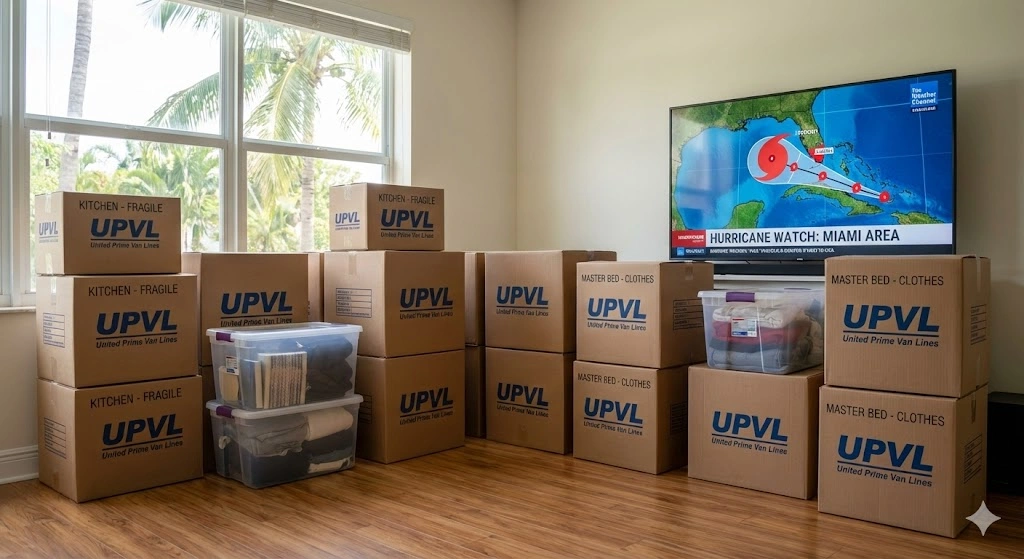
Electronics: Use original boxes or anti-static bubble wrap. Let them acclimate to room temperature before turning them on to prevent internal condensation. Art and Antiques: Canvas art and antiques require custom crates, corner protection, and plastic sheeting. I handle this specifically through our art & antique moving services, wrapping them assuming the weather might shift while in transit.
If Miami-Dade is under an official hurricane warning, we are not putting trucks on the road in dangerous conditions.
That said, not every tropical system shuts down a move. We look at wind speeds, flood risks, and building rules. Sometimes we can complete the move by starting earlier or shifting by a day. I talk openly about rescheduling policies and prioritize clear communication so you are never left in the dark.
If a storm is potentially on the way:
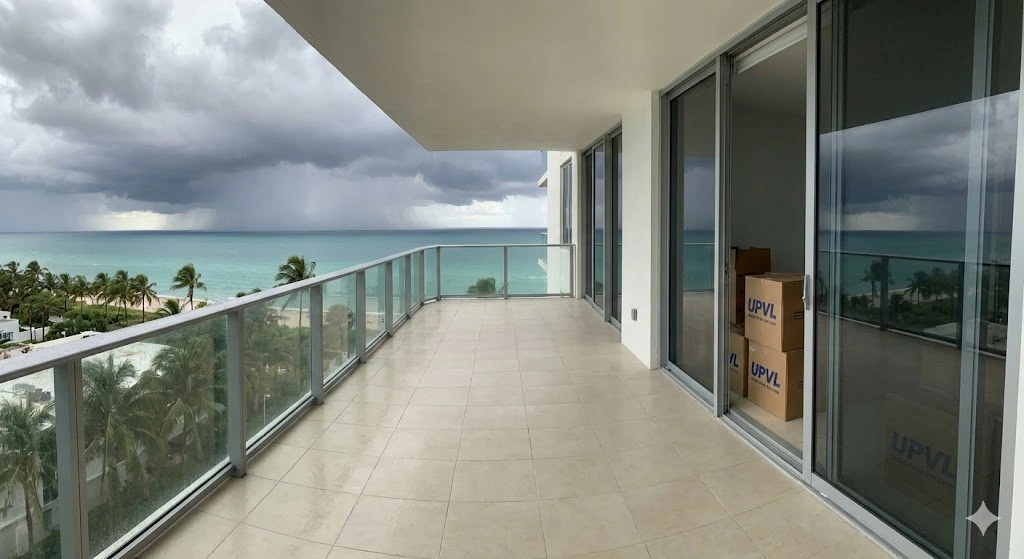
When we handle local moving in Miami during hurricane season, you have advantages:
The biggest thing is having a moving team that knows local streets, flood-prone areas, and building quirks.
When you move during hurricane season, you don’t just need “a mover”—you need a calm, experienced partner who isn’t fazed by forecasts.
If you’re staring at your calendar and the words “September” or “October” are glaring back at you, you’re not alone. When you move with United Prime Van Lines, I bring the experience, the planning, and the backup options so you’re not navigating the storm season alone.