If you’re planning a move in or around Chatsworth, CA, you’re probably realizing something: on paper it looks simple, but in real life it’s a lot.
Packing, HOA rules, parking permits, fragile stuff, kids, pets, work, deadlines… and it all lands on one day.
The Local "Personality": We work with a lot of families and businesses around the San Fernando Valley and the northwest side of LA, and Chatsworth has its own unique moving "personality."
- It's not just "LA traffic."
- It's the mix of sprawling horse properties, strict gated communities, and tight commercial zones.
This guide is everything we wish people knew before they call us, and everything we always end up explaining on the phone anyway.
What We Will Cover: We’ll walk you through how moving in Chatsworth actually works, including:
- What to look for in a local mover.
- The specific realities of the area (heat, terrain, access).
- How United Prime Van Lines structures a stress-free move in the Valley.
What Makes Moving in Chatsworth a Bit Different
Chatsworth is not Hollywood, and it’s not Downtown LA. That’s both the good news and the tricky part. It has a mix of rural equestrian charm and industrial grit. Let’s break down the local factors that really matter on moving day.
Typical Homes and Access Issues
In Chatsworth, we aren't usually dealing with high-rise elevators. Instead, we see:
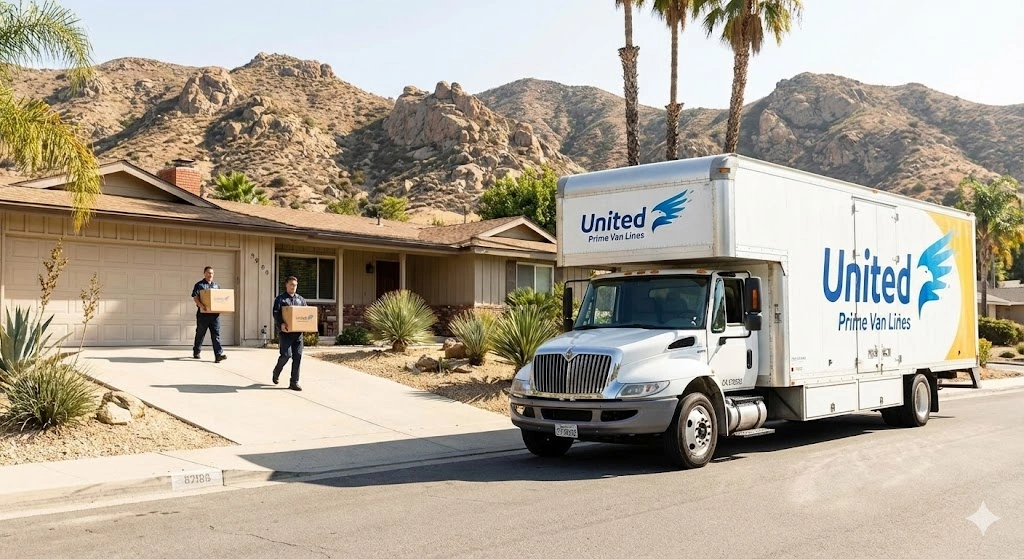
- Single-family homes with long driveways or cul-de-sacs.
- Gated communities and HOAs with very specific rules.
- Townhomes and small apartment complexes with tight parking.
- Light industrial/Office spaces (especially near De Soto, Lassen, and Nordhoff).
Those details affect everything: what size truck we bring (26-foot vs. 16-foot), how many movers we recommend, and how we plan access.
The "Chatsworth Factors" (What We Run Into A Lot)
1. The "Hillside" Driveway Chatsworth has a lot of properties backing up to the Santa Susana Mountains.
- The Issue: Long uphill or steep downhill driveways where a heavy 26-foot moving truck simply cannot drive without scraping the bottom or getting stuck.
- The Solution: We may need to park on the street and use dollies and "speedpacks" to shuttle items up or down.
- Note: This adds time and labor (often called a "Long Carry"). If we know about the slope in advance, we can bring a smaller "Shuttle Truck" to ferry items back and forth.
2. Strict HOA & Gate Rules Whether it's Indian Springs or a smaller townhouse complex, the rules can be tight.
- The Restrictions: We’ve seen HOAs that only allow moves between 9:00 AM and 4:00 PM, prohibit trucks from idling at gates, or require a specific "Service Entrance."
- The Fix: Before you book your date, call your HOA and ask: "Are there specific move-in/move-out hours? Do I need to reserve a parking spot for the truck?"
3. Tight Parking in Townhome Complexes If you are south of Devonshire, parking can get tight.
- The Strategy: We often need to secure space with cones early in the morning or coordinate with management to block off a "Loading Zone." If we know this early, we can plan for it so we don't end up blocking your neighbors (and getting you a fine).
Weather and Timing: The "Valley Heat" Factor
If you are new to the area, you might underestimate the microclimate. Chatsworth is deep in the San Fernando Valley. Summers aren't just warm; they are hot and dry.
Why the Heat Matters:
- Item Protection: Candles will melt. Vinyl records will warp. Electronics can overheat if left in the sun.
- Crew Pacing: Moving heavy furniture in 100°F heat requires strategy. We pace our crews with hydration breaks to ensure they keep their energy (and care) high until the very last box is unloaded.
Our Recommendations for Summer Moves (July–September):
- The "Early Bird" Rule: We almost always recommend an 8:00 AM or 9:00 AM start time. Beating the midday sun makes the load-out faster and safer.
- Heat-Sensitive Items: You need to identify these before they go on the truck. If the back of the truck gets hot, these items suffer:
- Candles: (Pack these in a cooler or take them in your personal car).
- Artwork (Oil Paintings): Direct sun can damage them.
- Musical Instruments: Especially string instruments (guitars, violins) which can crack with rapid temp changes.
- Electronics: Computers and TVs should not sit on the sidewalk in direct sunlight for long.
Winter Moves (Rain & Hills): While rare, winter rain in Chatsworth can make steep driveways incredibly slick.
- The Slippage Risk: If your home has a steep, paved incline, let us know. We may need to park at the bottom and shuttle items up to avoid the truck sliding.
- Floor Protection: We bring floor runners and extra pads standard, so we don't track mud onto your carpets.
Local Traffic Patterns That Actually Matter
Chatsworth isn’t gridlocked Downtown LA, but the roads feeding in and out have their own rhythm. Ignoring them can add hours (and dollars) to your move.
The Major Bottlenecks:
- The 118 (Ronald Reagan Fwy): It flows well mid-day, but during commute hours (7-9 AM and 3-6 PM), it can be a parking lot.
- Topanga Canyon Blvd & De Soto Ave: These are the main arteries. School traffic in the morning and trade traffic in the afternoon can slow a 5-mile drive into a 30-minute crawl.
- The "Passes": If you are moving out of Chatsworth towards the Westside (via Topanga) or Simi Valley (via Santa Susana), those canyon roads are slow for heavy trucks.
Why This Matters for Your Bill (The "Double Drive Time" Law): In California, the Public Utilities Commission (CPUC) requires movers to charge "Double Drive Time" for the time between pickup and delivery.
- What it means: If it takes 30 minutes to drive from your old house to your new house, you are legally billed for 60 minutes of labor for that leg.
- Why it exists: It covers the crew's time getting to the origin and back from the destination, so you don't get charged a separate "fuel surcharge" or "trip fee."
- The Takeaway: Sitting in traffic on the 118 literally costs you money. This is why we push for mid-morning transports (10 AM - 2 PM) whenever possible.
Timing Strategies:
- School Zones: Chatsworth has several large schools (Chatsworth High, Sierra Canyon, etc.). We try to avoid routing trucks past them at 8:00 AM or 3:00 PM.
- Elevator Cut-Offs: If you are moving into a condo complex, check if their freight elevator closes at 5:00 PM. If we hit traffic and arrive at 4:30 PM, we might not finish in time.
How to Choose a Moving Company in Chatsworth (Without Regrets)
We’re obviously in the moving business ourselves, but we’d rather you choose any solid, honest mover than a cheap, shady one. Here’s exactly what we’d tell a friend to look for.
1. The "Cal-T" License Check (Non-Negotiable)
In California, the rules are strict. Every legitimate mover must be licensed by the California Public Utilities Commission (CPUC).
- The "Cal-T" Number: This is the magic number. It looks like Cal-T-190475.
- Where to Look: By law, this number must be painted on their truck, listed on their website, and printed on every advertisement.
- The Test: If you ask for their "Cal-T Number" and they hesitate, hang up. They are likely operating illegally.
2. Verify "Workers' Comp" Insurance
This is arguably more important than cargo insurance.
- The Risk: If an uninsured mover slips on your driveway or hurts their back lifting your sofa, you could be liable for their medical bills.
- The Ask: Ask specifically: "Do you carry Workers' Compensation for your crew?" A legitimate company will say "Yes" immediately and can prove it.
3. Understand "Double Drive Time" (It's Not a Scam!)
This is the most confusing part of California moving law, but you need to know it so you don't think you're being ripped off.
- The Law: The CPUC requires movers to charge Double Drive Time for the time between your old home and your new home.
- How It Works: If it takes 30 minutes to drive from Chatsworth to Porter Ranch, the mover is legally required to bill you for 60 minutes of labor for that leg of the trip.
- Why? This covers the crew's time getting to the origin and back to their headquarters, so they don't charge you a separate "fuel surcharge" or "trip fee."
- The Red Flag: If a mover says "We don't charge Double Drive Time," they are either breaking the law or hiding the cost somewhere else.
The United Prime Standard
We’re always ready to share our Cal-T Number and insurance details because we deal with building managers and HOAs all the time. We follow the CPUC rules to the letter—no hidden fees, no "cash only" surprises.
How Quotes Really Work (And Where People Get Burned)
Most people look at one thing: the hourly rate. They see "$119/hr" and think it's cheaper than "$139/hr." Do not be fooled. The hourly rate is only half the story.
Ask These 3 Questions to Avoid Surprise Bills:
1. "Are packing materials included in the hourly rate?"
- The Trap: Most California movers charge for "consumables" separately.
- The Reality: The moving pads (blankets) are usually free to use, but the tape and shrink wrap used to secure those pads are not.
- The Cost: If a company charges $6.00 per roll of tape and uses 30 rolls, that’s an extra $180 on your bill you didn't expect.
- Our Advice: Ask for the "Material Price List" upfront.
2. "What are the 'Accessorial Charges'?"
Beyond the clock ticking, look for these specific fees that hit Chatsworth homes hard:
- Long Carries: If the truck can't get within 75 feet of your front door (common with long driveways), is there a fee?
- Stairs/Elevators: Do they charge per flight of stairs?
- Bulky Items: Is there a flat fee for that Peloton, gun safe, or upright piano?
3. "When does the clock start and stop?"
- The California Standard: For local moves, the clock usually starts when the crew arrives at your door and stops when they finish at the new house.
- The Drive Time: Remember the Double Drive Time law we mentioned? That covers the crew getting to/from the warehouse.
- The Warning: If a mover says the clock starts "When we leave our yard in Riverside," run away. You shouldn't pay for their commute if they are stuck in traffic on the 405.
The United Prime Promise: When we give a quote, we walk through all of this. We calculate the truck access, the stairs, and the estimated materials. We’d rather slightly overestimate and give you a happy surprise (a lower bill) than lowball you and hand you a surprise invoice on moving day.
Red Flags to Watch for When Hiring Movers
If you hear or see any of these warning signs, pause immediately. These are the hallmarks of a "Hostage Load" scam.
1. The "Blind Price" Tactic
- The Scam: “Don't worry, we’ll weigh the truck and tell you the final price after we load everything.”
- The Reality: Never let them load the truck without a signed estimate. In California, you are entitled to a "Not To Exceed" price in writing before the move begins.
2. The "Cash Upfront" Demand
- The Scam: Asking for a large cash deposit (50%+) via Zelle or CashApp before the move day.
- The Reality: A small deposit ($50-$100) to reserve the date is normal. Asking for half the money before lifting a box is not.
3. The "Ghost Office"
- The Scam: No physical address on the website, or the address leads to a UPS Store or a residential house on Google Maps.
- The Reality: If they don't have a yard for their trucks, they might be a "Broker"—a middleman who sells your job to a random guy with a rental truck. Always hire a local Carrier with their own fleet.
4. The "Insurance" Vague-Talk
- The Scam: “We are fully insured, don't worry about it.”
- The Reality: If they can't explain the difference between Basic Valuation ($0.60/lb) and Actual Cash Value, they are hiding something. A pro will explain exactly what happens if your TV breaks.
The United Prime Standard: A legitimate mover will put everything in writing, explain your coverage options clearly (including the awkward "what if it breaks" conversation), and never get defensive when you ask for proof of their license.
Local Moves in Chatsworth: What “Local” Really Means
In the moving world, "local" isn't just a feeling—it's a legal definition that determines how you pay.
1. The "100-Mile" Rule (Local Moves)
In California, the Public Utilities Commission defines a "Local Move" as any move under 100 air-miles between the origin and destination.
- The Pricing: By law, these moves are billed by the hour.
- The Territory: If you are moving within Chatsworth or to nearby neighbors like Northridge, Porter Ranch, Canoga Park, Simi Valley, or Woodland Hills, you are in "Local" territory.
- The Strategy: Since you are paying for time, preparation is money. The more organized you are (boxes packed, pathways clear), the lower your final bill will be.
2. The "Intrastate" Move (Over 100 Miles)
If you are moving from Chatsworth to San Francisco, Sacramento, or San Diego, the rules change.
- The Pricing: These are usually priced by Weight (lbs) or a Flat Rate, not by the hour.
- Why: Traffic and distance become too unpredictable for hourly billing to be fair.
3. The "Long-Distance" Move (Crossing State Lines)
Moves from Chatsworth to Nevada, Arizona, Texas, or Florida fall under Federal (DOT) laws.
- The Pricing: This is strictly based on the Volume (Cubic Feet) or Weight of your inventory and the mileage.
- The Logistics: These moves require detailed inventory lists and strict delivery windows.
The United Prime Approach: We handle all three types. Whether you are moving 5 miles down Devonshire St or 2,000 miles to Miami, we have the trucks and the licenses for it. But we explain the pricing model before you book so you know if you are watching the clock or watching the scale.
A Realistic Timeline for a Local Chatsworth Move
For a standard 2–3 bedroom home in Chatsworth, if you’re staying within the West Valley (Northridge, Porter Ranch, Canoga Park) and are reasonably packed, a typical timeline usually looks like this:
- 8:00 – 9:00 AM: Arrival & Prep. (Note: If you live in a gated community like Indian Springs or Porter Ranch, the guard gate often won't let heavy trucks in until 9:00 AM. Check this beforehand!)
- 9:00 – 12:00 PM: The Load. Furniture is wrapped, beds disassembled, and boxes stacked.
- 12:00 – 12:45 PM: The Drive.
- Chatsworth to Northridge: ~15 mins.
- Chatsworth to Simi Valley: ~20-30 mins (via 118).
- Chatsworth to Woodland Hills: ~30-40 mins (Topanga Canyon traffic).
- 1:00 – 4:00 PM: The Unload. Reassembly of beds and final placement.
What Can Break This Schedule?
- The "Gate Line": In Porter Ranch, waiting in line at the visitor gate can burn 20 minutes if the guard has to call you for authorization.
- The "Not-Quite-Packed" Box: If the crew has to stop to pack your kitchen because you ran out of time, add 2–3 hours immediately.
- The "118 Afternoon Wall": If the move runs late and we are driving West on the 118 after 3:00 PM, traffic can double the drive time.
Our Advice: We usually recommend planning your move day as if it’s a full-day project. Don't schedule a cable installation or a dinner reservation for 5:00 PM. Give yourself a buffer so you aren't stressed if traffic on Topanga Canyon adds 30 minutes.
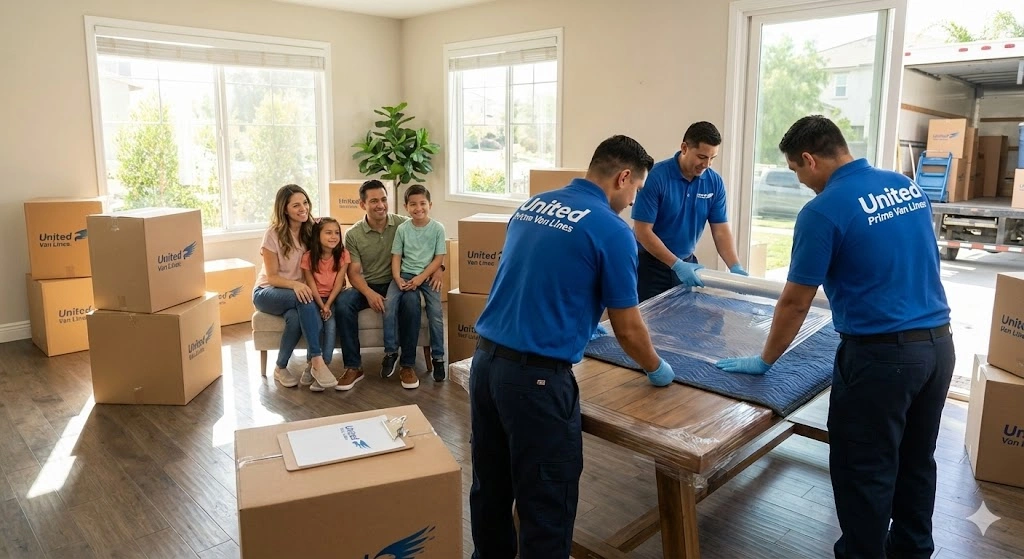
Packing for a Chatsworth Move: Smart, Not Perfect
You don’t have to pack like a professional mover (unless you want to). You just need to pack in a way that doesn’t slow the crew down or put your stuff at risk.
What to Pack Yourself (And What to Let Us Handle)
The most popular option in Chatsworth is the "Partial Pack." You do the easy stuff; we do the scary stuff.
Great to Pack Yourself (The "Safe" Stuff):
- Clothes: Leave dressers full? Usually fine if it's just clothes (remove jewelry/perfume). For hanging clothes, use Wardrobe Boxes.
- Books: Use small boxes only. (Book boxes should never weigh more than 40 lbs).
- Linens & Towels: These make great cushioning for other boxes.
- Non-Breakable Kitchen: Tupperware, pots, pans, and utensils.
Better to Let Us Pack (The "High-Risk" Stuff):
- The "China" Barrel: Kitchen glassware, stemware, and plates. If you pack these yourself and they break inside the box, movers generally cannot be held liable (it's called "Packed By Owner" or PBO).
- Large Mirrors & Art: We have telescoping mirror cartons specifically for this.
- Large Electronics (TVs): If you don't have the original box, let us crate it. Wrapping a 75" OLED screen in a blanket is rarely enough protection.
The "Valley Dust" Factor: Chatsworth gets dusty, especially during Santa Ana winds.
- Tip: If you are moving items into a garage or storage unit, use plastic bins with tight lids rather than cardboard boxes. Cardboard attracts silverfish and lets dust in over time.
The United Prime Approach: You’re not locked into "All or Nothing." We can just pack the kitchen and the Master Bedroom closet, or we can pack the entire house. We customize the labor to fit your budget and your stress level.
How Many Boxes Do You Actually Need? (The "Valley" Estimate)
Most online calculators underestimate because they assume you live in a minimalist downtown loft. In Chatsworth, where people have garages, sheds, and backyards, the reality is different.
Realistic Box Counts:
- Studio / 1 Bedroom: 20–35 boxes
- 2 Bedrooms: 40–60 boxes
- 3 Bedrooms: 70–100 boxes
- 4+ Bedrooms (with Garage): 120–150+ boxes
The "Chatsworth Factor" (What Everyone Forgets): If you have a garage or a shed, add 20 extra boxes immediately.
- Garage Shelves: People forget that three shelves of tools, holiday decor, and camping gear can easily fill 15 medium boxes.
- Outdoor Gear: Chatsworth is horse and hiking country. Saddles, tack, bikes, and patio cushions take up massive volume. (Note: We have special "Speed Packs" for large, awkward items like cushions and lamps).
How to Get It Right: We can help estimate during a virtual or in-person walkthrough. A quick 10-minute video call where you open the closets and show us the garage saves you from running to Home Depot at 10 PM on the night before the move.
Labeling Boxes the Right Way (So Unpacking Isn’t a Nightmare)
We’re not picky about style, just consistency. But there is one "Golden Rule" of labeling that will save you hours of searching later.
The Golden Rule: Label the SIDE, not the TOP.
- Why: When we load the truck or stack boxes in your new living room, they go 4 or 5 high. If you wrote "Kitchen" on the top flaps, that label is now covered by another box.
- The Fix: Write the room name big and bold on the side of the box.
Our Favorite Simple System:
- The Destination (Big Letters): Write the room where it goes, not where it came from. (e.g., "MASTER BEDROOM," "KITCHEN," "GARAGE").
- The Contents (Small Letters): Add 1–2 words so you know what's inside. (e.g., "Pots & Pans," "Winter Clothes," "Tax Docs").
- The Warnings: Mark FRAGILE on at least two sides. Use red marker if possible.
- The "Essentials" Box: Mark 2-3 boxes as "OPEN FIRST" or "DO NOT LOAD" (for your car). Put your coffee maker, toilet paper, chargers, and bed sheets in here.
Why It Matters to Us: We follow your labels religiously. If a box says "OFFICE – NEAR DESK," we will try to place it exactly there. If it just says "STUFF," it’s going in the middle of the living room, and you’ll have to move it twice.
Special Considerations for Chatsworth Homes and Buildings
Moving Out of or Into Apartments and Condos
Chatsworth has a mix of older, low-rise apartments (especially near Topanga Canyon Blvd) and newer, stricter condo communities. Each has its own quirks.
1. The "Underground Garage" Trap:
- The Issue: Most apartment garages in the Valley have a clearance of 7 feet. A standard moving truck is 12 to 13 feet tall.
- The Reality: We usually cannot drive the moving truck into your building's garage.
- The Plan: We need to know where the "Loading Zone" is. If the only option is street parking, we need to check for Red Curbs (Fire Lanes) or Permit Zones.
2. Talk to Your Building Manager (The Checklist): Before your move date, ask these three questions:
- "Do you need a COI?" (Certificate of Insurance). Many buildings require us to name them as an "Additional Insured" on our policy. We do this for free, but we need 24-48 hours notice.
- "Are there moving hours?" Some buildings strictly forbid weekend moves or stop all freight elevators at 5:00 PM sharp.
- "Is there a Freight Elevator?" If yes, you often need to reserve it in a 4-hour block. If you don't reserve it, we might be stuck fighting neighbors for the single passenger elevator.
3. Street Parking & Permits: If your building doesn't have a loading dock, we might need to park on the street.
- Yellow Zones: These are for commercial loading (that's us!).
- Residential Permits: If you live on a street with permit parking, let us know. We may need to use your guest permits for the crew's personal vehicles or the shuttle van.
The United Prime Approach: We deal with these logistics every week. If your building needs a COI, just email us their requirements (sample PDF), and our office will handle it. We don't want you stressing about insurance limits on moving day.
Moving From a House With a Big Garage or Backyard
In Chatsworth, the garage isn't just a place for cars; it's often a workshop, a storage unit, and a gym rolled into one. This is usually the hardest room to pack.
The "Hidden Volume" of the Garage: We often find:
- Tools & Workbenches: Heavy, awkward, and often greasy.
- "The Time Capsule": Old boxes in the rafters that haven't been opened since 2005.
- Horse Tack: Saddles and stable gear take up surprising amounts of space (and need special care).
- Appliances: Spare freezers or "beer fridges."
Our Advice for the Garage:
- Start Here First: Do not leave the garage for the night before. Start sorting it 2–3 weeks early.
- The "Purge": This is the best time to donate that broken lawnmower or the bikes the kids outgrew.
- Hazardous Materials (The "No-Go" List): For safety and insurance reasons, we CANNOT transport:
- Propane Tanks: (Even for the BBQ grill). You must transport these yourself.
- Gas Cans: Even if empty, the fumes are dangerous in a hot truck.
- Paint & Chemicals: Thinners, solvents, or open paint cans.
- Ammunition: Please transport this in your personal vehicle.
Handling the Heavy Stuff: On move day, we have the lift gates and appliance dollies to handle:
- Workbenches & Tool Chests: (Please empty the drawers of loose tools first!).
- Freezers: Crucial: These must be emptied and defrosted 24 hours in advance. If they leak water onto someone’s mattress in the truck, it’s a disaster.
- Large Safes & Gym Equipment: We need to know the weight of gun safes or Pelotons beforehand to bring the right dolly.
The Gas Line Rule: We can move your dryer and your BBQ grill, but you must disconnect the gas lines yourself (or hire a plumber) before we arrive. Our crews are movers, not licensed gas technicians, and we cannot touch gas valves for liability reasons.
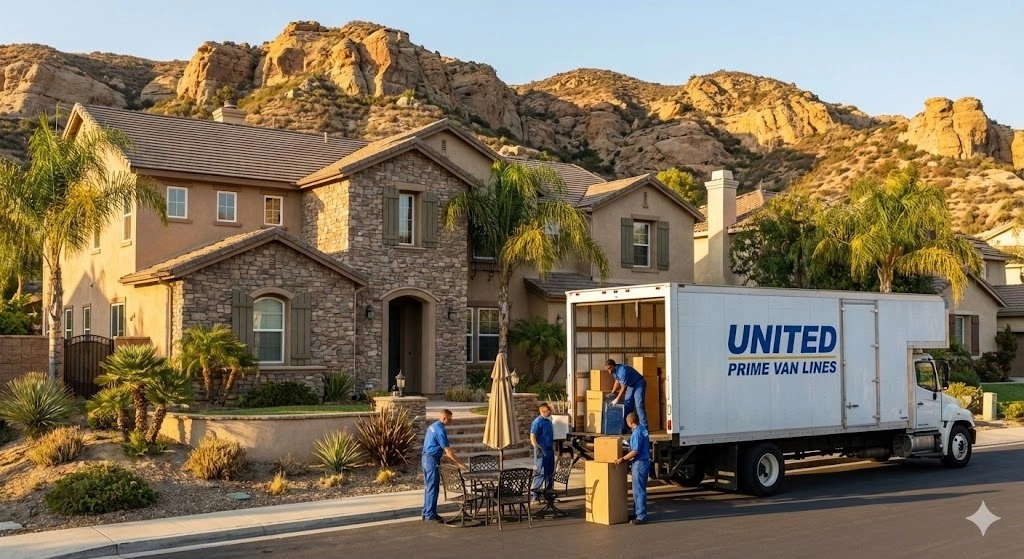
How We Plan a Chatsworth Move (The United Prime Process)
We don't believe in "winging it." Moving days are stressful enough without surprises. Here is how we structure a typical move, step by step, so you know exactly what to expect.
Step 1: The Discovery Call (No Rush, No Pressure)
You can call us, fill out a form, or request a callback. But we won't just throw a random price at you in 30 seconds. To give you an honest quote, we need to understand the logistics.
On that first call, we will ask:
- The "Where": Exact addresses matter. Moving from a flat street in Northridge is different than moving from a steep hill in Chatsworth.
- The "What": Is it a 2-bedroom condo or a 4-bedroom ranch with a guest house? Do you have a garage? A shed? A storage unit?
- The "Heavy Hitters": Do you have a piano, a gun safe (over 300 lbs), a Peloton, or large antique cabinets?
- The Access: Are there stairs? Elevators? Long carries? Gate codes?
The "Virtual Survey" (The Game Changer): For anything larger than a 1-bedroom apartment, we highly recommend a Virtual Walkthrough.
- How it works: You hop on a quick video call (FaceTime/Zoom) and walk us through your home.
- Why it helps: We can see the volume of boxes, the size of the furniture, and the access challenges before move day. This allows us to give you a Binding Estimate or a much more accurate "Not-To-Exceed" price, rather than a wild guess.
Step 2: We Build a Customized Plan (The "No Surprise" Blueprint)
Based on the survey, we don't just give you a number; we give you a strategy.
What Goes Into Your Plan:
- Crew Size Strategy: We calculate the "Efficiency Point."
- Example: For a 3-bedroom home in Chatsworth with stairs, hiring 4 movers is often cheaper than hiring 3. The 4th man keeps the truck pack tight while the others run boxes, cutting total labor hours significantly.
- Truck Access: We check Google Earth. If you have a long, winding driveway off Topanga Canyon, we might send two 16-foot trucks instead of one 26-footer to avoid getting stuck.
- The "Red Flags": We list potential extra costs upfront. If you have a 300lb marble table or a "Long Carry" (distance from door to truck), we note it now—not on moving day.
The Written Estimate: You get a detailed, itemized PDF. We don't just text you a price. You will see:
- The hourly labor rate (and crew size).
- The estimated material costs (tape, shrink wrap).
- The Double Drive Time calculation.
- Valuation (Insurance) options.
Total Flexibility: If the quote is higher than your budget, talk to us. We can adjust the plan.
- Option A: We pack everything (Full Service).
- Option B: You pack the boxes, we move the furniture.
- Option C: We just move the "Big Stuff" (sofa, beds, appliances), and you move the boxes in your pickup truck over the weekend.
Step 3: Move Day (What Actually Happens)
On the day of your move in Chatsworth, here is the playbook we follow:
1. Arrival & The "Captain's Walk"
- The Arrival: We show up within the agreed window (e.g., 8:00 AM – 9:00 AM).
- The Walkthrough: Before we lift a single box, the Foreman walks the house with you.
- Your Job: Point out the fragile antiques, the items that are staying behind (the "Do Not Move" pile), and any scratches that were already there.
2. Prep & Protection (Before the Lifting)
- Floor Protection: We lay down runners to protect your hardwood or carpet, especially in high-traffic hallways.
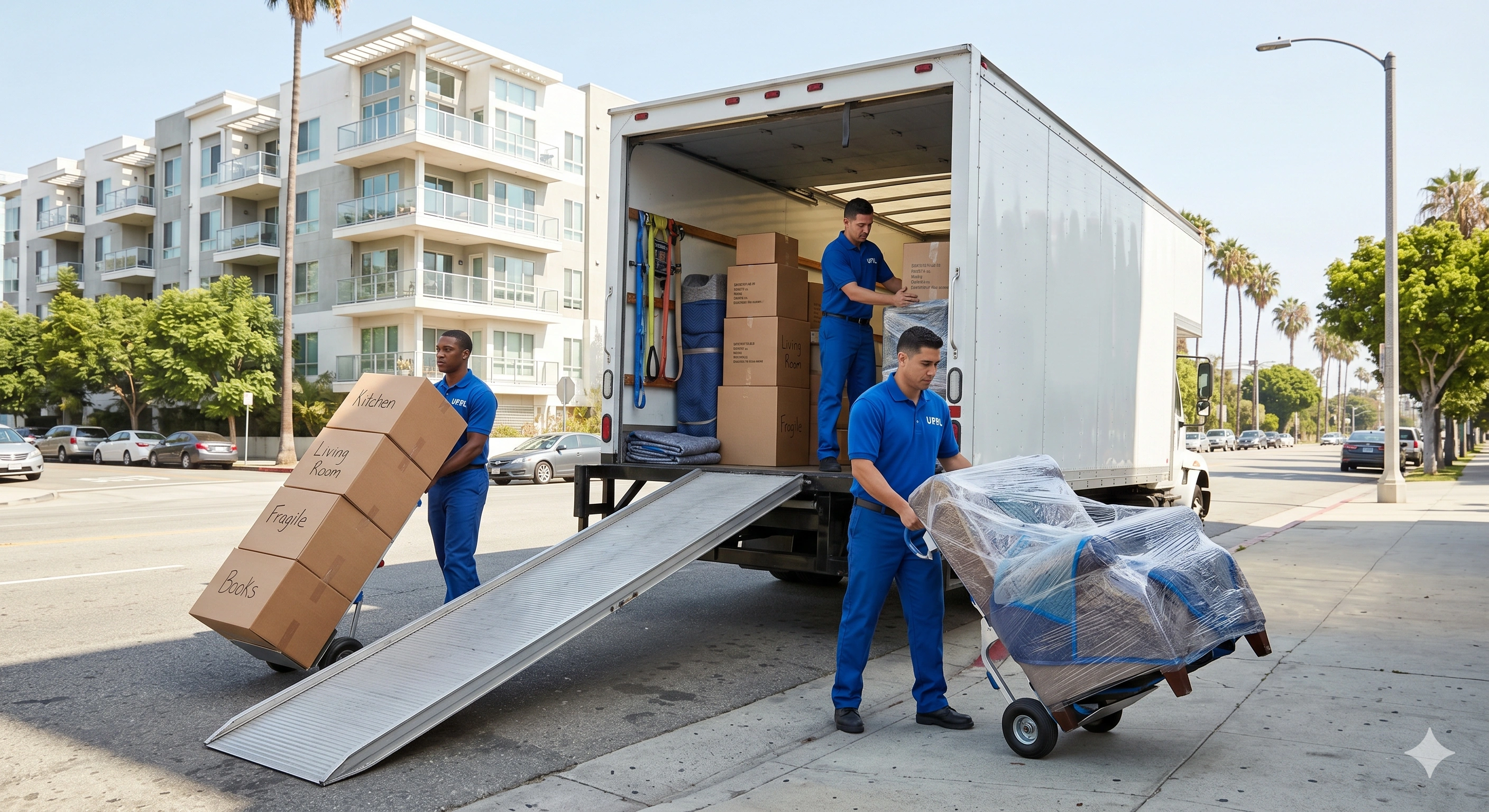
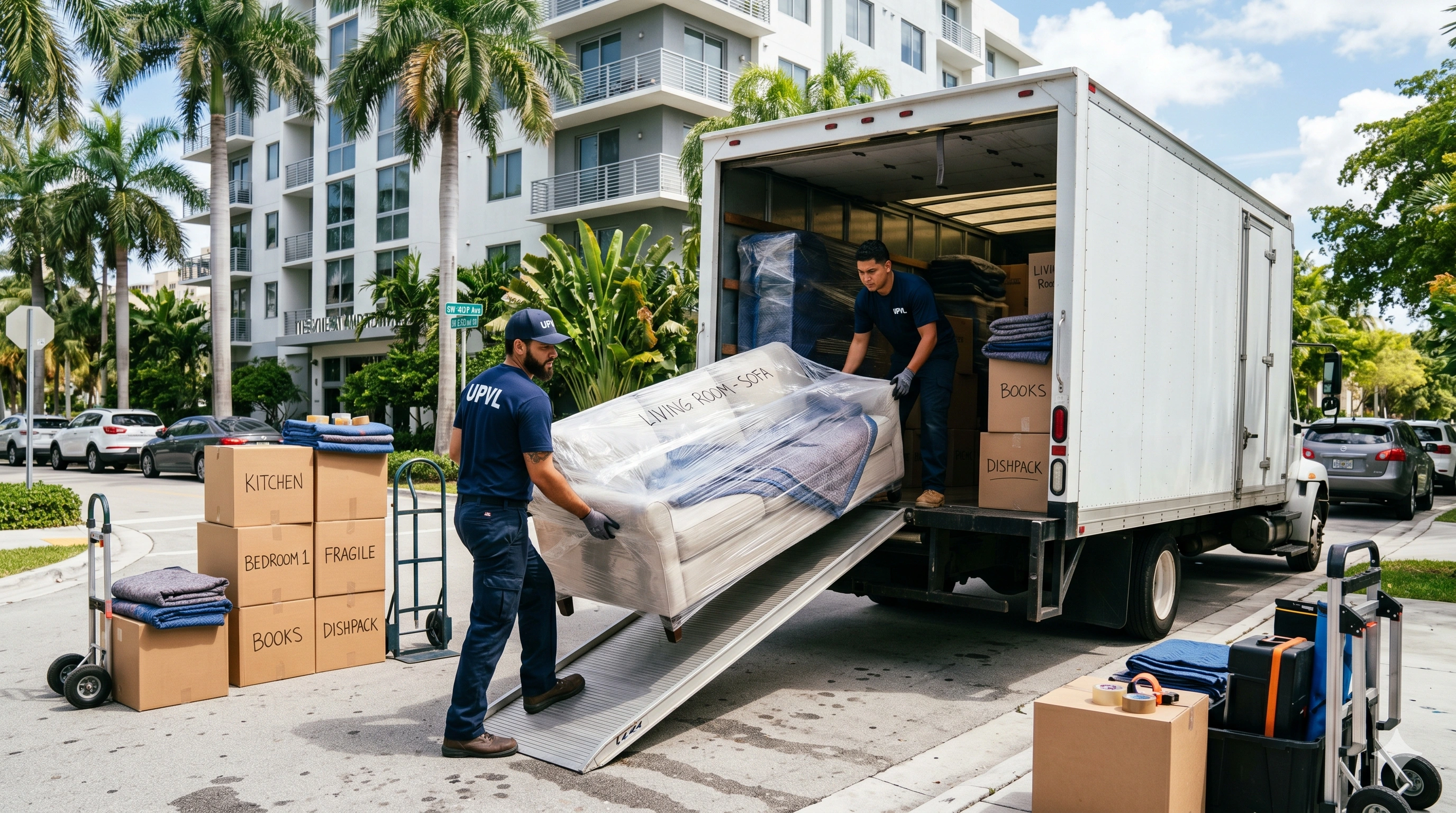
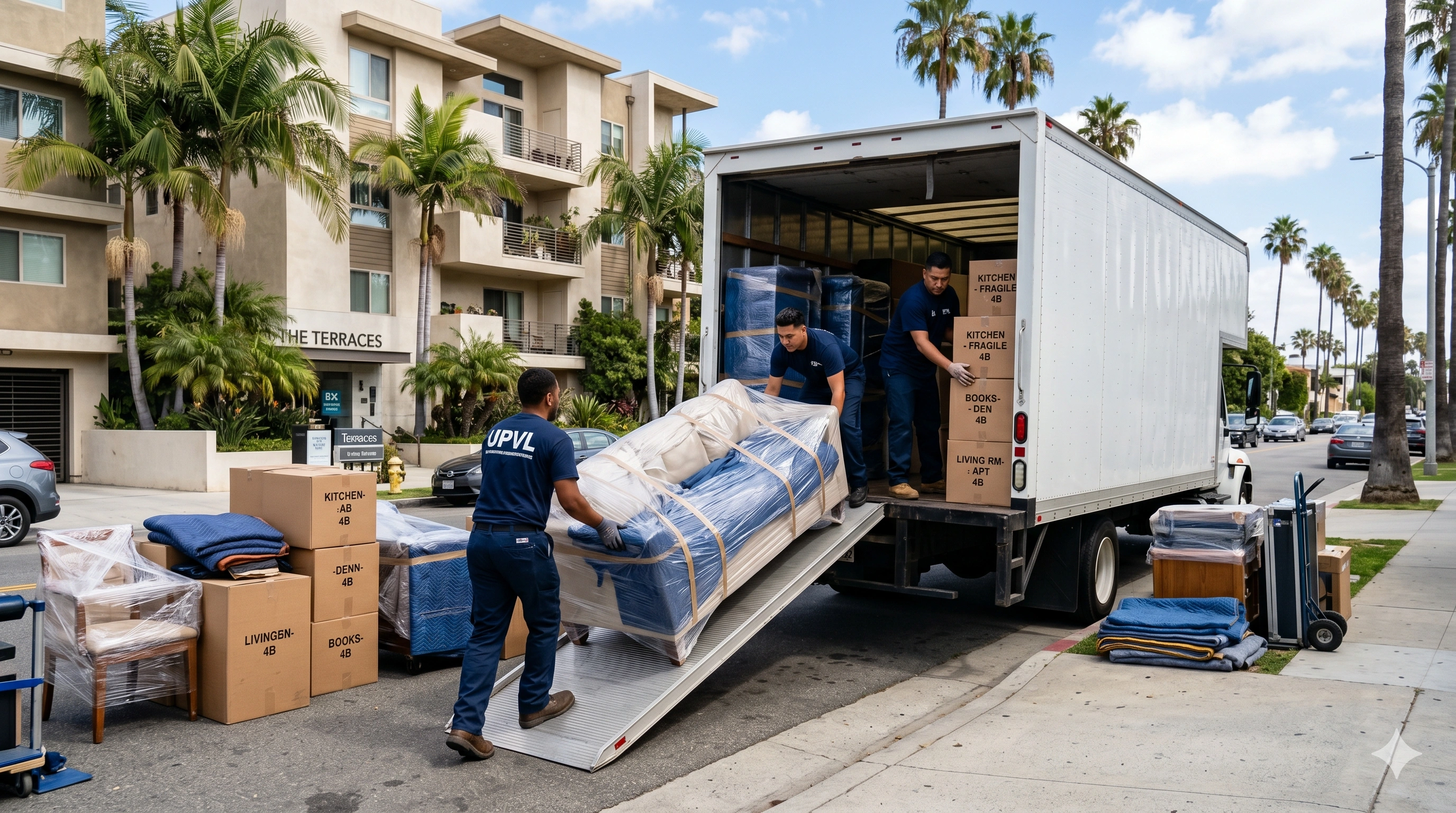
- Furniture Wrapping: We wrap your furniture inside the house, not out at the truck. Every dresser, table, and sofa gets pad-wrapped and shrink-wrapped to prevent dings on door frames.
- Disassembly: We take apart the beds, remove mirror backs from dressers, and detach legs from dining tables. We keep all screws in labeled bags.
3. The Load (Tetris Mode)
- The Stack: We load heavy items (appliances, dressers) at the bottom and lighter items (boxes, chairs) on top.
- The Lock: We use straps and logistics bars to lock rows in place so nothing shifts, even if we hit a pothole on the 118 Freeway.
4. The Transport
- The Drive: We drive carefully because we’re carrying your life, not just "stuff."
- The Communication: If we hit traffic on Topanga Canyon or need to stop for fuel, the driver will keep you updated on the ETA so you aren't waiting at the new house wondering where we are.
5. Unload & Reassembly
- Placement: We don't just dump boxes in the garage (unless you ask us to). We place furniture in the specific rooms you requested.
- Reassembly: We put the beds back together first so you can sleep that night. We reattach table legs and mirror backs.
- The Final Check: Before we leave, we ask you to look inside the empty truck. This ensures absolutely nothing was hidden or left behind.
The United Prime Goal: Throughout all this, our goal is simple: You should feel like the move is boring. Boring is good. It means everything is under control.

Budgeting for a Chatsworth Move: Where the Money Really Goes
What Impacts the Cost the Most?
In California, local moves are a race against the clock. The price is driven by Labor Hours.
The Main Cost Factors:
- Time: The meter is running. The more efficient we are, the less you pay.
- Crew Size: A 4-man crew costs more per hour but moves 30% faster than a 3-man crew.
- Complexity: Stairs, elevators, and "Long Carries" (walking 100 yards from truck to door) kill productivity.
- Packing: Full packing is a luxury service; if you do it yourself, you save labor.
- Special Items: Moving a standard sofa is fast. Moving a baby grand piano requires specific equipment and time.
The "Same House" Myth (House A vs. House B)
Two moves can look identical on paper—"3 bedroom house in Chatsworth moving to Porter Ranch"—but the final bill can differ by $500–$1,000.
House A (The "Easy" Day):
- Access: Flat driveway, truck parks 20 feet from the door.
- Layout: Single-story ranch style.
- Result: The crew flows like water. Fast load, low cost.
House B (The "Chatsworth Challenge"):
- Access: Long, steep driveway (truck must park on the street). Crew has to shuttle items up a 150-foot hill.
- Layout: Two stories with a tight, winding staircase.
- Result: It takes 2x the effort and time to move the same amount of furniture.
Why Details Matter: House B will always cost more. This is why we ask so many questions upfront. It’s not to be nosy; it’s so we can give you a realistic estimate rather than a "lowball" quote that doubles on moving day.
Ways to Keep Your Costs Under Control
If you’re watching your budget, the math is simple: Time is Money. Anything that slows the crew down increases your final bill.
Here are 5 honest tips to slash your moving costs:
1. The "Fully Packed" Rule
- The Tip: Be 100% packed before we arrive.
- The Reality: If we walk in and see loose shoes, open drawers, and lamps without boxes, we have to stop and pack them. That burns time (labor) and materials (boxes/tape) that you end up paying for.
2. Eliminate the "Loose Items"
- The Tip: If it fits in a box, put it in a box.
- The Reality: Carrying one loose toaster takes the same amount of time as carrying a large box containing the toaster, the blender, and the coffee maker. Consolidating loose items allows us to move 5x more volume per trip.
3. Label Like a Pro
- The Tip: clear labels mean we don't have to stop and ask, "Hey, where does this go?" every 5 minutes.
- The Reality: If we can run on "autopilot" from the truck to the correct room, the unload moves 20% faster.
4. The "Pre-Move Purge"
- The Tip: Don't pay us to move things you are going to throw away next week.
- The Reality: Chatsworth garages are famous for holding onto old paint cans and broken chairs. Donate or dump them before moving day.
5. Clear the Path (Kids & Pets)
- The Tip: Keep pets and small children safely with a sitter or in a designated "Safe Room."
- The Reality: If the crew has to constantly stop to make sure the cat didn't run out the front door, it breaks their rhythm and adds time. Safety is priority #1, but a clear path is priority #2.
The United Prime Flexibility: We’re always happy to talk through your priorities.
- The "Full Service" Client: "I want this done fast, and I don't want to lift a finger." (We send a larger crew).
- The "Budget" Client: "I want this to be as cheap as possible." (We focus on just the heavy furniture, and you move the boxes yourself).
Tell us your goal, and we will build the plan to hit it.
Local Chatsworth Tips to Make Move Day Easier
Think About Your Neighbors (The "Good Neighbor" Policy)
Chatsworth neighborhoods—whether it’s the quiet cul-de-sacs of Roy Rogers Estates or the gated streets of Indian Springs—are generally peaceful. Disrupting that peace without warning is the fastest way to start your new life on the wrong foot.
1. The Cul-de-Sac Squeeze:
- The Issue: A 26-foot moving truck needs a lot of room to turn around. In a tight cul-de-sac, the driver might need to "take over" the entire circle for 20 minutes to position the ramp.
- The Fix: Text your neighbors the night before: "Heads up, movers are coming tomorrow at 8 AM. The street might be tight for a bit." This gives them a chance to move their cars out early.
2. Shared Driveways & Private Lanes:
- The Issue: Many hillside homes in Chatsworth share a single, narrow access road. If we park the truck in the middle, no one gets in or out.
- The Fix: If you share a lane, this is critical. We need to coordinate with neighbors so we don't trap them while they’re trying to leave for work.
3. The "Equestrian" Factor:
- The Issue: Chatsworth is horse country. If you live near a trail or a property with stables, be mindful.
- The Fix: Let us know! We can instruct our drivers not to use air brakes or back-up alarms unnecessarily near stables, as loud sudden noises can spook horses.
The Bottom Line: A quick text or a knock on the door a day in advance can save you from an angry confrontation at 7:30 AM. It costs nothing to be considerate.
Don’t Forget Utilities and Services (The "Lights On" Checklist)
As you plan your move date, make a specific checklist. In Chatsworth, you are likely dealing with the City of Los Angeles services, but it varies by street.
The Essential Contact List:
- Power & Water: Most of Chatsworth is served by LADWP. (Call them 2 weeks early; hold times can be long).
- Gas: SoCalGas. (You will need to schedule a technician to turn it on if it was shut off).
- Internet: Usually Spectrum or AT&T.
- Pro Tip: If you work from home, schedule the installation for the day before you move in (if you have keys) or the morning of. We’ve seen people move in on Friday only to realize the internet guy can’t come until Tuesday. That’s a disaster for remote work.
The "Admin" Checklist:
- [ ] USPS Change of Address: Do this online 1 week prior.
- [ ] Bank/Credit Cards: Update billing addresses so your card doesn't get declined for "suspicious activity" when you buy pizza on move night.
- Home Security: If you have Ring, ADT, or SimpliSafe, remember to update your "Geo-Fencing" and monitoring address.
Settling Into Your New Chatsworth Place
One of the things we love about working in Chatsworth is that people tend to stay put once they move here. It has a laid-back, almost small-town feel, even though it's still in LA County.
The "First Night" Strategy: After the truck pulls away, give yourself permission not to unpack every box in a day. Instead, focus on the "Survival Quartet":
- The Bedrooms: Get the beds reassembled and made with fresh sheets. If you can sleep well, you can handle anything tomorrow.
- The Bathroom: Shower curtain up, towels out, toiletries ready. You will want a hot shower after a long day.
- The Kitchen Basics: Don't unpack the spices yet. Just find the coffee maker, a few mugs, and the toaster.
- The "Chill Zone": Set up one corner of the living room with a couch and a TV (or speaker). You need a sanctuary where you can sit down and not look at boxes.
The United Prime Promise: If we’re doing your move, we prioritize these zones during the unload. We don't just dump boxes in the garage; we place the "Master Bedroom" boxes in the master bedroom and the "Kitchen" boxes in the kitchen. We want your first night to feel like a homecoming, not a warehouse shift.
Welcome to Chatsworth. It’s a great place to call home.
When You’re Ready to Move in Chatsworth, We’re Here
Moving in Chatsworth doesn’t have to be chaos. Yes, there are details—HOAs, steep driveways, stairs, parking permits, kids, pets, timing—but that’s all we do, every single day. You live your life; we manage the move.
How We Can Help: Whether you are planning:
- A Local Move within Chatsworth or nearby neighborhoods (Northridge, Porter Ranch).
- A Relocation to another part of California (San Diego, SF).
- A Long-Distance Move out of state (Texas, Florida, Nevada).
We’re ready to walk you through it step by step, answer every question honestly (even the uncomfortable ones about price), and build a plan that fits where you are in life right now.
The United Prime Promise: When you call United Prime Van Lines, you’re not just getting a truck and a few guys. You’re getting a team that treats your move like it’s our own family’s move—because that’s the only way this job makes sense to us.