If you’re planning a move in Florida and you’ve suddenly realized, “Wait… what happens if something gets damaged?”, you’re already ahead of half the people I talk to.
Most folks find out what moving insurance actually means only after something goes wrong. And Florida, with its humidity, storms, condos, elevators, and HOAs, adds a few extra twists.
Let me walk you through this the same way I explain it to my own customers at United Prime Van Lines—in plain English, no scare tactics, and no hidden fine print talk.
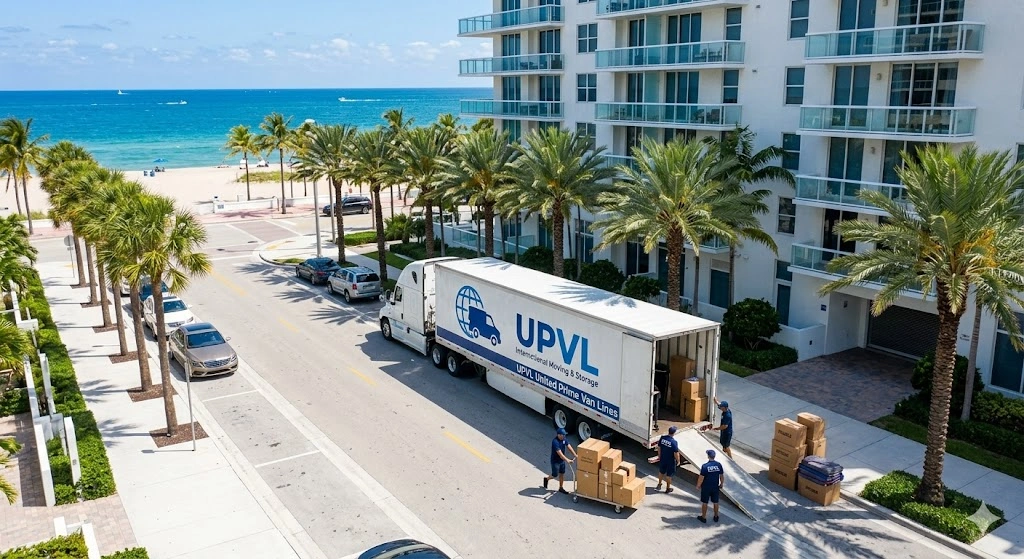
Florida moves are their own special category:
All of that means more potential risk for your stuff.
Here’s the hard truth no one likes to say out loud: Even with a careful, professional crew, zero risk doesn’t exist. Something can still get scratched, dropped, or water-damaged. That’s where moving insurance (or, more accurately, valuation coverage) comes in.
This is the sentence I hear constantly: “But you’re fully insured, so if anything breaks, I’ll get reimbursed, yes?”
Not exactly—and this is where a lot of frustration in the moving world comes from. There are two different things at play:
So yes, at United Prime Van Lines, we’re fully insured as a business. But when we talk about protecting your sofa, TV, or antique dresser, we’re talking about valuation and/or third-party moving insurance.
Let’s break down the options you’ll typically see when moving in or out of Florida.
This is the standard coverage that most movers include automatically at no extra charge. Sounds good, right? Until you see the math.
By law, it usually covers around $0.60 per pound per item. If your 10 lb flat-screen TV is destroyed, the maximum you’d receive is: 10 lbs × $0.60 = $6.00.
Released Value Protection is designed as a legal minimum, not meaningful “insurance.” It might be enough if you are moving low-value items or have excellent homeowners insurance that covers transit.
Full Value Protection (FVP) is what most people think they have. The mover agrees to be liable (up to a level you choose) for repairing, replacing, or compensating you for lost or damaged items.
For a standard Florida 2-bedroom apartment, FVP is often the most reasonable default choice.
Sometimes, you want more. If you have high-end furniture, luxury electronics, or one-of-a-kind art, a third-party policy makes sense.
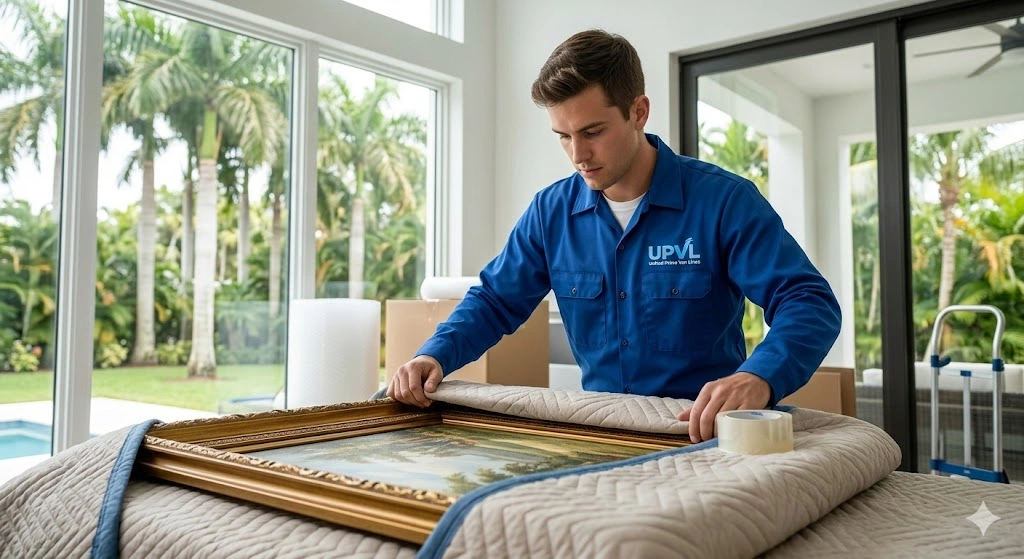
If a client is moving a gallery wall of original art and a baby grand piano, I recommend our regular service plus specific handling like our Art & antique moving + piano moving services, paired with a third-party insurance policy for maximum financial protection.
High-rise condos in Miami, Aventura, or Hollywood often require a Certificate of Insurance (COI) and proof of general liability coverage from the mover before they allow access.
At United Prime Van Lines, we deal with COI requests all the time for places like Hallandale Beach. You send us the requirements; we send the COI.
Most valuation policies have exclusions around “acts of God” and weather events. If you’re moving during hurricane season, you want a mover with contingency plans. You might also need short-term storage to keep items safe and climate-controlled if schedules shift due to a storm.
Coverage rules differ if you’re doing a local move within South Florida versus a long-distance move across state lines. Federal regulations guide interstate valuation options, while local moves depend more on state rules and company policies.
This is the fine print that bites people later. No matter which coverage option you pick, you’ll often see exclusions like:
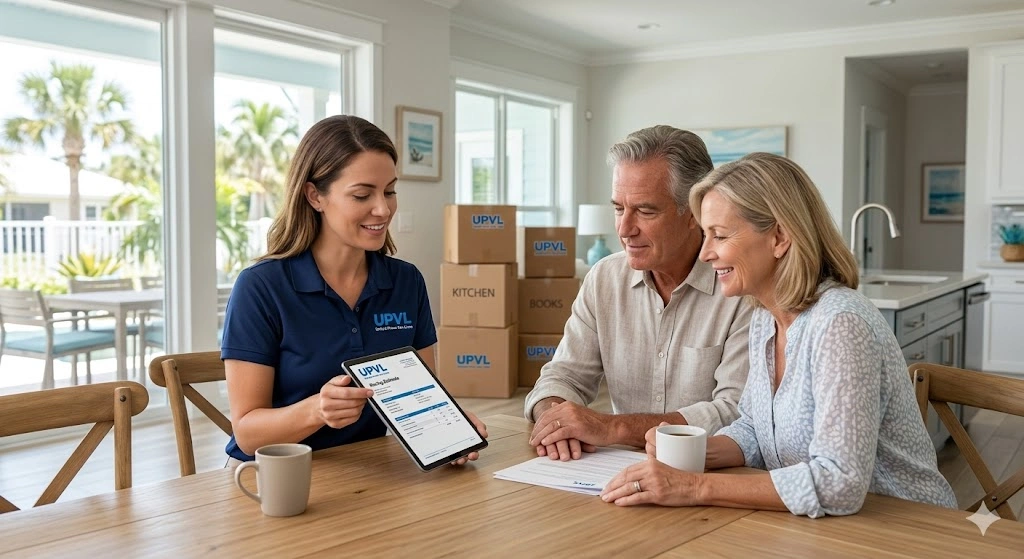
When you reach out to us, we don't use "insurance language." We use normal words. I’ll ask:
From there, we’ll explain your base coverage, go over upgraded options, and recommend special handling if necessary. Our job is to help you make a decision that matches your actual risk and budget.
Paying for extra coverage is usually a smart move if:
Sticking with basic coverage might be okay if:
Moving insurance in Florida doesn’t have to be confusing.
Basic coverage is free but usually not enough. Full Value Protection gives you peace of mind. Florida adds extra layers—condos, HOAs, storms—so getting coverage right is crucial.
If you’re planning a move and feeling unsure about how to protect your things, reach out to us at United Prime Van Lines. We’ll walk you through the options with no pressure, and help you choose what actually fits your situation and your budget.