When someone from Highland Lakes calls and says, “We’re moving out of state and I’m worried about my furniture,” I already know the conversation we’re about to have.
Not because every move is the same (they’re not), but because long‑distance moves are tough on furniture if you don’t prep it right. You’ve got distance, vibration on the road, changes in humidity between South Florida and wherever you’re going… and usually a tight schedule on top of that.
I want to walk you through the same step‑by‑step process I use with my own clients who are moving long‑distance from Highland Lakes. I’ll talk to you the way I talk to them: plainly, with real‑world details, and zero scare tactics.
If by the end you’re thinking, “This feels like a lot to tackle alone,” that’s exactly where my crew at United Prime Van Lines steps in. But even if you decide to DIY, you’ll know how to protect your furniture properly.
For a local move inside Miami‑Dade, your furniture is on the truck for maybe an hour or two. For a long‑distance move out of Highland Lakes, it might sit on a truck for days, sometimes over a week, going through continuous vibration on highways, sudden braking, sharp turns, temperature and humidity swings, and multiple load/unload points.
Any weak connection, loose leg, or unprotected corner will absolutely “tell on you” along the way. That’s why for long‑distance jobs, I think of furniture in three parts:
Everything we do in prep is about those three things.
Before anyone grabs a moving blanket, I always walk through the home with the client. Here’s how I suggest you look at your own furniture:
Long‑distance moves are priced mostly by weight and volume. That sagging $150 IKEA bookshelf? It might cost you more to move it than to replace it.
Ask yourself for each piece: Would I buy this again today at full price? Does it have sentimental value? Is it solid wood or particle board? If the answer is no + no + particle board, I recommend donating or selling it instead of paying to haul it across state lines.
Antique dressers, glass‑front cabinets, marble/stone‑top tables, pianos, and custom woodwork need special attention. For items like fine art furniture, I usually recommend our Art & antique moving approach or full packing service, because the risk of DIY mistakes is just too high.
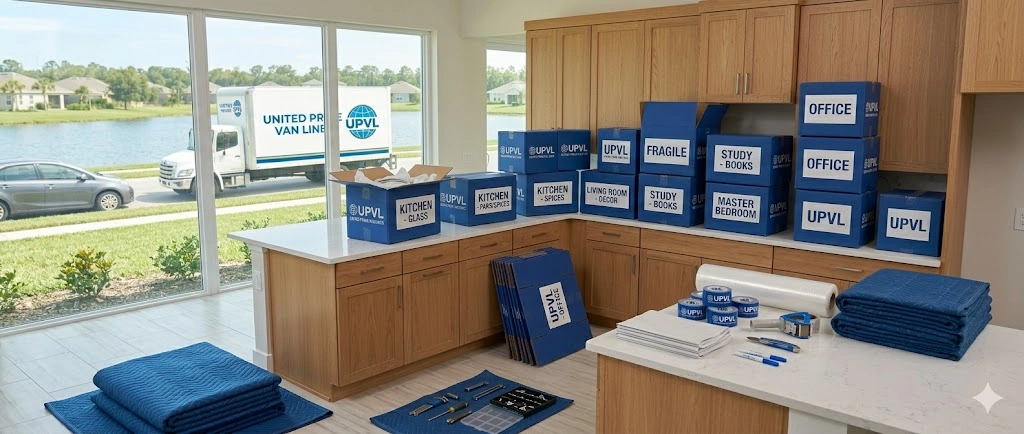
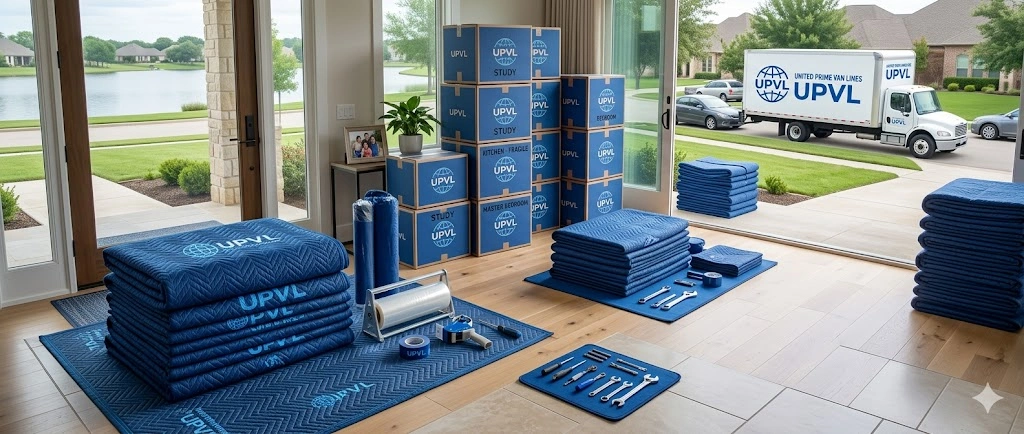
If you’re moving long‑distance from Highland Lakes, here’s what I strongly suggest having on hand:
If you’re using us for long‑distance moving, we bring all of this and more. But if you’re prepping on your own, don’t skimp here. The “free boxes from the grocery store” strategy doesn’t really translate to furniture protection.
Long‑distance moves reward anything that’s compact and solid. If a piece can be safely broken down, it usually should be.
What I Usually Recommend Disassembling: Dining tables, beds, large desks, sectionals (if modular), wall units, and large media centers. What I Usually Leave As One Piece: Solid dressers/chests, nightstands, side tables, and sturdy armoires.
How To Disassemble Without Regretting It Later:
South Florida humidity is no joke, and long‑distance moves add even more stress on wood.
Take everything out of drawers and cabinets. For solid dressers, we usually keep the drawers in but secure them shut. Never move a dresser long‑distance with clothes inside drawers. It adds weight, strain, and risk of internal damage.
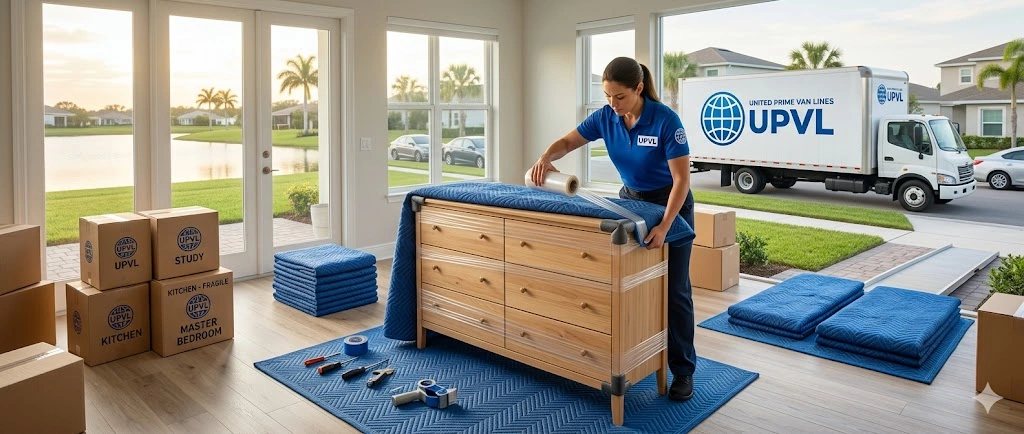
For wood furniture, I always go in this order:
Avoid using bubble wrap directly against finished wood; it can leave impressions under heat.
Wrap each leg individually with padding, then include them again when you wrap the whole piece. Use corner protectors or double‑folded moving blankets at each corner under the stretch wrap.
Vacuum under cushions, wipe non‑fabric parts, and make sure everything is dry before wrapping. Moisture trapped under plastic in a hot truck is a recipe for mildew.
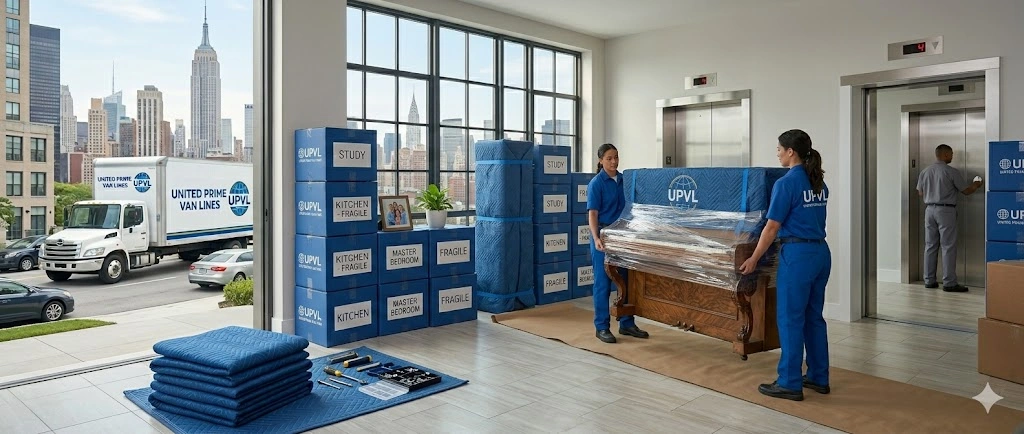
For sofas, armchairs, and upholstered headboards, use moving blankets on key surfaces (arms, back, corners), then stretch wrap over everything to protect from dust and dirt. Don’t pull so tight that you deform the cushions.
These are the pieces that make everyone nervous. Always remove glass shelves, stone table tops, and mirror pieces from dressers. Use a layer of bubble wrap on the surface, edge protectors on all sides, and a moving blanket over that. For long‑distance hauls, we pack these in mirror cartons or custom-built cartons so they travel upright, snug, and fully supported.
Remove loose rugs and shoes from hallways. Outside, clear the entryway and confirm where the truck can park. Highland Lakes has its share of HOA rules; I always tell people to double check if you need elevator reservations or loading time windows.
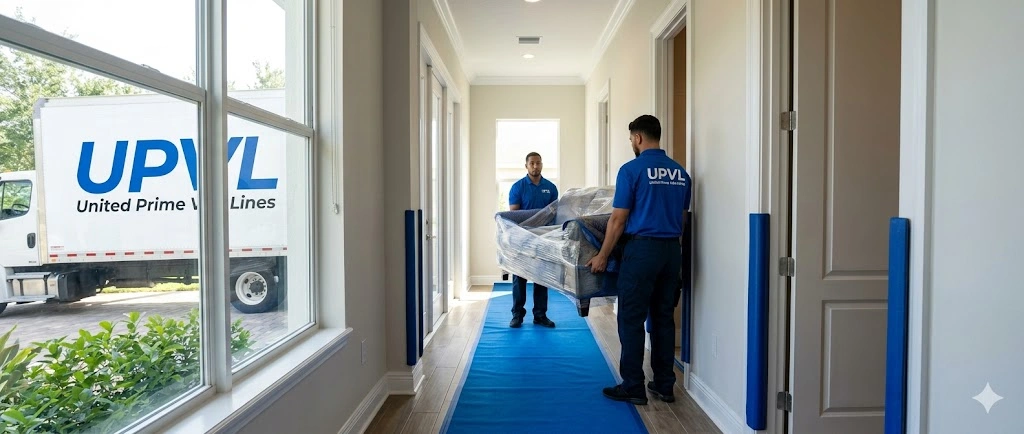
We typically bring floor runners, door jamb protectors, and corner guards. If you’re doing parts of the move yourself, lay some protection down in high‑traffic paths to keep dirt and damage to a minimum.
Even perfectly wrapped furniture can get damaged if it’s badly loaded.
With my crew at United Prime Van Lines, loading is one of the big reasons people hire us: it’s the difference between “everything arrived fine” and “we’re filing a damage claim.”
If you’re moving long‑distance from Highland Lakes, here’s how I typically support clients:
On moving day, my team shows up with all pads, stretch wrap, corner protectors, tools for disassembly, and floor protection. When we get to your new home, we set up beds, place furniture where you want it, and take the materials with us.
The difference between a rough long‑distance move and a smooth one usually comes down to what happens before the first box leaves your Highland Lakes driveway.
You decide what’s worth moving, get the right materials, disassemble only what makes sense, wrap and pad with the distance in mind, and load tight and secure. You can absolutely do parts of this yourself. But if you’d rather have someone who does this all day put a plan together with you, that’s exactly what we do at United Prime Van Lines.
We know Highland Lakes. We know the building rules, the streets, the parking headaches. And we know how to get your furniture from here to your new home in one piece, without turning the whole process into a full‑time job for you.