Planning a long-distance move from Los Angeles is not the same as booking a simple local move across town. You are not just loading a truck, driving a few miles, and unloading the same afternoon. With long distance moving LA customers need to think about interstate estimates, delivery windows, packing quality, licensing, route planning, insurance options, storage timing, and the real cost of moving household goods across state lines.
Maybe you are moving from Los Angeles to the East Coast for a new job. Maybe your family is leaving California for Texas. Maybe you are relocating from LA to Florida, or heading north to Seattle, Portland, or another Pacific Northwest city. No matter the route, the goal is the same: protect your belongings, understand the estimate, avoid surprise charges, and work with interstate movers Los Angeles customers can trust for state-to-state transportation.
Long-distance moving from Los Angeles is not just a bigger version of a local move. It is a different type of relocation with different rules, pricing logic, paperwork, route planning, delivery expectations, and risk.
A local LA move may be completed in one day. A state-to-state move can take several days or longer depending on the destination, shipment size, carrier schedule, access conditions, weather, and delivery window.
Los Angeles also creates unique pickup challenges. A move may start in a high-rise apartment in Downtown LA, a hillside home in Silver Lake, a condo in Westwood, a beach-area apartment in Santa Monica, a house in Sherman Oaks, or a larger property in the San Fernando Valley. Each location can have different access issues.
Los Angeles County had an estimated population of 9,694,934 as of July 1, 2025, making it the most populous county in the United States, according to the U.S. Census Bureau QuickFacts.
That population size matters for moving. More people means more apartment buildings, more cars, more loading restrictions, more competition for move dates, more managed properties, and more demand for reliable state to state movers Los Angeles customers can schedule with confidence.
When you are moving out of LA, the pickup is only the first part. The real planning also includes the interstate route, delivery access, estimate type, packing quality, valuation coverage, storage needs, and how flexible your delivery window should be.
For customers starting in Southern California, the Los Angeles movers page is a useful city resource when the move begins in LA and may include local pickup, packing, storage, or long-distance transportation.
A good long-distance moving plan should answer these questions before moving day:
The more clearly these questions are answered, the smoother your long-distance move from Los Angeles can be.
Los Angeles is one of the biggest origin points for state-to-state moves in the United States. Some customers move for work. Others leave for lower housing costs, family reasons, retirement, business expansion, or a different lifestyle.
Route planning matters because a move from Los Angeles to Dallas is not the same as a move from Los Angeles to New York. A move from LA to Miami is not the same as LA to Seattle. Each route has different mileage, timing, climate conditions, delivery challenges, and packing considerations.
| Route Example | Common Customer Reason | Planning Notes |
|---|---|---|
| Los Angeles to New York / New Jersey | Work, family, finance, tech, urban relocation | Plan for dense destination access, elevator rules, parking limitations, and longer delivery timing. |
| Los Angeles to Texas | Job relocation, lower housing costs, family moves | Popular routes include Dallas, Austin, Houston, and San Antonio. Inventory accuracy is important. |
| Los Angeles to Florida | Family, retirement, business, lifestyle relocation | Long route with climate differences, storage needs, and careful packing requirements. |
| Los Angeles to Pacific Northwest | Work, lifestyle, tech, outdoor living | Routes to Seattle and Portland require weather-aware delivery planning. |
| Los Angeles to Colorado | Work, family, mountain lifestyle | Plan for elevation, weather, and delivery access at destination. |
| Los Angeles to Nevada / Arizona | Regional state-to-state move | Shorter than cross-country moves but still requires interstate documentation. |
For cross country movers LA customers should focus on preparation. A longer route increases the importance of packing quality, inventory accuracy, valuation coverage, and realistic delivery expectations.
The route also affects what you should keep with you. If the delivery window is several days or longer, you should carry essentials separately instead of loading them on the truck.
Passports, IDs, medication, laptops, chargers, work documents, school records, pet supplies, valuables, and a few days of clothing should stay with you.
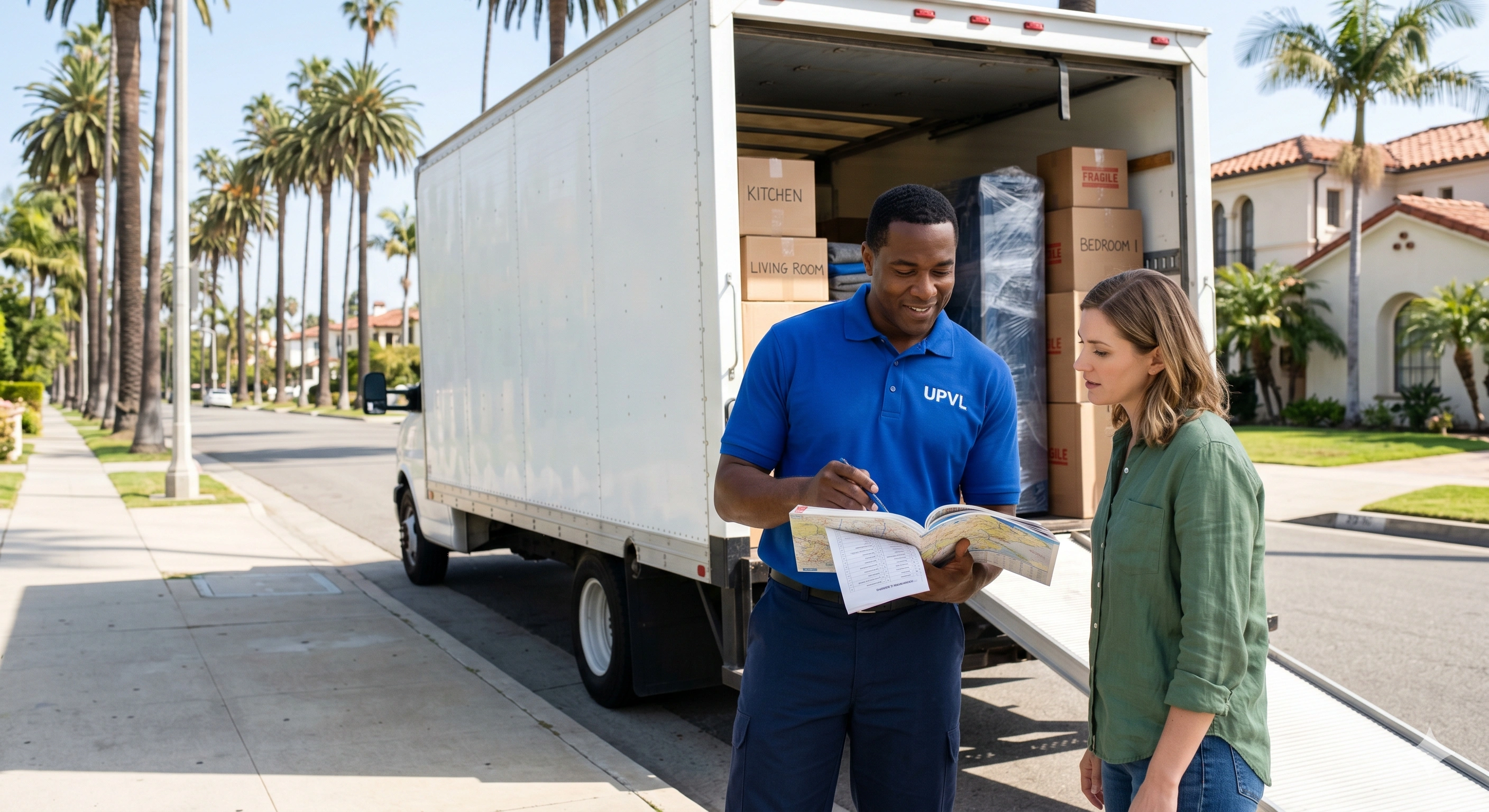
Moving from Los Angeles to the East Coast is one of the most serious types of cross-country relocation. The route is long, the delivery window can be wider, and destination access may be more complex if you are moving into New York, New Jersey, Boston, Washington, D.C., Philadelphia, or another dense metro area.
The biggest planning mistake is treating the East Coast delivery like a simple house-to-house move. Many East Coast cities have older buildings, tighter streets, limited truck parking, elevator rules, and strict move-in schedules. If your shipment is going into a high-rise or managed building, the destination may require paperwork before delivery.
| Planning Area | Why It Matters | What to Ask |
|---|---|---|
| Delivery access | Dense East Coast cities can limit truck parking. | Can the truck park legally near the entrance? |
| Building rules | Condos and apartments may require approval. | Is a COI needed before delivery? |
| Elevator reservation | Delivery can be delayed without elevator access. | Can the freight elevator be reserved? |
| Weather | Seasonal rain, snow, or cold can affect delivery. | What is the weather plan for the delivery window? |
| Essentials | Transit can take time. | What should stay with you during the move? |
For LA to East Coast moves, packing quality matters. Items may travel thousands of miles, and fragile items need more than casual wrapping. TVs, mirrors, artwork, glass tabletops, lamps, electronics, and delicate furniture should be packed with the route in mind.
If your delivery address is not final yet, ask about storage-in-transit before pickup. It is better to plan storage early than to scramble later when the truck is already moving across the country.
Texas is one of the most common destinations for people leaving California. Many families and professionals move from Los Angeles to Dallas, Austin, Houston, San Antonio, Fort Worth, or nearby suburbs.
The route is shorter than an East Coast or Florida move, but it is still an interstate move. That means you still need proper documentation, a written estimate, licensing, valuation coverage, and a clear delivery window.
| Consideration | Why It Matters | Planning Tip |
|---|---|---|
| Heat-sensitive items | Southwest and Texas routes can involve high temperatures. | Protect electronics, candles, documents, and delicate materials. |
| Large homes | Many Texas moves involve more space at destination. | Label boxes by destination room for faster unloading. |
| Storage timing | Closing dates and lease dates may not line up. | Ask about storage before pickup. |
| Delivery access | Suburban homes may be easier than city apartments, but not always. | Confirm gates, HOA rules, driveway access, and stairs. |
If you are moving from an LA apartment to a Texas house, do not assume the destination will be automatically easy. Gated communities, apartment complexes, townhomes, and HOA-managed neighborhoods may still have access rules.
The best approach is to describe both ends of the move clearly. Pickup in LA may be difficult because of parking or stairs. Delivery in Texas may be easier, but it still needs accurate planning.
Los Angeles to Florida is a true cross-country move. Customers may relocate to Miami, Fort Lauderdale, Hallandale Beach, Orlando, Tampa, Jacksonville, Naples, or Palm Beach. Some move for family. Some move for business. Others choose Florida for lifestyle, taxes, weather, or retirement.
This route requires strong preparation because the distance is long and both origin and destination can create access issues. LA may involve hills, stairs, traffic, and apartment rules. Florida may involve condo restrictions, elevator reservations, gated communities, and hurricane-season timing.
If your move is connected to South Florida, you can also review the company’s main moving company page to understand broader service options for long-distance relocation, packing, and storage support.
Because this is a long route, inventory accuracy is critical. If you leave out items during the estimate, the mover may need to revise the cost later. Be honest about boxes, storage units, patio furniture, garage items, artwork, and oversized furniture.
A lower quote based on incomplete inventory is not a real savings. It is usually a future problem.
Moves from Los Angeles to the Pacific Northwest are common for customers relocating to Seattle, Portland, Tacoma, Bellevue, Vancouver, Eugene, or nearby areas. Some are moving for tech jobs, remote work, lifestyle changes, family, or lower housing costs compared with certain parts of Southern California.
This route is not as long as LA to Florida or LA to New York, but it still requires interstate planning. Weather differences also matter. A shipment leaving dry Southern California may arrive in a rainy destination with different unloading conditions.
| Destination Area | Common Challenge | Planning Tip |
|---|---|---|
| Seattle | Urban access, hills, apartment buildings, rain | Confirm parking, elevator access, and weather protection. |
| Portland | Older homes, narrow streets, rain | Ask about truck access and floor protection. |
| Bellevue / Redmond | Apartment communities, tech relocations | Coordinate delivery timing and building rules. |
| Tacoma / Vancouver | Residential delivery, weather differences | Protect mattresses, furniture, and cardboard from moisture. |
For Pacific Northwest moves, ask about moisture protection. Mattress covers, furniture wrap, and strong boxes can help reduce risk during rainy delivery conditions.
Also ask about delivery access. Some Pacific Northwest neighborhoods have hills, narrower streets, and older homes that may require extra planning.
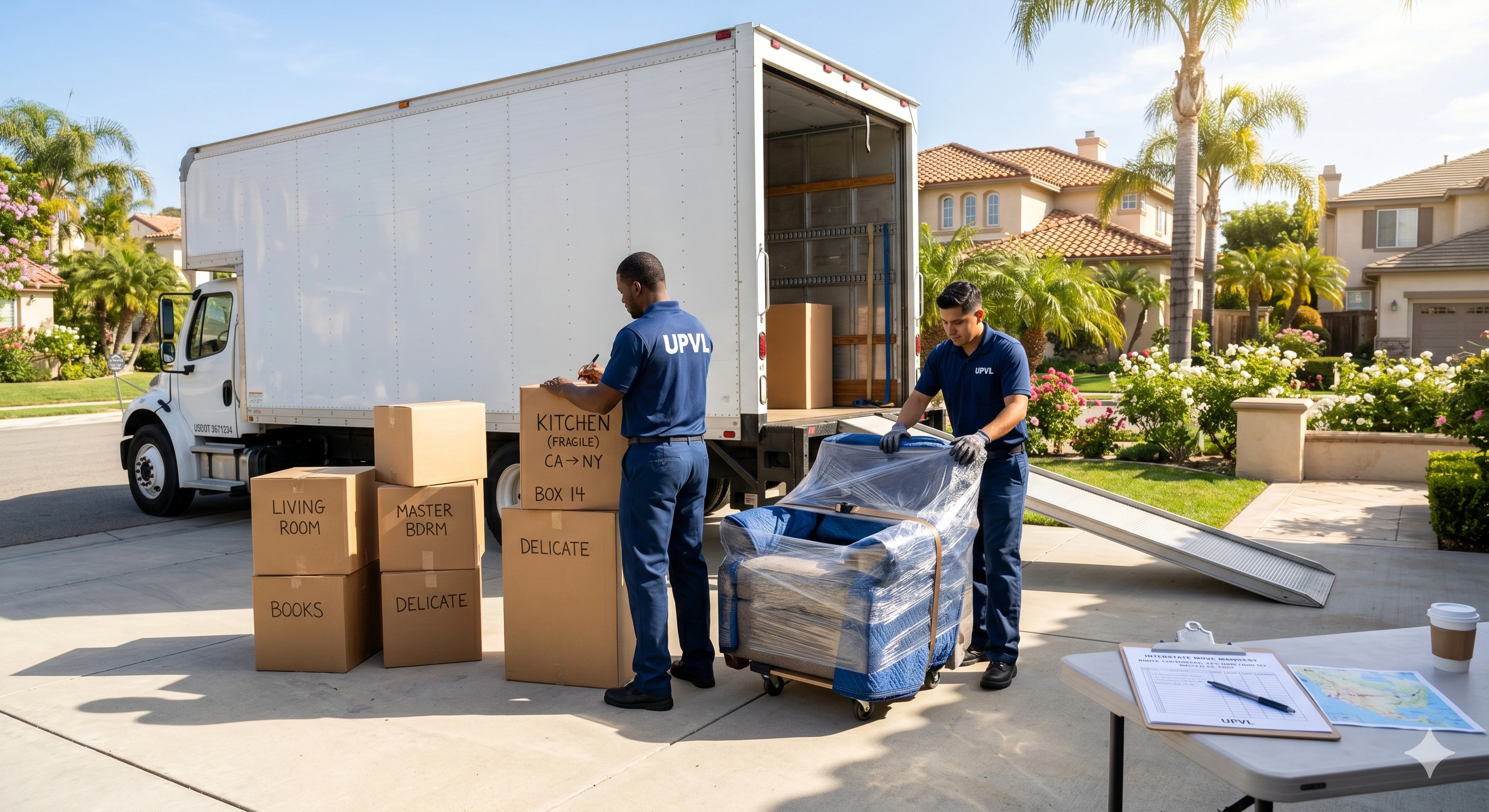
One of the biggest differences between local and long-distance moving is the delivery window. A local move is usually completed the same day. A long-distance move often has a pickup date and an estimated delivery spread.
A delivery window is the range of dates when your shipment may arrive. It is not always one exact guaranteed date. The longer the route, the more variables can affect timing.
Delivery windows may depend on distance, shipment size, truck schedule, route demand, weather, road conditions, access at destination, storage needs, and whether the shipment is moving directly or as part of a larger route plan.
| Route Type | Example Route | Timeline Planning Notes |
|---|---|---|
| Regional interstate move | Los Angeles to Nevada or Arizona | Usually shorter than cross-country routes, but still requires interstate documentation. |
| Mid-range interstate move | Los Angeles to Texas or Colorado | Plan for several days of transit and some delivery flexibility. |
| Pacific Northwest route | Los Angeles to Seattle or Portland | Weather and delivery access may affect timing. |
| East Coast route | Los Angeles to New York or New Jersey | Longer route with urban delivery planning and wider delivery windows. |
| Florida route | Los Angeles to Miami or Fort Lauderdale | Long cross-country route with destination building rules and climate considerations. |
These are planning categories, not guaranteed delivery promises. Your actual delivery window should be provided in writing by your mover based on your route, shipment, service plan, and access conditions.
To reduce timing issues, give accurate details for both addresses. If the destination is a high-rise, apartment building, gated community, storage facility, or narrow street, tell the mover before the estimate is finalized.
An interstate moving estimate is one of the most important documents in a state-to-state move. It tells you what the mover expects the move to cost and what that cost is based on.
The Federal Motor Carrier Safety Administration provides consumer resources through Protect Your Move, which helps customers understand interstate moving rules and avoid moving fraud.
For interstate moving, the estimate should be based on real details. A vague quote based only on “two-bedroom apartment” is not enough. Two homes with the same number of bedrooms can have completely different shipment sizes.
| Estimate Detail | Why It Matters | What to Check |
|---|---|---|
| Pickup address | Confirms origin access and location. | Include apartment, gate, stairs, elevator, and parking details. |
| Delivery address | Confirms destination access. | Provide full destination details as soon as possible. |
| Inventory | Determines shipment size. | Review room-by-room items, boxes, furniture, and storage units. |
| Packing services | Affects cost and liability. | Clarify full packing, partial packing, or self-packing. |
| Accessorial services | Can change the price. | Ask about stairs, long carry, shuttle, storage, and assembly. |
| Estimate type | Controls pricing expectations. | Know if it is binding, non-binding, or another estimate type. |
| Valuation option | Affects damage claims. | Compare Released Value and Full Value Protection. |
| Delivery window | Helps you plan arrival. | Get the expected range in writing. |
For state to state movers Los Angeles customers should be especially careful with inventory. Do not forget patio furniture, garage items, closets, storage units, bikes, plants, mirrors, artwork, large TVs, and boxes you have not packed yet.
If it is going on the truck, it belongs in the estimate.
A dedicated long-distance moving service page can help customers understand the type of support needed for interstate relocation, including packing, storage, and route planning.
Binding vs non-binding estimates are two terms every interstate moving customer should understand before signing paperwork. They affect what you may pay and how the estimate should be interpreted.
A binding estimate generally means the mover must deliver the shipment for the estimated amount if the shipment and services match what was listed. A non-binding estimate is not a guaranteed final price, but it must still be based on the mover’s estimate of the services provided.
FMCSA explains that under a non-binding estimate, a moving company cannot require payment of more than 110% of the non-binding estimate at the time of delivery, with remaining charges billed later. Source: FMCSA: What Is a Binding Move Estimate?.
| Estimate Type | What It Means | Best For | What to Watch |
|---|---|---|---|
| Binding estimate | Price is fixed for the listed shipment and services. | Customers who want more price certainty. | Adding items or services can change the estimate. |
| Non-binding estimate | Price is an approximation, not a final guaranteed amount. | Moves where final weight or scope may vary. | Final charges may be higher than the estimate. |
| Binding-not-to-exceed | Price may go lower if shipment is smaller, but not higher if scope matches. | Customers wanting protection from overage. | Confirm the exact terms in writing. |
The biggest mistake is focusing only on the total number and ignoring the estimate type. A low non-binding estimate may not be better than a higher but more detailed binding estimate.
What matters is what the estimate includes, how accurate the inventory is, and what can change the price.
A serious moving company should be willing to explain these terms clearly. If the answer is confusing, slow down before you book.

Packing matters more on a long-distance move than on a short local move. Your items may travel hundreds or thousands of miles. They may spend more time in transit, experience more road vibration, and be handled at pickup and delivery under different access conditions.
That is why packing is not just a convenience. It is part of risk management.
For cross country movers LA customers can usually choose between self-packing, partial packing, full packing, and specialty packing. The right choice depends on budget, time, item value, and how fragile the shipment is.
| Packing Option | Best For | Pros | Watch Out For |
|---|---|---|---|
| Self-packing | Simple household goods, budget-conscious customers | Saves money and gives you control. | Poor packing can increase damage risk. |
| Partial packing | Kitchens, artwork, glass, lamps, mirrors, TVs | Protects the most fragile items while controlling cost. | Must clearly define what movers pack. |
| Full packing | Large homes, busy families, corporate relocations | Saves time and creates consistent packing quality. | Higher upfront cost. |
| Specialty packing | Antiques, fine art, marble, fragile décor, instruments | Extra protection for high-value or delicate items. | May require crating or custom materials. |
Self-packing can work well for clothes, linens, books, basic household goods, and simple items. But fragile items deserve special attention on a state-to-state move.
| Item Type | Recommended Material | Reason |
|---|---|---|
| Dishes and glassware | Dish boxes, packing paper, dividers | Reduces pressure and direct contact. |
| TVs | TV box, foam corners, screen protection | Protects fragile screens and edges. |
| Mirrors and artwork | Mirror cartons, corner guards, padding | Protects edges and glass surfaces. |
| Furniture | Moving blankets, stretch wrap, corner guards | Reduces scratches and dents. |
| Mattresses | Mattress bags | Protects against dust, moisture, and stains. |
| Books | Small sturdy boxes | Prevents overweight boxes. |
| Clothing | Wardrobe boxes or sealed bags | Keeps clothing organized and easier to unpack. |
If you pack yourself, use quality boxes. Do not overload large boxes with books, dishes, or tools. Use small boxes for heavy items and larger boxes for lightweight items.
Always keep essentials with you. Passports, IDs, medication, jewelry, laptops, chargers, cash, work documents, pet supplies, school records, and important papers should not go on the truck.
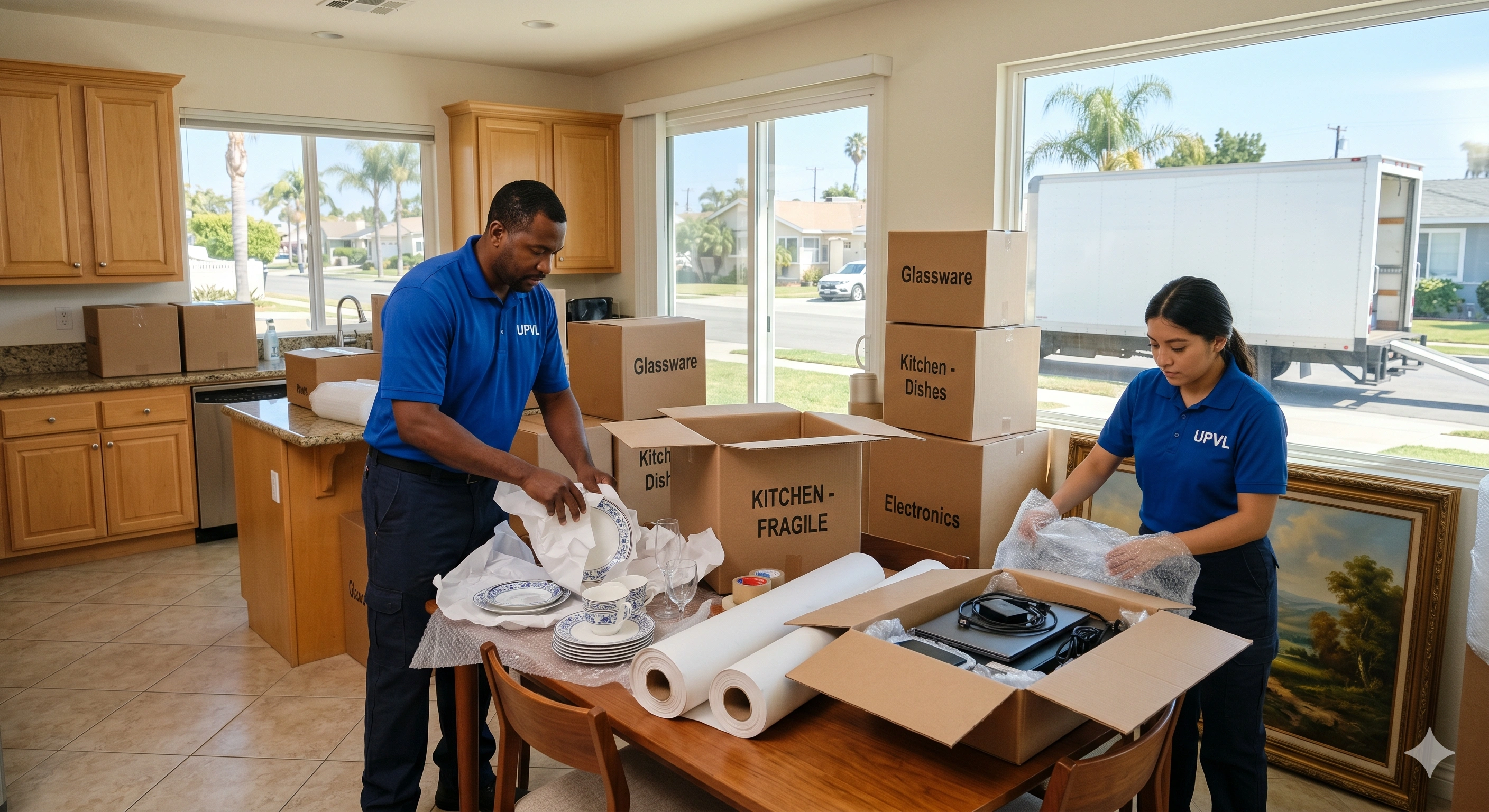
Insurance is one of the most misunderstood parts of long-distance moving. Many customers ask, “Are you insured?” That is a good question, but it is not enough.
You also need to understand valuation coverage. In interstate moving, valuation is the mover’s level of liability for your goods. It is not always the same as a traditional insurance policy.
FMCSA explains that movers are responsible for the value of household goods they transport and that customers generally choose between Full Value Protection and Released Value. Source: FMCSA Liability and Protection.
| Protection Type | What It Means | Best For | Important Note |
|---|---|---|---|
| Released Value | Basic minimum liability, often based on weight. | Low-value shipments or customers accepting minimal protection. | May pay very little for expensive lightweight items. |
| Full Value Protection | More complete repair, replacement, or settlement responsibility. | Long-distance moves with valuable household goods. | Usually costs more and has terms and limitations. |
| Third-party insurance | Separate policy from an outside insurer. | High-value items, art, antiques, or special collections. | Read exclusions and claim rules carefully. |
FMCSA’s Rights and Responsibilities booklet explains that Released Value is minimal protection and that the mover assumes liability for no more than 60 cents per pound per article under that option. Source: FMCSA Rights and Responsibilities When You Move.
That can be a serious issue for expensive lightweight items. A laptop, framed artwork, designer lamp, camera, or delicate décor item may not weigh much, but it can cost a lot to replace.
Before pickup, photograph valuable furniture, electronics, artwork, mirrors, and fragile items. Keep receipts or appraisals for high-value goods when available.
If something is especially valuable, tell the mover in writing before the move.
Storage is common in long-distance moves from Los Angeles. Sometimes the new home is not ready. Sometimes closing dates change. Sometimes the customer is still searching for housing in another state. Sometimes a job start date comes before the delivery address is available.
Storage can solve these problems, but only if you understand how it is priced and handled.
| Question | Why It Matters |
|---|---|
| Is storage included in the estimate? | Prevents surprise monthly or handling fees. |
| Is storage short-term or long-term? | Helps you plan cost and delivery timing. |
| Is the facility climate-controlled? | Important for furniture, electronics, documents, and artwork. |
| Can I access my items? | Some storage options are not designed for frequent access. |
| Are items inventoried? | Helps track the shipment and reduce confusion. |
| What coverage applies in storage? | Clarifies liability if something is damaged while stored. |
| How do I schedule final delivery? | Prevents delays once the destination is ready. |
Storage-in-transit can be useful, but it should be clearly explained. Ask whether the storage charge is daily, weekly, or monthly. Ask whether there are handling fees to move the goods into or out of storage.
For LA customers moving out of state, storage is often most useful when destination timing is uncertain. It can prevent rushed decisions and make the transition easier.
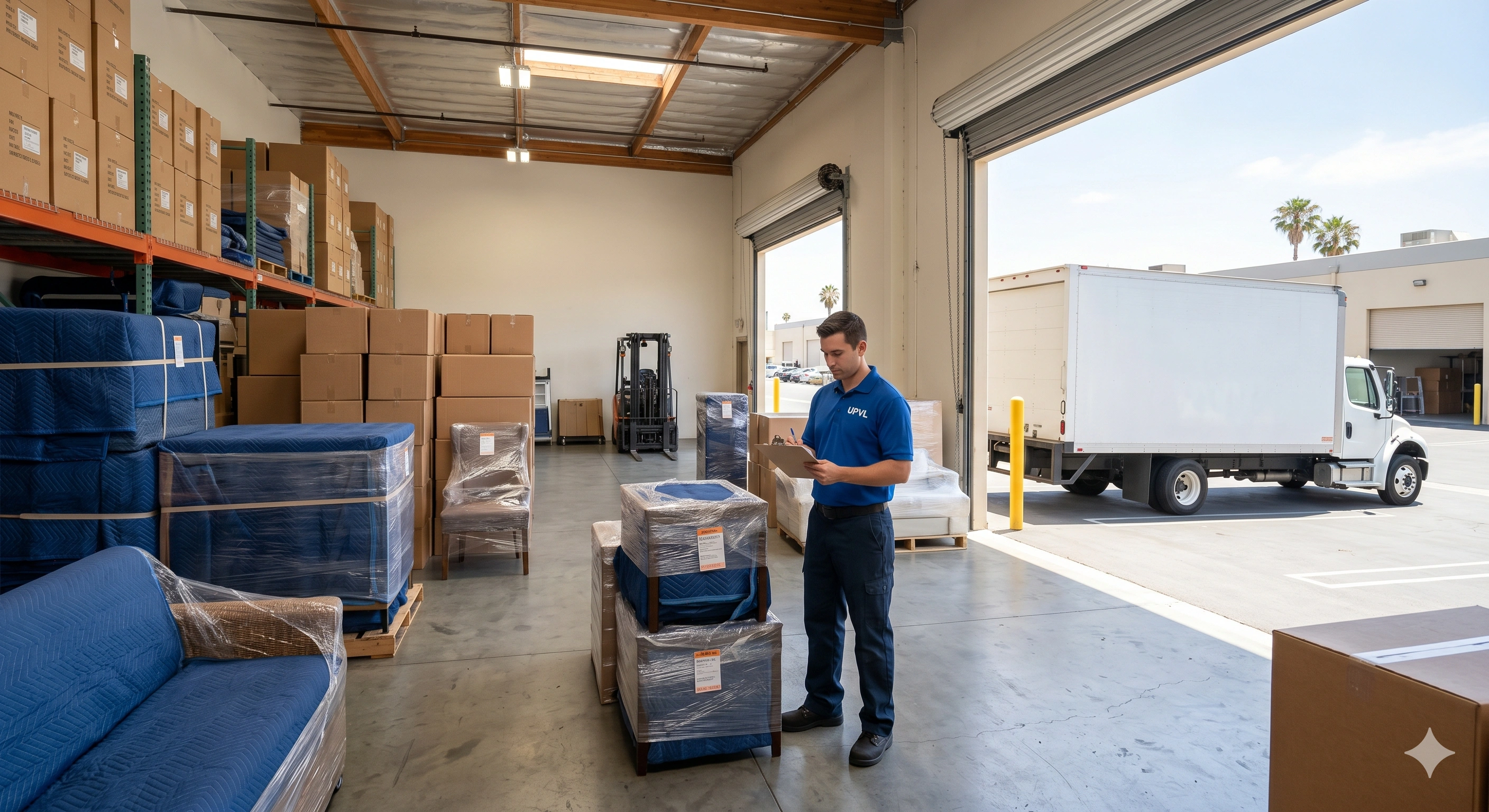
Licensing matters because long-distance moving crosses legal boundaries. If your move begins in Los Angeles and ends in another state, it is an interstate move. That means federal moving rules apply.
For interstate moves, customers should use FMCSA resources to understand moving rights and verify mover information. The FMCSA Protect Your Move program provides consumer guidance for interstate moving.
For moves within California, the California Bureau of Household Goods and Services regulates residential moving companies that perform moves within California, and moving companies must be licensed before operating. Source: California Bureau of Household Goods and Services.
One important question is whether the company is a mover, a broker, or both.
| Company Type | What It Means | What to Ask |
|---|---|---|
| Mover / carrier | Physically transports your household goods. | Will your company handle pickup and delivery? |
| Broker | Arranges the move with another company. | Which carrier will transport my shipment? |
| Both | May operate as a carrier on some moves and broker on others. | Who is responsible for my specific move? |
Brokers are not automatically bad, but customers should know who is actually transporting the shipment. If that answer is vague, be careful.
A legitimate moving company should explain licensing, authority, paperwork, estimate type, valuation coverage, and delivery process clearly.
Choosing cross country movers LA customers can trust should not be based only on the lowest number. A very low quote may be attractive, but it can also mean the estimate is incomplete.
A strong interstate mover should explain the process clearly, provide written documentation, review your inventory carefully, discuss delivery windows, explain valuation coverage, and answer questions about route planning.
The right state-to-state mover should make the process less confusing, not more confusing. If you feel rushed, pressured, or unclear about what you are signing, slow down.
A professional moving company should be able to explain the difference between local moving, interstate moving, packing services, storage, valuation coverage, and delivery windows in plain language.
A long-distance move becomes easier when you break it into steps. Use this checklist to stay organized before, during, and after your move.
| Task | Why It Matters |
|---|---|
| Create a room-by-room inventory | Helps generate a more accurate estimate. |
| Declutter before the quote | Reduces shipment size and cost. |
| Request written estimates | Allows proper comparison between movers. |
| Ask about binding vs non-binding terms | Clarifies pricing risk. |
| Review packing options | Protects fragile and high-value items. |
| Ask about storage | Useful if destination timing is uncertain. |
| Task | Why It Matters |
|---|---|
| Confirm pickup and delivery details | Reduces scheduling confusion. |
| Reserve elevator if needed | Required by many LA buildings. |
| Request COI if needed | Prevents building access delays. |
| Start packing nonessential items | Makes the final week easier. |
| Separate valuables and documents | Keeps critical items with you. |
| Take photos of high-value items | Creates condition records before moving. |
| Task | Why It Matters |
|---|---|
| Confirm arrival time | Keeps the schedule clear. |
| Finish packing | Prevents hourly delays or last-minute stress. |
| Label boxes by room | Helps at delivery. |
| Prepare essentials bag | Covers the delivery window period. |
| Review paperwork before signing | Protects against misunderstanding. |
| Task | Why It Matters |
|---|---|
| Be available during delivery | Helps direct placement and answer questions. |
| Check inventory | Helps identify missing or damaged items. |
| Inspect major furniture | Documents condition quickly. |
| Take photos if damage is found | Supports any claim process. |
| Unpack essentials first | Makes the first night manageable. |
An interstate moving estimate is a written cost estimate for a move that crosses state lines. It should include shipment details, inventory, services, access conditions, packing, valuation coverage, delivery window, and the estimate type. A good estimate should be based on real information, not just the number of bedrooms.
The delivery window depends on the destination, route, shipment size, service type, access conditions, and scheduling. A move from LA to nearby states may have a shorter window, while a cross-country move to the East Coast or Florida usually needs more delivery flexibility.
A binding estimate generally fixes the price for the listed inventory and services. A non-binding estimate is an approximation and the final cost may change. For interstate moves, FMCSA says movers generally cannot require more than 110% of the non-binding estimate at delivery, with remaining charges billed later.
For moves crossing state lines, interstate movers must follow federal rules and should have proper interstate authority. For moves within California, household moving companies must be licensed before operating under California household mover rules.
Ask whether the company is a mover, broker, or both, what type of estimate you are receiving, what is included, what can change the price, what delivery window applies, what valuation coverage is included, and whether storage is available if your new home is not ready.
Full packing can be useful for large homes, fragile shipments, busy families, and corporate relocations. Partial packing is often a good middle ground if you only need professional help with kitchens, mirrors, artwork, TVs, lamps, and high-value décor.
Yes. Storage can be helpful if your destination home is not ready, your closing date changes, or you need flexible delivery timing. Ask whether storage is included, how it is billed, whether the facility is climate-controlled, and what coverage applies while items are stored.
Common routes include Los Angeles to the East Coast, Texas, Florida, the Pacific Northwest, Colorado, Nevada, and Arizona. Each route has different delivery timing, access conditions, and packing considerations.
Keep passports, IDs, medication, jewelry, laptops, chargers, legal documents, school records, work documents, pet supplies, and essential clothing with you. Do not place critical items on the moving truck if you may need them before delivery.
A long-distance move from Los Angeles is not something to rush. It involves more planning than a local move, more paperwork, more route questions, more timing concerns, and more risk if the estimate is incomplete.
The best state-to-state moves start with accurate inventory, clear pickup and delivery details, strong packing decisions, written estimates, realistic delivery windows, proper licensing, and a clear understanding of valuation coverage.
Do not choose interstate movers Los Angeles customers recommend based only on the lowest number. Choose based on clarity, licensing, communication, route planning, packing quality, and how well the company explains the process.
If you are moving from LA to the East Coast, Texas, Florida, the Pacific Northwest, or another state, ask better questions before you book. What type of estimate is this? What is included? What can change the price? What is the delivery window? What coverage applies? Do I need packing? Do I need storage?
A good mover should make those answers easy to understand.
Long-distance moving is not just transportation. It is a process of protecting your home, your schedule, your budget, and your peace of mind from Los Angeles to the next state.