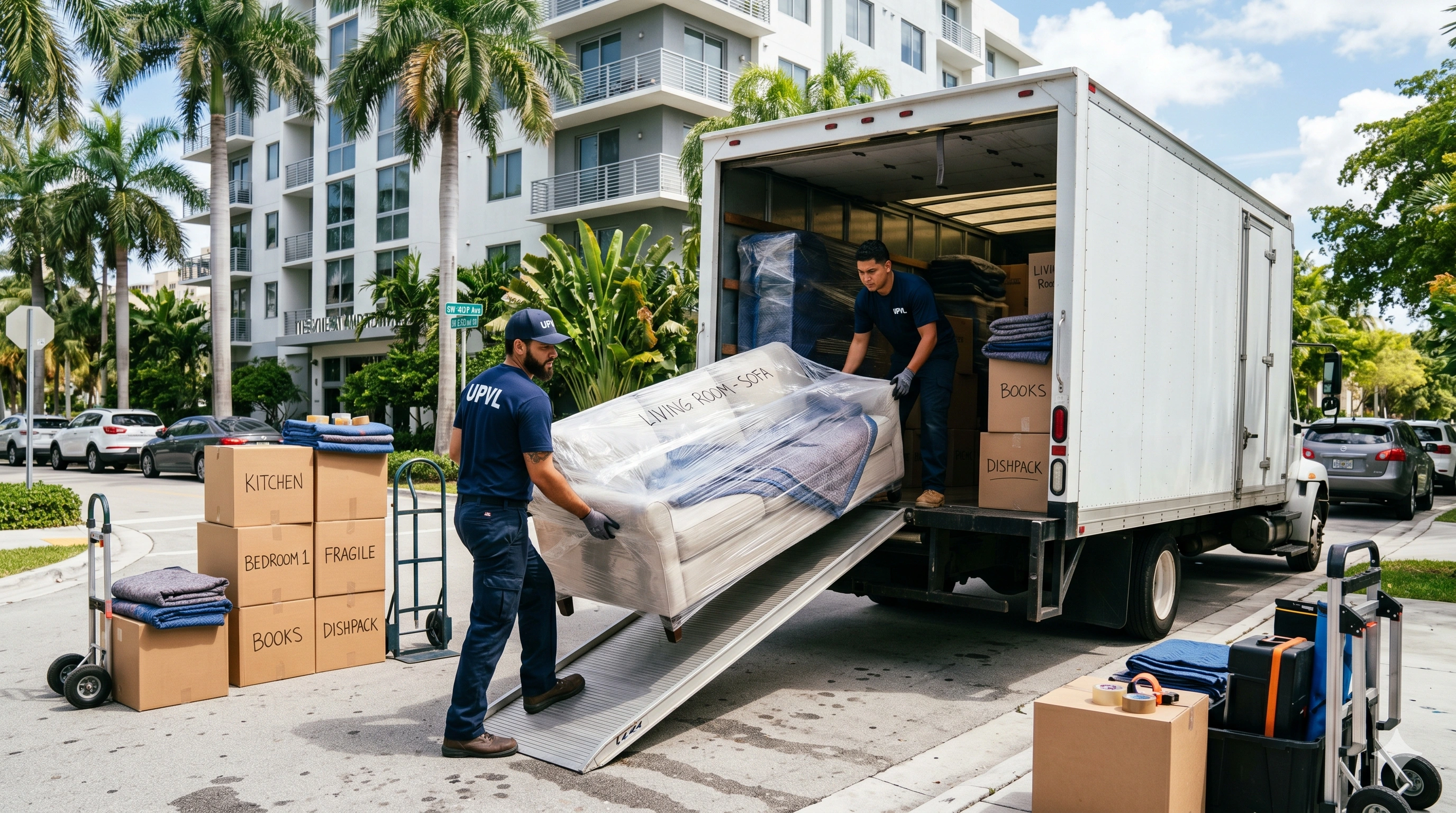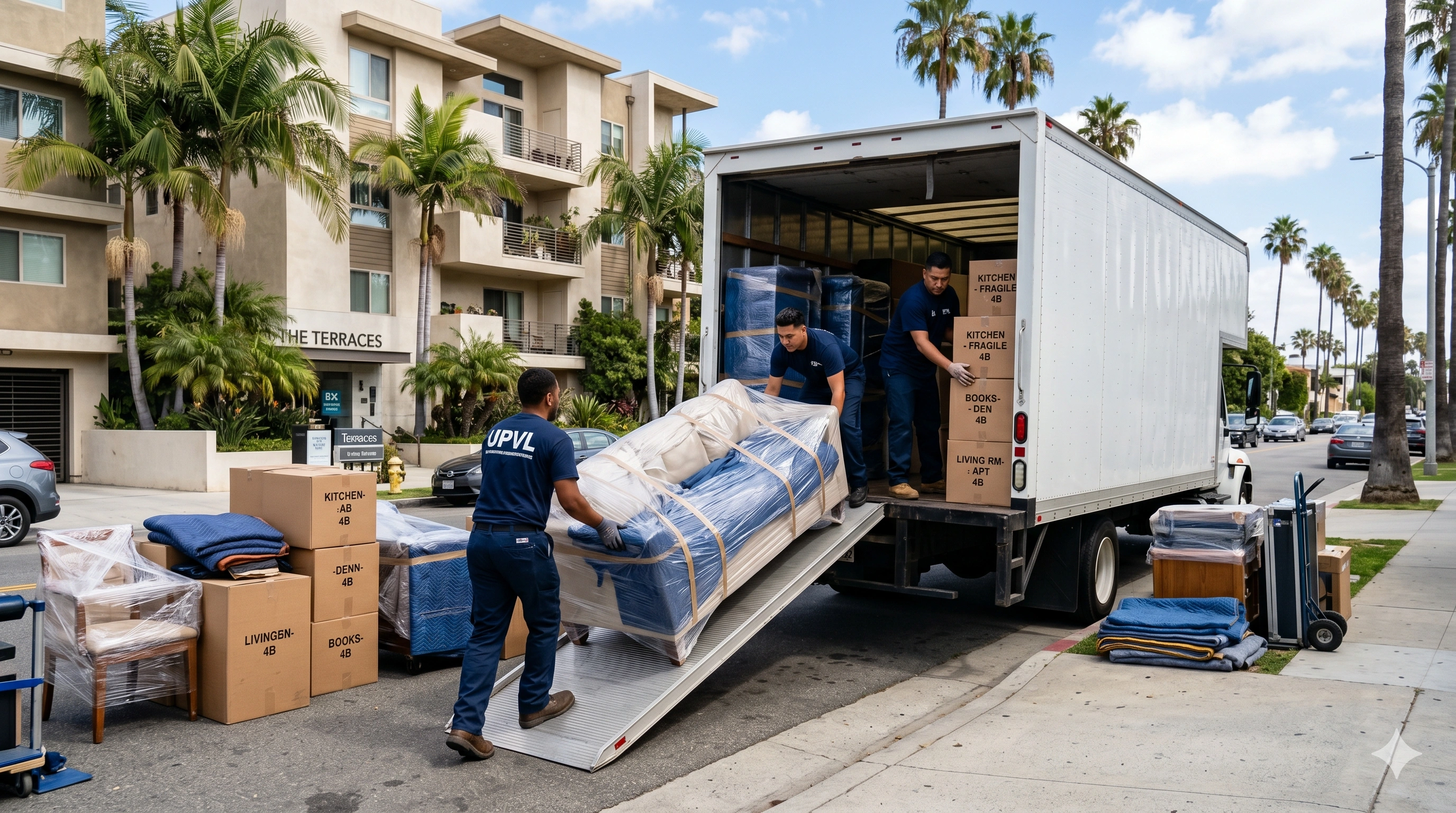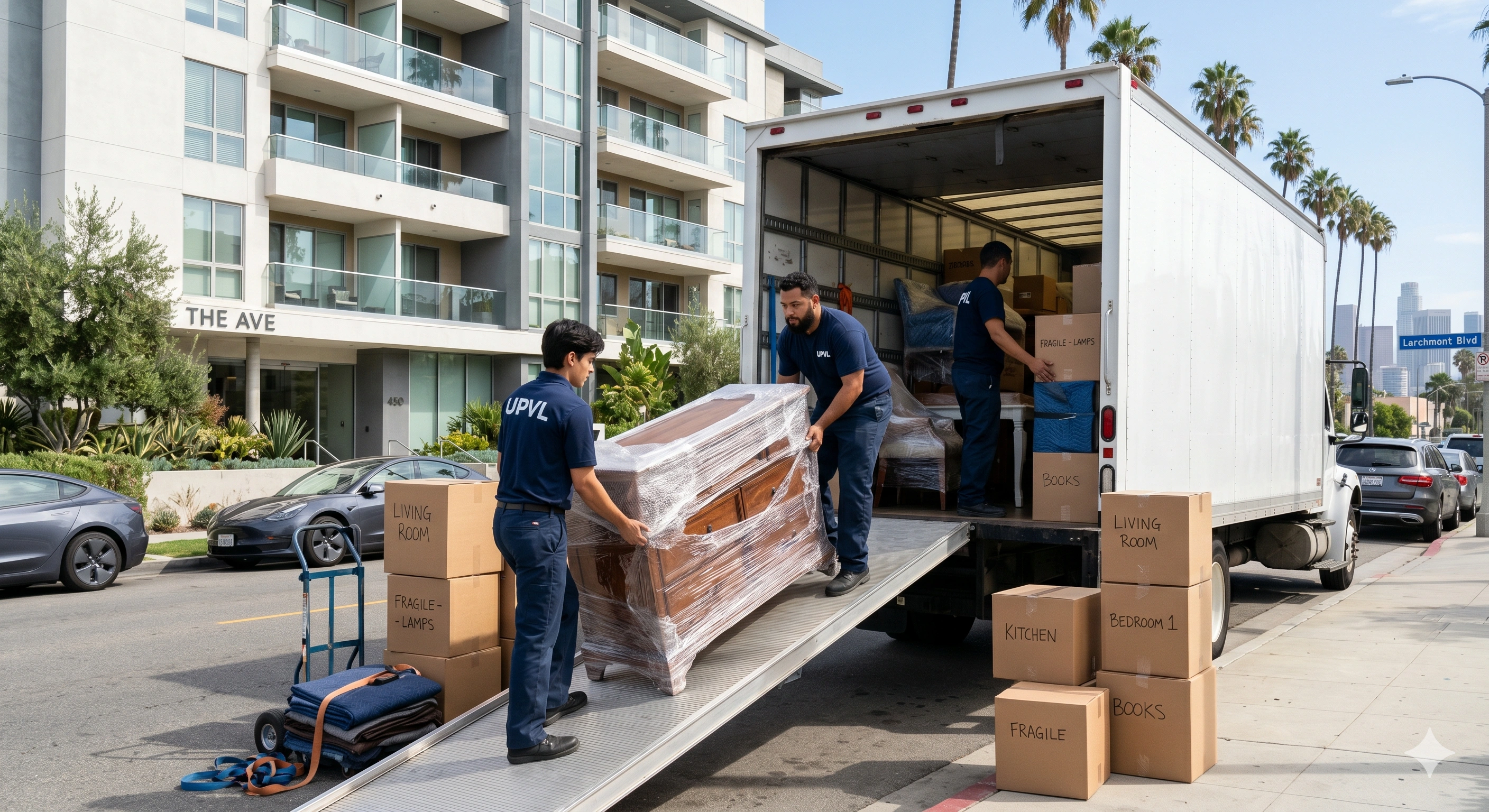
Moving in Los Angeles sounds exciting until the real logistics show up: apartment parking, narrow streets, elevator reservations, traffic on the 405, hillside driveways, storage timing, fragile packing, and that one oversized couch that somehow fit into the old place but refuses to leave quietly. If you are searching for Los Angeles movers, you probably want more than a truck and a few strong people. You want a move that is planned clearly, priced honestly, handled legally, and protected from the first box to the final walkthrough.
Los Angeles is not a simple city to move through. It is huge, spread out, dense in some neighborhoods, hilly in others, and famous for traffic that can turn a short distance into a long afternoon.
A move from Hollywood to West Hollywood may look easy on a map. A move from Santa Monica to Downtown LA may look manageable if you only count miles. But once you add apartment access, building rules, parking limitations, elevator reservations, narrow streets, and traffic, the move becomes much more complicated.
That is why LA movers need more than general moving experience. They need local experience. Los Angeles County had an estimated population of 9,694,934 as of July 1, 2025, making it the most populous county in the United States, according to the U.S. Census Bureau QuickFacts.
That number matters when you move. More people means more apartment buildings, more cars, more managed properties, more loading restrictions, more demand for good moving dates, and more competition for reliable licensed movers Los Angeles residents can trust.
Los Angeles also has neighborhood variety that affects moving. A flat apartment move in Koreatown is different from a hillside move in Silver Lake. A condo move in Westwood is different from a house move in Sherman Oaks. A beach-area move in Venice is different from a long-distance relocation out of California.
Then there are regional risks. Los Angeles deals with earthquakes, wildfires, heat waves, heavy rain events, and power disruptions. Ready LA County advises residents to prepare for emergencies by making a plan, building a kit, staying informed, and getting involved, which is also practical moving advice because your documents, medication, chargers, and essentials should never disappear into a random box. Source: Ready LA County.
A good Los Angeles move starts with clear answers to practical questions:
If you answer those questions early, your move becomes easier to price, easier to schedule, and easier to control.
Not every move needs the same service level. Some people only need movers for a small studio apartment. Others need full packing, storage, long-distance transportation, furniture disassembly, fragile-item handling, or careful planning around building rules.
Before comparing moving companies in Los Angeles, define the type of move you actually need. That one step makes the entire process clearer.
| Moving Need | Best Service Type | Why It Matters |
|---|---|---|
| Moving within Los Angeles | Local moving | Usually based on labor time, crew size, truck access, stairs, elevators, and traffic. |
| Moving within California | Intrastate moving | Requires California household mover licensing and clear written terms. |
| Moving from Los Angeles to another state | Long-distance moving | Requires interstate moving authority, detailed inventory, valuation options, and delivery planning. |
| Moving from or into an apartment | Apartment moving | Often involves parking rules, elevators, stairs, access codes, and building management coordination. |
| Moving from or into a house | Residential house moving | May involve garages, patios, large furniture, outdoor items, and multiple rooms. |
| Moving fragile items | Packing and specialty handling | Helps reduce damage risk for glass, art, mirrors, electronics, and delicate furniture. |
| Moving before the new home is ready | Storage | Useful for closing delays, lease gaps, renovations, downsizing, or staged deliveries. |
| Moving a business | Commercial moving | Requires equipment planning, downtime control, labeling, and fast setup. |
The biggest mistake is searching for “cheap movers” before you know what the job includes. A cheap quote can look attractive at first, but if it misses packing, stairs, long carry, storage, or furniture assembly, the final price can change fast.
Instead, start with the scope. Ask yourself what you need the movers to do. Then compare companies based on the same services.
If you are planning a move and want a team that can help coordinate the process, a professional moving company in Los Angeles can be useful when you need more than basic loading and unloading.

Long-distance moving from Los Angeles is a different process from a local move. If you are moving from Los Angeles to Las Vegas, Phoenix, Dallas, Denver, Chicago, Miami, Seattle, Portland, Nashville, New York, or another state, you need more than a moving crew.
You need a plan for inventory, pickup, transit, delivery windows, valuation coverage, packing, storage, and federal moving rules.
The Federal Motor Carrier Safety Administration runs the Protect Your Move program, which helps consumers understand interstate moving rules and avoid moving fraud.
That matters because interstate moving is more regulated and more paperwork-heavy than a local move. You should know who is transporting your shipment, what type of estimate you are signing, what is included, and how delivery will work.
| Cost Factor | Why It Matters | What You Should Do |
|---|---|---|
| Distance | Longer routes increase transportation cost. | Confirm origin, destination, and any extra stops. |
| Shipment size | More items require more truck space and handling. | Create an accurate inventory. |
| Packing services | Packing adds labor and materials. | Choose full, partial, or self-packing. |
| Storage | Storage adds handling and monthly fees. | Ask if storage-in-transit is included or separate. |
| Access | Stairs, elevators, long carries, and shuttles affect labor. | Explain access at pickup and delivery. |
| Delivery window | Long-distance delivery is usually not instant. | Ask for realistic timing in writing. |
| Valuation coverage | Coverage affects claims and protection. | Review Released Value and Full Value Protection. |
A long-distance quote should not be based on a two-minute phone call. A serious estimate needs a real inventory.
If you have a two-bedroom apartment, that tells the mover almost nothing. One two-bedroom apartment may have 35 boxes and basic furniture. Another may have 100 boxes, a storage unit, patio furniture, a large sectional, three TVs, artwork, gym equipment, and fragile décor.
Those are not the same move.
FMCSA explains that a binding estimate means the mover must deliver the shipment for the estimated amount, as long as the shipment and services match what was listed. A non-binding estimate is not a guaranteed final price, but FMCSA says a mover generally cannot require more than 110% of a non-binding estimate at delivery, with remaining charges billed later. Source: FMCSA: What Is a Binding Move Estimate?.
This is one of the most important rules to understand before an interstate move. It helps you compare estimates and avoid confusing pricing.
Still, remember this: even a binding estimate depends on accurate inventory. If you add items or services, the estimate may need to be revised.
Packing is where many moves succeed or fall apart.
People often underestimate packing because it looks simple. Put things in boxes, tape the boxes, write a room name on top, and move on. But real packing is more careful than that, especially in Los Angeles homes where people may have glass tables, framed art, electronics, designer furniture, fragile décor, musical instruments, books, plants, and outdoor furniture.
Good packing saves time, reduces damage risk, and makes unloading easier.
| Packing Option | Best For | Pros | Watch Out For |
|---|---|---|---|
| Self-packing | Budget-conscious moves with simple items | Saves money and gives you control. | Damage risk is higher if boxes are weak or poorly packed. |
| Partial packing | Kitchens, fragile items, mirrors, artwork, TVs | Good balance of cost and protection. | Must clearly define what movers pack. |
| Full packing | Large homes, busy families, long-distance moves | Saves time and creates consistent packing quality. | Higher upfront cost. |
| Specialty packing | Art, antiques, glass, marble, instruments | Better protection for valuable items. | May require crating or special materials. |
You do not always need full packing. Many customers choose partial packing because it protects the risky items while keeping the total cost under control.
For example, you can pack clothes, shoes, linens, books, and basic household items yourself. Then you can let the movers pack dishes, mirrors, framed pictures, TVs, lamps, artwork, and fragile décor.
That is often the smartest middle ground.
| Item Type | Recommended Material | Why It Helps |
|---|---|---|
| Dishes | Dish boxes, packing paper, dividers | Reduces pressure and impact. |
| Glassware | Cell dividers and packing paper | Prevents glass-to-glass contact. |
| TVs | TV box, screen cover, foam protection | Protects screen and corners. |
| Mirrors | Mirror cartons and edge guards | Reduces cracking risk. |
| Mattresses | Mattress bags | Protects from dust, stains, and moisture. |
| Furniture | Moving blankets, stretch wrap, corner guards | Prevents scratches and dents. |
| Clothes | Wardrobe boxes | Keeps hanging clothes organized. |
| Electronics | Original boxes or padded cartons | Protects delicate components. |
| Books | Small boxes | Prevents overweight boxes. |
| Artwork | Picture boxes or custom crating | Reduces puncture and pressure damage. |
The most common packing mistake is using boxes that are too large. Large boxes filled with books, dishes, tools, or documents become heavy and unsafe.
Use small boxes for heavy items and larger boxes for lightweight items.
Simple rule: if you cannot lift the box comfortably, it is too heavy.
This is especially important in Los Angeles because emergency preparedness matters. If a wildfire warning, earthquake, outage, or traffic disruption happens, you do not want your essential documents buried in a truck or warehouse.
Every move needs an open-first box.
Include toilet paper, paper towels, hand soap, trash bags, basic tools, phone chargers, medication, pet supplies, snacks, bottled water, towels, shower items, a change of clothes, coffee supplies, and cleaning wipes.
When you arrive tired at the new place, this box will feel like a rescue kit.

Storage is common in Los Angeles moves because timing does not always line up neatly.
Maybe your lease ends before your new lease starts. Maybe your closing date changes. Maybe your new apartment is not ready. Maybe you are renovating. Maybe you are downsizing. Maybe you are moving out of state and do not want immediate delivery.
Storage can solve the gap, but only if you understand the terms.
In Los Angeles, storage can be especially helpful when dealing with apartment timing, construction delays, or long-distance delivery windows.
Climate-controlled storage may be worth considering for art, electronics, instruments, documents, leather, wood furniture, and high-value items.
| Storage Situation | Best Option | Why |
|---|---|---|
| 1 to 7 day timing gap | Short-term mover storage | Convenient and reduces extra handling. |
| 1 to 3 month gap | Warehouse storage | Useful for lease or closing delays. |
| Renovation | Accessible storage | You may need to retrieve items. |
| Downsizing | Climate-controlled storage | Better for sensitive furniture and documents. |
| Long-distance delay | Storage-in-transit | Helps when delivery timing is uncertain. |
Storage is useful, but it should not become a way to avoid decisions forever. If you store items for a year, the storage fees may cost more than the items are worth.
Before storing anything, ask yourself: would I pay to buy this again?
If the answer is no, it may be time to donate, sell, or recycle it.
The honest answer to “How much do Los Angeles movers cost?” is simple: it depends on the move.
That may sound frustrating, but it is true. Moving cost depends on inventory, labor, crew size, truck needs, stairs, elevators, parking, packing, storage, distance, valuation coverage, and the type of estimate.
For local LA moves, pricing is often hourly. For long-distance moves, pricing may depend on shipment size, distance, services, access, and delivery conditions.
| Cost Factor | How It Affects Price | How to Control It |
|---|---|---|
| Inventory size | More items require more labor and truck space. | Declutter before requesting an estimate. |
| Packing services | Packing adds labor and materials. | Choose partial packing for fragile items. |
| Stairs | Carrying items up or down stairs takes more time. | Tell the mover about stairs upfront. |
| Elevators | Slow or shared elevators can create delays. | Reserve elevators early. |
| Long carry | Truck parked far from the door increases labor time. | Confirm parking access. |
| Parking restrictions | Limited truck access can slow the move. | Ask about permits or loading zones. |
| Heavy items | May require extra movers or equipment. | Mention pianos, safes, gym equipment, and large furniture. |
| Move date | Busy dates may be harder to book. | Use flexible dates if possible. |
| Storage | Adds handling and storage fees. | Confirm pricing in writing. |
| Long-distance delivery | Distance and shipment size matter. | Request a detailed written estimate. |
| Move Scenario | Common Pricing Style | What to Confirm |
|---|---|---|
| Small apartment in Los Angeles | Hourly | Minimum hours, travel time, supplies, stairs, and parking. |
| Condo or apartment building move | Hourly | COI, elevator reservation, loading dock, and building rules. |
| House move | Hourly or flat estimate | Crew size, garage items, patio furniture, packing, and access. |
| Los Angeles to another California city | Intrastate estimate | California licensing, written terms, and delivery timing. |
| Los Angeles to another state | Long-distance estimate | FMCSA authority, estimate type, delivery window, and valuation. |
| Full-service move | Package estimate | Packing, materials, furniture handling, storage, and coverage. |
The biggest cost mistake is hiding items to keep the estimate low. It usually backfires.
If the crew arrives and finds more items than expected, the move can require more labor, more truck space, more time, or a revised estimate.
Be honest upfront. It is usually cheaper than surprises on moving day.
Hourly vs flat-rate pricing is one of the most common questions people ask when comparing LA movers.
There is no universal winner. The better option depends on the move.
Hourly pricing can be great for a simple local move. Flat-rate pricing can be better for larger, more complex, or long-distance moves where you want more predictability.
Hourly pricing usually works well when the move is local, inventory is simple, access is easy, the customer is fully packed, parking is close, elevators are reserved, and there are no major surprises.
The risk is delay.
If the elevator is slow, the truck has to park far away, or boxes are not ready, the final cost goes up.
Flat-rate pricing usually works better when inventory is clear, the move is larger, the move is long-distance, there are multiple services included, and the mover has enough details to price the job accurately.
The risk is scope change.
If you add items, request extra packing, add storage, or change access details, the flat price may need to be updated.
| Pricing Type | Best For | Main Advantage | Main Risk |
|---|---|---|---|
| Hourly | Local Los Angeles moves | Flexible and fair for simple moves. | Delays increase cost. |
| Flat-rate | Larger or complex moves | More predictable when inventory is accurate. | Scope changes can raise price. |
| Binding estimate | Clear inventory and services | Stronger price certainty. | Must disclose all items and services. |
| Non-binding estimate | Some interstate moves | Can reflect actual shipment details. | Final cost may change. |
If your move is small, local, and easy to access, hourly pricing may make sense.
If your move involves a building, storage, long-distance transportation, many fragile items, or uncertain access, ask whether a flat or binding estimate is available.
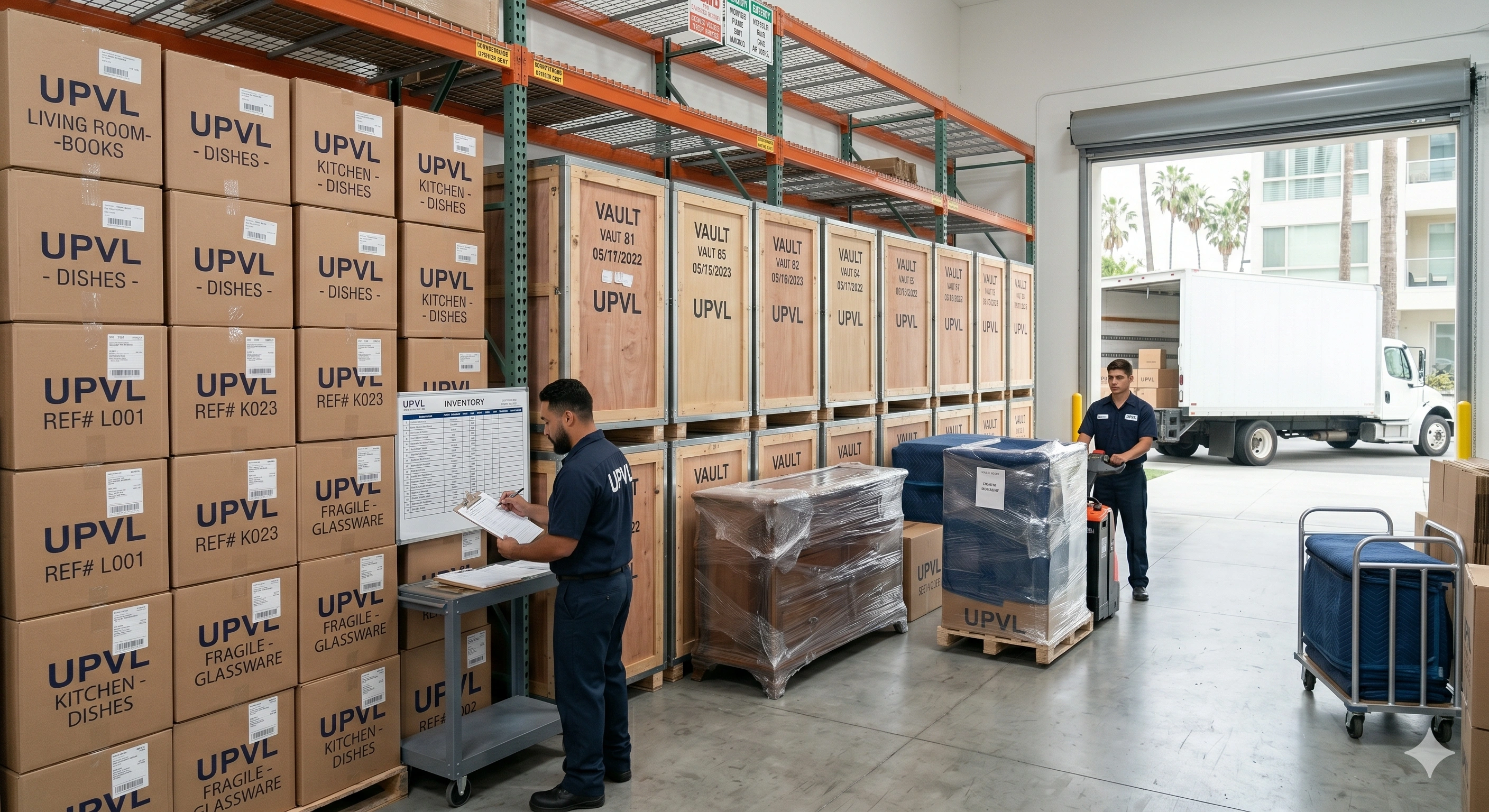
Licensing and insurance are not just marketing words. They are part of protecting your belongings, your money, and your peace of mind.
When people search for licensed movers Los Angeles or insured movers LA, they usually want to know one thing: can I trust this company?
That is the right question.
For residential moves within California, household moving companies must be licensed before operating. The California Bureau of Household Goods and Services states that it regulates residential moving companies that perform moves within California, and moving companies must be licensed before operating. Source: California Bureau of Household Goods and Services.
This is important because a licensed mover is not just someone with a truck. A licensed mover must follow industry rules, maintain required licensing, and operate under state oversight.
The Bureau also explains that a general household mover license applies to companies moving household goods entirely within California, as well as companies moving household goods within California and into or out of California. Source: BHGS Household Movers FAQ.
If your move crosses state lines, federal rules apply. You should check FMCSA information and confirm whether the company is acting as a mover, broker, or both.
A mover physically transports your shipment. A broker arranges the move with another company.
Brokers are not automatically bad, but you need to know who is actually responsible for your items.
If a company avoids answering that question, be careful.
Many customers ask, “Are you insured?” That is a good question, but it is not enough.
You also need to ask what protection applies to your belongings.
For interstate moves, FMCSA explains that movers must assume liability for the household goods they transport, and customers generally choose between Full Value Protection and Released Value. Source: FMCSA Rights and Responsibilities Booklet.
Released Value is minimal protection. It may be based on weight, not replacement cost. That can be a problem for expensive lightweight items like laptops, artwork, lamps, cameras, electronics, or designer décor.
| Protection Type | What It Means | Best For | Watch Out For |
|---|---|---|---|
| Released Value | Basic minimum liability | Lowest-cost basic coverage | May pay very little for expensive items. |
| Full Value Protection | More complete repair or replacement responsibility | Long-distance and valuable shipments | Costs more and has terms. |
| Third-party insurance | Separate insurance policy | High-value goods | Must review exclusions carefully. |
| Building COI | Shows liability coverage for building requirements | Condo and apartment moves | Does not mean full coverage for your personal items. |
A Certificate of Insurance is often required by apartment and condo buildings. It helps satisfy building management, but it is not the same thing as full replacement protection for your belongings.
Ask both questions:
They are related, but they are not the same.
Choosing a moving company Los Angeles residents can trust should not be based on price alone.
Price matters, of course. Nobody wants to overpay. But the cheapest mover can become the most expensive choice if the quote is vague, the crew is unprepared, or the company is not properly licensed for the move.
A strong moving company should be organized, responsive, transparent, and willing to explain the details.
If the mover rushes you, avoids questions, refuses to explain fees, or pressures you to book immediately, step back.
| Question | Why It Matters |
|---|---|
| Are you licensed for this move type? | Confirms compliance. |
| Are you a mover, broker, or both? | Clarifies responsibility. |
| Is my estimate written? | Protects against vague pricing. |
| Is pricing hourly, flat, binding, or non-binding? | Helps compare quotes correctly. |
| What is included? | Prevents surprise add-ons. |
| What is not included? | Reveals possible extra charges. |
| Can you provide a COI? | Important for apartment and condo buildings. |
| What valuation coverage is included? | Clarifies liability. |
| Do you offer packing? | Useful for fragile items. |
| Do you offer storage? | Helps with timing gaps. |
| How do claims work? | Important if damage occurs. |
The point is simple: do not ignore warning signs just because the price looks attractive.
Moving gets easier when you stop trying to remember everything in your head.
Use checklists. They work.
| Task | Why It Matters |
|---|---|
| Declutter room by room | Reduces moving cost and packing time. |
| Request estimates | Gives you time to compare movers. |
| Ask building for rules | Prevents move-day delays. |
| Start packing nonessentials | Keeps the final week manageable. |
| Create inventory | Helps with accurate estimates. |
| Plan storage if needed | Avoids last-minute stress. |
| Task | Why It Matters |
|---|---|
| Confirm mover | Secures your date. |
| Reserve elevator | Required by many apartment and condo buildings. |
| Request COI | Needed for many managed buildings. |
| Pack décor and seasonal items | Reduces workload. |
| Arrange utilities | Prevents service gaps. |
| Update address | Helps mail and billing transition. |
| Task | Why It Matters |
|---|---|
| Confirm arrival time | Avoids confusion. |
| Finish most packing | Keeps moving day efficient. |
| Label boxes clearly | Speeds unloading. |
| Prepare open-first box | Makes the first night easier. |
| Confirm parking | Prevents delays. |
| Separate valuables | Keeps important items with you. |
| Task | Why It Matters |
|---|---|
| Walk the crew through the home | Confirms scope. |
| Point out fragile items | Improves handling. |
| Keep building paperwork nearby | Helps with access. |
| Keep pets secure | Prevents accidents. |
| Check empty rooms | Avoids leaving items behind. |
| Inspect delivery | Documents any issues quickly. |
Start with the basics. Set up beds, stock the bathroom, connect chargers and Wi-Fi, check fragile items, inspect major furniture, locate kitchen essentials, break down empty boxes, and report damage quickly if needed.
Do not try to unpack everything in one night. You will burn out.
Focus on making the home livable first.
Los Angeles moving cost depends on the size of your move, crew size, truck needs, stairs, elevators, packing, storage, parking access, and whether the move is local, within California, or interstate. Local moves are often priced hourly, while long-distance moves usually require a detailed written estimate.
Prepare a room-by-room inventory, count your boxes, mention heavy or fragile items, share building rules, explain parking access, and include stairs or elevators. Photos or a video walkthrough can make the estimate much more accurate.
Hourly pricing can work well for simple local LA moves when everything is packed and access is easy. Flat-rate pricing may be better for larger, complex, or long-distance moves where the inventory is clearly documented.
A binding estimate means the mover must deliver the shipment for the estimated amount if the listed inventory and services match the estimate. If you add items or request extra services, the estimate may need to be updated.
A non-binding estimate is an approximation, not a guaranteed final price. For interstate moves, FMCSA says movers generally cannot require more than 110% of the non-binding estimate at delivery, with remaining charges billed later.
For residential moves within California, check whether the mover is licensed through the California Bureau of Household Goods and Services. For interstate moves, check FMCSA information and confirm whether the company is a mover, broker, or both.
It means the mover carries required insurance or liability coverage, but you still need to ask what protection applies to your belongings. Basic liability does not always equal full replacement value.
Released Value is basic protection and may be too limited for expensive items. If you have electronics, artwork, antiques, designer furniture, or fragile valuables, ask about Full Value Protection or additional coverage.
Many Los Angeles apartment and condo buildings require a Certificate of Insurance before move day. Ask your building manager early and send the exact COI requirements to your mover.
Professional packing is worth considering if you have fragile items, a large home, limited time, or a long-distance move. Partial packing is a good middle ground for kitchens, mirrors, artwork, TVs, lamps, and delicate décor.
Ask whether the company is licensed, insured, a mover or broker, whether the estimate is written, what is included, what can change the price, what coverage applies, and whether they can handle your building requirements.
For California moves, the contact information is:
Moving services - United Prime Van Lines
21350 Lassen St, Chatsworth, CA 91311, United States
Phone: +1 888-807-5399
A Los Angeles move can be smooth, but it rarely becomes smooth by accident.
The best moves start with clear details: your inventory, building rules, parking access, elevator reservations, packing needs, storage timing, access conditions, and written pricing.
Do not choose Los Angeles movers by price alone. Choose by clarity.
A professional moving estimate should explain what is included, what is not included, how pricing works, what coverage applies, and what you need to do before moving day.
Ask questions early. Get building rules early. Reserve elevators early. Confirm parking. Pack smarter. Protect fragile items. Understand hourly vs flat pricing. Verify licensing and insurance. Keep important documents and valuables with you.
Moving is not just about getting furniture from one address to another. It is about protecting your time, your money, your belongings, and your peace of mind.
So before you book your move, ask yourself one simple question: do I fully understand what is included in my estimate, or am I just hoping everything works out on moving day?