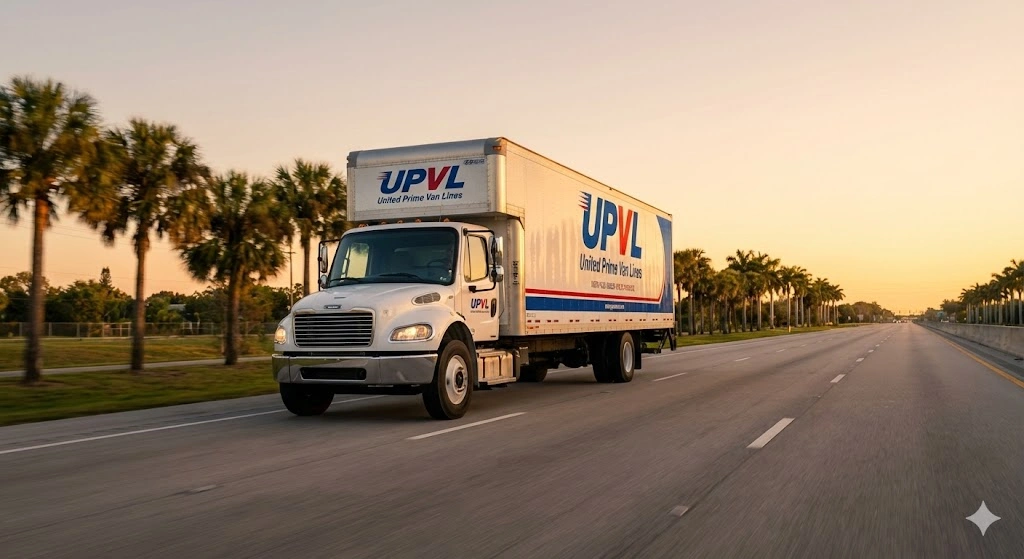
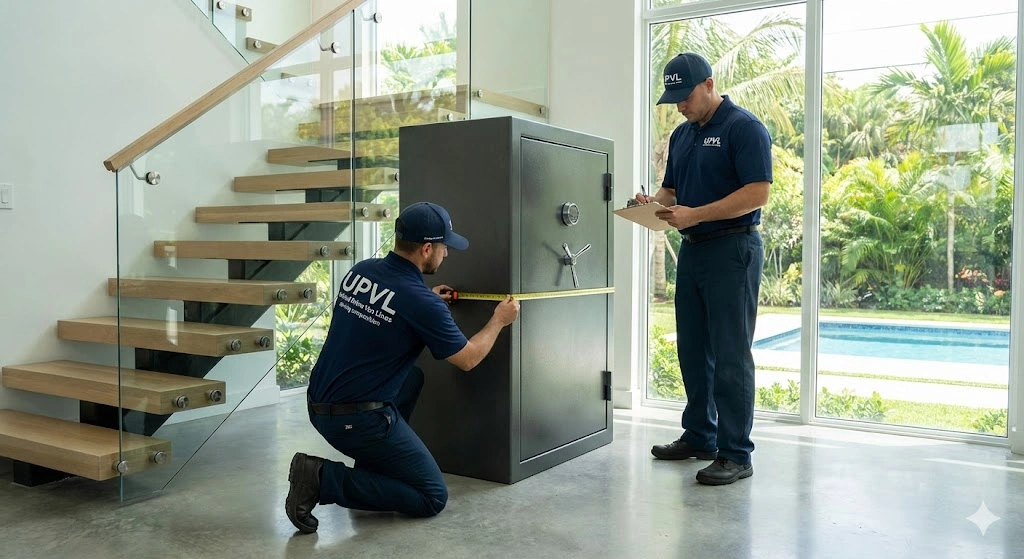
Unless you pay for an Exclusive Use (Dedicated) Truck (where your stuff is the only thing on board), your items are likely sharing space with other customers moving along the same route to keep costs down.
Realistic Transit Timelines (Estimates):
- FL to GA/SC (Short Long-Distance): 2–5 days.
- FL to NY/NJ (East Coast Run): 4–10 days.
- CA to TX/CO (Mid-Distance): 5–12 days.
- Coast to Coast (FL to CA or NY to LA): 10–21 days.
Note: At United Prime Van Lines, we strive for tighter windows (often 3–7 days for standard routes), but weather, traffic, and consolidation logistics always play a role.
Phase 5: Delivery (1 Day)
Unloading is faster than loading.
- Why? Gravity works with us, and we aren't spending time Tetris-ing boxes into a truck wall.
- Time: Usually 3–6 hours depending on access (stairs vs. elevator).
2. How Long Does the Truck Take? (The Transit Window)
This is the part that surprises people the most. You might drive your car from Miami to New York in two long days of driving. So why does the moving truck take 4–10 days?
It comes down to two main factors: Logistics and Federal Law.
The "Uber Pool" vs. "Private Car" Concept
Unless you are moving a massive estate that fills an entire 53-foot semi-truck, your move is likely going on a Consolidated Truck.
- Consolidated (Shared) Shipping: Think of this like an "Uber Pool." Your belongings are safely partitioned on a large truck with 2–4 other families' shipments moving in the same direction.
- The Pro: It is significantly cheaper because you share the fuel and driver costs.
- The Con: It takes longer. The truck might stop in Orlando and Savannah to pick up other shipments before heading north to deliver yours in New Jersey.
- Timeline: Flexible delivery window (e.g., 4–10 days).
- Exclusive Use (Dedicated) Shipping: Think of this like a "Private Car." You pay for the entire truck, regardless of how much stuff you have.
- The Pro: The truck goes directly from Point A to Point B with no other stops. You pick the exact delivery date.
- The Con: It is much more expensive.
- Timeline: Direct drive (e.g., 2–3 days for FL to NY).
Why the Truck is Slower Than Your Car (DOT Rules)
Even if the truck goes directly to your new home, it will still be slower than you driving your sedan.
Professional truck drivers are strictly regulated by the Department of Transportation (DOT):
- 11-Hour Limit: Drivers are legally allowed to drive a maximum of 11 hours in a 14-hour window, followed by a mandatory 10-hour break.
- Weigh Stations: Trucks must stop at weigh stations and agricultural checkpoints, which adds time.
- Speed: Loaded semi-trucks generally travel slower than passenger cars, especially through mountains or heavy traffic.
Realistic Transit Estimates (The Cheat Sheet)
Based on our experience at United Prime Van Lines, here are realistic delivery windows for Consolidated Moves (Standard):
- East Coast Run (e.g., Hallandale Beach, FL → New York/New Jersey):
- Estimate: 3 – 10 Days
- The "Snowbird" Route (e.g., FL → Midwest/Chicago):
- Estimate: 4 – 12 Days
- Mid-Distance (e.g., Los Angeles, CA → Texas/Colorado):
- Estimate: 4 – 10 Days
- Coast-to-Coast (e.g., Miami → Los Angeles / California → Florida):
- Estimate: 10 – 21 Days
Note: These are ranges. We always aim for the shorter end, but weather, mechanical checks, and route logistics can push it to the longer end.
3. How Long Until You Feel Settled? (The Unpacking Phase)
The truck arrives. The crew unloads everything into your new rooms. They reassemble the beds and tables. They drive away. Now what?
- The "Essentials" Phase (Days 1–3): You are living out of your "Open First" boxes. Kitchen basics, bedding, toiletries. You are functional, but surrounded by cardboard towers.
- The "Functional" Phase (Weeks 1–2): The kitchen is fully unpacked. Clothes are in closets. The TV is set up. You can host a friend for coffee, but the guest room is still a storage unit.
- The "Home" Phase (Weeks 4–6): Art is on the walls. The garage is organized. You finally broke down the last box.
Pro Tip: If you used our Professional Packing Service, ask about Unpacking Services too. We can unpack the boxes and take the debris away with us on delivery day, turning that 4-week settling period into 2 days.
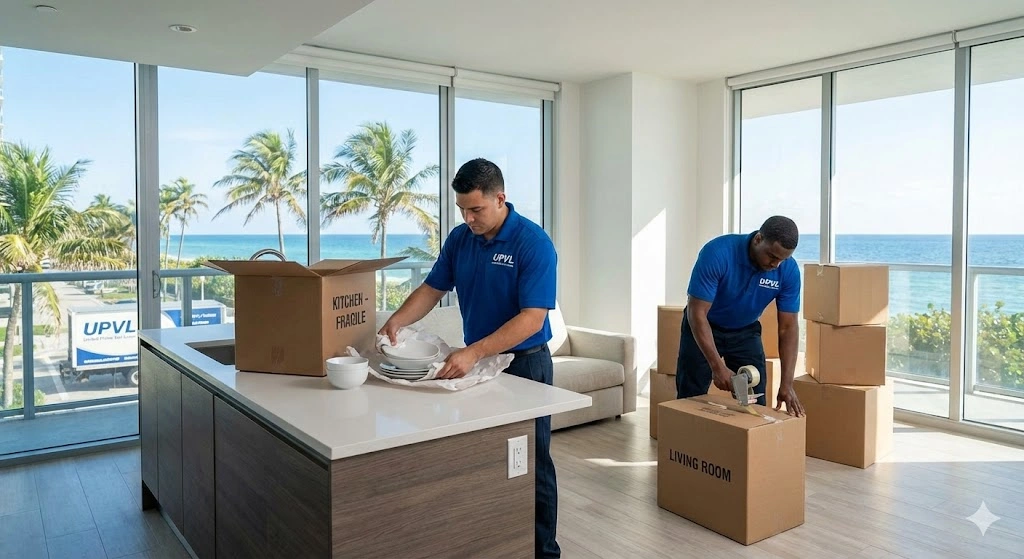
4. How Long Until You Feel Settled?
The truck arrives, the crew unloads everything, and they drive away. Now comes the part everyone forgets to budget time for: turning a pile of boxes back into a home.
The DIY Unpacking Timeline (The Marathon)
If you are unpacking yourself, be realistic. Most people work full-time jobs and can only unpack on nights and weekends.
- Days 1–3: You’re living out of “Open First” boxes (kitchen essentials, bedding, toiletries). You’re functional, but it feels like camping.
- Weeks 1–2: The kitchen is mostly done. Clothes are in closets. The TV is set up. You can host a friend for coffee, but the guest room is still a storage unit.
- Weeks 4–8: Art goes on the walls. The garage finally gets organized. You break down the last box.
The Reality: For many families, that last 10% of boxes (books, random decor, garage stuff) sits unpacked for months.
The Professional Unpacking Timeline (The Sprint)
If you hire us for unpacking services, the timeline compresses drastically.
- Day 1 (Delivery Day): We unload and reassemble furniture.
- Day 2 (Unpacking Day): A crew opens boxes, puts items in cupboards/closets/shelves, and takes all the cardboard and trash away with them.
You go from “empty house” to “fully lived-in home” in about 48 hours. It costs more, but for busy professionals or families with small kids, buying back those 4–8 weeks of chaos is often worth it.
Can You Speed Up the Truck? (The "Exclusive Use" Option)
If looking at a 3–10 day delivery window makes you panic, you do have another option.
You can ask for Exclusive Use (sometimes called a Dedicated Truck).
- How it works: You pay to reserve the entire truck, even if your stuff only fills half of it. No other customers’ items are loaded.
- The Speed: The driver goes directly from Point A to Point B with no detours for other pickups.
- The Result: Your delivery timeline drops to the absolute minimum driving time allowed by law (plus loading/unloading).
- Standard: 4–14 days.
- Exclusive: 2–5 days (depending on distance).
This is a premium service—it costs significantly more because you aren’t sharing fuel or labor costs—but if you have a strict closing date or start a new job on Monday, it’s the only way to guarantee a tight date.
Summary: The Realistic Cheat Sheet
Here is the "back-of-the-napkin" math we use at United Prime Van Lines to help you plan your life.
PhaseEstimated TimeWho Controls It?Booking4–8 weeks out (Ideal)YouPacking1–3 days (Pro) / 3+ weeks (DIY)You or UsLoading1 DayUsTransit2–14+ Days (Distance dependent)Driver / LogisticsDelivery1 DayUsSettling In2 Days (Pro) / 4+ Weeks (DIY)You or Us
Total Time (Door-to-Door):
- Short Long-Distance (e.g., FL to GA): ~2–5 Days
- Mid-Distance (e.g., FL to NY): ~4–10 Days
- Cross-Country (e.g., FL to CA): ~10–21 Days
The Takeaway
A long-distance move isn’t just a drive; it’s a logistical chain.
The best way to keep that chain moving smoothly is communication. When you book with United Prime Van Lines, we’ll look at your specific route—whether it’s Hallandale Beach to Dallas or Chatsworth to Seattle—and give you a window you can actually plan your life around.
We can’t make the miles shorter, but we can make the timeline clearer.
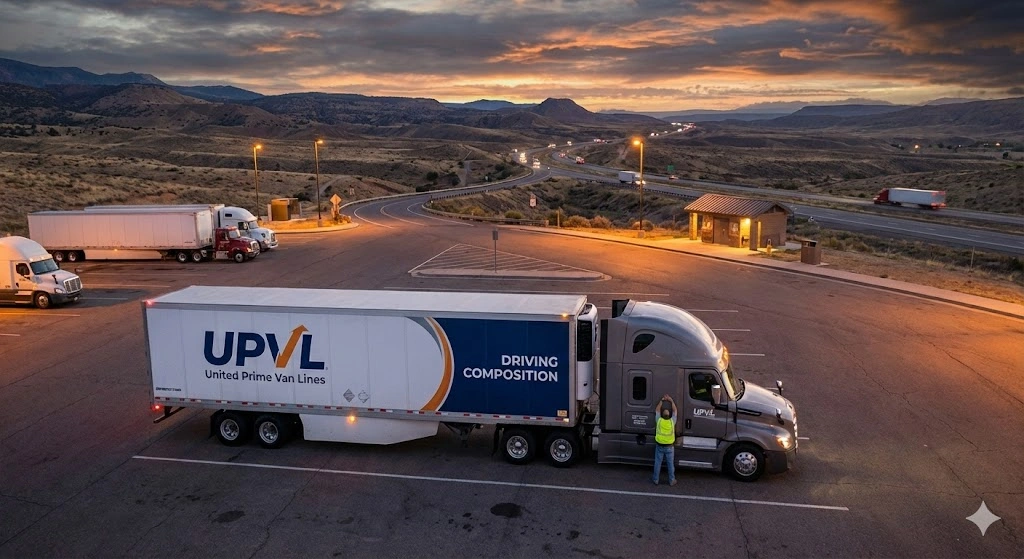
The "Gap" Days: What To Do While Your Stuff Is on the Road
If you have a 5–10 day delivery window, you might beat the truck to your new home. Instead of sitting on the floor waiting, use this "gap time" to speed up your settling process later.
The "Pre-Move" Checklist:
- Deep Clean: It is infinitely easier to clean carpets, scrub baseboards, and wipe out cupboards when the house is empty.
- Measure & Map: Use blue painter’s tape to mark exactly where the sofa, beds, and rugs will go. This makes delivery day much faster because you can just point to the tape instead of debating layout while the movers hold a heavy dresser.
- Utilities & Tech: Ensure the water is hot, the AC works, and—most importantly—the Wi-Fi is set up before the boxes arrive.
How Long Until We Feel Settled? (The Unpacking Phase)
The truck arrives. The crew unloads everything in 4–6 hours. They drive away. Now you have a house full of boxes. How long until it feels like home?
The DIY Timeline (The Marathon)
If you are unpacking yourself after work and on weekends:
- Week 1 (Functional): Kitchen essentials, beds, and toiletries are unpacked. You can eat, sleep, and shower, but you’re living in a maze.
- Month 1 (Livable): Living areas and kids' rooms are done. The garage and guest room are still storage units.
- Month 3–6 (Done): The last box (usually books or sentimental items) is finally broken down.
The Professional Timeline (The Sprint)
If you hire us for Unpacking Services:
- Day 1: We unload.
- Day 2: We unpack everything, organize it into shelves/closets, and remove all the trash.
- Result: You are settled in 48 hours.
The Bottom Line: Moving is a Marathon, Not a Sprint
When you add it all up—booking, packing, transit, and settling—a long-distance move isn't a "weekend project." It's a 4–8 week lifecycle.
The secret to a low-stress timeline?
- Book Early: Lock in your dates 4–6 weeks out.
- Be Flexible: Mid-month, mid-week moves are smoother.
- Communicate: Tell us about the elevator, the narrow street, and your "must-have" delivery dates upfront.
At United Prime Van Lines, we can’t make the miles shorter, but we can make the timeline clearer. When you know what to expect, the wait gets a whole lot easier.
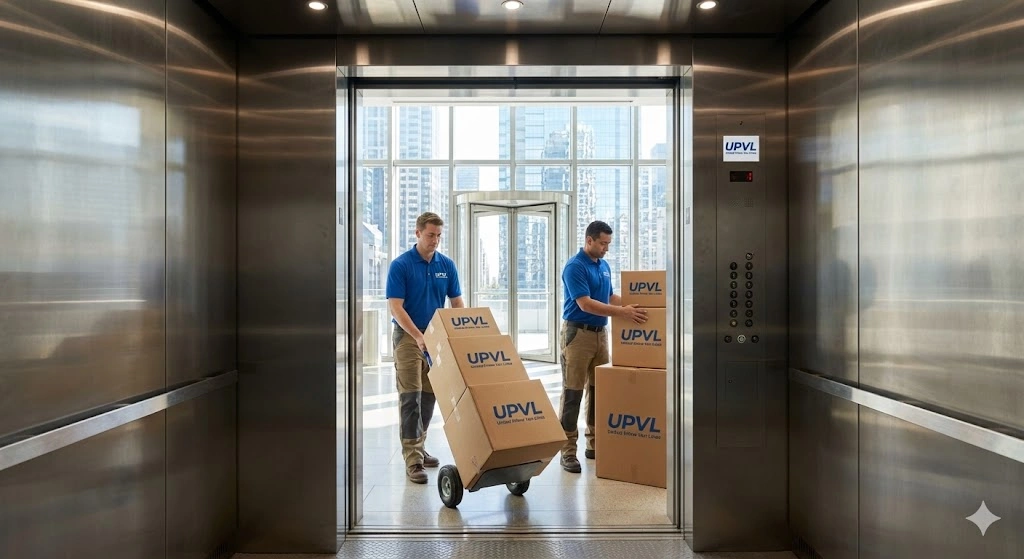
The Bottom Line: Moving is a Process, Not Just a Drive
When you look at the timeline from 30,000 feet, you realize that the actual driving part is just one slice of the pie.
A successful long-distance move isn't about getting the truck there at 90 mph. It's about:
- Smart Prep: Booking early and packing methodically.
- Realistic Expectations: Knowing that a 650-mile move isn't a one-day drive for a semi-truck.
- Communication: Having a mover who tells you where your stuff is, instead of leaving you guessing.
At United Prime Van Lines, we can’t make the miles go by faster, but we can make the timeline clearer. Whether you are moving from Hallandale Beach to Atlanta or Chatsworth to Chicago, we give you dates you can actually plan your life around.
Don't stress the calendar. Plan the process.
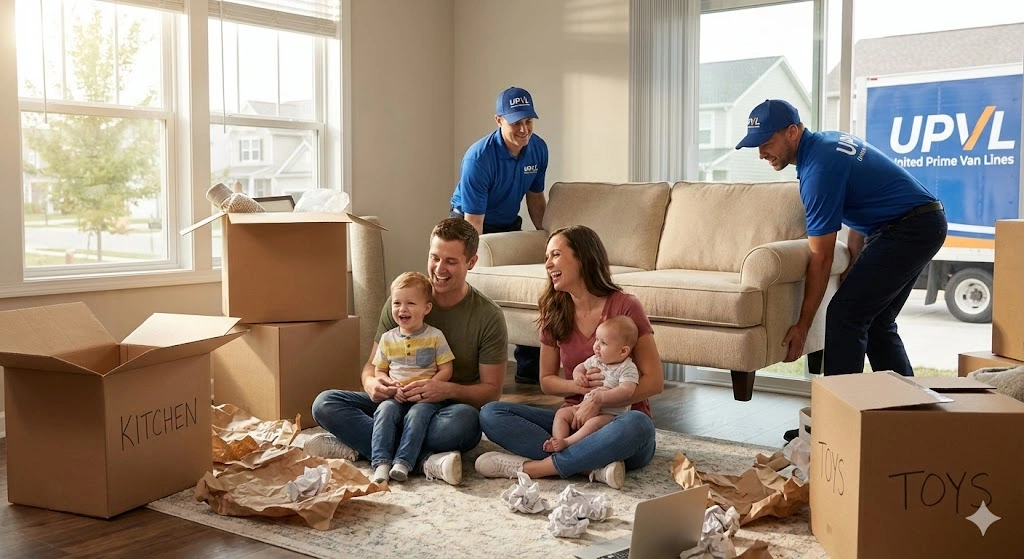
Shortcut: Rough Total Timelines for Long-Distance Moves
Putting all three layers together (prep + transit + settling), most long-distance moves look like this:
- Small move (Studio / 1-Bedroom):
- Prep: 1–3 weeks (less if we pack for you).
- Transit: 2–10 days (depending on distance).
- Settling: 2–5 days.
- Medium move (2–3 Bedrooms):
- Prep: 3–6 weeks.
- Transit: 3–14 days.
- Settling: 1–2 weeks.
- Large move (4+ Bedrooms):
- Prep: 4–8 weeks.
- Transit: 4–21 days (especially cross-country).
- Settling: 2–4 weeks.
You don’t need to memorize this. But having this mental framework helps you avoid planning something unrealistic like, “We’ll move from California to Florida next weekend and be fully settled by Tuesday.”
How We Handle Timelines at United Prime Van Lines
We know your move isn’t just “boxes on a truck.” You’re planning start dates at new jobs, kids starting new schools, and lease end dates. So when we talk about timing, we focus on being clear—not overly optimistic.
Here’s what we do:
- We ask about your non-negotiables. Need to be out by the 30th? We build that into the plan.
- We give realistic delivery windows. Not fantasy dates. If we can offer a tighter window with a different service level, we’ll explain that.
- We explain the specific variables. Weather, route, building access, shipment size—no vague promises, just real explanations.
- We stay reachable. You’ll have a point of contact so you aren't left wondering where your things are.
How to Make Your Long-Distance Move Go Faster
If speed matters to you, here are four real ways to tighten your timeline without losing your mind.
1. Declutter Aggressively
Fewer items = faster packing, loading, and unloading. If you haven’t used it in a year, ask yourself if it’s worth paying to move it 1,000 miles.
2. Decide Early on Packing Help