Moving is stressful enough even when everything goes right. When the paperwork is a mess or missing, that’s usually when people get into trouble: surprise charges, delayed deliveries, lost items, or outright scams.
We see it all the time when folks come to us after a bad experience with another mover: “I signed something but I don’t really know what it was,” or “They never gave me a copy.”
Let’s fix that.
In this guide, we’ll walk you through the exact documents you should get from any legit moving company (including us at United Prime Van Lines), what each one means in plain English, and a few red flags to watch for so you don’t end up paying for someone else’s mistake.
Before anyone touches a single box, there are a few things you should already have in your hands (or inbox).
If you’re moving across state lines, your mover legally has to be registered with the FMCSA. For in-state moves, there are usually state-level licenses.
What you should get or see:
Red Flag: If you ask for these numbers and they dodge the question, walk away.
This is the most critical document for your wallet. If you only have a verbal price over the phone, you don't have an estimate—you have a guess.
1. Non-Binding Estimate (The Gamble)
2. Binding Estimate (The Lock)
3. Guaranteed Not-To-Exceed (The Best of Both)
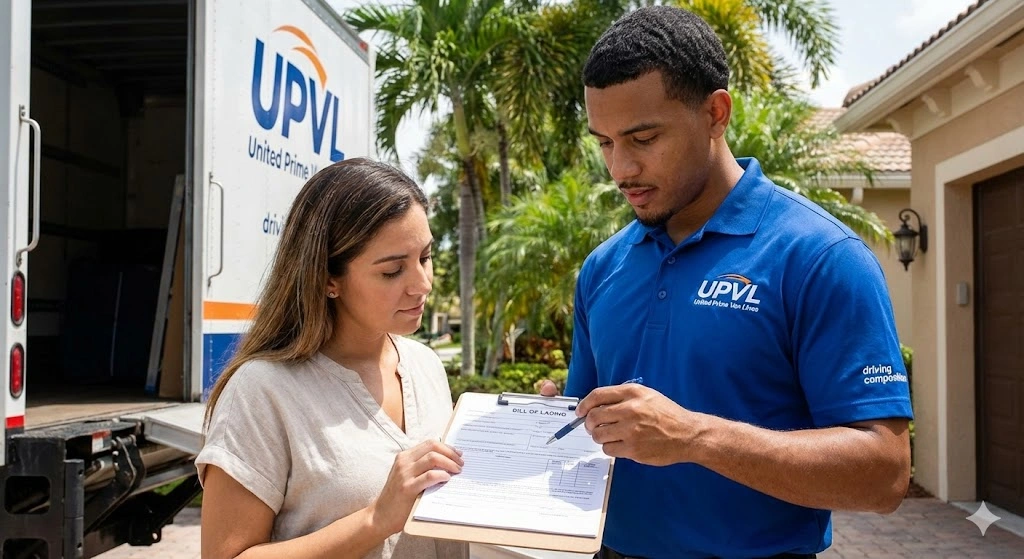
If you only remember one phrase from this article, remember this: Bill of Lading.
This is the official contract of your move. It controls your rights, the mover’s responsibilities, and the terms you rely on if something goes wrong.
What must be on it:
This is the section everyone skims but regrets ignoring if something breaks.
Option A: Full Value Protection (FVP)
Option B: Released Value (60 cents/lb)
The Rule: Your paperwork must clearly show which option you chose. If it just says "Basic Coverage Included," ask for the specific terms.
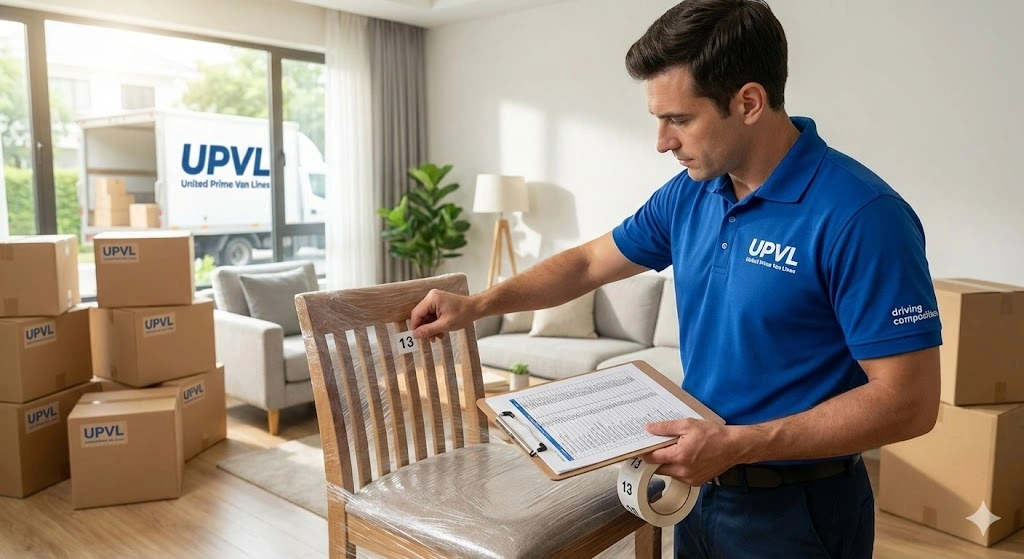
On moving day (especially for long-distance or storage), the crew creates an inventory.
What it should include:
Why it matters: If a box is missing at delivery, this sheet is your only proof that it was loaded in the first place.
Not every move is a straight shot.
Money and paperwork should always travel together.

To make this practical, here is what you should have in your hand at each stage:
Before the Move:
On Moving Day:
After the Move:
At United Prime Van Lines, we provide every single one of these documents because clear paperwork protects us just as much as it protects you. If you ever have a question about a form, just ask.