If you’re moving in Los Angeles, it can feel like there are more moving companies than palm trees. Everyone has a truck, everyone is “the best,” and everyone claims to be “licensed and insured.”
But here’s the hard truth: in LA, not every “mover” is actually a legal, licensed mover.
I’ve helped a lot of people move with United Prime Van Lines, and I can’t tell you how many times I’ve heard the same horror stories about no-shows or held-hostage belongings. That’s exactly why I want to walk you, step by step, through what to check when you’re hiring licensed movers in Los Angeles—so you can avoid the drama.
In California, professional movers must be licensed by the CPUC (California Public Utilities Commission). This isn’t just a formality.
A licensed mover is required to:
Unlicensed movers don’t have to do any of that. If something goes wrong, you have almost no protection.
First thing I always tell people in LA: don’t skip the license check. Ask the mover for their California CPUC license number (usually "CAL-T ######" or "MTR ######").
How to Check:
Red Flag: If they refuse to give you the number, run.
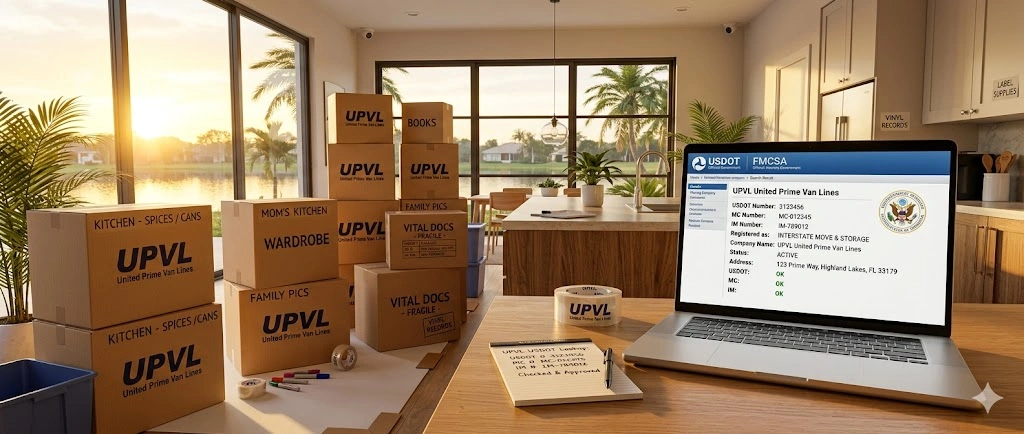
If you are moving from Los Angeles to another state, you need a mover with federal authority.
If you are planning a long-distance move, check our Long-Distance Moving Services.
"Licensed and insured" is a common phrase, but what does it mean?
1. Liability Coverage In California, movers must offer Basic Coverage ($0.60/lb). Reputable movers also offer Full Value Protection (FVP) for an extra cost.
2. Worker’s Compensation If a mover gets hurt on your property and the company doesn't have worker's comp, you could be liable. Always ask for proof of insurance, especially for office moves.
A real licensed mover in Los Angeles is required to give you a written estimate.
Check the Details: Does it list the addresses, date, number of movers, and specific services (packing, stairs)? If the quote is just a text message saying "$800," it's not valid.
LA is built to generate extra fees. A licensed mover should be transparent about them.
Ask about:
Don't just look at the star rating. Look for patterns in recent reviews.
Ask: "Are you the actual company that will perform my move?" When you book with United Prime Van Lines for a Local Move, you are booking us, not a random third party.
A legitimate mover has a real business address (not a P.O. Box) and consistent branding across their website, truck, and paperwork. Check their address on Google Maps to ensure it's a real office or warehouse.
Licensed movers follow standards of care.
For California moves, you must receive:
Don't let them load a single box until you have paperwork that matches your estimate.

When you choose a properly licensed mover and take 20 minutes to verify the details, you aren't being difficult—you’re protecting your home.
If you want help from a team that lives and breathes this stuff, that’s exactly what we do at United Prime Van Lines. We handle local LA moves, long-distance relocations, and everything in between with the licenses to back it up.
Contact us today to start your move the right way.