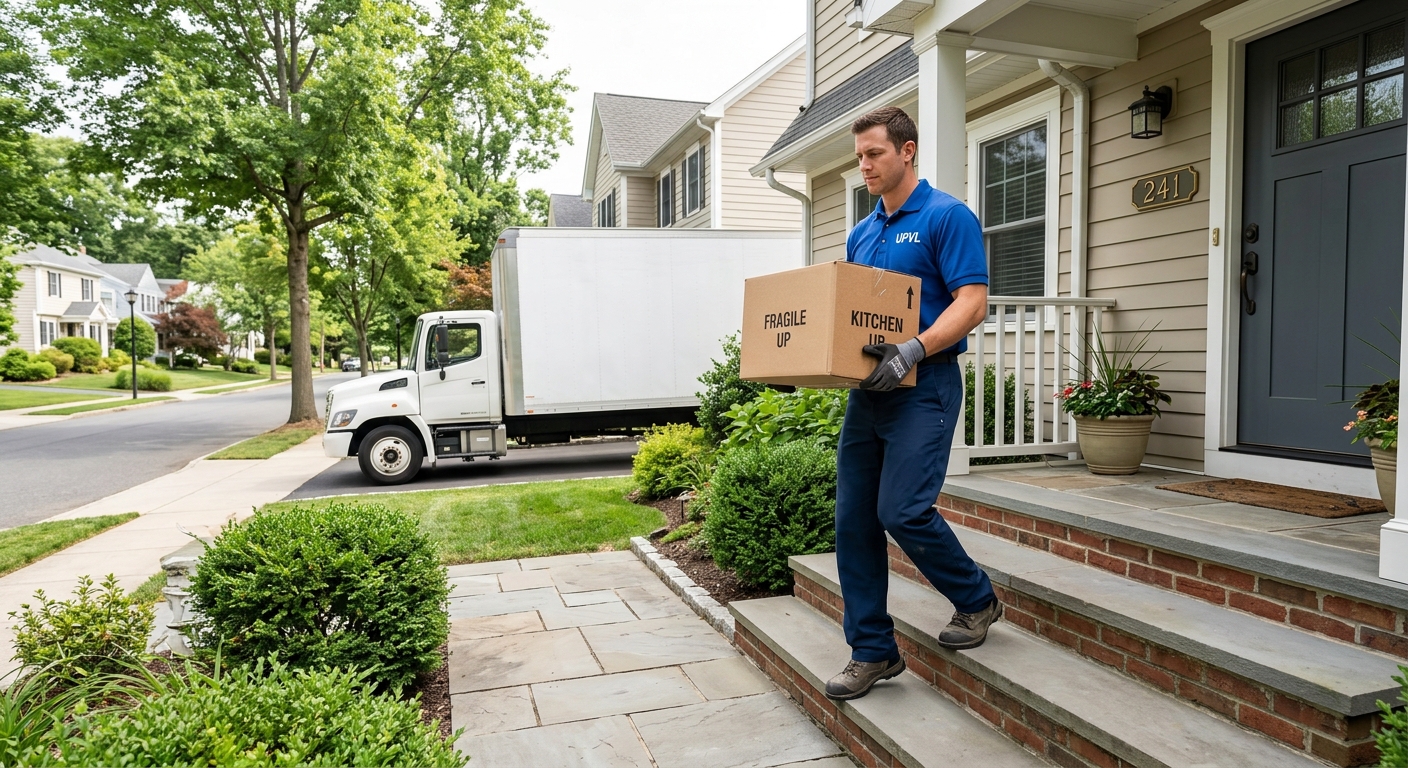
Moving a few miles in Miami can feel more complicated than moving to another state. Between condo associations, elevators, parking, rainstorms, and tight timelines, choosing the right local moving company in Miami is the key to a smooth move.
Quick Navigation
Local moving services in Miami have to handle more than just loading a truck. Miami’s mix of high-rise condos, gated communities, older apartments, and single-family homes makes every move unique.
A reliable local moving company in Miami understands:
Miami traffic and weather also affect scheduling. Midday thunderstorms are common in the wet season (roughly June–November) according to the National Hurricane Center, so experienced movers plan start times and truck loading to minimize the risk of your belongings getting soaked.
For many customers, the biggest stress isn’t distance—it’s coordinating elevator reservations, COIs, parking, and timelines on both ends of the move. A professional Miami mover should walk you through these details before moving day.
Most people think of “a couple of movers and a truck,” but local moving services in Miami can be tailored to your situation, building rules, and budget.
| Service Type | Best For | What It Usually Includes |
|---|---|---|
| Standard Local Move | Most apartments, condos, and houses | Truck, crew, basic furniture protection, loading/unloading, local drive |
| Full-Service Move | Busy professionals, families, seniors | All packing/unpacking, furniture disassembly, supplies, full load-in |
| Labor-Only Move | Moves within same building or DIY truck | Movers for loading/unloading only, no truck provided |
| Last-Minute Move | Short notice, emergency moves | Expedited scheduling, flexible crews, often higher rates |
| Partial Move | Moving only big items | Furniture and appliances only, customer moves boxes |
United Prime Van Lines provides a range of local options that can be adapted to your building’s rules and your schedule. For example, if you are only moving within the same complex or from one floor to another, a labor-only crew may be ideal. If you want everything done for you, a full-service package similar to what’s outlined on full packing services may be a better fit.
Choosing a mover with experience in your specific home type matters:
Ask your moving coordinator if they regularly service your neighborhood and building type. A mover used to Kendall single-family homes may not be the best fit for a high-rise in Brickell without the right experience.
Different Miami neighborhoods have different challenges. The right local moving company in Miami will plan access, parking, and timing based on your exact addresses.
| Area | Typical Challenges | What Movers May Need |
|---|---|---|
| Brickell / Downtown | High-rises, strict COI, time windows | COI, elevator reservations, dock schedule, smaller truck or shuttle |
| Miami Beach / South Beach | Street parking, older buildings, stairs | Parking permits, extra labor for stairs, smaller trucks |
| Edgewater / Midtown / Wynwood | Construction, limited loading zones | Advance route planning, possible long walks with carts |
| Coconut Grove / Coral Gables | Narrow streets, tree canopies, historic homes | Careful truck selection, furniture protection, floor protection |
| Kendall / Westchester / Doral | Gated communities, larger homes | Gate codes, truck access check, longer load times |
Many high-rise Miami buildings require:
Ask your building management for their moving rules as soon as you know your date. Then share these with your mover so they can coordinate COI and scheduling.
United Prime Van Lines often helps customers in areas like Brickell, Miami Beach, and Hallandale Beach. If you’re comparing local options, you can explore their local moving information as a reference for what a professional mover typically offers in South Florida.
Apartment movers in Miami specialize in buildings with elevators, stairs, and tight loading situations. Even a small studio move can be time-consuming if the walk from your unit to the truck is long or if the elevator is slow.
Professional apartment movers should:
When you request a quote from apartment moving specialists, be ready with details:
Because most local Miami moves are billed hourly, anything that speeds up the process directly saves you money.
Condo movers in Miami must respect association rules that can be much stricter than standard apartment complexes. Many high-rise condos along Biscayne Bay, Brickell Avenue, and Miami Beach have:
A COI (Certificate of Insurance) is a document from the mover’s insurance company that proves they have the required liability and workers’ compensation coverage. Buildings request this to protect themselves if something is damaged in common areas or if a worker is injured on-site. The FMCSA requires interstate movers to maintain certain insurance, and many reputable local movers mirror these standards.
For Miami condos, the COI usually needs to list:
Provide your building’s COI sample to your mover at least 3–5 business days before the move. A professional local moving company in Miami should be able to submit the COI directly to your building or send it to you to forward.
Because many buildings offer limited move windows, timing is crucial. If your condo gives you a 9 a.m.–1 p.m. freight elevator slot, the crew must arrive on time and continually load to use that window efficiently.
| Scenario | Risk If Poorly Planned | How a Good Mover Handles It |
|---|---|---|
| Short elevator window (3–4 hours) | Move runs over, fees from building, rushed work | Extra crew, early arrival, staging items near elevator |
| No dock parking | Tickets, long carry distances, delays | Scout parking, use smaller truck, use dollies/carts efficiently |
| Strict quiet hours | Move stopped mid-way, rescheduled | Adjust start time to complete before cutoff |
| Multiple moves in same building | Elevator congestion, resident complaints | Coordinate with management for staggered use |
If your building has penalties for going over the scheduled elevator time, let your movers know upfront so they can plan crew size and timing.
House movers in Miami handle a different set of challenges than condo or apartment movers. Single-family homes and townhomes can mean more volume, heavier furniture, and longer walking distances.
House movers Miami crews usually bring more pads, tools, and sometimes multiple trucks to handle larger loads. They also pay attention to driveway access—especially where big trucks can’t turn easily.
If you’re moving from a house to an apartment or condo downtown, tell your mover both types of locations are involved. They can plan a house-friendly truck and gear, plus condo-compliant processes on the destination side. United Prime Van Lines’ house moves information gives a good sense of what a full-service house relocation typically involves.
Packing often takes more time than people expect. Miami’s humidity and frequent rain also make proper packing extra important, especially for electronics, art, and clothing.
| Packing Option | What Movers Do | Best For |
|---|---|---|
| Full Packing Service | Pack everything, label boxes, protect fragile items | Busy professionals, families, long-distance-quality packing on local move |
| Partial Packing | Pack kitchen, fragile items, artwork only | People who can pack clothing/books but want pros for breakables |
| DIY Packing | Customer packs, movers only load and transport | Tight budgets, simple small moves |
| Unpacking Service | Unpack and place items on surfaces, haul away boxes | Those wanting fast setup in new home |
Professional packing similar to what’s described on United Prime Van Lines full packing services can reduce the risk of damage, especially if you’re dealing with delicate items or art.
Because Miami is hot and humid most of the year, keep these tips in mind:
Ask your mover whether they provide mattress bags, wardrobe boxes, and TV boxes, or if you need to supply these yourself.
Storage often comes into play when closing dates don’t line up or condo renovations run long. Many local moving services in Miami can combine moving and storage into one plan.
Some movers offer their own storage or partner with secure facilities. You can review what combined moving and storage looks like by looking at options like United Prime Van Lines storage.
| Storage Option | Pros | Considerations |
|---|---|---|
| Short-Term Storage (under 3 months) | Good for gap between leases or closings | Ask about minimum months and access rules |
| Long-Term Storage | Ideal during long renovations or extended travel | Climate control may be important for Miami humidity |
| Container / Vault Storage | Reduced handling, items stay in sealed vaults | Access usually by appointment only |
| Self-Storage Facility | You control access and organization | You handle loading/unloading unless you hire movers twice |
In Miami’s humidity, climate-controlled storage is strongly recommended for wood furniture, electronics, musical instruments, and artwork.
Most local moves in Miami are priced hourly, based on crew size and truck count, with a minimum number of hours. The exact rate depends on your move date, access conditions, and services like packing or storage.
According to the U.S. Census Bureau, Miami-Dade County has a high renter population and frequent moves, which keeps local movers busy during peak periods like late spring and summer. Booking early can secure better scheduling and sometimes more favorable rates.
Every company prices differently, but this example shows how time and access affect total cost on a typical hourly move:
| Move Type | Estimated Hours | What Increases Time |
|---|---|---|
| Studio in Edgewater to Brickell | 3–5 hours | Elevator wait times, parking distance, long hallway |
| 2BR Apartment Kendall to Doral | 5–7 hours | Stairs, heavy furniture, multiple flights |
| 2BR Condo Brickell to Brickell | 5–8 hours | COI, strict elevator windows, dock access delays |
| 3BR House Coral Gables to Pinecrest | 7–10 hours | Large volume, outdoor items, long driveway |
To keep costs under control:
Local moving services in Miami usually offer hourly pricing, but some companies may provide flat-rate quotes for clearly defined jobs. Understanding both helps you choose what’s best for your move.
With hourly pricing, you pay for the actual time the crew works, often with a minimum number of hours (for example, a 3- or 4-hour minimum). Time usually starts when the crew arrives and ends when the job is finished, sometimes including travel time between addresses.
With a flat rate, the company estimates how long the move will take and gives you one price based on the inventory and access you describe. If the mover underestimated and it takes longer, that’s on them—unless the scope changes (for example, you add extra items not listed in the quote).
| Pricing Type | Advantages | Best For |
|---|---|---|
| Hourly | Simple, flexible, you pay for actual time used | Smaller moves, short distances, uncertain inventory |
| Flat-Rate | Predictable total cost if scope stays the same | Larger moves with clear inventory, complex but well-defined access |
| Hybrid (Hourly + Caps) | Some cost control with hourly flexibility | Moves where customer wants some protection against overruns |
| Minimum Hours | Ensures crew and truck costs are covered | All moves; important if your job is very small |
When comparing movers, ask:
Some companies, like United Prime Van Lines on their local moving page, describe their estimate approach and what factors can change pricing. Use this as a checklist when you talk with any mover in Miami.
Licensed and insured movers protect you financially and help ensure a professional level of service. In Florida, moving within the state is regulated by state law, and interstate movers are additionally regulated by federal agencies.
For state-level rules, the Florida Attorney General summarizes consumer protections and mover obligations. Source: Florida Attorney General.
For interstate moves, the Federal Motor Carrier Safety Administration (FMCSA) oversees licensing and safety. Source: FMCSA Protect Your Move.
Even for local Miami moves, reputable movers will often carry:
Moving companies typically offer “valuation coverage,” not traditional insurance. For interstate moves, federal regulations require that movers offer:
Explanation: FMCSA Valuation and Insurance.
For local moves in Miami, options can vary by company, but similar concepts often apply. Always ask:
Most Miami condos and many apartment buildings require a COI. Your mover should:
If a mover cannot provide a COI or hesitates when asked for licensing and insurance information, consider that a red flag.
Use this checklist to keep your local Miami move on track and avoid common surprises.
| Task | When to Do It | Who Handles It |
|---|---|---|
| Book mover | 2–4 weeks before move | You |
| Elevator reservations | 1–3 weeks before move | You + building management |
| COI request | 7–10 days before move | Mover |
| Final packing | 1–2 days before move | You or mover (if packing service) |

Hourly movers in Miami usually charge a set rate per hour for a specific crew size and truck. For example, a rate might cover two movers and one truck, with additional movers costing more per hour. Time usually starts when the crew arrives at your home and ends when the last item is unloaded at the new place, sometimes with travel time included between locations.
Always ask if there are any extra charges for fuel, stairs, long carries, or heavy items so you’re not surprised when you see your final bill.
Most local moving companies in Miami have a minimum number of billable hours, often 3 or 4 hours, even if your move takes less time. This minimum allows the company to cover the costs of sending a truck and crew for smaller jobs.
For example, a studio move that only takes two hours of actual work may still be billed at a 3-hour minimum. If you have a very small move, consider combining tasks—such as having the movers also rearrange furniture or move some items into storage—to get the most value from the minimum.
If you live in a Miami high-rise, condo, or managed apartment building, you most likely need both a COI (Certificate of Insurance) and an elevator reservation for your move. Many Brickell, Downtown, and Miami Beach buildings will not allow movers to work on-site without a COI on file and a confirmed time slot for using the freight elevator.
Ask your building management directly: “What are your moving requirements?” Then pass the written requirements or a sample COI to your moving company so they can handle the paperwork correctly.
Many local movers in Miami can move heavy or specialty items such as pianos, safes, and gym equipment, but these items usually require extra planning, workforce, and sometimes dedicated equipment. It’s important to mention each specialty item during your estimate so the mover can quote any additional fees and plan appropriately. Some companies, like those offering piano moving services, have specialized crews for this kind of work.
Miami sees its busiest moving periods in late spring, summer, and the end of each month, when many leases renew. Weather-wise, winter and early spring often offer more pleasant temperatures and less daily rain, while the Atlantic hurricane season (June through November) brings a higher chance of storms, as noted by the National Hurricane Center.
If your schedule is flexible, moving on a weekday and outside of month-end can sometimes make booking easier and reduce stress.
For most local moves, booking 2–4 weeks in advance is ideal. During peak moving months or if you need a specific day (such as the last Saturday of the month), aim for 4–6 weeks’ notice. Last-minute moves are possible—companies like those highlighting last-minute moves can sometimes help on short notice—but your options and preferred time slots may be limited.
Helpful questions include:
Clear, detailed answers are a good sign that the mover is professional and transparent.
For Florida moves, the contact information is:

Local moves in Miami involve more than just distance. Building rules, COI requirements, elevators, traffic, and weather can all impact your schedule and budget. Choosing an experienced local moving company in Miami—one that understands apartments, condos, and houses across neighborhoods—can make the difference between a stressful move and a smooth one.
Define your inventory clearly, share your building rules early, and ask detailed questions about pricing, licensing, and coverage. With the right planning and the right mover, you can enjoy your new Miami home sooner and with far less stress.