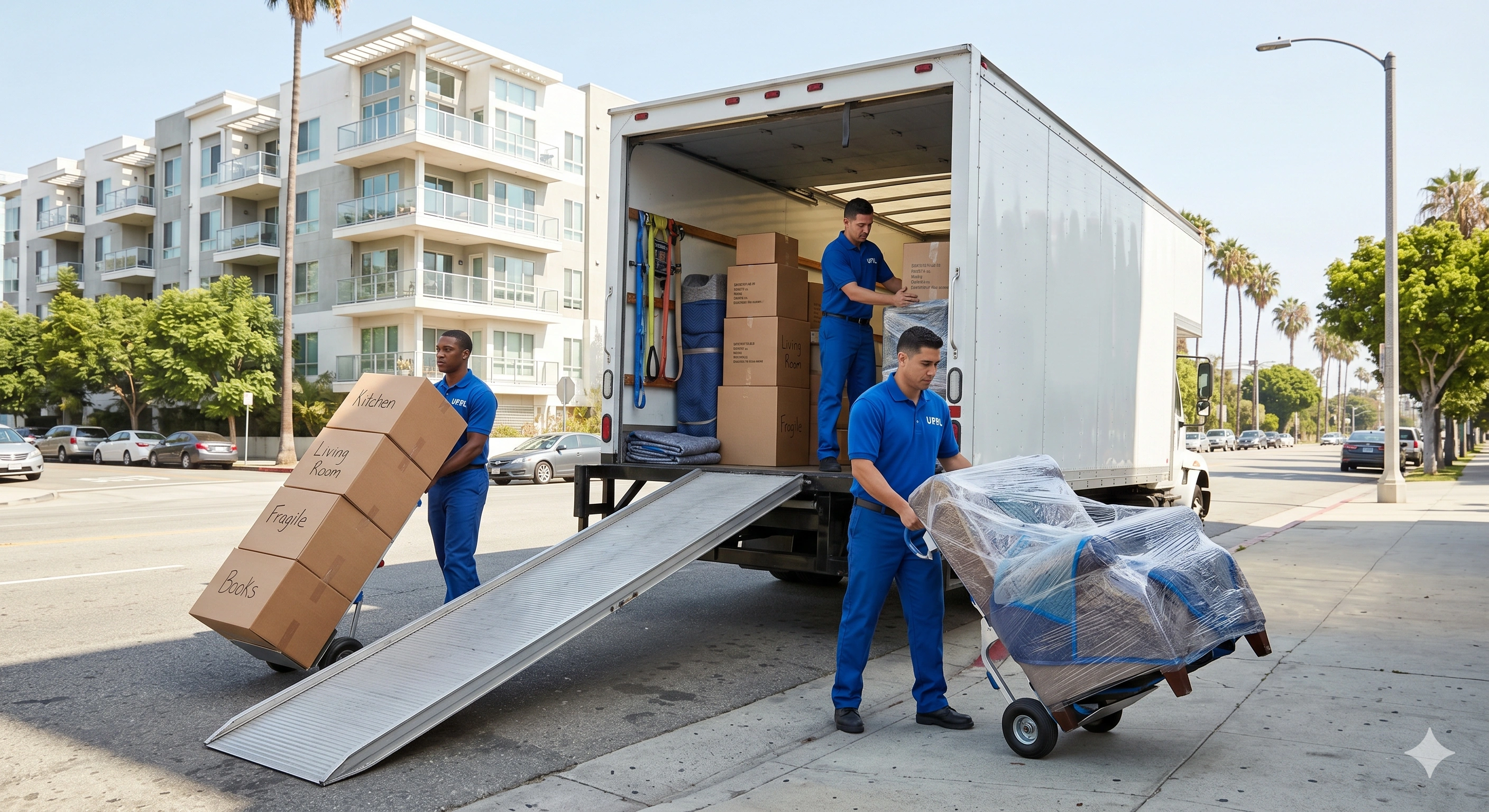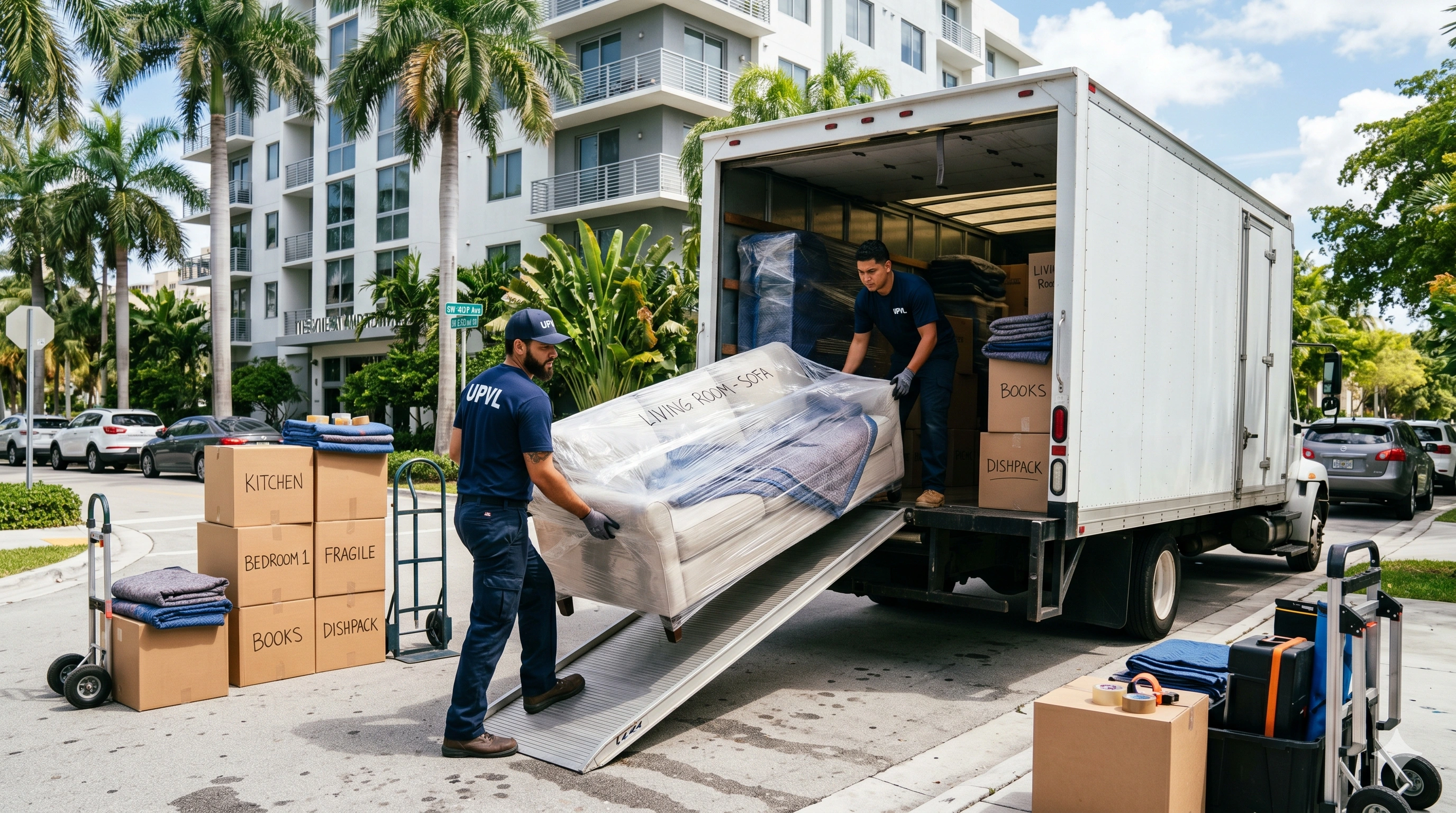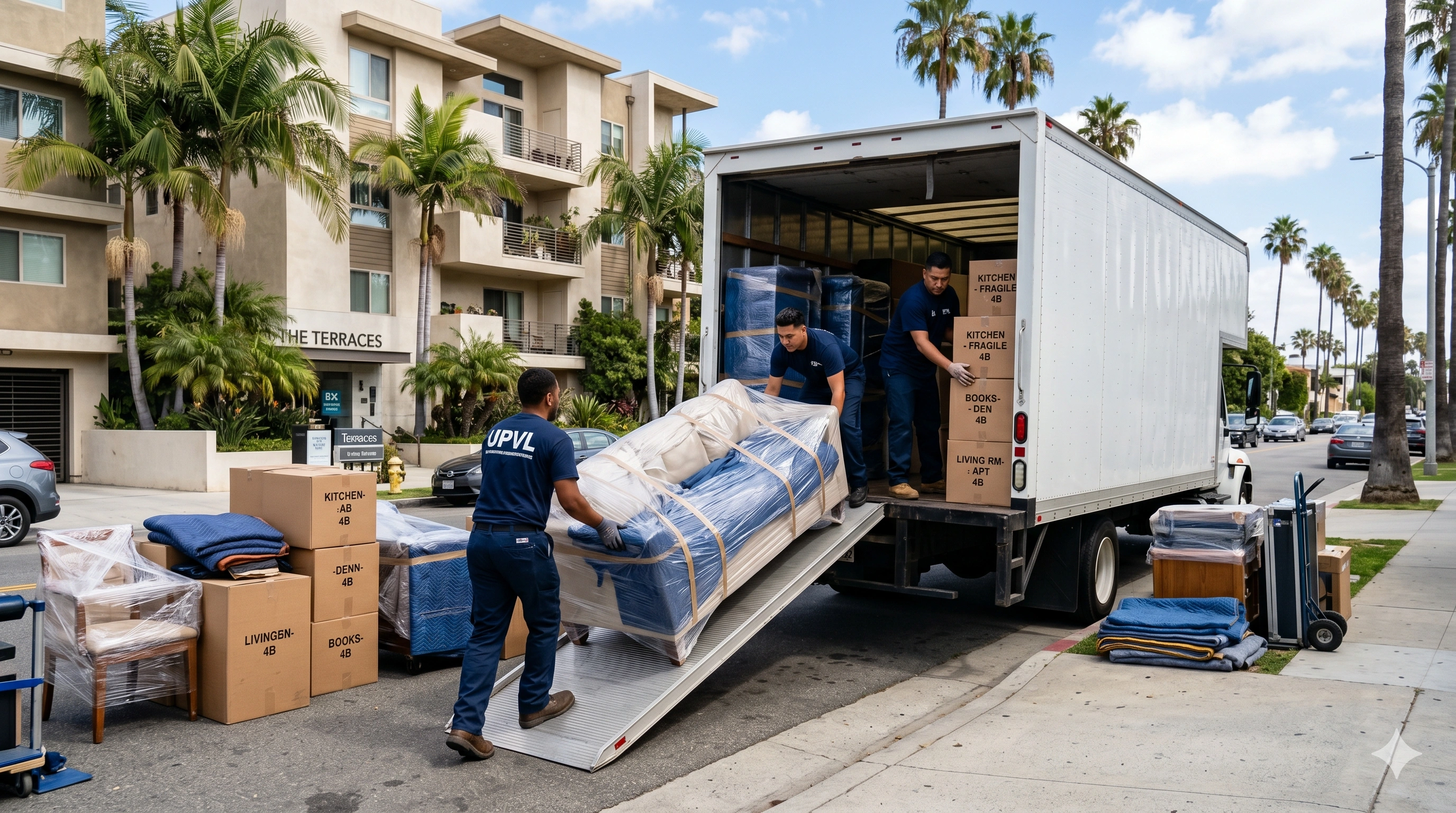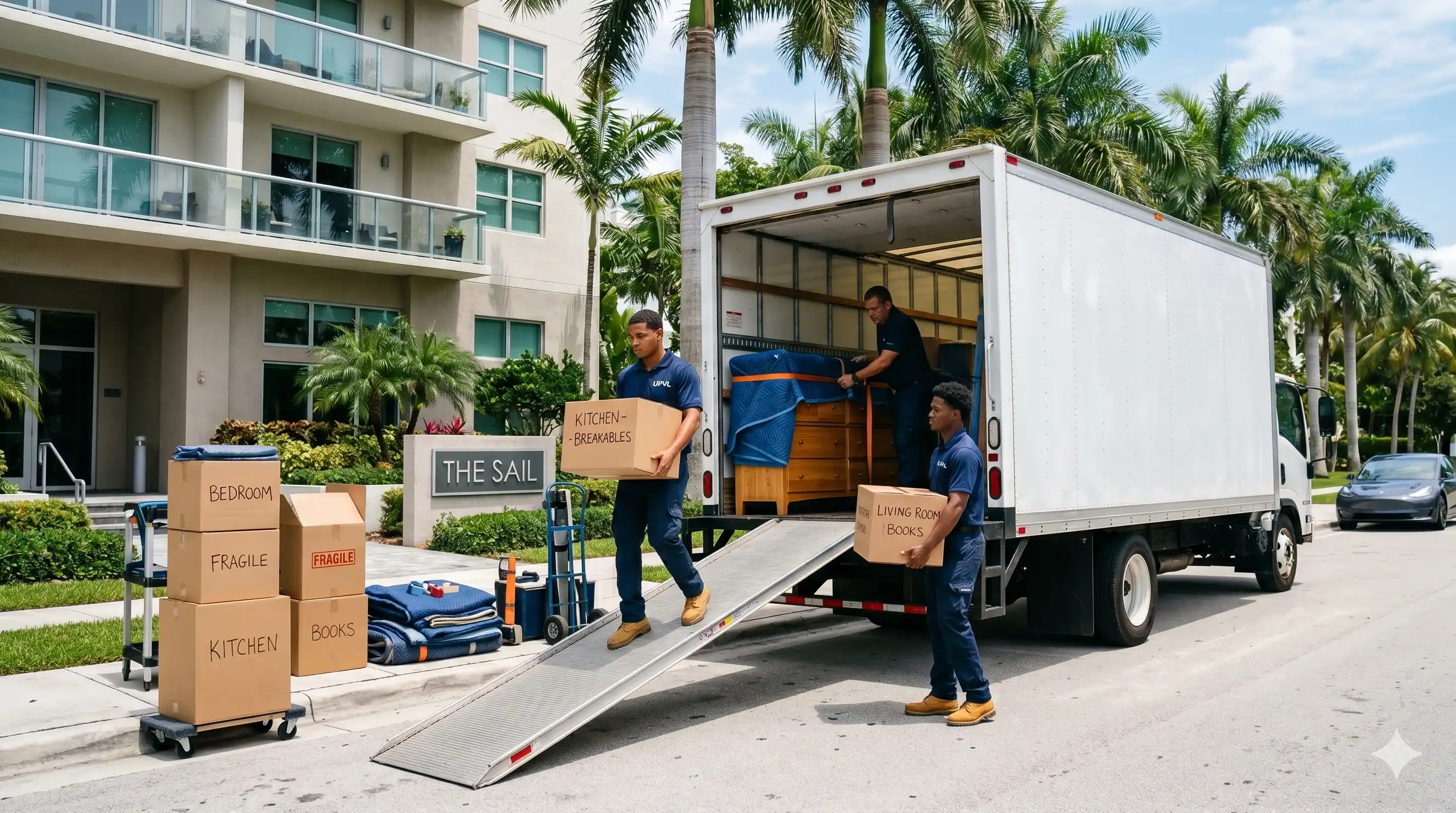
Moving in Miami sounds exciting until you picture the real details: condo elevators, tight loading zones, sudden rain, summer heat, strict building rules, fragile furniture, and that one friend who says, “Don’t worry, I have a pickup truck.” If you are searching for Miami movers, you probably want more than muscle and a truck. You want a move that is organized, priced clearly, properly protected, and handled by people who understand how Miami actually works.
Miami is not a simple place to move. It is beautiful, energetic, and full of opportunity, but moving here can feel like solving a puzzle with traffic, weather, buildings, elevators, parking, and timing all mixed together.
A move from Brickell to Coral Gables may look easy on Google Maps. It might be only a few miles. But if your building requires elevator reservations, a Certificate of Insurance, loading dock approval, and a strict move-out window, that “small local move” can quickly become complicated.
That is why Miami movers need local experience. Not just moving experience in general, but real Miami experience.
Miami-Dade County had an estimated population of 2,802,029 as of July 1, 2025, according to the U.S. Census Bureau. The same source shows that 70.3% of the county identified as Hispanic or Latino, which helps explain why Miami is such a diverse, international, fast-moving relocation market. (Source: U.S. Census Bureau QuickFacts, 2025)
That population density matters when you move. More people means more apartment buildings, more condo rules, more elevators, more traffic, more competition for moving dates, and more demand for licensed movers Miami residents can trust.
Miami also has a climate that affects moving. Heat, humidity, and sudden rain are not small details. They can damage cardboard boxes, slow down crews, create slippery loading areas, and make long moving days harder on everyone.
Then there is hurricane season. The Atlantic hurricane season officially runs from June 1 through November 30, and the National Hurricane Center notes that the climatological peak of the season is around September 10, with most activity between mid-August and mid-October. (Source: NOAA/National Hurricane Center)
That does not mean you should avoid moving during those months. People move in Miami year-round. It just means you should plan smarter.
A good Miami move starts with three things:
If one of those is missing, the move becomes more stressful than it needs to be.
Not every move needs the same level of service. Some people only need a small apartment move across town. Others need full packing, storage, long-distance transportation, furniture disassembly, or careful handling for fragile items.
Before you compare moving companies in Miami, get clear on the type of move you actually need.
| Moving Need | Best Service Type | Why It Matters |
|---|---|---|
| Moving within Miami-Dade | Local moving | Usually based on labor time, crew size, truck access, and building rules. |
| Moving within Florida | Intrastate moving | Requires Florida-specific compliance and written estimates. |
| Moving from Miami to another state | Long-distance moving | Requires interstate authority, detailed inventory, and delivery planning. |
| Moving from or into a condo | Building-compliant moving | Often requires COI, elevator reservations, and loading dock scheduling. |
| Moving fragile or expensive items | Packing and specialty handling | Helps reduce damage risk. |
| Moving before your new home is ready | Storage | Useful for lease gaps, closing delays, or renovations. |
| Moving a business | Commercial moving | Requires planning around downtime, equipment, and office setup. |
| Moving last minute | Expedited moving | Requires fast coordination and flexible scheduling. |
The mistake many people make is shopping for “cheap movers” before they understand the scope of the move. That usually leads to vague quotes, missing services, and surprise charges.
A better approach is to define the move first.
Ask yourself: am I moving locally, within Florida, or out of state? Do I need packing? Do I need storage? Do I live in a building with elevator rules? Do I have fragile, heavy, or high-value items? Do I need help with furniture disassembly? Do I need a Certificate of Insurance? Do I want hourly pricing or a flat estimate?
Once you know the answers, it becomes much easier to compare movers fairly.
For example, if you are moving from a high-rise condo in Downtown Miami to a house in Kendall, you are not just paying for miles. You are paying for elevator timing, loading logistics, labor, truck access, furniture protection, travel time, and unloading.
If you are moving from Miami to another state, you need a different level of planning. Delivery windows, inventory accuracy, valuation coverage, and long-distance regulations become much more important.

Local moving in Miami usually means a move within the same general metro area. That could be Brickell to Edgewater, Miami Beach to Coconut Grove, Coral Gables to Doral, Wynwood to Little Havana, or Kendall to Homestead.
Local moves are often priced hourly. That can be fair and flexible, but it also means time matters.
If everything is packed, the elevator is reserved, parking is ready, and the movers have easy access, the move can go smoothly. If boxes are half-packed, the truck has to park far away, and the building manager says the elevator was never reserved, the clock keeps running.
That is where local planning saves real money.
A professional moving company in Miami should ask about more than your address. They should ask about inventory, access, packing, furniture, elevators, stairs, building rules, and timing.
If a mover gives a price without asking real questions, be careful. Miami moves have too many variables for a blind quote to be reliable.
| Move Type | Common Challenges | Best Preparation |
|---|---|---|
| Studio apartment | Small elevator, parking, limited access | Pack fully before movers arrive. |
| 1-bedroom condo | COI, loading dock, elevator timing | Confirm building rules early. |
| 2-bedroom apartment | More furniture, fragile items, more boxes | Label boxes and reserve elevator. |
| Townhome move | Stairs, parking, narrow hallways | Mention stairs during the estimate. |
| Single-family home | Garage, patio, large furniture | Declutter before the quote. |
| Luxury condo move | Strict building rules, high-value items | Request COI and packing help. |
| Miami Beach move | Parking, bridge traffic, building restrictions | Confirm the loading location. |
The most important local moving rule in Miami is simple: access matters more than mileage.
A move from Brickell to Midtown may only be a short distance, but the building rules can make it harder than a house move from Kendall to Pinecrest.
Tell the mover everything that could slow the crew down. That includes stairs, elevators, long hallways, parking limits, security desks, freight elevator rules, move-in fees, HOA restrictions, tight streets, oversized furniture, and items that need disassembly.
The more honest you are upfront, the more accurate your estimate can be.
Long-distance moving from Miami is a different process from a local move. If you are moving from Miami to Atlanta, New York, Chicago, Dallas, Houston, Los Angeles, Charlotte, Nashville, Denver, or anywhere outside Florida, you need to think beyond moving day.
You need to think about pickup, transit, delivery windows, inventory, valuation coverage, packing, storage, and federal moving rules.
FMCSA’s Protect Your Move program is designed to help consumers understand interstate moving rules and avoid fraud. For interstate moves, movers must provide customers with important rights and responsibilities information before moving household goods. Source: Federal Motor Carrier Safety Administration, 2022.
That matters because interstate moving has more paperwork and more risk than a short local move.
A long-distance move is usually priced based on factors such as distance, shipment weight or volume, inventory size, packing services, specialty items, storage needs, access at pickup and delivery, delivery window, valuation coverage, shuttle needs, extra stops, season, and demand.
The biggest danger in long-distance moving is a quote that looks too low because it is based on incomplete inventory.
Let’s say you tell the mover you have a two-bedroom apartment. That sounds simple. But what if you also have a storage unit, patio furniture, a large sectional, two TVs, a king bedroom set, fitness equipment, 70 boxes, and fragile artwork?
That is not a basic two-bedroom move anymore.
Before booking long-distance Miami movers, ask these questions:
If the answers are vague, slow down.
A good long-distance moving estimate should be detailed, written, and based on actual inventory. A two-minute phone quote is not enough for a serious interstate move.
FMCSA explains that a binding estimate means you cannot be required to pay more than the estimate at delivery for the listed shipment and services. A non-binding estimate is not a final guarantee, but it must be reasonably accurate.
Under a non-binding interstate estimate, the mover generally cannot require payment of more than 110% of the estimate at delivery, with remaining charges billed later. Source: FMCSA Rights and Responsibilities Booklet, 2022.
That is a useful consumer protection rule, but it does not mean you should be casual about the estimate.
If you add items or services, the estimate may need to change. That is why inventory accuracy matters so much.
Packing is one of the most underestimated parts of moving.
People look around and think, “We don’t have that much.” Then they start opening closets, kitchen cabinets, drawers, bathroom shelves, kids’ rooms, and the garage.
Suddenly, “not that much” becomes 70 boxes.
Packing takes time. More importantly, packing quality affects damage risk. A cheap box, weak tape, or poor wrapping can turn into broken dishes, scratched furniture, cracked mirrors, and damaged electronics.
Miami adds another layer: humidity.
Cardboard can weaken in damp areas. Rain can arrive quickly. Garages and storage areas can get hot and humid. If you are packing early, storing items, or moving during rainy season, materials matter.
| Packing Option | Best For | Pros | Watch Out For |
|---|---|---|---|
| Self-packing | Budget-conscious moves with simple items | Saves money | Higher risk if boxes are weak or poorly packed. |
| Partial packing | Kitchens, fragile items, mirrors, TVs, art | Good balance of cost and protection | Must define exactly what movers pack. |
| Full packing | Large homes, busy families, long-distance moves | Saves time and creates consistency | Higher upfront cost. |
| Specialty packing | Antiques, art, marble, glass, instruments | Better protection for valuable items | May require custom materials or crating. |
You do not always need full packing. Sometimes partial packing is the smartest choice.
For example, you may pack clothes, books, linens, and simple household items yourself, then let movers pack the kitchen, mirrors, artwork, glass tabletops, TVs, and fragile décor.
That gives you control over cost while still protecting the items most likely to break.
| Item Type | Recommended Material | Why It Helps |
|---|---|---|
| Dishes | Dish boxes, packing paper, dividers | Reduces pressure and impact. |
| Glassware | Cell dividers, packing paper | Prevents glass-to-glass contact. |
| TVs | TV box, screen cover, foam protection | Protects screen and corners. |
| Mirrors | Mirror carton, edge guards, padding | Reduces cracking risk. |
| Mattresses | Mattress bags | Protects from dust, stains, and moisture. |
| Furniture | Moving blankets, stretch wrap, corner guards | Prevents scratches and dents. |
| Clothes | Wardrobe boxes | Keeps hanging clothes organized. |
| Electronics | Original boxes or padded boxes | Protects delicate components. |
| Books | Small boxes | Prevents overweight boxes. |
| Artwork | Picture boxes or crating | Reduces punctures and pressure damage. |
The most common packing mistake is using boxes that are too large. Large boxes filled with books, dishes, or tools become heavy, unsafe, and more likely to break.
Use small boxes for heavy items and larger boxes for light items.
Simple rule: if you cannot comfortably lift the box, it is too heavy.
Pack these items yourself and keep them with you:
Movers can move many things, but some items are better kept in your personal control.
Every move needs an open-first box.
Include toilet paper, paper towels, hand soap, trash bags, basic tools, phone chargers, medications, pet supplies, snacks, bottled water, shower curtain, towels, a change of clothes, coffee supplies, and cleaning wipes.
When you arrive at the new place, this box will feel like a gift from your past self.

Storage is common in Miami moves because timing does not always line up perfectly.
Maybe your lease ends before your new lease starts. Maybe your closing date shifts. Maybe you are renovating. Maybe you are downsizing. Maybe your new condo building only allows delivery on certain days.
Storage can solve the gap, but only if you understand the terms.
Storage may be useful when your new home is not ready, you are waiting for closing, you are renovating, you are staging a home for sale, you are downsizing, you need to move out before moving in, you are relocating out of state, you are combining households, you have seasonal items, or you need temporary business storage.
In Miami, climate-controlled storage can be important for sensitive items. Heat and humidity can affect wood furniture, leather, documents, art, electronics, musical instruments, and antiques.
Before you approve storage, ask:
Storage can be convenient, but fees can add up if you do not understand the structure.
| Storage Situation | Best Option | Why |
|---|---|---|
| 1 to 7 day timing gap | Short-term mover storage | Convenient and avoids extra handling. |
| 1 to 3 month gap | Warehouse storage | Good for lease or closing delays. |
| Renovation | Accessible storage | You may need to retrieve items. |
| Downsizing | Climate-controlled storage | Better for sensitive furniture. |
| Long-distance delay | Storage-in-transit | Helps when delivery timing is uncertain. |
Do not use storage as a way to avoid decisions forever. Long-term storage can cost more than many items are worth.
Before storing anything, ask: would I pay to buy this again?
If the answer is no, you may not want to pay to store it.
The most honest answer to “How much do Miami movers cost?” is: it depends on the move.
That is not a sales trick. It is reality.
Moving cost depends on inventory, labor, truck needs, access, stairs, elevators, packing, materials, storage, distance, timing, and the type of estimate.
Florida’s Attorney General recommends getting at least three written estimates before moving and notes that local moves are usually based on hourly charges, while interstate moves are often priced according to weight and distance. Source: Florida Attorney General Consumer Guide to Moving.
That is a helpful starting point.
But the real goal is not to find the cheapest mover. The goal is to understand what the quote includes.
A cheap quote can become expensive if it excludes packing materials, travel time, stairs, long carry, storage, or valuation coverage.
| Cost Factor | How It Affects Price | How to Control It |
|---|---|---|
| Inventory size | More items require more labor and truck space. | Declutter before the estimate. |
| Packing | Professional packing adds labor and materials. | Use partial packing for fragile items. |
| Stairs | Slows the move. | Mention stairs upfront. |
| Elevator | Can create waiting time. | Reserve elevator early. |
| Long carry | More walking means more labor time. | Confirm truck parking. |
| Heavy items | May require extra movers or equipment. | Disclose them before booking. |
| Building rules | Can limit moving hours. | Get rules from management. |
| Move date | Busy dates may cost more. | Choose flexible dates if possible. |
| Storage | Adds handling and monthly charges. | Confirm exact storage terms. |
| Long-distance delivery | Distance and shipment size matter. | Get a detailed written estimate. |
| Move Scenario | Common Pricing Style | What to Confirm |
|---|---|---|
| Small apartment in Miami | Hourly | Minimum hours, travel time, supplies. |
| Condo-to-condo move | Hourly | COI, elevator, loading dock. |
| House move | Hourly or flat estimate | Crew size, furniture handling, packing. |
| Miami to another Florida city | Intrastate estimate | Written contract and registered mover. |
| Miami to another state | Long-distance estimate | FMCSA authority and delivery window. |
| Full-service move | Package estimate | Packing, materials, storage, valuation. |
The biggest cost mistake is hiding items to get a lower quote.
It usually backfires.
If the crew arrives and sees more items than expected, the move can take longer, require a larger truck, require more movers, or trigger a revised estimate.
Honesty upfront is cheaper than surprises later.
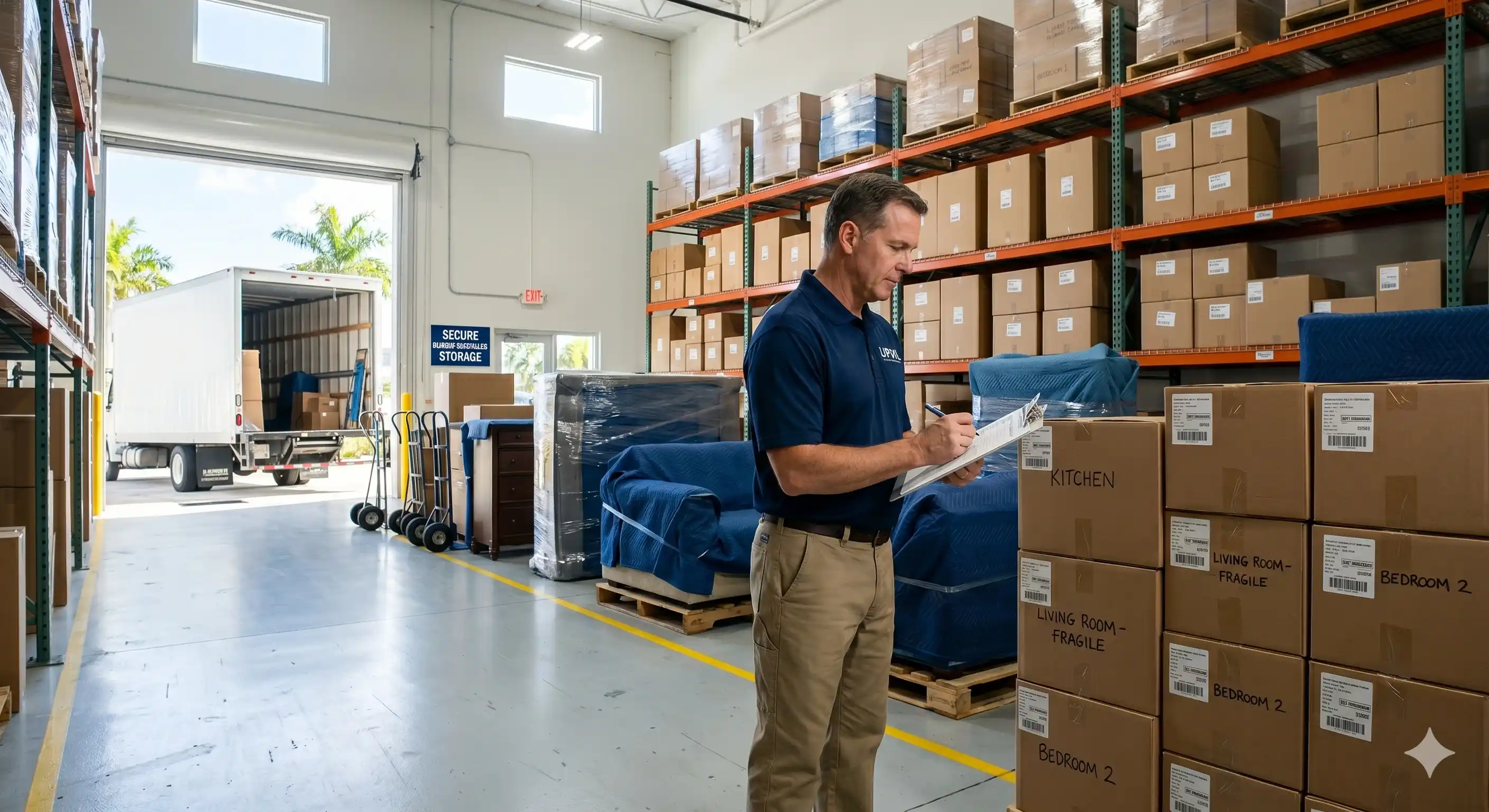
Hourly vs flat-rate pricing is one of the most common questions people ask when comparing moving companies in Miami.
There is no universal winner. The better option depends on the move.
Hourly pricing can be great for a simple local move. Flat-rate pricing can be better for complex moves, long-distance moves, or situations where you want more predictability.
The key is to understand what is included.
Hourly pricing usually works well when the move is local, inventory is simple, access is easy, the customer is fully packed, parking is close, elevators are reserved, there are no major surprises, and the move does not require storage.
The risk is delay.
If the elevator is slow, the truck has to park far away, or boxes are not ready, the final cost goes up.
Flat-rate pricing usually works better when inventory is clear, the move is larger, the move is long-distance, there are multiple services included, the customer wants more price certainty, and the mover has enough details to price accurately.
The risk is scope change.
If you add items, request extra packing, add storage, or change access details, the flat price may need to be updated.
| Pricing Type | Best For | Main Advantage | Main Risk |
|---|---|---|---|
| Hourly | Local Miami moves | Flexible and fair for simple moves. | Delays increase cost. |
| Flat-rate | Larger or complex moves | More predictable when inventory is accurate. | Scope changes can raise price. |
| Binding estimate | Clear inventory and services | Stronger price certainty. | Must disclose all items. |
| Non-binding estimate | Some interstate moves | Can reflect actual shipment details. | Final cost may change. |
If your Miami move is small, local, and straightforward, hourly pricing may make sense.
If your move includes a condo building, packing, storage, heavy furniture, or long-distance transportation, ask whether a flat or binding estimate is available.
Licensing and insurance are not just nice words on a moving website. They are part of protecting yourself.
When people search for licensed movers Miami or insured movers Miami, they usually want to know one thing: “Can I trust this company with my belongings?”
That is the right question.
For household moves within Florida, Florida Chapter 507 applies to movers and moving brokers handling intrastate household goods moves. Florida law defines an estimate as a written document prepared by a registered mover that sets forth total costs and describes the basis of those costs. Source: Florida Statutes Chapter 507, 2025.
Florida law also requires written estimates and contracts before moving or accessorial services are provided. Source: Florida Statutes Chapter 507.
That means you should not rely on verbal promises.
Get the details in writing.
If your move crosses state lines, federal rules apply. You should check FMCSA registration and understand whether the company is acting as a mover, broker, or both.
A mover physically transports the shipment. A broker arranges the move with another company.
Brokers are not automatically bad, but you need to know who is actually responsible for your items.
If a company avoids explaining that, be careful.
Many customers ask, “Are you insured?” That is a good question, but it is not enough.
You also need to ask what coverage applies to your belongings.
For interstate moves, FMCSA explains that movers have liability for household goods they transport and that customers generally have two levels of liability options: Full Value Protection and Released Value. Source: FMCSA Rights and Responsibilities Booklet, 2022.
Released Value is minimal protection. In many cases, it is based on 60 cents per pound per article. That can be a problem for expensive lightweight items.
Think about a flat-screen TV, laptop, artwork, or designer lamp. Weight-based coverage may not come close to replacement value.
Florida law also requires movers to disclose valuation coverage terms in writing before services are provided. Source: Florida Statutes Section 507.04, 2025.
| Protection Type | What It Means | Best For | Watch Out For |
|---|---|---|---|
| Released Value | Basic minimum liability | Lowest-cost basic coverage | May pay very little for expensive items. |
| Full Value Protection | More complete repair or replacement responsibility | Long-distance and valuable shipments | Costs more and has terms. |
| Third-party insurance | Separate insurance policy | High-value goods | Must review exclusions. |
| Building COI | Shows liability coverage for building requirements | Condo and apartment moves | Does not mean full coverage for your items. |
A Certificate of Insurance is often required by Miami condo buildings. It helps satisfy building management, but it is not the same as full replacement coverage for your belongings.
Ask both questions:
They are different.
Choosing a moving company Miami residents can trust should not be based on price alone.
Price matters, of course. Nobody wants to overpay. But the cheapest mover can become the most expensive option if the quote is vague, the crew is unprepared, or the company does not understand local building rules.
A strong moving company should be clear, organized, responsive, and willing to explain the details.
Look for clear written estimates, proper licensing for the move type, insurance and valuation options, experience with Miami buildings, COI availability, transparent pricing, a detailed inventory process, packing options, storage options, good communication, realistic scheduling, and a clear claim process.
If the mover rushes you, avoids questions, or pressures you to book immediately, step back.
A legitimate moving company should be able to explain how pricing works.
| Question | Why It Matters |
|---|---|
| Are you licensed for this move type? | Confirms compliance. |
| Are you a mover, broker, or both? | Clarifies responsibility. |
| Is my estimate written? | Protects against vague pricing. |
| Is pricing hourly, flat, binding, or non-binding? | Helps compare quotes. |
| What is included? | Prevents surprise add-ons. |
| What is not included? | Reveals possible extra charges. |
| Do you provide COI? | Important for condos and apartments. |
| What coverage is included? | Clarifies liability. |
| Do you offer packing? | Useful for fragile items. |
| Do you offer storage? | Helps with timing gaps. |
| How do claims work? | Important if damage occurs. |
If you need professional help for a local move, local moving in Miami can be a useful option when your move involves building coordination, furniture handling, packing support, and careful scheduling.
Watch for no written estimate, a very low quote with no inventory review, no clear address, no licensing information, large cash deposit demands, vague answers about insurance, refusal to explain fees, no COI available, poor communication, pressure to book immediately, different company names on paperwork, no clear claim process, and bad reviews about price jumps.
Florida’s Attorney General has warned consumers about moving scams and recommends written estimates as part of protecting yourself. Source: Florida Attorney General Consumer Guide to Moving.
The point is simple: do not ignore warning signs just because the price looks attractive.
Moving is easier when you stop trying to remember everything in your head.
Use checklists. They work.
| Task | Why It Matters |
|---|---|
| Declutter room by room | Reduces moving cost and packing time. |
| Request estimates | Gives you time to compare movers. |
| Ask building for rules | Prevents move-day delays. |
| Start packing nonessentials | Keeps the final week manageable. |
| Create inventory | Helps with accurate estimates. |
| Plan storage if needed | Avoids last-minute stress. |
| Task | Why It Matters |
|---|---|
| Confirm mover | Secures your date. |
| Reserve elevator | Required by many buildings. |
| Request COI | Needed for condos and apartments. |
| Pack décor and seasonal items | Reduces workload. |
| Arrange utilities | Prevents service gaps. |
| Update address | Helps mail and billing transition. |
| Task | Why It Matters |
|---|---|
| Confirm arrival time | Avoids confusion. |
| Finish most packing | Keeps moving day efficient. |
| Label boxes clearly | Speeds unloading. |
| Prepare open-first box | Makes the first night easier. |
| Confirm parking | Prevents delays. |
| Separate valuables | Keeps important items with you. |
| Task | Why It Matters |
|---|---|
| Walk crew through home | Confirms scope. |
| Point out fragile items | Improves handling. |
| Keep paperwork nearby | Helps with building access. |
| Keep pets secure | Prevents accidents. |
| Check empty rooms | Avoids leaving items behind. |
| Inspect delivery | Documents any issues quickly. |
Start with the basics. Set up beds, stock the bathroom, connect chargers and Wi-Fi, check fragile items, inspect major furniture, locate kitchen essentials, break down empty boxes, and report damage quickly if needed.
Do not try to unpack everything in one night. You will burn out.
Focus on making the home livable first.
Miami moving cost depends on the size of your move, number of movers, truck needs, packing, stairs, elevators, parking access, storage, and whether the move is local or long-distance. Local moves are often priced hourly, while long-distance moves usually need a more detailed written estimate.
Prepare a room-by-room inventory, count your boxes, mention heavy or fragile items, share building rules, and explain parking or elevator access. Photos or a video walkthrough can make the estimate much more accurate.
Hourly pricing can work well for simple local Miami moves when everything is packed and access is easy. Flat-rate pricing may be better for larger, complex, or long-distance moves where the inventory is clearly documented.
A binding estimate means the mover cannot require more than the agreed estimate at delivery for the listed inventory and services. If you add items or request extra services, the estimate may need to be updated.
A non-binding estimate is an approximation, not a guaranteed final price. For interstate moves, FMCSA says movers generally cannot require payment of more than 110% of the non-binding estimate at delivery, with remaining charges billed later.
For moves within Florida, check whether the mover is registered for intrastate household moves. For interstate moves, check FMCSA registration and confirm whether the company is a mover, broker, or both.
It means the mover carries insurance or liability coverage, but you still need to ask what protection applies to your belongings. Basic coverage may not equal full replacement value.
Released Value is basic protection and may be too limited for expensive items. If you have electronics, artwork, antiques, designer furniture, or fragile valuables, ask about Full Value Protection or additional coverage.
Many Miami condo and apartment buildings require a Certificate of Insurance before move day. Ask your building manager early and send the exact COI requirements to your mover.
Professional packing is worth considering if you have fragile items, a large home, limited time, or a long-distance move. Partial packing is a good middle ground for kitchens, mirrors, artwork, TVs, and delicate décor.
Ask whether the company is licensed, insured, a mover or broker, whether the estimate is written, what is included, what can change the price, what coverage applies, and whether they can handle your building requirements.
For Florida moves, the contact information is:
United Prime Van Lines - Moving company
221 W Hallandale Beach Blvd, Hallandale Beach, FL 33009, United States
Phone: +1 888-807-5399
A Miami move can be smooth, but it rarely becomes smooth by accident.
The best moves start with clear details: your inventory, building rules, elevator reservations, packing needs, storage timing, access conditions, and written pricing.
Do not choose Miami movers by price alone. Choose by clarity.
A professional moving estimate should explain what is included, what is not included, how pricing works, what coverage applies, and what you need to do before moving day.
Ask questions early. Get the building rules early. Reserve the elevator early. Pack smarter. Protect fragile items. Understand hourly vs flat pricing. Verify licensing and insurance. Keep important documents and valuables with you.
Moving is not just about getting furniture from one address to another. It is about protecting your time, your money, your belongings, and your peace of mind.
So before you book your move, ask yourself one simple question: do I fully understand what is included in my estimate, or am I just hoping everything works out on moving day?