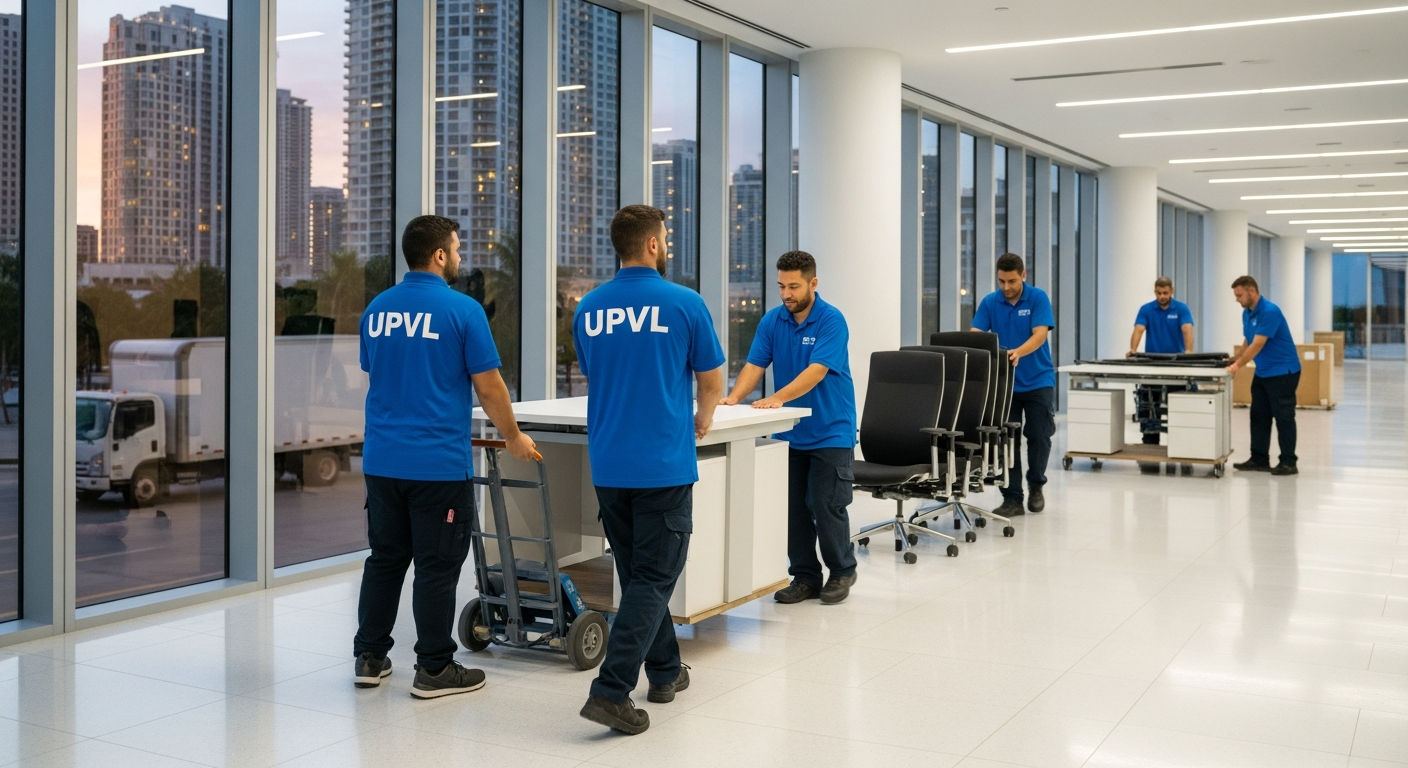
Relocating a business in Miami is never just about moving desks. It’s about keeping phones ringing, servers online, and teams productive while office movers work around you. With the right commercial movers in Miami, you can relocate with minimal disruption and a clear, predictable plan.
Quick Navigation
Office relocation in Miami comes with challenges you won’t see in every city: high-rise buildings with strict elevator rules, coastal humidity that can affect electronics, afternoon thunderstorms, and traffic that shifts dramatically with events and tourist seasons.
Commercial movers in Miami need to balance all of this while keeping your teams working. That means:
For many companies, the real risk isn’t broken furniture—it’s downtime. Lost billable hours, call center outages, or even a few hours of offline servers can cost more than the entire move. That’s why business movers in Miami build relocation plans around your operating schedule, not the other way around.
| Miami Business Type | Biggest Moving Risk | Key Planning Focus |
|---|---|---|
| Law firm in Brickell | Confidential files and strict building rules | After-hours move, secure file handling, COIs |
| Tech startup in Wynwood | Server and network downtime | IT cutover schedule, backup systems |
| Medical office in Doral | Delicate equipment and patient schedules | Specialty crating, phased move, insurance |
| Logistics warehouse near Miami International Airport | Interrupted inbound/outbound shipments | Staggered move, temporary storage, dock access |
Choosing experienced commercial movers means they understand these local realities and can help you design a move that keeps operations stable.
When you start talking to business movers in Miami, it helps to know the specific services you can request. Commercial and corporate relocation in Miami usually includes a mix of planning, packing, transportation, and specialized handling.
Most reputable office and warehouse movers in Miami offer:
| Service Type | Best For | Typical Add-Ons |
|---|---|---|
| Standard office move | Small to medium offices, 5–50 employees | Packing, furniture assembly, e-waste hauling |
| Corporate relocation | Multi-floor, multi-department companies | Move coordinator, phased schedule, labeling |
| Warehouse relocation | Distribution centers, e-commerce, storage | Pallet relocation, racking teardown, forklift moves |
| IT-focused move | Tech, finance, call centers, healthcare IT | Server crates, network coordination, cable mapping |
Some moves are entirely local within Miami and neighboring areas like Coral Gables, Doral, and Miami Beach. Others involve interstate corporate relocations where you will work with a mover licensed as an interstate carrier. For example, a company moving from Brickell to Atlanta would typically engage a long-distance specialist such as the team at United Prime Van Lines long-distance moving.
For many Miami businesses, the move is local but still complex. The main difference between local and long-distance commercial moves is how pricing and scheduling are structured.
| Move Type | Typical Range | Common Pricing |
|---|---|---|
| Local commercial move | Within Miami–Dade / South Florida region | Hourly rate (with minimum hours), sometimes flat |
| Intrastate move | Within Florida but outside Miami metro | Flat-rate or weight/distance-based, plus services |
| Interstate corporate relocation | Miami to another state | Binding/non-binding estimate based on weight & miles |
| Multi-location rollout | Several branches over time | Custom contract and project pricing |
For large or multi-location projects, discuss a master service agreement so your commercial movers can repeat the same process in multiple cities with consistent standards.
The most important question executives ask is: “How do we avoid downtime?” The answer is careful planning and phased execution. True zero downtime might be unrealistic for some organizations, but you can often keep operations 90–100% functional throughout the move.
Before you schedule dates, sit down with key department leaders and map out:
Share this operational map with your office movers so they can design a move that respects your business priorities.
Most successful corporate relocation in Miami uses a phased approach:
For some businesses, phases are separated by a day or two. For others, especially warehouses or 24/7 operations, phases might stretch across weeks.
To avoid surprises, bring in IT and outside vendors early. Ask:
Document all of this in a move plan, and give your commercial movers a copy. They can then schedule their crews so that equipment is moved and set in place in time for your vendors to work.
For many Miami offices, moving after business hours is the single most effective way to cut downtime. Business movers in Miami routinely schedule moves during evenings, nights, and weekends to keep your teams operating during the day.
Every building and mover defines it slightly differently, but generally:
Miami high-rises often require office relocation to happen after-hours to reduce noise, protect elevators, and manage dock traffic. Building management might only allow moves after 6 p.m. on weekdays or on Saturdays.
Choosing after-hours or weekend service can:
However, it can also affect cost. Some commercial movers in Miami charge a premium for late-night hours, while others simply schedule different crews. Ask for this detail on your estimate.
| Schedule Type | Pros | Potential Trade-Offs |
|---|---|---|
| Business-hours move | Lower rates, easier staff coordination | More downtime, conflicts with building rules |
| Evening move | Reduced downtime, simpler IT cutover | Possible after-hours building surcharges |
| Overnight move | Minimal disruption, Day 1 readiness | Higher labor costs, staff fatigue |
| Weekend move | Best for public-facing businesses | Weekend building fees, planning complexity |
If you’re unsure which option is best, ask your mover to price both a standard move and an after-hours move. That allows you to compare the premium against the value of reduced downtime.
Every commercial move in Miami runs through building management. Your movers can’t touch a hallway or elevator until your landlord’s requirements are satisfied, especially in high-rise areas such as Brickell, Downtown, and Miami Beach.
A Certificate of Insurance (COI) is a document issued by the mover’s insurance company showing that they carry required coverage—typically general liability, auto, and workers’ compensation. Most Miami office towers will not allow movers on site without a COI naming the building owner and management company as additional insureds.
To keep your schedule on track:
Many Miami buildings have specific rules for freight elevators and docks:
If you’re moving from or to a building with only passenger elevators (common in some Miami Beach and Coral Gables properties), your movers will need a plan for extra protection and more trips.
| Building Type | Typical Requirements | Planning Tip |
|---|---|---|
| Class A Brickell tower | COI, freight elevator reservation, floor protection | Book elevator 2–3 weeks in advance |
| Mid-rise Coral Gables office | COI, off-peak hours, limited dock space | Stagger loading times |
| Warehouse in Doral | Dock scheduling, safety vests, forklift rules | Coordinate with shipping/receiving |
| Medical building near Jackson Memorial | Strict COI, infection control routes, quiet hours | Route plan with facilities team |
Experienced business movers in Miami maintain relationships with many local building managers and can often suggest the best way to navigate access rules.
Modern commercial moves are really technology moves. Laptops, monitors, phones, VoIP systems, servers, and network gear are the backbone of most Miami businesses. If these are mishandled, productivity halts.
Professional commercial movers use specific procedures for IT and office electronics:
Ask your movers how they handle IT gear. If they don’t have a clear process, consider a provider with dedicated IT moving experience.
For most offices, the biggest risk of downtime comes from network and server transitions. To manage this:
For high-availability operations, consider moving redundant systems first and testing them thoroughly before shutting down the original location.
Beyond IT, many Miami offices rely on specialized equipment:
When you inventory your office, flag any equipment that has a maintenance contract. Notify those vendors about the move so they can advise on prep, transport, and reinstallation.
Warehouse movers in Miami handle an entirely different set of challenges than office movers. Instead of cubicles and conference tables, they move pallet racking, inventory, forklifts, and sometimes heavy machinery.
Key steps often include:
Many companies run partial operations in both the old and new warehouses for a short period, gradually shifting stock and operations.
Warehouse relocations around Miami often involve routes near Miami International Airport, Doral, Hialeah, and Medley. These areas can see significant truck traffic. Coordinating with warehouse movers who understand local truck routes and restrictions helps avoid delays and fines.
Packing is where commercial moves are often won or lost. Good packing protects items and speeds up setup. Poor packing leads to confusion, delays, and damaged property.
Most business movers in Miami offer several levels of packing support:
| Packing Option | Best For | Impact on Downtime |
|---|---|---|
| Full packing | Busy teams, tight timelines | Lowest internal workload; higher mover cost |
| Partial packing | Medium-sized offices | Balanced cost and control; requires coordination |
| Self-packing | Smaller offices, budget-sensitive moves | More staff time; risk if staff miss deadlines |
| Custom crating | Art, glass walls, specialty equipment | Protects high-value assets; extra planning |
Full packing can be a smart investment for larger firms because your employees stay focused on work instead of corrugated boxes.
Good labeling transforms move-in day from chaos into a controlled rollout. Work with your movers to create a simple system:
When movers arrive on-site, they can place each box and piece of furniture exactly where it belongs without asking repeated questions.
Law firms, medical offices, and financial institutions in Miami must handle confidential materials carefully. Ask how your commercial movers protect:
For regulated industries, document chain-of-custody procedures if needed.
Not every commercial move is one-and-done. You may be renovating, waiting on permits, or downsizing. In those cases, flexible storage is essential.
Commercial storage options in the Miami area typically include:
Because of South Florida’s heat and humidity, climate control can be valuable for electronics, records, and specialty furniture. The NOAA notes that Miami maintains warm, humid conditions year-round, which can affect certain materials over time.
When you need integrated moving and storage, consider providers like United Prime Van Lines storage services that can transport items directly into and out of secure facilities.
Commercial moving costs in Miami vary based on size, complexity, schedule, and access conditions. Most local office moves are priced differently than interstate corporate relocations, but the underlying cost factors are similar.
Expect your quote to reflect:
| Cost Factor | How It Affects Price | What You Can Control |
|---|---|---|
| Labor hours | More items or obstacles mean more time | Declutter and pre-pack non-essentials |
| Access/distance | Long hallway or no dock adds time | Reserve closest dock/parking possible |
| After-hours schedule | May increase hourly or flat-rate cost | Compare with cost of daytime downtime |
| Packing level | Full packing raises move cost | Use partial packing for mid-range budget |
For budgeting purposes, many companies request a not-to-exceed number so they can plan worst-case costs while allowing for some flexibility if the move goes faster than expected.
Understanding how office estimates work is critical to controlling your budget. Commercial movers in Miami may use hourly pricing, flat rates, or structured estimates, particularly for larger or interstate corporate relocations.
For local commercial moves within Miami, pricing often relies on hourly rates for crews and trucks. For larger or interstate relocations, estimates may be categorized as:
For a corporate relocation Miami company moving out of state, ask whether your quote is binding, non-binding, or not-to-exceed and what happens if your inventory changes.
Local office relocation Miami projects typically use either hourly or flat-rate pricing:
| Pricing Type | How It Works | Best For |
|---|---|---|
| Hourly | You pay for actual time (crew + trucks) with a minimum number of hours | Smaller offices or moves with uncertain scope |
| Flat-rate | You receive a fixed price based on a detailed survey | Medium to large offices with defined inventory |
| Hybrid | Flat rate for core work; hourly for add-ons or overflow | Projects with known base and possible extras |
| Project-based | Custom contract for multi-phase or multi-location relocations | Corporate relocations and rollouts |
To get accurate quotes, schedule a walkthrough—virtual or in-person—so the estimator can see your space, access points, and any special requirements.
A thorough commercial estimate should list:
Compare estimates not just on price but on scope. A lower quote with fewer services can easily become more expensive if you must add support later.
Commercial relocations involve high-value equipment and potential liability in office towers, parking structures, and loading docks. Working with properly licensed and insured business movers in Miami is non-negotiable.
For moves that cross state lines, movers must be registered with the FMCSA as interstate carriers. You can verify their USDOT number and complaint history on the FMCSA website.
For local moves within Florida, companies must comply with state and local regulations. The FMCSA and the Florida Attorney General provide consumer protection guidance for moving services.
It’s important to distinguish between the mover’s liability coverage for your goods (often called valuation) and their liability insurance.
Common valuation options include:
| Coverage Type | Cost | Typical Payout Scenario |
|---|---|---|
| Released Value | Included (no extra fee) | Low per-pound payout; may not cover actual value |
| Full Value Protection | Additional fee based on declared value | Repair, replacement, or cash settlement for covered items |
| Third-party insurance | Purchased separately via insurer | Custom policy; may cover exclusions |
| Self-insured (large corporations) | Internal risk management | Company covers its own losses; may still use valuation |
Given the value of corporate relocation Miami equipment such as servers, large copiers, and specialized machinery, many companies choose Full Value Protection or arrange third-party coverage.
Your mover should provide COIs that meet each building’s exact wording and limits. Typical requirements include:
Confirm that your mover can issue COIs quickly; waiting on paperwork is a common cause of move delays.
A structured checklist keeps your office relocation Miami project on track and aligned with your downtime goals.
| Checklist Stage | Key Actions | Primary Owner |
|---|---|---|
| 90–60 days | Define objectives, gather quotes, confirm building rules | Leadership, facilities |
| 60–30 days | Select mover, plan IT, set schedule | Move manager, IT |
| 30–7 days | Distribute labels, finalize COIs and layouts | Move manager, HR |
| Move week | Supervise phases, back up data | Department leads, IT, movers |
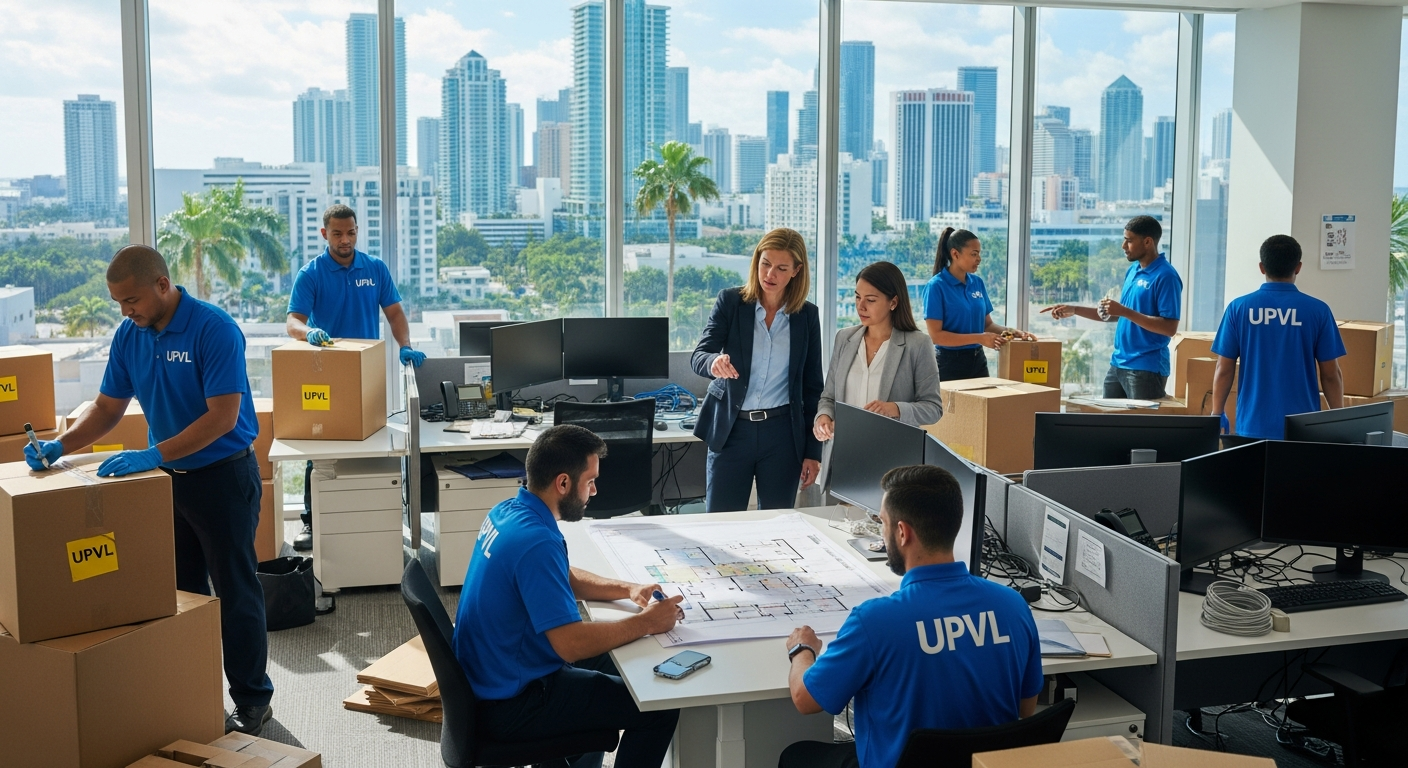
Office move estimates in Miami are typically based on an on-site or virtual survey of your current space, inventory, and access conditions. The mover notes how many workstations, offices, and common areas you have; your floor level and elevator situation; special items like servers or large copiers; and whether the move is after-hours. They then propose either an hourly rate with an estimated duration or a flat/project rate. For interstate moves, estimates may be binding, non-binding, or not-to-exceed as described by the FMCSA. Always ask what type of estimate you are receiving and what could cause the price to change.
Yes. Many commercial movers in Miami regularly perform weekend moves for offices that can’t afford weekday downtime. In fact, some high-rise office buildings prefer or require weekend moves to reduce impact on other tenants. You’ll need to confirm with both your current and new building managers that weekend elevator and dock access is allowed and whether there are added building fees. Weekend moves may cost slightly more in labor but often save money overall by preserving normal weekday operations.
A Certificate of Insurance (COI) is a document from the mover’s insurance carrier proving that they carry certain coverage levels, such as general liability, auto, and workers’ compensation. Miami office buildings require COIs to protect themselves from liability if damage or injury occurs during your move. The COI typically must list the building owner and management company as additional insureds and match specific wording. Without an approved COI, building security will usually not allow the movers on site, so it’s crucial to arrange this paperwork well before your move date.
To minimize downtime, start by mapping your critical functions and systems. Then schedule the physical move for evenings or weekends so staff can continue working during business hours. Use a phased move: relocate non-essential items first, then workstations and IT in carefully planned waves. Coordinate IT cutovers overnight or during low-usage periods, and have remote work options available if needed. Choosing experienced business movers in Miami who routinely handle after-hours office relocations is one of the most effective ways to keep operations running.
Many business movers in Miami do handle IT equipment and servers, but capabilities vary. When you request estimates, specifically ask how they protect computers, monitors, and server racks and whether they provide specialized packing materials, computer carts, and server crates. Some movers work alongside your own IT team, handling only the physical packing and transport, while others offer full disconnect/reconnect services. For mission-critical systems, always involve your IT leadership in selecting and coordinating with the mover.
Yes. Warehouse and office moves share some planning principles but are fundamentally different in execution. Office relocations focus on workstations, private offices, IT equipment, and conference rooms, with heavy emphasis on downtime and building rules. Warehouse moves involve pallet racking, inventory, forklifts, and loading docks, emphasizing throughput, safety, and coordination with shipping and receiving. Warehouse movers in Miami must understand local truck routes, dock access, and industrial safety standards. Many companies work with the same provider for both, but the crews and planning processes are tailored to each environment.
Some do. If your lease changes unexpectedly or you face an urgent situation, certain providers can mobilize quickly, especially if you’re flexible on after-hours or weekday timing. However, availability depends on crew schedules and building rules, so last-minute corporate relocation Miami projects work best when you can be flexible on move dates and scope. For very tight timelines, you may consider a moving company with dedicated last-minute services such as those described at United Prime Van Lines last-minute moves.
For Florida moves, the contact information is:
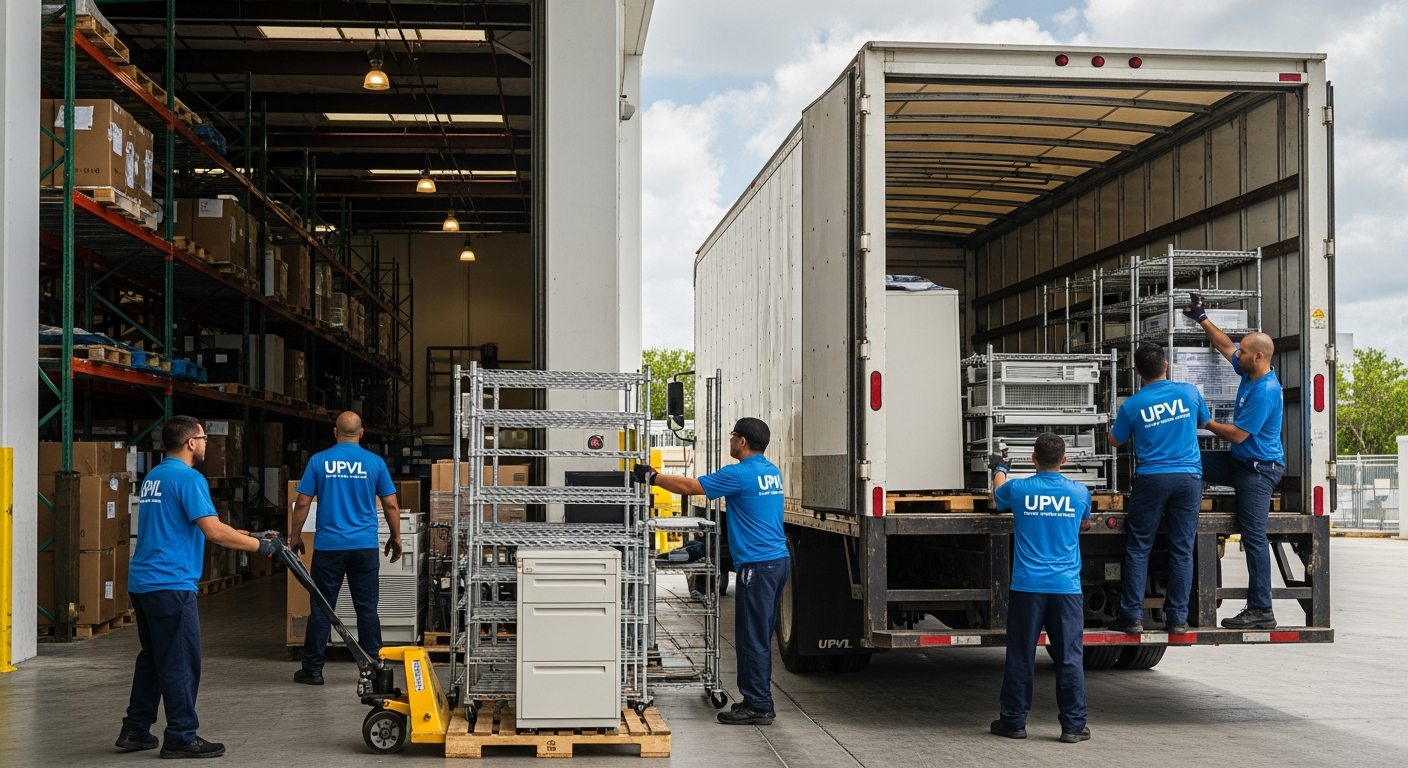
Office and warehouse relocation in Miami doesn’t have to mean days of lost productivity and frustrated teams. With the right commercial movers, a clear estimate, and a phased, after-hours strategy, you can protect your business from costly downtime while you upgrade or relocate your space.
Invest time up front in selecting properly licensed and insured business movers in Miami, aligning IT and building management, and choosing the right mix of packing, storage, and valuation coverage. Those choices, more than anything, determine whether your commercial move feels disruptive—or like a smooth, well-executed project that sets your company up for its next stage of growth.
If you’re comparing options, explore how full-service providers like United Prime Van Lines office and commercial moving coordinate planning, after-hours scheduling, and specialized equipment handling for Miami businesses. A strong partner can turn relocation from a risk into an opportunity to create a better, more efficient workplace for your team.