Relocating an office around North Miami sounds simple until you actually start doing it. Suddenly it’s not just “move desks and computers.” It’s leases, IT, parking, keeping clients happy, and somehow making sure your team can still do their jobs while everything’s in boxes.
I’ve helped a lot of businesses move in and around the North Miami area — from small startups upgrading to bigger spaces to established companies shifting between neighborhoods like North Miami Beach, Aventura, and Ojus. In this guide, I want to walk you through how I’d plan an office move step‑by‑step if I were sitting right there with you at your conference table.
No scare tactics, no hype. Just a practical roadmap, with a few “learned it the hard way” notes sprinkled in.
Before we talk boxes and trucks, let’s talk purpose. The reason for your move shapes almost every decision you make.
Common reasons I hear from North Miami businesses include outgrowing the current space, needing a better deal on rent, wanting to be closer to clients (for example, shifting toward North Miami Beach or Aventura), escaping parking and commute headaches, or downsizing to go hybrid/remote.
Be brutally honest with yourself here. Ask what’s not working in your current space, what absolutely must be better in the new office, whether you are growing or shrinking over the next 2–3 years, and how important location is for your clients. Write these down. They’ll guide you when the leasing agent is showing you that “beautiful open concept” that actually doesn’t fit how your team works at all.
One of the biggest mistakes I see is underestimating how long an office move takes. For a small office (say 5–15 employees) around North Miami, I like to see 8–12 weeks of planning before move day. Bigger operations need even more.
Finalize your new lease, lock in your move date, choose your moving company, start talking to your internet and phone providers, and appoint an internal “move coordinator.”
Walk the new office and plan the layout. Decide what’s coming with you and what’s being sold/donated. Start a rough inventory of furniture and tech, and confirm building rules in both locations (elevators, loading dock, COI requirements).
Notify clients and vendors about your upcoming move. Finalize IT and telecom cut‑over dates, confirm access times with both buildings, and start packing non‑essential items, archives, and decor.
Label everything, pack personal items and lower‑priority areas, do a final walkthrough of the new office with your movers and/or IT team, and confirm parking and access for move day.
Move essential IT first (servers, routers, key workstations), then move core office furniture and shared spaces. Have a small “welcome kit” ready at the new office (Wi‑Fi, snacks, basic supplies). Plan one person to stay behind at the old office and one at the new.
When I work with businesses on an office relocation, I help them lay out this entire timeline in a shared doc or simple spreadsheet so everyone knows what’s coming when.
You’ll find a lot of movers if you just Google “office moving North Miami,” but not all of them specialize in commercial moves. An office relocation is a different animal than a house move. You’ve got network gear, shared workstations, building rules, and you absolutely need to minimize downtime.
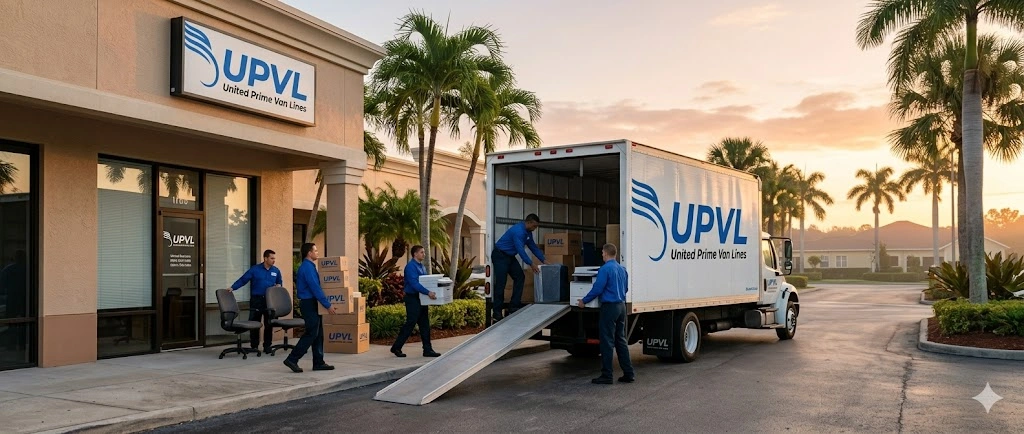
This is exactly the kind of work we handle with our office and commercial moving services at United Prime Van Lines. We know the North Miami, Ojus, Hollywood, and Aventura buildings, the dock areas, and the tricky parking situations.
When comparing companies, ask if they have moved offices in North Miami before, how they handle IT equipment, if they can provide a certificate of insurance, and if they offer packing support. Listen to how they answer. You want someone who sounds calm, prepared, and experienced.
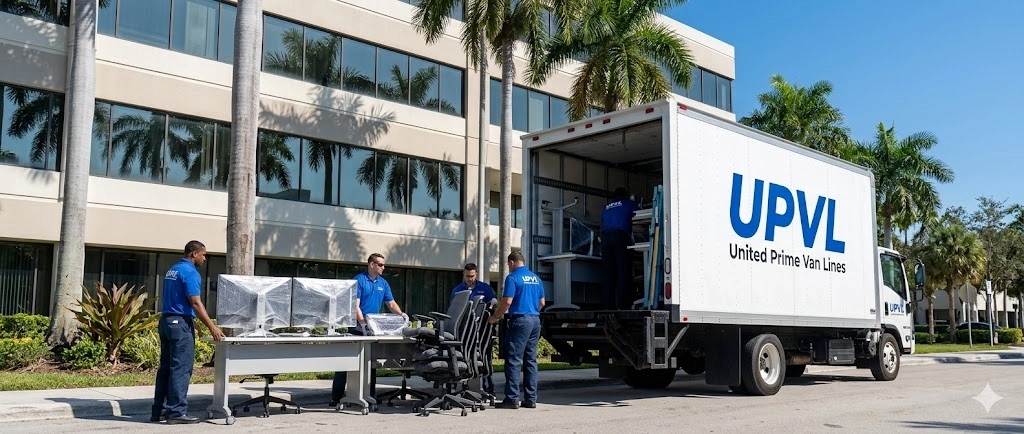
Office moves in the North Miami area come with one guaranteed ingredient: building rules. You might be dealing with elevator time windows, floor protection requirements, loading dock procedures, and insurance documentation.
As soon as your move date is roughly set, reach out to management at both your current and new office. Ask what days and times movers can use the elevator, if reservations are required, where the loading dock is, what insurance documents are required, and if there are noise restrictions.
Don’t play middleman more than you have to. I always offer to speak directly with the building’s management on behalf of my clients so we can send over the certificate of insurance, confirm elevator reservations, and clarify access for large trucks. Good coordination here saves a ton of headaches on move day.
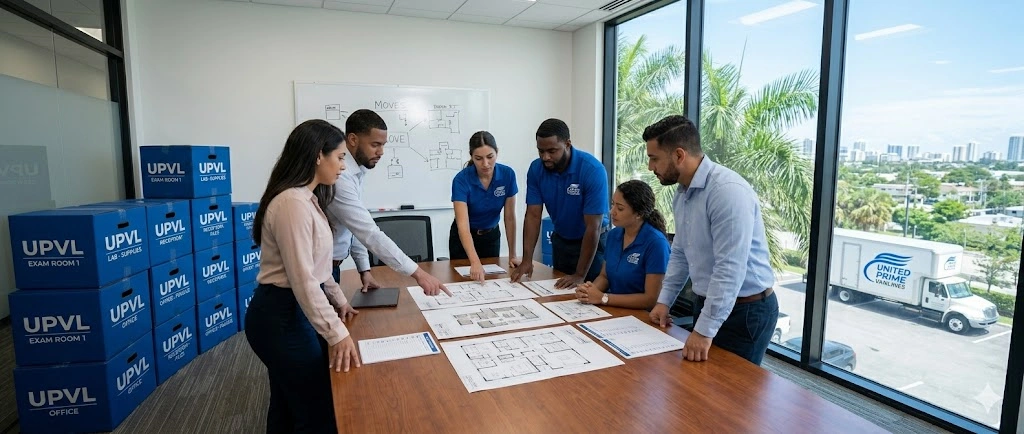
One of the most satisfying parts of an office move is designing a space that actually works for your team. Before you move, walk the new space with a printed floor plan, a tape measure, and someone from your operations team (if you’re using us, we’ll usually come walk it with you). Look for power outlets, natural light, and where people naturally move through the space.
Next, decide on the essentials. Determine where the reception area will be, who needs private offices, where printers and shared storage will go, and where the main network gear will live.
Then create a simple map. It doesn’t have to be architect‑level perfect, as long as it clearly shows desk numbers or zones, where each team goes, and meeting rooms. We use these maps constantly on move day. Each desk, chair, and box can be labeled with a zone, cutting hours off your total move time.
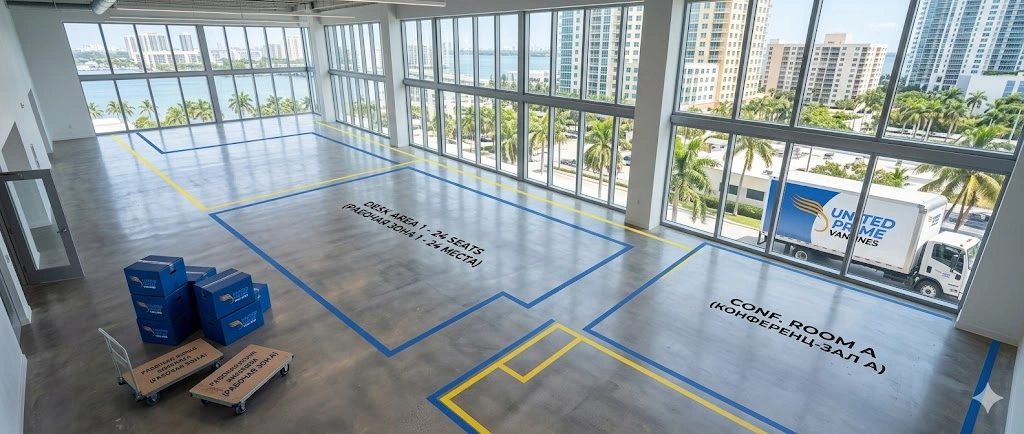
If you take only one thing from this guide, let it be this: labeling is everything.
Assign a color to each department (Blue = Accounting, Green = Sales) and a number for each workstation (Sales 01, Sales 02).
On each item, combine the two (e.g., “Marketing 03”). Put that label on the desk, chair, computer tower, monitor, and boxes for that station. At the new office, print big signs (“MARKETING” with desk numbers) and place them in the right area of the floor plan. When my team arrives, we know exactly where it goes — no one has to hunt for answers.
If you’d rather not deal with any of that, we can bring labels and handle this system for you as part of our office moving service.
This is the part that keeps most business owners up at night: “What if we move, and nothing works?”
If you have an internal IT person or an outside vendor, loop them in early. Together, build a list of modems, servers, workstations, printers, and phone systems. Decide what moves and when.
Do everything you can to avoid this scenario: your team shows up Monday, but internet won’t be installed until Wednesday. Contact your providers several weeks ahead to schedule the transfer and test the connection a day or two before the team arrives.
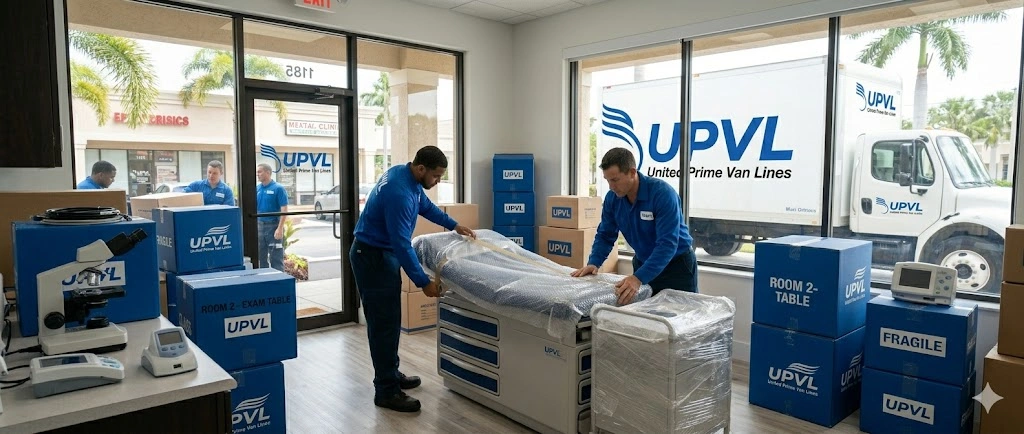
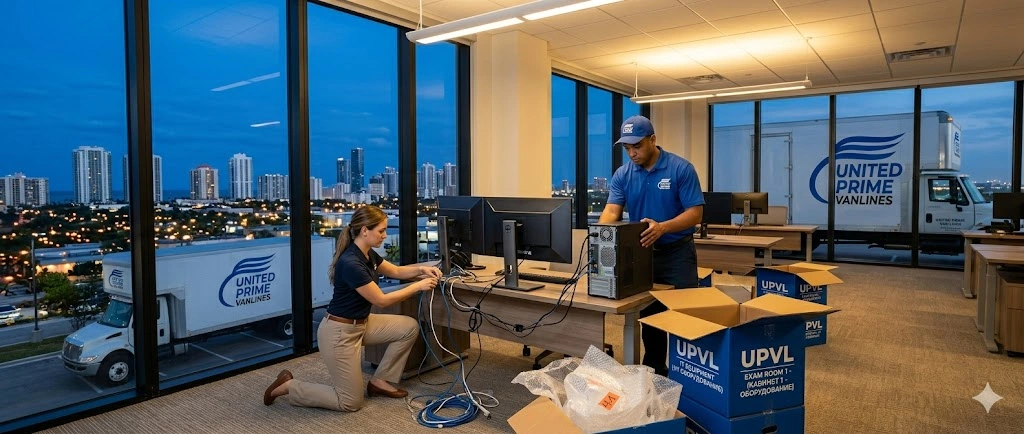
We use anti‑static wrapping for towers, padded boxes for monitors, and clear labels indicating which desk each device belongs to. You can pack IT yourself, or we can handle it with our full-service packing option and work alongside your IT vendor.
Every hour your team can’t work is money and opportunity lost. With some planning, an office move around North Miami doesn’t have to shut you down for days.
A lot of our office clients choose packing on a Friday afternoon, moving Friday evening or Saturday, light setup on Sunday, and are back in action on Monday.
If your business can function with a smaller core team on‑site, consider having only essential staff return the first day, letting others work remotely until everything is fully set up.
Make a list of what absolutely must be functioning by the end of day one (Internet, VoIP, Reception, one main printer, key workstations). We’ll structure the move so those items are loaded last, unloaded first, and set up as early as possible.
Office moves can be emotional for your staff. To keep things steady, communicate early and clearly. Share the reason for the move, show photos of the new space, explain timelines, and let them know how long you expect disruption to last.
Assign move champions for larger teams to gather questions, help with labeling, and be a point of contact during move week. Be clear on your personal items policy—what employees should pack and take home themselves. Offering simple things like pizza on packing day goes a long way.
A lot of businesses remember Google Maps and forget everything else. Work through a simple checklist: Google Business Profile, your website, email signatures, social media bios, online directories, invoices, business cards, vendors, and your old landlord.
If your clients visit you in person (we’ve moved plenty of offices in North Miami Beach where clients drop by), consider an email a couple of weeks before the move and a simple printed sign at your old address with a QR code to your new location.
If you’re wondering where exactly United Prime Van Lines fits into all this, here’s how we usually help businesses in the North Miami area:
If your move is mostly local — say from North Miami to Hollywood, FL — we’ll treat it as a local office relocation with all the same care and planning as a long‑distance commercial move.
From there, it’s just a matter of following through on the plan. My job — and my team’s job at United Prime Van Lines — is to make sure move day itself feels like the easiest part of the whole process.
If you’re planning an office move anywhere around North Miami, North Miami Beach, Hollywood, or the nearby areas and want a calm, organized partner to walk through it with you, we’re here when you’re ready to talk.