Moving in Miami is its own special kind of chaos. You’ve got the heat, the humidity, sudden rain, tight elevators, narrow condo hallways, and that one heavy couch you swear shrunk on the way out because it definitely went in easier.
I move people around Miami for a living. I’ve carried sectionals up Brickell high-rises, vintage armoires through Coral Gables homes, and IKEA wardrobes into tiny South Beach studios. I’ve seen what protects furniture—and what destroys it—in this city.
Let me walk you through how I protect furniture during Miami moves, step by step, the same way my crew and I do it at United Prime Van Lines.
Why Miami Is Tough On Furniture
Miami isn’t just “hot.” It’s hot, humid, and unpredictable. That combo is brutal on furniture if you don’t plan for it.
Here’s what we’re up against:
- Humidity: Warps wood, swells drawers, weakens glued joints over time.
- Sudden Rainstorms: One passing cloud can soak an entire load in minutes.
- Intense Sun: Direct sunlight + heat can crack leather and fade fabric.
- Salt Air: Not great for metal hardware or delicate finishes.
- Tight Spaces: Condos, elevators, older homes with narrow doorways = more chances to ding, scrape, and chip.
When I’m planning a Miami move, I think about your specific furniture and the path it has to travel: out of the home, down an elevator, into the truck, and into the new place—under Miami conditions.
Step One: Know What You’re Moving Before Moving Day
Protecting furniture starts before anyone grabs a blanket.
When I walk into a client’s place for an estimate, I mentally sort furniture into categories:
- Solid wood vs. veneer vs. particle board
- Upholstered pieces (sofas, chairs, headboards)
- Glass & mirrored items
- Leather furniture
- Antiques and sentimental pieces
- Flat-pack & IKEA-style furniture
- Bulky/heavy items (pianos, large dressers, armoires)
Different pieces need different protection. A solid oak table can handle more handling than a budget particle board nightstand.
If you want to do a pre-check yourself, walk through your place and note:
- Anything already loose, wobbly, or cracked.
- Pieces with sentimental value.
- Expensive pieces: designer, custom, or high-end.
- Super heavy items: sectionals, large bookshelves.
These items go on my “treat like gold” list. If you’d rather someone else think about this for you, this is exactly the kind of walk-through I do when you book a move with us in Miami: 👉 United Prime Van Lines Miami
Step Two: The Packing Materials That Actually Matter
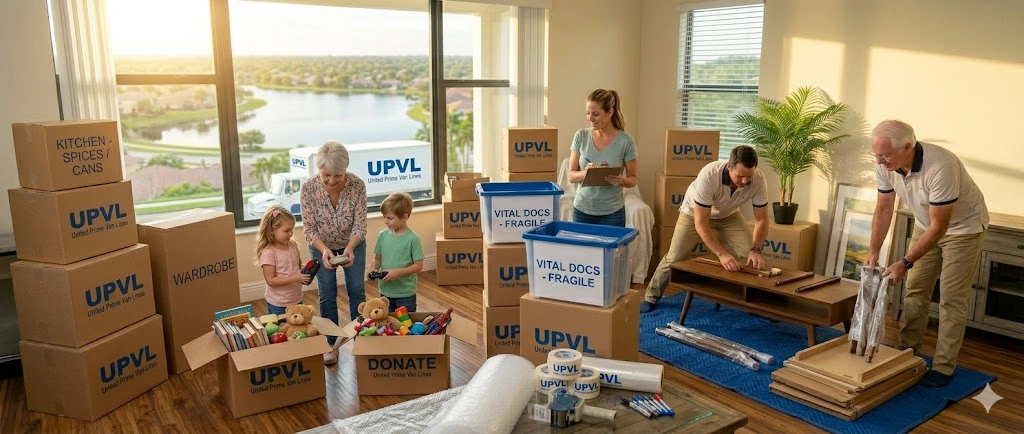
You don’t need every fancy product from the moving aisle, but you do need the right ones.
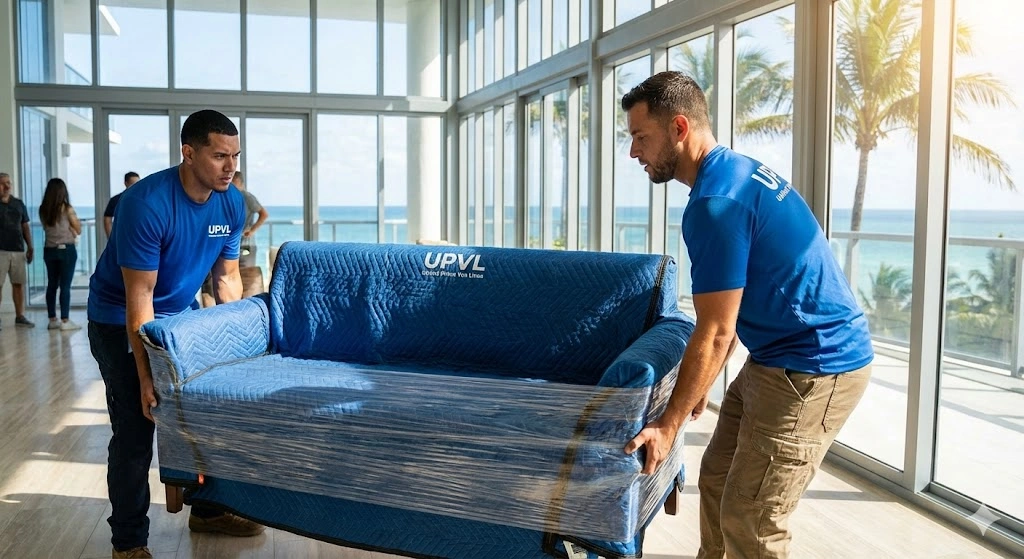
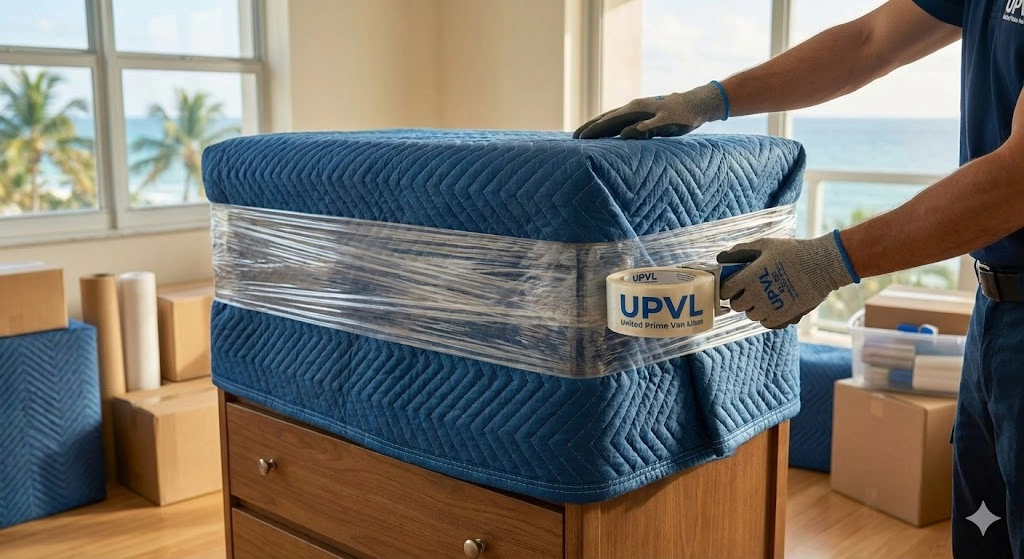
- Thick Moving Blankets: These are your #1 defense against scratches and impacts. We wrap large pieces completely—like a cocoon.
- Shrink Wrap / Plastic Wrap: In Miami, shrink wrap is a must. It protects from moisture and keeps drawers closed. Important: we never shrink wrap directly onto leather or unfinished wood in high heat (it can "sweat"). We always put a padded layer underneath first.
- Mattress & Sofa Covers: Essential for protecting against dirt and moisture.
- Corner Protectors & Foam: For glass tabletops, framed art, and sharp wood corners.
- Proper Tape: Painter’s tape or packing tape should only go on blankets—never directly on wood finishes, leather, or painted surfaces.
Step Three: Disassembly (When To Do It, When Not To)
A lot of damage happens in doorways, hallways, and elevators.
We usually disassemble:
- Beds (headboard, footboard, rails)
- Dining tables (legs off, leaves removed)
- Sectionals (separate pieces)
- Large desks
We think twice before fully taking apart:
- Cheap particle board pieces that have already moved once or twice.
- Anything where the hardware is stripped or barely holding.
If assembling and disassembling furniture stresses you out, you might want us to handle that part entirely: 👉 Furniture Disassembly & Assembly Services
Step Four: Protecting Different Types of Furniture
Living Room
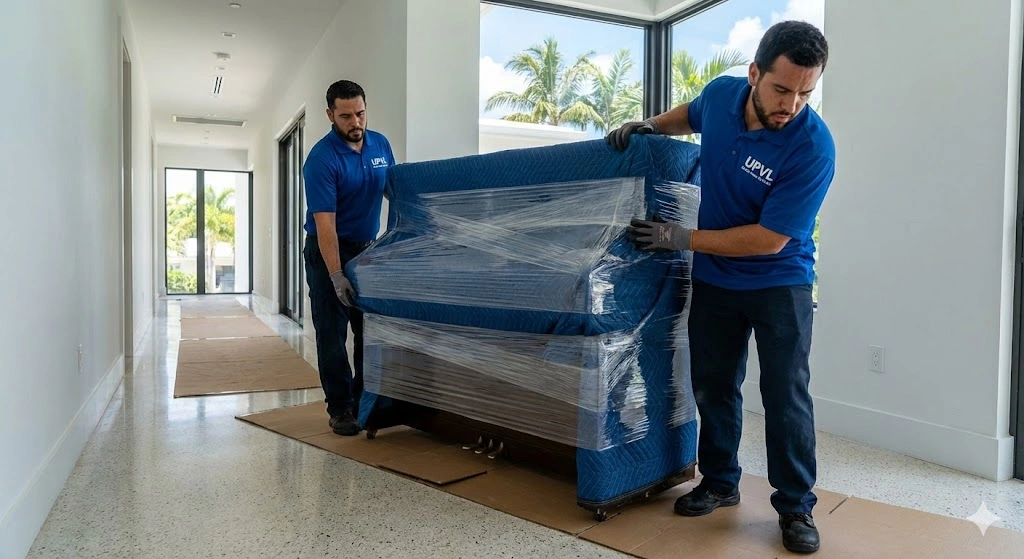
- Sofas & Sectionals: Wrap the entire frame in a blanket, then shrink wrap. Pay extra attention to legs and arms. In Miami, we avoid leaving wrapped sofas sitting in direct sun.
- Coffee Tables: Glass tops come off; wood gets blanket-wrapped and corners padded.
- TV Stands: Shelves out, cords labeled, doors secured with a blanket + wrap.
Bedroom
- Beds: Mattress and box spring go into covers. Headboard/footboard wrapped individually in blankets. Miami tip: we don’t lean mattresses on wet surfaces outside. Moisture + mattresses = mold risk.
- Dressers: For a short distance with elevator access, we often leave drawers in and wrap the whole dresser. For long distances or fragile pieces, we remove the drawers and move them separately.
Dining Room
- Dining Tables: Legs off when possible. Top gets thick blankets and corner padding.
- China Cabinets: Glass doors padded from the inside, entire unit blanket-wrapped.
Special & Delicate Pieces
If you have pianos, art, and antiques, you really want professionals who know what they’re doing. We handle these through our dedicated services: 👉 Piano Moving 👉 Art & Antique Moving
Step Five: Protecting Furniture From Miami Weather
Heat & Humidity
- We avoid leaving furniture sitting in a closed truck for hours in direct sun.
- We try to time moves earlier in the day when the heat is less brutal.
Sudden Rain
If you’ve lived here long enough, you know: one minute it’s clear, the next it’s a wall of water.
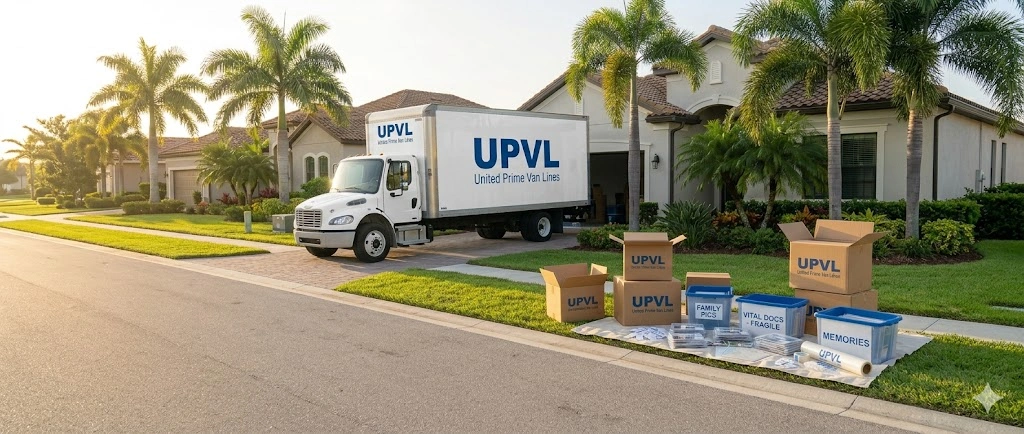
- We stage items just inside the door so loading is quick and controlled.
- We run furniture straight from home → truck → home. No standing in the rain.
- We never leave unprotected wood or upholstery in open trucks during a downpour. I’d rather pause the move for 15 minutes than risk your dining table.
Step Six: How We Load the Truck
Even perfectly wrapped furniture can get damaged if the truck is loaded badly.
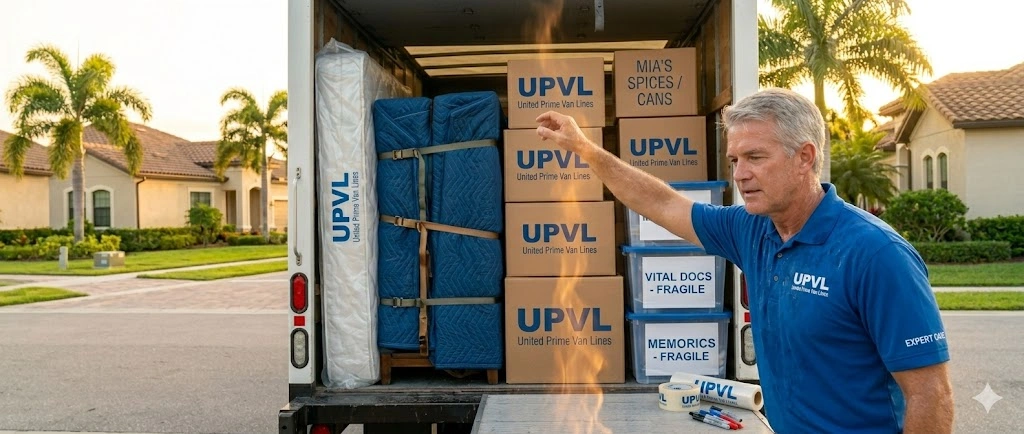
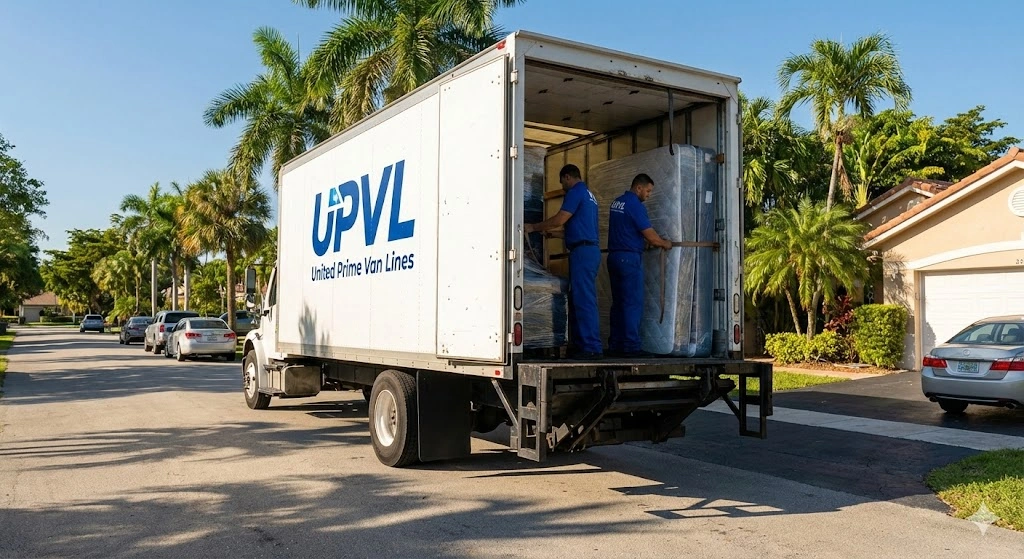
- Heaviest items first: Dressers, appliances, large cabinets against the front wall.
- Sofas and big pieces: Arranged so nothing sharp is pressing into them.
- Glass and mirrors: Never flat on the floor; always upright, padded, and secured.
- Straps and tie-downs: Used liberally so nothing shifts if we stop suddenly.
We build the truck like a 3D Tetris puzzle, with your furniture as the priority. Boxes fill gaps, not the other way around.
Step Seven: Protecting Furniture Inside Miami Buildings
A lot of damage happens because of the building itself (tight elevators, low ceilings, narrow staircases).
What we do:
- Put pads/blankets on elevator walls if the building doesn’t already.
- Walk the route before we bring the big pieces.
- Measure big items vs. doorways/elevators if there’s any doubt.
- Take doors off hinges temporarily when needed.
If you’re in a condo or high-rise, book the elevator in advance and ask if they provide elevator pads.
DIY vs. Professional: When It’s Worth Bringing in a Crew
If you’re moving a small studio with mostly replaceable furniture, a DIY move might be fine.
But if you:
- Own real-wood furniture that you want to keep for years.
- Have tight stairs or elevator routes.
- Are moving in peak Miami heat or rainy season.
- Have antiques, a piano, or sentimental pieces.
…then it’s usually cheaper in the long run to let professionals handle the heavy, delicate stuff.
How I Think About Furniture Protection
When I show up to your place with my crew from United Prime Van Lines, here’s what’s running through my head:
- What in this home would break your heart if it got damaged?
- Where are the tight squeezes and tricky angles?
- How’s the weather looking?
- How do we load this so it rides like it’s not even moving?
That mindset is the difference between just “getting the job done” and getting you into your new Miami home with your furniture looking exactly like it did the day before the move.
If you want help planning a move where your furniture is actually protected—not just talked about—reach out. We do local Miami moves all the time, and we build this kind of protection into every single job.