Moving out of Miami and across the country feels different than hopping from Brickell to Aventura. The distance adds pressure, the weather plays its own tricks, and the timing rarely lines up perfectly. I’ve seen people try to “wing it” with packing for a long‑distance move and end up overwhelmed, exhausted, and spending way more than they planned.
Let me walk you through how I’d approach packing for a long‑distance move from Miami if we were sitting at your kitchen table. Along the way, I’ll show you where it makes sense to do things yourself and where it’s smarter to let us at United Prime Van Lines step in and handle the heavy, fragile, or just plain annoying parts.
Why Packing for a Long‑Distance Move From Miami Is Its Own Beast
Miami isn’t just “any” city to move from. You’re dealing with:
- Heat and humidity that can wreck certain items if they’re not packed right.
- Sudden storms that make loading a race against the rain.
- High‑rise buildings and tight loading rules in places like Brickell and Downtown.
- Long transit times across multiple climate zones.
When you’re moving long‑distance, your boxes aren’t just going from truck to elevator. They are stacked, driven for days, and transferred. Anything that’s not packed well gets punished. That’s why I always tell people: packing matters just as much as the move itself.
If you know you want a full-service experience, our long-distance moving services can handle it all. But if you’re a DIY packer, let’s break it down.
Step One: Decide What’s Really Making the Trip
Before you buy a single box, get brutally honest about what’s coming with you.
Ask Yourself:
- Do I use this often enough to justify paying to move it hundreds of miles?
- Will this fit in my new place?
- Would I miss it if it disappeared tomorrow?
Miami-Specific Decluttering:
- Summer Clothes: You won’t need 25 pairs of shorts in Denver.
- Beach Gear: Keep only what you truly use.
- Humidity Victims: Anything already warped or rusted? Toss it.
Step Two: Get the Right Packing Supplies
Using random grocery store boxes for a long‑distance move is like driving to New York on bald tires.
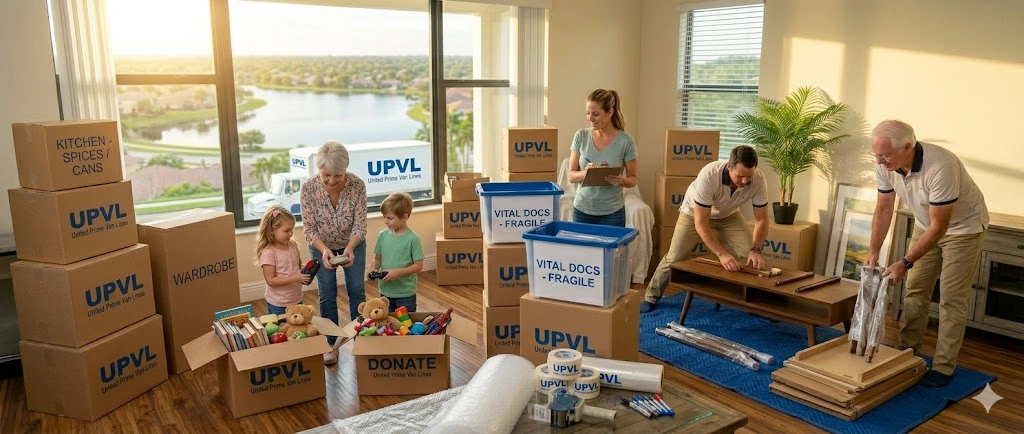
- Small Boxes (1.5 cu ft): Heavy items like books and tools.
- Medium Boxes (3 cu ft): Kitchen items, small appliances.
- Large Boxes (4.5–5 cu ft): Bedding and pillows.
- Wardrobe Boxes: For hanging clothes (saves time and prevents crushing).
- Specialty Protection: Double‑walled dish boxes, TV boxes, and mattress bags.
- Materials: Heavy‑duty tape, bubble wrap, packing paper (not newspaper), and stretch wrap.
If hunting this down stresses you out, our full-service packing team brings all the right materials.
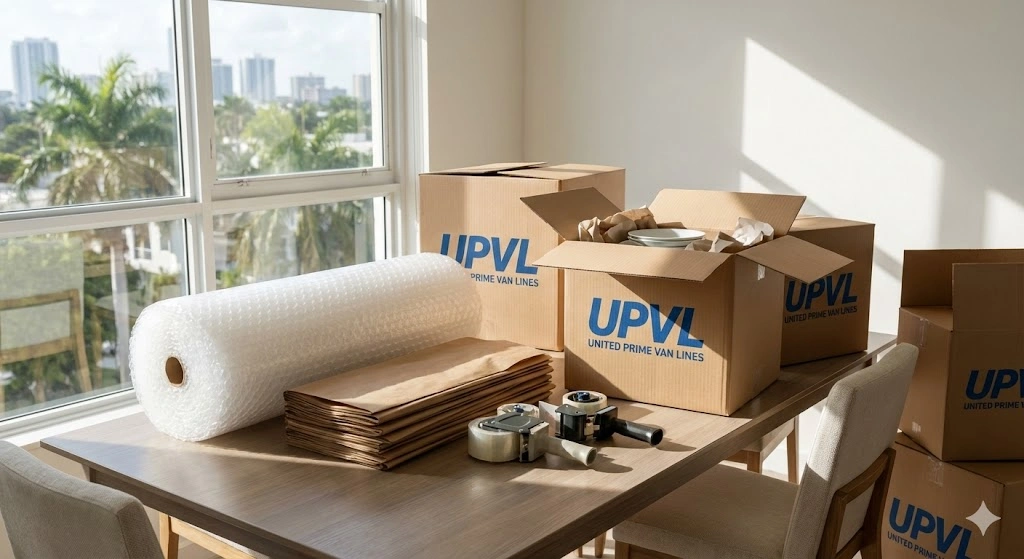
Step Three: Pack With Distance in Mind
The Kitchen
The kitchen always takes longer than people think.
- Dishes: Use dish boxes. Wrap each plate individually and stack them vertically (like records).
- Pans/Appliances: Nest pots with paper between each. Wrap appliance cords and pack in padded medium boxes.
- Food: Use it or donate it. Cans are heavy; avoid packing them for cross-country moves.
The Living Room
This is where damage gets expensive.
- Electronics: Use TV-specific boxes. Label cords in ziplock bags and tape them to the device.
- Art/Mirrors: Use picture boxes. Put an 'X' of masking tape over the glass and wrap in bubble wrap.
- Note: For high-value art, we offer dedicated art & antique moving solutions.
- Heavy Furniture: Remove legs. Wrap upholstered pieces in stretch wrap and moving blankets.
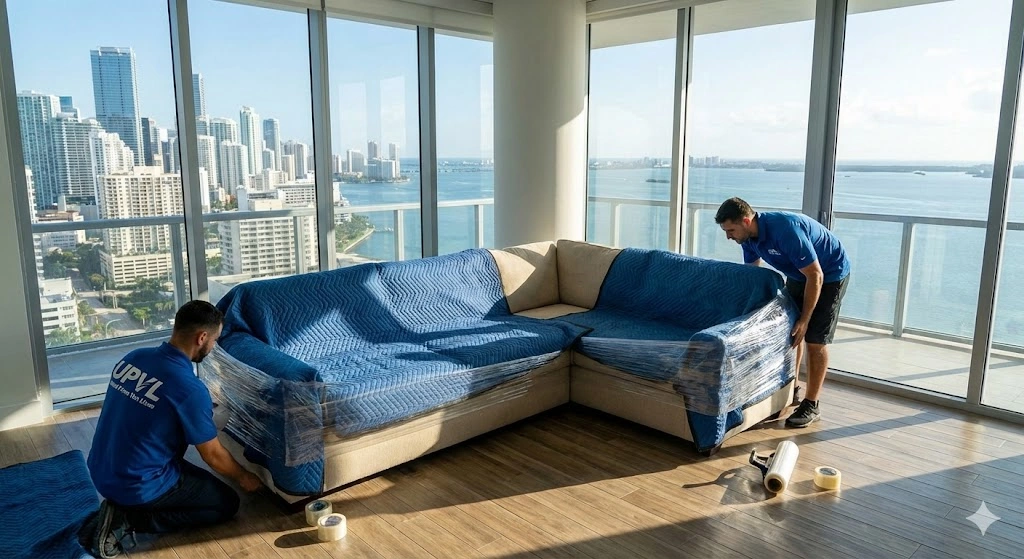
Bedrooms and Bathrooms
- Clothing: Use wardrobe boxes for suits/dresses. Pack off-season clothes separately.
- Mattresses: Use mattress bags to protect from moisture and dirt.
- Jewelry/Valuables: Do not pack these on the truck. Keep them with you in your car or carry-on.
- Bathroom: Toss almost-empty bottles. Tape the tops of remaining liquids, put them in sealable bags, and pack upright.
Miami Weather and Long-Distance Moves
- Humidity: Moisture damages leather, books, and wood. Use moisture-resistant mattress bags and drop silica gel packs into boxes with sensitive items.
- Sudden Rainstorms: We plan loading around building overhangs and keep certain items last-on/first-off to minimize exposure.
If you want to see how we handle Miami moves specifically, here’s more about our work in Miami, FL.
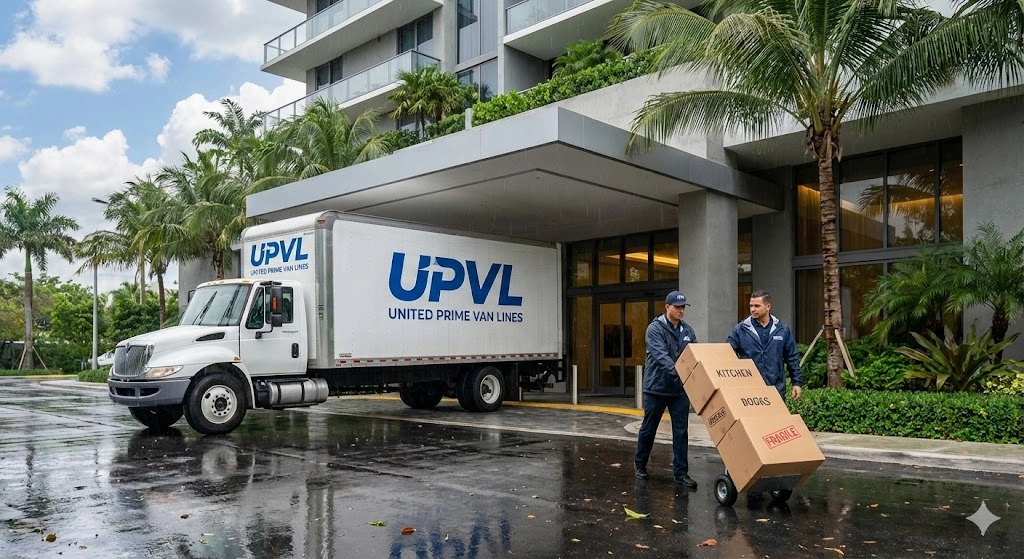
Labeling: The Five Seconds That Save You Hours
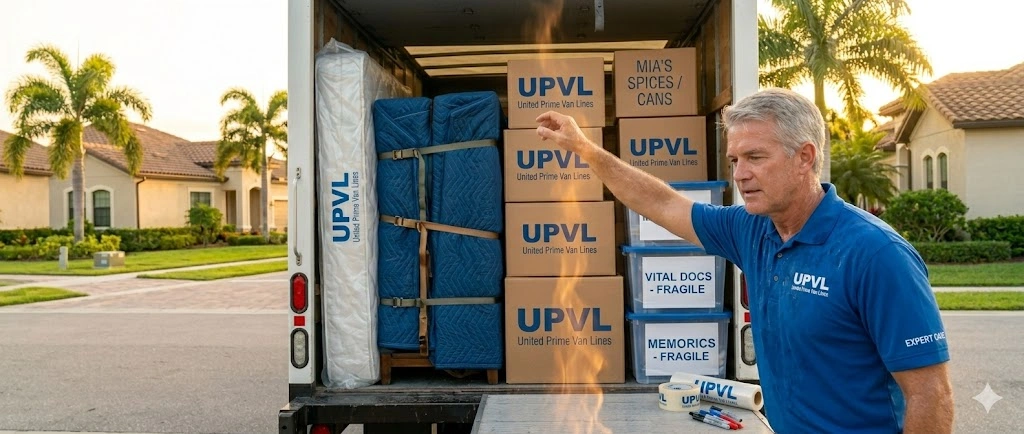
Long‑distance moves mean you won’t see your stuff for days. When it arrives, you don’t want to open “Mystery Box #17.”
- Room Name ("MASTER BEDROOM").
- Content Description ("WINTER CLOTHES").
- Priority Level (Mark 3–5 boxes as "OPEN FIRST").
- Your Name/Destination City (crucial for shared trucks).
What to Keep With You (Not on the Truck)
Pack a “Travel Kit” for your car or flight:
- Medications and prescriptions.
- Important documents (IDs, leases, medical records).
- Chargers and laptops.
- A few days of clothes and basic toiletries.
- A simple set of dishes/snacks for the first night.
When to Let the Pros Pack
Some people enjoy packing. But I strongly recommend letting us step in if:
- You are on a tight timeline.
- You have high-value items, art, or delicate electronics.
- You live in a high-rise with strict elevator windows.
With United Prime Van Lines, you can choose full-service packing or partial packing (where we handle the fragile/heavy stuff and you pack the clothes).
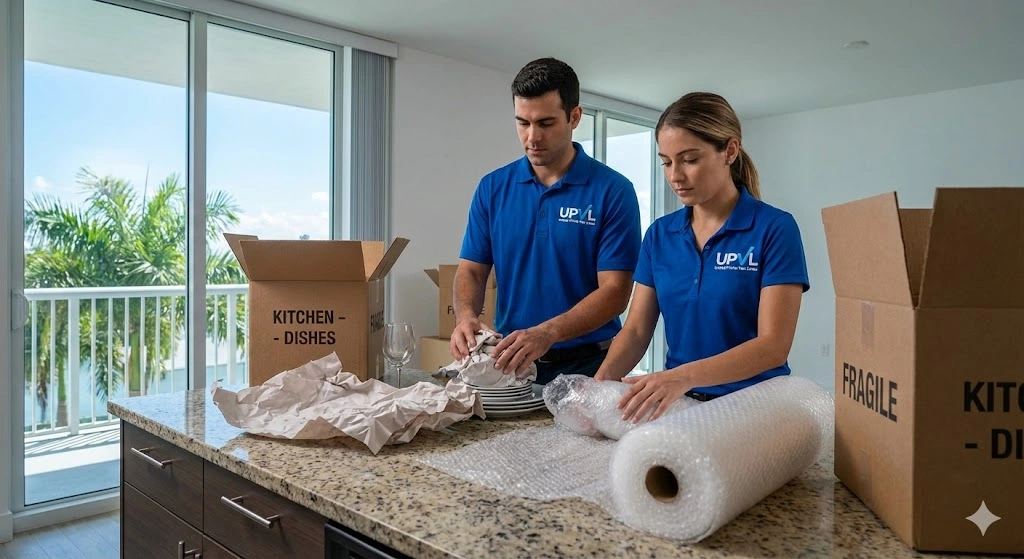
Packing Without Losing Your Mind
You don’t need a military operation to pack well, but you do need a clear plan, the right supplies, and a realistic timeline.
I’d rather see you spend your last days in Miami enjoying a final walk on the beach than buried in a pile of half‑sealed boxes. If you want help planning or handling your packing and long‑distance move, we can walk you through options, give you a clear quote, and build a plan that fits.
Learn more about how we handle long-distance relocations here: United Prime Van Lines – Long-distance moving