Long-distance moves are where furniture really gets tested. Local moves are one thing – the truck drives across town, hits a few bumps, and you’re done. But when you’re sending your couch, dining table, and bed hundreds or thousands of miles, every weak spot in your packing shows up.
I’ve seen gorgeous solid wood tables arrive with deep corner dents because someone “figured a blanket was enough.” I’ve also seen IKEA pieces survive cross‑country moves just fine because they were packed smart, not fancy.
In this guide, I’ll walk you through how I personally approach packing furniture for a long‑distance move – the same way we do it on jobs with United Prime Van Lines. I’ll keep it practical and honest, not textbook-perfect. If you want to DIY as much as possible and bring us in just for the heavy or tricky parts, this will help you know exactly what matters and what doesn’t.
Before we talk bubble wrap and moving blankets, I always start with this: not every piece of furniture deserves a spot on a long-distance truck.
Ask yourself three questions for each item:
I always tell my customers: if you hate the piece already, paying to move it long‑distance will only make you hate it more. Donate it, sell it, or leave it behind. Save your packing energy for what you actually want in your next place.
How I pack your furniture depends a lot on what it’s made of. Here’s how I mentally “sort” items when I walk into a home:
Think real wood dining tables, dressers, bed frames, and credenzas. Pros: Strong, can handle weight, can be disassembled and reassembled. Cons: Scratches, dents, and corner damage show easily; moisture and temperature changes can mess with them. For long-distance moves, I treat solid wood like it’s already sold to someone else and I’m responsible for it arriving in perfect condition.
Think IKEA, most budget furniture, a lot of office pieces. Pros: Lightweight, cheaper. Cons: Hates stress, screws strip out, edges chip, water is the enemy. For these, extra padding and avoiding direct pressure is key. I try not to stack heavy stuff on them at all.
Think couches, armchairs, ottomans, upholstered headboards. Pros: Fabric hides a lot of small bumps and bruises. Cons: Fabric tears, stains, odors, and bed bug risk if not protected. Long-distance = always wrapped and sealed. Bare fabric in a long-haul truck or storage is asking for trouble.
Think glass tabletops, marble or granite tops, mirrored dressers. Pros: Beautiful. Cons: One wrong move and it’s done. These are non‑negotiable “extra care” items: corner protection, rigid support, and never laid flat if it’s glass or mirrors.
Think leather couches, recliners, chairs. Pros: Durable if treated right. Cons: Scratches, scuffs, and punctures show badly. No tape directly on leather. Ever. I treat it like skin – it needs a barrier.
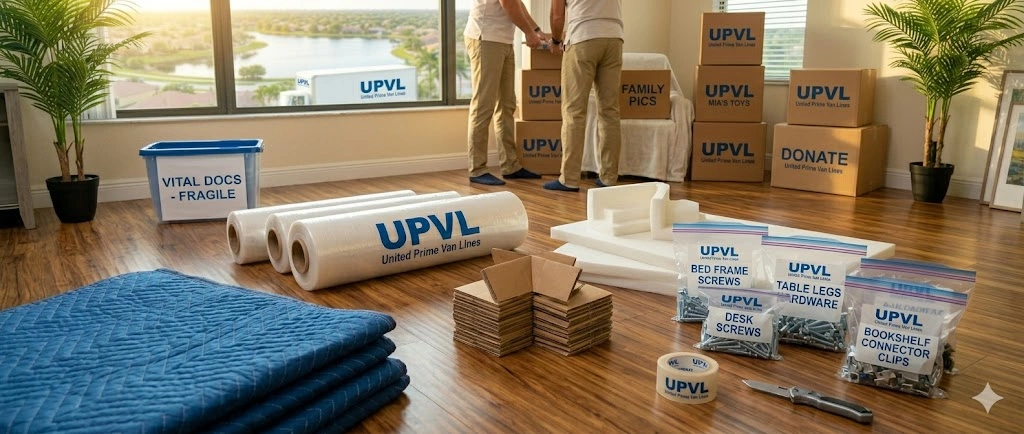
You don’t need a warehouse of fancy materials, but there are a few things that make or break a long-distance move.
Must-haves:
Nice-to-haves (especially for long-distance):
What I rarely bother with for most regular furniture is tons of tiny bubble wrap. It’s better for fragile decor and dishes. For furniture, blankets plus cardboard plus stretch wrap does most of the heavy lifting.
Let’s get specific. This is how I’d walk through a home before loading a long-distance truck.
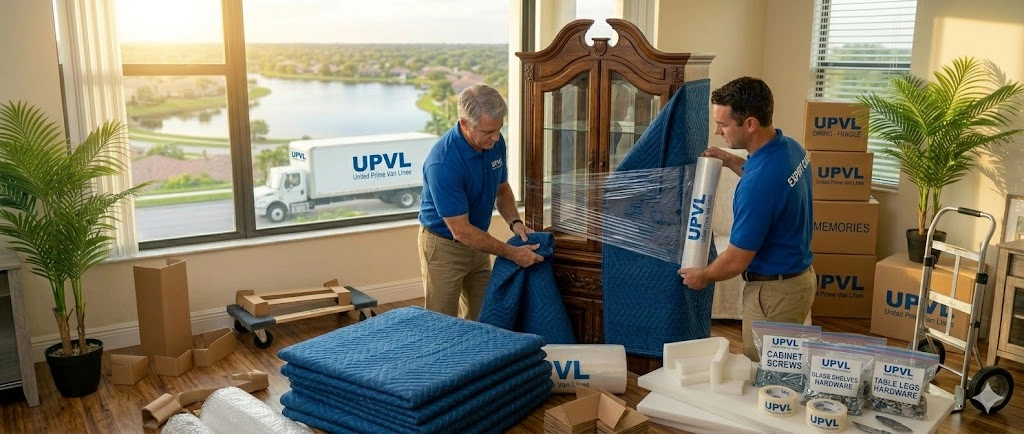
1. Clear it out and strip it down: Take off cushions and pillows. Check under cushions for remotes and change. If your sofa has removable legs, remove them and bag the hardware. 2. Protect the fabric or leather: For fabric, cover with a sofa cover or moving blankets, then stretch wrap over the blankets. For leather, blanket first, then wrap. No direct tape or plastic on leather. 3. Protect the corners and arms: Add extra padding (foam or folded blanket) on armrests and corners. Wrap snugly with stretch wrap so padding doesn’t slide down. 4. Get it upright & secure on the truck: I like to load sofas on their feet or on the arm, tightly strapped to the wall. Long-distance trucks vibrate – the tighter it is, the fewer chances there are for friction damage.
Tables:
Chairs: Wrap chairs in pairs (back-to-back) with a moving blanket around both, then stretch wrap. For high-end chairs, wrap individually.
Long-distance trick: Always load table tops on edge, never flat, with padding between them and the truck wall.
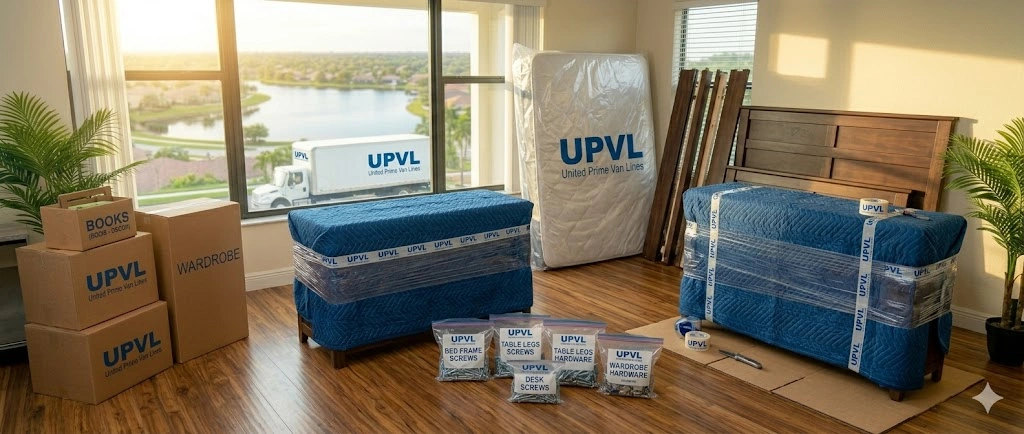
Mattress: Slide the mattress into a plastic mattress bag and tape the open edge securely. Upgrade to a mattress box if moving into storage or bad weather. Bed frame:
If you ever want someone else to deal with all the disassembly and reassembly, I’m happy to handle it with our furniture disassembly & assembly service.
People always ask, “Can I keep clothes in the dresser?” For long-distance, my answer is usually no, or only partially. When a truck hits potholes and tight turns, a full dresser becomes heavy, the frame flexes, and drawer tracks can crack.
What I do:
Office furniture can be deceptively fragile.
How I pack it:
If we’re handling a full office move, I generally bring in our office and commercial moving approach.
These are the pieces I treat like newborns.
My rules: Never load big glass or mirrors flat – they travel on edge. Always use corner protectors and a rigid backing. No loose glass in the truck, ever. How to pack:
Same goes for marble and granite tops; they’re strong surfaced but very sensitive to impact and tension.
If you have anything that would break your heart to see damaged, treat it like a specialty item. We normally bring in our art & antique moving or piano moving approach: custom padding, custom crating, and a tighter loading plan in the truck.
Here’s the mental shift I always make with furniture on long hauls:
What changes in my approach is that I’m much pickier about weight inside furniture (less is better). We use more blankets and more layers on key pieces. We strap everything tighter to the walls. I avoid “temporary quick fixes” like tape directly on surfaces.
You know what actually causes the most stress after a long move? “Where the hell are the screws for the bed?”
Here’s what I suggest:
Packing furniture well is half the story. The other half is how it’s loaded and secured.
Long-distance means planning the load like a 3D puzzle, not like a game of Tetris at the last minute.
I’m all for you saving money by packing your own boxes or taking apart simple beds. Where people are usually glad they called us in is wrapping and loading large couches, disassembling complicated beds and desks, handling glass/stone/antiques, and preparing everything for a truly long run.
If you want to do a hybrid approach, that’s something we do all the time: you handle what you’re comfortable with, and we step in for the heavy lifting, full-service packing, wrapping, and long-distance transport.
If you’re staring at your furniture and thinking, “I don’t have the time or the patience to do all this right,” you’re not alone.
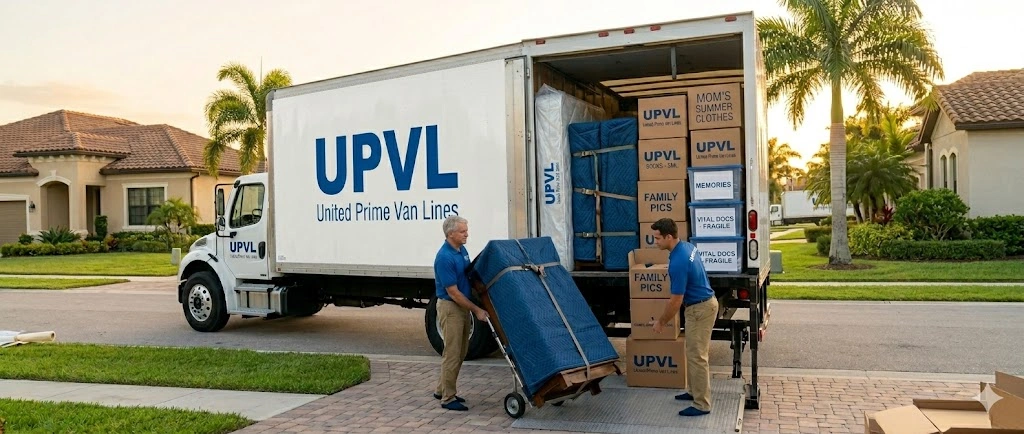
With United Prime Van Lines, here’s what I can take off your plate:
If you want to talk through your specific furniture and get a realistic plan for a long-distance move, you can always reach out through our site: United Prime Van Lines.
Long-distance moves are a big reset. When your furniture arrives in one piece, clean, and ready to use, it makes settling in so much less stressful. Strip heavy items down, pad corners and surfaces, keep hardware organized, and think about the whole journey.
And if you’d rather not spend your weekend wrapped in tape and stretch wrap, I’m right here to help you get it done the right way with United Prime Van Lines.