If you’ve never lived in South Florida before, the humidity here can be a rude awakening—especially on moving day. I’ve watched perfectly good furniture swell, cardboard boxes sag, clothes smell musty, and electronics sweat up with condensation just because they weren’t packed with our climate in mind.
I work with folks moving in and around places like Hallandale Beach, Hollywood, Aventura, and the rest of South Florida every day. Over time, you learn what survives our sticky air… and what doesn’t.
Let me walk you through how I personally guide my clients to pack for South Florida humidity, and what we at United Prime Van Lines actually do behind the scenes to protect your stuff once it’s on our truck and in storage. This is the kind of advice I wish everyone had before they start taping up boxes.
South Florida doesn’t just get “a little muggy.” For a good part of the year, we’re living in 70–90% humidity. Add in sudden rainstorms, salt air near the coast, and long, hot days, and you’ve got a pretty hostile environment for wood furniture, clothes and linens, books and documents, electronics and appliances, leather goods and shoes, and artwork and photos.
Humidity doesn’t only mean “wet.” It means warping and swelling for wood and MDF, mold and mildew inside boxes and on fabric, rust and corrosion on metal and electronics, sticking finishes on leather and vinyl, and soft, collapsing cardboard when it absorbs moisture.
When you pack for a dry climate, you can get away with a lot. In South Florida? The environment will punish every shortcut. That’s why when I help someone move locally around Hallandale Beach, FL or anywhere else in this area, I treat humidity as its own “moving challenge,” just like stairs or tight doorways.
Most people start with, “Where can I get free boxes?” In South Florida, that can backfire fast.
Why free grocery or liquor boxes are risky here: They’re often weakened from previous use and moisture. They can absorb humidity quickly and start sagging. Sometimes they’ve absorbed food smells or spills, which mold absolutely loves.
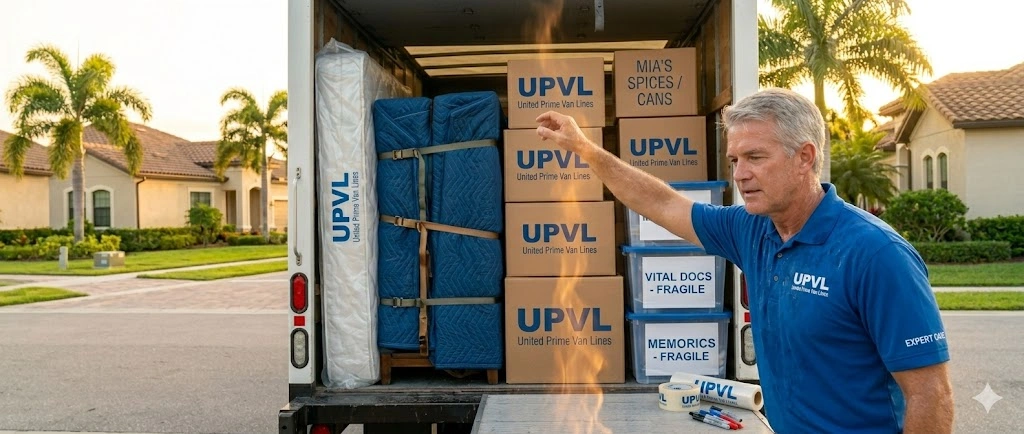
Use heavier-duty cardboard or plastic where it matters: Use double-walled moving boxes for books, dishes, and anything heavy. Utilize plastic totes with good lids for clothes, linens, papers, and kids’ items that might sit for a while. Wardrobe boxes are fantastic for suits, dresses, and anything at risk of mildew or musty odors.
You don’t have to use plastic for everything, but for anything fabric-based or paper-based, it can be a smart investment. When you move with us at United Prime Van Lines, we can bring sturdy boxes and specialty cartons so you’re not scrambling to find “whatever’s free.” Our full-service packing team uses packing supplies that actually hold up in South Florida’s climate.
Cardboard on its own is like a sponge. Even if your boxes never get “rained on,” high humidity can still slowly soak them. Here’s how I coach clients to create a little “micro-climate” inside each box:
1. Line or protect what’s most vulnerable: For books, documents, and photos, put them in plastic sleeves or resealable plastic bags before boxing, and use smaller, sturdier boxes so they don’t get too heavy or saggy. For clothes and linens, pack in sealable plastic bags or vacuum bags (but don’t over-compress delicate fabrics). If you don’t want plastic near everything, at least use moisture-absorbing packets in each box.
2. Use moisture absorbers (they actually help): You don’t need anything fancy. I often suggest silica gel packets (you can buy them in bulk online), DampRid or similar moisture absorbers for storage units or closets, and activated charcoal packs to cut down on odors. Drop a few small packets in boxes with shoes and bags, clothes, books and papers, and electronics cables and accessories.
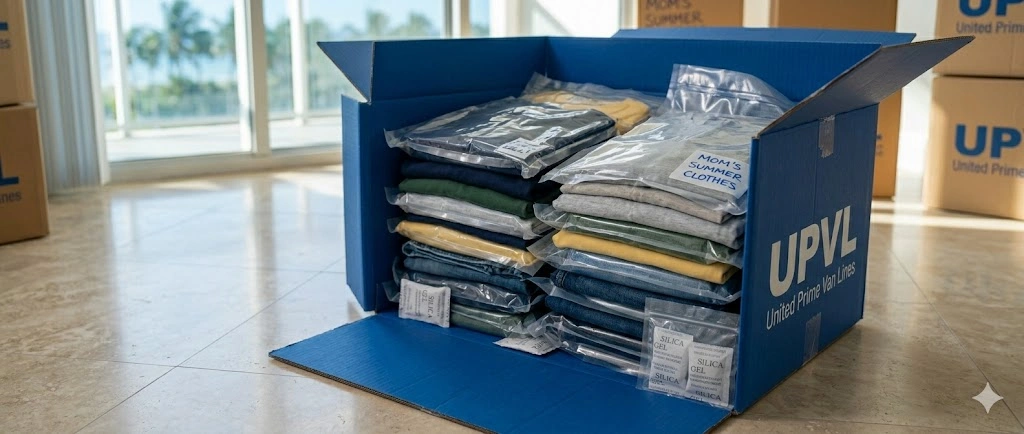
One of the most common complaints I hear after a humid move is: “Why do my clothes smell weird?” Humidity plus any trace of body oils, detergent, or leftover moisture from washing can create that stale, musty scent.
1. Start with bone-dry, truly clean items: Wash and fully dry clothes and linens before packing. Don’t pack anything straight from the dryer if it’s even slightly warm or damp. Let them cool and air for a bit. Avoid heavy fabric softeners with strong fragrances; those sometimes “lock in” a funky smell after sitting in humidity.
2. Use bags strategically (not blindly): For items going into storage or a garage, use vacuum-sealed bags or thick zippered plastic bags, and add one or two moisture absorbers inside. For clothes you’ll unpack within a week or two, you can use wardrobe boxes with breathable garment bags, leaving a little space between hangers so air can move.
3. Don’t overpack the box: When you cram a box so full that nothing can breathe, any trace of moisture has nowhere to go. In a humid climate, that’s exactly what mold wants. If you can’t press down the top just a little with your hand, it’s probably too full.
Wood furniture has a tough time here. Hot, humid air can cause doors and drawers to swell and stick, veneer to bubble or peel, joints to loosen, and finishes to turn cloudy.
1. Prep your furniture before moving day: Empty everything out of drawers, cabinets, and shelves. Weight plus humidity is a bad combo. Wipe surfaces down to remove dust and body oils, and if possible, apply a light furniture polish or conditioner to create a thin barrier.
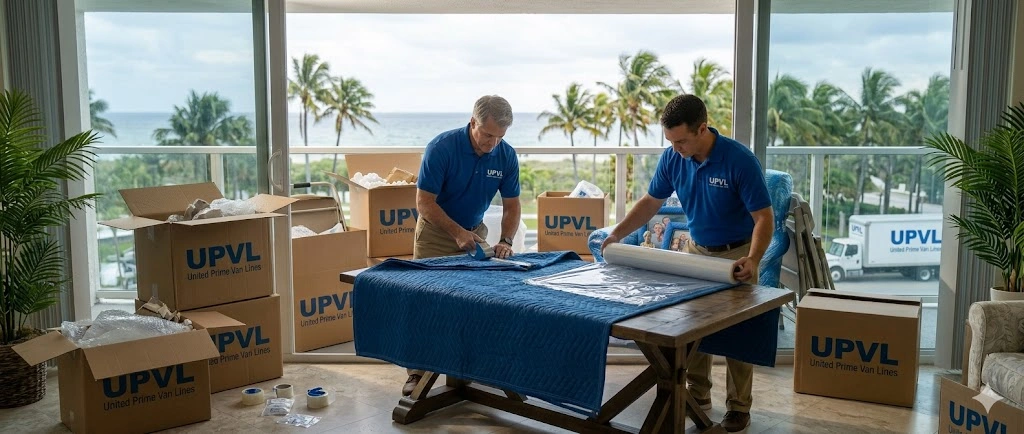
2. Wrap smart, not suffocating: Plastic wrap can trap moisture in as much as it keeps moisture out. A safer way to wrap wood in South Florida is to use a first layer of moving blankets or soft furniture pads, a second layer of plastic wrap around the blankets (not directly on the wood), and cardboard protectors on vulnerable corners and legs.
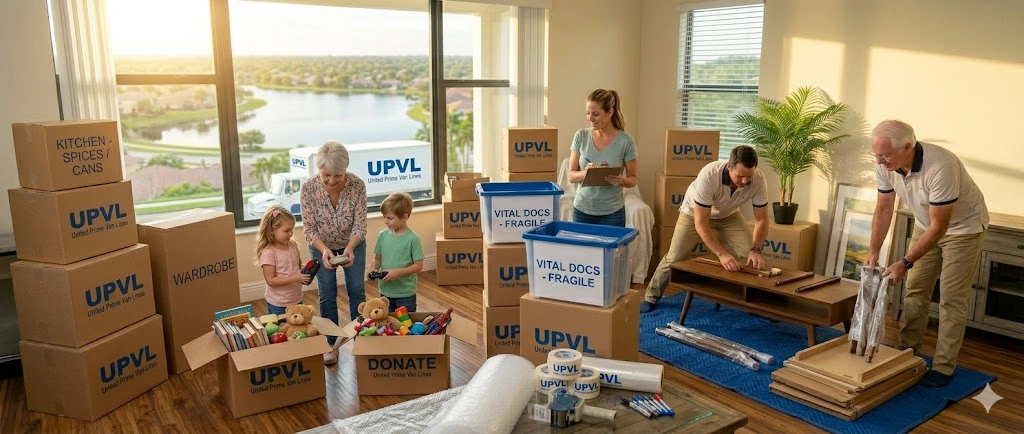
3. Disassemble where it makes sense: If you’ve got an expensive dining table, large bed frame, or office desk, consider removing table legs, taking apart bed frames, and separating glass tops and shelves. This makes it easier to move through narrow hallways and allows each part to be wrapped carefully so it can breathe. Our furniture disassembly & assembly service takes this off your plate entirely.
Electronics and humidity have a complicated relationship. The big dangers are condensation forming when an air-conditioned item moves into hot air, and corrosion over time.
1. Let them adjust to room temperature: If your TV, computer, or console has been in a very cold room, turn them off and unplug them a couple of hours before packing. Let them sit at normal room temperature so they don’t “sweat” when exposed to hot, humid air.
2. Use plastic—but not directly on all sides: Wrap the device in anti-static bubble wrap or foam and place it in a sturdy box. Add a few silica gel packets inside. If you’re worried about summer rainstorms, you can use a plastic bag as an outer layer around the packed box—but don’t vacuum seal the actual device inside plastic.
3. Label boxes clearly: Write “ELECTRONICS – KEEP DRY – THIS SIDE UP” clearly on the outside. In our trucks, anything marked like that gets extra attention from the crew.
If something is irreplaceable and made of paper, humidity is your main enemy.
1. Sort and prioritize: Digitize everyday paperwork you don’t really need where possible. Treat sentimental items like letters, journals, kids’ art, and photos as high priority.
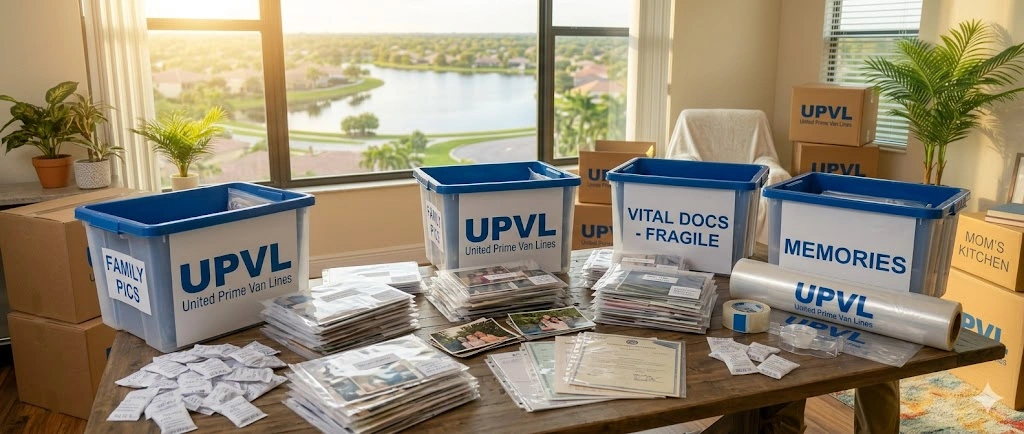
2. Protect them like you would from a small leak: Store important paper-based items flat if possible. Use plastic sleeves or archival-quality folders, put those into plastic bins or sturdy small boxes, and add several silica gel packets inside. Avoid packing sentimental paper items in big, heavy boxes that might sag or get buried.
If you’re putting things into storage, humidity becomes a 24/7 issue.
1. Decide what absolutely needs climate control: I strongly recommend you only store fine wooden furniture, artwork and antiques, electronics, valuables, photos, important documents, and musical instruments in climate-controlled units in South Florida. We can arrange secure, climate-conscious storage through our storage options so you’re not playing roulette with a random unit in moist air.
2. Elevate everything off the floor: Use pallets or shelving to keep boxes up off the ground. Leave a little space between items so air can move around them.
3. Don’t seal in a problem: If you’re storing for a long time, make sure nothing is even slightly damp before it goes into boxes or bins. In our climate, “a little damp” can turn into visible mold in just a few weeks.
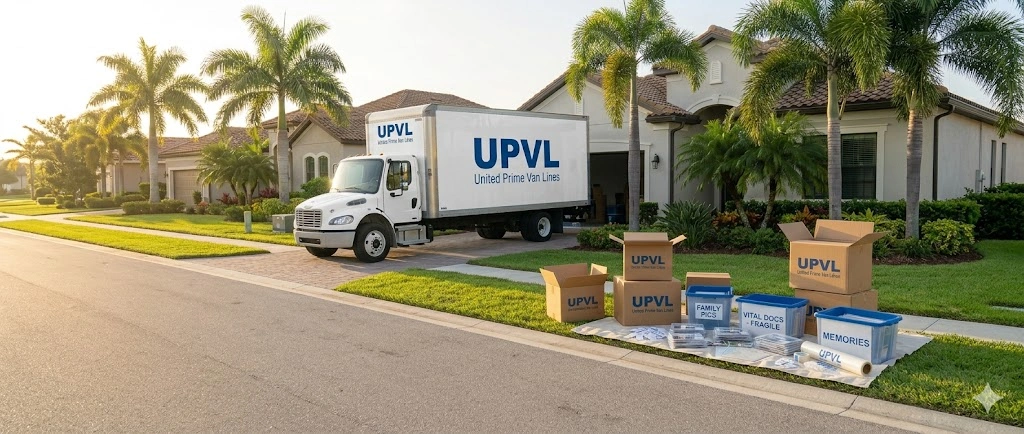
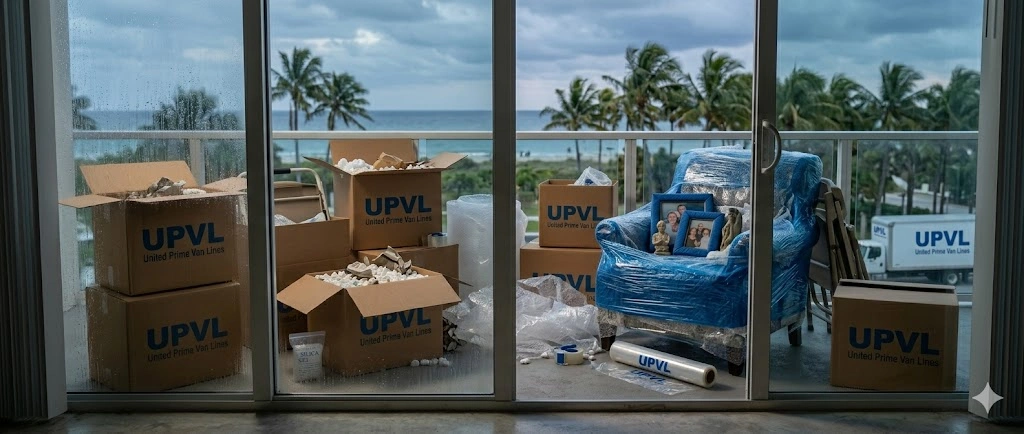
If you’re moving locally around Hallandale Beach, Hollywood, or nearby areas, avoid packing on your balcony or patio if the air feels thick and sticky. That moisture settles on surfaces and goes right into your boxes. If your home has strong AC, pack in the cooled rooms and move sealed boxes out closer to the door only when you’re ready. During rainy season, plan around afternoon storms and load earlier in the day when possible.
Even after the move, humidity is still in the picture. How you unpack matters.
1. Label by priority and room: On each box, write the room, the priority (e.g., “Unpack 1st/Last”), and special notes. Make anything fabric, paper, or electronics a “Unpack 1st” priority. The less time they’re sealed up in a humid environment, the better.
2. Unpack and air out in cool rooms first: Get your AC running at the new place as soon as you arrive. Unpack clothes, linens, and books in the coolest, driest rooms first. If something feels slightly damp, let it air out on a clean surface instead of shoving it into a closed closet.
You can DIY your packing in South Florida and do a great job. But I gently suggest bringing us in for at least partial or full packing if you’re moving in the rainy season and don’t have flexibility on the date, you have a lot of wood furniture or artwork you really care about, you’re combining a move with storage, or you’re juggling work and a tight move-in window.
When my team at United Prime Van Lines handles your packing, we’re not just putting items in boxes. We plan around humidity, weather, the layout of your home, and the truck loading order.
If you’re moving in South Florida, you’re moving through a hot, humid, sometimes stormy environment that doesn’t care how valuable your belongings are.
To stack the odds in your favor, use sturdy boxes and plastic bins for moisture-sensitive items. Keep clothes, linens, books, and papers protected with bags and moisture absorbers. Wrap wood furniture with blankets first, plastic second, and avoid trapping moisture. Treat electronics and photos like priority passengers: gently packed, clearly labeled, and unpacked early. Think ahead if you’re using storage—climate control and airflow matter a lot here.
If this feels like a lot to juggle, my team at United Prime Van Lines can step in wherever you need help—whether that’s just packing your fragile items, handling furniture disassembly, or taking the entire packing job off your plate. You focus on getting settled into your new South Florida home; we’ll focus on getting your belongings there dry, secure, and ready to use.