Moving high‑end furniture across state lines is a different beast than moving an IKEA shelf across town. When you’ve got a $12,000 Italian leather sofa, a custom walnut dining table, or a designer bed frame, you can’t treat it like “just another item.” One careless bump, one wet blanket, one lazy shortcut from a mover—and you’re staring at a scratch that makes you feel sick to your stomach.
I’ve seen both sides of this. I’ve walked into homes where people were almost afraid to let anyone touch their luxury pieces. I’ve also seen the relief on their faces when everything arrives in their new state looking exactly like it did the day the interior designer set it up.
Let me walk you through how I approach protecting luxury furniture during interstate moves, what actually matters, what doesn’t, and how you can keep control of the process—even if you’re handing the heavy lifting to us at United Prime Van Lines.
Understanding What “Luxury” Means in a Move
Not everything expensive is automatically fragile—and not everything simple is automatically safe. When I look at “luxury furniture,” I don’t just think about the price tag. I look at:
- The materials (solid wood, veneer, leather, lacquer, glass, stone, metal).
- The construction (handmade, antique joinery, modular systems).
- The finishes (high‑gloss lacquer, oiled wood, delicate fabrics).
- The history (heirlooms, custom commissions, art‑level pieces).
That helps me decide what kind of protection each piece really needs.
Some examples:
- A solid oak table with a matte finish can take more abuse than a high‑gloss lacquered console.
- A vintage leather armchair needs very different care than a microfiber sectional.
- A custom marble coffee table is heavy, brittle at the edges, and hates sudden impact.
When I walk a client through their home before an interstate move, I mentally categorize every big item into:
- Impact‑sensitive (things that chip, crack, dent easily).
- Pressure‑sensitive (things that warp, bend, or deform).
- Finish‑sensitive (things that scratch, scuff, or stain).
- Climate‑sensitive (things that react to heat, cold, or humidity).
That’s how you avoid treating a $20,000 rosewood credenza like a $200 bookcase.
The Hidden Enemies of Luxury Furniture on Long Moves
Interstate moves mean distance, time, and more opportunity for things to go wrong. The biggest threats I plan around are:
- Vibration & micro‑movement: Hours of highway driving means constant tiny movements. If furniture isn’t packed snugly, that becomes grinding and pressure points.
- Stacking pressure: Stacking boxes on the wrong spot can warp wood panels or crush cushions.
- Temperature & humidity swings: Sudden climate changes can cause wood to expand, lift veneers, or weaken glue joints.
- Moisture exposure: A sudden downpour or condensation can destroy delicate finishes.
- Human shortcuts: Rushed crews dragging instead of lifting or skipping corner protection are what ruin luxury furniture.
At United Prime Van Lines, I build our process around eliminating these five threats before a single chair gets loaded.
Step One: A Proper Walkthrough and Inventory
For interstate moves with luxury furniture, I never recommend a blind estimate over the phone. The protection starts with the walkthrough.
Here’s what I like to do with clients:
- Room‑by‑room tour: We walk through your home together.
- Identify priority pieces: You tell me, “This table is irreplaceable.”
- Photo documentation: We take photos of existing dings, complex assemblies, and weak points.
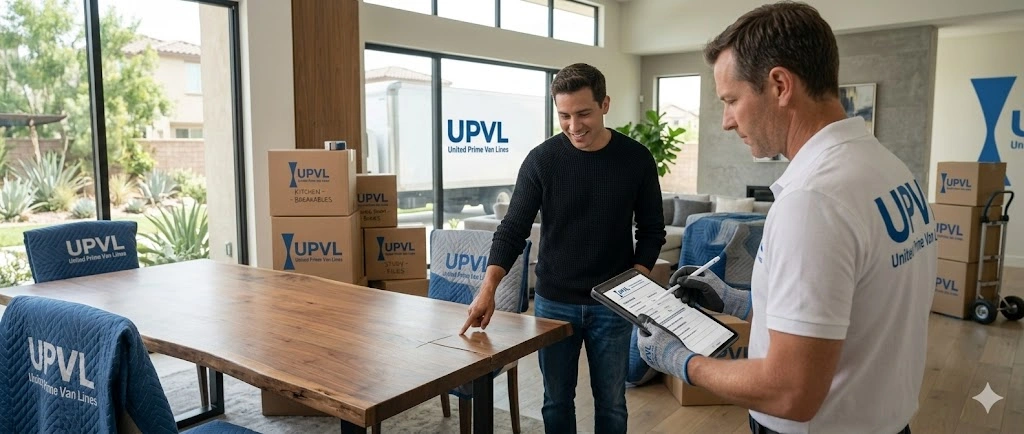
This documentation protects both of us. You know exactly what condition everything was in, I know precisely which items need top‑tier packing, and the crew has a clear plan.
The Packing Strategy: Shielding Each Type of Luxury Piece
“Blanket and tape” is not enough when we’re crossing state lines with high‑end furniture.
For High‑End Wood Furniture
Think: custom dining tables, credenzas, sideboards, consoles.
- Disassemble when it’s safe: Remove legs and hardware to reduce leverage and risk.
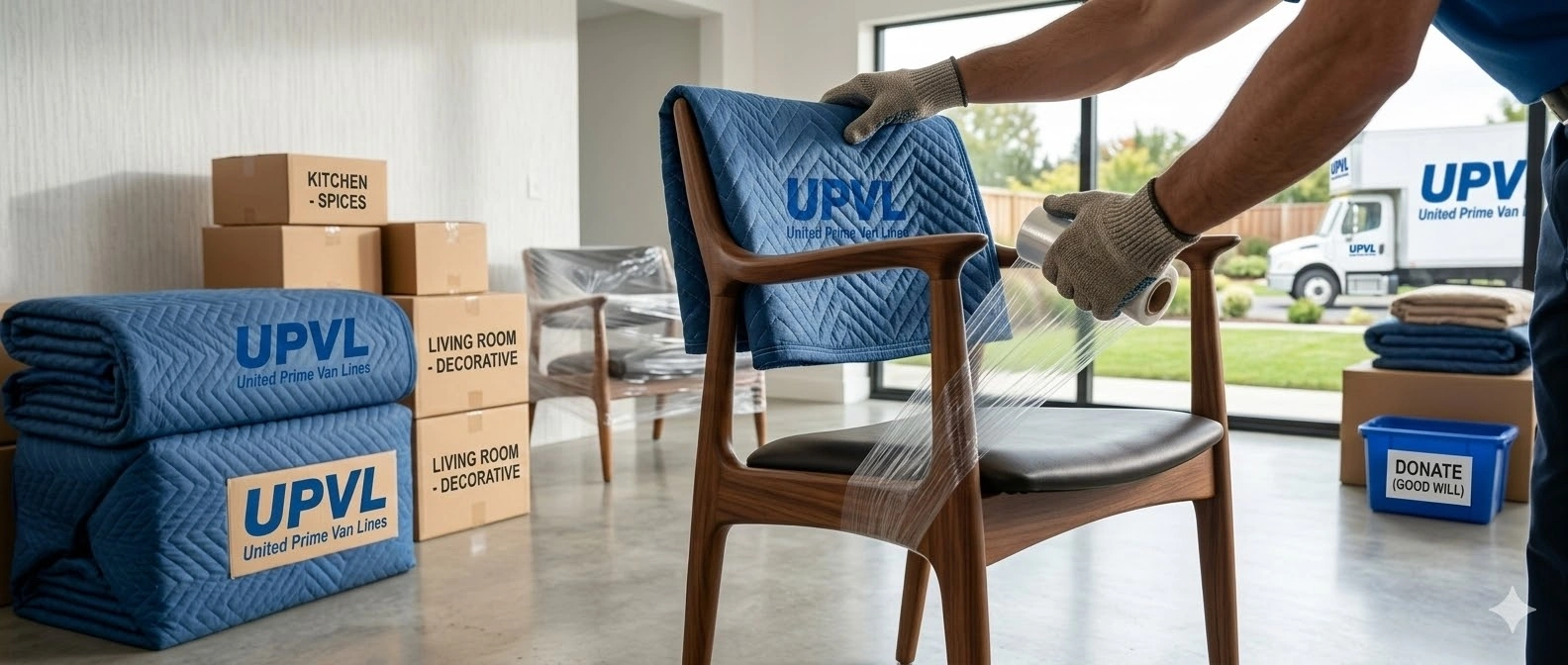
- Wrap the surface first: Use a soft, non‑abrasive layer (clean moving blankets or foam) before applying stretch wrap.
- Use edge and corner protection: Corners are always the first victims. We use thick corner guards.
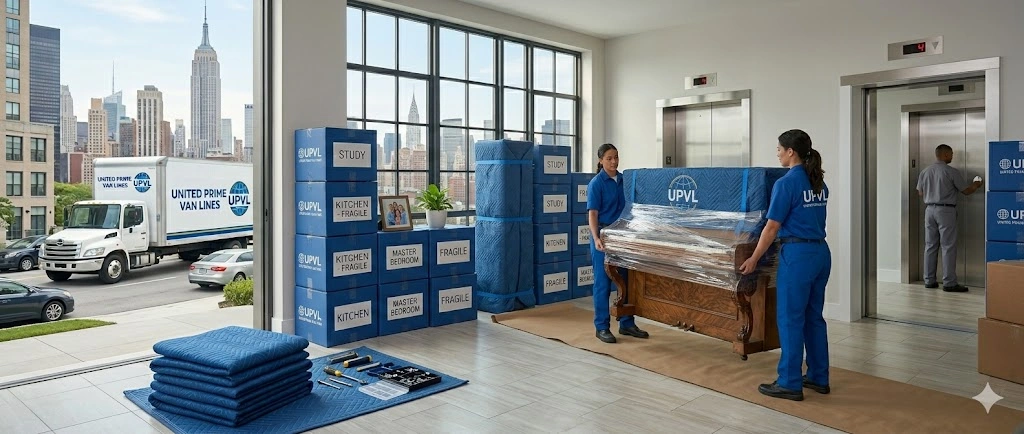
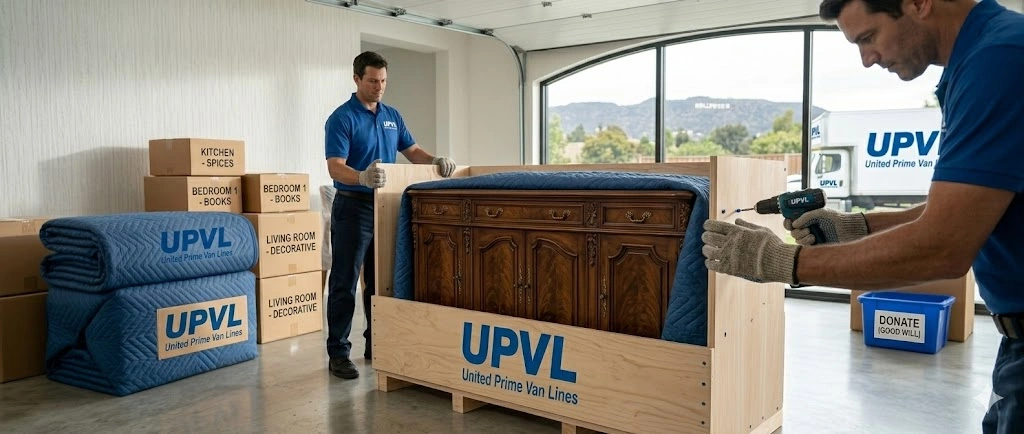
- Box or crate when appropriate: For very high‑value items, we use custom cardboard boxing or crating.
For Leather and Velvet Sofas & Chairs
Leather is tricky: it scuffs easily and hates adhesive.
- Never tape directly to leather.
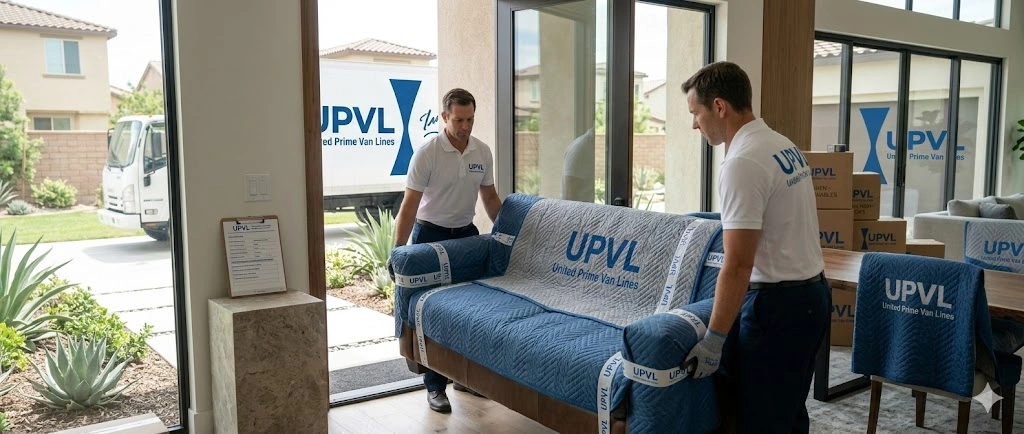
- Use clean, quilted furniture pads specifically assigned to that sofa.
- Wrap with stretch film over the pads to create a snug “shell” without suffocating the material.
For velvet or delicate upholstery, we add a layer that prevents imprinting or fabric distortion.
Disassembly and Reassembly: The Part Most People Underestimate
A lot of damage doesn’t come from the truck ride—it happens at doorways, stairs, and tight turns.
I personally like to:
- Remove table legs.
- Take headboards and footboards apart.
- Separate sofa sections.
- Detach delicate hardware.
We carefully bag and label hardware, taping it to the protective layer so it never goes missing. If you want that handled professionally, our furniture disassembly & assembly service is built exactly for this.
The Truck Load: Keeping Luxury Pieces Safe on the Road
You can pack an item perfectly and still ruin it with a bad truck load.
My rules for luxury furniture in an interstate truck:
- Never “float” expensive pieces: They must be immovable between padded items or locked with load bars.
- No stacking on delicate surfaces: No boxes on top of marble, glass, or high-gloss lacquer.
- Cushion pressure points: Folded pads or foam corners distribute weight.
- Strategic placement: Keep fragile items away from shifting zones and heavy, dense items.
When Climate and Distance Really Matter
When we’re crossing multiple states, I pay attention to:
- Wood reaction: Humidity changes can crack wood or lift veneers.
- Leather reaction: Extreme heat dries it out; moisture causes mold.
What I do about it:
- Use breathable wraps for pieces that need it.
- Avoid storing luxury furniture in non‑climate‑controlled environments.
- Plan the route to minimize unnecessary layovers in harsh conditions.
If your pieces need to sit for a while between homes, a climate‑conscious option like our storage solutions is worth considering. It’s not about upselling; it’s about not letting a Steinway live in a damp box.
Special Case: Art‑Level and Antique Furniture
If you own furniture that’s closer to museum‑grade (antique sideboards, hand‑carved armoires, studio furniture), I treat those more like art than “furniture.”
My typical recommendations:
- Custom crating for fragile or irreplaceable items.
- Detailed condition reports and photos.
- Ultra-careful placement in the truck.
Our dedicated art & antique moving service exists because not every item should be wrapped the same way.
How You Can Prepare Your Luxury Furniture
- Empty everything: Weight and shifting contents can crack drawer frames during transport.
- Secure doors and drawers (lightly): Don’t rely on existing weak latches.
- Clean surfaces lightly: Dust and grit can turn into abrasive particles under wraps.
- Flag prior repairs: Old repairs are weak spots that need extra care.
- Decide your “non‑negotiables”: Tell me what you are most worried about so I can prioritize.
How I Talk Honestly About Risk
No mover in the world can honestly say there is zero risk in an interstate move. The truck is a controlled environment, but not a laboratory.
What I can do is bring risk as close to zero as humanly possible with correct packing, smart loading, and careful handling. I’ll also be honest about which items need crating and how we’d handle a claim if the rare event occurs.
When you work with the team at United Prime Van Lines, I want you to feel like your furniture is in the hands of people who care about it as much as you do.
Why Choosing the Right Interstate Mover Matters
It’s tempting to ask, “Who’s cheapest?” But with luxury furniture, price alone is a risky filter.
What to look for:
- Ask exactly how they protect high‑end furniture. “We use blankets” is not enough.
- Ask about disassembly and reassembly. Are the crews actually trained?
- Ask to walk through the plan. A good mover won’t get annoyed by detailed questions.
- Ask about insurance/valuation. Make sure coverage makes sense for high‑value pieces.
How I’d Handle Your Interstate Move with Luxury Furniture
If you called me today, here’s roughly how I’d handle it with United Prime Van Lines:
- Conversation and photos: We’d talk through your inventory.
- In‑person or virtual walkthrough: We note all the details.
- Protection plan: I’d outline which pieces need full packing, crating, or premium padding.
- Clear estimate: No vague promises.
- Move day with a prepared crew: The team arrives briefed on high-priority items.
- Careful unload and reassembly: We set the furniture where you want it, and you get to inspect everything while we’re still there.
A Few Final Practical Tips
- Label luxury items separately in your inventory. Don’t just list “table.” List: “Custom walnut dining table, high priority.”
- Don’t rush your movers. Give the crew time to do thorough wrapping and careful loading.
- Keep small, irreplaceable hardware with you.
- When in doubt, over‑protect.
- Be present at load and unload if you can.
If you’re planning an interstate move and your furniture is one of the things you’re most stressed about, you’re not overreacting. With the right plan, materials, and team, your luxury pieces can make it to your new home in the same condition they left.
And if you want help building that plan and executing it from end to end, my team and I at United Prime Van Lines are here to do exactly that.