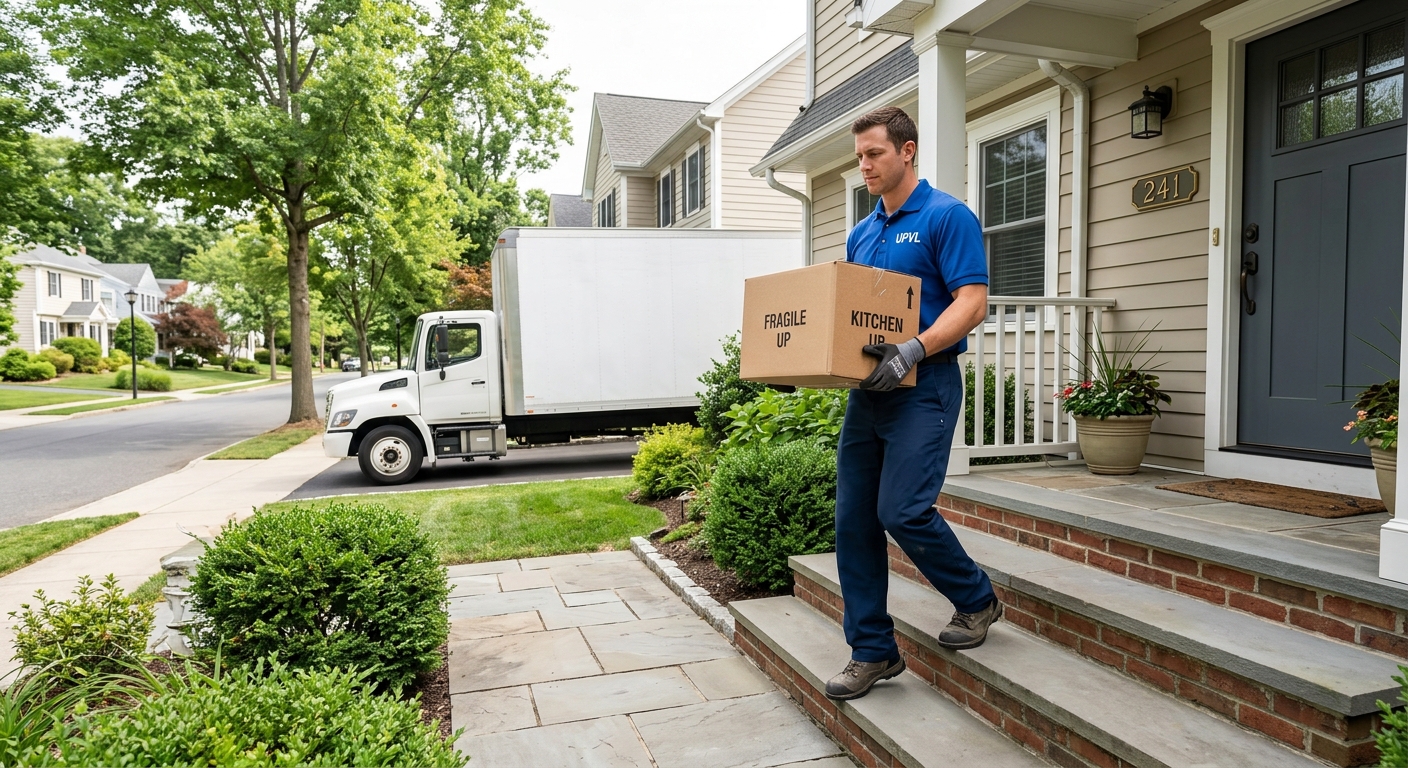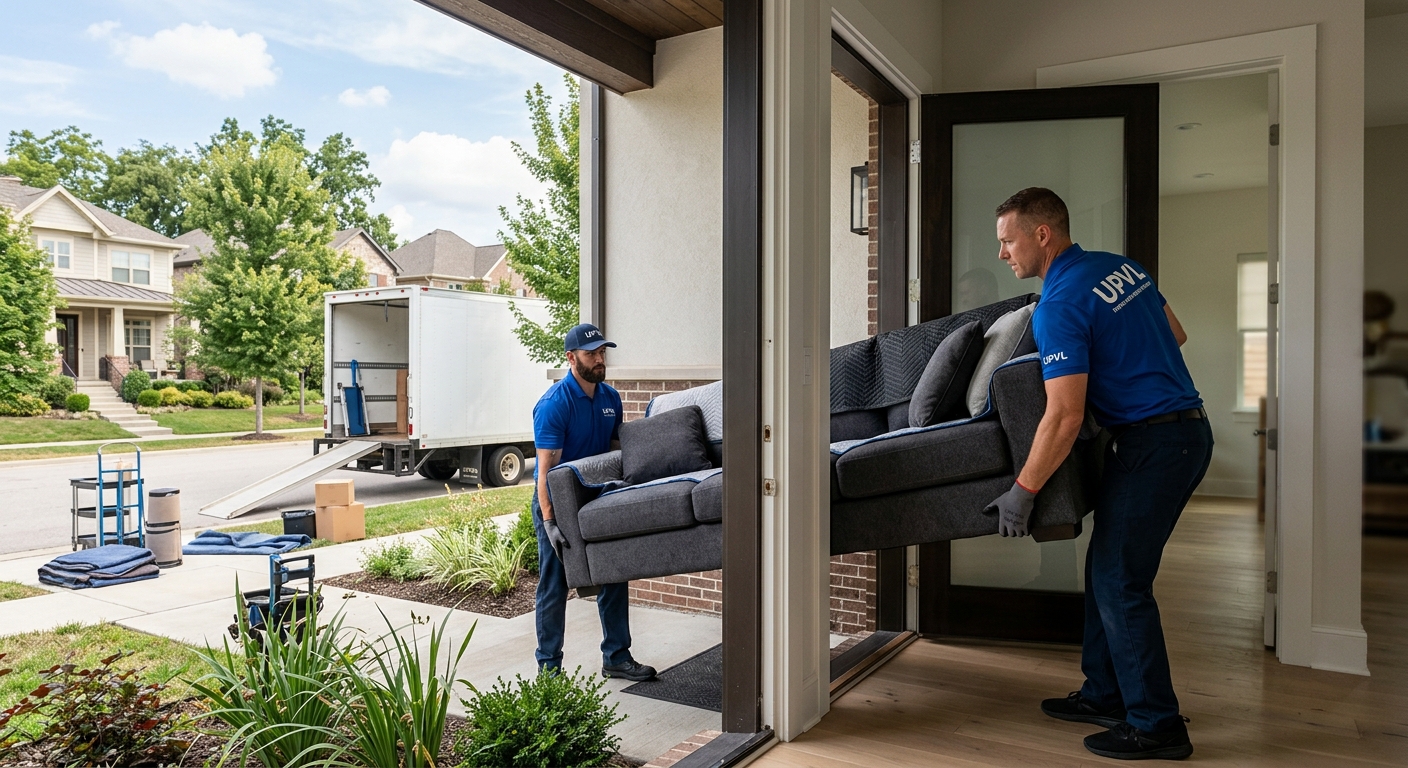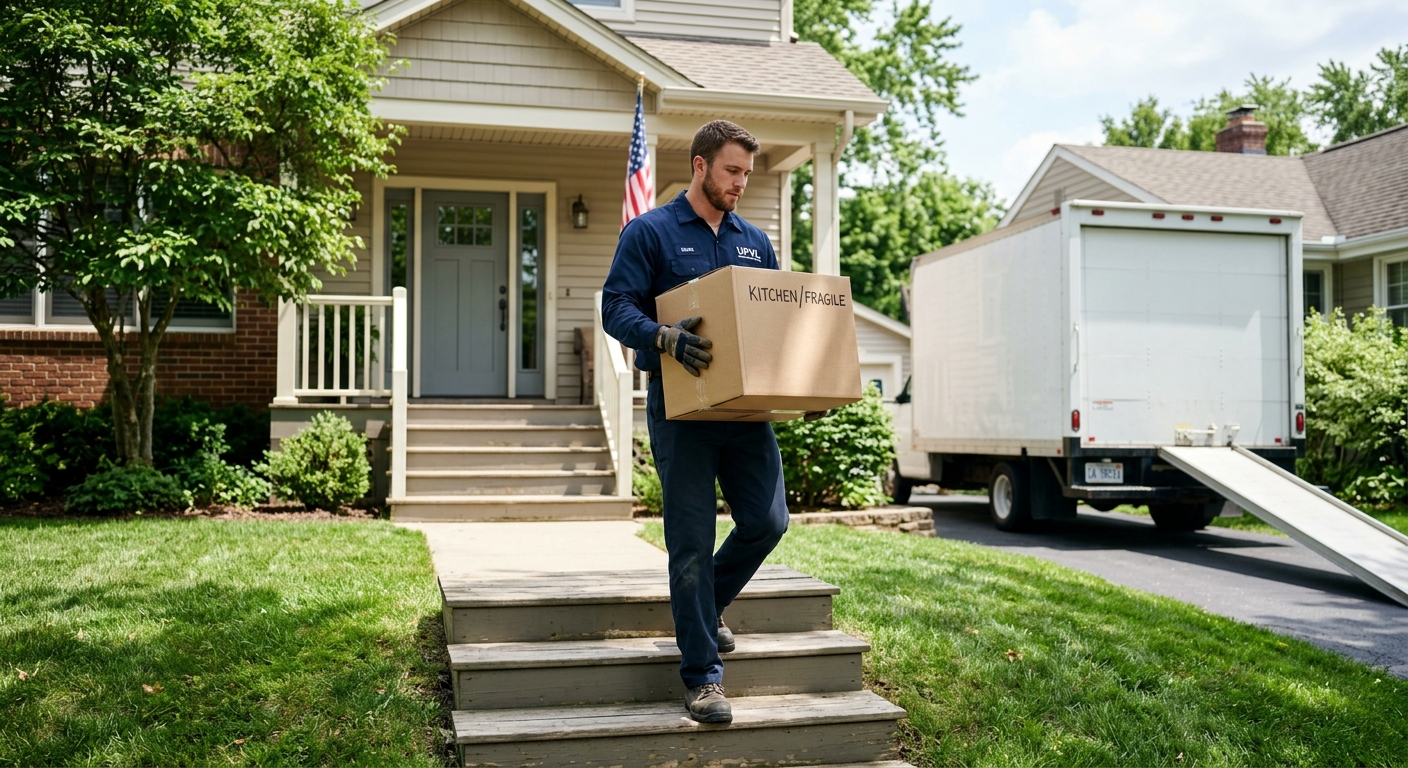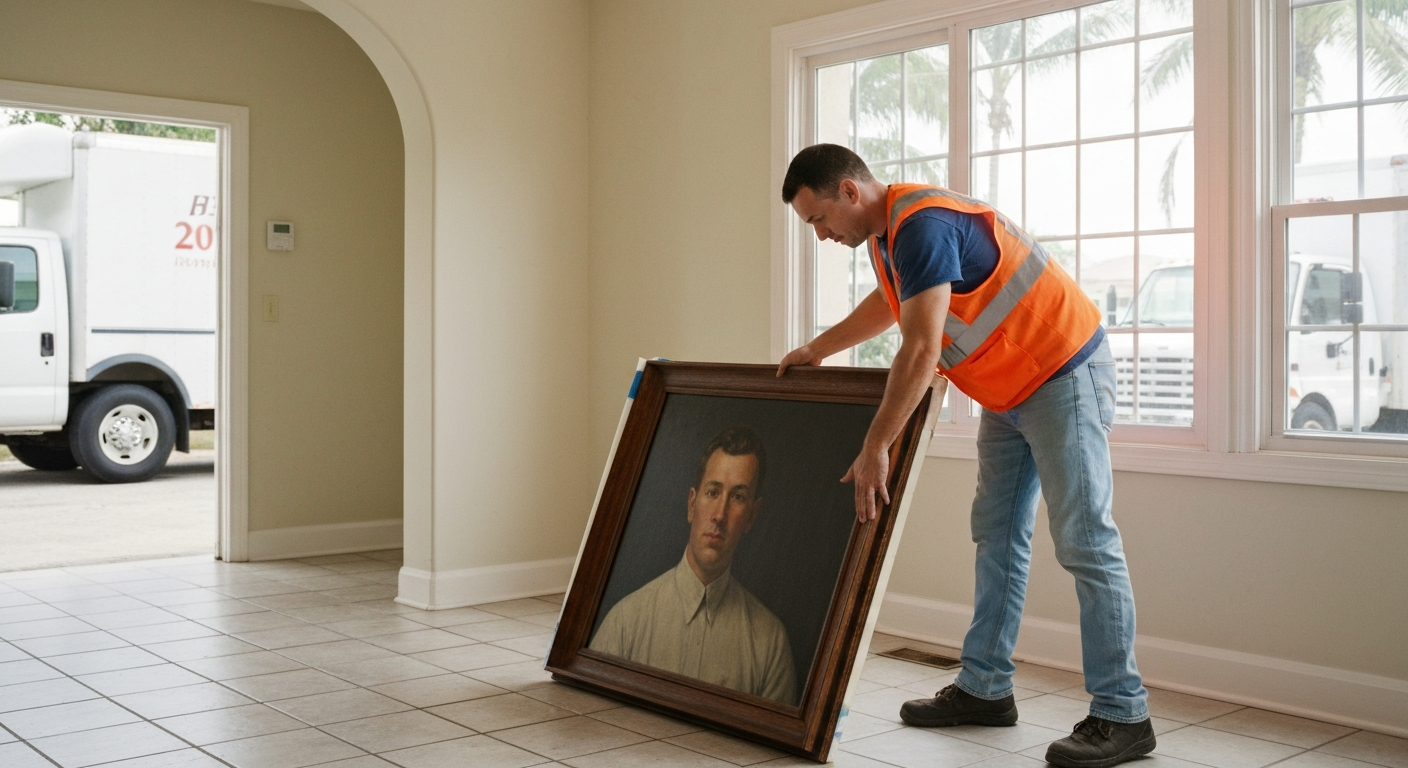
Moving high-value art and antiques in Miami requires more than a strong back and a truck. Coastal humidity, sudden rain, high-rises in Brickell, and historic homes in Coral Gables all add risk. Choosing experienced fine art movers in Miami who offer true white-glove handling is the safest way to relocate your collection without stress.
Quick Navigation
Hiring fine art movers in Miami is essential whenever you’re relocating paintings, sculptures, designer furniture, or heirloom pieces with sentimental or market value. Regular movers may be excellent with boxes and standard furniture, but high-value art needs specialized materials, climate awareness, and precise handling techniques.
Miami adds extra complexity: condo rules in Brickell, tight streets in Miami Beach, and delicate plaster or terrazzo floors in older Coral Gables homes. Professional art and antique movers understand how to protect both the pieces and the property.
A specialty art and antique mover provides:
For complex projects, you may combine specialty art services with full residential moving. For example, you might use United Prime Van Lines Miami services for your household items and add white-glove art handling for your collection.
| Type of Item | Why It Needs Specialty Handling | Typical Protection Method |
|---|---|---|
| Oil paintings | Heat, humidity, and pressure can damage paint layers and canvas | Glassine, corner protectors, padded cartons or crates |
| Antique wooden furniture | Joint movement and veneer cracking in climate swings | Blanket wrap, edge guards, climate-aware loading |
| Marble or stone sculptures | High weight and brittle edges prone to chipping | Custom crating, foam blocking, palletizing |
| Glass and mirrors | Shatter risk and edge pressure during transit | Mirror cartons, foam, reinforced crates |
Miami is a city of very different neighborhoods, and each one presents its own challenges for art and antique movers. A good antique movers Miami team will plan differently for a single-family home in Coral Gables than for a high-rise penthouse in Brickell or a waterfront condo in Miami Beach.
Coral Gables is known for historic Mediterranean Revival homes, arched entryways, and older plaster walls. Many homes have narrow doorways, curved staircases, and delicate flooring.
Miami Beach combines Art Deco architecture, high humidity, and busy streets. Many buildings have limited parking and strict loading rules.
Brickell and Downtown are dominated by high-rise living and modern corporate offices. Most art and antique moves here require coordination with building management.
| Area | Main Challenge | Typical Moving Strategy |
|---|---|---|
| Coral Gables | Narrow routes in historic homes | Pre-move walk-through, disassembly, protective floor runners |
| Miami Beach | Parking and salt-air exposure | Early loading, short exterior exposure, quick truck access |
| Brickell | High-rise logistics and COIs | Elevator booking, COI, padded elevators and lobbies |
| Wynwood / Design District | Gallery schedules and delicate installations | Off-hours work, detailed labeling and condition checks |
Not every piece requires a dedicated fine art truck, but many collections do need more than standard moving. Understanding service types helps you match the right level of protection to your budget and risk tolerance.
Local moves (usually under 50–100 miles) cover relocations within Miami and nearby areas. You might move from a Coral Gables home to Brickell, or from Miami Beach to Coconut Grove.
High-value collections moving from Miami to other Florida cities or across state lines need more planning. Longer routes increase exposure to temperature swings and handling points.
For whole-house moves with collections, combining standard long-distance moving with specialty art packing (via services like long-distance moving and art and antique moving) can be cost-efficient.
White-glove art transport Miami generally means elevated service with more protection and less work for you:
Galleries in Wynwood, museums, and interior designers often need recurring art and antique logistics:
| Service Type | Best For | Key Features |
|---|---|---|
| Standard residential + art handling | Homeowners with mixed household and art items | Combo truck, selective crating, cost-efficient |
| Full white-glove art transport | Collectors, galleries, designer installations | In-depth planning, top materials, on-site placement |
| Dedicated art shuttle / run | Multi-stop gallery and collector routes | Route-optimized, scheduled pickup/delivery |
| Storage and staging | Renovations, estate transitions | Climate-aware storage, inspected receiving |
Packing is the single most important factor in safely moving art and antiques. Even a short Miami move can go wrong if a framed piece is placed glass-down in a moving truck or an antique marble top is unsupported.
Experienced crews follow a structured process for framed paintings and prints:
Unframed art is more vulnerable to punctures and creasing:
For very high-value works, a custom-built wooden crate with foam interiors and corner blocking is recommended.
Antique movers Miami professionals treat furniture differently than standard household pieces. Older joinery, veneers, and finishes can be fragile.
Some items demand custom solutions:
| Item Type | Typical Packing Method | Extra Precautions |
|---|---|---|
| Framed painting (glass) | Glassine, foam, corner protectors, carton or crate | Taped glass, "this side up" orientation |
| Unframed canvas | Glassine, backing board, padded carton | Avoid stacking, keep away from sharp objects |
| Antique armoire | Blanket wrap, foam padding on carvings | Secure doors, avoid pressure on legs |
| Crystal chandelier | Piece-by-piece wrapping, custom crate | Photo and label each part for reassembly |
If you prefer not to pack anything yourself, consider adding full-service packing via a company that offers dedicated art packing support, such as full packing services.
Miami’s climate is beautiful for beach days but tough on fine art and antiques. High humidity, heat, and tropical storms can accelerate deterioration or create catastrophic damage if not managed carefully during a move.
Miami often experiences relative humidity above 70%. According to the National Oceanic and Atmospheric Administration (NOAA), coastal South Florida maintains warm, humid conditions for much of the year. That environment can affect:
Fine art movers in Miami minimize exposure by:
South Florida’s rainy season and hurricane season (June–November, as noted by the National Hurricane Center) mean sudden downpours and high winds can occur even on otherwise clear days.
When you speak with a moving consultant, ask specifically how they handle climate-related risks. A good white glove art transport Miami plan may include:
Pricing for art and antique moves varies widely. Factors include the number of pieces, value, size, packing complexity, distance, and building logistics. While some small local jobs might cost a few hundred dollars, large collections can reach several thousand.
Here are the biggest elements that influence cost:
| Cost Factor | How It Impacts Price | What You Can Do |
|---|---|---|
| Number of pieces | More time, materials, and truck space | Prioritize which pieces get full white-glove treatment |
| Crating needs | Custom crates can significantly add to cost | Group similar-sized pieces to optimize crate designs |
| Access & logistics | Stairs, tight turns, or no loading dock increase labor time | Reserve elevators, clear paths, and share building details early |
| Route & distance | Long-distance moves add fuel, driver time, and sometimes overnight stays | Be flexible with delivery windows for better routing |
Art and antique movers in Miami may charge using:
When you request quotes, ask whether packing materials and crates are included, and whether valuation coverage is separate or bundled.
Understanding how estimates work helps you compare Miami art moving companies fairly. For complex jobs, an in-home or virtual survey is strongly recommended.
For interstate moves, estimates typically follow definitions from the Federal Motor Carrier Safety Administration (FMCSA):
Local Miami art moves often use hourly pricing, but you can still request a written estimate detailing labor rates, travel time, and materials.
| Estimate Type | Best For | Pros and Cons |
|---|---|---|
| Hourly (local) | Small collections and short local moves | Flexible; final cost can vary depending on efficiency |
| Binding | Interstate or complex jobs with well-defined scope | Predictable; must update if scope changes |
| Not-to-exceed | High-value collections with some weight uncertainty | Price protection with chance of savings |
| Per-piece / project | Gallery, museum, or designer installations | Clear costs for each item or phase of work |
White-glove art transport Miami services typically include:
Additional charges may apply for:
When comparing companies, confirm whether they provide detailed inventories, labeling, and condition notations for your art and antiques.
When you’re moving irreplaceable items, you need to know who is legally moving them and what happens if something goes wrong. That’s where licensing and valuation coverage come in.
For moves within Florida, movers must comply with state and, when applicable, local rules. For interstate moves, carriers must have a USDOT number and operating authority from the FMCSA.
Valuation coverage is not the same as traditional insurance, but it is the mover’s contractual liability for your items. FMCSA recognizes two main options for interstate moves:
Source: FMCSA.
Because art and antiques are often one-of-a-kind, valuation discussions are critical:
| Coverage Type | Typical Payout Basis | Best Use Case |
|---|---|---|
| Released Value | Up to $0.60 per pound per item | Low-value or easily replaceable items only |
| Full Value Protection | Repair, replace, or cash settlement up to declared value | Most residential moves with valuable items |
| Special declared value for art | Agreed value per piece or collection | High-end collections, galleries, museums |
| Third-party fine art policy | Policy terms with a licensed insurer | Major collections and institutional holdings |
Brickell, Downtown Miami, and many Miami Beach condos require a Certificate of Insurance from your mover before they allow access to elevators and loading docks.
A COI summarizes the mover’s liability and workers’ compensation coverage and lists the building as a certificate holder or additional insured, depending on requirements.
Renovations, staging a home for sale, or temporary moves often require storage for art and antiques. In Miami, storage conditions are just as important as packing quality.
For high-value art and antiques, climate-controlled storage is strongly recommended. Consistent temperature and humidity help prevent warping, cracking, and mold.
Using a mover that also offers storage can simplify logistics. For instance, you can arrange pickup, storage, and redelivery with one provider, such as the storage solutions offered through United Prime Van Lines storage.
| Storage Option | Best For | Key Considerations |
|---|---|---|
| Short-term (under 90 days) | Renovations or staging homes for sale | Flexibility in access and delivery windows |
| Long-term | Seasonal residents or long projects | Stable climate conditions and security |
| Vaulted storage | Smaller collections or individual artworks | Dedicated wooden vaults, limited handling |
| Open racking | Large sculptures or over-sized pieces | Padding and stability, limited stacking nearby |
A detailed checklist helps ensure your collection arrives in the same condition it leaves. Start planning 4–8 weeks before your move when possible.
| Task | When to Do It | Why It Matters |
|---|---|---|
| Photograph your collection | 4–6 weeks before move | Provides condition documentation for valuation |
| Confirm building rules & COI needs | 3–4 weeks before move | Prevents last-minute access issues |
| Choose valuation coverage | 2–3 weeks before move | Ensures proper protection of high-value items |
| Walkthrough with movers | Move day | Aligns expectations and handling priorities |

For valuable pieces, the safest approach is to let professional fine art movers in Miami handle packing. They use glassine or acid-free paper, foam, and rigid boards or custom crates designed to protect against vibration and pressure. If you must pack some items yourself, always keep framed art vertical, tape glass to reduce shatter risk, use plenty of corner protection, and avoid leaving pieces in hot cars or garages.
Yes, in most cases you should consider coverage beyond basic Released Value protection, which typically pays only $0.60 per pound per item. That’s far below the value of most art and antiques. Ask your mover about Full Value Protection and whether you can declare specific values for individual pieces or a collection. For major collections, talk to an insurance professional about a separate fine art policy.
Miami’s high humidity and heat can cause warping, cracking, and mold on sensitive materials like canvas, wood, and paper. During a move, those risks increase if items are stored in non-climate-controlled spaces or exposed to rain. Professional antique movers Miami teams mitigate this by minimizing time outdoors, using climate-aware storage, and planning around severe weather when possible.
Large mirrors and glass should be packed in purpose-built mirror cartons or custom crates. Movers usually protect edges with foam, tape the glass to limit shattering, and transport mirrors vertically against padded surfaces. Avoid laying glass items flat on the truck floor. If your piece is particularly heavy, a crate with internal bracing and a pallet base is often recommended.
Yes, but choose climate-controlled storage to protect against Miami’s humidity. Ask your mover how often the storage area is inspected, what the climate ranges are, and how items are stored (vaults, racks, or shelves). For extended renovations, consider periodic checks on your collection, especially if there are any prior conservation concerns.
For peak seasons (late spring and summer) or complex jobs in Coral Gables, Brickell, or Miami Beach, booking 4–8 weeks in advance is best. This allows time to coordinate COIs, elevator reservations, and any custom crating. For smaller local moves, some companies can accommodate shorter notice, but availability is not guaranteed.
Some white-glove art transport Miami services include basic placement and even hanging, while others only provide delivery and uncrating. Always clarify this in advance. For very heavy or complex installations, your mover may recommend a specialist art installer or work alongside your designer or contractor.
You can, especially for lower-value or decorative items. Use sturdy cartons, ample padding, and clear labels such as "FRAGILE – ART." Keep these boxes with you in your car rather than the moving truck. However, for high-value, irreplaceable, or highly fragile works, it is generally worth hiring professionals who specialize in art and antique handling.
Contact your building management and ask for their written COI requirements, including coverage limits and any specific wording. Share this with your mover at least several business days before the move. Reputable companies can have their insurance provider issue a tailored COI that meets the building’s requirements and ensures your move can proceed without delays.
Ask detailed questions: What training do their crews receive? Do they have experience with similar pieces or collections? What packing materials and crate designs do they use? Can they provide references from galleries, designers, or past clients? Also verify licensing and check safety and complaint records through FMCSA for interstate carriers.
For Florida moves, the contact information is:
Moving art and antiques in Miami doesn’t have to feel risky. With the right planning, specialized packing, and a team experienced in white-glove handling, your collection can travel safely between Coral Gables, Miami Beach, Brickell, or far beyond.
Focus on three essentials: choose properly licensed movers, invest in professional packing and (where appropriate) custom crating, and secure valuation coverage that reflects the true value of your pieces. When those elements are in place, you can enjoy your new space knowing your art and antiques were treated with the care they deserve.