Choosing a moving company can feel risky. Your furniture, electronics, and family keepsakes will be in a stranger’s truck, and one wrong decision can mean damage, delays, or surprise charges. Understanding how to choose a moving company the right way is the best protection you have before moving day.
Quick Navigation
The single most important decision in any move is which company you trust with your belongings. A good mover protects your time, your budget, and your property; a bad one can turn a simple relocation into months of stress and disputes.
At a basic level, you want three things from a mover:
For interstate moves, movers are regulated by the Federal Motor Carrier Safety Administration (FMCSA). FMCSA tracks consumer complaints and requires interstate movers to be registered and insured. You can verify a mover’s USDOT number and complaint history directly through FMCSA’s mover search tool.
For local moves within one state, you’ll want to check state and sometimes city regulations. For example, California household movers must be licensed and regulated by the California Bureau of Household Goods and Services, and you can verify licenses through their online lookup. Source: California BHGS.
When you compare companies, pay attention to:
Reputable companies such as United Prime Van Lines put everything in writing, encourage questions, and stay consistent between what the salesperson promises and what appears on the contract.
| Risk Area | What Bad Movers Do | What Good Movers Do |
|---|---|---|
| Pricing | Lowball quotes and add surprise charges on move day | Explain all charges, access issues, and potential extras upfront |
| Scheduling | Vague arrival windows, frequent rescheduling | Provide realistic windows and call ahead to confirm |
| Handling | Rush, skip padding/wrapping, drag furniture | Use pads, shrink wrap, and proper tools for stairs and tight spaces |
| Claims | Ignore or delay damage claims | Explain written claims process and valuation options clearly |
When learning how to choose a moving company, start by matching the service type to your situation. Not every mover handles every kind of job, and the right fit can save you time, money, and stress.
Most full-service movers, including United Prime Van Lines, offer several main service categories:
| Service Type | Best For | Key Details |
|---|---|---|
| Local Moving | Moves within ~50–100 miles, same state | Often charged hourly, ideal for apartments, condos, and nearby house moves |
| Long-Distance / Interstate | State-to-state moves or 100+ miles | Priced by weight/volume and distance, with delivery windows |
| Office / Commercial Moving | Offices, medical, retail relocations | Requires downtime planning, IT handling, COI, and building coordination |
| Specialty Moving | Pianos, safes, antiques, artwork | May involve specialized equipment, crating, and extra coverage |
Some movers focus only on local jobs, while others specialize in cross-country or corporate relocations. When you first call, ask directly: "Do you handle [local / interstate / office] moves regularly?" A company that frequently runs your type of route will understand the real-world timing, traffic, and building rules you’ll face.
Route knowledge matters more than people realize. For example, a mover who regularly runs long-distance routes such as New York to Florida or California to Texas will have a better handle on:
United Prime Van Lines, for example, operates local services in places like Miami and Los Angeles, plus long-distance routes across the U.S. That combination helps coordinate complex moves such as relocating from a Miami high-rise condo to a suburban Los Angeles home.
Beyond basic loading and driving, most quality movers offer add-ons. You don’t always need them, but knowing they exist helps you compare apples to apples.
| Extra Service | When It Helps | Where to Ask |
|---|---|---|
| Full Packing | Busy families, seniors, last-minute moves | Ask if they have full packing like professional packing services |
| Partial Packing | You pack clothes, they pack fragile items | Great for kitchens, artwork, and electronics |
| Furniture Assembly | Beds, sectionals, office cubicles | Look for services like disassembly/assembly |
| Storage-in-Transit | Gap between move-out and move-in | Useful if closing dates slip or renovations run long |
List which services matter most before you start calling companies. That way, you can quickly rule out movers who can’t support your needs.
Local moves and long-distance moves operate under different rules, cost structures, and timeframes. Knowing the difference will help you ask smarter questions and spot red flags sooner.
Generally, a local move is within the same metro area or within roughly 50–100 miles and stays inside one state. For example:
Local moves are often billed hourly based on the number of movers and trucks. Access issues (stairs, elevators, long carries, or parking challenges) can significantly affect how long the job takes.
Any move that crosses a state line is considered interstate and falls under FMCSA regulations—even if the mileage is short. For example, a move from Jersey City, NJ to Manhattan, NY is interstate even though the distance is small.
Long-distance intrastate moves (e.g., a move from Miami to Orlando within Florida) may be regulated at the state level. Always ask whether your move is treated as interstate or intrastate, because that changes which rules and documents apply.
For interstate moves, FMCSA requires movers to provide written estimates and certain consumer rights documents. Source: FMCSA Protect Your Move.
| Factor | Local Move | Long-Distance / Interstate |
|---|---|---|
| Pricing | Usually hourly rate plus materials and fees | Based on weight/volume and distance; may be binding or non-binding estimate |
| Regulation | State or local rules, varies by state | FMCSA-regulated; USDOT number required |
| Schedule | Often same-day or one-day | Pickup day plus multi-day delivery window |
| Truck Loading | Usually one crew, single trip | May share space with other shipments or use dedicated truck |
When you’re comparing companies, ask specific questions based on your type of move:
Local moving has its own challenges, especially in dense urban areas and high-rise buildings.
For apartments and condos, you’ll want a mover familiar with:
Companies like United Prime Van Lines apartment movers are used to navigating tight stairwells, walk-ups, and condo rules. Ask if they’ve moved into your specific building or neighborhood before—it’s more common than you might think.
For houses, the main issues are typically:
Make sure you mention anything unusual during your estimate: low ceilings, narrow spiral stairs, very steep driveways, or basement access. Surprises slow down the crew and can affect the final cost.
Long-distance moves add complexity: multiple states, weather, weigh stations, and sometimes other customers’ shipments on the same truck. That’s why reputable movers provide delivery windows rather than exact times.
| Approximate Distance | Typical Delivery Window | Notes |
|---|---|---|
| Up to 500 miles | 1–3 business days | Often picked up one day and delivered the next or following |
| 500–1200 miles | 3–7 business days | Depends on route, traffic, and other stops |
| 1200–2500 miles | 5–14 business days | Cross-country or multi-state moves, may share truck with other shipments |
| Peak Season (summer) | +2–5 days | High demand can extend windows; book early |
Ask movers specifically:
Understanding this upfront helps you plan for temporary housing, time off work, or keeping essentials with you instead of on the truck.
Choosing a moving company wisely means understanding what really drives your cost. While exact prices vary by region and season, the cost formula is surprisingly consistent across the industry.
These are the big levers that change your price, whether it’s a local or long-distance move:
Every city is different, but here are broad ballpark ranges many customers see for local moves with professional, licensed movers. These are not quotes—just reference points to help you recognize unrealistic offers.
| Home Size (Local) | Typical Crew/Truck | Approximate Cost Range* |
|---|---|---|
| Studio / 1 Bedroom | 2 movers, 1 truck | $400–$900 |
| 2 Bedroom Apartment | 3 movers, 1 truck | $700–$1,500 |
| 3 Bedroom House | 3–4 movers, 1–2 trucks | $1,200–$2,500 |
| Large 4+ Bedroom Home | 4–6 movers, 2 trucks | $2,000–$5,000+ |
*These ranges assume typical access and moderate furniture volume. Your actual quote will depend on your city, timing, and the specifics of your move.
For long-distance and interstate moves, cost is driven mainly by shipment weight, distance, and services like packing and storage. Movers weigh the truck (or estimate weight by volume) and use a tariff or pricing table.
You may see rough ranges such as:
Any quote that seems dramatically lower than several others for the same inventory and route is a red flag for a potential scam, lowball estimate, or missing services.
Before you sign anything, ask each mover clearly:
Reputable companies will walk you through realistic cost scenarios. If an estimator simply says "Don’t worry, it’ll be fine" without details, that’s a concern.
Understanding estimates is one of the most important parts of learning how to choose a moving company. The way your estimate is written directly affects your final bill and your rights if something goes wrong.
Local moves are often billed hourly, while long-distance moves are more often flat-rate or weight-based. Each approach has pros and cons.
| Pricing Type | Pros | Cons |
|---|---|---|
| Hourly | Simple to understand; flexible if the job is smaller than expected | Can rise if access is difficult or if you’re not fully packed/ready |
| Flat-Rate (Local) | Predictable cost; good for well-defined jobs | Usually based on a careful inventory; may include buffers for risk |
| Weight-Based (Long-Distance) | Standardized by regulations; fair if weight is accurately measured | Requires trust in weight tickets and estimate accuracy |
Ask your mover to show you exactly how they calculated your estimate. For example, a local flat-rate estimate might be based on an assumed number of hours multiplied by an hourly rate, plus truck and materials. A long-distance estimate may be based on estimated shipment weight multiplied by a per‑pound rate for your route.
For interstate moves, FMCSA recognizes different types of estimates, and the differences really matter. Source: FMCSA on binding estimates.
Ask each company clearly: "Is this estimate binding, non-binding, or binding not-to-exceed?" and "What happens if my inventory list changes?" Get the answers in writing.
Watch for these common warning signs when you compare quotes:
Legitimate carriers such as United Prime Van Lines long-distance movers clearly identify whether they are acting as the carrier (the company that actually transports your belongings) or as a broker that sells your move to another carrier.
Packing is where many moves go wrong—boxes break, items aren’t labeled, and unpacking becomes chaos. How you pack also influences your estimate and how claims are handled if something is damaged.
You have three main options:
| Packing Option | Best For | Key Advantages |
|---|---|---|
| Self-Packing | Budget-conscious, organized movers | Lower cost, full control over what goes where |
| Partial Packing | Most families and busy professionals | Pros handle fragile items; you control personal/non-fragile items |
| Full Packing | Busy households, seniors, executive relocations | Fast, professional, less stress and lower damage risk |
If you’re considering professional packing, ask if the company offers something similar to full packing services or if they can customize a partial-packing plan for your kitchen, artwork, and electronics only.
High-quality boxes and packing materials can mean the difference between a smooth move and broken items. Ask movers:
Professional-grade materials include:
Even if you hire pros for some packing, there’s a lot you can do to help:
Storage is often an overlooked part of how to choose a moving company, but it’s critical if your move-in date doesn’t line up with move-out, or if you’re downsizing and need time to sort belongings.
Movers may offer different storage solutions:
| Storage Type | Best For | Considerations |
|---|---|---|
| Storage-in-Transit | Short gap between move-out and move-in | Often billed monthly plus handling fees; easy to combine with long-distance move |
| Warehouse Storage | Remodeling, extended stays, downsizing | Check climate control, security, and access policies |
| Portable Containers | DIY packing, flexible schedules | May require more self-work; check local parking rules |
Ask whether storage is integrated with their moving services, as with United Prime Van Lines storage options, or if they subcontract storage to a third party.
Before committing, ask your mover:
Make sure storage charges (monthly rate, handling fees, and re-delivery fees) are clearly listed in your estimate or contract.
One of the smartest ways to choose a moving company is to verify their licensing and understand how your belongings are protected. Two separate concepts matter here: legal licensing and cargo protection.
For interstate movers, federal law requires:
You can confirm all of this through the FMCSA mover search. Source: FMCSA Mover Database.
For in-state (intrastate) moves, licensing varies:
Always ask for the company’s legal name, DBA (doing business as) names, physical address, and license/registration numbers.
Customers often confuse "insurance" with "valuation." Movers provide valuation coverage, which defines their liability for loss or damage. Separate third‑party insurance can sometimes be purchased if you want more protection.
For interstate moves, federal regulations require movers to offer at least two valuation options. Source: FMCSA on valuation.
| Coverage Type | What It Means | When to Consider |
|---|---|---|
| Released Value Protection | Basic coverage at no additional charge, typically up to $0.60 per pound per item | Budget moves with low-value items; offers minimal compensation |
| Full Value Protection | Higher-level valuation; mover can repair, replace, or pay current market value up to the declared amount | Recommended for most households, especially with electronics and furniture |
| Third-Party Insurance | Separate policy from an insurance company, not the mover | High-value shipments, expensive artwork or collections |
Ask movers to explain in writing:
Also ask about the claims process: how to file, time limits, and typical resolution timelines.
If you have unusually expensive pieces—fine art, high-end electronics, or rare collections—tell the estimator specifically. You may need:
These items should be listed on a high-value inventory form and may need extra coverage.
Access conditions—how the truck reaches your door and how movers reach your unit—are among the biggest wild cards in any move. This is especially true in dense cities and condo buildings.
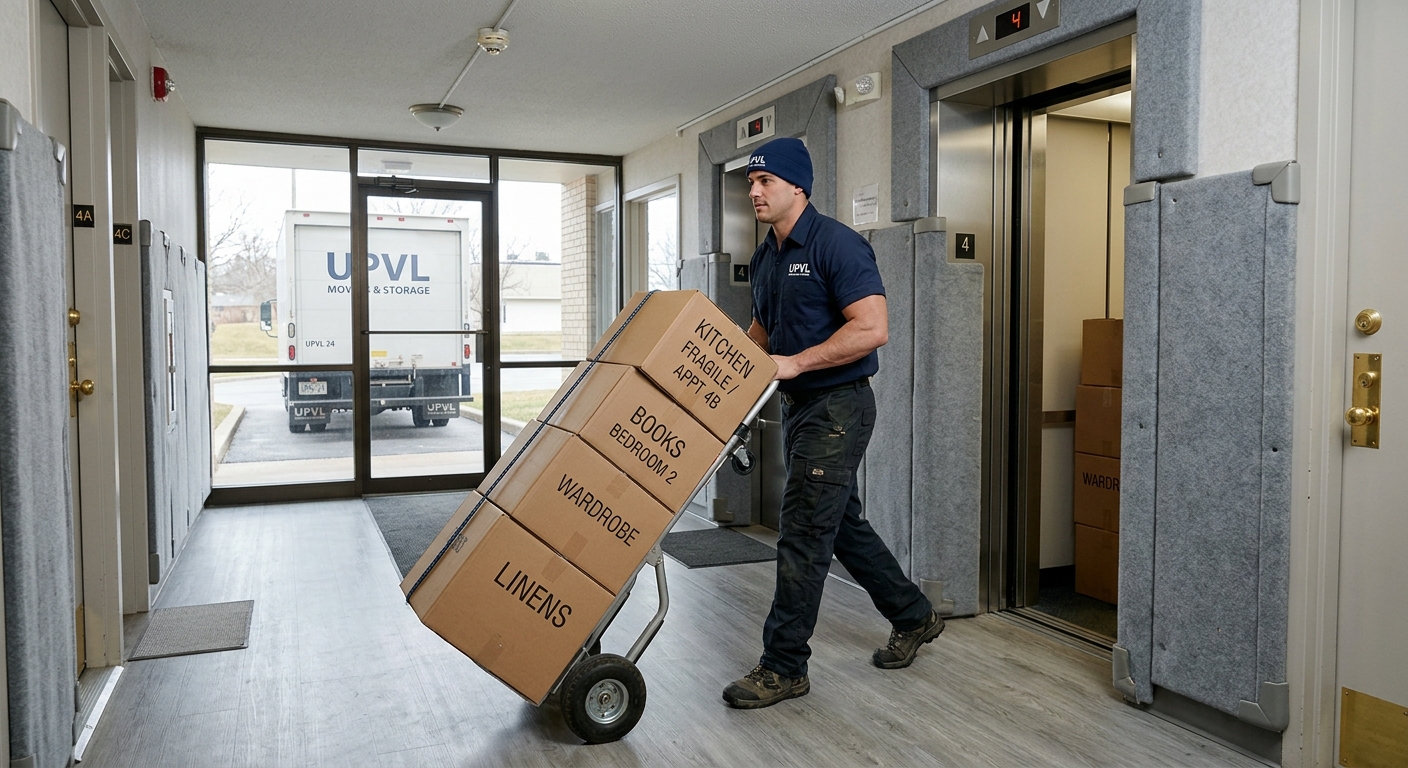
A Certificate of Insurance is a document that proves the moving company has required levels of liability and workers’ compensation coverage. Many apartment and condo buildings require a COI before movers can enter or use elevators.
Typically, building management will provide a sample COI form or specific wording that must appear on it. Your mover then sends a customized COI naming the building as "certificate holder" or "additional insured" for the moving date.
Ask every moving company:
Many buildings control when and how moves can take place. Common rules include:
Give your mover:
Mismatched expectations here can lead to delays and additional fees if movers must wait for access or return on another day.
Ask movers how they handle street parking, permits, and restricted zones in your city. Some companies will obtain permits for you; others require you to coordinate with local authorities. Check city transportation departments, like LADOT for Los Angeles or local parking offices in your area, to learn about temporary no‑parking signs or truck-restricted streets.
| Access Issue | Impact on Move | What to Do |
|---|---|---|
| No Driveway / Street Only | Longer carry, more time | Ask about long-carry fees; reserve parking if possible |
| Height Restrictions / Low Garages | Truck may not fit | Provide garage clearance height to your mover |
| Walk-Up Stairs | Slower loading/unloading | Ask about stair fees; mention number of flights |
| Gated Communities | Potential delays at gate | Arrange gate codes or guard instructions before move day |
Scheduling and timing are central to your experience with a moving company. A reasonably priced move still feels like a failure if the truck arrives days late with no communication.
For local moves, movers often give a specific arrival window on move day (for example, between 8–10 a.m.). For long-distance moves, you’ll usually receive a broader delivery window, typically several days, based on route, distance, and whether your shipment shares a truck.
Ask for:
Even good movers sometimes face delays due to:
For severe weather, federal and state agencies may issue warnings or closures. The National Oceanic and Atmospheric Administration (NOAA) and the National Hurricane Center provide official updates that can affect coastal and hurricane-prone routes.
A reputable mover will communicate proactively, not go silent. When you compare companies, ask: "How do you handle and communicate delays?" and "Who is my point of contact during transit?"
To reduce stress:
Putting everything together, here’s a practical checklist to help you choose and work with a moving company from the first quote to move day.
| Checklist Stage | Key Actions | Why It Matters |
|---|---|---|
| Research & Estimates | Verify licenses, compare 3+ quotes, ask about estimate types | Protects you from scams and surprise charges |
| Planning & Booking | Confirm dates, COI, access rules, and packing level | Prevents delays and building issues |
| Packing & Prep | Declutter, label, protect valuables, document items | Reduces damage and makes unpacking easier |
| Move & Delivery Days | Be present, review documents, note issues in writing | Preserves your rights if you need to file a claim |

For most moves, booking 4–8 weeks in advance is ideal. During peak season (May through September), try to book 6–10 weeks ahead, especially for long-distance or large home moves. Last-minute moves are sometimes possible—companies like United Prime Van Lines last-minute movers can help—but your options and preferred dates may be limited.
Confirm that the mover:
Use tools like FMCSA’s database and your state’s licensing agencies to verify registration and complaint history.
A carrier is the company that actually owns trucks, employs movers, and transports your belongings. A broker arranges moves and sells them to carriers but may not handle any physical moving.
Brokered moves can work, but you should always know who the actual carrier is, what their licensing is, and who will show up at your door on move day. Ask directly: "Are you the carrier for my move, or a broker? If a broker, which carrier will you use?"
Get at least three written estimates from licensed movers. This lets you compare pricing, services, and professionalism. If one quote is much lower than the others for the same move details, investigate why before deciding—it could signal missing services, inaccurate inventory, or a potential scam.
Price matters, but the cheapest option is not always the best. Consider:
Choosing a slightly higher-priced, highly-rated mover can cost less in the long run than dealing with damages, delays, or disputes from a lowball provider.
A thorough estimate should include:
Never rely only on a verbal quote or a vague one-line estimate.
You can often reduce cost by:
Discuss your budget openly with your mover; they may suggest ways to adjust services while staying within your price range.
If you discover damage:
Your compensation will depend on the valuation coverage you selected (Released Value vs. Full Value Protection) and the mover’s policies.
Tipping isn’t mandatory but is common when crews do a good job. Many customers tip:
Adjust based on service quality, complexity, and your budget. Cash tips are typical, but you can also ask if tips may be added to the final bill.
For Florida moves, the contact information is:
For California moves, the contact information is:
Choosing a moving company doesn’t have to feel like a gamble. When you understand how pricing, licensing, valuation coverage, and access conditions really work, you can compare movers confidently and avoid common pitfalls.
Start by defining your move type (local, long-distance, or office), then gather a few detailed, written estimates from licensed companies. Ask direct questions about estimate types, delivery windows, valuation, and building requirements. Look for movers who are transparent, responsive, and willing to put everything in writing.
With careful research and a clear checklist, you’ll be able to select a mover who treats your belongings and your schedule with the care they deserve—and arrive at your new home ready for a smoother start.