
Hiring professional movers can turn a stressful move into a smooth, organized project—if you pick the right team and plan correctly. Whether you’re moving across town or across the country, understanding how moving companies work helps you protect your belongings, your budget, and your timeline.
Quick Navigation
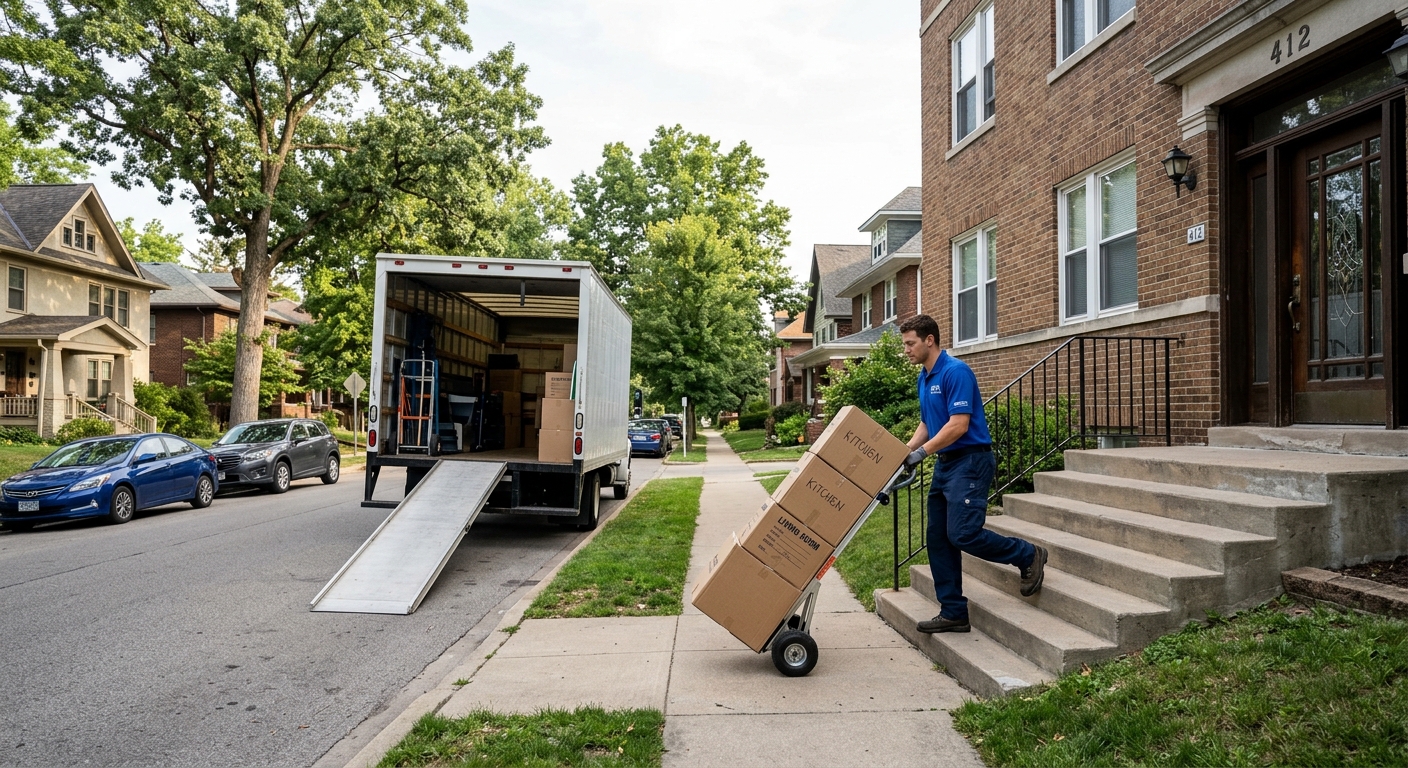
Professional movers matter because they bring trained labor, proper equipment, and structured planning to a process that is complex, physical, and time-sensitive. A good moving company does more than load a truck. They protect floors and doorways, disassemble furniture, pad-wrap fragile items, navigate parking rules, and manage timing between move-out and move-in.
Using professional movers is especially important when:
The right moving company can also lower risk. Professional movers follow standardized loading patterns, use dollies and moving straps, and understand how to secure loads to reduce breakage. They also carry valuation coverage and liability protection that DIY moves do not offer.
On the other hand, choosing the wrong mover—or a fraudulent broker—can cause delays, unexpected costs, and damaged or even held-hostage goods. The FMCSA warns that moving fraud is a recurring issue, especially for interstate moves. That’s why it’s critical to understand licensing, estimate types, and contract terms before signing anything.
| Reason to Hire Pros | DIY Risk | How Movers Help |
|---|---|---|
| Heavy lifting and stairs | Injury, dropped items | Trained crews, dollies, proper lifting |
| Complex building rules | Fines, delays, denied access | COI, elevator reservations, dock coordination |
| Long-distance timing | Uncertain arrival, extra hotel/boarding costs | Planned routes, delivery windows, tracking |
| Fragile or high-value items | Breakage, inadequate coverage | Professional packing, valuation options |
When you compare professional movers, look beyond just price. Evaluate experience, licensing, reviews, communication, and the clarity of the estimate. Companies such as United Prime Van Lines focus on detailed planning upfront so move day runs on schedule and on budget.
Professional movers offer a range of service types to fit different homes, distances, and timelines. Understanding what’s available helps you request the right moving estimate and avoid paying for services you don’t need.
Most full-service moving companies offer several core services:
Many movers also provide add-on services such as full packing, partial packing, furniture disassembly and reassembly, and storage in transit. For example, local moving services may be combined with short-term storage when you have a gap between closing dates.
| Service Type | Best For | Typical Billing Method |
|---|---|---|
| Local move | Moves within same city/metro | Hourly rate + materials |
| Long-distance move | Out-of-state or 100+ miles | Weight or volume + distance |
| Apartment move | High-rises, walk-ups, condos | Hourly or flat, plus access fees |
| Office/commercial move | Businesses and offices | Project quote, often binding |
| Last-minute move | Urgent relocations | Premium hourly/flat-rate |
| Specialty item move | Pianos, art, antiques | Per-item or hourly surcharge |
Local movers are used for short routes like:
These moves are heavily influenced by traffic, parking, and loading access rather than distance alone. That’s why an accurate local moving quote asks about stairs, elevator access, long hallways, and parking permits.
Long-distance movers plan routes across states and often across multiple days. Common examples include:
For these routes, delivery windows, fuel costs, tolls, and overnight parking all affect your quote. Many customers work with a dedicated long-distance moving coordinator who manages route planning and communication between origin and destination.
Office and commercial moves involve business-critical assets: desks, chairs, conference tables, file storage, servers, and often warehouse inventory. Choosing a mover with commercial experience helps minimize downtime. Professional office movers coordinate with building management for after-hours access, loading dock times, and Certificates of Insurance (COIs).
| Move Type | Key Priority | Why Pros Are Essential |
|---|---|---|
| Small apartment move | Managing stairs and tight halls | Avoiding damage to walls and railings |
| Large house move | Coordinated packing and loading | Reducing multiple trips, better truck loading |
| Office relocation | Limiting business downtime | After-hours work, labeling systems, IT coordination |
| Warehouse move | Inventory accuracy | Barcode or labeled inventory, pallet handling |
Local and long-distance moving share the same basic process—packing, loading, transportation, unloading—but the logistics, pricing structure, and risks are quite different. Knowing these differences helps you compare professional movers on equal terms.
A local move is typically defined by distance rather than state lines. Most companies treat moves under 50–100 miles as local, even if they cross from one suburb to another. Local movers commonly bill by the hour for:
In many states, local moving is regulated at the state or local level. For example, the California Bureau of Household Goods and Services oversees household moves within California and sets rules for written estimates and maximum rates for intrastate moves. Always check your state’s consumer protection site if you’re moving locally.
A long-distance move covers a larger distance, often 100+ miles, and is usually priced by shipment weight or volume plus mileage. An interstate move crosses at least one state line and falls under federal regulation by the Federal Motor Carrier Safety Administration (FMCSA).
Interstate professional movers must have a U.S. DOT number and, in many cases, an MC (Motor Carrier) number. You can verify this using FMCSA’s Safety and Fitness Electronic Records (SAFER) System.
| Factor | Local Move | Long-Distance / Interstate |
|---|---|---|
| Pricing | Hourly rates | Weight/volume + distance |
| Regulation | State/local rules | FMCSA interstate regulations |
| Delivery timing | Same day or next day | Multi-day window |
| Estimate type | Hourly quote or flat-rate | Binding/non-binding written estimate |
| Risk exposure | Short transport, fewer overnights | Longer routes, weather, more handling |
For long-distance moves, ask companies how they handle consolidated loads (where your items share a truck) versus dedicated trucks (where the truck carries only your shipment). Dedicated trucks cost more but can offer tighter delivery windows and fewer transfers.
Professional movers use delivery windows to account for driving time, weather, traffic, and multiple deliveries. While every carrier is different, a general pattern often looks like this:
| Distance | Typical Delivery Window | Notes |
|---|---|---|
| 0–100 miles | Same day or next day | Most local moves complete same day |
| 100–500 miles | 1–5 business days | Possible overnight stop for drivers |
| 500–1,000 miles | 2–7 business days | Common for regional relocations |
| 1,000–2,000+ miles | 3–14 business days | Coast-to-coast or multi-state moves |
Always read your Bill of Lading and order for service carefully to understand your specific pickup and delivery dates or windows. FMCSA explains how delivery spreads work and your rights when movers miss a window. Source: FMCSA.
How you handle packing is one of the biggest decisions you’ll make when hiring professional movers. Good packing protects your belongings, saves time on moving day, and can impact your valuation coverage.
Most professional movers offer at least three levels of packing service:
Companies that specialize in full-service moves, like those offering full packing services, can also unpack at destination, haul away used boxes, and set up furniture in each room.
| Packing Level | Best For | Pros and Cons |
|---|---|---|
| Self-packing | Budget-conscious, small moves | Lowest cost, but more labor and risk for you |
| Partial packing | Average-sized homes, fragile items | Balance of cost and convenience |
| Full packing | Busy households, long-distance | Highest convenience, higher cost |
| Unpacking services | Fast setup at destination | Extra fee, but saves days of work |
Reputable movers follow industry-standard techniques:
Incorrect packing—like overloading boxes or leaving empty space—can cause crushing and breakage during transit. Some valuation plans only fully protect items that are professionally packed by the mover, so ask how self-packed items are covered under your policy.
Professional movers also manage disassembly and reassembly for bulky items. Many companies offer specialized services, such as furniture disassembly and assembly, piano moving, and art and antique moving. These services may include:

If you choose to self-pack, follow these guidelines to keep your shipment safe and organized:
It often pays to have professionals pack any glass, mirrors, framed art, electronics, and kitchen dishes. That way, the most fragile items are handled with proper materials and techniques.
Storage is a valuable add-on when your move-out and move-in dates don’t line up, or when you’re downsizing and need time to sort belongings. Professional movers often integrate storage directly into the moving process.
Customers use moving-related storage when:
Most full-service moving companies offer one or more of the following:
| Storage Type | Typical Use | Pros and Cons |
|---|---|---|
| Warehouse vault storage | Longer-term, full-house storage | Secure and climate-controlled; access may need scheduling |
| Containerized storage | Flexible, temporary storage | Container stays sealed; may be less climate-controlled |
| Storage in transit (SIT) | Short gap between homes | Integrated into move; daily or monthly fees |
| Self-storage unit | Frequent personal access | You manage unit; separate billing and security |
Some movers, including those with dedicated storage services, can bundle storage and transportation costs. See examples of integrated storage solutions at United Prime Van Lines storage.
Adding storage affects:
Ask how your mover inventories items going into storage and what notice they need to schedule redelivery. Always keep copies of the inventory and any storage contracts for your records.
Moving costs vary widely, but they aren’t random. Professional movers use clear cost drivers, and understanding them helps you read estimates and avoid surprises.
Across both local and long-distance moves, key cost drivers include:
You will typically pay more for peak dates like weekends, end-of-month, and summer, when demand is highest. The U.S. Census Bureau notes that around 27 million Americans move each year, with roughly 40% moving between May and August. Source: U.S. Census Bureau. High demand drives up prices in those months.
Exact prices depend on your home, region, and services, but it helps to see broad ranges:
| Move Type | Approximate Range | Notes |
|---|---|---|
| Small local apartment (studio/1BR) | $400–$1,200 | Short distance, minimal packing |
| 2–3 BR local home | $800–$2,500 | More labor hours and truck size |
| Long-distance 1–2 BR (interstate) | $2,000–$6,000+ | Varies by distance and weight |
| Long-distance 3–4+ BR | $4,000–$12,000+ | Large shipments over long routes |
These are broad estimates, not quotes. Always request an in-home or virtual survey for a more accurate moving estimate tailored to your specific shipment.
Local moves are often priced hourly, but some movers offer flat-rate options based on a detailed assessment. Understanding each helps you decide what’s better for your move.
| Pricing Model | How It Works | Best When |
|---|---|---|
| Hourly rate | You pay for time + materials | Smaller moves with predictable timing |
| Flat-rate quote | Set price for the entire job | Complex moves with stairs, long carries, or multiple stops |
| Hybrid model | Minimum hours + add-ons | Medium-sized moves with some unknowns |
| Time-and-materials for extras | Special handling or extra labor billed separately | Moves with pianos or heavy safes |
With hourly pricing, make sure the clock start and end times are clear and that travel time is spelled out in your contract. With flat-rate pricing, verify what’s included, what could trigger extra fees, and how the mover handles unexpected obstacles (like a broken elevator).
Understanding moving estimates is critical because it affects how much you’ll actually pay. FMCSA defines three main estimate types for interstate moves: non-binding, binding, and binding-not-to-exceed. Source: FMCSA.
Here are clear definitions you should know before hiring professional movers:
| Estimate Type | What You Pay | Pros and Cons |
|---|---|---|
| Non-binding | Actual charges; can be higher than estimate | Flexible but risky if under-estimated |
| Binding | Exact amount on estimate (if scope unchanged) | Predictable cost; must disclose all items |
| Binding-not-to-exceed | Lower of estimate or actual cost | Most protection, but not all movers offer it |
| Local hourly quote | Hours worked × rate | Simple, but cost can creep with delays |
To get a reliable moving estimate from professional movers:
Be cautious of quotes that seem far below others, especially online-only offers that don’t involve a real survey. Extremely low prices are a common red flag for moving scams where brokers overbook carriers or demand extra payment before delivery.
Legitimate professional movers are licensed and insured. Understanding the basics of licensing and valuation coverage helps you verify a mover and choose the right level of protection for your belongings.
For interstate moves (crossing state lines):
For intrastate moves (within one state):
Many customers assume movers’ “insurance” works like homeowner’s insurance. In reality, movers provide valuation coverage: a contractual limit on how much they will compensate you for loss or damage. FMCSA explains that valuation is not full insurance in the traditional sense. Source: FMCSA.
Two main valuation options for interstate moves are:
| Valuation Option | Coverage Level | Best For |
|---|---|---|
| Released Value | Usually $0.60 per pound per article | Low-value items, tight budgets |
| Full Value Protection | Current replacement value (with terms) | Most households with standard belongings |
| Third-party insurance | Variable; purchased separately | High-value items and collections |
| Self-insured (no extra coverage) | Only Released Value | Moves with very few possessions |
Example: Under Released Value, a 10-pound TV would be covered at about $6.00 if damaged (10 × $0.60), which usually does not cover replacement cost. Under Full Value Protection, coverage is significantly higher but comes with a premium fee and possible deductibles.
Many apartment buildings, condos, and office towers require a Certificate of Insurance before movers can work on-site. A COI is a document from the mover’s insurance company confirming that the mover carries specific liability and workers’ compensation coverage, often naming the building as an additional insured.
Professional movers routinely issue COIs, but it’s important to:
Failure to provide a COI can result in denied access, last-minute rescheduling, or building fines. Experienced moving companies are used to this process and can coordinate with building management for you.
Delivery windows and route planning are where professional movers really earn their keep on long-distance moves. Good planning reduces delays, protects your belongings, and helps you avoid extra costs like hotel nights or storage.
Professional movers use routing software and experience to plan:
The FMCSA Hours-of-Service regulations limit how long drivers can operate each day. This directly affects how many days your move will take and how delivery windows are set.
A delivery window is a range of dates when your shipment is expected to arrive, not a precise moment. Movers need flexibility for:
You can usually request earlier or more precise delivery dates for an additional fee, especially if your shipment is moved on a dedicated truck rather than consolidated with others.
To avoid stress when the truck arrives:
For apartments, condos, and office buildings, building rules are as important as the mover’s schedule. Professional movers regularly deal with these rules, but they rely on you to provide accurate information from your building management.
Many buildings require:
Some buildings restrict weekend moves or allow only morning or mid-day slots. Confirm those restrictions before booking your movers so they can schedule appropriately.
Movers often charge extra for:
Discuss these possibilities upfront with your moving company. Share photos or videos of the building exterior, driveway, and entrances so they can anticipate obstacles and include any additional costs in your moving estimate.
A structured checklist keeps your move on track and helps professional movers work efficiently. Here is a practical timeline-focused checklist from eight weeks before move day through delivery.
For long-distance moves or peak season dates (summer, weekends, end-of-month), aim to book 4–8 weeks in advance. For small local moves during off-peak times, 2–3 weeks may be enough, but earlier is always better to get your preferred date and time.
A moving company owns trucks, employs crews, and performs the move. A moving broker arranges moves and sells your job to other carriers. Brokers may not control scheduling or quality, and some scams involve brokers that drastically underquote. For interstate moves, FMCSA requires brokers to be registered and disclose that they are brokers. Always ask, “Are you the actual carrier, or a broker?” and verify using FMCSA’s SAFER system.
Movers are responsible according to the valuation coverage you select, but they are not automatically responsible for every type of damage. Released Value Protection offers limited compensation, while Full Value Protection provides broader coverage with conditions. Damage must be reported promptly and documented on delivery paperwork or within the claim period specified in your contract.
Yes. Most professional movers allow self-packed boxes. However, their liability for the contents of those boxes may be limited, especially if the box has no visible damage. For high-value or fragile items, consider having the mover pack them so they are fully protected under your valuation coverage.
Many professional movers include basic furniture disassembly and reassembly for items like beds and dining tables. More complex pieces, such as bunk beds or modular furniture, may require extra time or specialized services like those offered in dedicated furniture assembly services. Always confirm what is included in your estimate.
Avoid loading:
Your mover will provide a list of non-allowable items during the estimate process.
You can lower costs by:
Ask your mover which cost-saving strategies work best for your specific situation.
If your mover misses the agreed delivery window, your contract and FMCSA rules determine what happens next. For interstate moves, you may be eligible for certain compensation under specific circumstances, especially if a Guaranteed Pickup and Delivery Service was purchased. Always review the “delay claims” or “service guarantees” section of your contract and contact your mover’s customer service immediately if a delay occurs.
Hiring professional movers is one of the most impactful decisions you’ll make during a relocation. The right moving company brings expertise, equipment, and planning that protect your belongings and your schedule, while clear estimates and valuation coverage protect your budget.
Take time to research movers, understand how estimates and delivery windows work, and decide which services—packing, storage, specialty handling—fit your situation. With a licensed, well-reviewed mover and a solid plan, your move can be less about stress and more about starting the next chapter in a new home.