Timing your move in Los Angeles matters more than most cities. Summer heat, wildfire smoke, and infamous LA traffic can turn a simple relocation into a marathon. Planning ahead around seasons, time of day, and day of the week can save you money, stress, and even protect your belongings and health.
Quick Navigation
Los Angeles is not a place where you can casually pick a date and hope for the best. Between microclimates, wildfire risk, and freeways that clog before sunrise, the best time to move in Los Angeles can easily be the difference between a smooth 5-hour move and an exhausting 12-hour grind.
Three big factors make move timing crucial in LA:
Understanding these variables before you book lets you align your schedule with your movers’ availability, reduce overtime charges, and keep your crew and belongings safe.
| Timing Factor | Why It Matters in LA | How It Affects Your Move |
|---|---|---|
| Season (summer, fall, winter, spring) | Heat waves, fire risk, winter storms | Comfort, safety, risk of delays or cancellations |
| Day of Week | Work commutes, weekend events | Travel time, hourly cost, crew availability |
| Time of Day | Peak freeway congestion | Load/unload efficiency, arrival windows |
| Neighborhood Rules | Quiet hours, elevator slots, street parking | Start times, permits, potential fines |
For example, a move from Santa Monica to Pasadena at 8 a.m. on a Tuesday is a completely different experience than the same trip at 4 p.m. on a Friday. Your movers will often recommend starting at first light to beat both the heat and the traffic whenever possible.
Moving in summer Los Angeles is extremely common—but not always ideal. Late May through early October can bring triple-digit temperatures in the Valley and inland areas, plus thicker traffic from tourism and school breaks.
Summer isn’t automatically a bad time; it’s just more demanding. You need earlier start times, careful packing for heat-sensitive items, and some flexibility with traffic and wildfire-related closures.
On the positive side, summer offers longer daylight hours and predictable dry weather, which helps avoid rain delays that are more likely in late fall and winter. According to NOAA, Southern California’s summer months are statistically the driest, which reduces slip hazards and water damage risks.
| Summer Factor | Pros for Moving | Cons for Moving |
|---|---|---|
| Weather | Mostly dry, excellent visibility | High heat, especially in valleys and Inland Empire |
| Daylight Hours | More hours to load/unload safely | Long hot periods, risk of heat exhaustion |
| Scheduling | Families prefer to move when school is out | Busy season, higher rates, limited dates |
| Tourism & Events | N/A | Extra traffic near beaches, Hollywood, and sports venues |
Summer impacts different parts of LA differently:
If you’re moving in or out of Chatsworth or other Valley communities, consider a very early morning start. Many professional movers, including United Prime Van Lines in Chatsworth, routinely schedule summer moves to begin at 7 a.m. or earlier to avoid the worst heat.
Moving during fire season LA adds an extra layer of risk and planning. Wildfire season typically ramps up in late summer and fall, especially during Santa Ana wind events. The Ready LA County program and the National Weather Service Los Angeles/Oxnard regularly issue red flag warnings that can impact travel and air quality.
Wildfires can affect your move in several ways:
If you’re planning a move between mid-August and November, particularly in or near hillside and canyon areas like Topanga, Malibu, Pacific Palisades, Brentwood, Glendale, La Cañada Flintridge, or Chatsworth, build wildfire contingencies into your plan.
| Location Type | Typical Fire Season Risk | Timing Strategy |
|---|---|---|
| Coastal flats (Santa Monica, Venice) | Low to moderate | Standard planning, monitor air quality |
| Urban core (DTLA, Koreatown) | Moderate (smoke drift) | Check AQI; consider masks for sensitive people |
| Foothills/hillsides (Brentwood, Glendale) | Moderate to high | Have backup dates/routes, watch fire maps daily |
| Canyon areas (Topanga, Malibu canyons) | High | Stay flexible, maintain close contact with your mover |
Professional movers experienced with LA routes, such as those at United Prime Van Lines in Los Angeles, will routinely adjust route plans when wildfire-related closures appear, but the earlier you coordinate, the smoother it will be.
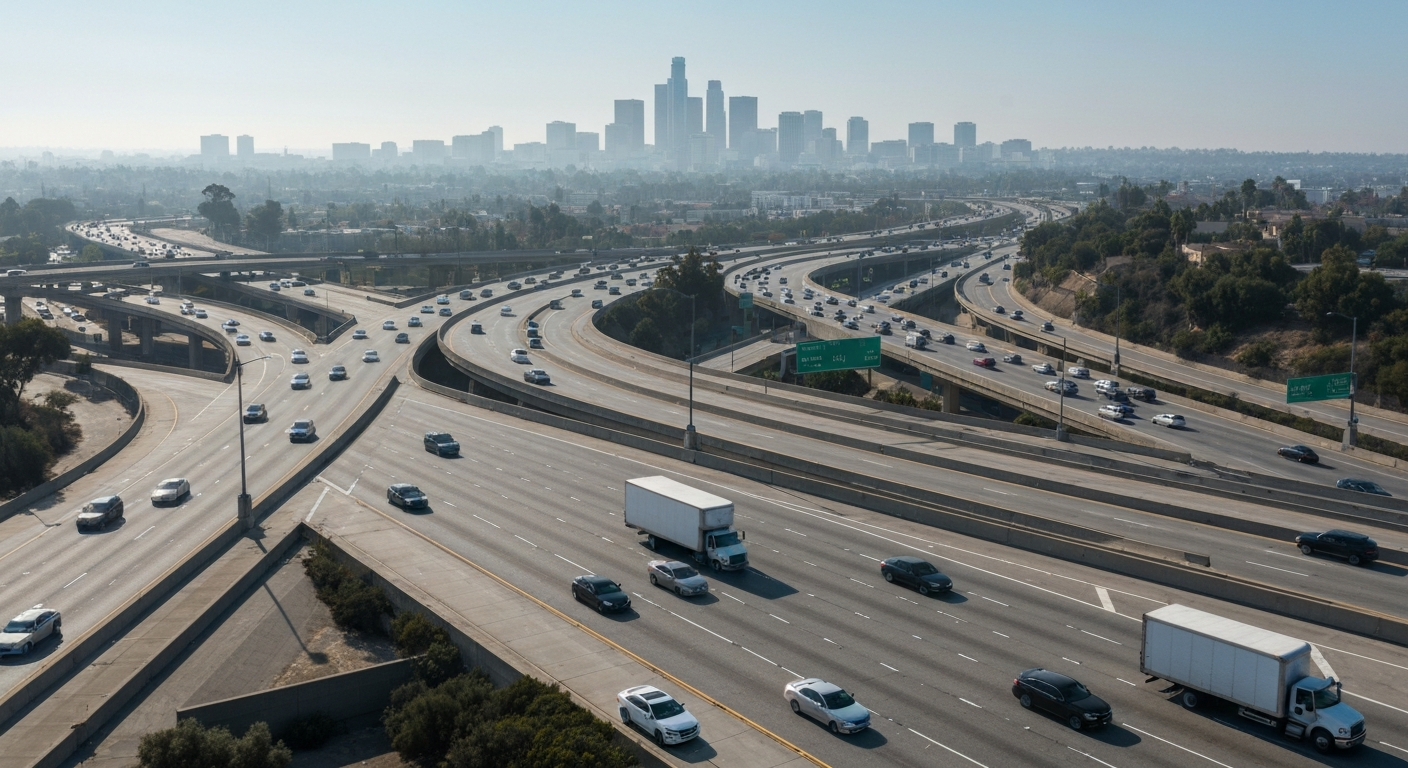
Navigating LA traffic on moving day is one of the biggest timing challenges. The same 10-mile distance can take 20 minutes at 6 a.m. or 90 minutes at 4 p.m. when combined with a lane closure or a crash.
Generally, traffic is heaviest on weekdays between 6:30–10:00 a.m. and 3:30–7:30 p.m., with Friday evenings often being the worst, especially near beach routes and entertainment districts. The Los Angeles Department of Transportation (LADOT) notes that congestion is a daily norm on major corridors.
| Freeway/Area | Common Congestion Times | Moving-Day Tips |
|---|---|---|
| 405 (Valley–Westside–South Bay) | All day, worst 7–10 a.m. & 3–7 p.m. | Schedule very early; avoid crossing the Sepulveda Pass late day |
| 101 (Valley to DTLA) | Morning inbound, evening outbound | Plan mid-morning or midday transit where possible |
| 10 (Santa Monica–DTLA–East) | Commute peaks, weekend beach traffic | Avoid Friday afternoons and sunny weekend middays |
| 5 (North–South corridor) | Heavy trucks, chronic bottlenecks | Build in extra time; consider alternate routes |
For most local moves within Los Angeles, the best timing is:
Some buildings in Downtown LA, Hollywood high-rises, or Westside luxury complexes may require late-night or early-evening moves to minimize disruption. Always check with your building management first and then coordinate with your movers, as night moves can come with extra fees or limited crew availability.
| Neighborhood | Key Challenge | Timing Advice |
|---|---|---|
| Downtown LA (DTLA) | Loading dock schedules, street closures | Book freight elevators far in advance; avoid events and rush hours |
| Hollywood / West Hollywood | Narrow streets, nightlife traffic | Earlier in the day when streets are clearer |
| Santa Monica / Venice | Beach visitors, limited street parking | Avoid weekend midday; consider early weekday mornings |
| Chatsworth / Valley | Extreme heat plus freeway congestion | Start at sunrise; cross major freeways before rush peaks |
Let your movers know in advance if your building requires a Certificate of Insurance (COI), elevator reservations, or has set delivery windows. That affects not just your cost but the best start time and routing strategy.
Choosing the best day to move in Los Angeles is as important as picking the right time of day. It affects how long the move takes and how much you pay.
In many cases, yes—it is cheaper to move on weekday LA compared to peak weekends. Many moving companies charge higher rates or have higher minimum hours for Saturdays and especially for the last weekend of the month, when demand surges.
However, weekday moves must contend with heavier commute traffic, so careful timing is critical.
LA’s rental and housing market is heavily month-driven, so the first and last few days of each month are popular moving dates. If possible:
| Timing Option | Pros | Cons |
|---|---|---|
| Weekday (Tue–Thu) | Often cheaper, better availability | Must time around traffic; may require taking off work |
| Weekend (Sat–Sun) | More convenient for work schedules | Higher demand, potentially higher rates |
| Beginning/End of Month | Aligns with lease dates | Peak demand, limited crews, higher prices |
| Mid-Month | More flexibility and negotiating room | Requires planning ahead so leases line up |
Timing impacts what you pay because most LA movers charge by the hour for local moves and by weight/distance for long-distance moves. The more your move overlaps with traffic or building delays, the more hours you pay for.
Key ways that timing hits your wallet:
Many local LA moves are priced hourly, especially within the city. Some companies will quote a flat rate for simple local moves, but that price is still based on an estimate of hours and difficulty (stairs, distance to truck, etc.). Long-distance moves (for example, LA to Phoenix or LA to Seattle) are more often priced based on weight plus distance.
| Scenario | Cost Impact | Timing Strategy |
|---|---|---|
| Weekday, early start, light traffic | Lower total hours billed | Start at 7–8 a.m., mid-day driving |
| Friday afternoon, heavy traffic | Higher hours due to slow transit | Avoid or adjust schedule earlier if possible |
| End-of-month Saturday | Highest demand, limited discounts | Book well in advance; consider mid-month alternative |
| Off-peak season (January–March) | Potentially better rates and flexibility | Ask movers about seasonal discounts |
If you’re flexible, ask your movers if they offer better rates for mid-week or off-peak dates. Companies like United Prime Van Lines’ local moving service can often recommend a date/time combination that keeps both your cost and stress level down.
The best timing strategy differs for a local LA move versus a state-to-state or cross-country relocation that either starts or ends in Los Angeles.
For local moves within Los Angeles County:
Long-distance moves (LA to Texas, LA to New York, LA to Florida, etc.) revolve around preferred pickup dates and a delivery window instead of a single day/time.
Most reputable interstate movers provide a delivery spread, such as 3–14 days, depending on distance and service type. According to FMCSA (Federal Motor Carrier Safety Administration), interstate movers must provide you with written delivery date or spread on your order for service.
| Route Example | Typical Delivery Window | Timing Tip for LA |
|---|---|---|
| LA to Phoenix | 2–5 business days | Plan LA pickup early morning; avoid Friday afternoon departures |
| LA to Denver | 3–7 business days | Be flexible; trucks may time departure to avoid mountain weather as well as LA traffic |
| LA to Chicago | 5–10 business days | Schedule LA load to miss peak freeway hours; consider Monday–Wednesday pickups |
| LA to New York / East Coast | 7–14 business days | Ask for a mid-week delivery window to avoid NYC or East Coast city traffic spikes |
When planning long-distance moves, companies like United Prime Van Lines’ long-distance moving service will look at LA traffic and your destination city’s traffic to design the most efficient schedule. Build some flexibility into your arrival plans so you’re not trying to move into an East Coast apartment at 5 p.m. on a Friday.
Los Angeles heat, especially in summer, can be hard on belongings. Planning when and how you pack is just as important as scheduling the crew.
Prolonged exposure to high temperatures can warp, melt, or damage common items such as:
In Valley areas like Chatsworth, Woodland Hills, or Burbank, truck interiors can get extremely hot. Aim to shorten the time fragile items spend in a parked truck.
| Packing Option | Best For | Timing Benefit in LA |
|---|---|---|
| Full professional packing | Busy schedules, large homes, fragile items | Pros schedule packing day ahead, minimizing time items sit in heat |
| Partial packing | DIY basic items, pros handle fragile or valuable pieces | You can pack off-peak hours; pros handle time-sensitive items quickly |
| DIY packing | Budget-conscious moves | You control timing; can pack evenings or cool early mornings |
| Last-minute packing services | Emergency moves, sudden lease changes | Movers compress packing into shortest possible window, which may help in heat waves |
If you’re concerned about delicate furniture, pianos, or artwork, ask about specialized services like furniture disassembly and assembly or art and antique moving. These often include additional padding and handling protocols suited for LA’s climate.
Storage often comes into play when you’re caught between lease dates, remodeling, or selling a home. In Los Angeles, storage timing can help you avoid peak moving days and give you flexibility during busy seasons like summer and fire season.
| Storage Type | Typical Length | Timing Advantages in LA |
|---|---|---|
| Same-day overnight hold | 1 night | Avoids late-night unloading; helps with staggered elevator times |
| Short-term storage | 1–30 days | Helps bridge gaps between leases, remodels, or new-build closings |
| Medium-term storage | 1–6 months | Useful during extended renovation or fire-season wait-outs |
| Long-term storage | 6+ months | Downsizing, working abroad, or long projects |
Companies with integrated moving and storage, such as United Prime Van Lines storage services, can load your belongings once, store them, then deliver when timing and conditions (heat, fire risk, building access) are more favorable.
Timing isn’t the only thing that can derail an LA move. If your mover doesn’t have proper licensing, insurance, or a valid COI for your building, you may be forced to reschedule at the last minute.
In California, household goods movers must be licensed by the Bureau of Household Goods and Services (BHGS). For interstate moves (from California to another state or vice versa), movers need a USDOT number and must comply with FMCSA regulations.
A Certificate of Insurance (COI) is a document your mover provides to your building’s management showing that they carry liability and workers’ compensation coverage. Many LA high-rises in Downtown, Hollywood, and the Westside require a COI before the move date.
Without a COI on file, security might refuse to let your movers load/unload, causing you to lose an elevator slot and possibly pay a fee.
| Requirement | Who Sets It | Timing Impact |
|---|---|---|
| COI needed | Building/HOA | Must be provided days before; late COI can delay move |
| Elevator reservation | Building/HOA | Strict loading window; movers must plan around it |
| Loading dock access | Building/HOA or onsite management | May limit you to certain hours, often weekdays |
| Quiet hours | City/local ordinances or HOA | Can restrict early-morning/late-night moving |
When you book your move, ask your mover to send their COI details early and confirm all building rules. A company experienced in Los Angeles moves will often coordinate directly with management to align the schedule with available windows.
Another timing-related detail is how your belongings are covered during transit and potential delays. Under federal law for interstate moves, movers must offer at least Released Value Protection (minimal coverage based on weight) and may offer Full Value Protection for an additional fee. Source: FMCSA.
Released Value is usually 60 cents per pound per item—meaning a 20 lb TV would only be covered up to $12 if damaged. That’s why many customers choose higher levels of valuation, especially when moving in conditions where delays, heat, or complex logistics raise the risk of damage.
To pull all of this together, use this LA-focused checklist to choose and lock in the best time to move.

The best day to move in Los Angeles is usually a mid-week day, like Tuesday, Wednesday, or Thursday. These days tend to have slightly lower moving demand than weekends and fewer large events, which can reduce both your hourly costs and traffic delays. If you’re flexible, pair a mid-week date with an early morning start to get the best results.
Often, yes. Many LA movers charge higher rates or minimums for Saturdays and for the last weekend of the month because demand is high. Weekdays, especially mid-week, can be less expensive or give you better negotiating room on time slots. Just remember to schedule around rush hours so your crew isn’t stuck in commuter traffic.
LA traffic is consistently heavy, but the worst periods for moving are typically weekdays from 6:30–10:00 a.m. and 3:30–7:30 p.m., with Friday afternoons being especially difficult. Major freeways like the 405, 101, 5, and 10 can be congested well beyond typical rush hours, so plan moves to load at first light and drive between 10 a.m. and 2 p.m. whenever possible.
The best time of day to move in LA is early morning. Starting around 7–8 a.m. lets your crew load while temps are cooler and reach the new home before the worst traffic peaks. In very hot weather or dense areas like Downtown or Hollywood, early starts are especially important to avoid both heat and parking chaos.
Summer is both the most popular and most challenging time to move in LA. You get long, dry days that are great for moving, but also intense heat, especially in Valley areas, and higher moving demand. If summer is your only option, aim for earlier start times, stay hydrated, protect heat-sensitive items, and try for mid-week, mid-month dates to avoid the highest rates.
Fire season in LA, typically late summer through fall, can bring road closures, poor air quality, and evacuation orders. Moves in or near hillside and canyon areas are most affected. You should monitor fire weather alerts, have flexible routes and backup dates, and consider rescheduling if air quality becomes unhealthy. Coordination with an experienced mover is key when planning around fire season.
If a wildfire or heavy smoke impacts your route or neighborhood on moving day, safety comes first. Contact your moving company immediately to discuss alternate routes or rescheduling. Check official updates from Ready LA County and the National Weather Service LA. Depending on conditions, your mover might adjust timing within the same day or propose a new date.
You don’t necessarily have to avoid fire season, but you should plan more carefully. Many people move successfully in late summer and fall. The key is to stay informed, remain flexible, and choose movers familiar with LA’s fire-prone corridors. If you have the luxury of choice, scheduling your move in late winter or spring usually offers cooler temperatures and fewer fire-related issues.
For local LA moves, hourly pricing is common because it accounts for variables like traffic and building delays. Flat-rate pricing can be convenient if your move is straightforward and the estimator can accurately judge the time and complexity. However, in a city with unpredictable traffic like LA, a transparent hourly estimate with a realistic time range is often more flexible and fair.
For non-peak dates, booking 2–4 weeks in advance is usually enough. For summer weekends, end-of-month dates, or large homes, aim for 4–6 weeks or more. Long-distance moves originating or ending in LA also benefit from early booking so movers can coordinate the best delivery window and routes around traffic, weather, and seasonality.
There’s no single “perfect” month, but many people find late winter and spring (February–May) to be a sweet spot—milder temperatures, less fire activity, and somewhat lower demand than peak summer. January can also be a good budget month if you don’t mind cooler, occasionally rainy days. If you’re sensitive to heat, avoiding July–September in the Valley is wise.
Check local calendars for marathons, parades, protests, and big events near your route or neighborhood. Areas like Downtown, Hollywood, and around Dodger Stadium and SoFi Stadium are heavily affected by event days. Aim to schedule your move on non-event days or adjust your start time and route to avoid closures and game-time traffic.
If you’re in a mid-rise or high-rise in neighborhoods like Downtown LA, Hollywood, Koreatown, or the Westside, you almost always need to reserve a freight elevator. Buildings may limit moves to specific hours and require a COI from your movers. Reserve your elevator as soon as you have your move date and share that time window with your moving company so they can plan accordingly.
For California moves, the contact information is:
Choosing the best time to move in Los Angeles means looking beyond your lease date. Heat, fire season, LA’s legendary traffic, and building rules all play a role in whether your move feels manageable or overwhelming.
When you pair a smart date choice (mid-week, mid-month where possible) with early morning timing, clear building coordination, and an experienced LA moving company, you dramatically reduce the chances of unpleasant surprises. Whether you’re heading from Santa Monica to Silver Lake or leaving the Valley for another state, thoughtful timing can save you money, protect your belongings, and turn a stressful life event into a surprisingly smooth transition.