
Planning a move is stressful enough. Add storage, insurance, estimates, and deadlines, and it can start to feel overwhelming. A clear moving and storage guide helps you understand your options, avoid surprise costs, and choose the right professional movers for your situation.
Quick Navigation
Moving touches almost every part of your life: work, school, finances, and daily routines. Without a plan, costs can balloon, delivery windows can slip, and important items may end up in the wrong place or damaged in transit.
A solid moving and storage guide helps by:
Most problems people experience with professional movers are preventable. Common issues include unexpected charges on moving day, misunderstanding of delivery windows, underestimating how many boxes they’ll need, and not understanding the difference between basic liability and full valuation coverage. Clear information and realistic expectations reduce these risks dramatically.
Interstate movers in the U.S. are regulated at the federal level, and many states add their own consumer protections. The Federal Motor Carrier Safety Administration (FMCSA) requires interstate household goods movers to give you written estimates and a brochure on your rights and responsibilities. Source: FMCSA.
By understanding how the system works before you book, you can compare companies on more than just price and feel confident that your belongings—and your budget—are protected.
Professional movers offer a wider range of services than most people realize. Knowing the main categories makes it easier to ask for accurate quotes and avoid paying for extras you don’t need.
Most moving companies break residential services into several core offerings.
| Service Type | What It Includes | Best For |
|---|---|---|
| Local moving | Short-distance moves billed hourly; labor, truck, basic equipment. | Moves within the same metro area or nearby city. |
| Long-distance moving | State-to-state or 100+ mile moves priced by weight/volume and miles. | Relocating to another state or across the country. |
| Apartment / condo moves | Navigating stairs, elevators, parking, and building rules. | Urban apartments, high-rises, complexes with tight access. |
| House moves | Larger homes, multiple rooms, heavy furniture. | Single-family homes or townhouses with bigger inventories. |
| Office / commercial moves | Workstation breakdown, IT handling, building COI, after-hours work. | Businesses relocating offices, medical practices, or retail. |
For example, a three-bedroom home moving within the same city would likely fall under local moving, possibly with house-move specialization if there are stairs, large furniture, or delicate items like pianos or antiques.
Many full-service moving companies, such as United Prime Van Lines, also offer specialty services like:
You can also choose how much of the work the movers handle versus what you do yourself.
| Approach | What Movers Do | Pros and Cons |
|---|---|---|
| Full-service move | Pack, load, transport, unload, and often unpack; may include disposal of packing materials. | Pros: Least stress, fastest. Cons: Highest cost, requires detailed planning. |
| Labor-only | Movers load/unload your truck or container; you drive. | Pros: Lower cost. Cons: You handle truck, driving, and often packing. |
| Hybrid move | Movers handle large items and loading; you pack boxes and may move light items yourself. | Pros: Balance of cost and convenience. Cons: Requires coordination and time on your end. |
| Pack-only service | Movers pack your items; another provider may transport them. | Pros: Professional packing for fragile items. Cons: Separate arrangements for transport. |
Hybrid moves are popular with budget-conscious families: professional movers handle the heavy lifting, disassembly, and truck loading while you pack non-fragile items at your own pace.
Some circumstances call for more specialized planning:
When you request a quote, describe your situation in detail—stairs, elevators, parking, long walks from your door to the truck, and fragile or high-value items. This leads to more accurate estimates and avoids surprise fees on moving day.
Local and long-distance moves operate under different pricing models, regulations, and timing. Understanding these differences helps you choose the right movers and plan your schedule.
Most companies treat moves within 50–100 miles as local, typically within the same metropolitan area or region. Local moves are almost always priced hourly based on crew size and truck count.
Key points about local moves:
State agencies such as the California Bureau of Household Goods and Services regulate in-state moves and set rules about estimates and contracts. Source: California BHGS.
A long-distance move is generally:
Interstate moves (any move crossing a state border) fall under federal regulations, including licensing and valuation requirements. Movers must have a U.S. DOT number and meet FMCSA insurance and safety standards. Source: FMCSA.
Long-distance pricing usually depends on:
Long-distance moves use delivery windows rather than exact dates, especially during peak season (roughly May through September). Here is a typical pattern for planning purposes:
| Route Example | Approx. Distance | Typical Delivery Window |
|---|---|---|
| Atlanta, GA to Orlando, FL | ~440 miles | 2–5 business days |
| Chicago, IL to Dallas, TX | ~925 miles | 3–7 business days |
| New York, NY to Miami, FL | ~1,300 miles | 4–10 business days |
| Los Angeles, CA to Denver, CO | ~1,000 miles | 4–10 business days |
| Seattle, WA to Boston, MA | ~3,000 miles | 7–21 business days |
Delivery windows allow carriers to combine shipments on one truck, route efficiently, and accommodate weather and traffic. Ask your mover whether your shipment is exclusive-use (only your items on the truck) or part of a consolidated load.
Access issues affect both local and long-distance moves. Examples:
Coastal and hurricane-prone areas (for example, Florida and Gulf Coast states) may have seasonal issues like heavy rain or tropical storms. The National Hurricane Center recommends advanced planning and flexibility for moves scheduled during hurricane season (June 1 to November 30).
If a building requires a COI, your mover must provide proof of liability and workers’ compensation coverage, often listing the building owner or management company as additional insured. You should confirm COI requirements with your building at least 2–3 weeks before move day.
Packing is where most moves go off track—boxes become too heavy, fragile items are under-protected, and labeling gets inconsistent. You can pack everything yourself, let movers handle it, or split the work.
| Packing Level | What It Includes | Who It Fits Best |
|---|---|---|
| Self-packing | You provide boxes and materials; movers only load, transport, unload. | Budget-conscious, time-flexible customers. |
| Partial packing | Movers pack specific areas (kitchen, fragile items, closets). | Busy families, people with lots of breakables. |
| Full packing service | Movers pack entire home, label boxes, and protect furniture. | Professionals with limited time, long-distance movers, seniors. |
| Unpacking services | Movers unpack, place items on surfaces, remove packing debris. | Those wanting a fast, low-stress setup in the new home. |
Professional full packing services are especially helpful for long-distance moves or when you’re coordinating a job change, house closing, and school transitions at the same time.
If you decide to do your own packing, follow these rules to protect your belongings and avoid issues with insurance/valuation claims:
For valuable items like fine art, high-end electronics, or heirlooms, consider professional packing or crating even if you pack everything else yourself. This can also support valuation coverage if something happens in transit.
Proper protection of furniture is one of the biggest advantages of hiring professionals. Movers typically:
Specialized services such as furniture disassembly and assembly ensure that complex pieces are taken apart and reassembled safely and quickly, which can be crucial if you’re working under tight elevator or loading dock time windows.
Sometimes the move-out and move-in dates don’t line up, or you’re relocating temporarily and only need part of your belongings. Storage becomes an important part of the plan.
| Storage Type | How It Works | Ideal Use Case |
|---|---|---|
| Warehouse storage (full-service) | Movers load, transport, and store items in a secure facility; re-deliver later. | Gap between closings, corporate relocations, long-distance moves. |
| Portable storage containers | Container dropped at your home, you or movers load it, then it’s stored or delivered. | DIY/hybrid moves, flexible packing over several days. |
| Self-storage unit | You rent a unit and move items in/out yourself or with movers. | Long-term storage or accessing items frequently. |
| Short-term transit storage | Items stay on the truck or in short-term holding between pickup and delivery. | Short gaps (a few days) between move-out and move-in dates. |
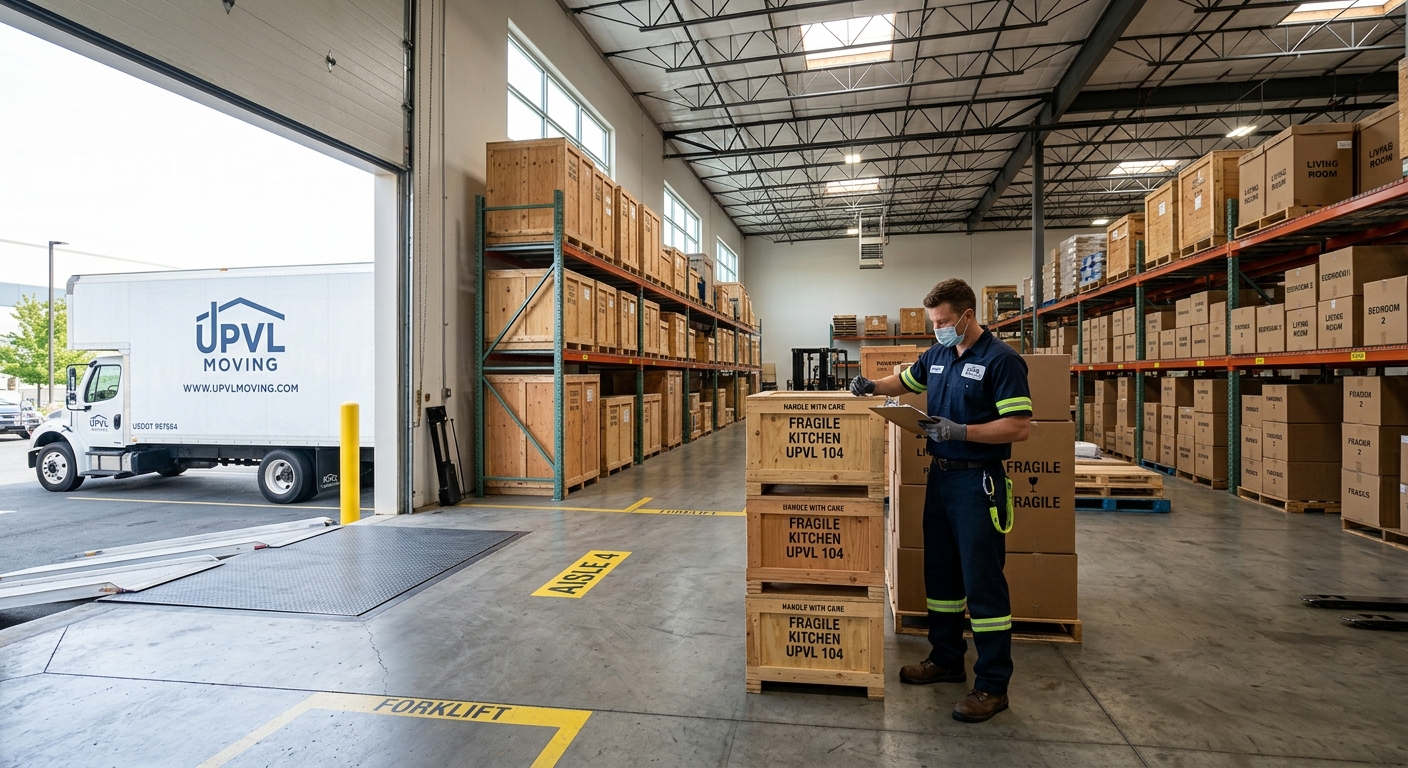
Full-service moving and storage solutions, like those available via professional storage services, simplify logistics since one company manages the entire chain: pickup, storage, and final delivery.
Before placing your belongings into storage, ask:
For long-distance moves, storage at origin vs. destination can influence cost and delivery timing. Storing at the destination often speeds up final delivery when you’re ready to receive your items.
No two moves are priced exactly the same, but they follow predictable patterns. Understanding cost drivers helps you estimate a realistic budget and compare quotes fairly.
The biggest factors that affect moving costs are:
These are very rough national ballpark ranges. Your actual costs may be higher or lower depending on local rates and specifics.
| Move Scenario | Common Range | Notes |
|---|---|---|
| Studio/1BR local move | $400 – $1,000 | 4–6 labor hours, 2 movers and a truck, no packing. |
| 2–3BR local move | $800 – $2,000 | 6–10 hours, 3–4 movers recommended. |
| 3–4BR local home | $1,500 – $3,500 | Full day or multi-day work; packing raises cost. |
| Long-distance 1–2BR (interstate) | $2,000 – $6,000 | Weight, distance, and timing determine final price. |
| Long-distance 3–4BR (interstate) | $4,000 – $12,000+ | Higher in peak season or with full packing/storage. |
According to the U.S. Census Bureau, roughly 27–31 million Americans move each year, with many moving during the summer months when kids are out of school. Source: U.S. Census Bureau. Higher seasonal demand often leads to higher prices and limited availability, especially for weekend dates.
Understanding how movers price their services—and what your estimate actually guarantees—is one of the most important parts of this moving and storage guide.
Local moves are typically billed hourly, while long-distance moves use flat-rate or weight/volume-based pricing.
| Pricing Model | How It Works | Pros and Cons |
|---|---|---|
| Hourly rate | Charged per hour of labor for a set crew size, often with a minimum. | Pros: Transparent for simple moves. Cons: Risk of higher cost if move runs long. |
| Flat-rate (local) | Fixed price for defined scope, usually after in-home or virtual survey. | Pros: Predictable final bill. Cons: Requires detailed inventory; scope changes may add charges. |
| Weight/volume-based (long-distance) | Price based on shipment weight or volume plus distance and services. | Pros: Standard for interstate moves. Cons: Can be confusing without clear inventory. |
| Hybrid pricing | For example, hourly for loading/unloading plus fixed fuel or travel fees. | Pros: Tailored to specific situations. Cons: Requires closer review of fine print. |
For interstate moves, FMCSA recognizes several types of estimates. Understanding them protects you from surprise charges.
FMCSA explains that binding and non-binding estimates work differently and that movers must provide you with written documents before loading begins. Source: FMCSA.
Watch for:
Before booking, verify interstate movers using the FMCSA’s online search tool. Source: FMCSA Licensing & Insurance.
Licensing and insurance are your safety net. They determine your rights if something goes wrong and whether you can recover financially from loss or damage.
For interstate moves, your mover must have:
For intrastate moves, many states have their own licensing agencies. Always ask for the mover’s license number and verify it with the appropriate authority in your state.
Movers provide valuation coverage, which is different from traditional third-party insurance. Valuation describes the level of liability the mover accepts for your belongings.
| Coverage Type | How It Works | Typical Protection Level |
|---|---|---|
| Released Value Protection | Basic coverage included in the move; no extra charge. | Up to 60 cents per pound per article for interstate moves. |
| Full Value Protection (FVP) | Enhanced valuation for a fee; mover is liable for repair, replacement, or cash settlement. | Usually based on shipment weight times a per-pound amount (for example, $6 per pound). |
| Third-party moving insurance | Separate policy purchased from an insurance company. | Can cover exclusions or high-value items beyond mover’s valuation. |
| Declared value for high-value items | Special forms listing single items above a set value threshold. | Ensures adequate coverage for jewelry, art, or collectibles. |
Released Value is very limited—if a 10-pound flat-screen TV is destroyed, you might receive only $6. Choosing Full Value Protection or third-party insurance for expensive household items is often a wise decision, especially on long-distance moves.
Many apartment, condo, and office buildings require a Certificate of Insurance before they allow movers on site. The COI proves that the moving company carries:
To avoid move-day delays, ask your building exactly what they need on the COI (coverage limits, additional insured wording, dates, and whether they require separate certificates for origin and destination). Provide this information to your mover at least a week prior to your move.
Timing is one of the most misunderstood parts of moving. Your schedule, the mover’s capacity, and external factors like traffic and weather all interact.
For local moves, timing is usually measured in hours rather than days. Still, advance planning is important:
Many movers offer morning and afternoon time slots. Morning slots are usually more predictable, while afternoon slots depend on how long the first job of the day takes.
For long-distance and interstate moves, you’ll be given a delivery spread—a range of days when your shipment will arrive.
| Shipment Size & Distance | Typical Delivery Window | Notes |
|---|---|---|
| Small shipment, short distance (under 500 miles) | 1–5 business days | May be faster with dedicated truck. |
| Medium shipment, regional (500–1,000 miles) | 3–10 business days | Common for moves one to two states away. |
| Large shipment, cross-country | 7–21 business days | Depends on route, consolidation, and season. |
| Peak-season cross-country | Up to 30 days | Some carriers allow broader windows in summer. |
During the window, the driver will typically call 24 hours in advance with a narrower arrival timeframe.

A detailed checklist keeps you on track from the moment you decide to move until the last box is unpacked. Here is a practical, time-based overview.
| Timeframe | Key Tasks | Notes |
|---|---|---|
| 8–10 weeks out | Research movers, declutter | Ideal timing for large or long-distance moves. |
| 4–6 weeks out | Book mover, start packing | Earlier booking recommended for summer. |
| 1–3 weeks out | Confirm building rules, finalize packing | Secure COI, elevator slots, and parking. |
| Move day | Supervise loading/unloading | Keep essentials and valuables with you. |
| After move | Unpack, file any claims | Document issues promptly with photos. |
For local moves, booking 3–6 weeks in advance is usually enough, though summer weekends can fill earlier. For long-distance or interstate moves, aim for 6–8 weeks or more, especially if you’re moving in peak season (May–September) or have specific date requirements.
Often, yes. Many movers offer lower rates or better availability Monday–Thursday compared with Friday–Sunday, when demand is higher. If your schedule is flexible, ask companies if weekday pricing is different and whether mid-month dates are less expensive than month-end, when many leases turn over.
Yes. For anything more than a small studio or local move with just a few items, getting at least two to three written estimates is wise. Make sure each company has the same inventory list, services, and dates so you can compare fairly. Be cautious of quotes that are significantly lower than the others without a clear reason.
Most movers won’t transport hazardous materials (paint, gasoline, propane tanks, fireworks, chemicals), perishable food, or live plants on long-distance moves. Firearms and high-value collections may have special rules. Ask your moving company for a list of prohibited or restricted items when you book and plan to move those items yourself if needed.
Local moves typically stay within 50–100 miles and are often billed hourly, while long-distance moves cover greater distances or cross state lines and are priced by shipment weight or volume plus distance. Long-distance moves also follow federal regulations, require DOT registration, and usually involve delivery windows instead of same-day delivery.
Most full-service movers offer basic disassembly and reassembly for standard beds, tables, and some sectionals as part of their service. More complex items like bunk beds, Murphy beds, or custom furniture may require a specialty technician or additional fee. Clarify with your mover what they include and whether you’ll need services like furniture disassembly and assembly.
Professional packing is worth considering if you’re short on time, have many fragile or high-value items, or are moving long-distance. Pros know how to pack for travel stress, maximizing protection and minimizing damage. If you’re on a budget, partial packing—having movers handle just the kitchen, artwork, and breakables—can be a good compromise.
Movers provide valuation coverage, not traditional insurance. Basic Released Value Protection offers about 60 cents per pound per item on interstate moves, which is minimal. Full Value Protection, available for an added charge, makes the mover responsible for repairing, replacing, or compensating based on a declared value of your shipment. For especially valuable items, you can also explore third-party moving insurance.
Often, yes. Many professional movers provide integrated moving and storage solutions, so they can pick up your items, store them in a secure facility, and deliver them when you’re ready. This can simplify logistics compared with using a separate self-storage provider, as one company handles your inventory from start to finish.
Keep important documents (IDs, passports, financial records), medications, basic electronics (laptop, chargers), sentimental items, and enough clothing and toiletries for several days with you. Also carry small valuables like jewelry and personal heirlooms. These are difficult or impossible to replace and should not be packed on the moving truck.
First, document the damage with photos and notes, and keep any related boxes or packing materials. Then, notify your moving company as soon as possible and request their claim form and instructions. Interstate movers must explain their claim process in your paperwork. Submit your claim by the deadline stated in your contract, and keep copies of everything you send.
A successful move comes down to three things: informed planning, choosing the right level of professional help, and clear communication with your movers. When you understand service types, pricing models, valuation coverage, and storage options, it’s much easier to build a realistic timeline and budget.
Use this moving and storage guide as a roadmap: start early, get written estimates, verify licensing, and decide where professional services like packing, storage, and specialty handling can save you time, risk, and stress. With a solid plan and a reputable mover, you can turn a complicated relocation into a manageable, well-organized project.