Moving with kids and pets in Los Angeles can feel overwhelming—between packing, school schedules, and LA freeways that never seem to clear. With the right plan, you can turn a stressful moving day into a manageable, even positive experience for your whole family.
Quick Navigation
Moving with kids and pets in Los Angeles isn’t the same as moving in a smaller city. LA’s size, traffic, parking rules, and climate all affect how you should plan your move.
Families in Los Angeles often juggle:
When you build your plan around kids’ routines and pet safety first—and then layer on realistic LA driving times—you protect your family’s comfort and your belongings. Working with experienced Los Angeles movers, like the local team represented on United Prime Van Lines Los Angeles, makes it easier to line up timing, truck access, and building requirements.
| LA Factor | Why It Matters for Families | How to Adjust Your Plan |
|---|---|---|
| Traffic | Kids and pets stuck in a car for hours get stressed and dehydrated. | Book early morning or late evening moves; avoid peak freeways. |
| Heat & air quality | Summer heat and smog can be hard on children, seniors, and animals. | Keep water, fans, and AC running; avoid midday summer moves. |
| Parking & access | Long carries increase move time and physical strain. | Reserve loading zones, curb space, or building loading docks. |
| School & daycare | Routine changes can trigger anxiety in kids. | Keep some routines intact; plan the move around school hours. |
| Building rules | Elevator reservations and quiet hours may limit your schedule. | Confirm rules with management 2–3 weeks in advance. |
Navigating LA traffic on moving day is one of the biggest stress points for families. The same distance can take 20 minutes early Sunday morning and 90 minutes on a weekday afternoon.
Many families move between popular neighborhoods—often trading small apartments for larger homes or shifting for better school districts. Here are examples of typical routes and what to expect.
| Route Example | Main Freeways / Streets | Typical Traffic Challenges |
|---|---|---|
| Santa Monica to Sherman Oaks | I-405 over the Sepulveda Pass | Heavy congestion; avoid weekday midday and rush hours. |
| Downtown LA to Pasadena | 110 North, 5, or surface streets | Stadium events and weekday rush hours can cause big delays. |
| Koreatown to Culver City | 10 Freeway and major boulevards | Frequent bottlenecks near freeway on-ramps and exits. |
| Silver Lake to West LA | 101, 110, 10, or cross-town routes | Cross-town traffic can be unpredictable; plan buffer time. |
| Valley (Chatsworth) to Westside | 118, 405, or canyon roads | Canyon roads are narrow; 405 can gridlock at peak times. |
The City of Los Angeles and regional agencies regularly publish traffic and emergency information. For advance planning, check Ready LA and event calendars that might affect roads near you.
Different LA neighborhoods pose different moving challenges, especially with kids and pets in tow.
| Area | Typical Moving Challenges | Family & Pet Considerations |
|---|---|---|
| Downtown LA (DTLA) | High-rise elevators, loading docks, strict time windows. | Plan for noise; arrange child and pet care off-site if possible. |
| Santa Monica / West LA | Tight parking, busy streets, residential permit zones. | Confirm parking for moving trucks; walk dogs away from traffic. |
| Hollywood / Koreatown | Narrow streets, alleys, limited curb space. | Keep kids and pets inside; sidewalks can be crowded. |
| San Fernando Valley (e.g., Chatsworth) | Longer travel distances across town; hotter temps. | Schedule earlier moves; stock extra water and sunshade. |
| Beach Cities | Steep driveways, sand and salt air, wind. | Secure crates and carriers; cats may be spooked by wind/noise. |
Choosing an LA mover familiar with your specific neighborhood—such as the crews servicing Chatsworth and the greater Valley—reduces surprises on moving day.
Planning ahead is the key to a smooth move when you’re moving with pets in Los Angeles. Heat, noise, and long drive times can be tough on animals, so think about pet safety from the moment you pick your moving date.
Here’s a practical sequence to follow in the weeks leading up to your move.
| Timeline | Pet Task | Why It Matters |
|---|---|---|
| 4 weeks out | Vet check, vaccinations, refill meds. | Ensures your pet is healthy for the move and new environment. |
| 3 weeks out | Update microchip and ID tags with your new address. | If your pet bolts during the move, you’re more likely to get them back. |
| 2 weeks out | Get your pet used to their crate or carrier. | Reduces anxiety on moving day and during car rides. |
| 1 week out | Pack a pet essentials bag. | Keeps food, meds, and comfort items close at hand. |
| Moving day | Set up a quiet, secure pet zone or bring them to a sitter. | Prevents escapes and stress around movers, doors, and noise. |
On moving day, doors are propped open and people come and go constantly. That’s a dangerous combination for curious or anxious pets.
Options for a pet safe zone include:
Give your movers clear instructions about the pet zone, and remind them not to leave doors or gates open near that area.
Los Angeles can get especially hot in the Valley and inland areas. Heat and poor air quality are serious concerns for pets and children alike.
Pack a separate pet bag that stays with you, not on the moving truck.
Kids handle moves best when they feel informed, included, and secure. The size of Los Angeles can make a move feel like a big life change, even if you’re only going a few miles.
Start the conversation early, especially for school-age children.
Older kids may want to research new schools and activities. Encourage them to explore school district and community websites.
School and daycare schedules in Los Angeles are often tied to traffic-heavy pickup and drop-off windows. Try to protect kids’ routines as much as possible.
Many families moving from apartments to houses in areas like the Valley, West LA, or the South Bay find it easier to move on a Friday, giving the weekend to unpack and settle before Monday.
Involving kids in packing helps them feel in control and less anxious.
When professional crews like those accessed through apartment moving services or house moves specialists arrive, kids’ boxes should already be clearly labeled and set aside so they can be unloaded into the correct room first.
Packing for a family move in Los Angeles is different from packing for a solo move. You need to think about kids’ sleep schedules, pet safety, and long LA drive times between old and new homes.
A structured approach helps you avoid last-minute chaos.
Full or partial professional packing can be a lifesaver for busy LA families, especially if both parents are working and juggling child care. Services like full packing services allow you to focus on kids and pets while trained crews safely pack your home.
Consider professional packing if:
Pack an essentials box (or suitcase) for the whole family that travels in your car, not on the truck.
| Category | Items to Include | Why It Helps |
|---|---|---|
| Kids | Pajamas, favorite stuffed animals, nightlights, chargers. | Helps kids sleep well on night one, reducing stress. |
| Parents | Basic tools, phone chargers, a few dishes/utensils. | Avoids digging through boxes just to eat or assemble beds. |
| Pets | Food, bowls, leash, litter, meds, favorite toys. | Keeps fur babies calm and fed despite the chaos. |
| Documents | IDs, lease or escrow papers, school records. | Prevents panic if you need documents the day of the move. |
| Cleaning | Wipes, trash bags, basic cleaning supplies. | Allows you to clean surfaces quickly at the new home. |
Succeeding at navigating LA traffic on moving day requires realistic expectations and careful scheduling around your kids and pets.
While traffic can vary, some general patterns hold across LA.
| Time Window | Traffic Conditions | Family Move Pros/Cons |
|---|---|---|
| Early morning (7–9 a.m.) | Freeways can be busy, but local streets may be calmer. | Kids are fresh; can interfere with school drop-off. |
| Mid-morning (9–11 a.m.) | Often a sweet spot between rush hours in many areas. | Good for short-distance moves; kids might miss school. |
| Midday (11 a.m.–2 p.m.) | Traffic builds, heat peaks—especially in summer. | Tough on pets and kids in hot cars; schedule AC breaks. |
| Late afternoon (3–6 p.m.) | Rush hour, school traffic, and events can snarl roads. | Consider only for very local moves; stress can spike. |
| Evening (after 6 p.m.) | Some freeways ease, but building quiet hours may apply. | Can work for small moves; kids’ bedtimes may be disrupted. |
Whenever possible, schedule the truck arrival on the earlier side and plan plenty of buffer time between pickup and drop-off.
Work with your movers to choose a route and timing that minimize time stuck in traffic.
For longer intrastate or state-to-state moves starting or ending in LA, experienced carriers such as those coordinated through long-distance moving services plan multi-day routes that build in rest stops, hotel stays, and realistic delivery windows.
Many LA apartment and condo buildings require advance reservations for freight elevators and loading docks, plus a Certificate of Insurance (COI) from your mover.
A COI proves that the moving company carries the necessary liability insurance in case of damage to common areas. Many downtown and Westside buildings will not let movers in without an approved COI on file.
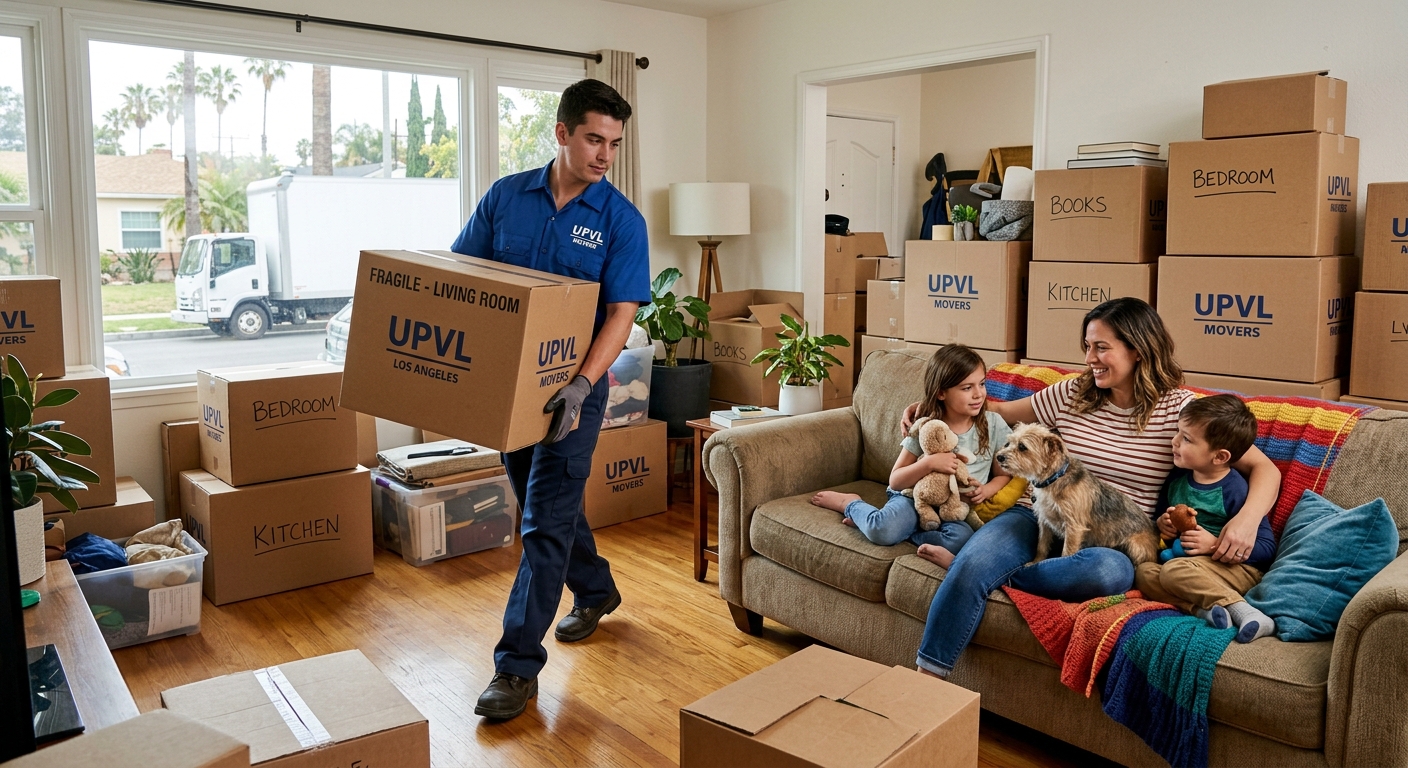
Choosing the right type of moving service can dramatically reduce stress for families. The more responsibility your movers take on, the more you can focus on keeping kids and pets comfortable.
Most moves within the Los Angeles metro area are considered local, often billed by the hour. Longer routes out of LA—such as from Los Angeles to Phoenix, Las Vegas, or the Bay Area—are usually priced differently and require more planning around delivery windows.
Reliable providers like local moving services and long-distance moving teams can help you decide what level of service makes sense for your family.
| Service Type | What It Includes | Best For |
|---|---|---|
| Standard local move | Truck, crew, loading, transport, and unloading. | Budget-conscious families who can handle packing themselves. |
| Full-service move | Packing, loading, transport, unloading, basic setup. | Busy households, parents with newborns, or tight timelines. |
| Partial packing | Movers pack only fragile or selected rooms. | Families who want help with kitchens, glassware, or decor. |
| Apartment/condo move | Specialized in elevators, loading docks, and tight corners. | High-rise living in DTLA, Koreatown, Westwood, etc. |
| Office or hybrid home office move | Careful handling of electronics and workstations. | Parents running businesses from home needing fast setup. |
Sometimes your new home in Los Angeles isn’t ready on the same day you must move out, or you’re remodeling and want to keep kids and pets away from construction. Short-term storage can bridge the gap.
Options include portable containers, self-storage units, and warehouse-style storage provided by movers via services similar to storage solutions.
| Storage Option | Pros | Cons |
|---|---|---|
| Portable container | Loaded at your home; convenient for gradual packing. | Street or driveway placement may be tricky in dense areas. |
| Self-storage unit | You control access and layout of your items. | You do the loading/unloading unless movers are hired. |
| Warehouse storage | Movers handle loading and inventorying your items. | Access usually by appointment; may have minimum terms. |
| Garage or spare room | Free if you have space at the new home. | Can clutter your home and stress kids and pets. |
Family moves in LA are influenced by several cost drivers: home size, access, distance, services, and timing. Understanding these factors helps you budget and decide what to outsource.
Most local moves in Los Angeles use hourly rates, while long-distance moves typically use weight or volume-based pricing. Here’s how that plays out.
| Pricing Type | How It Works | Family Considerations |
|---|---|---|
| Hourly (local moves) | You pay for labor and truck time by the hour, often with a minimum. | Decluttering and good prep can significantly reduce total cost. |
| Flat or written estimate | A set price based on an in-home or virtual survey. | Helps with budgeting but may include contingency buffers. |
| Interstate estimate | Based on shipment weight and distance, sometimes with add-ons. | Ask about binding vs non-binding estimates and delivery windows. |
| Additional services | Packing, crating, assembly, or stairs may be line items. | Useful to compare multiple estimates item by item. |
For interstate or long-distance moves starting or ending in LA, you may see terms like “binding” and “non-binding” estimate in your paperwork.
Ask which type of estimate you’re getting and clarify what happens if you add or remove items before moving day. For families, fewer surprises means less stress during an already busy time.
Choosing properly licensed and insured movers is especially important for families, because you’re not just moving furniture—you’re protecting kids’ belongings, pets’ supplies, and your household’s stability.
Los Angeles moves can be local within California or interstate between states. Each type requires different oversight:
Working with reputable companies like the ones represented in United Prime Van Lines Los Angeles services and Chatsworth helps ensure your mover is properly registered.
Movers don’t sell insurance, but they must offer valuation coverage, which determines how much you’re reimbursed if belongings are lost or damaged while in their care.
Families should think carefully about coverage for kids’ electronics, pet equipment, and important furniture pieces. You may also choose to purchase separate moving insurance from a third-party provider.
A Certificate of Insurance is a document from the mover’s insurer confirming liability and often workers’ compensation coverage to satisfy building or HOA requirements. Many LA high-rises and gated communities will require a COI.
To avoid last-minute delays:
Sorting COIs and elevator reservations early lets you focus on kids and pets instead of paperwork on moving morning.
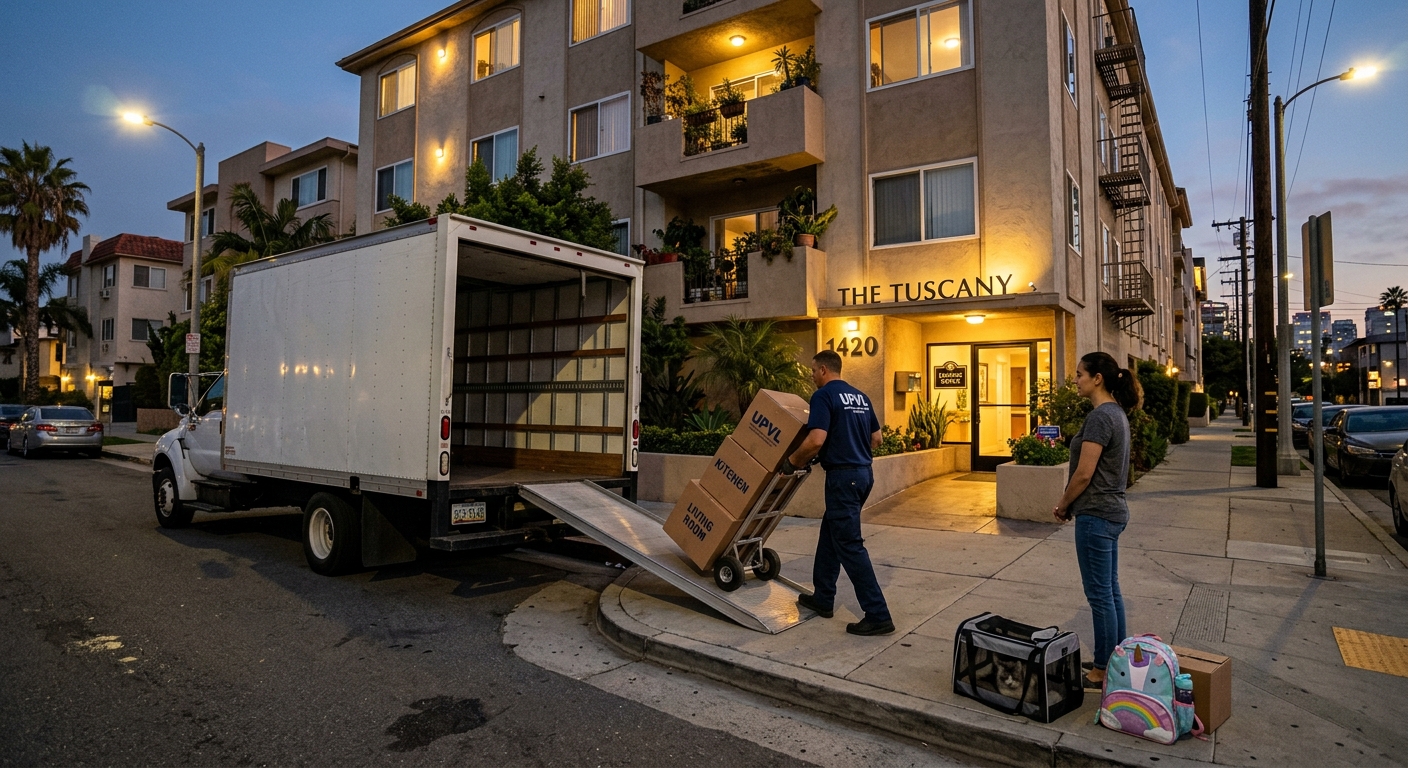
A solid moving checklist in Los Angeles keeps you on track and protects your kids and pets from last-minute chaos. Use this as a starting point and customize for your home and schedule.
| Timeframe | Family Tasks | Kids & Pets Focus |
|---|---|---|
| 8–6 weeks before | Get moving estimates, book mover, confirm dates. | Talk to kids about the move; note pet vet needs. |
| 6–4 weeks before | Declutter, donate, and sell items; order packing supplies. | Involve kids in sorting toys; update pet microchips. |
| 4–3 weeks before | Start packing rarely used rooms; confirm school transfers. | Vet visit and refills; acclimate pets to crates. |
| 3–2 weeks before | Confirm building rules, elevator reservations, COIs. | Plan child care and pet care for moving day. |
| 2–1 weeks before | Pack most non-essentials; label kids’ room boxes. | Set aside kids’ first-night boxes and pet supplies. |
| 1 week before | Finalize route and timing with movers; confirm parking plans. | Walk kids through the moving-day plan; review pet safe zone. |
| 2–3 days before | Finish packing, disassemble furniture, defrost freezer. | Keep kids’ routines as normal as possible. |
| Moving day | Protect floors, supervise load-out, do final walkthrough. | Set up pet safe zone; keep kids occupied and safe. |
Use this short list as a quick review the night before and morning of your move.
Keep pets in a quiet, closed room or with a trusted sitter on moving day, use familiar beds and toys, and stick to their normal feeding schedule. Use crates or carriers for transport, and avoid exposing pets to midday heat. For especially anxious animals, ask your vet about calming strategies a few weeks before your move.
Both options have trade-offs. Summer reduces conflicts with school schedules, but movers are busier and LA heat can be intense. Moving during the school year can preserve kids’ summer breaks but may interrupt routines. Many LA families choose late spring or early fall when weather is milder and calendars are slightly less hectic.
For most kids, 4–6 weeks’ notice works well. It’s long enough for them to process the change but not so long that they worry endlessly. Teens may need more time to say goodbye to friends and plan for new schools, while very young children usually do best with simpler, short-term explanations.
Use a secured crate or carrier placed in the back seat with a seatbelt or harness. Never let pets roam freely in the car; sudden braking or an open window can be dangerous. Plan your route to avoid peak traffic and make short stops for water and bathroom breaks if the drive is long.
Schedule your move for mid-morning or early afternoon on a weekday if possible and avoid big event days near stadiums or venues. Build extra time into your schedule so you’re not rushed. Keep snacks, water, and entertainment in the car for kids, and make sure pets have ventilation and breaks if the trip is more than an hour.
Include IDs, basic toiletries, medications, phone chargers, a change of clothes for everyone, kids’ favorite toys or comfort items, pet food and bowls, and simple snacks and drinks. Keep this bag in your car so it’s available even if the moving truck is delayed by traffic.
Reserve the freight elevator and loading dock well in advance, secure a COI from your mover, and arrange child and pet care off-site if the building will be hectic. Have one adult focus on supervising movers while another handles kids and pets, ideally away from busy corridors and stairwells.
For standard local moves, 4–6 weeks’ notice is ideal, especially for weekends or end-of-month dates. For larger homes, complex high-rise moves, or long-distance relocations, aim for 6–8 weeks. Shorter timelines are often possible, but flexibility on dates and times helps.
For California moves, the contact information is:
Moving with kids and pets in Los Angeles is a big project, but with the right planning it doesn’t have to be a nightmare. Prioritize safety, timing, and routines, and design your moving day around LA’s traffic patterns—not the other way around. With thoughtful packing, realistic schedules, and support from experienced local movers, your family can settle into your new LA home with far less stress and a lot more confidence.