Moving and storage can quietly eat your budget if you let them.
You book a unit “just in case,” keep it longer than planned, overpay for space you don’t really need… and suddenly storage is costing more than the items inside.
The good news: you don’t have to go that route. With a bit of planning, you can use storage as a tool, not a money pit. This guide walks through practical, budget-friendly storage strategies for moving – from decluttering and right-sizing your unit to smart timing, shared options and how we can help you avoid paying for things you don’t need.
The cheapest storage space is the space you never rent because you didn’t move unnecessary stuff.
Before you even look at storage prices, walk through your home with three piles in mind:
Ask yourself, item by item:
If the answer is “I don’t really care about this,” it doesn’t deserve a spot in your moving truck or your storage bill.
Budget trick:
Decluttering can easily shrink your storage size by an entire unit category – which can mean saving hundreds of dollars over several months.
Most people either overestimate and rent too big, or underestimate and end up with a game of Tetris that still doesn’t fit. Both cost money.
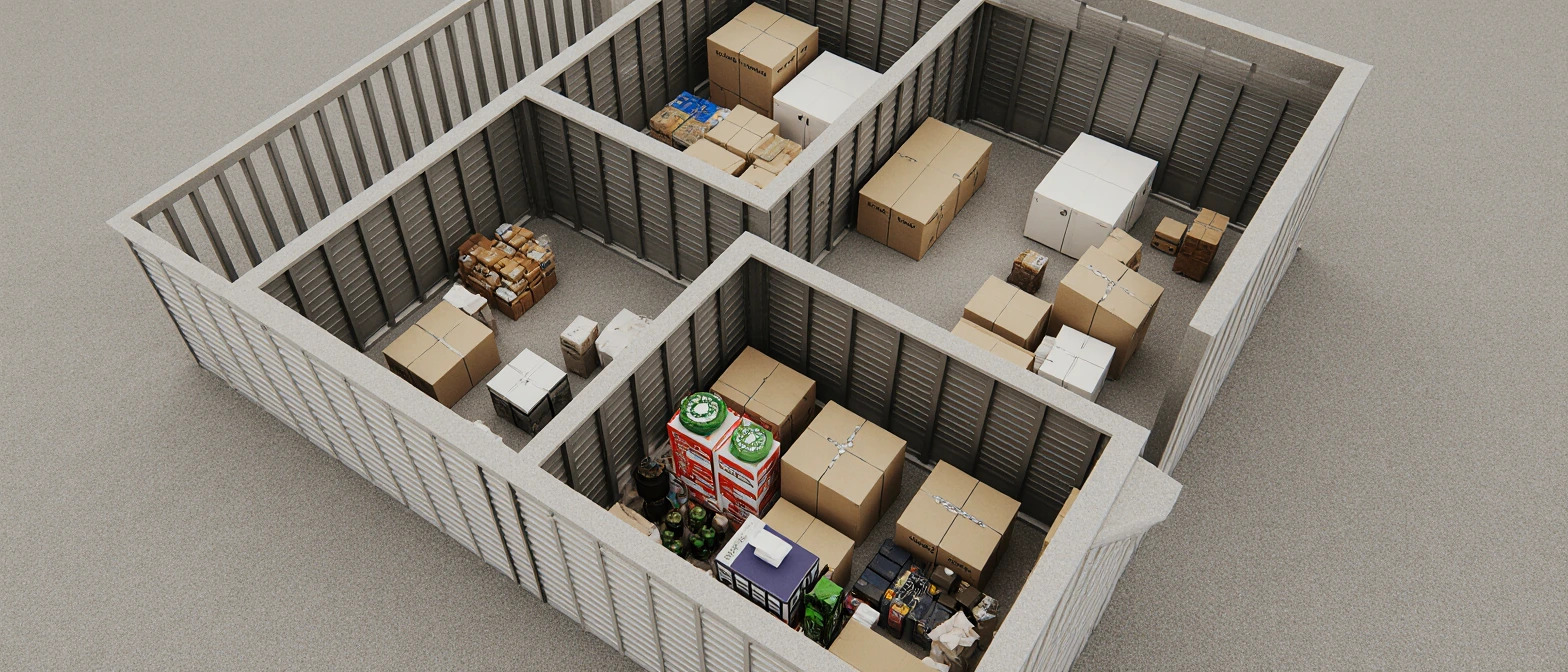
Instead of treating every box as a separate stack, make your larger items do double duty:
You’ll fit more into a smaller unit without just piling everything dangerously high.
You’re paying for volume, not just floor space. To get the most out of your unit:
If you’re planning to access the unit regularly, leave a narrow center aisle; otherwise, for short-term storage, you can pack a bit tighter.
If we’re moving you into storage, tell us that your goal is to minimize unit size and cost. Our crew can:
Sometimes the difference between a 10x10 and a 10x15 unit is just smart stacking and better boxes.
You don’t always need the biggest, fanciest unit. A few decision tweaks can bring the bill down without putting your stuff at risk.

Climate control is great, but it’s often overbought.
You probably don’t need climate control for:
You probably do want climate control for:
Budget move:
The perfect, super-central, shiny facility might not be necessary if:
Units slightly outside dense city centers can be noticeably cheaper. If you only plan to visit at move-in and move-out, you may not need the absolute closest spot.
Intro deals can be attractive, but always ask:
A slightly higher first month with a more stable long-term rate can be cheaper than a flashy promo followed by steep increases.
Drive-up units are super convenient, but if you’re:
you may save by choosing indoor upper-floor units that are less in demand.
On the flip side, if you need frequent access, paying a bit more for drive-up convenience can save time and frustration – and avoid damage from weaving heavy boxes through long hallways.
Full-service self-storage isn’t always the only option. Depending on your situation, you may be able to combine or replace it with lower-cost alternatives.
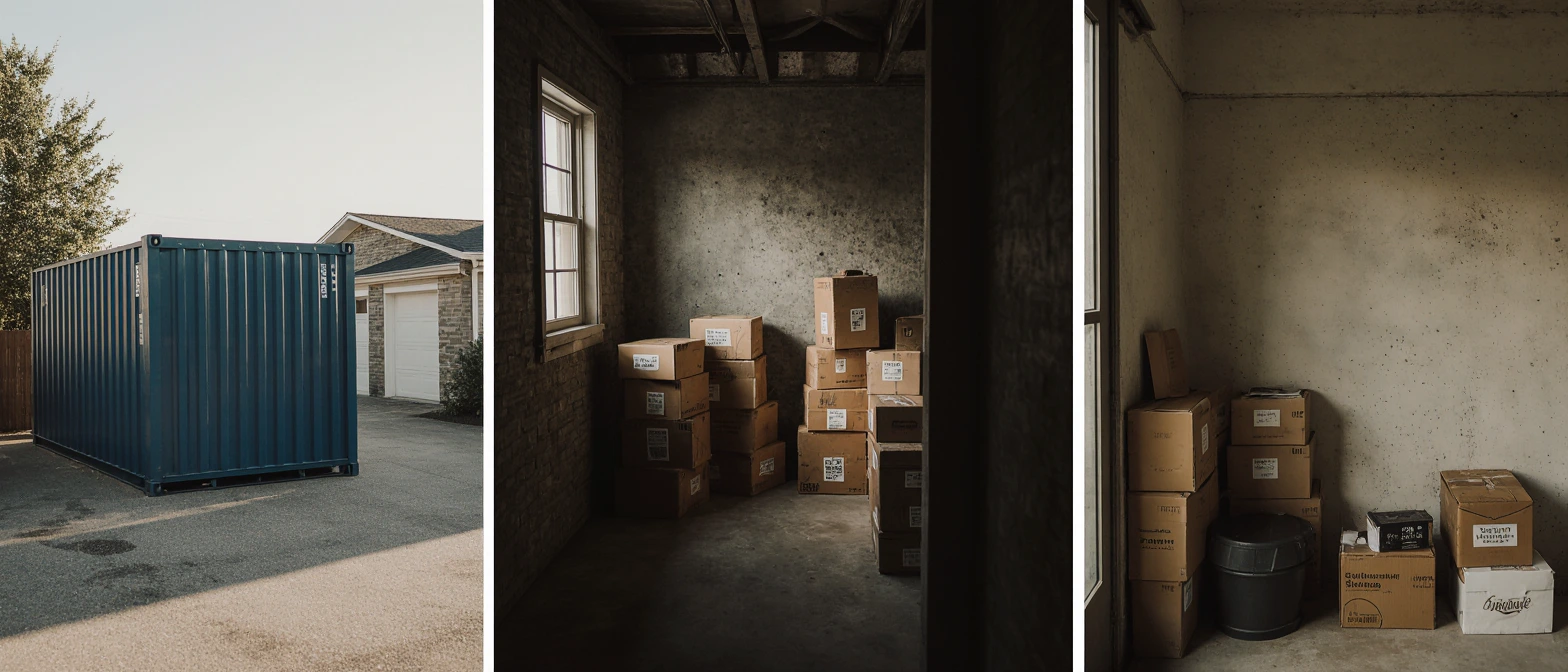
Portable storage containers are dropped at your home, you or movers load them, and then they’re:
They can be budget-friendly when:
The main savings comes from less handling – fewer times your items are moved, fewer hours of labor.
If you prefer, our team can load your container professionally so every inch is used and your items are properly protected inside.
If someone you trust has:
you might be able to store a few key items there for free or for far less than a full unit.
This works best for:
You still want to:
If you and a friend or relative both need storage around the same time:
To keep it sane:
This only works with someone you truly trust — storage units are legal responsibilities, not just extra closets.
Sometimes the cheapest “storage unit” is… your new place:
If you can delay or avoid renting a unit by using your new space strategically, that’s pure savings.
You can also save just by being smarter with timing.
Avoid paying for a storage unit weeks before you actually use it. Try to:
If you move with us, we can help plan truck arrival and storage check-in so you’re not paying for unused days or a second trip.
Long-term storage gets expensive when people say “just for a month or two” and leave things there for a year.
Before you sign:
Even if you keep it, you’ll make that choice on purpose, not by default.
Some storage facilities don’t prorate partial months. Others do.
Those “extra” months are often where storage shows its teeth on your budget.
Storage doesn’t have to be a financial black hole. When you plan your move with our team at United Prime Van Lines, we can help you:
You can still choose your own storage provider, level of climate control and location. We simply help you make those decisions with real-world experience instead of guesswork – and then do the heavy lifting to execute the plan.