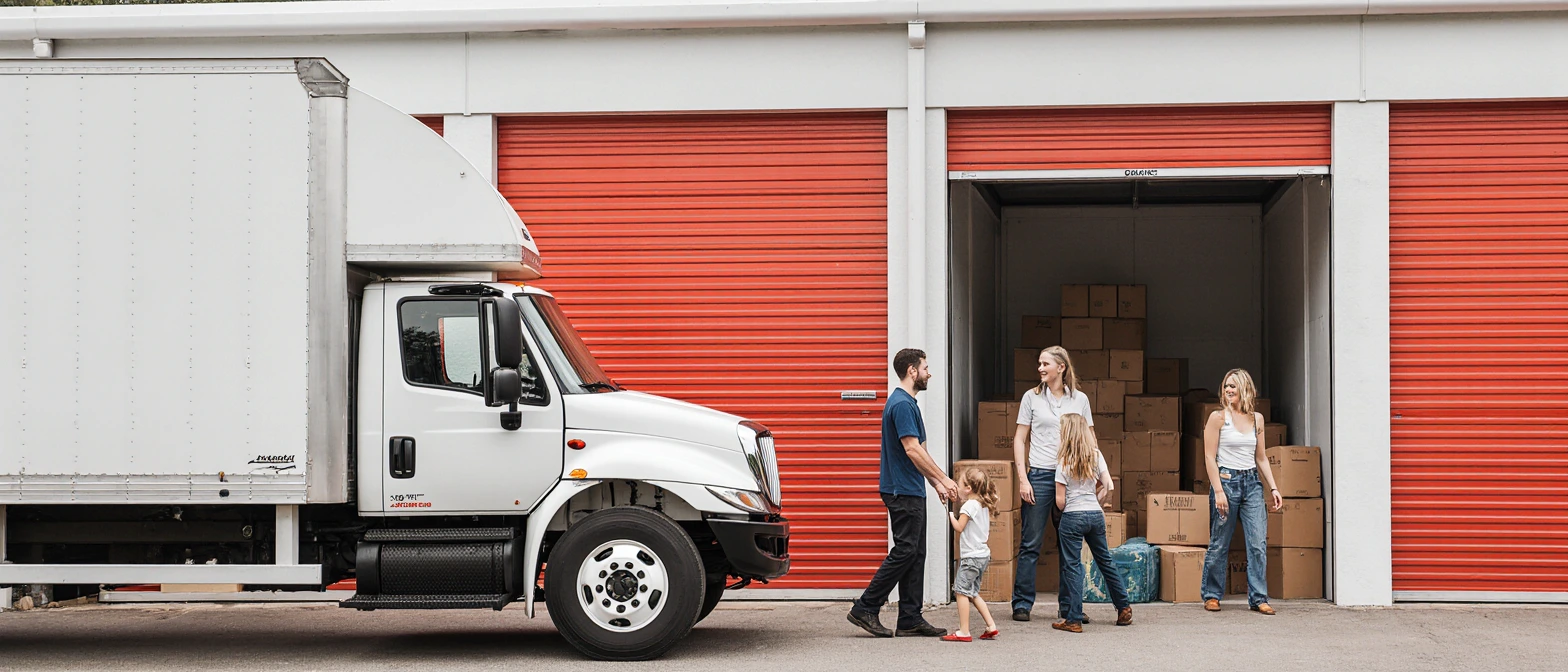
There are moves that go straight from old home to new home in one clean shot.
And then there are real-life moves: closing dates don’t line up, renovations run late, you’re downsizing, or you simply have more stuff than space.
That’s when storage shows up.
Storage can be a lifesaver in a complicated move – or a money-drain and stress magnet if you don’t manage it on purpose. In this guide, we’ll walk through:
- when you actually need storage,
- when you can skip it,
- what type of storage fits different situations,
- how to plan your move around storage,
- and how to keep your stored items organized instead of “lost in a unit somewhere.”
Why Storage Shows Up In So Many Moves
If every move were simple, you’d load the truck once, drive across town or across the country, and unload into your new home the same day.
In reality, a lot can get in the way:
- your lease ends before your new place is ready,
- your closing date shifts,
- your new home needs repairs or renovations,
- you’re combining households and don’t know what will fit yet,
- you’re moving in stages (job first, family later).
Storage is basically a pause button for your belongings. It lets you:
- move out on time,
- keep your items safe and in one place,
- buy yourself breathing room to sort, renovate or decide what stays.
The key is not just using storage, but using it with intention so it helps your move instead of making it more complicated.
Common Situations When Storage Really Makes Sense
Before you start shopping for units, it helps to know if your situation is one where storage is genuinely useful – or just “nice to have.”

1. Your move-out and move-in dates don’t line up
This is the classic one:
- You have to hand over keys on Friday…
- but you don’t get access to the new place until next week, or next month.
In that gap, storage lets you:
- move out on schedule,
- avoid overpaying by staying extra days,
- keep your belongings together and protected instead of scattered between friends’ garages.
2. Your new home isn’t ready to live in
Maybe you:
- want to refinish hardwood floors,
- plan to paint everything,
- are doing kitchen or bathroom work right away,
- discovered surprise repairs after an inspection.
Storing furniture and boxes gives contractors space to work and protects your belongings from dust, paint and damage.
You can move in stages:
- storage for most furniture,
- a lighter setup in one room so you can stay there,
- full move-in once the dirty work is done.
3. Downsizing or combining households
When you’re:
- moving from a house to an apartment,
- combining two homes into one,
- helping parents or relatives move into a smaller place,
you might not be ready to make permanent decisions on every piece of furniture and decor.
Storage gives you a transition period:
- keep extra items safe,
- figure out what actually fits and feels good in the new space,
- sell, donate or hand down pieces at your own pace.
4. Long-distance or cross-country moves in stages
For long-distance moves, storage often shows up when:
- one person moves first for work,
- the rest of the family follows later,
- housing is temporary at the beginning (short-term rental, extended-stay hotel, etc.).
In those cases, it’s common to:
- bring only the essentials into the first place,
- keep the rest in storage until you move into your “real” home,
- avoid hauling full-household volume into multiple temporary spots.
5. Life transitions: divorce, loss, deployment, big changes
Sometimes storage is less about logistics and more about emotional timing:
- divorce or separation,
- the loss of a loved one,
- military deployment,
- big career or life shifts.
Storage can give you time to:
- sort through belongings when you’re more ready,
- hold onto sentimental items without rushing decisions,
- keep important things safe while living in a smaller or temporary space.
In all of these moments, the right storage plan removes pressure instead of adding it.
How to Decide If You Really Need Storage (Or Can Avoid It)
Storage isn’t automatically the right answer. It costs money every month, and if you’re not careful, you end up paying to store things you don’t really want.
Ask yourself:
- Is there a real gap?
- Do my dates actually not line up, or am I just nervous and overplanning?
- Can I use my new place as storage?
- Could I temporarily dedicate one room, garage bay or basement corner as a “box zone” instead of renting a unit?
- Am I willing to declutter aggressively?
- If I get rid of things I don’t love or use, do I still need storage – or do we fit?
- Is this about logistics or comfort?
- Sometimes storage is a comfort blanket when what you really need is to make decisions.
If your honest answers still point to storage, great – you’ll use it on purpose, not out of fear.
Types of Storage During a Move (And When Each Fits)
Not all storage is just “a random unit with a lock.” Depending on your move, different setups can work better.
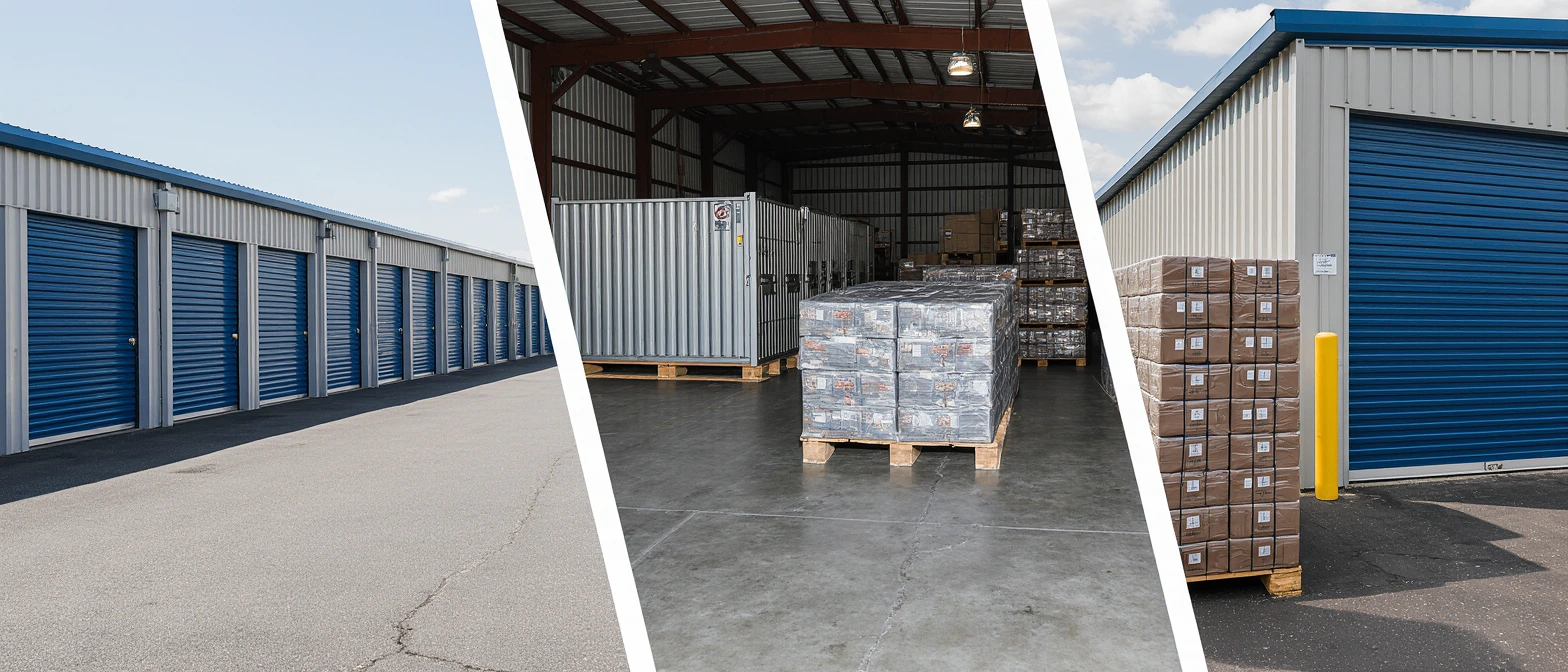
Option 1 – Traditional self-storage unit
What it is:
A storage facility where you rent your own unit by size (5x10, 10x10, 10x20, etc.), usually month-to-month.
Good for:
- flexible timing,
- having your own lock and access,
- people who may need to visit the unit occasionally,
- short- and long-term storage with predictable costs.
Best when:
- you’re between homes,
- you’re downsizing and don’t know yet what will stay,
- you want to manage access yourself.
Option 2 – Portable storage container
What it is:
A storage container delivered to your driveway. You or your movers load it, then the company:
- stores it at their facility, or
- delivers it to your new address later.
Good for:
- long-distance moves where you want to avoid double-loading,
- people who want to load/unload at their own pace,
- situations where you want storage and transport from the same container.
Best when:
- you’re okay planning around container drop-off and pickup windows,
- you don’t need frequent access while it’s in storage,
- you like the idea of your things staying in one sealed unit end-to-end.
Option 3 – Moving company storage
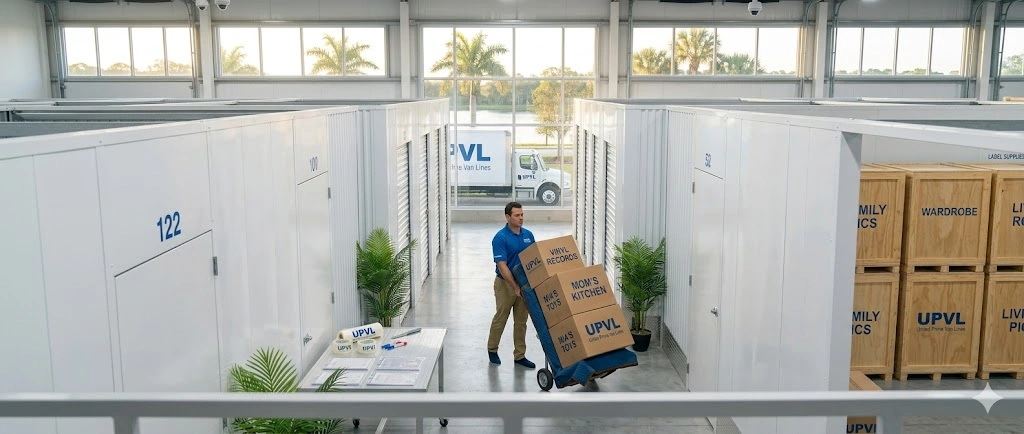
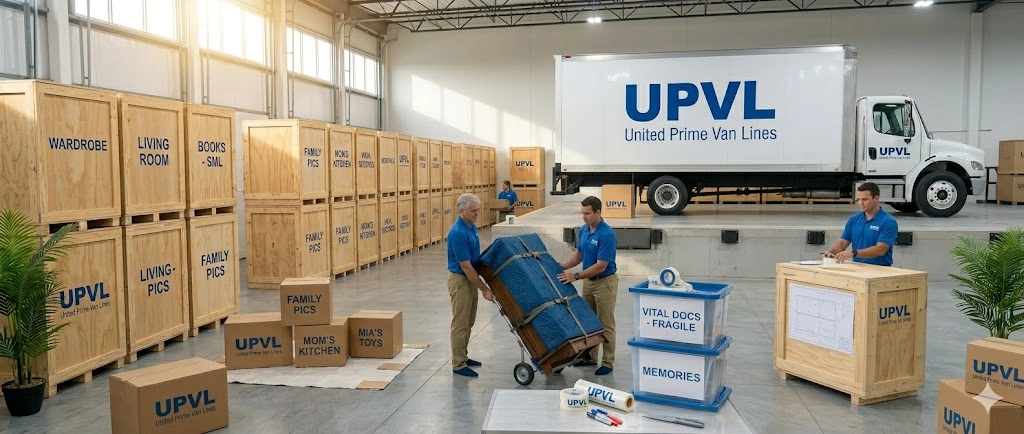
Some moving companies offer their own warehouse storage, sometimes called “vaulted storage” or “storage-in-transit.”
What it looks like:
- Your items are loaded into the truck,
- taken to a secure warehouse,
- stored in wooden vaults or on racks,
- then redelivered to your new home when you’re ready.
Good for:
- turnkey moves where you want one company to handle everything,
- long-distance or complex moves with flexible timing,
- people who don’t need to access their items while stored.
Best when:
- you want minimal handling and clear responsibility,
- you prefer one contract for moving + storage,
- you don’t need to visit the storage location in between.
If you move with our team at United Prime Van Lines, we can talk through what combination makes sense: self-storage, containers, or a more full-service storage arrangement as part of your move.
Planning Your Move Around Storage: Flow & Timeline
Once you know you’ll use storage, think in terms of flow: where items go and in what order.
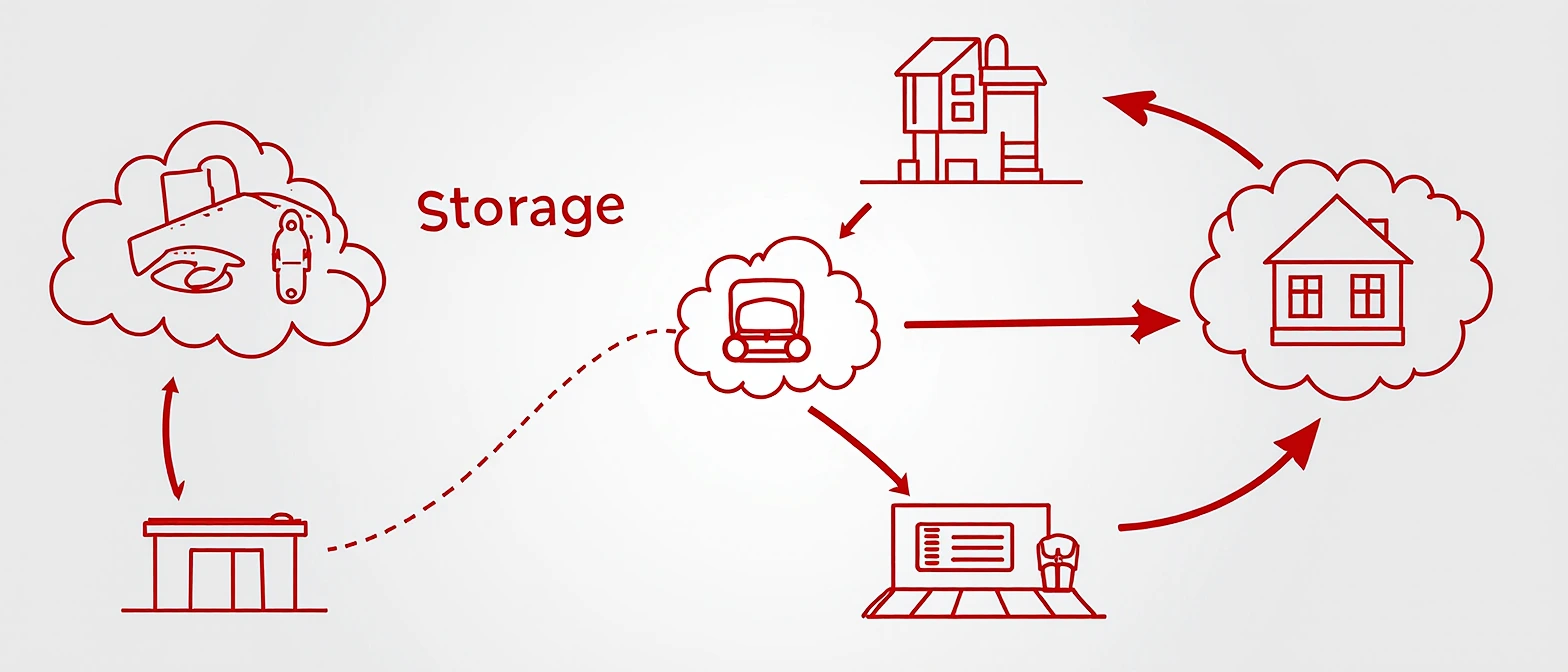
Common patterns:
- Everything → Storage → New Home
- Old home emptied into storage.
- Later, storage emptied into new home.
- Good for long gaps or uncertainty.
- Part → Storage, Part → New Home (Same Day)
- Essentials and current-use items go straight to new home.
- Extra furniture, seasonal items or “decide later” items go to storage.
- Good for downsizing, staging, or when new home has limited space at first.
- Multi-stage moves
- First move: essentials to temporary housing, rest to storage.
- Second move: storage to your long-term home.
- When we plan moves that include storage, we often load the truck in zones:
- one group of items destined for storage,
- another group for the new home,
- so the unloading order matches your plan and nothing ends up in the wrong place.
Deciding What Goes Into Storage (And What Definitely Shouldn’t)
A simple rule: if you’ll need it within the next 4–6 weeks, don’t put it in deep storage unless you’ll have easy access.
Things that usually go into storage:
- extra or bulky furniture,
- seasonal items (holiday decor, winter/summer gear),
- books, decor and non-essential collections,
- appliances you don’t need right away,
- boxes of “decide later” items when you’re downsizing.
Things that should usually stay out of storage (or stay easily accessible):
- important documents and IDs,
- medications and medical equipment,
- work laptops and equipment,
- daily-use clothes and shoes,
- kids’ essentials and favorite items,
- pet supplies,
- high-value jewelry or irreplaceable small items.
A good approach is to create three “lanes” while packing your home:
- New home now – daily life items, essentials, comfort items.
- New home later – boxes that can stay sealed for a while once they arrive.
- Storage – things you don’t need to see for weeks or months.
Color labels or colored tape work really well here: one color for storage, one for direct-to-new-home, one for essentials.
How to Keep Stored Items Organized (So They Aren’t “Gone”)
Storage shouldn’t feel like a black hole. A little organization now makes future you very, very happy.
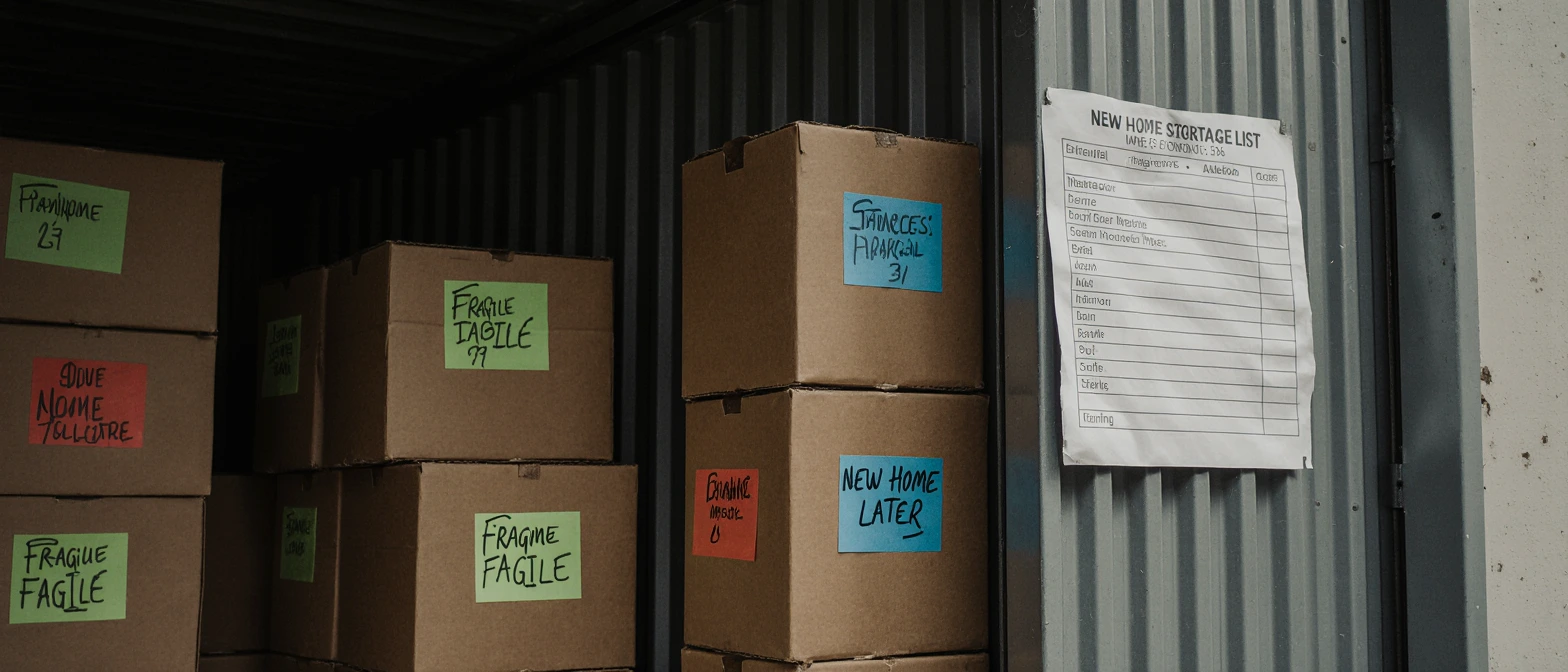
Practical tips:
- Label smart, not vague.
- “Kitchen – dishes & pans” is better than “Kitchen.”
- “Bedroom – winter clothes” is better than “Stuff.”
- Mark boxes that might be needed sooner.
- Use a star, different color or “Access Easily” note for items you might pull before move-in.
- Create a simple inventory.
- You don’t need a complex spreadsheet; a phone note like this works:
- Box 1 – “Books – office” – back left
- Box 2 – “Winter coats – bedroom” – front right
- Think about how the unit is loaded.
- Put rarely needed items at the back, more likely items toward the front.
- Keep a small aisle if you’ll visit the unit.
If we’re loading your storage, you can tell our crew, “These boxes may be needed; please keep them toward the front,” and we’ll build the layout around that.
Managing Storage Costs and Time Limits
Storage is incredibly helpful – but it’s also a monthly bill. Managing it is part of managing your move.
Keep it under control by:
- Setting a review date.
- When you rent a unit, decide:
- “In 60 or 90 days, I’ll come back, sort and either downsize or move out.”
- Decluttering again later.
- Once your new home is set up, you may realize you don’t need everything in storage. Bring a carload home, donate or sell another batch, then downgrade to a smaller unit.
- Avoiding “I’ll deal with it someday.”
- The most expensive storage is the kind you forget about. Put calendar reminders in your phone for check-ins.
- Knowing your real priority.
- If you’re paying high storage fees for low-value furniture, it may be cheaper long-term to sell now and buy something new later.
Storage should serve a clear purpose: giving you flexibility and breathing room while you transition – not becoming a permanent rented basement you’re scared to open.
How Our Moving Team Can Help You Handle Storage Smoothly
You don’t have to juggle all the logistics alone. When you move with United Prime Van Lines, we can help you:
- plan which items go to storage and which go straight to your new place,
- estimate how much storage space you’ll actually need,
- pack and protect items specifically for storage,
- load your unit efficiently and logically so it’s safe and accessible,
- coordinate timing between move-out, storage and move-in stages.
Instead of booking movers, storage and timelines separately and hoping they line up, you can treat the entire process as one connected move with storage built into the plan from day one.
Quick Checklist – When You Need Storage During a Move & How to Manage It
Use this as a fast reference:
- My situation truly calls for storage (dates, renovations, downsizing, or staged move).
- I’ve decided what type of storage fits best (self-storage, container, or mover’s storage).
- I separated items into:
- direct-to-new-home,
- new-home-later,
- storage.
- I labeled all boxes clearly, including what might be accessed sooner.
- I have a simple inventory and a rough layout plan for the unit.
- I know my storage budget and set a calendar reminder to review within 60–90 days.
- I have a clear plan for how items will move into storage and out of it (ideally with professional help).
If you can check these off, storage will work as a helpful “pause button” in your move – not a stress bomb waiting to explode months later.