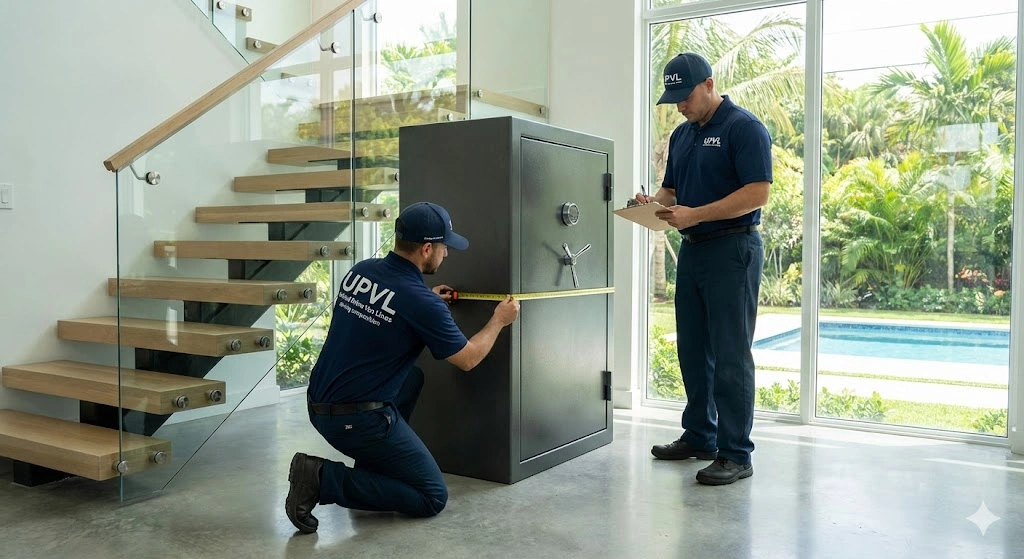
Moving has always had a reputation: cardboard everywhere, plastic wrap, gas-guzzling trucks, piles of junk going straight to the landfill. But more and more of our customers tell us the same thing:
“I need to move… but I also care about my carbon footprint. Is there such a thing as an eco-friendly move that’s not just marketing fluff?”
The honest answer: yes, but it takes a bit of intention and a little planning. And no, it doesn’t have to be insanely expensive or complicated.
In this guide, we’ll walk through what “carbon-neutral moving” really means, how we can reduce emissions in practical ways, and where carbon offsets come in. We’ll share what we do at United Prime Van Lines and what you can do on your side so that, together, your move has as small a climate impact as possible.
What “Carbon-Neutral Moving” Actually Means (No Buzzwords, Just Reality)
Let’s clear up the big phrase first: carbon-neutral moving.
In simple terms, a carbon-neutral move means:
- We reduce emissions wherever we realistically can (packing, transport, fuel use, waste).
- Whatever emissions are left over, we measure and offset by supporting verified climate projects (like reforestation, clean energy, or methane capture).
So the order matters. A real carbon-neutral mindset looks like:
- First: use fewer materials, drive fewer miles, burn less fuel.
- Then: neutralize what we couldn’t avoid.
If someone says “carbon-neutral” but all they do is slap on offsets without changing anything? That’s greenwashing. We’re not interested in that, and chances are, neither are you.
Where Do Moving-Related Emissions Come From?
When we look at a typical move — whether it’s a local relocation in South Florida or a long-distance move across the country — the main carbon “hot spots” are pretty predictable:
1. The Moving Truck and Fuel
This is the big one.
- Diesel or gas burned on the road = direct CO₂ emissions.
- Empty or half-empty trips mean wasted fuel.
- Detours or poor route planning = extra miles, extra emissions.
For long-distance relocations (say, Florida to California or New York to Texas), transportation is usually the largest single part of your carbon footprint.
2. Packing Materials and Boxes
- Single-use cardboard boxes that get tossed after one move
- Plastic wrap, tape, bubble wrap, foam peanuts
- Cheap, flimsy materials that can’t be reused
The production and disposal of all that stuff add up. It’s often not as big as fuel use, but it’s an easy area to improve.
3. Furniture, Appliances, and Stuff You Don’t Keep
Every item you move has an “embedded” carbon footprint: energy and resources used to make it, ship it, store it.
If half your garage ends up on the curb the day before moving, that’s a lot of wasted embodied carbon. The more we move only what you actually use and love, the lower your climate impact.
4. Extra Trips and Poor Planning
A few common traps:
- Multiple last-minute store runs to grab more boxes
- Several car loads back and forth on top of the truck
- Movers doing split trips because everything wasn’t ready
More trips = more fuel, more emissions. So much of this can be avoided just with smarter planning up front.
Our Approach: Start With Reducing, Not Offsetting
When we talk about carbon-neutral moving with our customers, we always start with one thing: let’s create less carbon in the first place.
Here’s how we think about it together with you.
Smarter, More Efficient Loads
We plan the move so that:
- Your truck is loaded efficiently (no big air pockets)
- We minimize “partial loads” whenever possible
- We plan routes to cut down on unnecessary miles, especially for long-distance moves
With long-haul relocations, even improving fuel efficiency by 5–10% makes a meaningful difference. You don’t see this part directly, but you benefit from less fuel use and, often, lower cost.
Fewer Boxes, Fewer Trips, Less Waste
We encourage you to bring us in early — when you’re still deciding what to keep and what to let go. Why?
- Every box you don’t move is less weight to haul and less fuel to burn.
- Decluttering ahead of time often means a smaller truck or fewer hours.
- Donating or selling items locally avoids moving things you’ll discard later.
We can even help you plan which categories to tackle first (like heavy, low-value items that cost more to move than to replace).
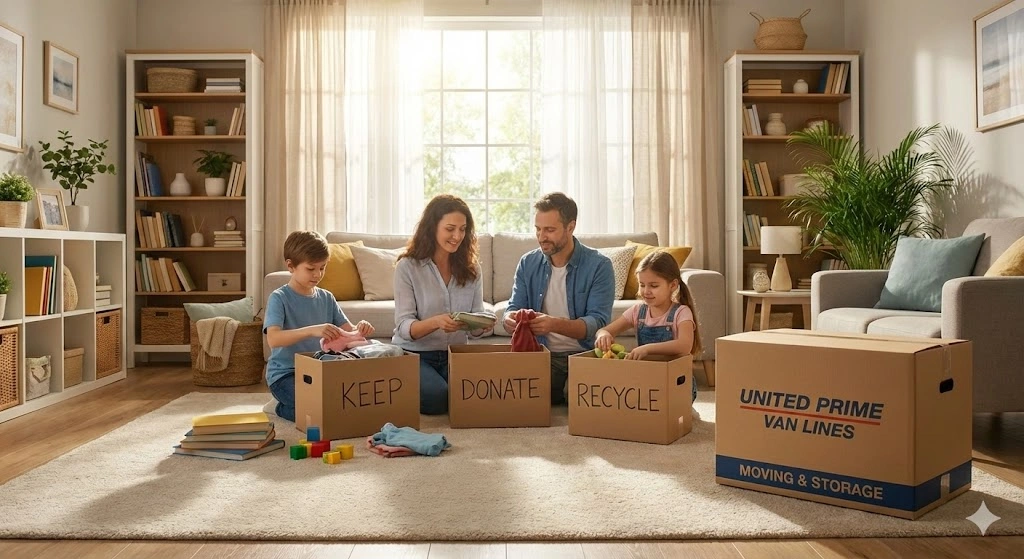
Your Side of the Equation: Practical Ways to Make Your Move Greener
You actually have a lot of control over how eco-friendly your move is. Let’s walk through what you can do — and how we can support you in each step.
Step 1 – Declutter With a Carbon Mindset
Instead of just asking “Do I want this?”, try:
- Would I buy this again today?
- Is this worth paying to move, fuel-wise and money-wise?
- Could someone else use this more than I do?
Carbon-smart decluttering looks like this:
- Donate usable items to local charities, shelters, or thrift shops.
- Sell higher-value items via Facebook Marketplace, OfferUp, or local consignment.
- Recycle electronics, scrap metal, cardboard, and textiles where possible.
- Avoid throwing away good items just because you’re in a hurry.
If you’d like, we can help you build a decluttering plan by category (kitchen, garage, closets) and by priority (heavy vs light, valuable vs replaceable). When we schedule your move at United Prime Van Lines, we can talk through this on the phone or via video and estimate how much you can realistically cut down.
Step 2 – Choose More Sustainable Packing Materials
You don’t have to hit perfection here. Just make a few better choices.
Some options:
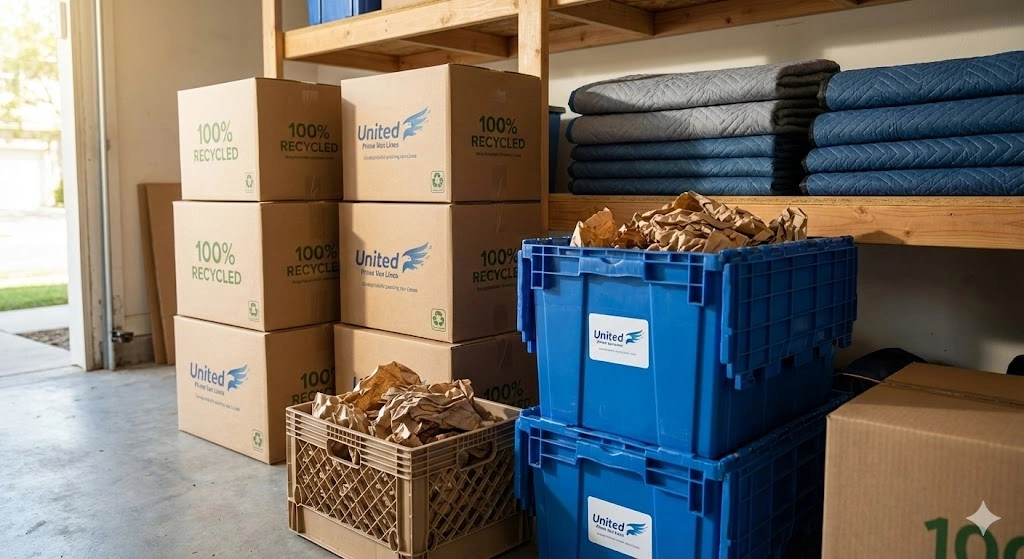
- Reused or reclaimed boxes
- Ask local grocery, liquor, or retail stores for clean used boxes.
- Reuse old boxes from neighbors, family, or office moves.
- Reusable containers
- Plastic bins you already own
- Rented reusable moving crates if available in your area
- Eco-friendly padding
- Use towels, blankets, linens, and clothing as cushioning
- Choose recycled paper instead of virgin bubble wrap when possible
- Avoid foam peanuts unless absolutely necessary
When we handle packing for you, we can:
- Use strong boxes that can be reused multiple times
- Reduce unnecessary plastic wrap by properly padding and securing furniture
- Keep inventory of packing materials so waste stays low
Step 3 – Think About Timing and Distance
Some timing choices can lower overall emissions:
- Combine trips whenever possible
- If you’re doing a partial DIY move in your car and we’re doing the remainder, we can help you plan so you’re not driving back and forth unnecessarily.
- Avoid peak traffic hours if it’s flexible
- Trucks idling in bumper-to-bumper traffic burn fuel without going anywhere.
- Choose the right origin/destination storage
- If you need storage, using one location instead of splitting between several reduces transportation miles.
When you book with us, we’ll talk through your schedule. Sometimes a minor shift in timing makes the route cleaner and quicker — which is good for your budget and your carbon footprint.
How We Can Reduce Emissions on Our Side as Your Movers
We don’t expect you to carry the whole burden of “going green.” A lot of the heavy lifting (literally and figuratively) is on us. Here’s what we focus on at United Prime Van Lines.
Route Optimization and Load Planning
Behind the scenes, we:
- Use smart route planning to minimize mileage between pickup and delivery.
- Combine compatible shipments when it makes sense (for certain long-distance moves) so the truck runs closer to full capacity.
- Reduce deadheading (trucks driving empty) whenever possible.
From your perspective, you see:
- Clear ETAs, realistic schedules
- Fewer surprises and detours
- Often, a more competitive price because we’re using our trucks efficiently
From the planet’s perspective, it just means less fuel burned.
Modern Equipment and Maintenance
A well-maintained truck emits less and uses less fuel. It’s that simple.
We focus on:
- Regular engine and tire maintenance
- Fuel-efficient driving practices
- Using the right size truck for the job so we’re not moving a lightly loaded giant when a smaller vehicle would do
We don’t promise “zero emissions” trucks (we’re not there yet as an industry), but we do commit to running what we have as responsibly and efficiently as we can.
Smarter Packing and Protection
We train our crews to pack in ways that:
- Cut down on unnecessary plastic wrapping
- Use reusable moving blankets and durable materials as much as possible
- Protect your items so they make it in one piece — because replacing broken items has its own environmental cost
Every broken dresser or destroyed TV that has to be replaced means more manufacturing, shipping, and waste. So careful handling is an environmental practice, too.
Offsetting the Emissions We Can’t Avoid
Even if we all do everything right, moving will still create some emissions. Trucks have to drive. Materials need to be produced. People need to relocate.
This is where carbon offsets come in.
What Is a Carbon Offset, In Plain English?
A carbon offset is a way to “balance out” the emissions from your move by funding a project that:
- Reduces emissions elsewhere (like solar or wind projects), or
- Removes CO₂ from the atmosphere (like reforestation, soil carbon, or certain technologies)
For example, if your move creates 1 ton of CO₂, and we fund 1 ton of CO₂ reduction or capture through a verified project, the net impact is considered “neutral.”
How We Can Build Offsets Into Your Move
Here’s how we typically approach this with customers who want a carbon-neutral relocation:
- Estimate emissions We use distance, estimated weight/volume, and truck type to approximate the carbon footprint of your move.
- Offer an offset option We can build a small additional line into your quote dedicated to carbon offsets that match your estimated emissions.
- Use verified projects We focus on established, third-party-verified projects (e.g., projects registered with recognized carbon programs) so we’re not just buying feel-good certificates.
- Share what we supported For customers who request it, we can share details of the type of project your offset supports (like forest protection or renewable energy).
The cost to offset one move is usually quite reasonable compared to the total cost of the relocation, especially on long-distance moves.
Local vs Long-Distance: How Carbon-Neutral Strategies Change
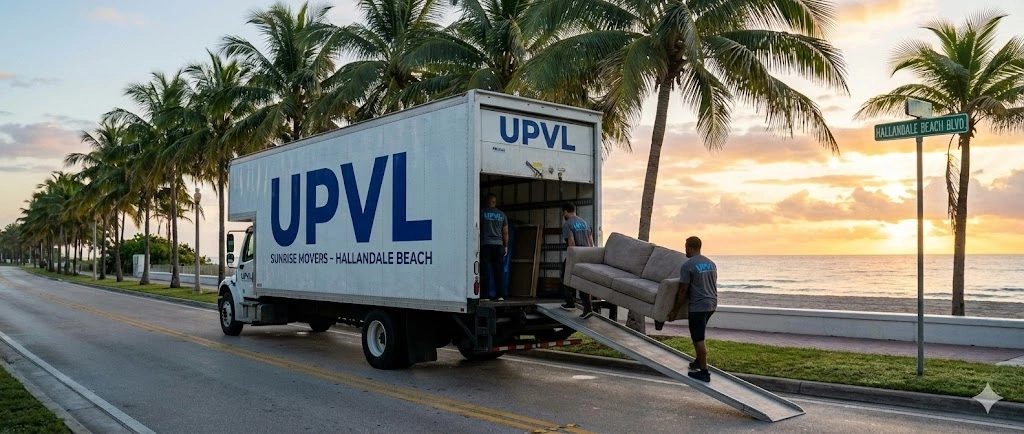
Carbon-neutral moving doesn’t look identical for a local Hallandale Beach move and a cross-country relocation to, say, Chatsworth, CA. The basics are the same, but the focus shifts.
Local Moves (Within the Same Metro Area)
For local moves, like around South Florida:
- Transportation distances are short, so decluttering and packing choices become a bigger chunk of the carbon picture.
- Traffic and timing matter more (South Florida congestion is real).
- We can sometimes avoid multiple trips by doing a solid pre-move walkthrough and planning the load carefully.
For a local move, you can make a big impact by:
- Really leaning into donating and selling what you don’t need.
- Borrowing or renting reusable crates if possible.
- Making sure everything is ready to go when the truck arrives, so there are no delays or return trips.
Common Myths About Eco-Friendly Moving (And What’s Actually True)
We hear a lot of assumptions when people start looking into carbon-neutral moving. Let’s clear up a few.
“Going Green With My Move Will Cost a Fortune”
Not necessarily.
In reality, some of the most eco-friendly choices actually save money:
- Moving fewer items means smaller loads and cheaper moves.
- Using reused boxes or containers can cut packing costs.
- Planning a single, efficient move beats multiple trips in your own car (time and gas).
The extra cost mainly comes in if you:
- Add premium eco materials for every single box, or
- Purchase a full carbon offset package (usually still a small piece of the whole bill)
We’ll be transparent about what’s optional, what saves money, and what actually adds cost so you can decide what feels right.
“If I Use Cardboard Boxes, My Move Can’t Be Carbon-Neutral”
Cardboard isn’t the enemy.
- Cardboard is often recyclable and reusable.
- The real waste is when boxes get used once and instantly trashed.
You can absolutely have a carbon-neutral move that uses cardboard — especially if:
- You reuse boxes from previous moves or local businesses.
- You recycle them properly afterward, or give them to someone else.
Carbon-neutral is about the whole picture, not one material.
“Offsets Are Just a Guilt Pass”
Offsets can be meaningless if they’re low-quality or used as an excuse not to reduce emissions.
But good offsets, chosen carefully and used after we’ve already cut emissions where we can, are a real tool. We treat them that way:
- Reduce what we can through better planning, lighter loads, and smarter packing
- Offset the remaining emissions through vetted projects
We don’t claim offsets magically fix everything, but they’re a legitimate part of balancing the climate impact of something like a long-distance move, which inevitably uses fuel.Long-Distance Moves (State-to-State or Cross-Country)
For longer relocations (Florida to California, New York to Florida, etc.):
- Truck fuel use dominates the carbon footprint.
- Route planning, load efficiency, and offsets become especially important.
- Sometimes we can combine shipments going similar directions to reduce total fuel usage.
You can help by:
- Giving us accurate inventories so we can pick the right truck and avoid extra vehicles.
- Sticking to agreed dates so we can coordinate loads efficiently.
- Considering a carbon-offset add-on to fully balance out the long-distance travel.
On our side, we’ll prioritize the cleanest route and the best load utilization we can, then help match the remaining emissions with meaningful offset projects if you choose that.
What a Carbon-Conscious Move With Us Can Look Like (Step by Step)
To make this concrete, let’s walk through how we might handle a move where carbon-neutrality is a priority.
1. Initial Conversation
You tell us:
- Where you’re moving from and to
- Rough timeline
- What matters most: budget, speed, eco-friendliness, or a balance
You also let us know you want to keep your carbon footprint as low as possible.
We respond by:
- Explaining your best options: decluttering guidance, packing plans, route options
- Giving you a sense of how much an offset would cost, if you’re interested
- Building a moving quote that lines up with your priorities
2. Pre-Move Planning and Decluttering
We work with you to:
- Identify the heaviest, bulkiest items that might not be worth moving
- Suggest donation centers or resale routes in your area
- Estimate how much volume and weight we’ve reduced by leaving certain items behind
This step alone often makes the biggest difference.
3. Packing With a Lighter Footprint
If we’re doing the packing:
- We bring durable materials, reuse where safe, and avoid over-wrapping.
- We protect your belongings well so nothing gets damaged or wasted.
If you’re doing part or all of the packing:
- We share best practices so you can use what you already own (towels, blankets, containers) as much as possible.
- We help you avoid over-buying single-use supplies you won’t need again.
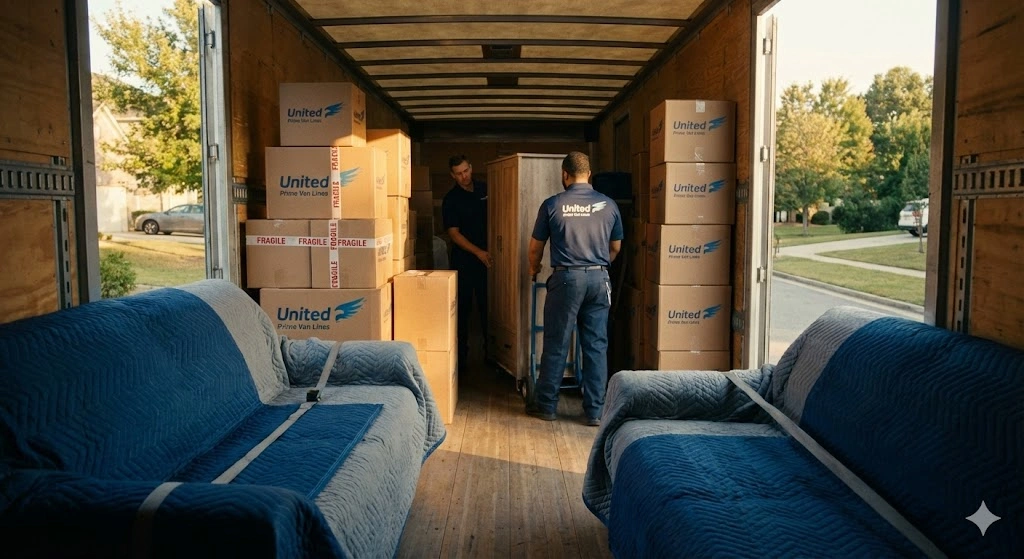
4. Efficient Loading and Transport
On moving day:
- Our crew loads the truck so space is used efficiently and items are stable.
- We follow the most direct, practical route, avoiding unnecessary detours.
- We avoid extra trips, delays, or idling as much as possible.
For long-distance moves, we also:
- Plan the drive with fuel efficiency and safety in mind.
- Make sure the truck isn’t moving half-empty if it can be combined with another compatible load.
5. Offsetting What’s Left (If You Choose)
After we’ve minimized what we can, we:
- Use distance and weight to estimate total emissions from your move.
- Apply the carbon offset option you chose at booking.
- Allocate that offset to vetted projects designed to balance that footprint.
You end up with a move that’s either low-carbon or effectively carbon-neutral, depending on how far you want to go
How United Prime Van Lines Fits Into Your Carbon-Neutral Plan
We see ourselves as your partners in this, not just your movers.
Here’s what we bring to the table if you’re trying to move responsibly:
- Honest conversations about what’s realistic for your budget and timeline
- Guidance on decluttering, packing choices, and route decisions that lower emissions
- Operational efficiency that cuts waste, fuel use, and unnecessary trips
- Offset options so you can choose to neutralize whatever emissions remain
We’re based in Hallandale Beach, FL and serve a lot of customers across South Florida and beyond, but this approach works whether you’re:
- Moving locally a few blocks away
- Relocating from Florida to California
- Or going from one side of the country to the other
If your goal is to feel good about how you move, not just where you’re going, we’re right there with you.
Making Your Next Move Lighter On the Planet
You don’t need a perfect, zero-impact lifestyle to care about the footprint of your move. You just need to make a few better decisions — and work with a team that respects those decisions.
To move in a more carbon-neutral way, we can:
- Help you move less by planning a serious pre-move declutter.
- Support smarter packing using reusable and recycled materials.
- Run an efficient move with optimized routes, right-sized trucks, and careful loading.
- Offer offset options so you can balance out the emissions we can’t avoid.
If you’re planning a move and you want it to be as kind as possible to the climate — without making your life harder — we can walk through your options, step by step, and build a plan that matches your values and your budget.
You focus on the fresh start in your new home. We’ll focus on getting you there safely, smoothly, and with a lighter footprint.