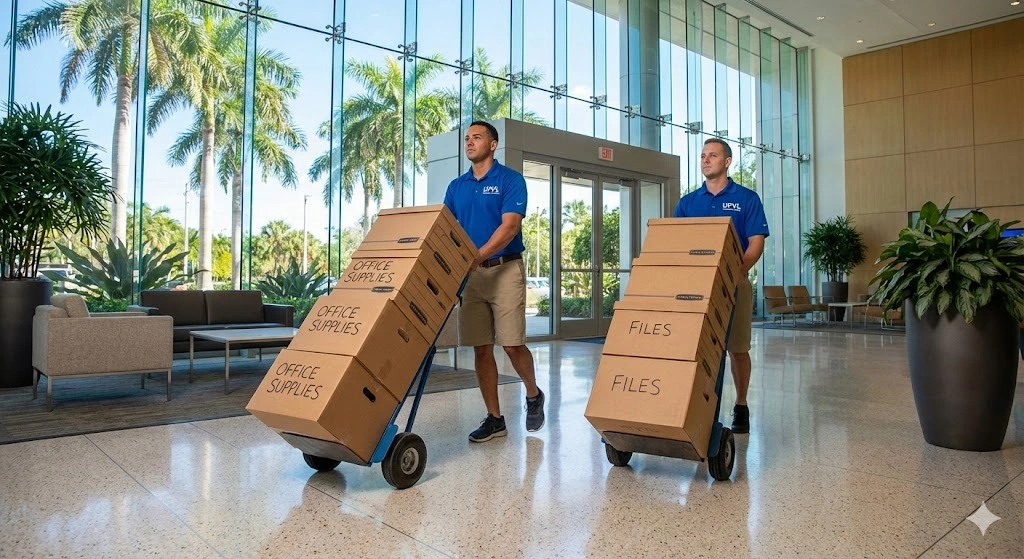
Moving a business in South Florida is a whole different animal compared to a simple apartment or house move. You’re juggling:
- Leases and landlords.
- IT and servers.
- Staff schedules.
- Customers you don’t want to lose for even one day.
- Building rules, loading dock hours, and elevator restrictions.
- And, of course, South Florida traffic and humidity.
I’ve helped relocate offices, showrooms, medical practices, and warehouses all over Hollywood, Aventura, North Miami Beach, Hallandale Beach, Miami, and beyond, and I can tell you this:
A commercial move is 80% logistics and planning, and only 20% actually lifting boxes.
In this guide, I’ll walk you through how I approach commercial moving logistics in South Florida step by step, what usually goes wrong (and how we prevent it), and what it looks like when you bring in a team like United Prime Van Lines to handle the heavy lifting and the behind-the-scenes coordination.
Where Commercial Moving in South Florida Starts: Time, Access & Rules
The first thing I look at with any commercial client isn’t the furniture or the number of desks. It’s time and rules.
- When do you absolutely need to be out of your current space?
- When can you get into the new space?
- What hours do both buildings allow movers?
- Are there union requirements or COI (Certificate of Insurance) requirements?
- How much downtime can you afford?
A law firm in Hollywood, FL has totally different needs than a small retail store in North Miami Beach. One might need a weekend-only move, while another might accept a phased move over two weeks.
We usually break the time planning into three core blocks:
- Pre-Move Window: Packing, labeling, IT prep, furniture disassembly, and purging old files.
- Move Window: Actual loading, transport, unloading, and setup.
- Post-Move Window: Unpacking, adjustments, and “last-mile” details like reconnecting equipment and removing debris.
If we don’t get that clear, everything else becomes chaos.
Site Walkthroughs: The Unsexy Step That Saves the Day
Before I design a move plan, I insist on walking both locations whenever possible: the space you’re leaving and the space you’re moving into.
Here’s what I’m looking for:
- Loading Areas: Can our truck get close to the entrance, or are we dealing with a parking garage and tight turns?
- Elevators: Freight elevator or passenger only? Are there weight limits? Do we need padding or key access?
- Hallways & Doors: Are there narrow turns, glass walls, or doors that need to be removed temporarily?
- Stairs: Are we doing stairs at any point (storage areas, mezzanines)?
- Floor Protection: Do we need Ram Board, Masonite, or plastic wrap to protect carpet or marble?
- Building Rules: Move hours, noise rules, and COI requirements.
In South Florida, especially in buildings near Hallandale Beach and Aventura, property managers are very strict. I’ve seen moves completely stalled because a building didn’t receive a COI in time.
With United Prime Van Lines, we handle all that admin so you’re not stuck playing middleman the day before the move. If you want to see what we offer for businesses, our office and commercial moving services are laid out here.
Building a Move Timeline That Doesn’t Kill Your Business
One of the biggest differences between residential and commercial moving is downtime cost. If your office is down, you’re not just “inconvenienced”—you might be losing thousands per day.
When I put together a timeline, I’m thinking:
- What must stay live until the very last minute?
- What can move early?
- What can be moved off-hours without affecting operations?
Example 1: Professional Office in Hollywood, FL
- Week 1 (Before Move): We deliver crates and labels, employees pack personal items, we disassemble rarely used workstations, and move archive files to storage.
- Friday Night: We come in after business hours and start dismantling main workstations and conference rooms.
- Saturday: Main move—load, transport, unload, and set up at the new location.
- Sunday: IT finishes wiring; our crew wraps up furniture placement.
- Monday Morning: Staff walks into an office that’s 80–90% functional.
Example 2: Retail Space in Aventura
- Night Move: Store closes at 7 PM; movers arrive at 7:15 PM. Fixtures, racks, and inventory are pre-labeled. We load and transport overnight.
- Next Morning: Inventory and main fixtures are in place; the store opens with limited hours but still operates.
The South Florida Factor: Traffic, Weather & Building Culture
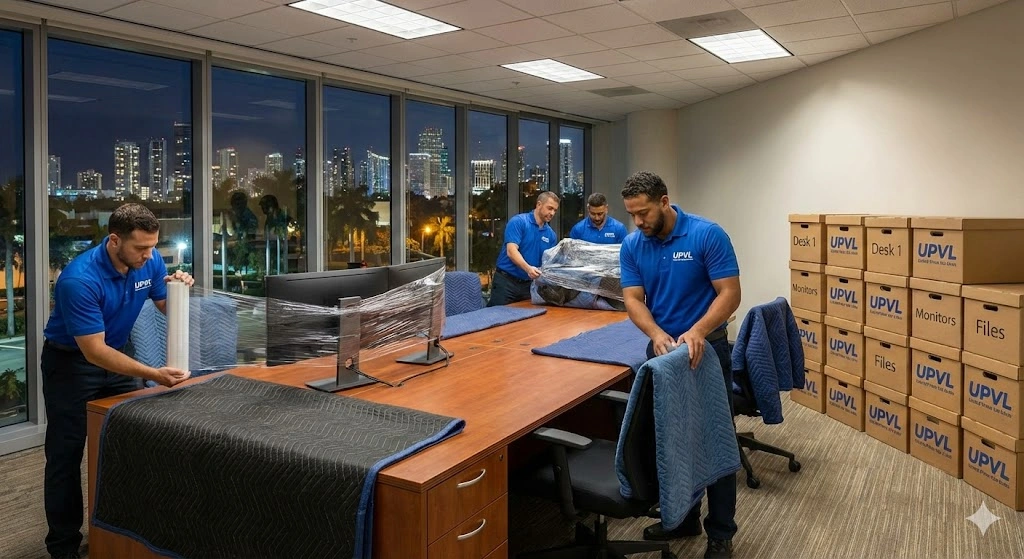
Moving in South Florida means dealing with I-95, sudden thunderstorms, and high-rise rules.
- Traffic & Timing: We schedule load and unload times around rush hours. I’d rather start at 7 AM or 7 PM than have a truck stuck on US-1 burning your clock.
- Weather & Humidity: We use extra wrapping against moisture and load as close to the door as possible to prevent quick temperature swings. If a major storm hits, we have a backup plan ready—especially if you need short-term storage to bridge the gap.
- Building Culture: Many corporate buildings only allow moves after 5 PM and demand floors be fully protected. We coordinate with property management directly to ensure security has our approvals.
Office Layout & Inventory: Planning What Goes Where
If you move from a 10,000 sq ft open office in North Miami Beach to a 7,000 sq ft suite in Aventura, you can’t just copy-paste your old setup.
Before move day, we help you with:
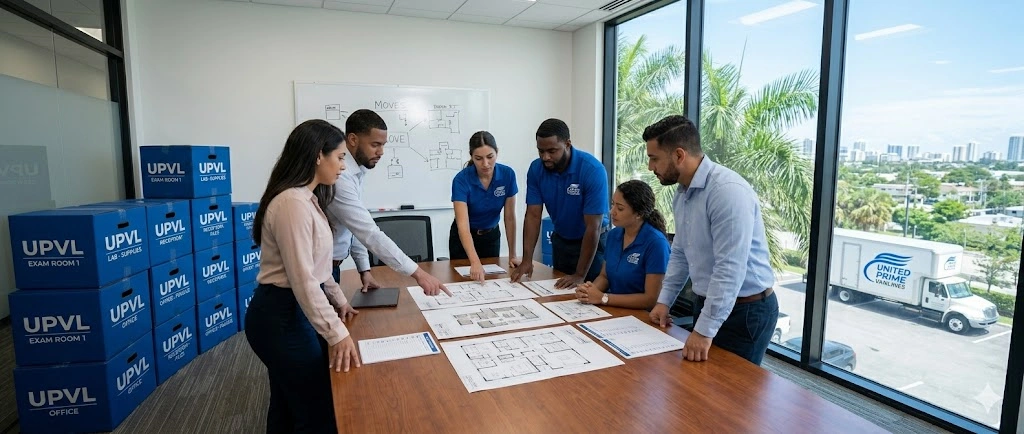
- Floor Plan Review: Where do departments go? What needs privacy?
- Priority Zones: Identify "A" zones (must be operational immediately, like IT) vs "C" zones (archive storage).
- Furniture Decisions: What are we keeping, donating, or trashing?

Labeling and Color-Coding: The Secret to Not Losing a Single Box
In an office, losing one IT box can freeze a whole department. Here’s our South Florida labeling system:
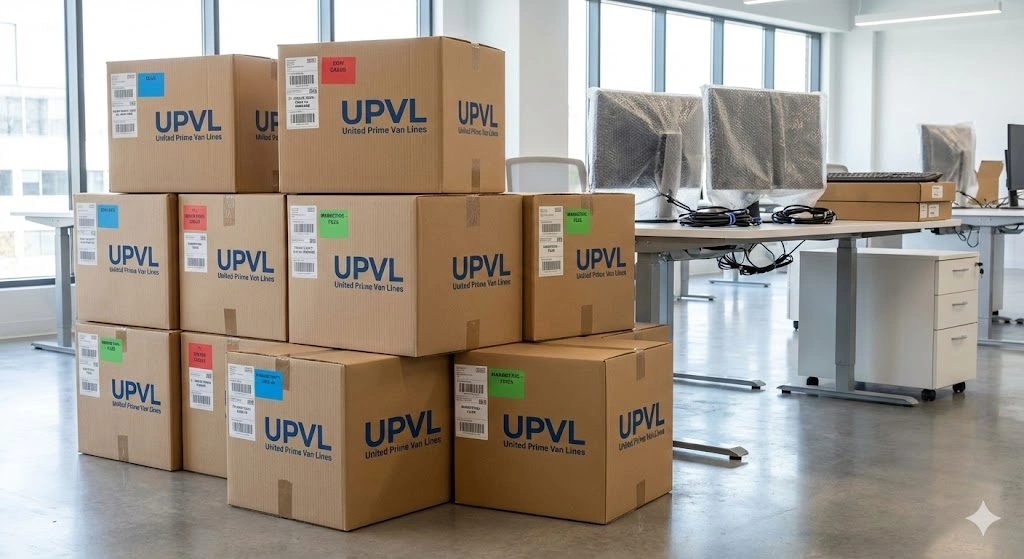
- Color Codes by Department: (e.g., Blue = Accounting, Red = IT).
- Detailed Labels: Include the Department, Room Number (e.g., "Room 204"), and Box Number.
- Matching Maps: At the new space, we tape color-coded maps to walls near the elevator so our crew instantly knows where each color goes.
IT & Tech: The Nerve Center of Your Business
The most stressful part of a move is usually the IT setup. We aren't your in-house IT team, but we work closely with them.
- Pre-Move Coordination: We get instructions on what’s most sensitive and create an inventory of critical devices.
- Special Handling: We use anti-static wrapping and separate boxes for cables.
- Clear Sequencing: Servers are often packed last at the old space and placed first at the new one.
Packing Strategy for Businesses
Commercial packing is part science, part common sense:
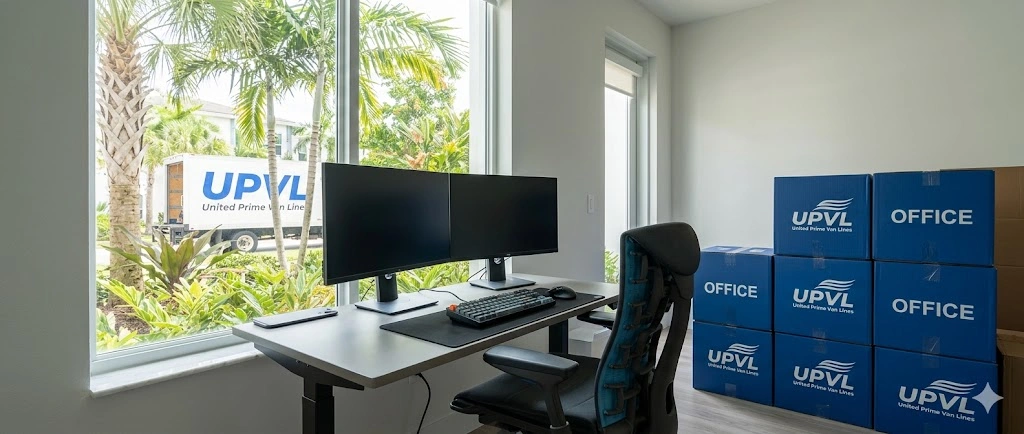
- Desks & Workstations: We take apart and reassemble workstations using our furniture disassembly & assembly service so nothing gets damaged.
- Files & Documents: Keep active files in "A priority" boxes.
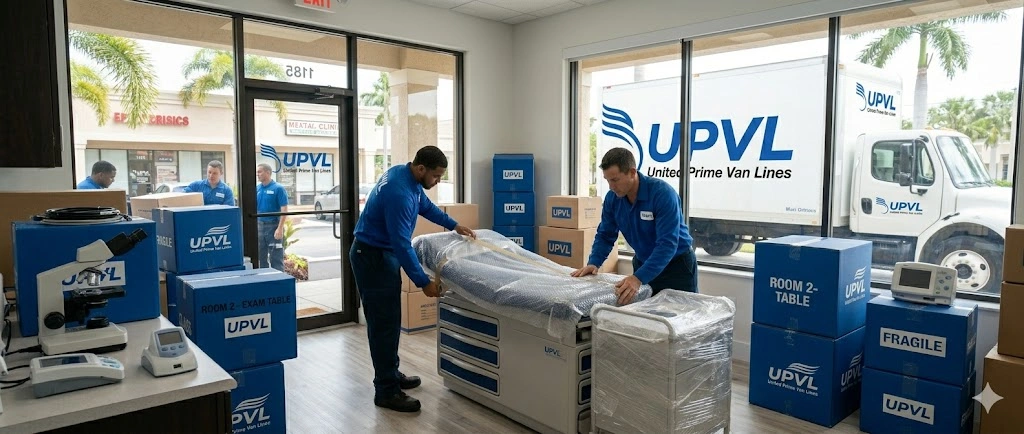
- Specialty Equipment: Medical, printing, or production gear often needs custom crating.
For minimal disruption, our full-service packing allows your staff to keep working right up to the last day while we pack common areas and supplies.
Preventing Common Commercial Moving Nightmares
- Nightmare: The building won’t let the movers in. Prevention: We handle COIs and elevator reservations days in advance.
- Nightmare: Wrong items loaded first, critical stuff arrives last. Prevention: We plan “A/B/C” priority zones and load accordingly.
- Nightmare: Movers treat office furniture like disposable junk. Prevention: Our crews specialize in commercial moving and use proper padding. A scratched conference table damages your brand image.
Bringing Order to a Stressful Transition
Moving a business in South Florida doesn’t have to feel like you’re gambling with your reputation or your sanity.
With the right logistics, your IT is brought back up in the right order, your buildings are happy, and your downtime is as short as possible.
If you’ve got a move coming up—whether it’s a small office in Hollywood or a multi-floor operation closer to Miami—we can quietly handle the logistics in the background while you stay focused on your clients and your team.