
Los Angeles moves are never one-size-fits-all. Hills, traffic, parking, and building rules all affect what you finally pay, so understanding the true average cost of movers LA is the first step to budgeting realistically and avoiding surprises on move day.
Quick Navigation
Los Angeles is a unique moving market. The same two-bedroom apartment move could cost very different amounts depending on whether you are in Koreatown with tight alley access, on a steep Hollywood Hills driveway, or in a high-rise near Downtown requiring elevator reservations and a Certificate of Insurance.
Moving company prices Los Angeles customers see online are usually broad ranges. Without context—crew size, access, traffic timing, packing, and potential long carries—those numbers are almost meaningless. To get a realistic budget and avoid disputes on moving day, you need to understand how LA movers build their quotes.
Intersections like the 405/101 or 10/110, major event days near Crypto.com Arena, and street sweeping rules can all add time and cost. Planning with a transparent, licensed mover such as United Prime Van Lines in Los Angeles can keep your budget under control while still protecting your belongings.
For a standard local move (within about 50 miles of your origin), most LA customers pay somewhere between a few hundred dollars for a small studio and several thousand for a large home with packing. Where you land in that range depends on time, complexity, and services.
These are ballpark ranges based on common job sizes with professional, licensed movers, excluding unusually difficult access or luxury packing needs. Actual costs vary by inventory, date, and specific conditions.
| Move Type (Local LA) | Typical Crew & Truck | Approx. Cost Range* |
|---|---|---|
| Small studio or 1-bedroom apartment | 2 movers + 1 truck | $450 – $900 |
| Standard 2-bedroom apartment/condo | 3 movers + 1 truck | $800 – $1,600 |
| 3-bedroom house (within 30–40 miles) | 3–4 movers + 1–2 trucks | $1,500 – $3,000 |
| 4+ bedroom home or complex move | 4–6 movers + 2 trucks | $2,500 – $6,000+ |
*These examples assume mid-range hourly rate movers LA consumers typically see, plus drive time, basic protection, and standard stairs or elevator use. Specialty items, heavy traffic, long carries, and packing add to the total.
When you request an in-depth estimate from a company like United Prime Van Lines, a move coordinator reviews these factors to create a more accurate projected total instead of just quoting a generic hourly rate.
Most local moving company prices Los Angeles residents encounter are based on hourly billing, plus some standard fees. Knowing exactly how the clock works protects you from surprises and helps you control costs.
Local LA movers generally charge an hourly rate that includes the truck, crew, and basic equipment. There is often a minimum number of hours (commonly 3 or 4), plus drive time and sometimes a fuel or service fee.
| Service Element | How It’s Charged | Typical LA Range* |
|---|---|---|
| Hourly labor (2 movers + truck) | Per hour, often 3–4 hour minimum | $120 – $190/hour |
| Hourly labor (3 movers + truck) | Per hour, higher minimum | $165 – $260/hour |
| Drive time | Portal-to-portal or double drive time | Equivalent to hourly rate |
| Service/fuel fee | Flat added to invoice | $30 – $100+ |
*These are common mid-market examples for licensed, insured movers, not the lowest or highest available. Actual rates depend on company policies, date, and demand.
Many reputable movers in LA follow the "double drive time" rule outlined in California regulations for local moves. In simple terms, the time spent driving between your old and new place is doubled and billed as labor.
For example, if it takes 30 minutes to drive from your West Hollywood apartment to your new place in Pasadena, the mover may bill 1 hour of time for that middle driving segment. The intent is to simplify drive time billing and keep estimates consistent. You should see this clearly stated on your estimate and in the move confirmation.
Typical hourly-rate packages include:
Hourly rates usually do not automatically include:
A detailed conversation with your coordinator at the quote stage makes sure those potential extras are either included or clearly listed, not appearing out of nowhere on moving day.
Many customers ask whether flat rate vs hourly movers Los Angeles options are cheaper. The answer depends almost entirely on how predictable your move is and how carefully the mover surveys your inventory and access.
Flat-rate pricing is usually based on a detailed inventory list, photos or video walk-throughs, and clear descriptions of building conditions. It often makes sense when:
Good flat-rate quotes still assume "normal" LA traffic, reasonable loading conditions, and accurate disclosures. If major surprises occur (no elevator when one was promised, several unboxed rooms not disclosed, etc.), the mover may have the right to re-price or add charges. Make sure you understand the fine print.
Hourly pricing can be safer when the situation is less predictable, such as:
With hourly billing, you pay for actual time used. If everything goes smoothly and quickly, you benefit. If there are delays, you pay more—but you also see where the time went.
| Factor | Flat-Rate Movers | Hourly-Rate Movers |
|---|---|---|
| Cost predictability | High if inventory/access accurate | Medium, depends on actual time |
| Best for | Well-defined, low-uncertainty moves | Moves with unknowns or flexible scope |
| Risk of change orders | Higher if inventory/access misrepresented | Lower; rate stays same, just more hours |
| Traffic impact | Generally absorbed by mover (within reason) | Directly increases your cost |
If you’re unsure which model fits your situation, ask the coordinator directly: "Based on my inventory and these addresses, would flat-rate or hourly be more predictable for me?" A transparent company like United Prime Van Lines’ local moving team will explain both approaches and show you how they arrived at their numbers.
No discussion of the average cost of movers LA would be complete without talking about geography, traffic, and parking. These three issues can add hours to your move if not properly planned.
Every Los Angeles neighborhood has its own moving challenges—narrow streets, hills, strict HOAs, or tightly timed loading zones. Knowing what to expect helps keep pricing fair and accurate.
| Area | Typical Challenges | Impact on Cost |
|---|---|---|
| Downtown LA (DTLA) | High-rises, dock/elevator scheduling, COI, tight loading zones | More planning time, possible waiting, longer overall job |
| Hollywood / West Hollywood | Narrow streets, limited parking, night/entertainment traffic | Parking research, walk distance, potential long-carry time |
| Santa Monica / Westside | Strict parking rules, busy coastal traffic, expensive citations | More time securing permits/parking; delays raise hourly total |
| Hills (Hollywood Hills, Bel Air, Laurel Canyon) | Steep driveways, tight turns, limited truck access | Shuttle trucks or long carries, extra crew time |
Explain your exact addresses, including unit numbers and parking limitations, when requesting your estimate. Cell phone photos of your building’s entrance and parking area can be extremely helpful.
LA’s reputation for traffic is legendary. Morning and evening rush hours, events at venues, beach traffic, and construction all affect your movers’ clock.
Scheduling your move to start early in the morning helps avoid the worst of traffic. When planning a long-distance pickup or delivery that crosses LA, professional movers route and schedule to minimize congestion, but real-world delays still affect time-based charges.
Parking is one of the most overlooked cost variables for LA moves. If the truck must park far from your unit, movers may charge a "long carry" fee (either as extra time on an hourly job or as a flat fee on a flat-rate job) when the distance significantly exceeds normal conditions.
Common parking issues:
Some buildings or cities require temporary "No Parking" signs or parking permits for moving trucks. Researching this ahead—sometimes with guidance from your mover—can save both money and frustration on move day.
Many LA apartment and condo buildings, especially in DTLA, Century City, and the Westside, have detailed moving rules:
COI requirements protect building owners from liability and are standard for reputable movers. Provide your building management contact information to your moving company well before move day so they can send the COI and confirm all requirements. Failing to do so can lead to delays or rescheduling, which increases cost.
Pricing structure also changes depending on whether your move is local (within roughly 50–100 miles) or long-distance (interstate or across California). These moves involve different regulations and billing methods.
Local moves within the Los Angeles area are usually billed hourly, as described earlier. Service radius can include neighborhoods such as Los Angeles proper, Orange County, San Fernando Valley, and nearby metro areas, depending on the company’s license and coverage. For example, a move from a Studio City apartment to a house in Pasadena would typically be treated as a local hourly job.
Moves that stay within California but go beyond a local range (for example, Los Angeles to San Diego or Los Angeles to Sacramento) may be billed differently. They might still use hourly rates for loading/unloading plus mileage or weight-based charges for transportation, depending on the company and distance.
California regulates household goods movers at the state level, and legitimate movers must hold a California license for these jobs. Always confirm this when comparing moving company prices Los Angeles to other cities across the state.
State-to-state moves originating in Los Angeles are typically priced very differently from local hourly jobs. Costs are usually based on shipment weight (or space used in the trailer) and distance, plus any packing, storage, or access-related services.
Example long-distance routes from LA:
Companies like United Prime Van Lines long-distance services provide in-depth written estimates for these routes, outlining weight, mileage, and service line items.
Unlike local moves, which usually pick up and deliver the same day, long-distance jobs operate on delivery windows. For example:
| Route Example | Approx. Transit Time | Typical Delivery Window* |
|---|---|---|
| Los Angeles to Phoenix | 1–2 days driving | 2–5 business days |
| Los Angeles to Denver | 2–3 days driving | 4–8 business days |
| Los Angeles to Austin | 3–4 days driving | 5–10 business days |
| Los Angeles to New York | 6–8 days driving | 7–14 business days |
*Delivery windows vary by carrier, time of year, route, and whether your load is full-truckload or combined with other shipments. Your written estimate or order for service should state the delivery spread.
Packing is one of the biggest swing factors in your moving budget. You can handle it all yourself, have movers pack selected areas, or choose full packing for maximum convenience.
DIY packing is cheapest on paper but most time-consuming. You purchase your own boxes and materials, pack everything, and the crew only handles loading, transport, and unloading.
Partial packing means movers pack certain rooms or fragile items, such as the kitchen, glassware, or artwork, while you handle the rest.
Full packing is where the moving company packs virtually your entire home, typically the day before or the morning of the move, using their own professional materials.
| Packing Service / Material | How It’s Charged | Typical LA Range* |
|---|---|---|
| Professional packing labor | Hourly per packer | $45 – $90/hour per packer |
| Standard moving box (small/medium) | Per box | $2 – $5 each |
| Wardrobe box with bar | Per box | $10 – $20 each |
| Dish pack / dish barrel | Per box | $10 – $20 each (plus packing) |
*Ranges depend on quality of materials, whether boxes are returned, and labor needed to pack them.
Packing help is often worth the investment when:
Some customers choose full packing for kitchen and fragile rooms and DIY for clothing, books, and linens to balance cost and convenience. Professional packing services can also reduce claims and damage risk.
Storage can be part of your move if your new home isn’t ready, you’re downsizing, or you’re relocating out of state with a gap between closing dates.
| Storage Type | Typical Use Case | Cost Considerations |
|---|---|---|
| Storage-in-transit with mover | Short gap between move-out and move-in | Monthly rate + handling fees for in/out |
| Long-term mover’s warehouse | Extended stays for relocation or downsizing | Discounted monthly for longer terms; handling charges |
| Self-storage | DIY access to items anytime | Unit rent, insurance, plus extra moving time for two stops |
| Portable containers | Flexible load/unload over several days | Monthly container rent + delivery/pickup fees |
Using your mover’s own storage can streamline logistics, reduce handling, and simplify billing. Many customers book combined services through a single provider such as United Prime Van Lines storage solutions.

To make sense of moving company prices Los Angeles, you also need to understand how estimates are written and when they are binding or adjustable.
For interstate moves, the Federal Motor Carrier Safety Administration (FMCSA) defines different types of estimates. While local California moves follow state rules, many companies use similar concepts for clarity.
Ask your mover what type of estimate you’re receiving and read their written explanation. For local LA moves billed hourly, the document may be an hourly quote instead of a binding price, but it should still outline minimum hours, rates, and potential fees.
Legitimate movers disclose potential extra fees in writing. Hidden fees are a red flag. Common add-ons include:
To prevent misunderstandings, walk your estimator through all details—stairs, distances, parking, elevator limitations, HOA rules—and confirm they are noted on the estimate.
Not all "cheap" movers are actually cheaper once you factor in damage, delays, or legal risks. Checking licensing and understanding insurance and valuation coverage protects both your wallet and your belongings.
In California, household goods movers that operate within the state must be licensed by the state. Long-distance interstate movers must also be registered with the FMCSA.
Working with a reputable company like United Prime Van Lines in Chatsworth ensures you’re dealing with a properly authorized mover.
Customers often confuse "insurance" with "valuation." Insurance is a regulated financial product, while valuation is the mover’s contractual responsibility for your goods. FMCSA explains these options for interstate moves. Source: FMCSA.
For high-value shipments, especially long-distance or moves with many fragile items, paying for higher valuation coverage can be a smart investment.
Many LA buildings require proof that your movers carry adequate liability and worker’s compensation coverage. This is often provided via a Certificate of Insurance.
Your building management may need to be named as an "additional insured" or "certificate holder" with specific dollar amounts listed. Request COI requirements from your building early, then share them with your mover so their insurance provider can issue the document before move day.
Use this checklist to make sure you’ve accounted for all major cost variables and prepared the information your mover needs to give a firm, realistic estimate.
| Task | Why It Matters | Status |
|---|---|---|
| List your inventory room by room | Helps right-size crew, truck, and quote | Not started / In progress / Done |
| Photograph building entrances and parking | Reveals access issues and long carries | Not started / In progress / Done |
| Ask building about moving rules and COI | Prevents delays and rescheduling fees | Not started / In progress / Done |
| Decide on DIY vs pro packing | Significantly changes total cost | Not started / In progress / Done |
Most importantly, don’t stop at rate-per-hour comparisons. A company that charges a slightly higher hourly rate but works more efficiently and plans access and parking carefully may end up costing less—and causing fewer headaches—than a cheaper, less organized competitor.
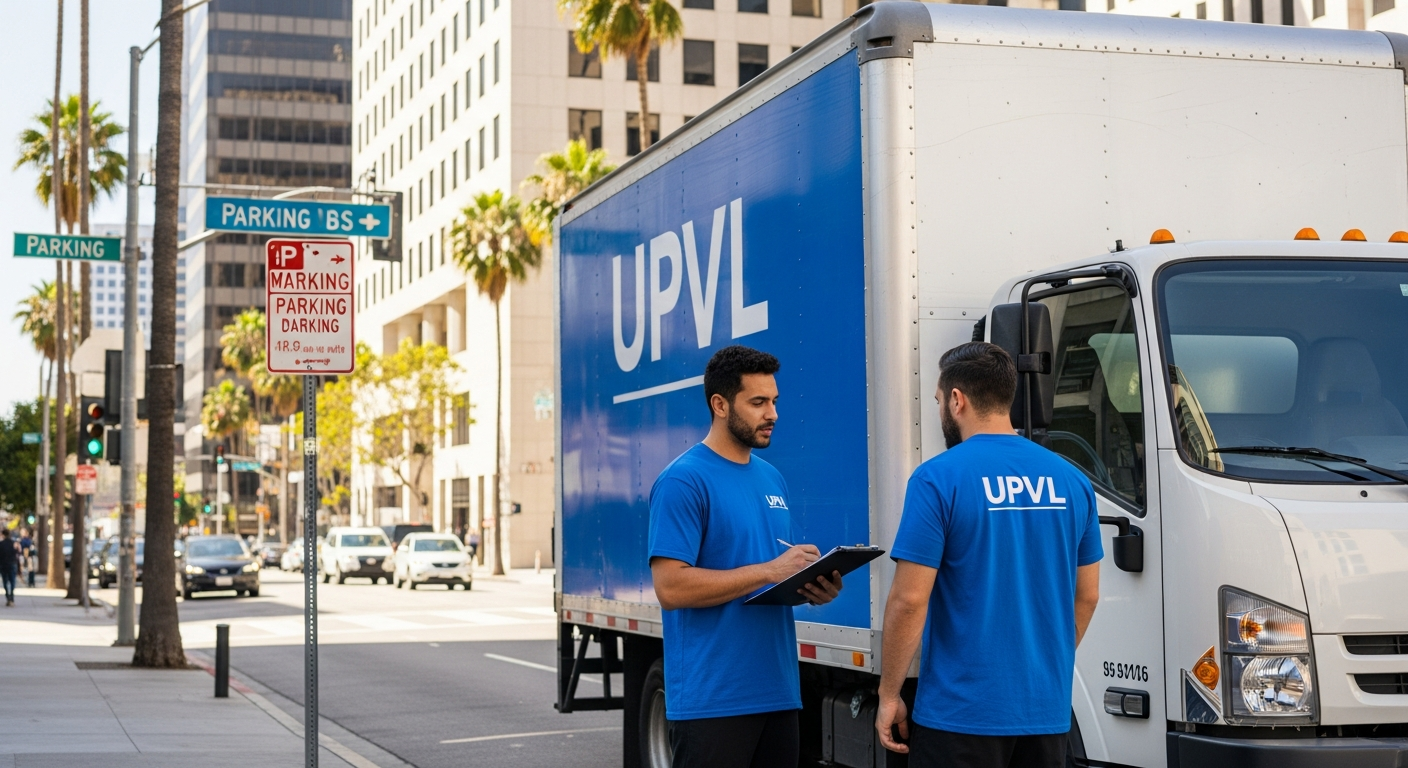
For local moves, the typical hourly rate movers LA customers see ranges roughly from $120 to $190 per hour for a crew of two movers and a truck, and $165 to $260 per hour for three movers and a truck. Rates vary by company, date, demand, and what’s included (fuel, basic supplies, equipment). Always confirm minimum hours and what the hourly rate covers in writing.
In Los Angeles, most local jobs are billed hourly, so traffic has a direct impact on your total cost. Time spent driving between locations is billed the same as loading and unloading time, and many movers use a "double drive time" rule to standardize billing. Heavy congestion on routes like the 405, 101, or 10, as well as event or beach traffic, can extend your billable hours if your move crosses those areas during peak times.
Parking can significantly change moving company prices Los Angeles customers pay. If a truck can park directly in front of your building, loading and unloading are much faster. When parking is far away, limited by permits, or impossible for a large truck, movers may need extra time or charge long-carry or shuttle fees. Planning ahead with building management and, if needed, parking permits reduces both time and surprise charges.
A long-carry fee applies when movers must carry items an unusually long distance between the truck and your door, such as when parking is not available near your entrance or in hillside neighborhoods where the truck can’t access the driveway. On hourly jobs, this usually just means more time; on flat-rate quotes, there may be a specified distance included (for example, 75 feet) and extra charges for longer carries. Your estimate should clearly explain the policy.
A typical 1-bedroom apartment move within the Los Angeles area might range from about $450 to $900 with a licensed, insured mover, assuming moderate stairs or elevator access and no full packing service. Costs increase if you have a lot of heavy items, complicated access, or if you move during peak times like month-end or weekends.
For a straightforward apartment move with known elevator access and reasonable parking, flat rate vs hourly movers Los Angeles pricing can both work. Flat rate offers more budget certainty if your inventory and access are accurately described. Hourly can be better when there are unknowns, such as uncertain parking or packing progress, because you pay only for the actual time used. Ask your mover which they recommend given your exact addresses and conditions.
Extremely low advertised rates can indicate incomplete quotes, unlicensed operators, or missing services like valuation coverage and proper equipment. Some companies quote a low hourly rate but add numerous fees later, or arrive with fewer movers than promised, stretching the job longer. Always verify licensing, request a written estimate listing all potential charges, and compare the full cost structure—not just the headline rate.
For local moves in Los Angeles, booking 3–4 weeks in advance is a good target, especially for weekends and month-end dates. During peak summer months, earlier is even better. Last-minute bookings are sometimes available, and companies like United Prime Van Lines last-minute services may be able to accommodate urgent moves, but selection and pricing are usually less favorable when you wait.
You can reduce your moving bill by decluttering before you move, packing non-fragile items yourself, labeling boxes clearly, reserving elevators and parking in advance, and starting as early in the day as your mover allows. Having everything packed, disassembled (if agreed), and ready to go when the crew arrives keeps the hourly clock focused on loading rather than waiting.
Most professional LA movers accept major credit cards, debit cards, and sometimes cash or certified funds for balances on delivery. A deposit may be required to secure your date. Avoid companies insisting on large cash-only payments, as this can be a red flag. Make sure all payment terms are spelled out in your estimate and confirmation.
For California moves, the contact information is:
Understanding how the average cost of movers LA is built—hourly rates, flat fees, access, traffic, packing, storage, and protection—puts you in control of your budget. Instead of chasing the lowest advertised rate, focus on transparent estimates, proper licensing, clear communication about your buildings, and a service level that matches your timeline and stress tolerance.
When you’re ready, share your inventory, addresses, and move date with a trusted, licensed mover and request a detailed estimate. With the right planning and the right team, your Los Angeles move can stay on schedule, on budget, and far less stressful than you might expect.