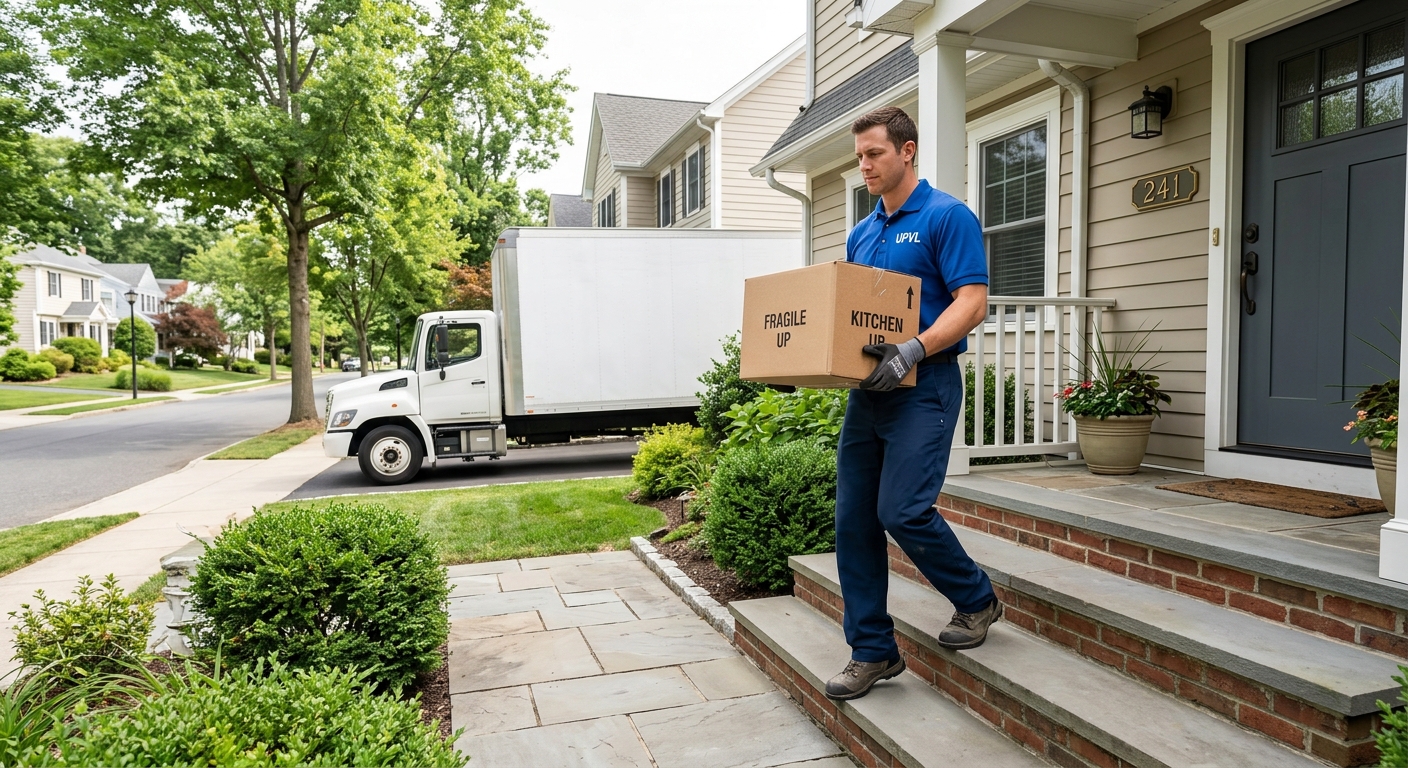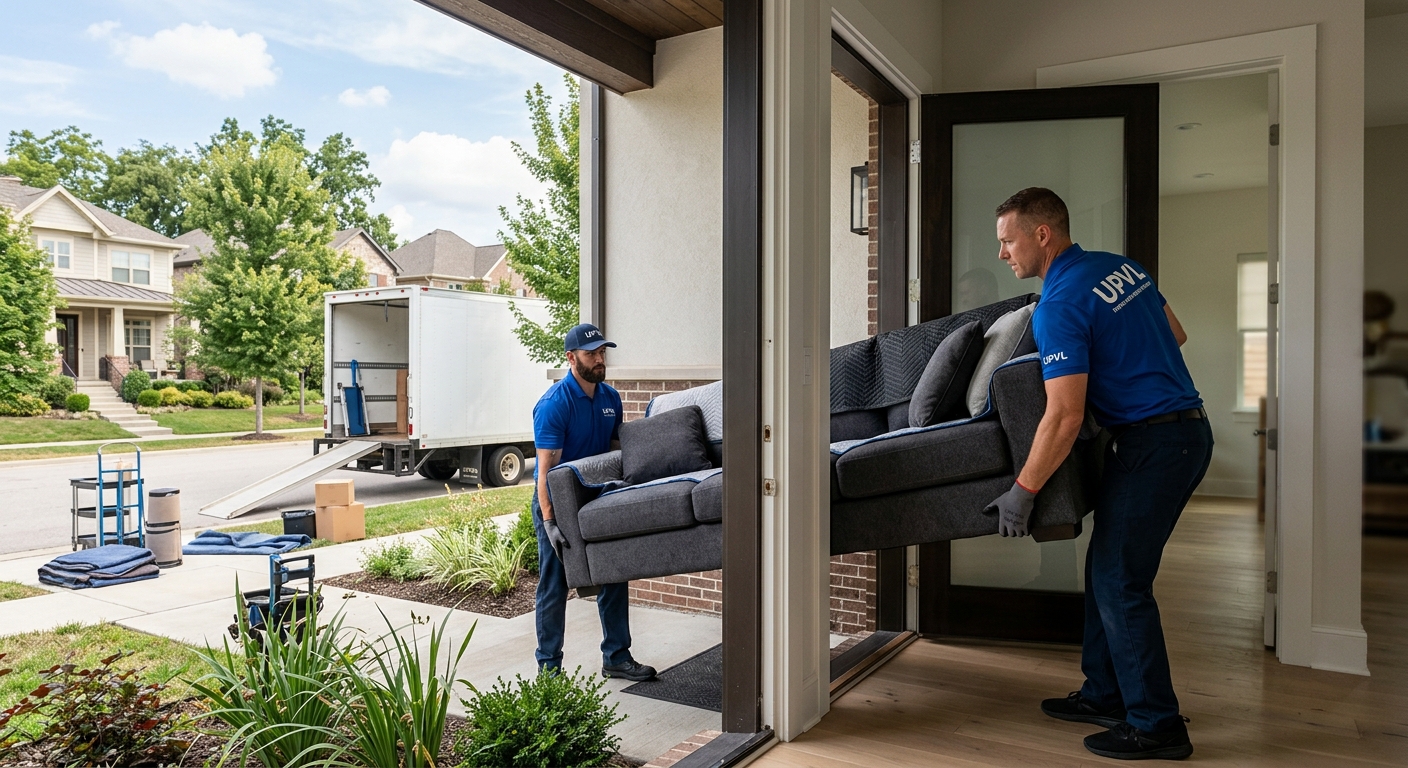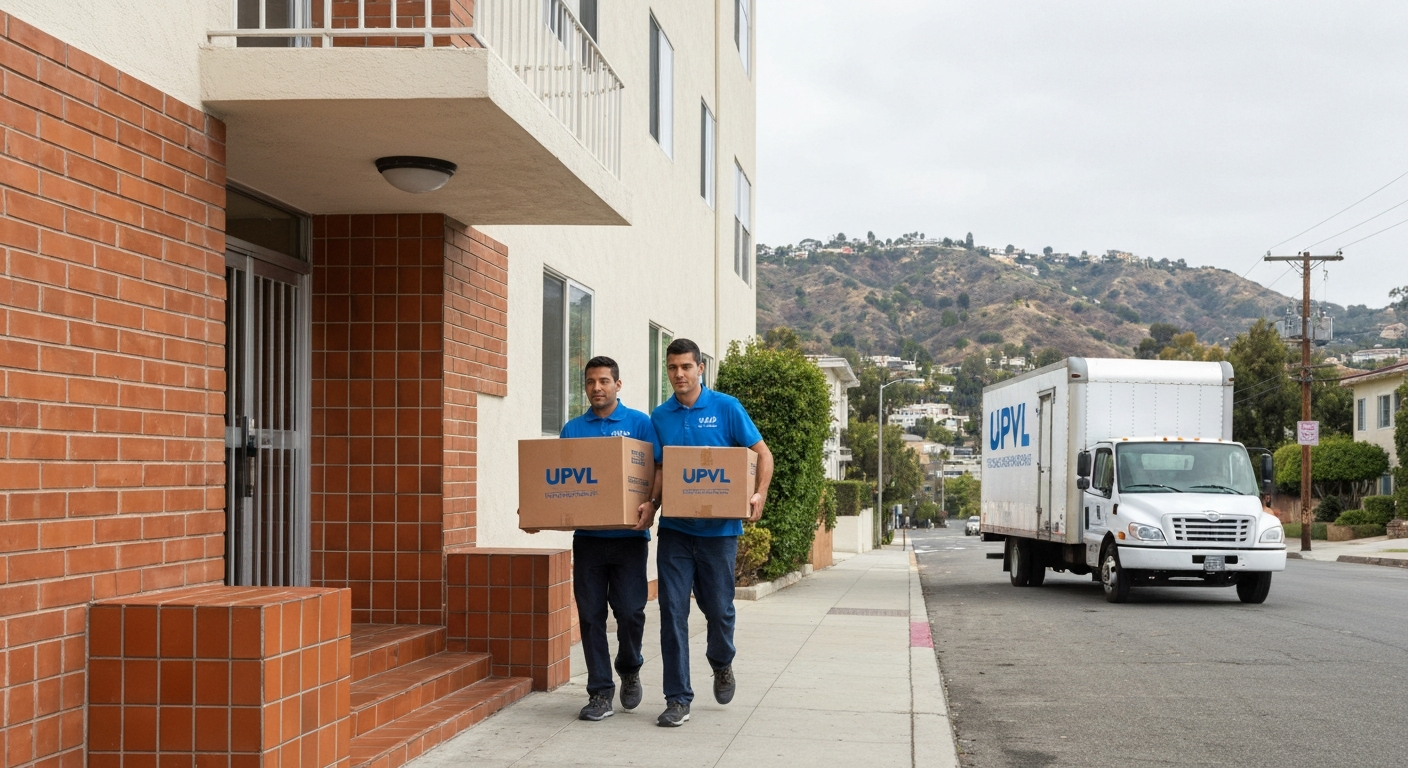
Moving in Los Angeles is never just about loading a truck. Between traffic, tight parking, steep hills, and strict building rules, you need an LA-specific moving day checklist that covers timing, permits, packing, and access from every angle.
Quick Navigation
A solid moving day checklist in LA protects you from the city’s most common moving headaches: gridlocked freeway traffic, blocked driveways, ticket-happy parking enforcement, slow elevators, and strict condo rules.
Without an LA-specific plan, you risk:
Compared to many cities, Los Angeles adds three big layers of complexity:
Planning around these realities is the core of a good LA moving checklist.
| LA Moving Challenge | Why It Matters | Checklist Solution |
|---|---|---|
| Heavy freeway traffic | Can double driving time and labor cost | Book early-morning time slots; avoid peak commute hours |
| Limited street parking | Truck may park blocks away, adding time | Secure parking permits or reserve building loading zones |
| Steep hills and narrow streets | Makes truck access slower and trickier | Discuss access with your mover and plan for smaller trucks if needed |
| HOA and building rules | Unauthorized moves can be stopped mid-load | Get written approval, moving rules, and COI requirements early |
Taking the time to map these items now will save you money, stress, and last-minute surprises on moving day.
For most neighborhoods, the best timing for local LA moves is:
Freeway volumes around Los Angeles are consistently high across the day. According to U.S. Census Bureau data, LA County remains one of the nation’s largest and densest counties, which translates directly into congested corridors.
Here is how LA-specific timing affects your moving day checklist:
| Move Type | Better Start Time | Notes |
|---|---|---|
| Within one neighborhood (e.g., Hollywood to Hollywood) | 7:00–9:00 a.m. | Shorter driving; main delays from local congestion and parking |
| Valley to Westside or vice versa | 7:00–8:00 a.m. or after 10:30 a.m. | Avoid peak times on 405 and canyon roads |
| Downtown high-rise moves | 8:00–9:00 a.m. start at origin | Coordinate elevator windows; downtown streets may be busy mid-day |
| Weekend moves | 8:00–9:30 a.m. | Less commuter traffic but more events, closures, and competition for parking |
Example 1: Sherman Oaks apartment to Santa Monica condo
Example 2: Downtown LA high-rise to Koreatown mid-rise
Parking is often the make-or-break issue for a smooth LA move. A truck that cannot get close to your building means longer carries, more time on the clock, and higher risk of damage or tickets.
Your moving day checklist in LA must always include:
Depending on the neighborhood, you may need to consider:
For areas governed by the City of Los Angeles, the Los Angeles Department of Transportation (LADOT) regulates temporary parking restrictions and some moving-related signs. Check current rules with LADOT before your move day.
| Neighborhood | Parking Challenges | Checklist Actions |
|---|---|---|
| Downtown LA (DTLA) | Loading docks, strict security, limited street parking | Reserve dock and elevator; confirm COI; ask building where truck can stage |
| Hollywood & West Hollywood | Permit parking, narrow streets, frequent filming | Check for temporary no-parking signs and film notices; plan alternate routes |
| Santa Monica & Venice | Metered spots, alley access, beach traffic | Budget for meter costs; verify alley height/width; avoid peak beach hours |
| Silver Lake & Echo Park | Hills, tight corners, limited driveway access | Discuss truck size with mover; assess if a shuttle truck is needed |
| San Fernando Valley (Sherman Oaks, Chatsworth) | Long driveways, larger complexes | Ask management where trucks can enter; watch for low-hanging trees and power lines |
Many LA apartment towers, condos, and office buildings require a Certificate of Insurance (COI) from your moving company, listing the building owner and sometimes the property manager as “additional insured.”
Your LA moving day checklist should always include:
If you are moving a business, many Class A and Class B office buildings in LA will refuse entry to any moving company that doesn’t present a COI on arrival. This is one reason to choose a professional, licensed mover such as United Prime Van Lines office and commercial moving services instead of unverified labor.
Packing in LA has some unique twists: long carries, multiple staircases, heat, and sometimes overnight street parking for trucks. Your packing plan should protect belongings from both movement and environment.
Key LA-focused packing rules:
Most LA renters live in apartments or condos, often with narrow hallways and limited elevator sizes. To make this easier:
If DIY packing feels overwhelming, especially around LA traffic and access, professional services like United Prime Van Lines full packing services can pack your home for you. Typical options include:
| Packing Option | What It Includes | Best For |
|---|---|---|
| Full Packing Service | Movers pack all rooms, label boxes, protect furniture | Busy professionals, families, or long-distance moves |
| Partial Packing | Movers pack breakables (kitchen, art, mirrors), you pack the rest | People comfortable packing clothes/books but not fragile items |
| DIY Packing with Materials | You pack everything; movers only load, transport, and unload | Tight budgets and simple, local moves |
| Unpacking Services | Movers unpack boxes and place items on surfaces | Moves with short timelines or young kids, seniors, or remote workers |
Electronics and heat:
Art, antiques, and instruments:
Large furniture and assembly:
Tips for moving to Los Angeles vs moving out of LA
A local move is typically within the greater Los Angeles area or within about 50–60 miles. Local moves are usually billed by the hour, with travel time between addresses included. The same LA traffic and parking checklist applies whether you are moving from Hollywood to Burbank or from Santa Monica to Culver City.
Local moving services, like those described on United Prime Van Lines local moving, often include:
If you are moving out of LA to another state, your planning has to consider:
For interstate moves from LA, review services like United Prime Van Lines long-distance moving so you understand pickup dates, delivery spread, and how your items will be transported.
| Route Example | Typical Distance | Delivery Window Considerations |
|---|---|---|
| Los Angeles to San Francisco Bay Area | ~380–420 miles | Often 1–3 business days depending on schedule and load size |
| Los Angeles to Phoenix, AZ | ~370–400 miles | 1–3 business days; consider summer heat for packing |
| Los Angeles to Portland, OR or Seattle, WA | ~950–1,150 miles | 3–7 business days; weather can affect timing |
| Los Angeles to New York City | ~2,800–2,900 miles | 7–21 business days, depending on size and shared vs dedicated truck |
According to FMCSA, interstate movers must provide you with a written estimate, a copy of the “Your Rights and Responsibilities When You Move” booklet, and a bill of lading that defines the terms of your shipment.
Most LA residents fit one of these moving profiles:
Professional movers such as apartment moving services and house moving services can adapt to LA’s narrow staircases and long driveways.
Hollywood to Sherman Oaks:
Santa Monica to Downtown LA:
Chatsworth to Los Feliz:
Sometimes leases fall through, landlords sell quickly, or life events force a fast move. For urgent relocations in LA, services like last-minute moving can help, but you still need a tight checklist:

LA moving costs are driven by time, access difficulty, and distance more than by simple square footage. Your final bill depends on:
| Factor | How It Shows Up in LA | Impact on Cost |
|---|---|---|
| Traffic delays | Rush hour on 405, 10, 101, 110 freeways | More billable hours for crew and truck travel |
| Stairs & no elevator | Older buildings in Hollywood, Echo Park, Silver Lake | Extra labor time; may need more movers |
| Long carry | Truck parked far from entrance; large complexes | Additional hourly time for walking items to/from truck |
| Elevator & dock schedules | Downtown towers, Westside condos | Downtime while waiting for service elevators or loading docks |
| Specialty items | Pianos in hillside homes, custom furniture, large TVs | Possible surcharge or extra equipment, increasing total cost |
According to consumer guidance from the California Bureau of Household Goods and Services (BHGS), licensed movers in California must provide written estimates for moves within the state and follow state tariff rules.
Most local LA moves are billed hourly, but some companies may offer flat-rate or hybrid pricing. Understanding the differences helps you read your estimate correctly.
| Pricing Type | How It Works | Pros / Cons in LA |
|---|---|---|
| Hourly Rate | You pay for the time the crew is working, including drive time | Pros: transparent; good for small moves. Cons: traffic and access delays can increase cost. |
| Flat-Rate (Local) | Set price based on inventory and access description | Pros: more predictable. Cons: you must provide accurate info; access changes may lead to adjustments. |
| Binding Estimate (Long-Distance) | Fixed price for defined inventory and services | Pros: price certainty. Cons: changes in items or services may trigger new charges. |
| Non-Binding Estimate (Long-Distance) | Projected cost; final charges based on actual weight/services | Pros: flexible if inventory is uncertain. Cons: final cost may be higher than estimate. |
Binding estimate: A written agreement that guarantees the total cost of your interstate move based on the services and items listed. If you add items or services, the mover can issue a revised estimate. FMCSA explains binding estimates here: FMCSA binding estimates.
Non-binding estimate: An approximation of your moving cost; the final charges are based on the actual weight and services. By law, for interstate moves, the mover cannot require you to pay more than 110% of the non-binding estimate at delivery for the goods to be released, but you may be billed for the balance later. More details: FMCSA non-binding estimates.
Bill of lading: The official contract between you and the mover for your shipment. Always read it carefully before signing.
For your own safety and to meet building requirements, you must use a properly licensed mover, especially when elevators and loading docks are involved.
Federal law requires interstate movers to offer two main levels of liability (valuation), not to be confused with insurance:
More information is available from FMCSA on valuation and insurance.
A Certificate of Insurance (COI) proves that your mover carries the liability and workers’ compensation coverage your building requires. The COI typically lists:
On your LA moving checklist, write down:
Storage is common for LA moves, especially when:
Companies like United Prime Van Lines storage services offer short-term or long-term storage integrated with your move, which saves time and multiple truck rentals.
| Storage Type | How It Works | Best For |
|---|---|---|
| Warehouse / Vault Storage | Your goods are loaded into wooden vaults in a secure facility | Interim storage between LA and your new city |
| Containerized Storage | Portable containers loaded at your home and stored off-site | Moves with flexible delivery dates and limited access needs |
| Self-Storage Unit | You or movers load a storage unit you rent monthly | Frequent access and DIY loading/unloading |
| Short-Term Overnight Hold | Truck holds items overnight between move-out and move-in | One-day gap between LA leases or closings |
When choosing storage, consider LA’s climate and security. Indoor, temperature-stable storage is often better for electronics, wood furniture, and art.
Here is a focused timing checklist that addresses common LA questions about when movers will come, and how long moves generally take.
| Time | Action | LA-Specific Notes |
|---|---|---|
| 6:30–7:30 a.m. | Wake up, clear access paths, move cars from driveway / curb | Check for tickets, street sweeping signs, or unexpected closures |
| 7:00–9:00 a.m. | Mover arrival and walk-through | Review parking with crew; point out fragile items and access challenges |
| Morning | Loading at origin | Keep elevators reserved; monitor loading dock times |
| Midday | Drive between addresses | Expect possible traffic; crew may adjust route based on real-time apps |
| Afternoon | Unloading at destination | Protect floors and elevators; direct boxes to labeled rooms |
How long a move takes varies widely, but as a rough guideline for LA apartments:
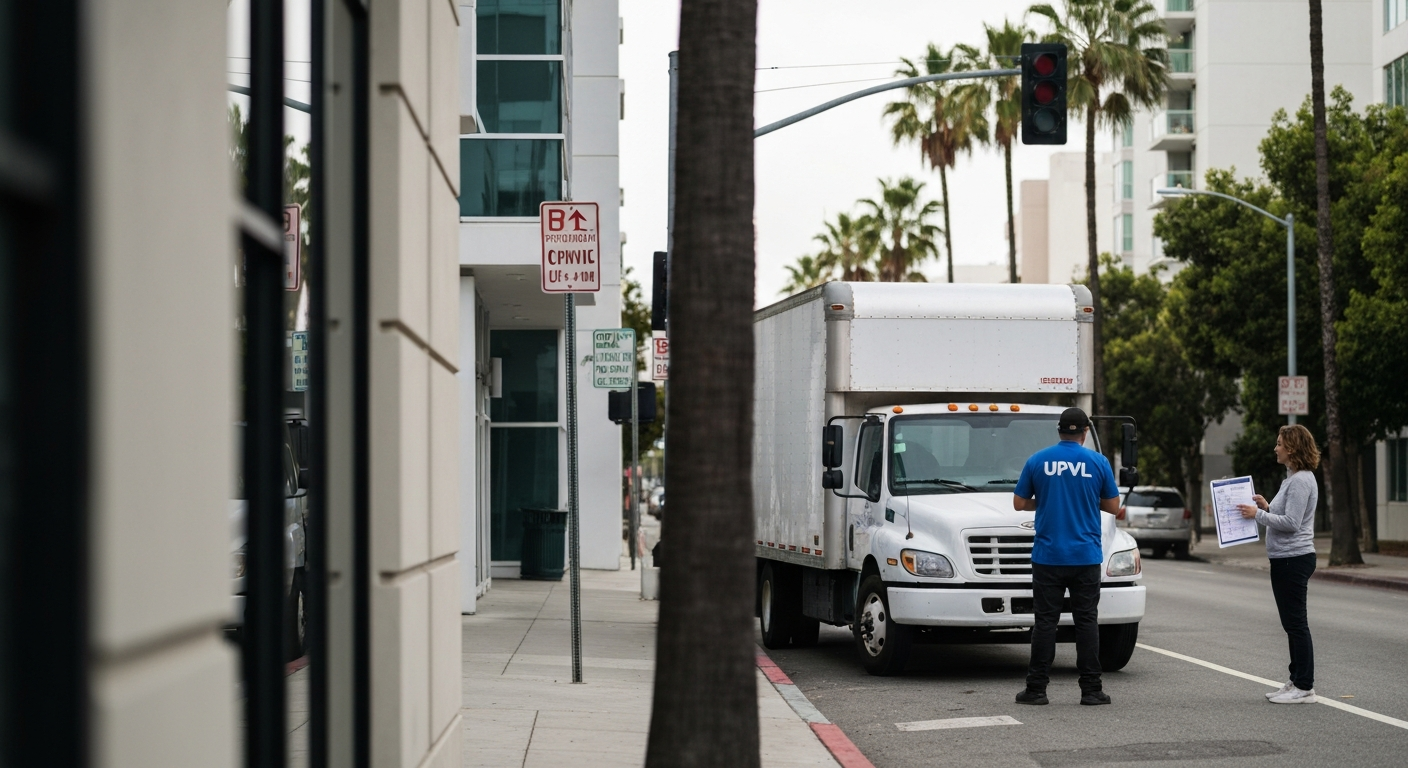
For most LA moves, a start window between 7:00–9:00 a.m. works best. It allows movers to load before the worst mid-day heat and gives some buffer against traffic delays while still finishing in daylight. For cross-town moves that must cross the 405 or I-10, aim for the earliest slot your mover offers.
For a local LA move, a studio or small 1-bedroom often takes 3–5 hours, while a larger 2-bedroom may take 4–7 hours, depending on stairs, elevator access, and traffic. Houses and larger apartments may run 6–10 hours or more. Long-distance moves out of LA involve separate pickup and delivery days with a multi-day delivery window.
Start by walking your block at the same time your move will occur to see real parking conditions. Look for red curbs, hydrants, bus stops, and loading zones. If needed, call your local city or LADOT about temporary no-parking signage or rules about trucks in permit zones. Confirm with your building where trucks may park, use alleys, or access loading docks.
Most movers expect you to secure legal parking; if the truck is parked illegally at your direction and gets a ticket, you may be responsible. The exact policy varies by company. Ask your mover upfront how they handle parking tickets and what they need from you to avoid them.
Use sturdy boxes, avoid overpacking, and keep heat-sensitive items (electronics, candles, cosmetics, wine, records) with you in your own car when possible. Avoid loading these items first if the truck will sit parked in the sun. Consider climate-controlled storage if your belongings will stay in storage through a hot LA summer.
Measure your new space carefully before moving day; many LA apartments have unique layouts. Ask your building about move-in hours, service entrances, and COI rules. Plan your arrival outside peak freeway times. Downsize before shipping heavy furniture across the country. Finally, budget for first-month expenses, deposits, and possible parking permits.
Give yourself extra time to sort and sell items; many LA households accumulate gear for beaches, hiking, and hobbies that may not be useful elsewhere. If you are moving to a different climate, adjust what you keep and how you pack (e.g., cold-weather storage, humidity protection). Confirm delivery windows and valuation coverage with your interstate mover so you can plan your arrival in the new city.
For peak season (May through September) and weekends, book 3–6 weeks in advance. For mid-week moves during off-peak months, 2–4 weeks may be enough. Last-minute slots are sometimes available, but your timing and pricing options will be more limited.
Many mid-rise and high-rise buildings in LA require a Certificate of Insurance from your moving company, especially in Downtown, Hollywood, the Westside, and major Valley complexes. Always ask management for their moving rules and COI requirements; then share them with your mover at least a week before your date.
Tipping is not mandatory but is customary if you are happy with the service. Many customers in LA tip 15–20% of the move cost or a flat amount per mover, scaled to the size and difficulty of the move. Cash tips are common, but some companies may allow tips via card.
Policies vary and may be limited by licensing and safety rules. Many movers will disconnect simple plug-in washers and dryers but will not handle gas lines or complex installations. Ask your mover; you may need a licensed plumber or appliance technician for gas or hard-wired connections.
For California moves, the contact information is:
Moving in Los Angeles demands more than a generic checklist. You have to account for LA traffic patterns, parking rules, tight apartment access, building security, and sometimes long distances within the same metro area. When you build a moving day checklist LA-style—covering timing, parking, packing, COIs, and storage—you dramatically reduce stress and surprise costs.
Whether you are moving into LA for new opportunities or moving out of LA for your next chapter, take the time to plan your route, verify your mover, and tailor your packing and schedule to the realities of this city. A thoughtful checklist now means a calmer, more predictable moving day later.