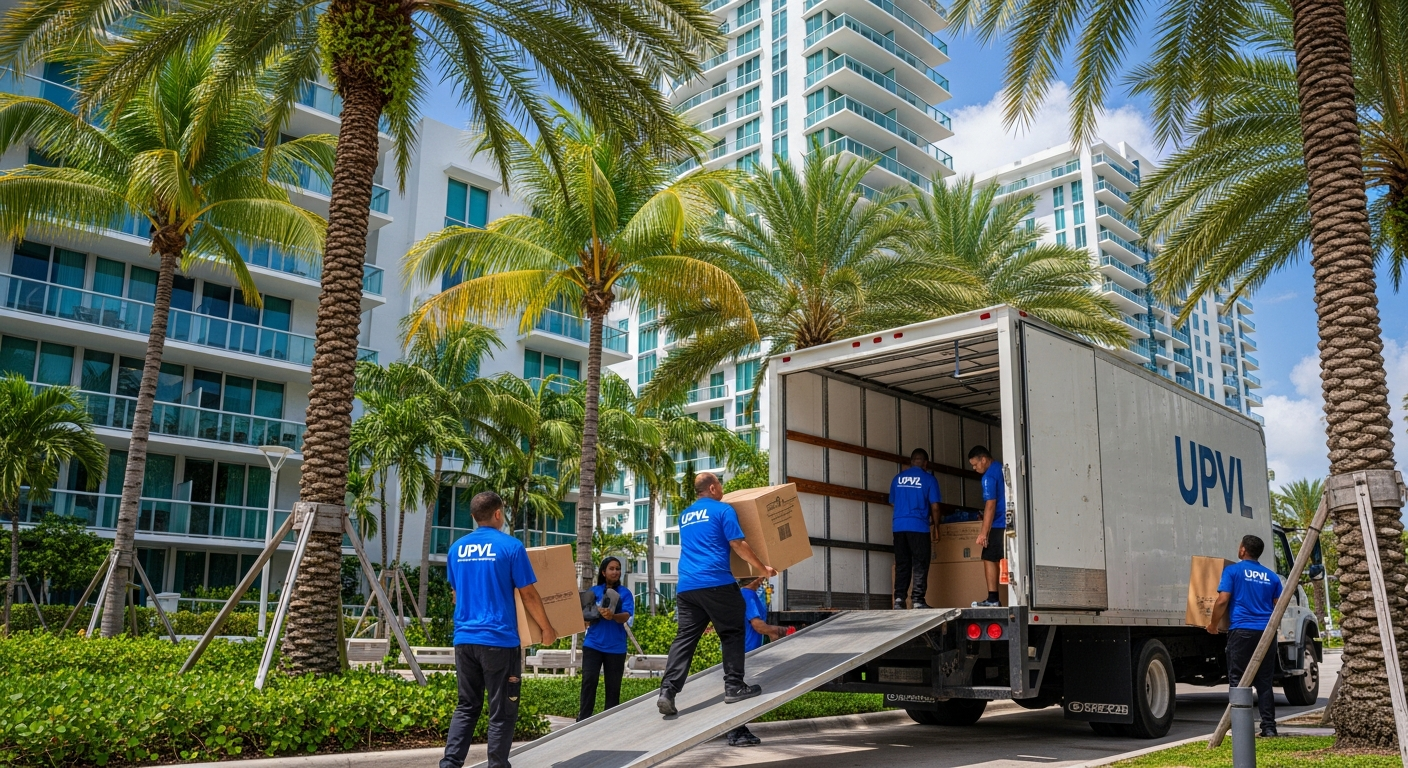
Moving from Miami to New York is a major life change: new climate, new pace, and a 1,200+ mile interstate route to plan. Choosing experienced movers from Miami to New York can make the difference between a smooth relocation and a stressful, expensive ordeal.
Quick Navigation
Interstate relocations between South Florida and the New York metro are not like simple in-town moves. You are crossing multiple states, changing weather zones, and often downsizing from a larger Florida home into a smaller New York apartment. That’s why working with specialized movers from Miami to New York matters.
This corridor is one of the busiest state-to-state moving routes in the country. Long-distance drivers familiar with I‑95, seasonal traffic, and East Coast weather can plan safer, more reliable deliveries.
What makes this route unique:
When you choose an experienced Miami to New York moving company, you’re not just paying for a truck. You’re paying for route knowledge, scheduling expertise, building coordination, and careful planning that protects your belongings and your schedule.
The most common drive for moving from Miami to New York follows the I‑95 corridor, running up the East Coast through Florida, Georgia, the Carolinas, Virginia, Washington D.C. area, and into the Northeast.
Most professional Florida to New York movers plan the trip something like this:
The full route is usually completed in 2–3 driving days, but delivery windows are often longer due to federal driver hours-of-service rules and multi-customer loads.
On this route, movers from Miami to New York frequently deliver to:
While driving hours are fairly predictable, the calendar can have a big impact:
Not every customer needs the same level of support. A well-organized Miami to New York moving company will offer different service types so you can match the move to your budget and timeline.
| Service Type | Best For | Key Features |
|---|---|---|
| Standard Interstate Move | Most households | Shared truck space, loading/unloading, basic furniture protection |
| Full-Service Packing Move | Busy professionals, families | Packing of all items, materials included, labeling and inventory |
| Partial Packing | Budget-conscious movers | Movers pack fragile or select rooms, you pack the rest |
| Premium / Expedited Service | Time-sensitive relocations | Faster delivery windows, sometimes dedicated truck or smaller shipment |
| Move with Storage | Staggered moves, housing gaps | Short- or long-term storage, delivery when new home is ready |
If you want a deeply hands-off experience, you can combine full-service packing with furniture disassembly/reassembly. United Prime Van Lines offers options like full packing services and furniture disassembly and assembly that are especially useful when moving into compact New York apartments.
Certain items on this route need additional planning:
Most long-distance residential moves use shared loads, where your items travel with other customers’ shipments on the same truck. This keeps costs down but impacts the delivery window. Premium or very large moves sometimes use a dedicated truck, with more precise scheduling and usually higher cost.
Once you cross state lines, your move is legally considered an interstate move. That means federal rules from the Federal Motor Carrier Safety Administration (FMCSA) apply, along with specific requirements about written estimates, tariffs, and dispute resolution.
It’s essential to understand who is actually handling your belongings:
FMCSA explains that movers and brokers have different obligations and that you should verify a company’s status before booking. Source: FMCSA.
As a customer moving from Miami to New York, you benefit from federal protections:
These rules help minimize disputes and clarify expectations when you choose reputable Florida to New York movers.
Many Miami customers head to the New York City metro area, but some continue farther north. Your exact destination affects cost and delivery timing:
| Destination Area | Typical Complexity | Impact on Move |
|---|---|---|
| Manhattan | High | Tight streets, strict building rules, elevator reservations, possible shuttle trucks |
| Brooklyn / Queens | Medium–High | Narrow streets, mixed parking, co‑op and rental rules |
| Bronx / Staten Island | Medium | Bridge and toll planning, local traffic differences |
| Long Island / Westchester | Medium | Longer drive within NY, more suburban-style access |
| Upstate New York | Medium–Low | Less congestion, more mileage, possible snow impacts in winter |
The packing plan is what actually protects your belongings over 1,200+ miles of highway. On a long route like this, good packing isn’t a nice-to-have—it's essential.
Here is how packing options typically compare when moving from Miami to New York:
| Packing Option | What Movers Do | Ideal For |
|---|---|---|
| Full-Service Packing | Pack all boxes, provide materials, label and inventory | Busy households, high-value or complex moves |
| Partial Packing | Pack fragile or high-risk items only | Budget-conscious movers, those with time to pack basics |
| DIY Packing | Movers only handle furniture and loaded boxes | Lower budgets, experienced packers |
| Unpacking Services | Unpack boxes and place items in rooms | Families, seniors, or rapid-settle relocations |
Full-service packing is usually the safest and fastest option, especially when you’re juggling work, kids, and housing logistics in both states. For those who prefer more control, partial packing plus professional handling of breakables is often a smart compromise.
A practical Miami to NYC packing plan might look like this:
Miami’s heat and humidity can damage certain items if packed improperly:
Every box should have:
This makes unloading much faster and smoother. It also ties neatly into the formal inventory list the crew will prepare for interstate shipments.
Many customers don’t move straight from one ready home to another. You might be renovating in New York, waiting for a co‑op board approval, or finalizing a lease. In these cases, combining your move with storage is often the most efficient path.
| Storage Type | Typical Use Case | Pros / Cons |
|---|---|---|
| Short-Term Storage (1–3 months) | Gap between Miami move-out and New York move-in | Flexible, keeps items with the mover / more handling compared to direct move |
| Long-Term Storage (3+ months) | Extended renovation, international assignment | Secure, often in warehouse / monthly fees add up |
| Storage-in-Transit (SIT) | When delivery date is not fixed | Built into interstate move, easy re-delivery / time limits in some tariffs |
| Self-Storage Unit | DIY, frequent access | Access anytime / extra handling, you manage loading/unloading |
Working with a company that offers both long-distance moving and secure warehouse storage, like the storage services from United Prime Van Lines, simplifies logistics. Your goods stay within the same system from Miami pick-up to New York delivery.
Ask your mover where their warehouses are and what happens if your expected storage duration changes.
Customers often ask, “How much does it cost to move from Miami to New York?” The honest answer: it depends on volume, services, access, and timing. But we can outline typical ranges and the main variables.
These broad ranges are for educational purposes and are not quotes. Your actual price must come from a written estimate by a licensed Miami to New York moving company.
| Home Size | Service Level | Approx. Cost Range* |
|---|---|---|
| Studio / Small 1-Bedroom | Self-packed, standard services | $1,800 – $3,200 |
| Large 1-Bedroom / Small 2-Bedroom | Self-packed, some stairs/long carry | $2,600 – $4,300 |
| 2–3 Bedroom Apartment / Small House | Partial packing, normal access | $3,800 – $6,500 |
| 3–4 Bedroom House | Full-service packing, complex access | $6,500 – $10,000+ |
*These are illustrative education ranges only, not guarantees or offers. Always obtain a formal quote. Interstate pricing is regulated and based on a mover’s published tariff.
When moving from Miami to New York, clarify potential additional fees:
Understanding your estimate type is one of the most important parts of hiring movers from Miami to New York. It determines how your final price is calculated and what happens if your shipment size changes.
FMCSA defines several key estimate types for interstate moves. Source: FMCSA.
Each estimate must clearly state which type it is and include a detailed inventory list.
Most Miami to New York interstate moves are priced by:
Unlike local MIami moves, interstate routes rarely use hourly charges; instead, they rely on tariff-based weight/distance pricing.
| Estimate Type | How Price Can Change | Best For |
|---|---|---|
| Binding | Price stays fixed if inventory/services don’t change | Those who know exactly what they’re shipping |
| Non-Binding | Final price can go up or down based on actual weight | Flexible shipments, uncertain inventory |
| Binding Not-to-Exceed | Price can go down if weight is less, but not above a ceiling | Budget-conscious movers who want protection against higher costs |
| Hourly (Usually Local Only) | Not typical for Miami–New York interstate moves | Local Miami or New York spins, not full route |
For accurate pricing:
United Prime Van Lines can provide quotes for both long-distance moving and optional packing or storage so you can see line-by-line costs.
Delivery timing is one of the top concerns for anyone moving from Miami to New York. You need to know when you’ll have your bed, kitchen items, and work supplies.
For a typical household shipment on this corridor, the transportation time (not counting storage) is often in the range of:
However, your contractual delivery spread may be broader (for example, 3–10 business days) to account for multi-customer loads, weather, and operational routing.
Interstate movers typically provide a delivery window rather than a single guaranteed date. Your move documentation will specify the earliest and latest date they expect to deliver.
| Move Type | Typical Window | Notes |
|---|---|---|
| Standard Shared Load | 3–10 business days | Most cost-effective; delivery depends on multiple customers |
| Small / Consolidated Shipment | 5–14 business days | More variable timing due to routing needs |
| Expedited / Premium | 2–5 business days | Often higher cost; more direct routing |
| Move with Storage | Flexible, on demand | Delivery coordinated after you clear for move-in |
To avoid sleeping on the floor, many customers:
When hiring movers from Miami to New York, you’re trusting a company with everything you own. It’s critical to understand licensing and valuation coverage terms.
Federal law requires interstate moving companies to have a valid USDOT number and MC (Motor Carrier) number. You can verify a mover’s status using the FMCSA’s Company Snapshot tool.
Look for:
Interstate movers don’t technically sell insurance; they provide valuation coverage, which defines the mover’s liability for your goods. FMCSA clarifies these options for consumers. Source: FMCSA.
| Valuation Type | Coverage Level | Best For |
|---|---|---|
| Released Value | Up to $0.60 per pound per item | Low-value shipments, those with separate insurance |
| Full Value Protection | Repair, replace, or pay current value | Most families with typical household goods |
| Third-Party Insurance | Varies by policy | High-value items, art, jewelry |
| Store-Bought Warranties | Specific items like electronics | Single-item coverage, not whole shipment |
Ask your Miami to New York moving company to explain valuation options in detail, including deductibles, exclusions, and claims procedures. Document your valuables with photos and lists before moving day.
Interstate moves on this route are shaped as much by buildings as by highways. Both Miami and New York have specific building logistics that can affect your schedule and cost.
South Florida is packed with high-rise condos along Miami Beach, Brickell, Downtown, Edgewater, Aventura, and Hallandale Beach. Many buildings require:
Your Miami to New York moving company should be familiar with preparing COIs, which are standard documents required by property managers. Confirm requirements with your building at least 2–3 weeks ahead and share them with your mover.
In New York City and nearby areas, access challenges might include:
Plan with your building ahead of time to secure elevator slots and any local permits. Your mover can help guide you through the most common requirements.
Some New York neighborhoods are more move-friendly than others:
| Neighborhood | Typical Access | Considerations |
|---|---|---|
| Upper East / Upper West Side | Mid–High complexity | Busy streets, co‑op rules, frequent elevator reservations |
| Downtown & Financial District | High complexity | Loading docks, security checks, tighter scheduling |
| Brooklyn Brownstone Areas | Medium–High | Stairs, narrow streets, limited parking |
| Queens (Astoria, LIC) | Medium | Mixed elevator/walk-ups, variable street parking |
| Suburban Long Island / Westchester | Medium–Low | More driveways and stand-alone homes, longer intra-NY drive |
Sharing photos or video of both your Miami and New York buildings with your mover in advance helps them plan crew size, equipment, and truck options.

A structured checklist keeps you on track and reduces last-minute stress. Use this as a framework and customize it to your situation.
| Timeframe | Key Tasks | Notes |
|---|---|---|
| 8+ Weeks | Research movers, gather quotes | Verify USDOT/MC, read reviews |
| 6–7 Weeks | Book mover, notify buildings | Start decluttering, set dates |
| 4–5 Weeks | Confirm services, begin packing | Arrange utilities and records |
| 2–3 Weeks | Label boxes, confirm COIs | Plan travel, special services |
| 1 Week | Pack essentials, prep documents | Confirm crew arrival and parking |
| Move Day | Walkthrough, sign inventory | Keep paperwork safe |
| Delivery Day | Direct crew, inspect items | Note issues on documents |
Most standard shipments from Miami to New York take about 2–5 business days of transit time once your belongings are loaded, but your official delivery window is usually longer, often around 3–10 business days. The exact timing depends on shipment size, whether your load is shared or dedicated, your chosen service level, and factors like weather and building access in New York.
Costs vary widely, but many households see ranges roughly between $2,000 and $7,000+, depending on home size, packing needs, storage, and access challenges. Small studio moves may be at the lower end; fully packed 3–4 bedroom homes can be significantly higher. These are general ranges, not offers. For accurate pricing, you need a written estimate from a licensed Miami to New York moving company after an in-home or virtual survey.
Your inventory should list all major furniture pieces (bed frames, dressers, sofas, tables, TVs, desks) and approximate box counts by size. During the on-site or virtual estimate, the mover will create a more precise inventory. On move day, the crew will usually prepare a formal written inventory for your shipment, noting item conditions. The more accurate your initial list, the more accurate your cost estimate and truck space planning will be.
For interstate moves such as Miami to New York, estimates must be provided in writing and usually come in one of three types: binding (fixed price for a listed inventory), non-binding (final price based on actual weight), or binding not-to-exceed (you pay the lower of the estimate or actual charges). The estimate accounts for weight or volume, distance, and services like packing, stairs, shuttles, and storage. FMCSA explains these estimate types and your rights as a consumer. Source: FMCSA.
Yes, last-minute moves are possible, but availability can be limited—especially in peak summer months or at the end of the month. Be prepared for fewer date options and sometimes higher pricing. If you’re in a rush, consider companies experienced with urgent relocations, such as the last-minute moving services offered by United Prime Van Lines.
Many condo and apartment buildings in both South Florida and New York City require a COI from your moving company. This document shows proof of liability and workers’ compensation coverage and often lists the building owner or management company as an additional insured. Share any COI requirements with your mover in advance so they can issue the document with the correct wording and coverage levels.
Plan for 3–7 days of essentials in case of minor delays. Include medications, a few changes of clothes, toiletries, chargers, important documents, basic kitchen supplies (plates, cups, utensils), and comfort items for kids. If you work remotely, carry your laptop, chargers, and critical work documents with you instead of loading them on the truck.
Yes, many interstate movers partner with auto transport carriers or can coordinate vehicle shipping. Car transport is usually priced separately, often by distance and vehicle type. You can choose open or enclosed carriers. Ask whether the auto transport is handled by the moving company itself or by a separate partner, and confirm pickup/delivery timing relative to your household goods.
If something arrives damaged or missing, note it on the delivery paperwork before signing, keep copies, and take photos. Your coverage depends on the valuation option you chose: basic Released Value (typically $0.60 per pound per item) or Full Value Protection. Then follow the mover’s claims process and timeline. FMCSA provides guidance on filing moving claims. Source: FMCSA.
For best availability and pricing, aim to book 4–8 weeks in advance, especially for summer or end-of-month dates. If you’re flexible on timing, even 2–3 weeks may work during off-peak periods, but options will be more limited.
For Florida moves, the contact information is:
Moving from Miami to New York is a big step—geographically, logistically, and emotionally. When you understand route specifics, cost factors, estimate types, and building rules, you can make confident decisions and avoid surprises. Working with experienced Florida to New York movers who know both South Florida condo logistics and New York apartment complexities helps ensure that your belongings arrive safely and on a timeline that works for your life.
Whether you need full-service packing, storage on either end, or simply a reliable long-distance carrier, companies like United Prime Van Lines can help you plan every detail from Miami to your new New York front door.