Moving has a strange way of showing us just how much “stuff” we’ve collected over the years. The back of every closet, the top shelf in the garage, that junk drawer that turned into a junk cabinet… it all comes out on moving day.
The good news? A move is actually the perfect moment to hit reset — not just on your home, but on how much waste we send to the landfill.
In this guide, we’ll walk through how we like to handle moves in the most low-waste, low-guilt way possible: by donating, recycling, and repurposing before we ever load a box on the truck.
We’ll talk about what to let go, what to keep, and what to do with everything in between — and how we at United Prime Van Lines can help you make those choices feel a lot less overwhelming.
Most of us don’t wake up one random Tuesday and decide to overhaul everything we own. We need a moment that forces us to touch every item, open every cabinet, and ask the question:
“Do I really want to pay to move this to my new place?”
That’s why moving is such a powerful reset.
Instead of treating moving as a frantic “throw everything in boxes and hope for the best” marathon, we like to treat it as a filter:
The fewer unnecessary things you move, the:
We’ve helped families in Hallandale Beach, across South Florida, out in Chatsworth, and all over the country use their move as a chance to clean up not just their homes but their environmental footprint. It doesn’t have to be perfect — it just has to be better than “throw everything away.”
We see people get stuck because they overcomplicate things. You don’t need a 20-color sticker system or a complicated spreadsheet.
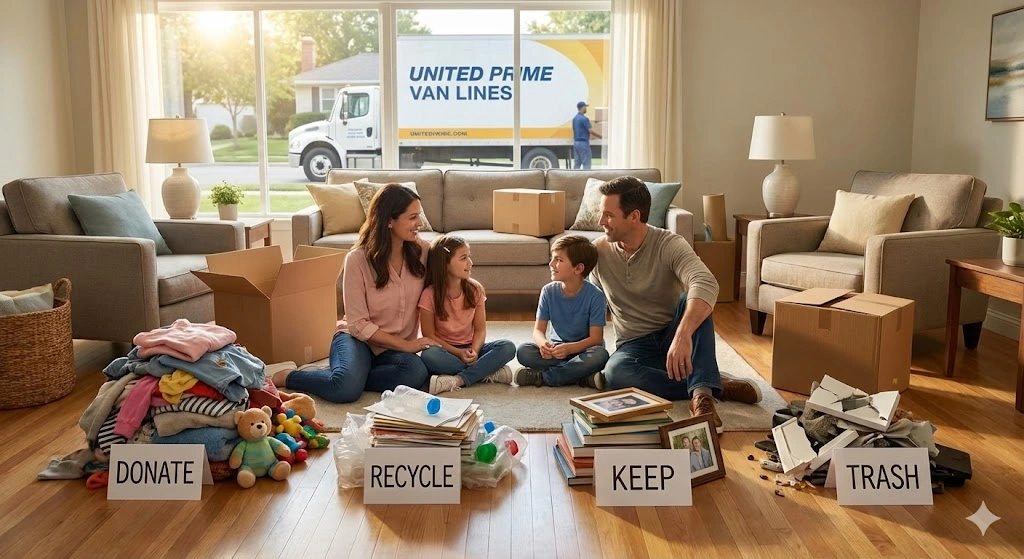
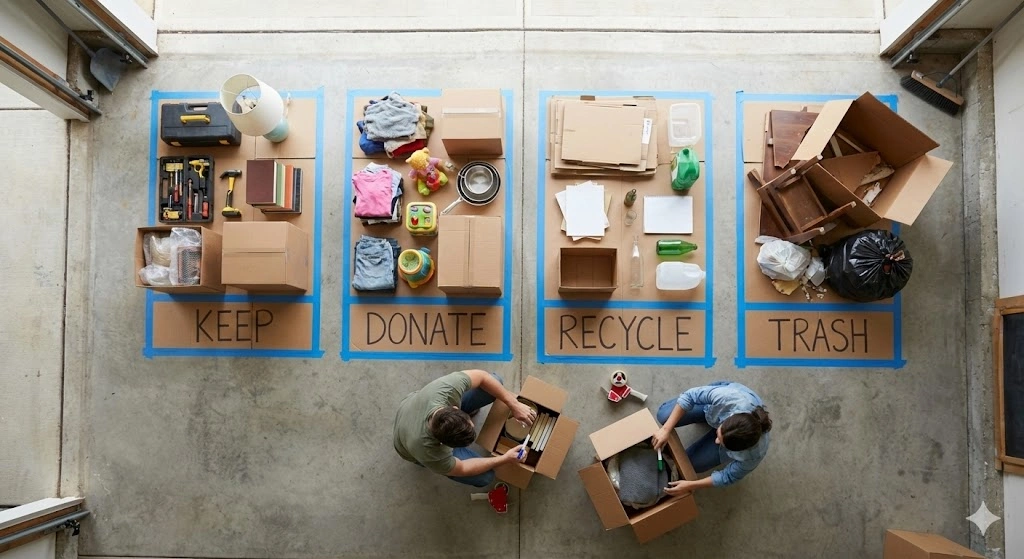
We usually recommend four basic categories while you pack:
Here’s how we encourage our clients to think about each one.
Your “keep” pile should earn its place. A few questions that help:
A lot of our clients tell us that just asking, “Would I pay to move this?” changes their answer fast. When you realize every pound adds cost and effort, that third blender suddenly looks less charming.
We can even help with this part: during in-home or virtual estimates, we often walk through rooms with you and talk through what’s realistic to move and what might be better to donate or sell locally before moving day.
Donation is the sweet spot between clinging to items and just tossing them out. You’re freeing up your space and helping someone else in the process. Win-win.
Think gently used when you’re building a donate pile:
We always say: if you’d be embarrassed to give it to a friend, it probably shouldn’t go in the donate pile.
Recycling rules change from city to city, and we see a lot of confusion here. People either throw everything in the trash out of frustration, or they “wish-cycle” (tossing things in the blue bin they hope are recyclable).
A better approach is to set aside:
Then, together we figure out the right destination — city recycling, hazardous waste drop-off, or private recyclers.
We try to keep this pile as small as possible. Truly trash items are:
When we handle a move, we’re happy to talk through this with you so you’re not standing over a trash bag feeling guilty or confused. A lot of clients appreciate just having someone say, “Yes, unfortunately this one has to go in the garbage,” or, “No, this can actually be recycled here.”
“Just donate it” is easy to say; actually doing it takes a bit more planning, especially right before a move. We’ve seen what works best and what usually turns into last-minute stress.
Many of our clients like the simplicity of big-name organizations, especially when moving from South Florida to another state or from California to somewhere new.
Some options to look for in your area:
Most of these accept:
A lot of locations in and around Hallandale Beach, Miami, Fort Lauderdale, Chatsworth, and greater Los Angeles offer scheduled pickups for larger furniture and bulk donations. If you’d like, when we’re planning your move at United Prime Van Lines, we can help you time those pickups before your moving date so you’re not tripping over a sofa you no longer want on the day we arrive.
Some of the best places to donate are smaller local organizations that don’t always pop up in the first page of Google search:
These groups often welcome:
If you’re not sure where to start, we encourage you to call a local community center or city office and ask who’s currently accepting donations. Needs change, and a quick phone call can be the difference between items going to great use or being turned away.
We’ve seen well-meaning people try to donate:
Charities have to pay to dispose of things they can’t use, which just shifts the waste problem onto them.
A simple mental check we suggest:
If the answer is no, it either needs repair, recycling, or disposal.
When you work with us, we’re happy to set aside clearly labeled “donate” boxes and load them into your vehicle, or, if you arrange a charity pickup, we’ll help stage them in an easy-to-access area like the garage or front room.

Recycling during a move isn’t just about bottles and cans. It’s about looking at all the “leftovers” of living in a home — and preparing to leave it — and deciding what truly needs to end up in a landfill.
Cardboard is one of the easiest materials to recycle, and in the moving world, it’s everywhere.
Here’s how we like to handle it:
In many South Florida and California communities, there are also people or small businesses happy to pick up sturdy moving boxes. Local Facebook groups, Nextdoor, or community boards are great places to post: “Free moving boxes, gently used.”
We can help you sort and stack boxes at your destination so they’re easy to grab for reuse or recycling instead of getting crushed and tossed.
Old laptops, tangled cords, dead tablets, boxes of mystery chargers… moves always seem to drag these out.
Electronics shouldn’t go in the trash. Many counties around Hallandale Beach, Broward County, Miami-Dade, Los Angeles County, and Ventura County offer:
We suggest:
We can help you keep that box separate so it doesn’t get lost in the general shuffle of moving boxes.
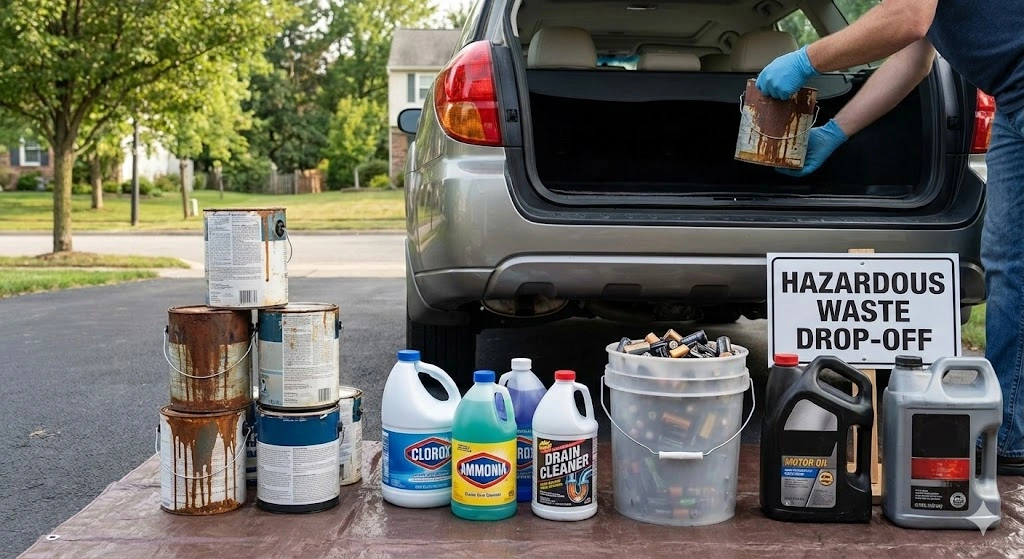
For safety and legal reasons, there are some things we can’t move:
We’ll go over a detailed list with you during your estimate so there are no surprises.
Instead of tossing everything, here are some better options:
In both South Florida and the Chatsworth/LA area, local governments maintain lists of drop-off sites and dates. If you’d like help finding the right link for your area while we’re planning your move, we’re happy to point you in the right direction.
Not everything has to be donated, recycled, or trashed immediately. Sometimes, the most efficient and eco-friendly choice is to repurpose what you already have — at least for the move itself.
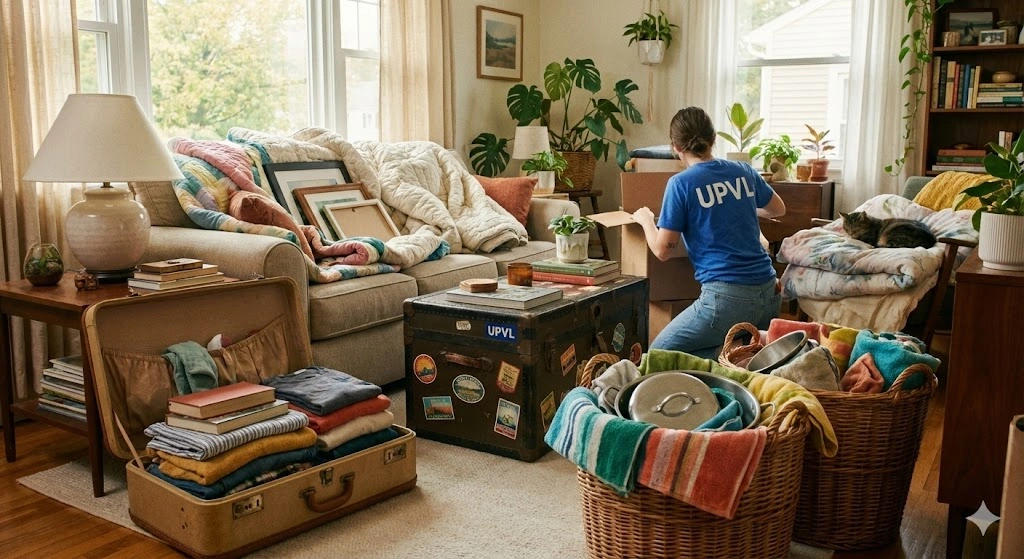
Instead of buying a mountain of bubble wrap and packing paper, we encourage clients to “shop” their own homes first:
We’ve helped plenty of families cut their packing material purchases almost in half just by doing this. It saves money, saves space, and creates less waste on the other end.
During packing services, our crews at United Prime Van Lines are trained to use your soft goods smartly — without putting anything at risk — so you get double use out of what you already own.
Some older furniture isn’t worth moving as a “forever piece,” but it can still help with the move:
We’re not here to tell you to turn everything into a Pinterest project — moving is stressful enough. But if a piece of furniture can serve one more purpose before you part ways, that’s one less item going straight to the landfill.
Once you arrive, it’s normal to realize that not everything fits the way you imagined. Instead of ordering all new everything, sometimes a “second look” at what you already have can help:
We watch people settle in all the time, and the homes that feel the most peaceful are usually the ones where the owners let their items evolve instead of instantly replacing them.
We’re not a “greenwashed” company that just slaps an eco-friendly label on everything. We’re movers first — but we’ve seen what works, what creates unnecessary waste, and where simple changes really help.
Here’s how we like to support a low-waste move when you work with United Prime Van Lines.
When you reach out to us, whether you’re moving from Hallandale Beach to another part of South Florida or from Chatsworth to another state, we don’t only talk truck size and dates.
We also talk about:
This planning stage is where we can build in time and structure for donating, recycling, and repurposing — so it doesn’t become a frantic last-minute job at 11 p.m. the night before we arrive.
If you decide to use our packing services, we can:
We see ourselves as partners in this process, not just muscle with a truck. If you tell us, “We’re trying to minimize waste,” we take that seriously and build it into how we work.
Because we’re based in Hallandale Beach and work all over South Florida, and we also serve clients out in California (including Chatsworth), we’re familiar with:
We won’t pretend to be experts on every local program everywhere you’re going, but we can share what we know, point you toward helpful resources, and help you avoid unnecessary waste where possible.
To make this practical, here’s how we usually suggest tackling each area of the home.
What to donate:
What to recycle or responsibly dispose of:
What to use as packing help:
What to donate:
What to repurpose for packing:
What to recycle or trash:
What to donate:
What to recycle or e-cycle:
What to repurpose:
What to donate:
What to handle as hazardous waste:
What to recycle:
When we walk your property during an estimate, we can flag anything in your garage that we already know can’t be loaded on the truck, and help you plan where it should go instead.
After years in this industry, we see the same patterns. Here are a few avoidable waste traps — and how we help you steer clear.
You’re exhausted, behind schedule, and the truck is coming. Suddenly entire drawers, cabinets, and even small furniture get thrown out just to “be done.”
How we help:
People buy:
How we help:
Ignoring local donation centers, recycling programs, and bulk pickup days means everything ends up out front on trash day.
How we help:
You don’t have to turn your move into a zero-waste science project to make a real difference. If you:
…you’re already far ahead of most moves in terms of environmental impact.
When you bring us in at United Prime Van Lines, we don’t just show up with a truck and hope for the best. We sit down with you (virtually or in person) and build a plan that:
Whether you’re moving from a condo in Hallandale Beach, a single-family home somewhere in South Florida, or a house in Chatsworth or the greater Los Angeles area, we’re ready to help you move in a way that feels lighter — on your wallet, your new home, and the environment.
If you’d like to talk through your specific situation, we’re just a call away. We’ll walk through what you own, where you’re going, and how we can make your next move the cleanest, calmest one you’ve ever had.