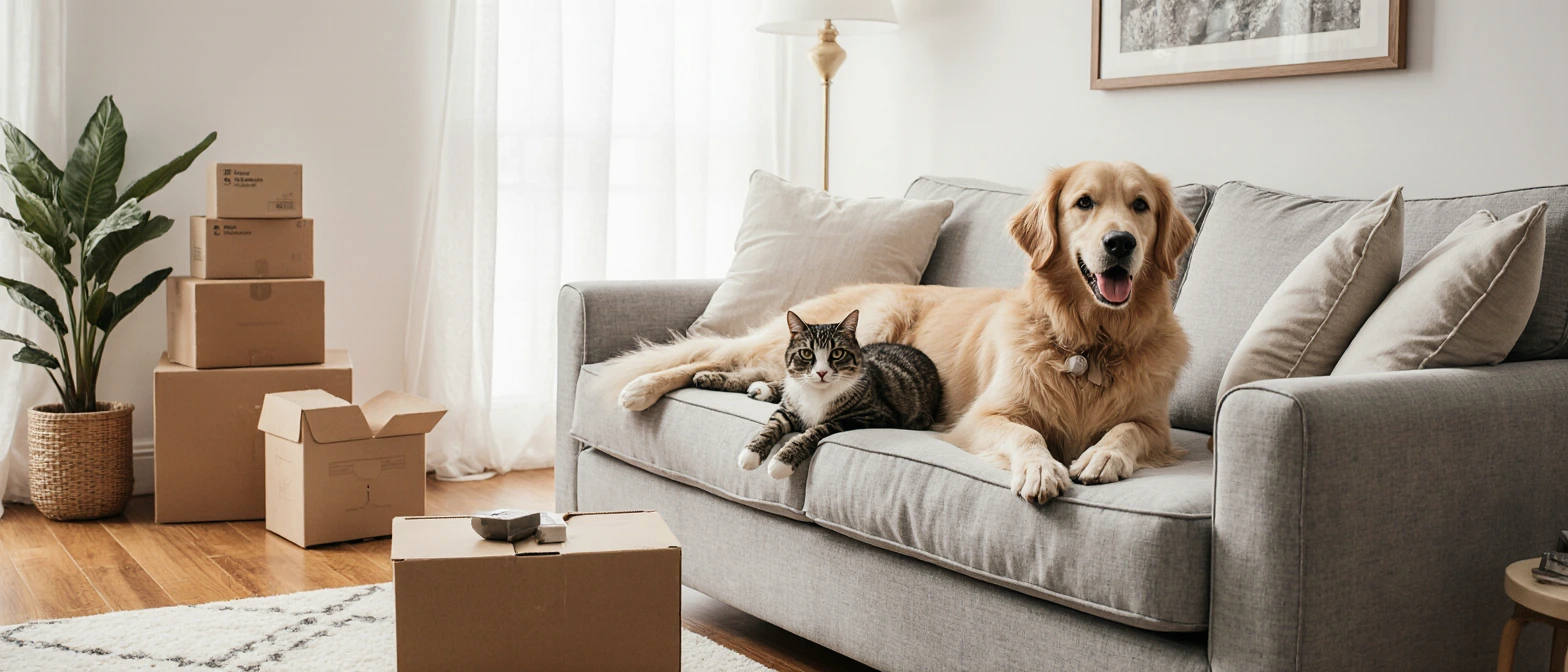
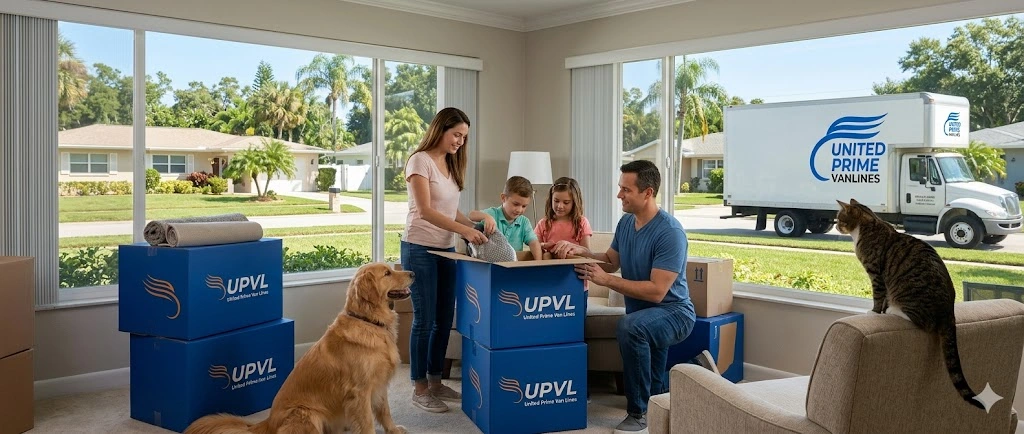
Moving is stressful enough for humans. For pets, who can’t read your calendar or understand your plans, it can feel like their whole world is shaking.
The good news: with some smart preparation, travel planning and gentle routines in your new home, your dog, cat or other companion can handle a move far better than you might expect.
This guide walks through how to prepare your pet before the move, keep them safe during transport, and help them settle into a new home with less stress for everyone.
Step 1 – Prep Your Pet Before Moving Day
A calm move with pets starts weeks before the truck shows up.
Book a vet visit ahead of time
Schedule a checkup 2–4 weeks before the move so you can:
- update vaccines if needed,
- refill medications,
- get a copy of medical records,
- ask about travel tips (especially for anxious pets),
- discuss sedation or calming options if your vet feels they’re appropriate.
If you’re crossing state lines or flying, you may need a health certificate dated close to your travel date. Ask your vet what’s required for your route.
Update tags and microchip info
Before you travel, make sure your pet can be identified quickly if they slip away:
- double-check their ID tag with current phone number,
- ensure microchip info is updated with your correct contact details,
- consider adding a temporary tag with your travel cell and “in the process of moving” note.
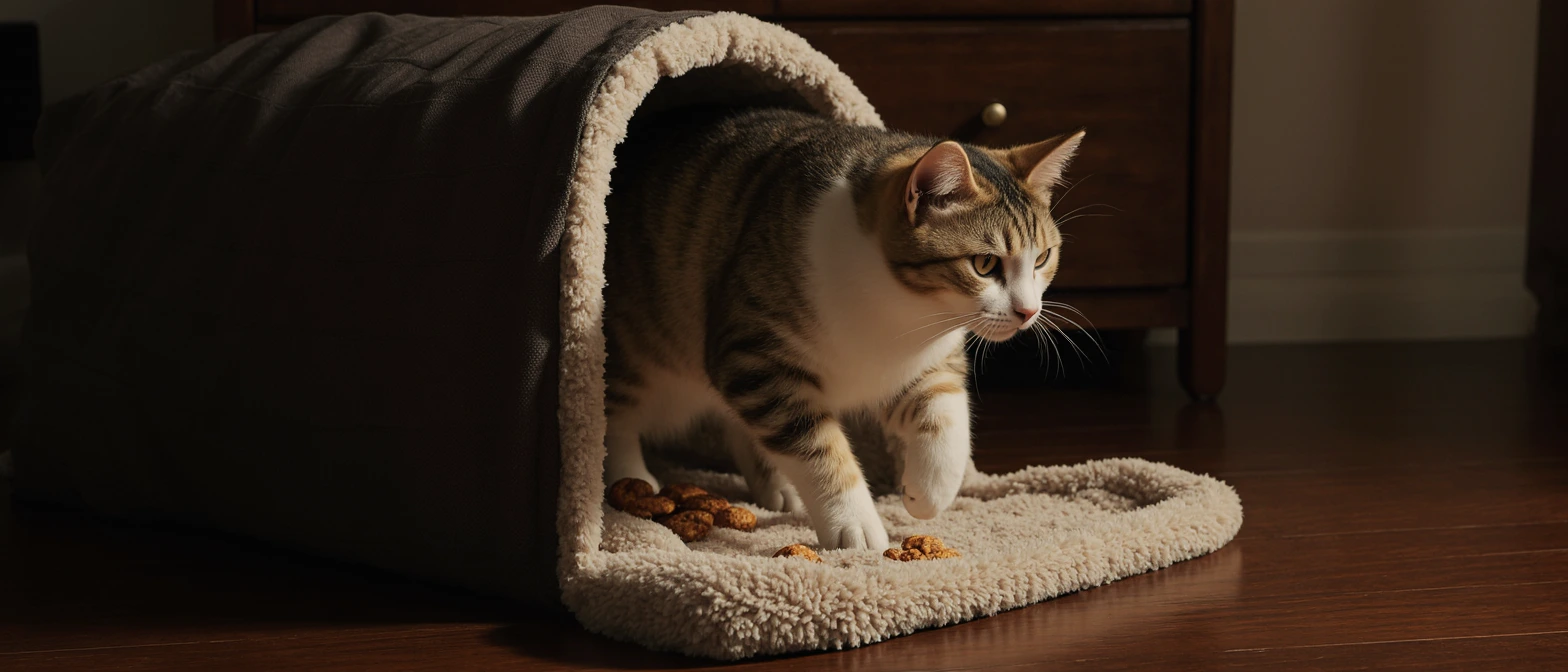
Get them used to carriers and crates
If your pet only sees the carrier before vet visits, they’ll associate it with stress. Change that story:
- leave the carrier or crate open in a room with a soft blanket inside,
- toss treats and toys in there casually,
- feed some meals near or inside the crate,
- take a few short practice rides in the car.
For dogs, crate training (or at least crate comfort) makes travel and hotel stays much simpler and safer.
Step 2 – Packing for Your Pet: Their Own “Go-Bag”
Your pet should have a dedicated bag or bin that stays with you, not on the moving truck. Pack it like you’re planning a small vacation for them:
What to include:
- 3–7 days of their regular food,
- portable food and water bowls,
- medications and supplements,
- poop bags, litter and disposable trays,
- a favorite toy or two,
- bed or blanket that smells like home,
- grooming supplies (brush, wipes, etc.),
- extra leash, collar and ID tag,
- copies of vet records and vaccine proof.
If your pet needs a particular brand of food or medicine, bring more than you think you’ll need in case it’s not easy to find immediately in your new area.
Step 3 – How to Transport Pets Safely
The golden rule: pets should never ride in the back of a moving truck. It’s dark, hot/cold, noisy and unsafe. They travel with you in your car or in airline-approved conditions.
Traveling by car
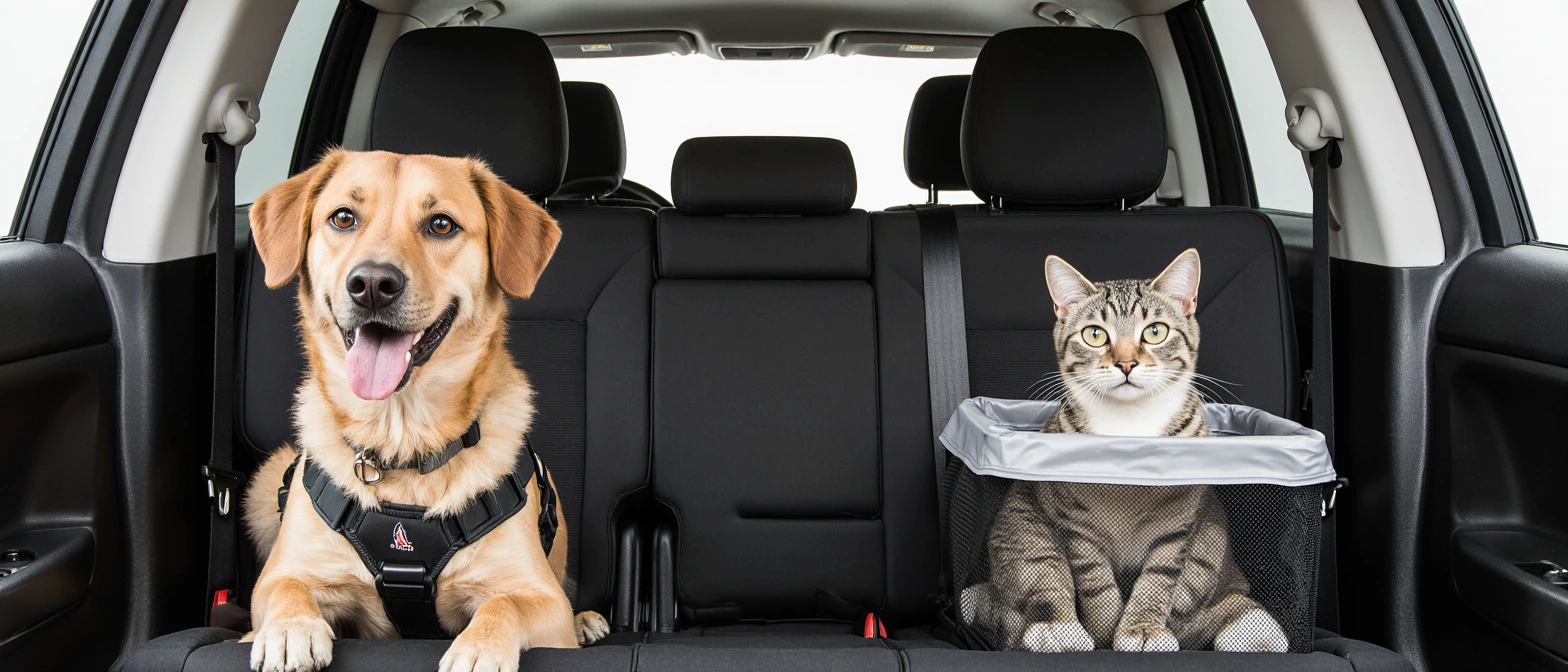
For most pets, car travel is the simplest and safest option.
For dogs:
- Use a crash-tested harness attached to a seat belt or a secure crate.
- Never let them ride on your lap or loose with their head out the window.
- Plan rest stops every 2–3 hours for bathroom breaks and short walks.
- Offer water regularly; small amounts more often are better than a lot at once.
For cats and small animals:
- Always keep them in a secure carrier; don’t let them roam the car.
- Cover part of the carrier with a light blanket to reduce visual stress.
- Use absorbent pads in the carrier in case of accidents.
Inside the car:
- Keep the temperature comfortable and avoid direct sun on carriers.
- Never leave pets alone in a parked car — even “just for a few minutes.”
Traveling by plane
Air travel with pets takes more planning, but sometimes it’s the only realistic option.
General tips:
- Check the airline’s pet policy early (cabin vs cargo, carrier size, required paperwork).
- Book flights to avoid extreme heat or cold when possible.
- Choose nonstop flights when you can to reduce stress and risk.
- For in-cabin travel, make sure your carrier fits the airline’s size rules.
Talk to your vet about:
- whether your pet is healthy enough to fly,
- feeding schedule before and after the flight,
- anxiety support (many vets are cautious with sedatives for flying pets).
Hotel or overnight stays
If your move involves overnight stops:
- choose pet-friendly hotels in advance,
- bring a foldable crate or carrier for safety in unfamiliar rooms,
- keep your pet leashed between the car and room,
- try to stick to their regular feeding and bedtime routine.
Place their bed or blanket near you in the room. Smell and proximity are huge comfort factors.
Moving Day Logistics: Pets and Movers
Moving day is loud, busy and full of open doors – basically a perfect recipe for a freaked-out escape artist pet if there’s no plan.
Create a “no-go” safe space
Decide in advance where your pet will be while movers are working:
- a closed room that’s packed last,
- a quiet bathroom with their bed and water,
- a friend’s house or daycare,
- or with one family member away from the action.
Put a sign on the door:
“DO NOT OPEN – PET INSIDE”
Tell the moving crew about your pets and the safe room, so nobody opens doors by accident.
Don’t wash away all their smells at once
You’ll want a clean house, but your pet needs familiar scents to feel safe.
Avoid washing all their bedding and toys right before the move. Instead:
- leave some items unwashed so “home smell” travels with them,
- place those items in the carrier and later in your new home.
That smell bridge is a huge comfort on a stressful day.
If you’re working with us on your move, you can let our crew know which room is the pet safe zone. We’ll work around it until you give the green light, so your dog or cat isn’t slipping past open doors while furniture is going out.
First Hours in the New Home: Slow and Calm
When you arrive, it’s tempting to let pets explore everything right away. For most animals, slower is better.
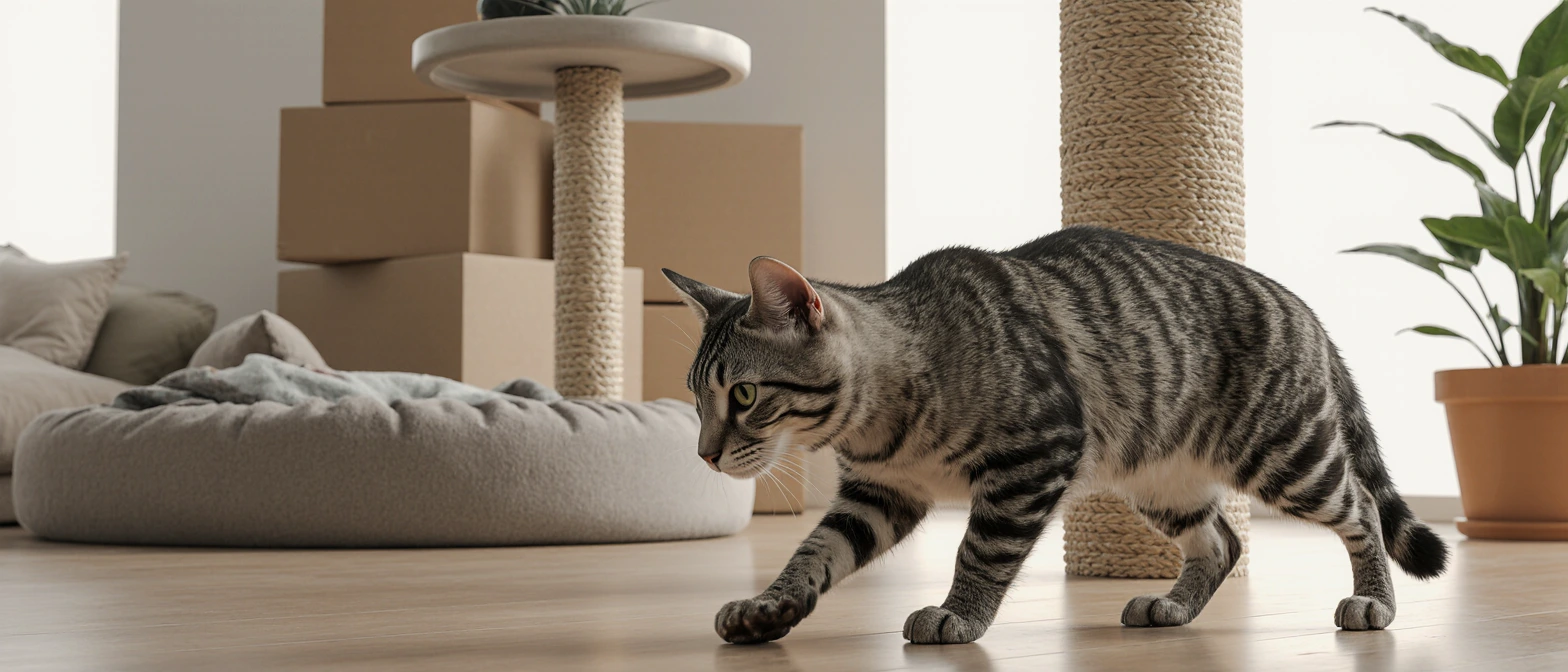
Set up one “base camp” room
Choose one quiet room and:
- set up their bed, bowls, toys and litter box (for cats),
- place their carrier there and open the door,
- keep the door mostly closed so they can adjust at their own pace.
Let them decompress in this smaller space before exposing them to the whole house.
For dogs:
- introduce a secure yard or outdoor potty spot on a leash,
- do a quick “sniff tour” of key areas, then return to base camp.
For cats:
- keep them in one room for at least a day or two,
- gradually open access to other rooms as they become more confident.
Keep routines as normal as possible
Within the first 24–72 hours, try to:
- feed at the usual times,
- walk dogs on a similar schedule,
- keep play and cuddle time in the mix (even if you’re tired),
- avoid big gatherings or loud visitors right away.
Regular routine says, “We moved, but you still have your people and your rhythm. You’re safe.”
Helping Dogs Adjust to a New Neighborhood
Dogs often adapt quickly once they realize there are new places to sniff and explore.
Tips to help them feel at home:
- Start with short, calm walks around nearby blocks.
- Let them sniff plenty – this is how they “read the news” of their new area.
- Keep them on leash until you fully understand local traffic, dogs and rules.
- Re-establish house rules right away (no jumping on counters, same sleeping spots, etc.).
If your dog is anxious or reactive, keep initial walks predictable and low-pressure. Over time, gradually introduce new routes, parks and people.
Helping Cats Settle In Without Drama
Cats are more territory-driven and can be more rattled by a move. A few extra steps go a long way.
Go slow with space
- Keep them in one room at first (“safe room”).
- Add familiar items: scratching posts, toys, bedding, hiding spots.
- Use vertical space (cat trees, shelves) so they can observe from above.
When they’re calm — eating normally, grooming, using the litter box — slowly expand their territory room by room.
Watch for hiding, not eating or litter problems
It’s normal for cats to:
- hide more at first,
- be jumpy with new sounds,
- eat a little less on day one.
Red flags that may need a vet call:
- no eating or drinking for more than a day,
- no urination or bowel movement within a normal window,
- constant hiding paired with heavy breathing or obvious distress.
Moving with Multiple Pets or Special Pets
Multiple pets add extra layers — but the principles are the same: safety, routine and gradual changes.
For multiple pets:
- keep everyone secured separately during travel,
- let them explore the new house one at a time if they’re easily overstimulated,
- keep resources (bowls, beds, litter boxes) plentiful to avoid competition.
For elderly, disabled or special-needs pets:
- talk to your vet about extra comfort measures,
- limit stairs if mobility is an issue,
keep their main rest area quiet and close to where you spend time.
How Movers Fit Into a Pet-Friendly Plan
A professional moving team can’t transport your animals inside the truck (that’s unsafe), but they can make your move much more pet-friendly by:
- working around your “pet safe room” on moving day,
- loading and unloading pet items last/first so beds, crates and bowls are ready quickly,
- keeping doors and pathways predictable so you can focus on your animals, not just furniture.
When you move with our team at United Prime Van Lines, you can let us know you’re moving with pets. We’ll coordinate timing, room order and loading so your dog or cat can stay as calm and secure as possible while we handle the heavy lifting.
Quick Checklist: Moving with Pets Safely
Use this list to stay on track:
Before the move:
- Vet visit completed (records, vaccines, meds, travel advice)
- Microchip and ID tags updated
- Carrier or crate introduced and made comfortable
- Pet “go-bag” packed (food, bowls, meds, comfort items)
Travel & moving day:
- Safe travel setup (harness, crate, carrier)
- Never in the moving truck; always with you
- Pet-safe room or off-site care arranged during loading/unloading
- Familiar bedding and toys kept unwashed for comfort
New home:
- Base camp room ready with bed, bowls, toys (and litter box for cats)
- Routines for feeding, walking and play restarted quickly
- Gradual access to new spaces
- Behavior and appetite monitored for signs of stress
Do you have to make it perfect? No. But a few thoughtful steps can turn “terrifying chaos” for your pet into “big day, but my humans are here and my bed still smells like home.”