Relocating elderly parents is a completely different kind of move.
You’re not just changing an address. You’re touching habits, emotions, long-time memories and a sense of safety that has been built over years.
If you rush it, the move can feel like something being done to your parents.
If you slow it down, explain things and plan it carefully, it can feel like an act of care.
This guide walks you through the key steps: from the first conversation to the first days in the new home, in a calm, human way.
Before you think about trucks, boxes or movers, you need one thing: a conversation that doesn’t feel rushed or forced.
Explain why the move is coming: maybe it’s closer to you, closer to better healthcare, safer, more accessible, or simply easier to manage day to day.
Let your parents talk too. Ask what they worry about, what they’re afraid of losing, what matters most to them in their daily life.
You don’t need to “sell” the move.
You need to show that you’re not making decisions over their head. You’re making decisions with them.
If there’s one area you want perfectly organized before anything else, it’s health.
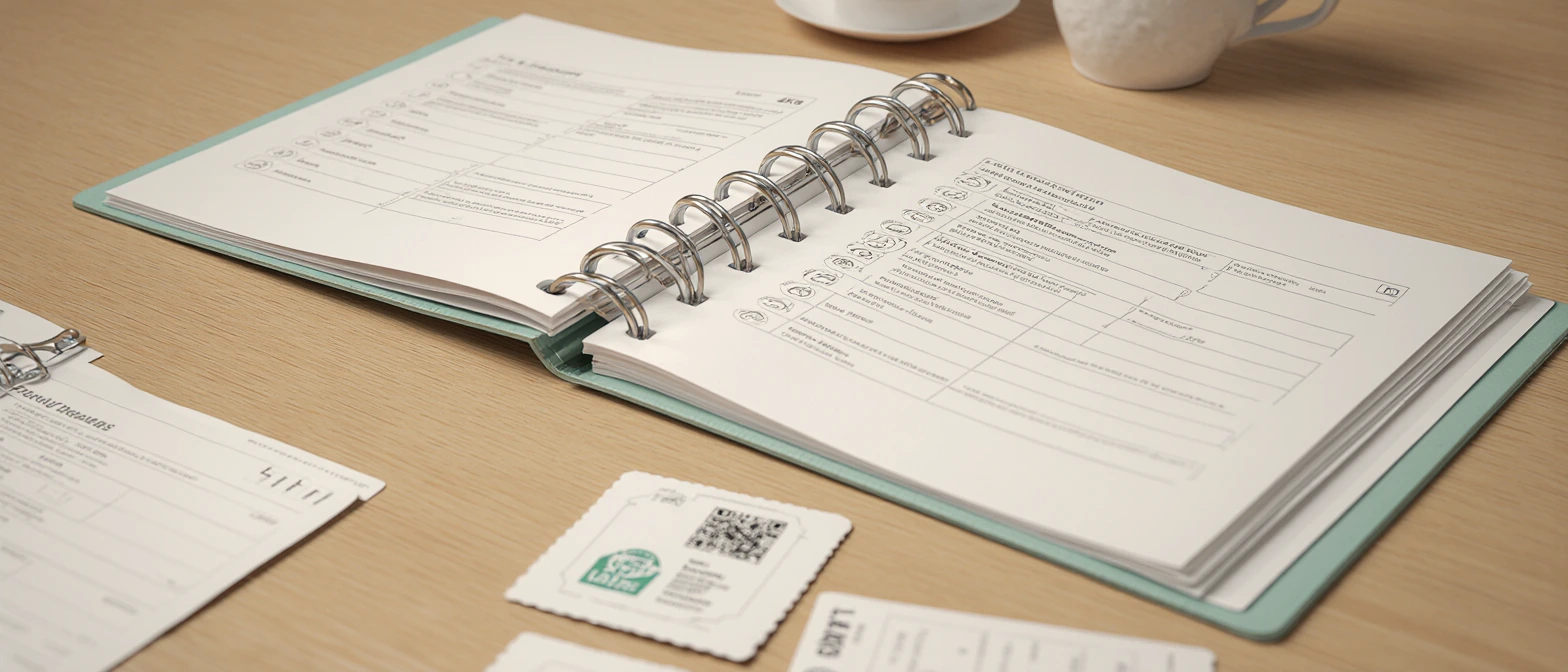
You don’t need a complex system. A single clear folder is enough if it contains:
Keep this folder somewhere visible and easy to reach. Make sure at least two people know exactly where it is.
Don’t wait until after the move to figure out where the nearest pharmacy or clinic is.
Check ahead of time:
Just knowing this information exists lowers anxiety for everyone.
Not every family needs the same type of help.
What matters is matching the moving format to your parents’ physical and emotional state, and your own time and energy.
This is the calmest option. Professional movers handle packing, furniture, loading, unloading and basic setup.
Your parents participate only by making decisions, not by lifting, bending or standing for hours.
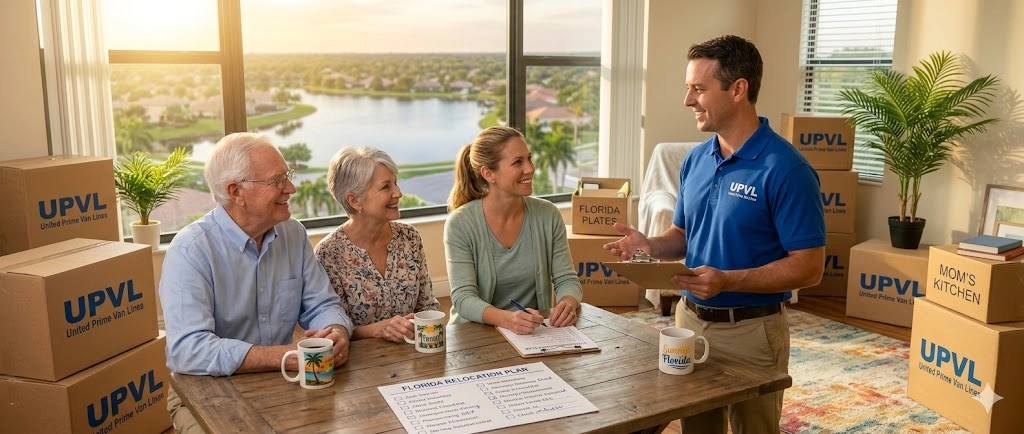
If you’re working with a company like United Prime Van Lines, you can say directly that you’re moving elderly parents and want a gentle, patient crew. That shapes how the day is planned and how the team behaves.
Here, movers handle the heavy and technical parts, while you and your parents take care of personal belongings and small items.
This works well when your parents still want some control:
they pack photos, letters, personal documents, a few favorite items, while professionals deal with furniture and awkward pieces.
In this scenario, most of the emotional work happens slowly with you:
you help sort, decide what stays, what goes, and what gets donated.
Movers arrive closer to the end of the process to simply take things from point A to point B without your parents having to carry anything.
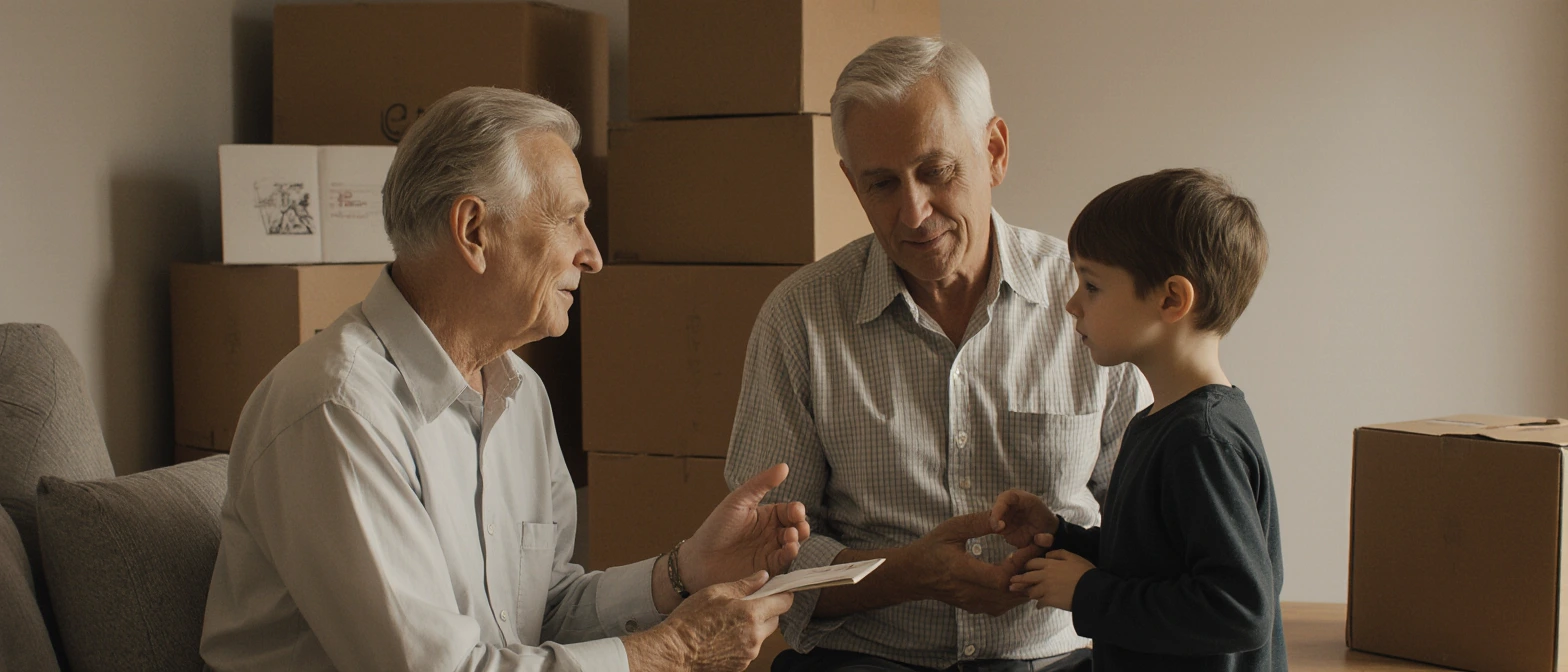
Decluttering with elderly parents is not a quick “keep or toss” weekend.
You’re touching objects that anchor them to their life story: books, gifts, photos, old furniture, even small everyday items.
Go slowly. Give them time to decide. Instead of “we don’t need this,” try questions like:
You can make three simple categories:
A powerful idea is a memory box: a small, special box filled with photos, little souvenirs and items that carry meaning, even if they don’t have a practical use.
You might be able to pack a whole apartment in a weekend. Your parents probably can’t.
A realistic, calm timeline might look like this:
You don’t have to follow these exact weeks, but the structure matters.
For elderly parents, predictability is more valuable than speed.
A new place can feel confusing at first, especially if your parents are used to one layout for years.
If you can, arrive at the new home in advance or send movers ahead with some key pieces.
Think about a few questions:
Clear pathways, remove small rugs that slide, and keep furniture simple and stable.
Make sure light switches are easy to find and lamps are placed where they naturally reach.
You don’t have to make everything perfect on day one.
But if the bed, favorite chair, bathroom and kitchen basics are ready, the space already feels more welcoming and less like a construction zone.

Just like families use a “first night” box, elderly parents benefit a lot from a personal “first days” box.
It might include:
Keep this box traveling with you, not in the back of the truck.
When they walk into the new place, you can open it right away and bring some instant familiarity into the room.
The hardest emotions often show up not during the move, but after it.
Once boxes are stacked and the house feels different, some parents may feel sadness, regret or disorientation.
This doesn’t mean the move was a mistake. It means they’re human.
Check in often. Help them build simple routines in the new place:
morning coffee by the same window, a short daily walk, a phone call at a regular time.
Encourage them to do small things on their own in the new home — choosing where certain items go, deciding what to hang on the walls, rearranging a cabinet.
These small choices rebuild their sense of control.

When you involve professional movers and explain that this is a relocation for elderly parents, the job becomes more than just transport. It becomes about tone.
A good crew will:
At United Prime Van Lines, for example, you can ask for a calmer, senior-friendly approach: fewer loud commands, more explanations, and a steady pace that doesn’t overwhelm your parents.
You take care of the emotional side — we help with the physical side.
Relocating elderly parents is not a “regular move.” It’s a transition that touches identity, memory and daily comfort.
If you:
the move stops feeling like a loss and starts feeling like support.