Storage seems simple on paper. You put your stuff in a unit, lock the door and walk away.
In real life, how long your belongings stay in storage changes almost everything:
- what kind of unit you should choose,
- how carefully you need to pack and protect things,
- how much you’ll pay over time,
- and how easy (or hard) it will be to actually use what you’ve stored.
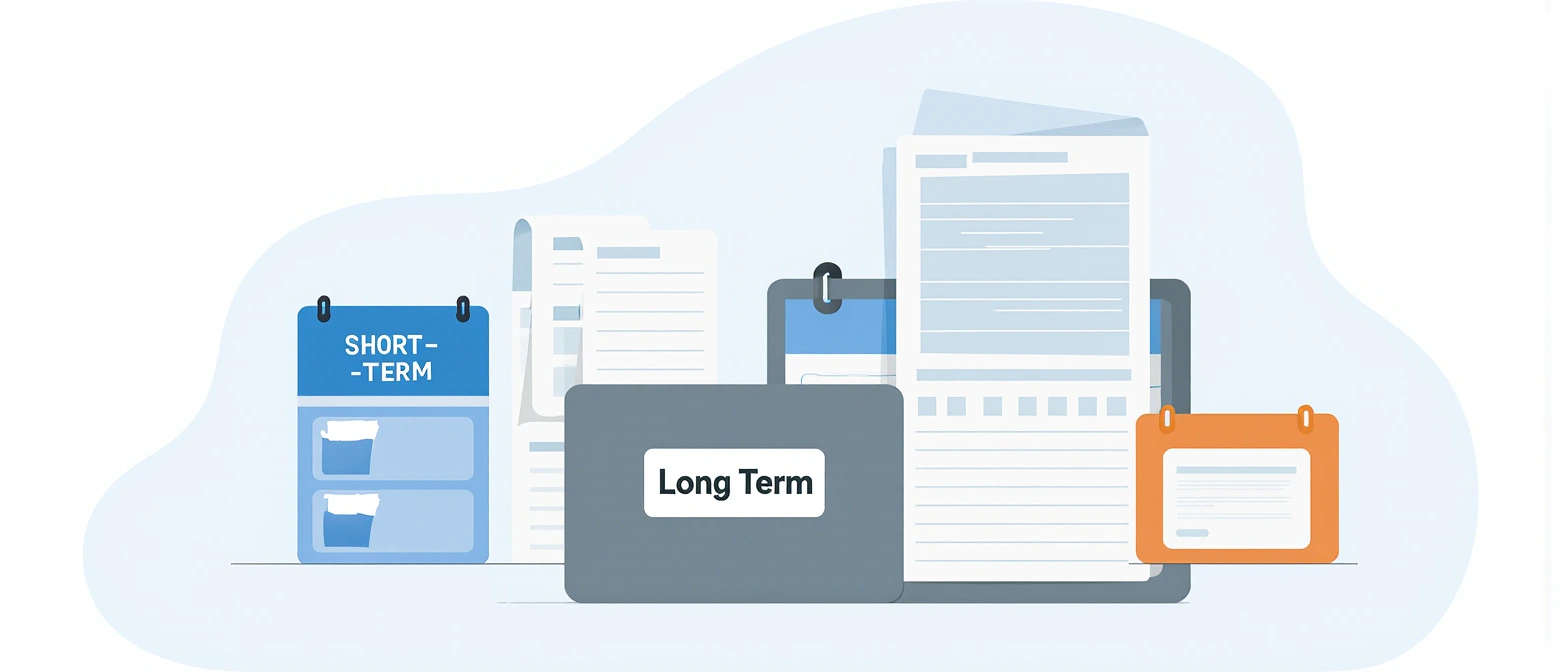
Short-term storage and long-term storage are two very different situations. Treat them the same, and you either overspend or risk damage.
In this guide, we’ll break down short-term vs long-term storage in a moving context – what they really mean, what to plan for in each case, and how to avoid the most common mistakes people regret months later.
Why Your Storage Timeline Matters More Than You Think
Storage isn’t just about finding an empty space. It’s about how your belongings will live there over time.
When you know your rough timeline, you can:
- choose standard vs climate-controlled correctly,
- decide whether to pack tight or leave space to walk in,
- pick cardboard vs plastic bins,
- think about moisture, dust, pests and temperature,
- avoid paying for features you don’t need.
The same unit that’s perfectly fine for three weeks might be a terrible idea for twelve months.
A quick way to think about it:
- Short-term storage:
- Weeks to a couple of months.
- Your goal is bridge the gap during a move, renovation or short transition.
- Long-term storage:
- Several months or more.
- Your goal is park part of your life safely and not worry about it.
Once you’re clear which bucket you’re in, the rest falls into place much more easily.
What Counts as Short-Term vs Long-Term Storage?
There’s no universal law, but this breakdown works for most moves:
- Short-term storage (0–3 months):
- Delay between move-out and move-in
- Short renovation or staged remodel
- Temporary job assignment or sublet
- You know exactly when you’ll empty the unit
- Mid-term storage (3–9 months):
- Extended renovation
- “Test run” in a new city or neighborhood
- Seasonal relocation
- Long-term storage (9+ months):
- Extended assignment or relocation abroad
- Downsizing without a final plan
- Keeping heirlooms, collections or archives off-site
- “I’ll deal with this later” that realistically means a year or more
Short-term vs long-term is less about a strict number and more about this question:
“Will these items sit mostly untouched for months, through multiple seasons?”
If yes, treat it as long-term storage in your planning.
lanning for Short-Term Storage (0–3 Months)
When storage is just part of your move, you can focus on speed and efficiency – with a bit less worry about long-term exposure.
Typical situations:
- You’re closing on a new place a few weeks after leaving the old one.
- Your apartment isn’t ready yet, but your lease ends.
- You’re doing a short, messy renovation (like refinishing floors or painting).
What kind of unit makes sense for short-term storage?
For most short-term situations:
- A standard (non-climate-controlled) unit is usually fine for typical household items, unless you live in a region with extreme heat/humidity or you’re storing very sensitive items.
- You can often get away with a slightly smaller unit by packing tightly, since you won’t need to access things regularly.
Climate control might still be worth it short-term if:
- you’re in a very hot, humid or very cold climate,
- you’re storing high-end electronics, instruments or art,
- you know certain items really don’t handle temperature swings well.
How to pack for short-term storage
Short-term storage is “moving mode”:
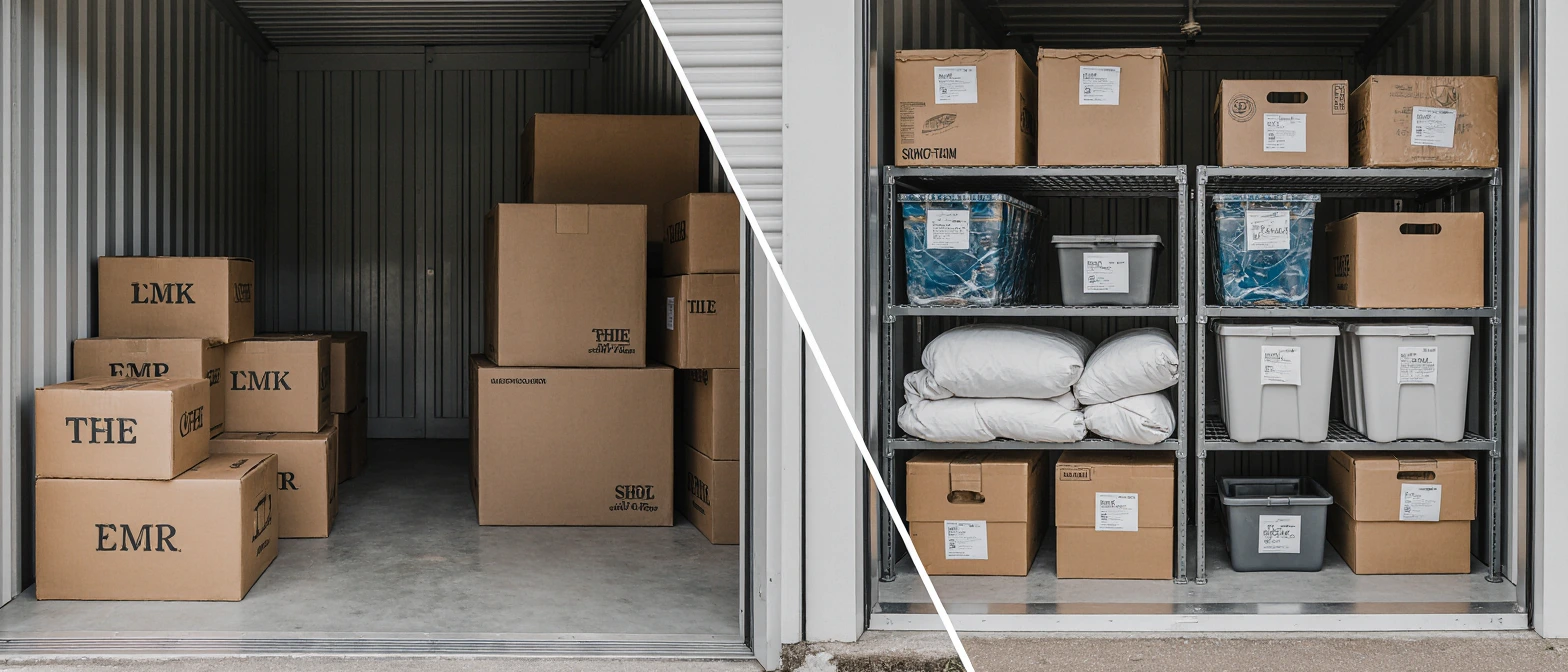
- You can pack tighter, stacking boxes higher and using more of the vertical space.
- You don’t need a perfect internal layout for walking around.
- You can keep frequently needed items near the front and bury the rest.
Smart tips:
- Use strong cardboard boxes (or reusable crates) that stack well.
- Label each box with room + brief contents (you’ll still forget what’s where in three weeks).
- Wrap fragile items properly – short-term storage doesn’t make them less breakable.
- Use moving blankets or pads on furniture to avoid scratches during loading/unloading.
You don’t need an elaborate shelving system or perfect airflow. You just need to load wisely and protect surfaces from bumps and compression.
Access and convenience in short-term storage
Short-term often means:
- you might only visit the unit once or twice,
- your movers may load in and out on different days,
- everything is in flux.
So when you choose a facility, focus on:
- easy truck access – can the moving truck get close?
- simple gate/access hours – no headaches with timing,
- clear route to the unit – fewer long hallways and tight corners.
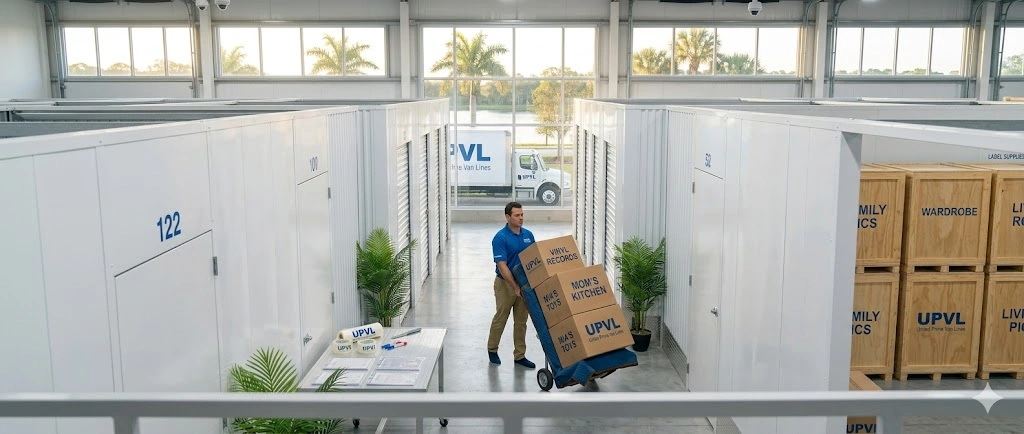
If you’re moving with us, we can go directly from your home into the storage unit, load everything once, and then reload from storage into your new place when it’s ready. For short-term storage, that means fewer touchpoints and less risk of damage.
Planning for Long-Term Storage (9+ Months)
Long-term storage is a different animal. You’re not just getting through a few weeks – you’re asking your furniture, boxes and keepsakes to survive multiple seasons in a box-shaped mini-warehouse.
This is where environment, prep and materials really matter.
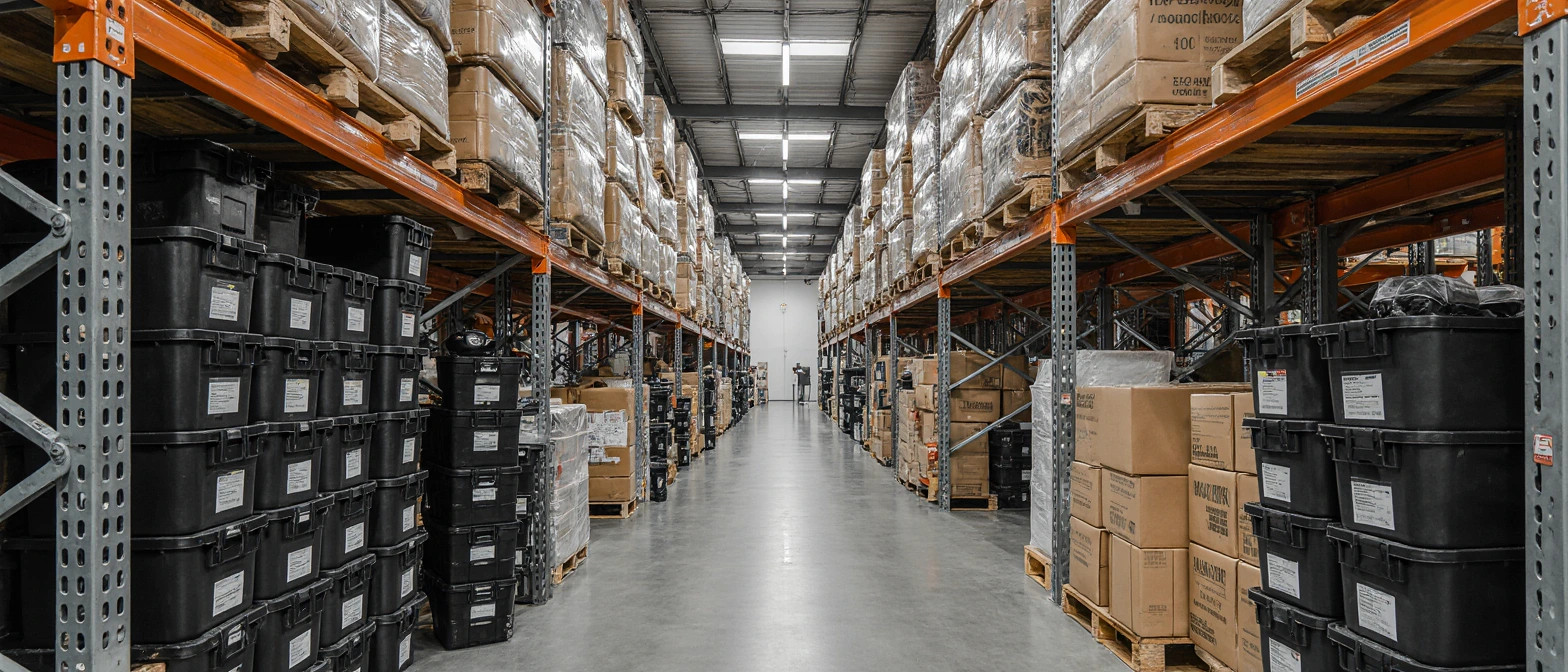
Climate control is no longer optional for sensitive items
For long-term storage, think hard about temperature and humidity.
You should strongly consider climate-controlled storage if you are storing:
- wood furniture you care about (tables, bed frames, antiques),
- leather sofas and chairs,
- electronics (TVs, computers, sound systems),
- musical instruments,
- photos, artwork and framed pieces,
- important documents or paper archives,
- collectibles and anything with potential resale or sentimental value.
Over months and years, heat and humidity can:
- warp wood,
- crack leather,
- encourage mold and mildew,
- damage electronics,
- fade photos and art.
Climate control costs more per month, but for many items it’s cheaper than replacing everything later.
Packing for long-term storage: durability first
Cardboard and a bit of tape are fine for a short stay. For the long haul, think stability and protection.
Better long-term choices:
- Plastic bins with tight lids for clothes, documents, decor, kids’ items.
- Uniform, strong boxes that stack neatly without crushing.
- Furniture covers and moving blankets to protect surfaces.
- Mattress bags to keep dust and moisture out.
Avoid:
- Thin, reused grocery-store boxes for anything important.
- Wrapping everything tightly in plastic without airflow in humid climates.
- Leaving items directly on the concrete floor (use pallets or boards).
Prep your items properly before long-term storage
A little extra prep now saves a lot of regret later:
- Clean everything first
- Wipe down furniture, vacuum sofas, wash linens.
- Dirt and crumbs attract pests; moisture causes mold.
- Make sure items are dry
- Never store damp fabrics, cushions or boxes.
- Let things air out fully before packing.
- Condition wood and leather (if needed)
- Use appropriate products recommended for long-term protection.
- Disassemble large furniture
- Remove table legs, headboards, shelving where possible.
- Wrap pieces individually; keep hardware in labeled bags taped to the item.
- Leave space for air
- Don’t pack floor-to-ceiling with zero gaps.
- A little breathing room reduces moisture-related issues.
Labeling and inventory for long-term storage
Future you will not remember what “Living Room – Box 4” means.
For long-term, it helps to:
- label boxes on at least two sides + top with:
- room,
- core contents (“books,” “winter clothes,” “kitchen appliances”),
- maybe a box number if you like tracking.
- keep a simple inventory list (even just a phone note):
- Box 1 – Bedroom – linens & extra pillows
- Box 2 – Office – books & binders
You don’t need a warehouse-level system, but basic notes will save time when you come back months later and want only one specific thing.
Mid-Term Storage (3–9 Months): The In-Between Zone
If your timeline is somewhere in the middle, you’ll borrow strategies from both sides.
Good approach:
- Treat sensitive items as if they’re going long-term (climate control, better protection).
- Treat durable items more like short-term (standard storage is usually fine).
- If budget is tight, consider splitting:
- climate-controlled unit for “high risk” items,
- standard unit or no storage at all for things you don’t care much about.
If that’s too complex, then plan conservatively: assume the storage will last longer than you think. People often say “just a few months” and end up at a year.
Short-Term vs Long-Term Storage – Key Differences at a Glance
Here are the big shifts between short and long-term storage:
- Environment:
- Short-term: standard units okay for most items.
- Long-term: climate control recommended for most valuables.
- Packing materials:
- Short-term: cardboard, basic wrap and blankets are enough.
- Long-term: plastic bins, better covers, pallets, more thought to airflow.
- Organization:
- Short-term: packed tight, minimal aisle, quick labels.
- Long-term: aisle or walking path, shelves if possible, detailed labels.
- Access:
- Short-term: you may not visit at all until move-out.
- Long-term: plan for occasional access and being able to find specific things.
- Cost planning:
- Short-term: you can treat it like a one-time moving cost.
- Long-term: it’s a recurring bill; you may want to declutter or downsize the unit over time.
Cost Strategy: Short-Term vs Long-Term
Short-term cost mindset
For short-term storage, you’re often willing to:
- pay a bit more for a super convenient location,
- accept a slightly larger or smaller unit depending on availability,
- skip climate control if the risk window is small.
It’s more about bridging a gap than optimizing a long-term budget.
Long-term cost mindset
For long-term storage, small price differences add up:
- A $30/month difference becomes $360 over a year.
- Paying for more space than you use can add up fast.
Before committing:
- Declutter hard so you’re not paying to store things you don’t need.
- Ask about rate increase history at the facility.
- Consider whether you’d be better off selling and later rebuying certain items instead of storing them for years.
There’s a point where storing low-value furniture for a long time costs more than replacing it later.
How Storage Fits Into Your Moving Plan
Storage works best when it’s built into a full move plan, not bolted on at the last minute.
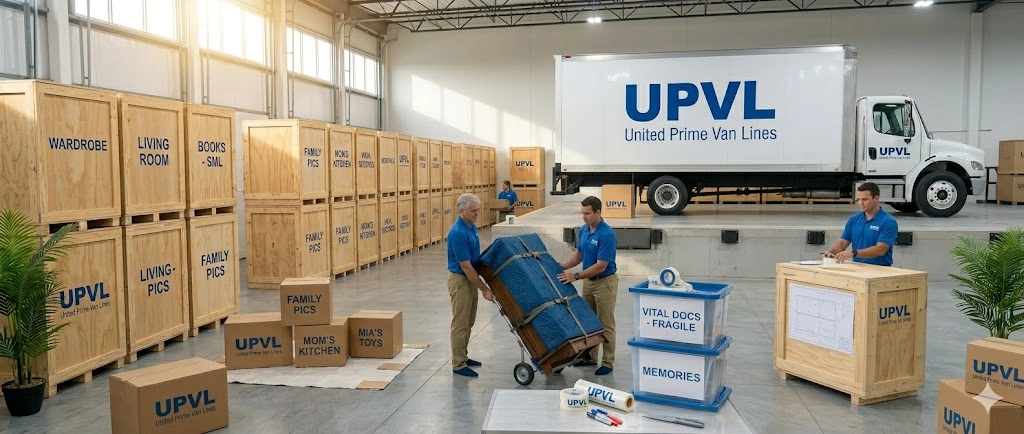
If you’re moving with a professional crew (like ours), you can:
- have everything loaded from your home directly into the storage unit,
- avoid double-handling items yourself,
- let movers stack and secure items in a way that matches your timeline (tight for short-term, organized for long-term),
- schedule move-out from storage to your new home when you’re ready.
When you book your move with us, tell us if you’re using storage short-term or long-term. We’ll adjust packing materials, loading style and recommendations to match your reality instead of treating every storage job the same.
Short-Term vs Long-Term Storage – Quick Planning Checklist
Use this as a fast decision tool:
- I know roughly how long I’ll need storage (short, mid or long-term).
- I listed what I’m storing and which items are sensitive (electronics, art, photos, documents, wood, leather).
- I’ve decided whether I need climate control or can use standard storage.
- For short-term: I’m okay with tight packing and minimal access inside the unit.
- For long-term: I’m planning for better packing, airflow, and possibly plastic bins and shelving.
- I understand how the monthly cost adds up over time and any possible rate increases.
- I have a plan for how items will be moved into and out of storage (ideally with professional help if the load is big or complex).
Get these pieces right, and storage becomes a useful tool instead of a black hole where your stuff – and your money – slowly disappear.