Moving would be so much easier if everything lined up perfectly: your current lease ends the same day your new keys are ready, the closing date doesn’t shift, and the movers load up in the morning and unload in the afternoon.
In real life? That almost never happens.
I can’t tell you how many times I’ve been on a job where a customer looks at me and says something like, “So… we just found out our new place won’t be ready for another week. What do we do now?”
That’s exactly where storage during a move comes in. Not as a last‑minute panic move, but as a safety net that can actually make your entire relocation smoother.
In this guide, I want to walk you through when storage is needed during a move, how to decide what type of storage makes sense, and how we at United Prime Van Lines usually set it up so you don’t end up juggling three sets of keys, a truck rental, and a storage contract on your own.
Most people think of moving as Point A → Point B. But in reality, there’s usually a Point A.5: somewhere your belongings live temporarily while life catches up with your plans.
Here are the most common reasons storage pops up in real moves, not just on paper:
A lot of people feel that something in their timeline is shaky but still try to plan a direct move. Then the delay happens and everyone scrambles.
If any of these are true for you, I’d say it’s worth planning for storage upfront—even if you end up not needing it:
When someone calls us and I hear, “Well, if everything goes perfectly, we’ll be fine”… that’s my cue to talk about storage options. Not to scare you, but to protect you from last-minute chaos.
Not all storage is the same, and honestly, this is where a lot of confusion happens. Let me break down the main options in plain language.
This is what we offer at United Prime Van Lines and what most people mean by “storage with movers.”
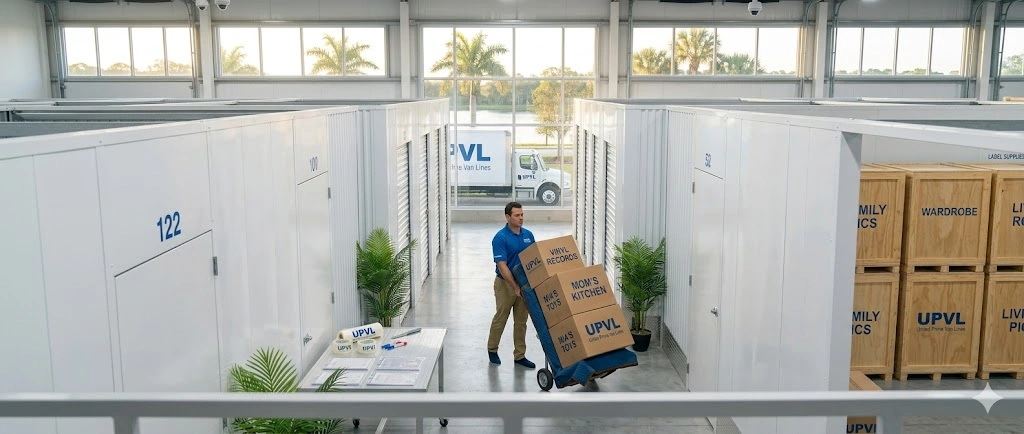
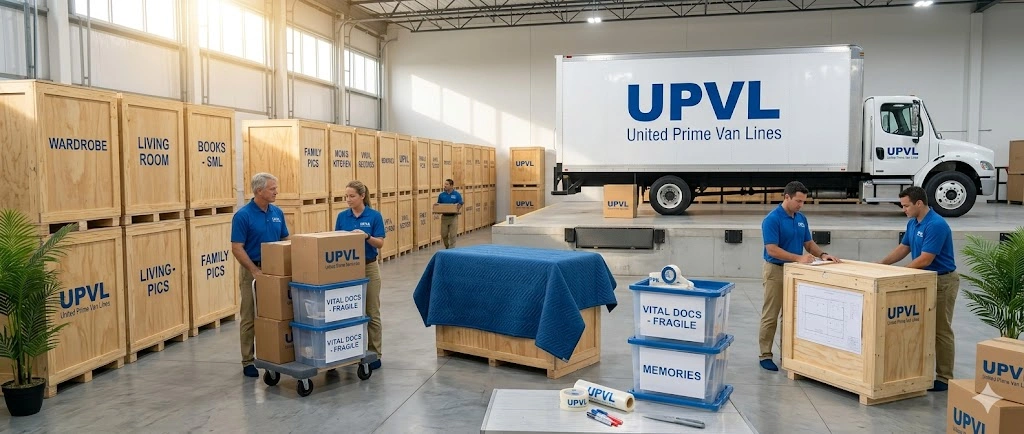
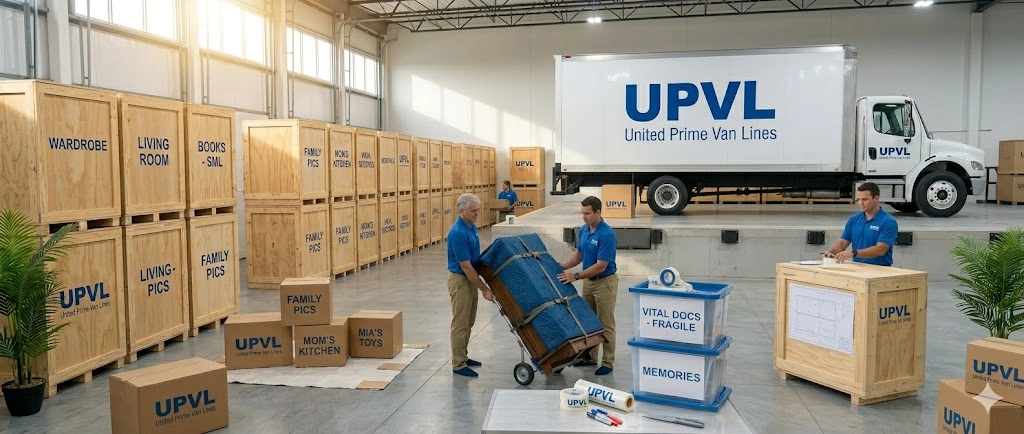
How it works: We come to your home, load everything, inventory it, and protect it. Your items go directly to our secure storage facility (often in large wooden crates or on warehouse racks) and stay there as long as you need. When you’re ready, we deliver everything to your new address. You don’t have to rent a truck, drive anything to a storage unit, or do any unloading yourself.
When to use it: This is typically the best fit when you’re moving long-distance and need your belongings held for a while. It's ideal if you have more than just a couple of items—a full home, condo, or office moving and storage project. It gives you the peace of mind of having one company handle the whole chain (pickup → storage → delivery). We usually pair this with our long-distance moving services when someone is relocating out of state and can’t be at the destination immediately.
This is the classic public storage unit you rent month-to-month.
How it works: You rent a specific unit size, and you or the movers bring your items there. You keep the key/access code and handle your own in-and-out.
The Pros & Cons: You can visit whenever you want, and it's sometimes cheaper for long-term use. However, you pay for the full unit size even if you aren't using it all. You also have to deal with multiple moves (Home → Storage, then Storage → New Home), which adds hassle. Security and climate control vary a lot by facility. This works well if you’re local and want frequent access to your belongings.
This is the middle ground between self-storage and full-service.
How it works: A container company drops off a large box at your driveway. You fill it, then they pick it up and either store it in their facility or move it directly to your new home.
The Pros & Cons: You can load at your own pace and don't have to drive a truck. However, you still do a lot of the heavy labor unless you hire movers to load. Containers may sit outside exposed to weather, and HOA/parking rules can be an issue.
With United Prime Van Lines, the most common setup is straightforward:
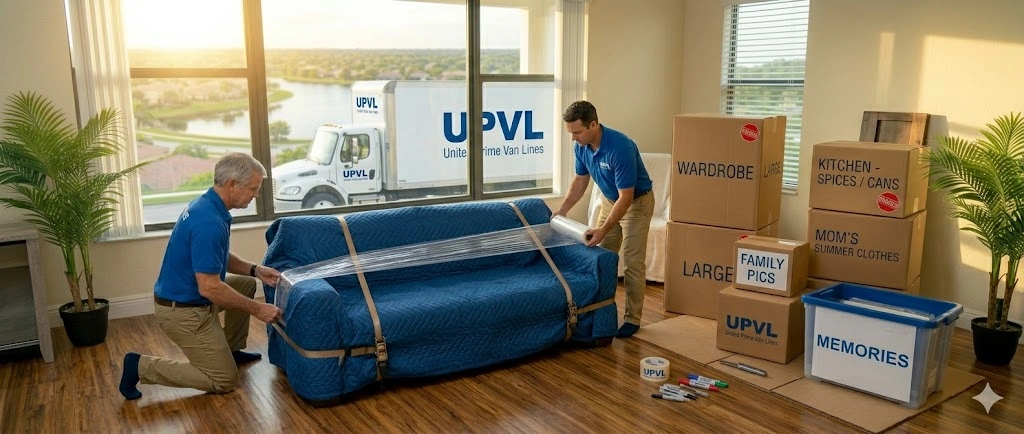
You plan everything around a tight window: out of your current apartment on Friday, into your new house on Monday. Then the call comes: “There’s a delay with closing; it’ll be 10–14 days.” If you’ve planned storage with your mover, your belongings are already in a safe facility. You can check into a short-term rental, and when the house is finally yours, we just schedule delivery.
You bought a place that “just needs a little work.” You could move everything in, cover it in plastic, and shuffle furniture from room to room… or we can move you out, put most of your belongings in storage, and deliver everything clean into a clean space once the messy phase is done. Your contractors work faster, and you aren't living in a construction zone.
You’re moving from Florida to California for a new job, but you’re not sure when you’ll find the right apartment. Having storage built into your long-distance moving plan keeps you from rushing into the wrong place just so your belongings have somewhere to land.
Choose full-service moving & storage if:
Choose self-storage or a portable container if:
Good candidates for storage: Extra furniture that doesn’t fit the new layout yet, off-season clothes, sports gear, holiday decorations, books, and items you’re not emotionally ready to part with yet.
Items to think twice about storing: Very high-value jewelry or cash, important documents (passports, birth certificates), perishables, plants, and anything you’ll need within the first 2–3 weeks in your new place.
I usually tell people to pack a “living life” set that never goes into storage—clothes, important papers, electronics, kids’ essentials, medications, and daily toiletries.
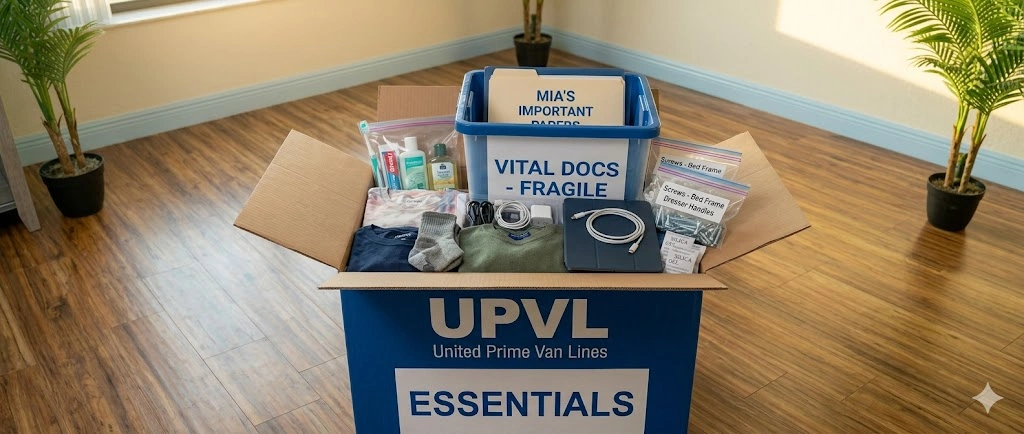
Packing for storage is slightly different from packing for a same-day move, especially if your things will be stored for more than a few weeks.
If you want to outsource all of that, our full-service packing option is there so you don’t have to stress over supplies or techniques.
Some people go in thinking, “Just a week or two,” and end up keeping items in storage for months. That’s not always a bad thing—it just needs to be intentional.
If it’s timing-related (waiting on keys, renovations), estimate how long the delay is likely to be and add a small buffer. Avoid locking into anything super rigid if your schedule is still moving.
If it’s decision-related (downsizing, decluttering), consider a staged approach. Move essentials into the new place, and leave non-essentials stored for 3–6 months while you figure things out. Put a reminder in your calendar to revisit your storage every few months so it doesn’t become “that place where things go to be forgotten.”
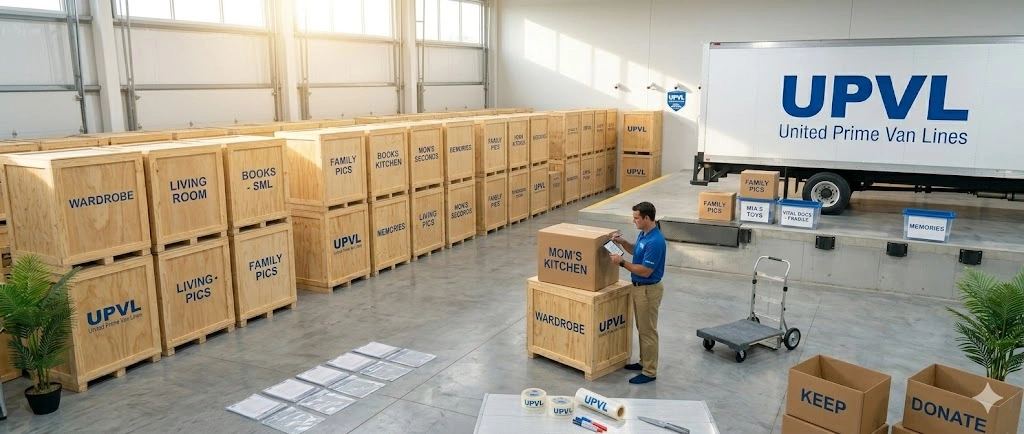
When someone calls us about a move, I don’t treat storage as an “extra.” It’s just one of the tools we use to build a smooth, realistic plan. If you’re in between homes, waiting on a closing date, or renovating before you move in, we can bundle moving + storage so it feels like one continuous service, not three separate projects.
You don’t have to chase a truck rental here, a storage contract there, and a second moving crew somewhere else. We handle the logistics, the packing, the storage, and the final delivery so you can focus on your new job or catching your breath.
You can always learn more about how we handle storage and moving here:
Needing storage during a move doesn’t mean something went wrong. It usually just means you’re living in the real world, where closing dates shift, contractors run late, leases don’t overlap, and jobs start before homes are ready.
Used well, storage gives you flexibility when your schedule moves around, breathing room when you’re downsizing, protection for your belongings, and a way to keep your move feeling like one continuous process instead of a series of frantic workarounds.
If you’re staring at your calendar and thinking, “There’s a gap here,” don’t ignore it. That gap is exactly where storage fits in. And if you want help building a realistic, low-drama plan around that gap, that’s exactly what we do at United Prime Van Lines every day.