If you live in Miami, you already know: we don’t just have “weather” here—we have Miami weather. Humidity that hits you like a wall, sudden downpours, hurricane season, and that salty ocean air that finds its way into everything.
Now imagine all of that working slowly on your furniture, photos, electronics, clothing, and business inventory… sitting in a regular storage unit for months.
That’s exactly why I talk so much about climate-controlled storage with our clients here. I’ve seen the difference with my own eyes—same sofa, same boxes, six months apart… one family used standard storage, the other used climate control. Two completely different outcomes.
If you’re planning a move in or around Miami and trying to decide whether climate-controlled storage is worth it, let’s walk through it together.
Why Miami Is Not Friendly to Stored Belongings
Miami is beautiful, but it’s brutal on anything that isn’t actively being lived in, cleaned, and aired out.
Here’s what we’re up against:
- High humidity almost year-round.
- Big temperature swings between day and night (especially in storage lots with sun-baked roofs).
- Salt in the air, especially if you’re closer to the coast.
- Tropical storms and hurricane season, with potential leaks, flooding, and power issues.
Indoors at home, you’re usually protected by AC and insulation. In a basic storage unit, you are essentially putting your stuff in a metal box that gets cooked from the outside and soaked with humidity from the inside.
What “Climate-Controlled Storage” Actually Means
A lot of people hear “climate-controlled” and imagine some fancy high-tech vault. In practice, it’s simple—and that’s a good thing.
A proper climate-controlled storage unit in Miami should:
- Keep temperatures stable (usually mid-60s to mid-80s °F).
- Control humidity levels so moisture doesn’t build up and create mold or warping.
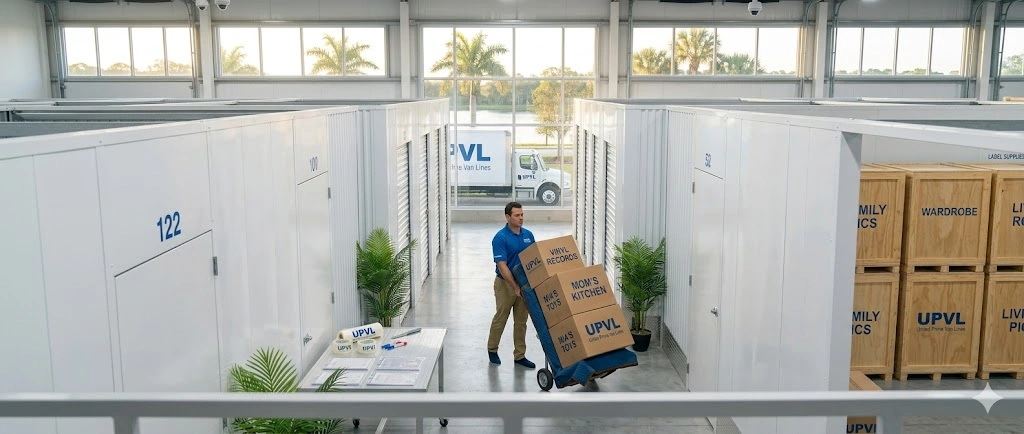
- Be indoors or well-insulated, not just a metal shipping container with a fan.
When I help clients set up storage through United Prime Van Lines, I always ask: What exactly are you putting into storage? For how long? How expensive are those items?
What Belongs in Climate Control (And What Doesn't)
Let’s break this down practically. You don’t need climate control for everything.
Things That Need Climate-Controlled Storage:
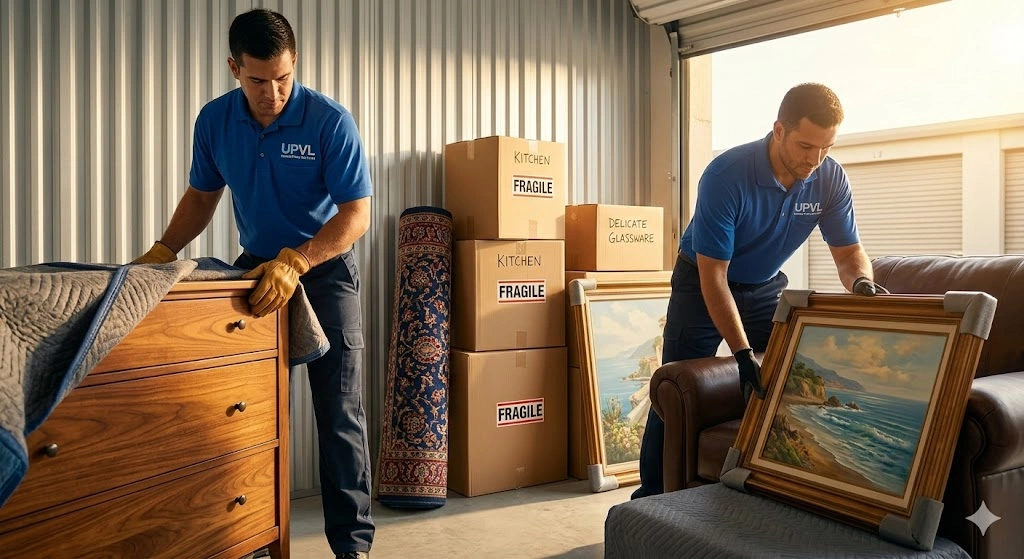
- Wood Furniture: Tables, bed frames, dressers. Miami humidity causes wood to warp, crack, swell, and attract mold.
- Leather Goods: Leather hates humidity. It gets sticky and can crack.
- Mattresses & Upholstery: They soak up moisture like a sponge and develop musty odors.
- Electronics: Condensation and heat damage internal components over time.
- Musical Instruments: Guitars and pianos are highly sensitive to moisture.
- Artwork & Photos: Ink runs, paper warps, and photos fuse together to glass.
- Important Documents: Contracts, passports, and archives.
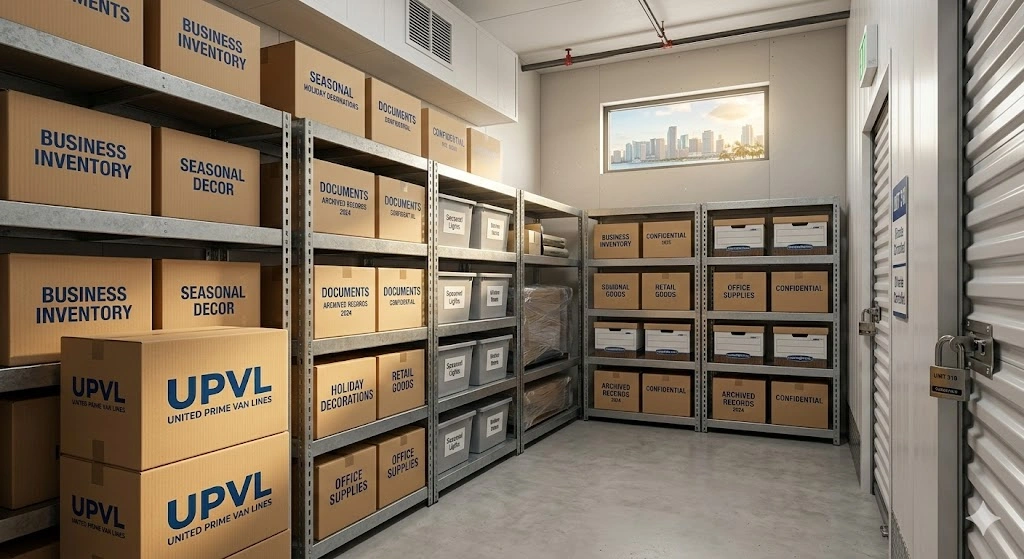
- Business Inventory: Clothing lines or products that need to look "new" when retrieved.
Items That Can Survive Basic Storage:
- Basic plastic bins and toys.
- Metal tools (if dry and lightly oiled).
- Outdoor patio furniture (built for the elements).
Miami-Specific Damage Risks I've Actually Seen
I’m not guessing here—I’ve seen these exact problems when people cut corners:
- Mold on Furniture & Mattresses: A regular unit feels like a hot bathroom after a shower. White film and black spots take over sofa backs and mattresses.
- Warped Wood & Peeling Veneer: Tables wobble, drawers stop sliding, and thin veneers peel away.
- Sticky Leather: Leather dries out, cracks, or gets weirdly sticky in humid heat.
- Ruined Photos: I’ve helped open boxes where photos were permanently fused together.
- Electronics That "Just Stop": Moisture causes internal rust that only shows up when you power them on months later.
This is why, when discussing storage options, we never treat climate control like an upsell. In this city, it’s common sense.
When Climate Control Makes the Most Sense
It is especially worth it when:
- You’re storing for more than 1–2 months.
- You’re moving in the summer (which is most of the year here).
- You have wood, leather, or upholstered furniture.
- The items have a high emotional or financial value.
- You’re in between homes or doing a big renovation.
How It Fits Into Your Move (Step by Step)
Most clients don't want to manage a mover, a packer, and a separate storage facility. Here is how we integrate it seamlessly:
- The Walkthrough: We determine what goes to the new place vs. what goes to storage.
- Smart Labeling: If you use our full-service packing, we label boxes specifically (e.g., "Storage – fragile – art").
- Strategic Loading: On move day, we load storage-bound items so they come off the truck first at the facility.
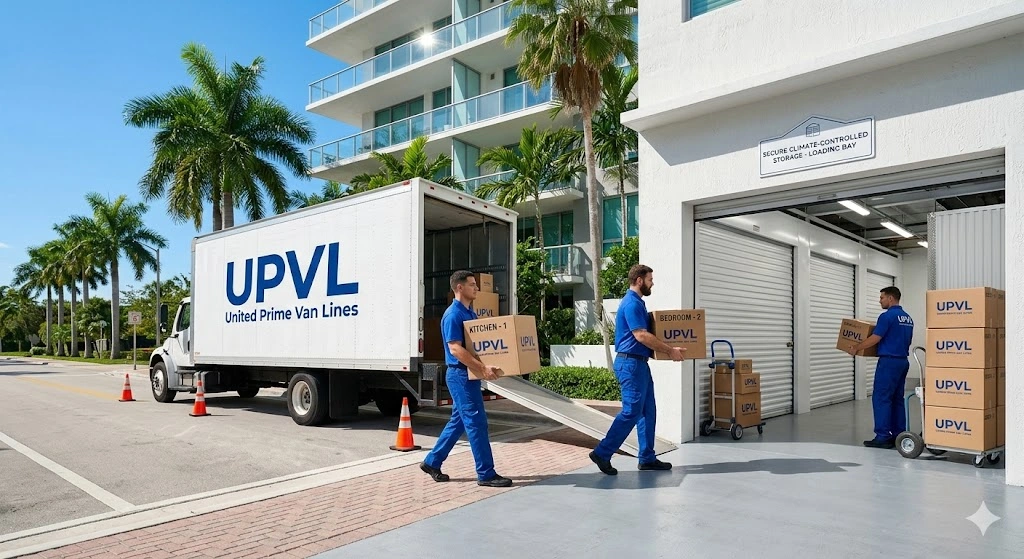
- Direct Transport: We move your belongings directly into climate-controlled storage. No sitting in a baking truck all day.
- Easy Retrieval: When your new home or renovation is ready, you schedule delivery with us.
Climate-Controlled Storage vs. “My Friend’s Garage”
“My cousin has a garage.” Free is free, I get it. But in Miami, garages are:
- Not insulated or dehumidified.
- Exposed to pests and flooding.
- Shared with cars, tools, and potentially leaky items.
Climate-controlled storage gives you predictable conditions, better security, proper insurance options, and a clear paper trail. Sometimes what looks “cheaper” at first ends up being very expensive later.
How to Tell If a Facility Is Truly Climate-Controlled
Not all “climate control” is what it sounds like. Check for this:
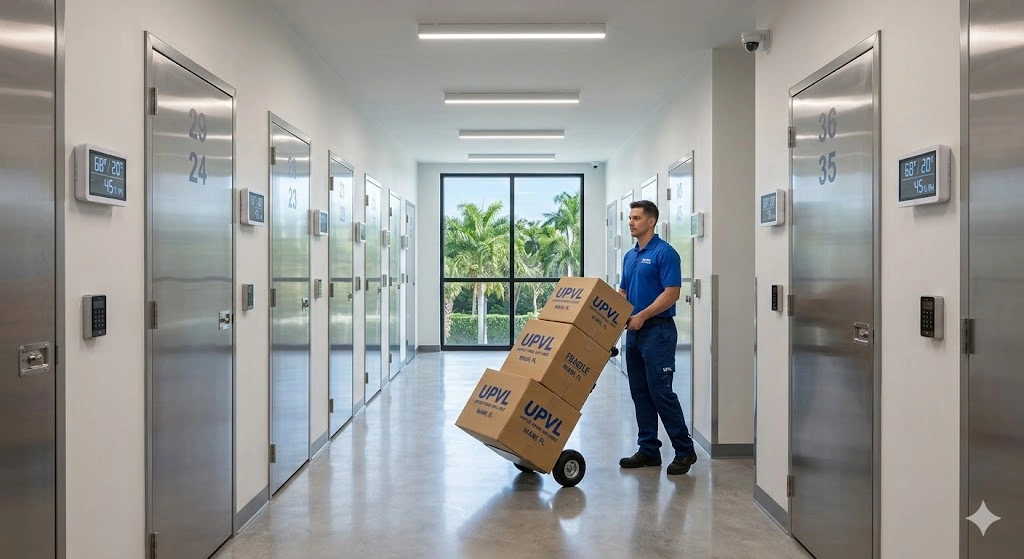
- Is the unit indoors? Hallways with sealed doors are a good sign.
- What temperature range do they maintain? If they can’t answer, walk away.
- Do they control humidity? For Miami, temperature alone doesn’t stop mold.
- Are there vents visible? If the hallway feels like a sauna, be cautious.
Life Situations That Call for Storage
- Downsizing: Keep extra furniture safe while you “test drive” a smaller condo in Brickell.
- Temporary Out-of-State Move: Don't let your good furniture sit in a sweaty unit for 8 months while you travel.
- Renovations: Keep your valuables pristine while contractors tear down walls.
- Business Inventory: Your customers won't see your storage setup, but they will see the condition of the product you deliver.
How United Prime Van Lines Helps
You don’t have to become a storage expert overnight. When you reach out to United Prime Van Lines, we look at the whole picture—your timeline, your budget, and what truly needs protection.
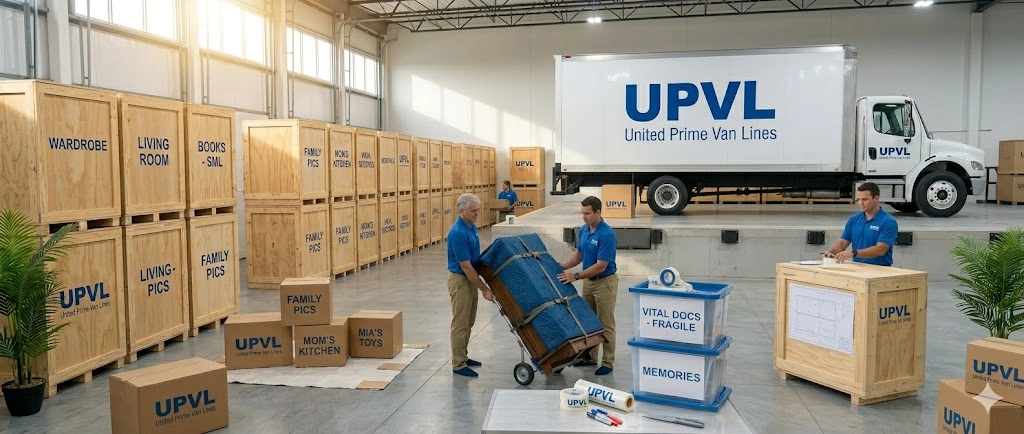
We can handle the packing, the loading, and the transport to a climate-controlled environment suitable for Miami conditions. You won’t have to worry about rental trucks or figuring out which storage facility is actually legitimate.
The Bottom Line
A move is more than getting your belongings from Point A to Point B. In Miami, it’s about making sure your stuff survives the heat, the humidity, and the storms in between.
Climate-controlled storage is the simplest tool we have to protect your furniture, electronics, and memories from what this city does naturally. Focus on where you’re going next, and we’ll make sure your things are protected until you’re ready for them.