If you’re planning a commercial move in Los Angeles, you quickly discover something: the actual packing and loading often isn’t the hardest part. It’s the paperwork, the parking, the freight elevator reservations, and the “Wait, we can’t block that alley?” moments.
I’ve helped a lot of businesses relocate in and around Los Angeles, and LA has its own special blend of traffic, building rules, and city regulations. My goal here is to walk you through the real-world side of commercial moving logistics—what matters, what’s just noise, and how to avoid the kind of delays that cost you revenue.
Moving a business is never simple. But in LA, the logistics get tricky fast because of:
When you move an office, retail space, or studio, you aren't just moving boxes. You are moving operations.
When business owners hear "permits," they think construction. For moving, it usually means:
The Risk: If you need a permit and don't have it, you end up with trucks circling the block, parking tickets, or being turned away by building security.
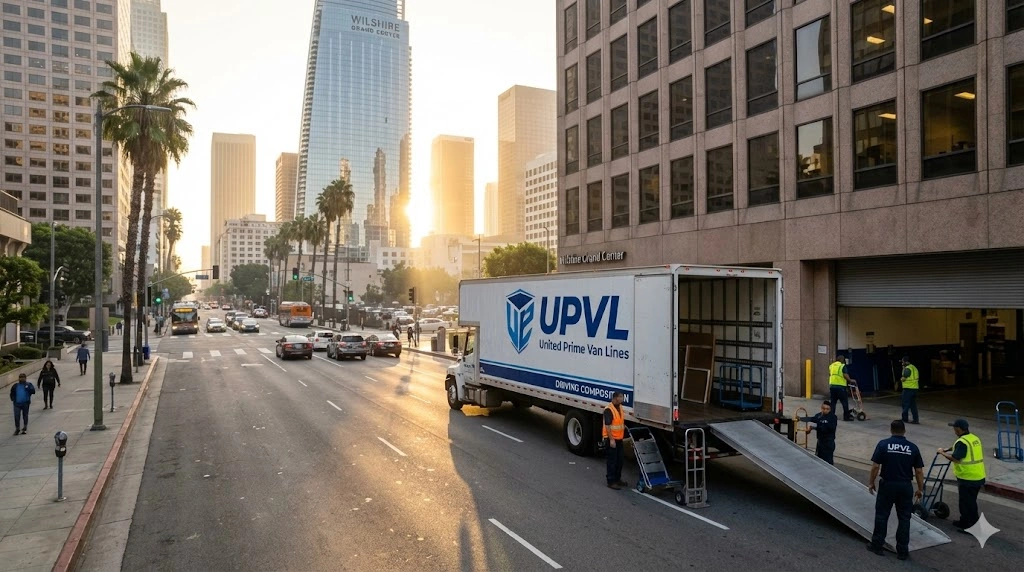
You want a guaranteed legal place for a 26-foot truck to park. In LA, this often involves applying for Temporary No-Parking signs.
How We Approach It:
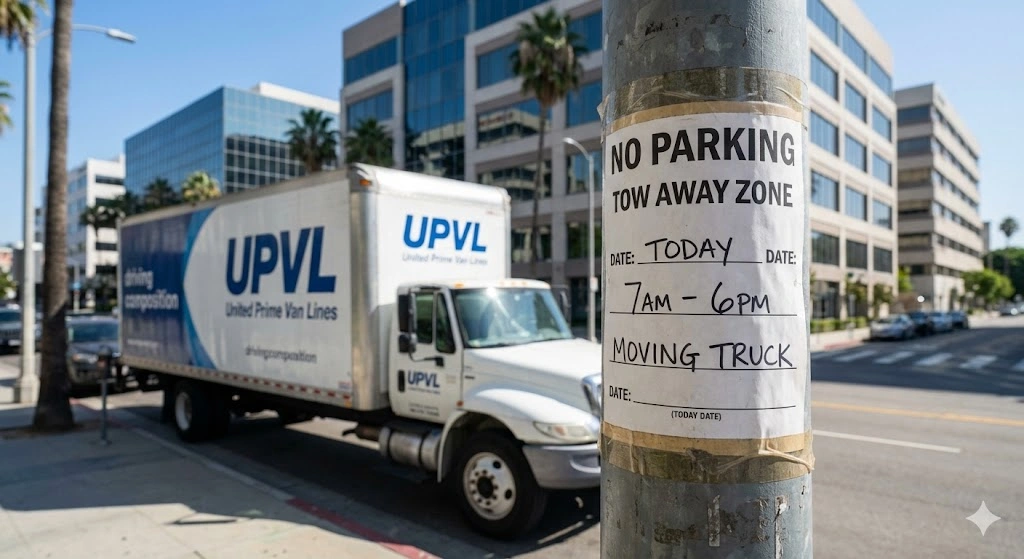
Building rules cause more headaches than city regulations. Every building has its own version of:
The Fix: We contact the property managers at both locations early to get the written move-in rules. We handle the COI submission so you don't have to chase insurance agents.
Traffic isn't just annoying; it blows up schedules.
This is the unglamorous part that decides if your move is smooth or chaotic.
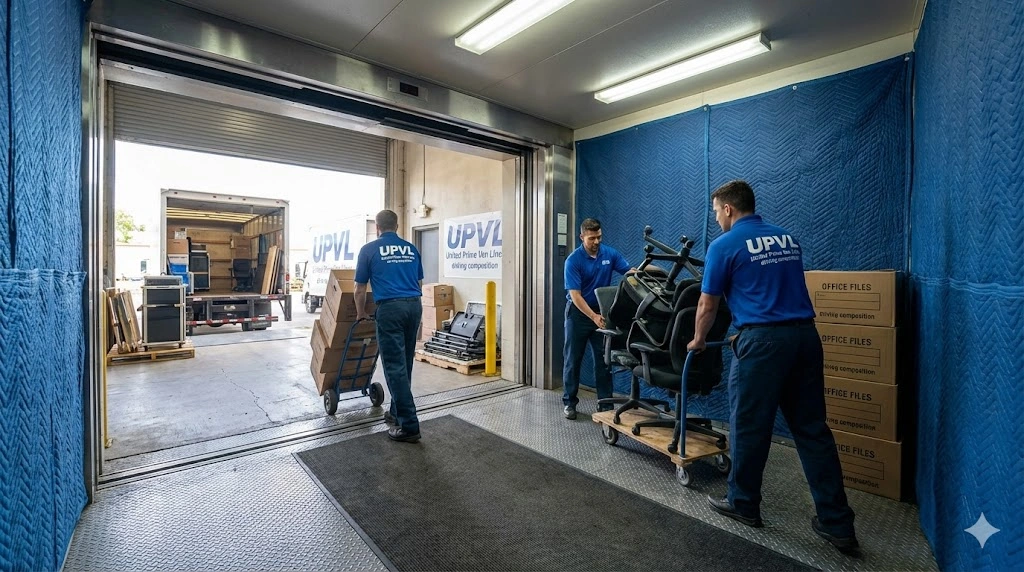
Logistics isn't just about trucks; it's about people.
For many businesses, the servers and workstations are the most stressful part.
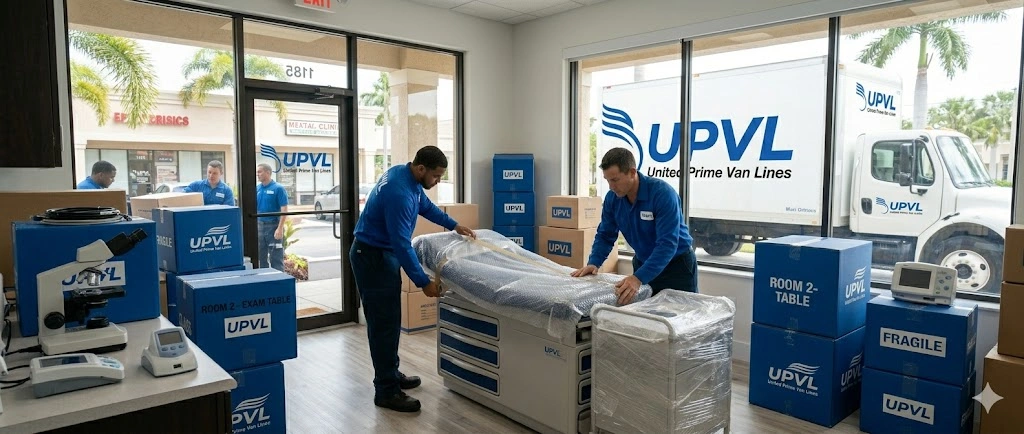
If needed, our Office & Commercial Moving services can include specialized tech handling.
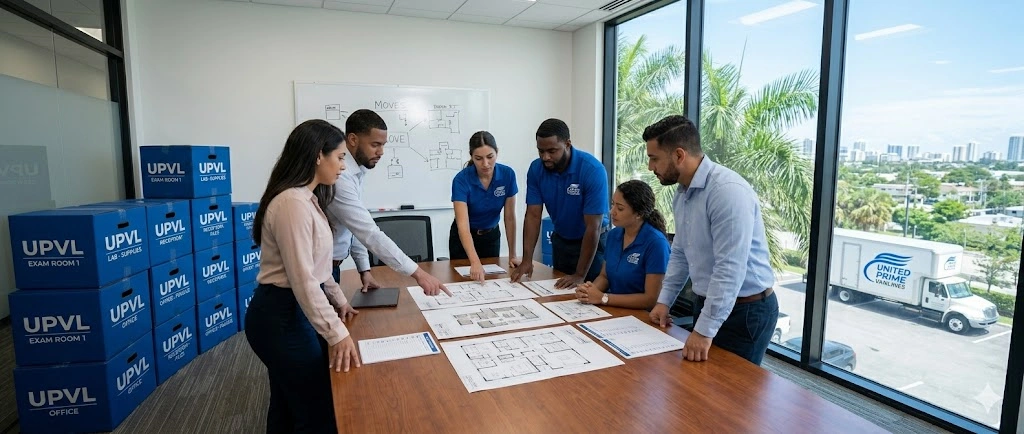
1. Initial Walkthrough: We look at access, stairs, and heavy equipment.
2. Management Contact: We lock in elevator times and submit COIs.
3. Permit Check: We determine if street permits are needed.
4. The Plan: We provide a timeline (e.g., Friday Pack, Saturday Move, Sunday Setup).
5. Execution: We show up early, protect the building, and stick to the schedule.
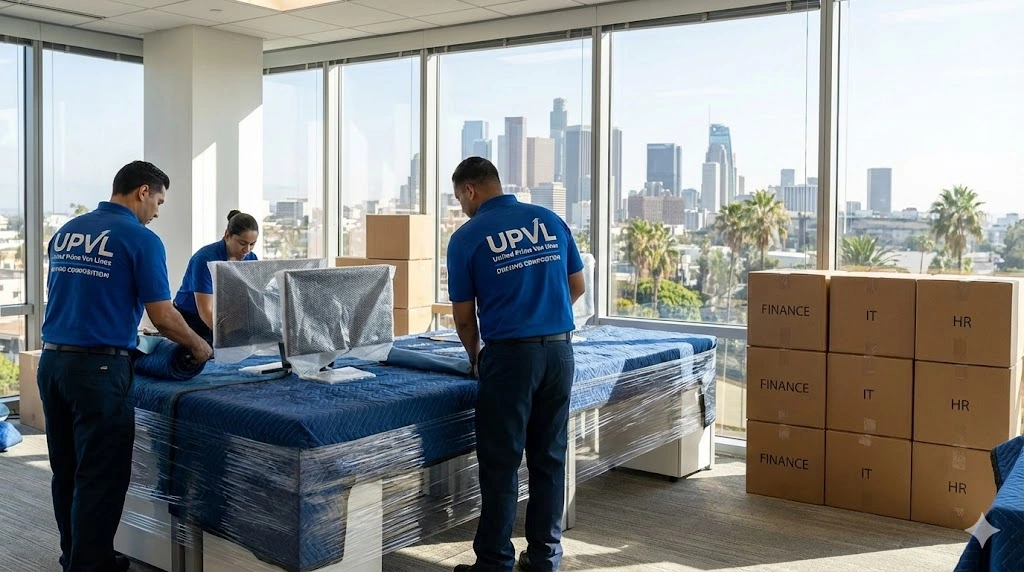
A commercial move in Los Angeles doesn’t have to be chaos. When you break it down—permits, elevators, parking, timing—it becomes something you can control.
If you’d rather not spend your evenings reading building rule PDFs and emailing property managers, that’s exactly what my team and I at United Prime Van Lines handle every day.
You tell me where your business is now, and where it needs to be. I’ll help you connect the dots in between so move day feels like a well-run operation, not a fire drill.