Moving a small business in Los Angeles is a completely different beast than moving a house. It’s not just boxes and furniture; it’s your income, your team, your reputation, and often your sanity on the line.
I’ve helped a lot of small business owners relocate around LA — from creative studios in North Hollywood to boutique shops near Downtown — and the same worries come up every time:
- "How do I move without shutting down for weeks?"
- "What if we lose clients because of the chaos?"
- "How do I deal with LA traffic, permits, and building rules?"
In this guide, I’ll walk you through how I would plan and execute a small business relocation in Los Angeles step by step, the same way I do it with my customers at United Prime Van Lines. My goal is simple: keep your downtime minimal and get you back to work fast.
Step 1: Get Real About Why You’re Moving
Before you look at a single moving box, you need clarity.
- Are you moving for more space, better location, or lower costs?
- Do you need a showroom or more parking?
- Do you need to be closer to a specific LA area?
The List: I sit down with owners and make a two-column list:
- Non‑negotiables: "Must have reception," "Need 3 private offices."
- Nice-to-haves: "Breakout room," "Extra storage."
This list shapes everything — from your floor plan to which equipment moves first.
Step 2: Build a Realistic Timeline
In Los Angeles, nothing is as quick as it looks on paper. Traffic and building rules eat time.
The Rough Timeline:
- 4–8 weeks out: Planning, inventory, getting quotes.
- 3–4 weeks out: Finalize IT/Telecom, notify clients.
- 1–2 weeks out: Pack non-essentials, label furniture.
- 48–72 hours before: Pack the rest, backup data, confirm access.
- Move Day: Execute like a military operation.
Step 3: Decide What to Outsource
Trying to save money by doing everything yourself usually costs more in lost productivity.
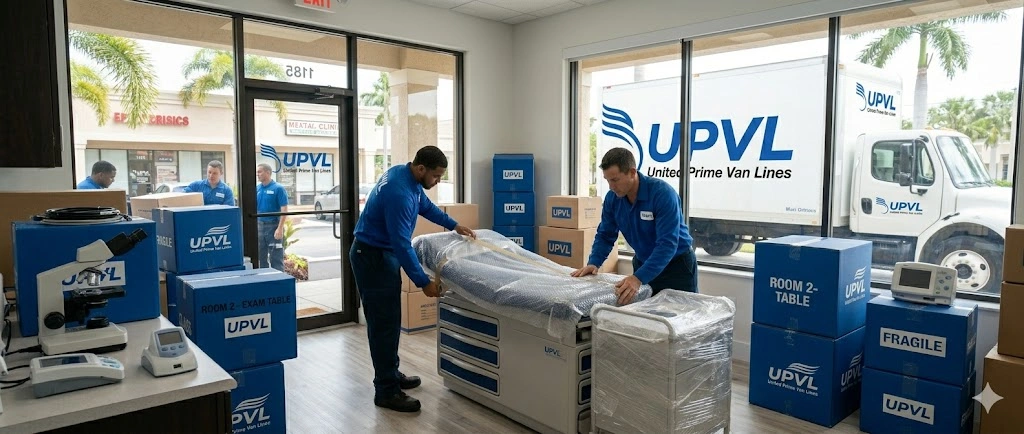
1. Definitely Outsource: Heavy furniture, machine disassembly, navigating loading docks. 2. Probably Outsource: Packing office contents, labeling. 3. Keep In-House: Deciding what to toss, setting up new workflows.
A lot of our clients choose a Hybrid Model: We handle the heavy lifting and transport; your team packs personal items.
Step 4: Take Inventory Like It Matters
An accurate inventory prevents chaos. Break it down:
- Furniture: Desks, chairs, shelving.
- Technology: Servers, monitors, printers.
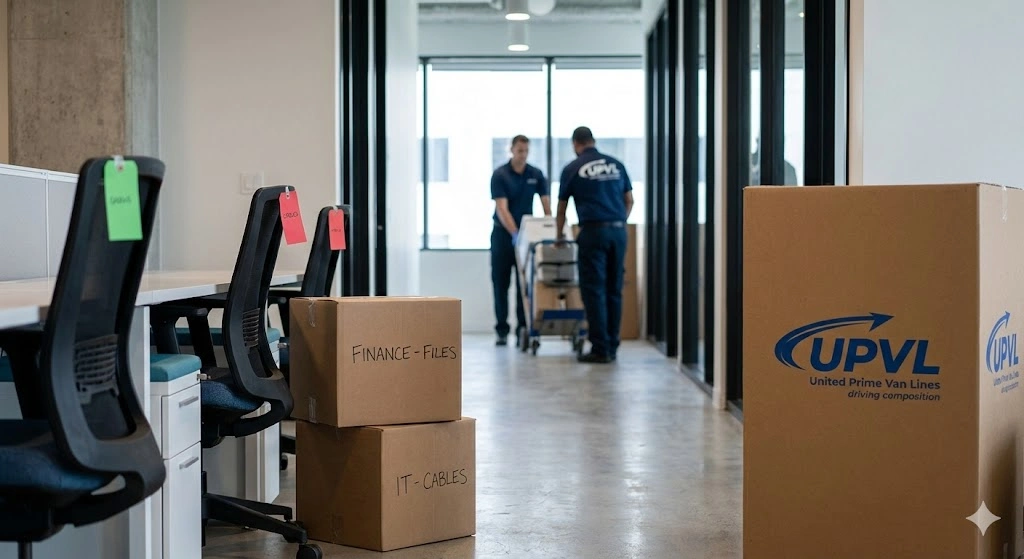
- Priority: Tag items as "Day 1" (must have immediately) vs. "Week 1."
Step 5: Map Out the New Space
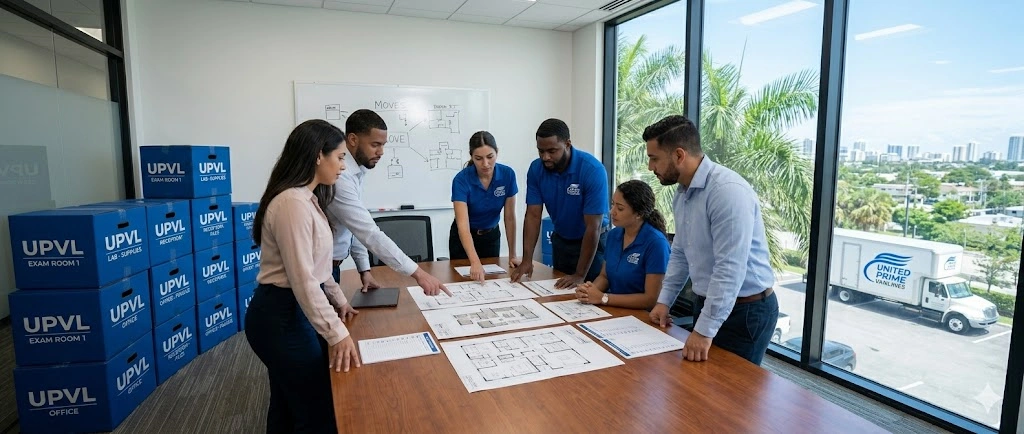
We don't walk into the new space blind. Before move day, I insist on:
- A Walkthrough: Or detailed measurements.
- A Floor Plan: Showing where departments and key furniture go.
- Labeling: Every box gets a destination code (e.g., "Office A," "Reception").
Step 6: Coordinate With Landlords & Rules
In LA, you can't ignore building rules.
- Confirm Hours: Many buildings restrict moves to early mornings or weekends.
- Reserve Elevators: This is mandatory in high-rises.
- COI Requirements: We provide the Certificate of Insurance buildings need.
- Truck Access: Check for low clearances or tight alleys.
Step 7: Protect Your Tech and Data
For small businesses, data is more valuable than furniture.
- Backup Data: Cloud or external hard drive (stored separately).
- Photograph Wiring: Take pics of the back of computers/servers before unplugging.
- Prioritize Setup: Internet and main workstations go first at the new place.
Step 8: Communicate Early
Don't lose customers because they went to the old address.
- Tell People: Notify clients and vendors 2–3 weeks out.
- Update Online: Google Business Profile, Website, Social Media.
- The Message: Repeat your Last Day at the old spot and First Day at the new one.
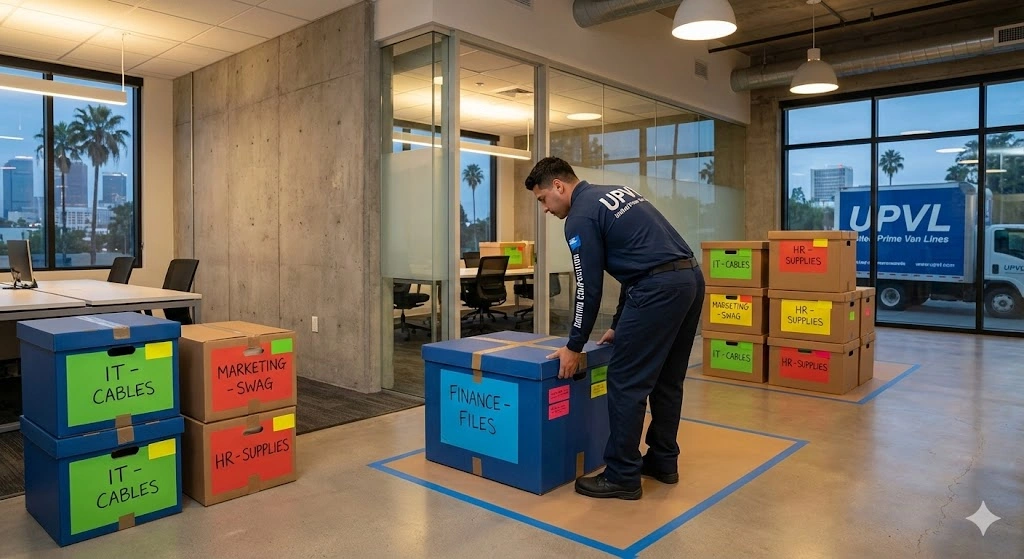
Step 9: Pack Smart (Color-Coding)
Use a simple system so my crew doesn't have to ask "Where does this go?" every 30 seconds.
- Blue: Reception
- Green: Owner's Office
- Yellow: Studio
- Red: IT/Tech
Step 10: Plan Move Day Like an Operation
The goal is Minimize Downtime.
- Strategy: Move over a weekend or in stages.
- Load-Out: Heavy items first, then boxes.
- Unload: Items go directly to their assigned zone.
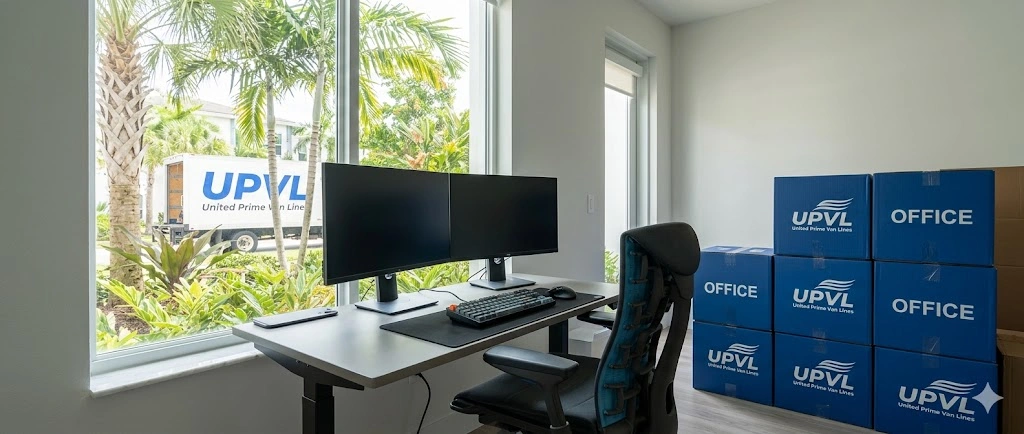
- Setup: We reassemble desks so you can work the next morning.
Step 11: Handle the Human Side
Moving is emotional for your team.
- Give them a voice: Ask for input on the new layout.
- Be honest: Acknowledge the disruption.
- Protect core hours: Don't pack during peak revenue times.
The Verdict: Getting from Old Keys to New Doors
Relocating a small business in Los Angeles will probably never be "relaxing," but it doesn't have to be chaotic.
If you are planning a relocation in or around Los Angeles and want a partner who’s done this many times, United Prime Van Lines is here. We treat your move as if it were our own—with one clear priority: get you back to business, fast.