Planning a move in South Florida is stressful enough without worrying whether your movers are legit. Choosing licensed movers in Miami protects your money, your belongings, and your move date—especially with condo rules, sudden rainstorms, and busy elevators in high-rises.
Quick Navigation
The fastest way to protect yourself from moving scams is to hire truly licensed movers in Miami. A licensed mover follows state and (when needed) federal rules, carries proper insurance, and issues written estimates and contracts that spell out your rights and responsibilities.
In Miami-Dade and across Florida, professional movers are regulated at both the state and federal levels, depending on whether your move crosses state lines. The Florida Department of Agriculture and Consumer Services (FDACS) regulates intrastate household movers under Florida law. Source: FDACS.
Licensed companies are more likely to:
Unlicensed operators often advertise low prices, take cash or Zelle, and disappear when something goes wrong. In a dense, high-rise-heavy city like Miami, that risk is even higher.
Moving in Miami is not the same as moving in a quiet suburb. Reliable movers in Miami understand the specific challenges of South Florida buildings, weather, and traffic.
From Brickell high-rises to single-family homes in Kendall, each Miami neighborhood adds its own complications. Licensed movers who work here every day know how to handle:
| Miami Area | Common Moving Challenges | What Good Movers Do |
|---|---|---|
| Brickell & Downtown | COI, freight elevators, tight loading docks | Coordinate COI, reserve elevators, use building-approved routes |
| Miami Beach & South Beach | Narrow streets, parking limits, condo rules | Secure parking permits, smaller trucks, off-peak scheduling |
| Doral & Kendall | HOA rules, gated communities | Confirm HOA hours, gate access, truck size limits |
| Wynwood, Edgewater, Midtown | Construction, street closures | Scout routes, adjust arrival time for traffic and events |
Choosing trusted movers in Miami means choosing a company that asks detailed questions about your building long before move day.
Miami’s heat, humidity, and storms can affect your move. Afternoon thunderstorms are common, and hurricane season runs June 1 to November 30. Source: National Hurricane Center.
A reliable mover will:
Ask any insured movers in Miami how they handle weather-related delays and what happens to your delivery window if a storm interrupts travel.
Many customers assume “licensed and insured” is just marketing language. It is not. In Florida, household moving companies must meet specific licensing rules, and interstate movers must also be registered with the federal government.
If your move is entirely within Florida—say, from Miami Beach to Coral Gables—it is considered an intrastate move. Florida law requires household movers to register with FDACS and meet insurance and contract requirements. Source: FDACS consumer tips.
Key points about Florida-licensed movers:
You can verify a Florida mover’s registration directly through FDACS. If the company you’re speaking with cannot provide their Florida registration number, that is a major red flag.
Moving from Miami to another state—like Georgia, New York, or California—makes your move an interstate move. Any company transporting your belongings across state lines must be registered with the Federal Motor Carrier Safety Administration (FMCSA) and must have a USDOT number. Source: FMCSA.
For interstate moves, look for:
FMCSA also explains how binding and non-binding estimates work and your rights if charges increase. Source: FMCSA Protect Your Move.
Beyond state and federal licensing, many Miami buildings require more paperwork from your mover:
A professional moving company will ask you to send building move-in/move-out rules so they can prepare COIs and schedule logistics ahead of time. If the mover seems unfamiliar with condo COI requirements in Brickell, Edgewater, or Miami Beach, look elsewhere.
Use this simple process to quickly confirm you’re dealing with licensed movers in Miami:
| Step | Where to Check | What You Should See |
|---|---|---|
| 1. Ask for full legal name | Company website & contract | The same legal name on all documents |
| 2. Verify Florida registration | FDACS moving companies search | Active status, matching address |
| 3. Check USDOT/MC (if interstate) | FMCSA Company Snapshot | Active, no out-of-service orders |
| 4. Confirm local address | Google Maps & state records | Real office/warehouse, not just an apartment |
If the mover has trouble giving you their license numbers in writing, do not book them.
When people search for insured movers in Miami, they often assume that “insured” automatically means any damage will be fully reimbursed. The reality is more nuanced. You need to understand both the mover’s insurance and your valuation coverage options.
Two separate concepts protect your belongings during a move:
Federal rules for interstate movers require them to offer certain valuation options, including Released Value and Full Value Protection. Source: FMCSA valuation and insurance.
These are the two most common levels of coverage you will see listed on your contract or Bill of Lading:
| Coverage Type | What It Means | Who It Fits Best |
|---|---|---|
| Released Value | Basic coverage, often around $0.60 per pound per item for interstate; very limited protection | Short local moves with few high-value items; tight budgets |
| Full Value Protection | Mover repairs, replaces, or pays current market value (with deductible) | Households with electronics, art, designer furniture |
| Third-Party Insurance | Separate policy through a specialty insurer | Long-distance moves or high-value collections |
| Building Liability Limits | COI shows coverage for building damage | Condo and apartment moves with strict rules |
Always review the valuation option selected on your estimate and final contract. If you are not sure which you chose, ask your mover for a clear explanation in writing.
Before you sign anything, ask:
Trusted movers in Miami will answer clearly and provide documentation. If the answer is vague—“Don’t worry, you’re covered”—that is not good enough.
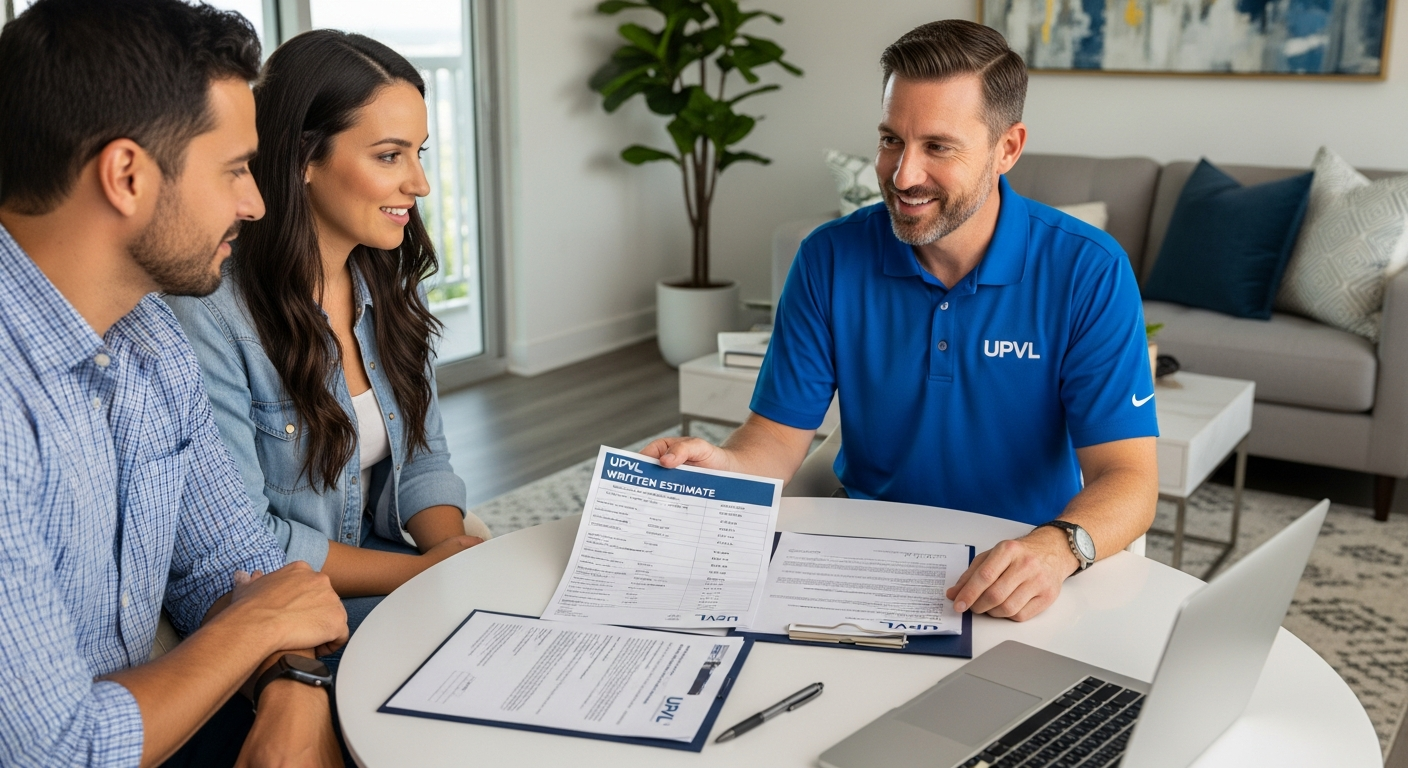
A written estimate is one of your strongest protections when hiring reliable movers in Miami. Florida law requires written estimates for household moves within the state. Interstate moves are also governed by federal rules on binding and non-binding estimates.
A proper written estimate:
Never rely on a verbal quote over the phone or a one-line text message. Legitimate licensed movers in Miami provide emailed or written estimates with clear terms and company information.
For long-distance or complex moves, you may see different estimate types. Understanding them protects your wallet.
| Estimate Type | How Price Is Set | Pros and Cons |
|---|---|---|
| Non-Binding | Based on estimated weight/time; final bill reflects actual weight/time | Flexible but can increase if weight or hours are higher than expected |
| Binding | Fixed price based on detailed inventory; does not change if weight increases (unless you add items/services) | Predictable total cost; must disclose all items and conditions |
| Binding Not-to-Exceed | Mover charges actual cost if lower, but never above a set maximum | Best protection; you benefit if your shipment is lighter or quicker |
| Hourly Local Estimate | Rate per hour per crew size, plus fees; final total based on actual time | Common in Miami locals; needs realistic time estimate and access details |
FMCSA explains that binding and non-binding estimates for interstate moves must be in writing and attached to the Bill of Lading. Source: FMCSA binding estimate rules.
To compare reliable movers in Miami, look for these items on every quote:
A company like United Prime Van Lines in Miami will typically provide written estimates after a video survey or detailed phone inventory so the crew and truck size are accurate.
Licensing is critical, but you still need to know whether a mover actually delivers good service. That is where review research comes in.
Look at multiple sources to get a complete picture:
One or two negative reviews are normal. Patterns are what matter: repeated complaints about bait-and-switch pricing, late arrivals, or damaged furniture without support.
Use this simple filter when evaluating reviewers’ comments:
| Review Signal | What It Tells You | How to Interpret |
|---|---|---|
| Consistent praise for communication | Dispatcher and foreman kept customer informed | Good sign of reliable operations |
| Multiple reports of late arrival | Scheduling or staffing issues | Consider whether your time window is flexible |
| Complaints about surprise charges | Estimates not detailed or not honored | Major red flag; review estimate language carefully |
| Details about high-rise/condo success | Familiarity with COIs and elevator rules | Great sign for Brickell, Miami Beach, Edgewater moves |
When you speak with potential movers, reference their reviews directly. Ask how they handled a situation similar to a complaint you read. Reliable movers in Miami won’t be defensive; they’ll explain how they addressed the problem.
If you’re planning a big house move or a complicated long-distance relocation, ask for 1–2 recent customers you can contact. Clients who moved from, say, a 3-bedroom house in Coconut Grove to a condo in Aventura can tell you how the mover handled packing, timeline, and building requirements.
Knowing what not to accept is just as important as knowing what to look for. Many Miami moving horror stories start with the same warning signs.
Walk away quickly if you see any of these:
Many moving scams involve holding belongings hostage until the customer pays much more than the original quote. FMCSA warns about this type of fraud and explains your rights if it happens. Source: FMCSA Moving Fraud.
Deposits are an area where customers are often confused. Some reputable moving companies do request deposits to hold a date—especially during busy summer and end-of-month periods—but the amount and method matter.
| Deposit Scenario | What It Usually Means | Safe or Risky? |
|---|---|---|
| Small deposit by card (5–15%) | Reserving your truck and crew on a busy date | Generally safe with licensed mover and written terms |
| Moderate deposit by card (20–30%) | Common for long-distance moves | Acceptable if clearly tied to written binding estimate |
| Huge deposit in cash or Zelle (50–70%) | Potential scam; gives you little leverage | Very risky; avoid |
| No deposit required | Flexible schedule or slower season | Fine, but still require written confirmation |
Whatever the amount, your deposit should be clearly itemized on the written estimate/contract, and you should receive a receipt.
Understanding how pricing works helps you spot legitimate quotes and ignore bait offers. Most licensed movers in Miami use hourly rates for local moves and weight or inventory-based pricing for long-distance relocations.
Your final price will be shaped by:
Most local Miami moves (within roughly 50–75 miles) are priced hourly. Some companies offer flat-rate pricing based on a detailed inventory and building details.
| Pricing Type | How It Works | Best For |
|---|---|---|
| Hourly Rate | Rate per hour for a crew and truck; minimum hours often apply | Local moves where time is reasonably predictable |
| Flat-Rate Local | Set price for your specific inventory and access situation | High-rises, complex parking, customers who want a fixed total |
| Hybrid | Base flat-rate plus hourly for extra services (packing, furniture assembly) | Moves with optional add-on services |
| Long-Distance (Weight/Inventory) | Charge based on shipment weight or itemized inventory | State-to-state or long intrastate routes |
When comparing quotes, be sure each mover has the same information about your move: same inventory, same floor numbers, same parking challenges. Otherwise, you’re not comparing like with like.
Licensed movers in Miami should disclose these costs up front when applicable:
Transparency is key. Quotes from companies like United Prime Van Lines local moving will itemize these potential fees in advance so there are no surprises.
Choosing between local and long-distance licensed movers matters because different rules, estimate types, and delivery windows apply.
Local moves usually stay within Miami-Dade, Broward, and sometimes Palm Beach County. Think: Brickell to Wynwood, Doral to Kendall, or Miami Beach to Hallandale Beach.
For these moves:
Local movers like United Prime Van Lines – Hallandale Beach are familiar with South Florida building rules, which helps prevent last-minute delays.
Moving from Miami to Orlando, Tampa, or Jacksonville may still be intrastate but longer than a typical local move. Moving to another state (for example, New York, Texas, or California) is an interstate move with additional federal protections and requirements.
For long-distance and interstate moves:
For detailed long-distance planning, customers often work with companies offering dedicated interstate services such as United Prime Van Lines long-distance moving.
Delivery windows depend on distance, route, and the type of moving service. Here is a general idea (actual timing can vary by company and season):
| Route From Miami | Approximate Distance | Typical Delivery Window |
|---|---|---|
| Miami to Orlando/Tampa | 230–300 miles | 1–3 business days |
| Miami to Atlanta | 650–700 miles | 2–5 business days |
| Miami to New York City | 1,250–1,350 miles | 3–7 business days |
| Miami to Los Angeles | 2,700+ miles | 7–14 business days |
Ask your mover to provide the earliest and latest possible delivery dates in writing, especially during peak moving season or around holidays.
Packing and storage decisions affect both cost and how protected your items are. Licensed movers in Miami usually offer multiple service levels so you can match your budget and time.
Most full-service Miami movers offer at least three packing levels:
| Packing Level | What’s Included | Best For |
|---|---|---|
| Full Packing Service | Movers pack everything, bring all materials, label boxes | Busy professionals, families, long-distance moves |
| Partial Packing | Movers pack fragile or specialty items only | DIY packers who want help with dishes, glass, art |
| Self-Pack | You pack; movers only load, transport, unload | Budget-conscious moves with enough prep time |
| Unpacking Services | Movers unpack boxes and remove debris | People who need to settle quickly after move-in |
Companies like United Prime Van Lines full packing services can also provide specialty packing for pianos, art, and antiques, which is especially helpful in Miami’s humid climate.
Storage is common in Miami for situations such as:
Ask these questions about storage:
Some movers, including United Prime Van Lines storage, can combine moving and storage under one contract so you do not have to coordinate multiple vendors.
To keep everything straight, use this practical checklist when speaking with any potential Miami mover.
| Item | What to Confirm | Why It Matters |
|---|---|---|
| Florida Registration (FDACS) | Active, no enforcement actions | Confirms they are legally allowed to move households within Florida |
| USDOT/MC Numbers (if interstate) | Active status in FMCSA database | Shows they meet federal standards for interstate transport |
| Insurance Certificates | Liability and cargo insurance in force | Protects against certain damages and building requirements |
| COI Capability | They can issue Certificates of Insurance quickly | Essential for Miami condos and high-rises |
Continue your checklist with service and documentation items:
Use the same checklist with each candidate so you can compare apples to apples and choose truly trusted movers in Miami.
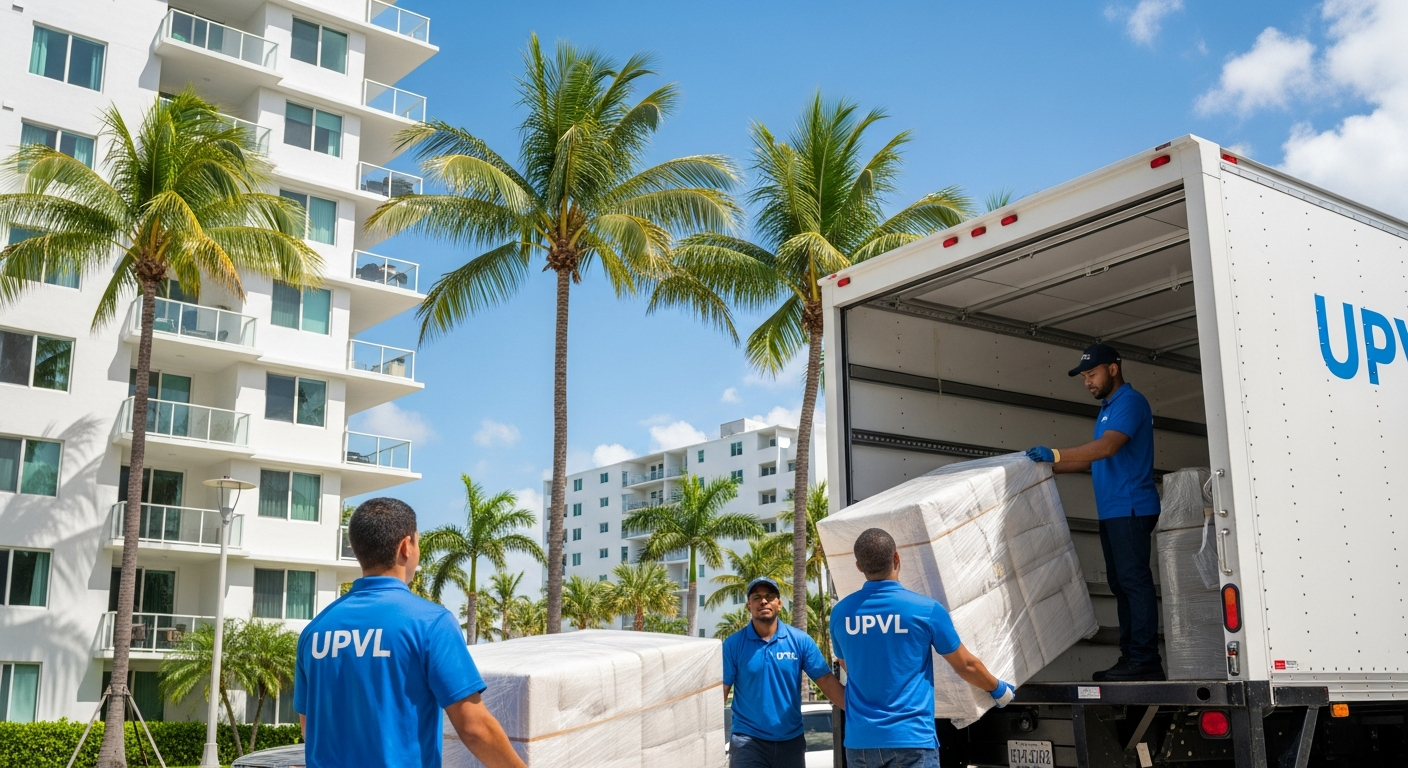
Ask the mover for their full legal company name and Florida registration number, then verify it with FDACS using their moving companies search. For interstate moves, also confirm the company’s USDOT and MC numbers in the FMCSA “Company Snapshot.” The names, addresses, and numbers on your estimate and contract should match the database records.
“Insured movers” usually means the company carries liability and cargo insurance required by law to operate. That protects the business and other parties in case of accidents or damage. It does not automatically mean your belongings are fully covered. To protect your items, review your valuation coverage options—such as Released Value or Full Value Protection—and consider third-party insurance for high-value shipments.
Yes. Florida law requires written estimates for intrastate household moves, and it is the best way to prevent disputes later. A written estimate should show the hourly rate or flat-rate, expected hours, crew size, any extra fees, and your chosen valuation coverage. Even for a small studio move in Brickell or Midtown, never rely only on a verbal quote.
For predictable, inventory-based moves (especially long-distance), a binding or binding-not-to-exceed estimate generally offers the most protection because your price cannot rise as long as you do not add items or services. Non-binding estimates can be fine if the mover thoroughly inspects your shipment and building access, but they can cost more if the move takes longer or weighs more than expected. Always read the estimate type on the first page of your quote.
Small deposits are common, especially for busy dates. Many legitimate movers charge 5–15% of the estimated total by credit card to reserve your date and crew. Long-distance shipments may require 20–30%. Be cautious if a mover demands a very large deposit in cash or instant payment (50–70%) or refuses to provide a detailed receipt and written terms. That is a red flag.
Verify all license numbers, demand a detailed written estimate, avoid huge cash deposits, and be wary of quotes that are dramatically lower than others. Research reviews across several platforms and confirm the mover’s physical address. FMCSA offers a list of common fraud signs and consumer protections. Source: FMCSA Protect Your Move. If something feels off, keep shopping.
Your contract should show the mover’s full legal name and license numbers, your pickup and delivery addresses, preferred dates, estimate type and charges, chosen valuation coverage, and any special services you requested (packing, storage, assembly). It should also reference or include the written estimate you approved. Do not sign a blank or incomplete Bill of Lading.
Condo associations and high-rise buildings require a COI to protect themselves from liability if any damage occurs to hallways, elevators, or common areas during your move. The COI proves your mover carries appropriate liability coverage and often lists the building as an additional insured. Many buildings in Brickell, Edgewater, Downtown, and Miami Beach will not let movers start without it, so confirm your mover can provide COIs ahead of time.
Yes, self-packing can reduce labor and material costs, especially for local moves. However, poorly packed boxes are more likely to be damaged, and some valuation coverage options may be limited for owner-packed cartons. A hybrid approach—having movers pack fragile items while you pack clothing and non-breakables—often balances cost and protection.
Tipping is not mandatory, but it is common when the crew works hard and carefully. Many customers budget 10–20% of the total move cost to split among the crew, or tip $5–10 per mover per hour for especially challenging jobs (like walk-ups or heavy furniture in the Miami heat). Confirm your mover’s policy; some companies allow tipping on a card, others prefer cash.
For Florida moves, the contact information is:
Choosing licensed movers in Miami is about more than just checking a box—it is about protecting your belongings, your schedule, and your peace of mind. When you verify licensing, understand insurance and valuation, insist on clear written estimates, and watch out for red flags, you dramatically reduce the chances of problems on move day.
Whether you are moving from a Brickell high-rise, a house in Kendall, or a beach condo, take the time to compare a few reliable movers in Miami using the checklists and tables above. A trusted, properly licensed company will welcome your questions, explain costs upfront, and help you navigate Miami’s unique building rules and weather challenges, so your move feels organized, safe, and under control.