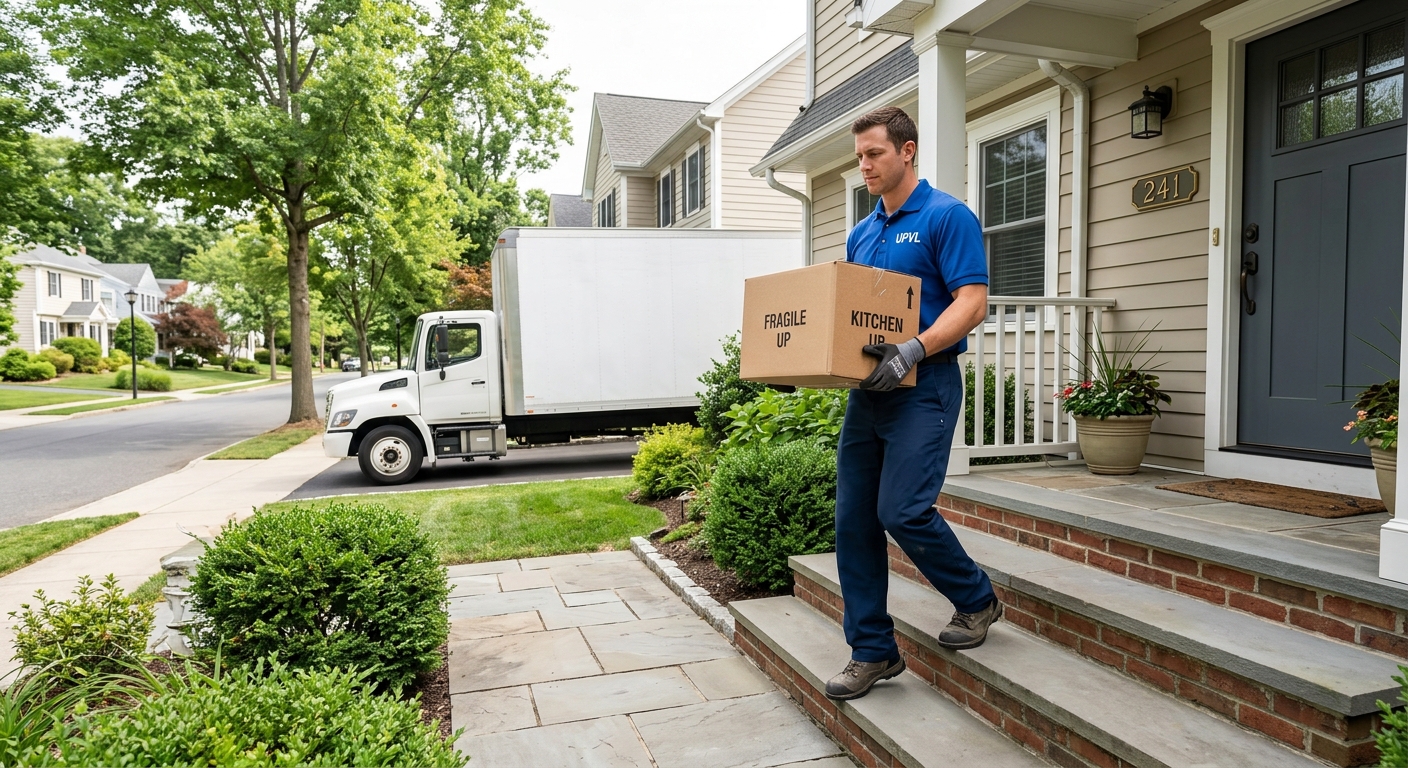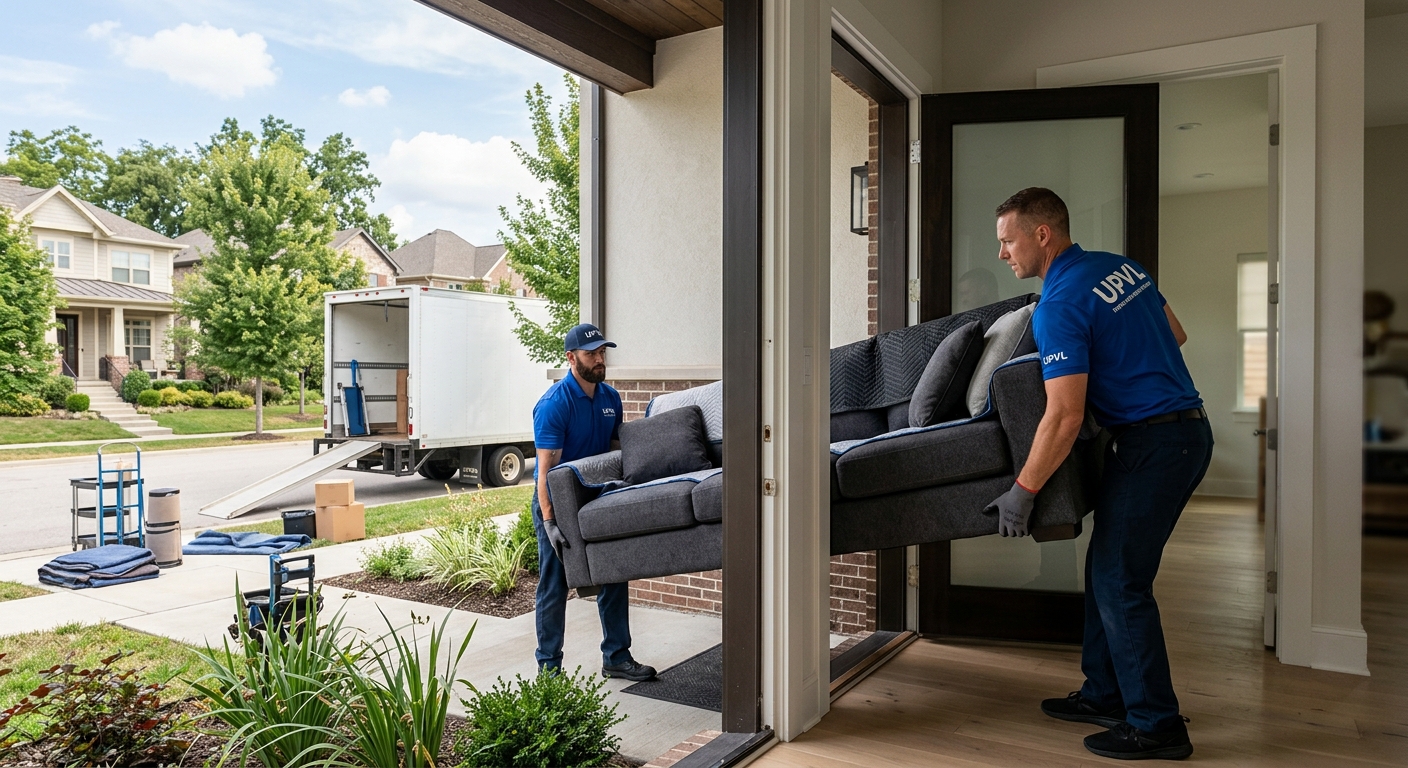
Hiring licensed movers in Los Angeles can mean the difference between a smooth move and a nightmare. LA’s traffic, parking rules, and building requirements make it essential to check licenses, insurance, and estimates carefully before you sign anything.
Quick Navigation
Licensed movers Los Angeles customers can rely on have gone through state and federal registration, carry required insurance, and follow consumer protection rules. In a market as large as LA, this is your first line of defense against scams and careless operators.
Within the city of Los Angeles and across California, household goods movers are regulated. In California, most residential movers must hold a license from the California Public Utilities Commission (CPUC) for intrastate moves. Many Angelenos still say “licensed by the PUC,” but the modern regulatory details are outlined by the state and enforced using CPUC household goods carrier rules. You can confirm these details using state resources tied to the former Bureau of Household Goods and Services (BHGS) and current CPUC carrier lists. A licensed carrier must show its CPUC (or MTR/Cal-T) number on trucks, websites, and paperwork.
For interstate moves that cross state lines, companies must also be registered with the Federal Motor Carrier Safety Administration (FMCSA) as interstate motor carriers. FMCSA maintains the official database of USDOT and MC numbers for movers handling long-distance shipments. Source: FMCSA.
Choosing licensed and insured movers LA residents trust helps you:
Unlicensed operators may offer cheaper quotes, but they often skip insurance, underpay workers, and disappear if something goes wrong. In Los Angeles, where apartment buildings, HOAs, and office towers often demand proof of licensing and insurance, that can stop your move at the loading dock.
| Reason | Licensed Movers | Unlicensed Operators |
|---|---|---|
| Legal status | Registered with CPUC and/or FMCSA | No official oversight |
| Insurance | Carries required liability and cargo policies | Often none or unverifiable |
| Consumer rights | Protected under state and federal rules | Very limited recourse |
| Paper trail | Written estimate, contract, bill of lading | Handwritten note or text messages |
| Building access | Can provide COI and license details | Frequently refused by buildings |
Reliable movers Los Angeles families and businesses recommend usually welcome these checks. They know that transparent licensing and insurance are key trust signals, not obstacles.
To verify licensed movers in Los Angeles, you need to check two main things: their California intrastate authority and, if they do interstate moves, their FMCSA registration.
For moves that start and end within California, your mover must hold a valid CPUC household goods carrier permit, often referenced with a Cal-T or similar number. The state explains that movers without this authority are operating illegally for intrastate shipments. Source: California Public Utilities Commission.
Practical steps:
If a mover refuses to provide a license number, or the number you enter doesn’t match their name, treat it as a major red flag.
If you’re moving from Los Angeles to another state, your mover must have interstate authority from FMCSA. FMCSA manages the USDOT and MC numbers that appear on long‑distance movers’ paperwork. You can search for this information using the FMCSA mover look‑up tools. Source: FMCSA Company Snapshot.
Here’s how to check:
Reliable movers Los Angeles to out‑of‑state destinations usually list their DOT and MC numbers prominently. If you only see a cell phone number and a first name, walk away.
Once you’ve confirmed licensing, check the insurance status, which is also shown in FMCSA records for interstate carriers. FMCSA indicates whether a mover has current insurance filings, and you can ask the mover directly for a copy of their certificate of insurance with limits.
For LA‑based intrastate movers, ask for:
Trusted movers LA customers rely on should be able to provide a sample certificate or confirm they can issue a COI (Certificate of Insurance) naming your building as an additional insured.
Licensing is the foundation, but trust comes from a mix of legal status and real‑world performance. When choosing insured movers LA residents recommend, look for:
You can also compare with established providers such as United Prime Van Lines in Los Angeles, which openly highlights its moving services, locations, and service types.
| Check | Where to Verify | What You Want to See |
|---|---|---|
| California license | CPUC household goods carrier search | Active permit, correct name and address |
| Interstate authority | FMCSA Company Snapshot | Active USDOT/MC, no out-of-service status |
| Insurance | COI / carrier documents | General liability, cargo, workers’ comp |
| Reputation | Online reviews, references | Consistent positive feedback, long history |
| Business presence | Website, office, trucks | Matching details, professional operation |
Insurance and valuation coverage protect your belongings and the buildings involved in your move. Los Angeles landlords, condo boards, and office towers frequently require proof that your movers are properly insured long before moving day.
When a company advertises itself as insured movers LA residents can hire, that can refer to different types of coverage:
True reliable movers Los Angeles customers can trust will carry all three and be prepared to show proof.
On your moving paperwork, you’ll also see “valuation” options. Valuation is not the same as insurance; it is the mover’s contractual level of liability for your belongings. FMCSA clearly separates valuation from third‑party insurance. Source: FMCSA.
Common valuation options:
Always ask which valuation levels are available, what they cost, and how claims work. Trusted movers LA shippers use should be able to walk you through scenarios for your specific items (TVs, glass tables, antiques, etc.).
| Coverage Type | What It Protects | Key Notes |
|---|---|---|
| General liability | Building property, third-party injuries | Required by many LA buildings |
| Cargo insurance | Your goods during transit | Policy limits and exclusions apply |
| Workers’ compensation | Injuries to movers | Protects you from injury claims |
| Released Value Protection | Minimal protection for your items | Usually free but very limited payout |
| Full Value Protection | Repair, replace, or cash settlement | Higher cost but stronger protection |
A COI, or Certificate of Insurance, is a standardized document issued by the mover’s insurance company showing coverage details and limits. Los Angeles condo associations, apartment complexes, and office property managers often require a COI that:
Before move day, provide your building’s COI requirements to your mover. Companies like United Prime Van Lines are familiar with LA building standards and can have their insurance broker issue the proper paperwork.
While each property is different, many LA buildings ask for:
Ignoring these requirements can result in your move being turned away at the door, even if the truck is already outside.
Licensed movers Los Angeles customers hire offer a mix of local, long‑distance, and specialized services. Understanding what each service type includes helps you compare apples to apples when reviewing estimates.
Most established LA moving companies offer:
When comparing quotes from reliable movers Los Angeles operates, check which of these are included, optional, or not available.
Traffic patterns, parking rules, and access challenges can vary dramatically by neighborhood. Here are common local routes and what they involve:
| Route Example | Challenges | What Licensed Movers Do |
|---|---|---|
| Santa Monica to Downtown LA | Heavy freeway traffic, loading zones, busy elevators | Schedule off‑peak hours, arrange loading dock access, secure COI |
| Hollywood to Los Feliz | Hilly streets, limited street parking, older buildings | Use smaller trucks if needed, secure street parking permits |
| West LA to Sherman Oaks via 405 | 405 congestion, narrow valley streets | Plan extra drive time, stage shuttle if big trucks can’t access street |
| Downtown LA high‑rise to Culver City | Freight elevator reservations, dock time limits | Coordinate with building manager, provide COI, assign an elevator crew |
| Los Angeles to San Diego (interstate-lite) | Longer drive, rest stops, HOA rules at destination | Build drive time into estimate, confirm COI with destination HOA |
Licensed and trusted movers LA residents hire usually ask you specific questions about your starting and ending addresses: floor level, elevator availability, truck access, and HOA rules. That’s not nosey; it’s how they give you an accurate estimate.

Local and long-distance moves are regulated and priced differently, even when the same LA company handles both. Understanding the difference helps you confirm that your mover is properly licensed for your specific relocation.
Local moves typically involve relocations within Los Angeles County or neighboring counties, though in regulatory terms they fall under California intrastate moves when both origin and destination are in the state. These moves:
Companies like United Prime Van Lines structure local LA pricing around crew size, estimated hours, and specific access issues (such as stair carries or long hallways).
When you move from LA to another state, FMCSA interstate rules apply. Licensed movers Los Angeles to out‑of‑state routes must hold active USDOT and MC numbers, maintain required levels of insurance, and follow federal estimate and bill‑of‑lading requirements. Source: FMCSA.
Key differences from local moves:
When comparing insured movers LA to other states, always check that the company name on your estimate matches the name in FMCSA records.
For interstate moves, FMCSA allows movers to provide a reasonable delivery spread (for example, June 10–14). The actual time is influenced by distance, traffic, and other shipments on the truck. Source: FMCSA Moving Checklist.
| Move Type | Typical Time Frame | What Affects Timing |
|---|---|---|
| Local LA move (same day) | 1 day, sometimes 2 for large homes | Traffic, elevator access, size of shipment |
| LA to Northern California | 1–3 days including travel time | Distance, weather, truck availability |
| LA to neighboring states (NV, AZ) | 2–5 days typical | Route planning, other loads on truck |
| Coast-to-coast from LA | 7–21 days depending on service | Distance, delivery spread, season |
Reliable movers Los Angeles homeowners trust will explain the delivery window clearly and provide updates during transit.
Even with licensed movers, Los Angeles move prices can vary widely. Understanding cost factors helps you evaluate whether a quote is realistic or too good to be true.
Common cost drivers include:
Licensed movers Los Angeles typically use hourly pricing for local moves, while some larger or more complex jobs may get a flat or “not‑to‑exceed” quote after an in‑home or virtual survey.
| Pricing Type | How It Works | Best For |
|---|---|---|
| Hourly rate | Charged per hour for crew and truck (e.g., 3 movers and a truck) | Standard local moves with predictable access |
| Flat rate / not-to-exceed | Set maximum based on detailed survey and inventory | Larger homes, complex moves, customers wanting price cap |
| Weight-based | Price per pound for interstate moves | Long-distance or cross-country shipments |
| Volume-based | Price per cubic foot or container | Some long-distance or containerized services |
Extremely low hourly rates can be a trap. Some unlicensed operators quote a cheap hourly rate, then drag out the job or add surprise fees for stairs, fuel, or “long carry” charges. Trusted movers LA residents rely on will list common fees upfront.
Common add-ons in LA pricing include:
Always ask your estimator to walk through access at both locations. Reliable movers Los Angeles professionals should be open about potential extra costs and how to avoid them.
Understanding moving estimates is critical before hiring any mover. Licensed movers Los Angeles must provide written estimates that follow California and federal rules, depending on whether your move is local or interstate.
A non‑binding estimate is an educated guess of your final charges based on the mover’s survey of your belongings and services requested. With a non‑binding estimate, the final cost may go up or down depending on actual weight, time, and services. FMCSA explains that, for interstate moves, you may have to pay up to 110% of the non‑binding estimate at delivery, with any remaining balance billed later. Source: FMCSA.
A binding estimate is a written agreement that guarantees the total cost of the move based on the inventory and services listed. If you do not add extra items or services, the price does not change. If you request additional services or add more items, you may receive a revised written estimate.
A binding not‑to‑exceed estimate (sometimes called “guaranteed not‑to‑exceed”) means you will either pay the binding amount or less if the shipment ends up weighing less than estimated. This type of estimate offers strong protection for consumers on interstate moves.
| Estimate Type | Price Flexibility | Pros and Cons |
|---|---|---|
| Non-binding | Final price can be higher or lower | Pros: Flexible; Cons: Less cost certainty |
| Binding | Price fixed if no changes | Pros: Predictable costs; Cons: Less room for decreases |
| Binding not-to-exceed | Price capped, may decrease | Pros: Protection and potential savings; Cons: Requires thorough survey |
| Hourly local estimate | Based on actual hours worked | Pros: Simple; Cons: Can increase if access is poor or unplanned |
Lawful, insured movers LA customers should hire will always:
Be cautious if a company refuses to write down the quote, insists that everything is “approximately,” or pressures you to sign blank or incomplete forms.
Packing is one of the biggest variables in move pricing and protection. Licensed movers Los Angeles will clearly explain what’s included, what’s optional, and how packing affects your valuation and damage coverage.
Most professional movers offer several packing options:
Providers like United Prime Van Lines can tailor these options to your schedule and budget.
| Packing Option | Who Does the Work | Impact on Cost and Protection |
|---|---|---|
| Self-packing | You | Lowest cost; more risk if boxes are weak or poorly packed |
| Partial packing | You + movers | Balanced cost; movers handle fragile/high‑risk items |
| Full packing service | Movers | Highest cost; strongest protection and efficiency |
| Unpacking | Movers | Extra cost but saves time, especially in high‑rises |
Under most tariffs and contracts, movers may limit their liability for items you pack yourself, especially if boxes are not properly sealed or labeled. If a self‑packed box of dishes breaks but the carton was weak or overfilled, a mover may deny the claim. When the mover packs fragile items professionally, they assume more responsibility for those items under your chosen valuation level.
Trusted movers LA residents hire will:
Los Angeles has its own quirks that affect packing strategy:
When you interview licensed movers Los Angeles, ask how they handle fragile items in high‑rise or long‑carry situations to gauge their professionalism.
Storage often becomes part of an LA move when closing dates don’t line up or when you’re relocating for work and need temporary housing. Licensed and insured movers LA provide storage-in-transit (SIT) options that keep your belongings in the mover’s custody instead of self‑storage.
You’ll see three main storage options:
Companies such as United Prime Van Lines can bundle moving and storage so you have a single provider responsible for your shipment.
| Storage Type | Best For | Pros and Cons |
|---|---|---|
| Storage-in-transit | Bridge between move-out and move-in dates | Pros: Seamless; Cons: Limited to short periods |
| Warehouse storage | Months-long holds during renovations or relocations | Pros: Managed by movers; Cons: Monthly cost, access rules |
| Self-storage | DIY or budget‑driven approaches | Pros: You control access; Cons: Multiple moves in/out |
| Container storage | Moves with portable containers | Pros: Flexible; Cons: Parking and city permits can be tricky |
When storage is part of your move, confirm that the same licensed movers Los Angeles you hired are responsible for the storage location. Ask:
Unlicensed operators may move your goods to unknown warehouses or sublet space without clear liability, which makes claims difficult if something happens.
Los Angeles has its share of rogue movers and brokers. A big reason to prioritize licensed movers in Los Angeles is to avoid these high‑risk operators. Always be on the lookout for specific red flags.
Watch for these warning signs:
These behaviors are not typical for reliable movers Los Angeles residents recommend. Professional crews should arrive in uniforms, use properly equipped trucks, and follow a clear process.
Another risk is confusing moving brokers with moving carriers. A broker arranges your move but does not own trucks or employ movers, while a carrier actually performs the move. If you think you hired insured movers LA, but you actually signed with a broker, your shipment may be handed off to a different company you’ve never heard of.
Before signing, ask directly:
FMCSA warns consumers about these distinctions on its Protect Your Move site. Source: FMCSA Moving Brokers.
In the Los Angeles area, you may see scam patterns like:
Stick to licensed movers Los Angeles that have stable names, traceable addresses, and documented histories.
Before you sign a contract or pay a deposit, run through this checklist to confirm that you’re working with licensed, insured, and trusted movers LA residents rely on.
| Checklist Item | What to Do | Why It Matters |
|---|---|---|
| Confirm California license | Ask for CPUC/Cal-T number and verify online | Ensures mover is legal for intrastate LA moves |
| Check FMCSA status (if interstate) | Verify USDOT/MC numbers via FMCSA | Confirms authority and insurance for out-of-state moves |
| Verify insurance and COI capability | Request sample COI and policy details | Required by buildings and protects you from liability |
| Review written estimate | Check whether it is binding, non-binding, or not-to-exceed | Prevents surprise price hikes |
| Inspect contract terms | Read fine print on fees, valuation, and claims | Helps you understand your rights and options |
| Evaluate reviews and references | Look for consistent patterns over time | Reveals reliability beyond marketing |
| Confirm building requirements | Ask your HOA/landlord for move rules and COI requirements | Prevents move day delays or cancellations |
| Clarify arrival time and crew | Ask how many movers, what truck size, and approximate arrival window | Ensures adequate staffing and realistic planning |
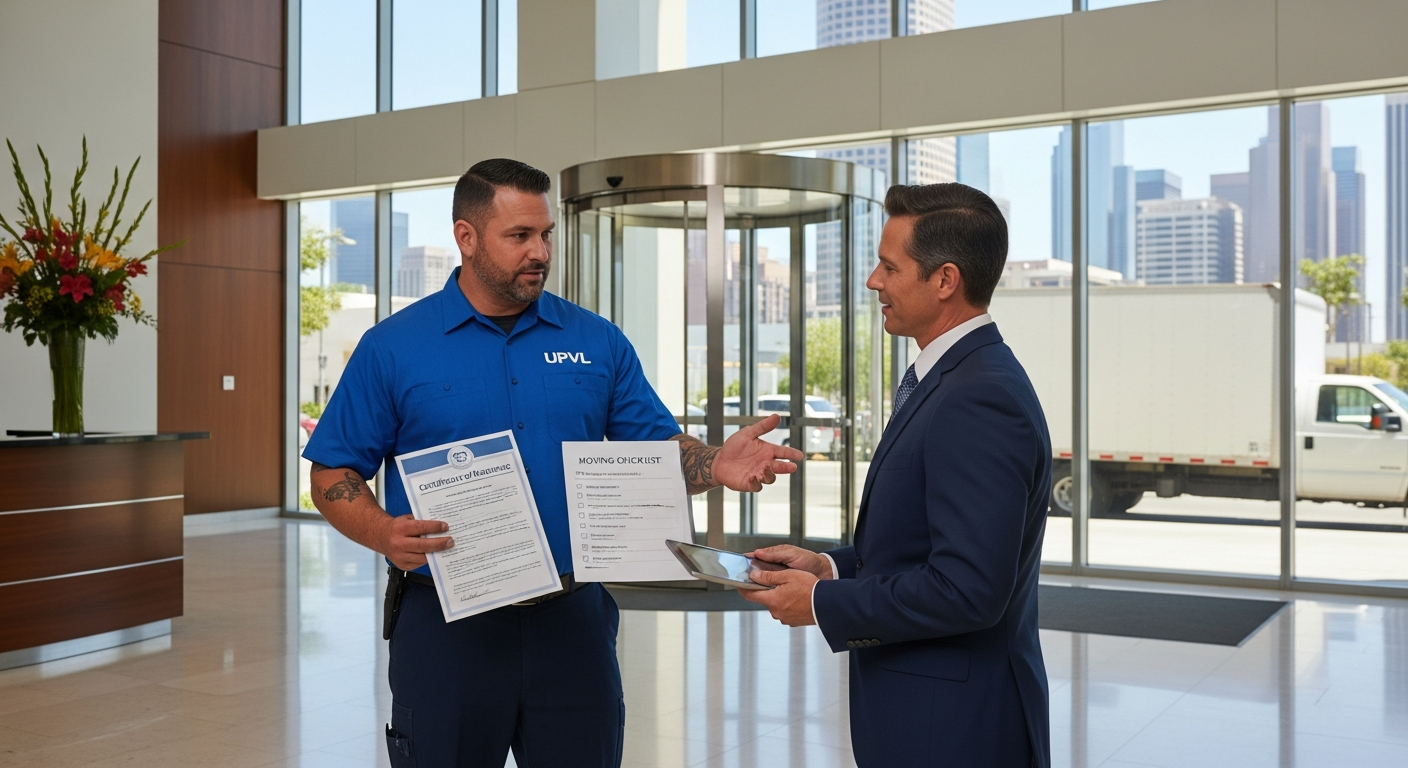
To check if a mover is licensed in Los Angeles, ask for their CPUC/Cal‑T household goods carrier number and search it on the California Public Utilities Commission website. For out‑of‑state moves, also request their USDOT and MC numbers and confirm them through FMCSA’s Company Snapshot tool. Make sure the company name and address on the license match the name on your estimate.
When movers say they are insured, it usually means they carry general liability, cargo insurance, and workers’ compensation. General liability protects against damage to buildings or third‑party injuries, cargo insurance helps cover your belongings in transit, and workers’ comp covers injuries to employees. Ask for a certificate of insurance and verify that coverage is active and sufficient for your building’s requirements.
A Certificate of Insurance (COI) is a document issued by your mover’s insurance company showing coverage limits and policy details. LA building managers need it to confirm that your movers have adequate liability and workers’ comp insurance before allowing them to use freight elevators or loading docks. Many properties require the building owner or HOA to be listed as a certificate holder or additional insured. Ask your mover how far in advance they can provide a COI.
A proper moving estimate should list the company’s legal name, address, license numbers, and contact information; describe your origin and destination addresses; outline the services included (labor, truck, packing, materials, stairs, long carry); state whether the estimate is binding, non‑binding, or not‑to‑exceed; and specify rates or total price. For interstate moves, FMCSA requires that this information be in writing and attached to the bill of lading.
A binding estimate guarantees the total price of the move based on the listed inventory and services, as long as you don’t add items or services. A non‑binding estimate is a good‑faith approximation; the final price may increase or decrease depending on actual weight or time. For interstate moves, you may have to pay up to 110% of the non‑binding estimate at delivery, with any remainder billed later. Binding not‑to‑exceed estimates cap your cost but allow it to decrease if your shipment is lighter.
Many reputable licensed movers in Los Angeles either take a modest deposit or no deposit at all for local moves, depending on season. For long‑distance moves, a reasonable deposit may be requested to reserve space. Be wary of companies asking for large, non‑refundable cash deposits or demanding full payment before they arrive. Paying by credit card gives you better consumer protections than cash or wire transfers.
Ask the company directly whether they will perform the move with their own trucks and employees or whether they are brokering the job to another carrier. Check FMCSA records: brokers are listed as “Broker” while carriers are listed as “Carrier” or “Motor Carrier.” If the name on your estimate doesn’t match the company listed as the carrier in FMCSA records, clarify who will actually handle your goods before you sign.
Common red flags include: no license or USDOT number on the website; refusal to provide a written estimate; requests for large cash deposits; name on paperwork not matching the truck or online presence; rental trucks and day laborers with no ID; and big price increases after your belongings are loaded. If a company won’t share license and insurance details or cannot issue a COI, look for another mover.
Full Value Protection is optional but strongly recommended if you have higher‑value items or want stronger protection. Basic Released Value coverage, often around $0.60 per pound per article for interstate moves, may not come close to covering the cost of replacing a damaged TV or antique. Ask your mover about available valuation options for local and intrastate moves and choose the level that matches your risk tolerance and budget.
For California moves, the contact information is:
In a market as busy and complex as Los Angeles, choosing licensed movers is not just about ticking a box—it is about protecting your belongings, your building relationships, and your wallet. When you verify licensing, insurance, COI capability, estimate type, and reputation, you dramatically reduce the odds of surprise charges, damage disputes, or outright scams.
Use the checklist and red flags in this guide to evaluate any company you consider. Compare a few licensed, insured movers LA offers, ask detailed questions, and insist on clear paperwork. When you work with reliable movers Los Angeles residents trust—such as established providers like United Prime Van Lines in Los Angeles—you gain more than a truck and crew. You gain a professional partner who respects city rules, protects your property, and treats your move with the care it deserves.