
Moving from Miami to Chicago means trading palm trees and humidity for skyscrapers and lakefront winters. To keep this big transition smooth, you need long distance movers Miami residents trust for interstate moves, clear pricing, and predictable delivery.
Quick Navigation
A Miami to Chicago move is a classic long-haul interstate relocation of roughly 1,350–1,450 road miles, depending on the exact route. That makes it too far for a DIY weekend drive and ideal for professional interstate movers Miami families and businesses can rely on.
Most moves follow a northbound I-95 and I-75 connection or an I-95 to I-57 route before cutting into Chicagoland. That distance, combined with weather, toll roads, and city access rules on both ends, affects cost, timing, and how your shipment is dispatched.
Three things make this route unique:
Choosing experienced long distance movers Miami based, such as a carrier like United Prime Van Lines in Miami, helps you avoid extra fees, delays, and building fines on both ends.
| Factor | Miami Origin | Chicago Destination |
|---|---|---|
| Climate concerns | Heat, humidity, hurricane season | Snow, ice, winter parking bans |
| Typical buildings | Condos, high-rises, gated communities | Walk-ups, mid-rises, high-rises |
| Access issues | Garage clearances, valet lanes, busy beaches | Alley access, loading docks, metered parking |
| Scheduling pressure | Hurricane prep, HOA calendars | Elevator slots, move-in deadlines, lease overlaps |
For a Miami-to-Chicago relocation, you’ll usually choose between shared long-distance service, exclusive truck service, or partial services like packing-only or labor-only. The right choice depends on budget, timing, and how much control you want over the delivery window.
Professional carriers use GPS and dispatch systems, but the core corridors are predictable. Knowing them helps you understand delivery windows and potential delays.
| Typical Route | Approx. Miles | What It Means for You |
|---|---|---|
| Miami → I-95 N → I-26 W → I-75 N → Chicago | ≈ 1,350–1,400 | Balanced route, used frequently by interstate movers |
| Miami → Florida Turnpike → I-75 N (via Atlanta) → I-24 → I-57 → Chicago | ≈ 1,400+ | More tolls possible, but flexible around weather systems |
| Miami → I-95 N → Coastal route then west | Varies | Sometimes used to avoid storms or heavy traffic |
| With storage-in-transit (SIT) | Extra miles/time | Shipment detours to a warehouse before final delivery |
Dispatch teams choose routes based on road closures, storms, and truck load plans. During hurricane season or major winter storms, they may intentionally route around specific states to stay ahead of weather patterns, which can add travel time but protects your shipment.
Long-distance moving companies usually offer several tiers of service for this route.
| Service Type | What It Includes | Best For |
|---|---|---|
| Standard shared truck (consolidated) | Your items share truck space with others going in the same direction; wider delivery window | Cost-conscious moves with flexible timing |
| Exclusive or “full truck” service | Truck dedicated to your shipment; tighter delivery window | Larger homes, fast timelines, complex building rules |
| Partial packing + loading | Movers pack fragile/high-value items, you pack the rest | Balanced budget and protection |
| Full packing + unpacking | Movers pack everything, protect furniture, may unpack at destination | Busy families, executives, elderly customers |
Companies like United Prime Van Lines long-distance moving service typically provide full-service options, furniture disassembly and reassembly, and storage-in-transit, all critical on a long route like Miami to Chicago.
Both households and businesses frequently relocate between these two cities. Each has special needs.
If you are moving a business between Miami and Chicago, look for movers who also offer office and commercial moving services, not just household goods moving.
This route is clearly a long-distance interstate move, not local. Understanding the distinction matters because your rights, pricing rules, and paperwork are different.
An interstate move is any move where your belongings cross state lines, regardless of mileage. Miami to Chicago involves multiple states and is governed by federal regulations from the Federal Motor Carrier Safety Administration (FMCSA). FMCSA explains that interstate household goods movers must be registered and have a USDOT number. Source: FMCSA.
A local move, by contrast, usually stays within 50–100 miles and does not leave the state. Pricing tends to be hourly instead of weight and distance-based.
| Aspect | Local Miami Move | Miami to Chicago Interstate Move |
|---|---|---|
| Governing rules | Florida state rules, company policies | Federal (FMCSA) + contract terms |
| Common pricing | Hourly + travel fee | Weight/volume + distance + services |
| Paperwork | Short contract, local bill of lading | Interstate bill of lading, estimate, inventory list |
| Delivery window | Same day usually | Several days to a couple of weeks |
Because Miami to Chicago is clearly interstate, you should receive FMCSA-required booklets such as “Your Rights and Responsibilities When You Move” along with a written estimate and a bill of lading.
On a short local move, you can make multiple trips, run back for forgotten items, and improvise. On a Miami to Chicago move, your shipment may be on the road for 3–7 days or longer, and you’ll likely travel separately by plane.
That means:
Both metro areas are dense, with many managed buildings, HOAs, and city rules. Overlooking these details is one of the fastest ways to run into moving-day chaos, fines, or long delays.
A COI (Certificate of Insurance) is a document your moving company provides to your building management showing it carries a certain level of liability and workers’ compensation insurance. Many Miami condos and Chicago high-rises require a COI before they’ll block off an elevator or allow movers on site.
Property managers use COIs to protect themselves if a mover accidentally damages a wall, elevator, or lobby. A professional interstate mover should quickly provide a COI customized with your building’s name and required limits.
Miami and greater South Florida bring a set of origin-side logistics:
Chicago adds a different set of constraints:
| City | Typical Building Requirement | What to Confirm Before Move |
|---|---|---|
| Miami | COI, reserved elevator, weekday-only moves | Time window, loading area, COI details |
| Miami Beach | Truck size limits, no blocking valet lanes | Garage clearance, route for large truck |
| Chicago Loop | Loading dock schedule, COI, security sign-in | Dock height, dock hours, freight elevator |
| Chicago North Side | Street or alley parking, snow considerations | Permit needs, alley clearance, snow removal |
Tell your mover the exact buildings at both ends as early as possible. A company familiar with both markets, like United Prime Van Lines, can pre-plan truck sizes, crew sizes, and timing to avoid refused access or overtime fees.
On a long-distance route like Miami to Chicago, good packing is the difference between a smooth claim-free move and damage claims or weeks of frustration. Cross country moving Miami customers often choose at least partial professional packing for this reason.
| Packing Level | What It Includes | Pros & Cons |
|---|---|---|
| Self-pack (DIY) | You pack all boxes; movers blanket-wrap furniture | Lower cost but higher risk of damage if done poorly |
| Fragile-only packing | Movers pack dishes, glass, art, TVs, mirrors | Protects high-risk items; you save on labor by packing non-breakables |
| Full packing service | Movers pack everything, label boxes, protect furniture | Fast and convenient; higher upfront cost but lower risk and effort |
| Unpacking service | Movers unpack and remove debris at destination | Great for quick setup but requires planning box placement |
Many interstate movers Miami residents use offer flexible combinations, such as packing just the kitchen and artwork. See full-service details from providers like United Prime Van Lines full packing services.
You’re not just moving things; you’re moving them through very different conditions. Consider:
Long-haul routes amplify the risk to specialty items. Ask potential movers if they offer:
These services cost more but are usually much cheaper than repairing or replacing damaged valuables.
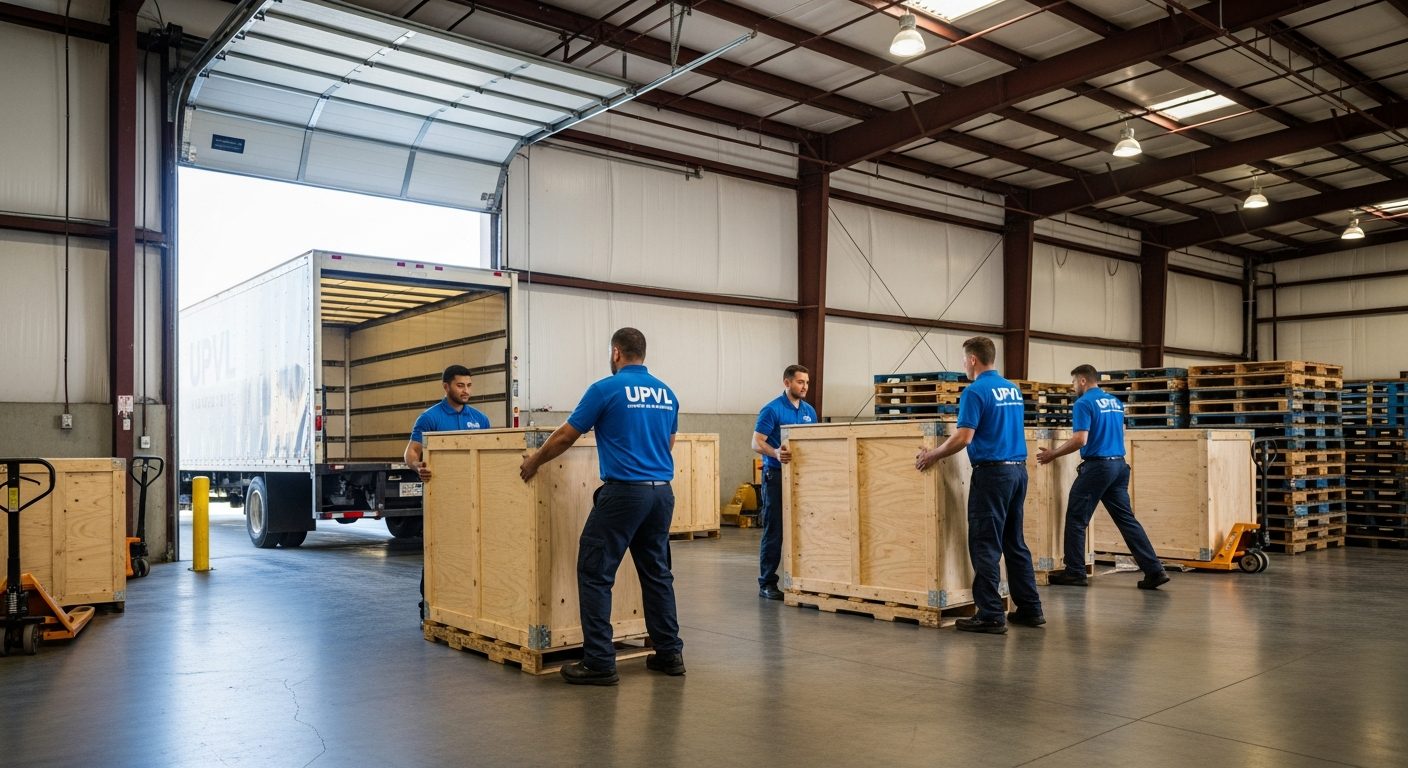
Many Miami to Chicago moves involve some gap between move-out and move-in dates. That’s when storage-in-transit (SIT) or longer-term storage becomes important.
Storage-in-transit is short-term storage provided by your moving company while your goods are en route to your final destination. Your items are typically stored in a secure, climate-controlled warehouse, still under the moving company’s custody, for a limited number of days (for example, 30–90 days) at an agreed daily or monthly rate.
SIT is useful if:
| Storage Type | Typical Duration | Best Use Case |
|---|---|---|
| Storage-in-transit (SIT) | Days to a few months | Short gap between move-out and move-in |
| Long-term warehouse storage | Several months or more | Extended relocations, overseas assignments |
| Self-storage units | Flexible | DIY access to items during and after move |
| Hybrid (warehouse + self-storage) | Varies | Split items between immediately accessible and long-term storage |
Using your mover’s warehouse for SIT is more seamless than unloading into self-storage and reloading later. Your belongings stay within one company’s chain of custody, which can simplify valuation coverage and claims.
For integrated storage options on Miami–Chicago moves, companies such as United Prime Van Lines storage can arrange SIT near origin, destination, or along major interstate routes.
Adding SIT changes both cost and delivery timing:
Always clarify daily or monthly SIT rates and any storage-retrieval fees on your moving estimate and bill of lading before signing.
Customers often ask, “How much will my Miami to Chicago move cost?” For a typical 1–3 bedroom home, expect costs in the low-to-mid four figures and up, depending on weight, services, and timing. No two moves are identical, but you can understand what drives the price.
Professional interstate movers base pricing primarily on:
| Cost Factor | How It Affects Price | Example for Miami → Chicago |
|---|---|---|
| Weight/volume | Bigger shipments cost more to haul | 4-bedroom house costs more than a studio |
| Packing services | More packing = higher labor and materials cost | Full packing might add hundreds to a few thousand dollars |
| Storage-in-transit | Daily or monthly storage + handling fees | 30 days SIT could add several hundred dollars |
| Access at each end | Extra time and crew for complex access | High-rise with small elevators vs. driveway house |
Every move needs a personalized quote, but many customers appreciate at least general ranges to aid budgeting. For a Miami to Chicago household move:
These ballparks assume a reputable carrier, standard valuation, and typical dates. Exact pricing must be confirmed with written estimates.
On a long interstate route, understanding estimate types protects you from unpleasant surprises. FMCSA highlights the differences between binding and non-binding estimates for interstate moves. Source: FMCSA.
Here are the standard estimate types you’ll encounter with interstate movers Miami companies:
| Estimate Type | Definition | Pros & Cons |
|---|---|---|
| Non-binding estimate | An educated price estimate based on the mover’s assessment; final charges are based on actual weight and services | Flexible but can go up if actual weight or services exceed estimate |
| Binding estimate | A guaranteed price for the listed services and inventory as long as you don’t add items or services | Predictable cost; changes require a revised estimate for added items |
| Binding not-to-exceed estimate | You pay the lower of the estimated amount or the actual cost; price will not exceed the estimate | Strong consumer protection but not offered by every mover |
| Hourly (local only) | Used for local work; not standard for Miami–Chicago because it crosses state lines | Useful only for add-on local services, not the main haul |
Expect this general process with reputable interstate movers:
For peace of mind, many customers prefer binding or binding not-to-exceed estimates, especially on a long route where minor miscalculations in weight can add up.
If you’re getting a quote from a carrier like United Prime Van Lines, ask clearly whether your estimate is binding, non-binding, or binding not-to-exceed and have that spelled out on the paperwork.
For interstate moves, “insurance” is often called valuation coverage. You should understand the options to protect your belongings across 1,400 miles of highways.
FMCSA notes that movers must offer at least these two valuation levels for interstate household moves. Source: FMCSA.
| Coverage Type | What It Pays | Best For |
|---|---|---|
| Released Value Protection | Up to $0.60 per pound per item | Low-value, DIY-packed moves where cost is the top concern |
| Full Value Protection (FVP) | Repair, replace, or cash settlement based on current value | Most households with normal furniture, electronics, and decor |
| Additional third-party insurance | Varies by policy | High-value collections, art, antiques, or jewelry |
| Homeowner/renter policy | Sometimes limited in-transit coverage | Supplemental; check with your agent for details |
On a route where your shipment will be handled multiple times (loading, possibly warehouse storage, unloading), most families choose Full Value Protection with a reasonable deductible. It costs more up front but limits unexpected losses later.
Ask your mover to clearly outline:
For a long route like Miami to Chicago, licensing and compliance are not optional. They are your first defense against scams and unprofessional operations.
Interstate movers must be registered with FMCSA and have a USDOT number and MC number. You can verify these using the FMCSA’s Company Snapshot tool. Check for:
Florida regulates intrastate moves within the state, but your Miami to Chicago move will fall mainly under federal rules once it crosses state lines. Still, a mover with a solid local presence and knowledge of Miami-area regulations and consumer protections is beneficial. The Florida Attorney General’s office offers tips on choosing movers and understanding contracts. Source: Florida Attorney General.
Some companies advertise as “Miami to Chicago movers” but are actually just brokers. A broker arranges for another mover to handle your shipment. There are legitimate brokers, but also many who:
Ask directly: “Are you a moving carrier, a broker, or both?” Reputable carriers like United Prime Van Lines operate trucks and crews and can clearly explain when and if any brokerage is involved.
For a Miami to Chicago household move, most customers should expect a delivery window—an estimated range of days when the truck may arrive—rather than a single exact date, unless they purchase guaranteed or exclusive-delivery options.
Once loaded and dispatched direct, truck transit between Miami and Chicago can take approximately 3–5 days of actual driving time under normal conditions. However, your contract may show a larger delivery spread (for example, 5–14 days) to account for:
| Service Type | Typical Delivery Window | Notes |
|---|---|---|
| Shared truck, standard service | About 5–14 days from loading | Most cost-effective; flexible timing required |
| Shared truck, peak season | Can stretch longer during summer or holidays | Book early for best dates and tighter windows |
| Exclusive-use truck | Often 3–7 days, more predictable | Higher cost but tighter schedule control |
| With storage-in-transit | Transit plus your SIT duration | Delivery arranged after release from storage |
Because you will probably arrive in Chicago before your shipment, plan for a gap:
Always have your mover’s dispatch contact details handy. On long routes, office staff and drivers coordinate check-in calls as they move through different states.
A route-specific checklist keeps you organized and minimizes surprises.
| Stage | Key Tasks | Who Handles It |
|---|---|---|
| Pre-move planning | Surveys, estimates, choose mover | You + moving consultant |
| Building coordination | COI, elevator, parking | You + property managers + mover |
| Packing | DIY and/or pro packing | You + movers |
| Transit & storage | Dispatch, routing, SIT | Mover dispatch team |
Route cost depends on shipment size, services, time of year, and building access. For many households, Miami to Chicago moves fall somewhere in the low-to-mid four figures and up. A small apartment with minimal packing may be at the lower end, while a large home with full packing, storage-in-transit, and complex building access can reach higher four figures or more. Always request a written binding or binding not-to-exceed estimate from your mover.
Actual truck transit is often 3–5 days of driving, but standard shared-truck services usually quote a delivery window around 5–14 days from the loading date. This accounts for routing, weather, and multiple customers’ shipments. Exclusive-use or guaranteed-delivery options can narrow that window, but they cost more. Storage-in-transit will extend the total timeline by however long you keep items in storage.
Storage-in-transit (SIT) is short-term warehouse storage provided by your moving company while your belongings are between your Miami origin and Chicago destination. Your shipment is unloaded into a secure facility and then reloaded for final delivery when you’re ready. SIT is ideal if your Chicago home won’t be ready on your move-out date or if you’re remodeling. Fees typically include storage by the day or month plus additional handling charges.
Sometimes, but you need to coordinate with your mover. Because your goods are stored in sealed vaults or pallets in a warehouse, unscheduled access is not like a self-storage unit. If you anticipate needing specific items during SIT, set those aside and keep them with you or ask to store them separately in an easily accessible vault, which may add cost.
Declutter heavily before your survey, choose flexible dates, pack some or all boxes yourself, and avoid unnecessary storage. Ask about shared-truck options if your move dates are flexible and your shipment is not extremely large. Keep building access simple by securing elevators and parking in advance to avoid extra labor time.
Yes, but it requires extra planning. Hurricane season officially runs June 1 to November 30 according to the National Hurricane Center. Professional movers monitor weather forecasts and may adjust loading times or routes to stay safe. Book early, keep in close contact with your mover, and build some flexibility into your schedule in case of storm-related delays.
Winter moves work fine with proper planning. Snow and ice can affect parking and walking paths, so ensure walkways and stairs are cleared and salted before the crew arrives. Movers may add travel time or reschedule in case of severe storms or unsafe road conditions, but they regularly operate in winter climates and bring protective materials for floors and carpets.
In most cases, yes if you’re moving into or out of a managed condo, co-op, or high-rise. Ask both property managers for COI requirements—policy limits, wording, and any special endorsements. Give this information to your moving company at least a week or two before move day so they can prepare and send the COI on time.
Many long-distance movers cannot or will not transport live plants on interstate routes because of state regulations and the difficulty of keeping them alive in a closed truck for days. Even if allowed, plants may not survive the journey, especially with temperature swings. It’s usually better to gift them locally or transport a few favorites yourself.
For Florida moves, the contact information is:
A Miami to Chicago move is a major life change and a complex logistics project at the same time. By understanding the route, cost drivers, estimate types, valuation coverage, building rules, and realistic delivery windows, you can make clear, confident decisions instead of guessing.
Focus on three pillars: a licensed interstate carrier, detailed written estimates, and honest communication about your timing and building requirements. With the right long distance movers Miami based handling the drive and details, you can concentrate on settling into your new life on the shores of Lake Michigan instead of worrying about what’s happening on the highway between Florida and Illinois.