Military moving LA comes with unique rules, tight deadlines, and family stress layered on top of Los Angeles traffic and housing challenges. Whether you have PCS orders, a TDY, or a long-distance separation move, understanding your options in Los Angeles can save you money, time, and headaches.
Quick Navigation
Moving in Los Angeles is already complex. Layer PCS orders, DoD rules, and long-distance timelines on top, and the stakes get higher. Military families in LA often juggle base access, tight report-by dates, and school schedules while navigating some of the most congested highways in the country.
Los Angeles is home to or near key military-related locations such as Los Angeles Air Force Base (El Segundo), Naval Base Ventura County, and various Reserve and National Guard facilities around the metro area. That means a high volume of PCS and long-distance moves every year, many of them moving to or from other major installations across the U.S.
Working with movers who truly understand PCS moves, DoD requirements, and long-distance routes from Southern California helps you:
Even if your household goods are moved by a DoD-contracted carrier, many service members also hire civilian long distance movers for supplemental shipments, personally procured moves (PPM/DITY), or family needs that don’t fit inside the standard PCS program.
| Reason | Why It Matters in LA | How Movers Help |
|---|---|---|
| Traffic & congestion | Delays on I-405, I-10, and US-101 can impact timing. | Route planning, early arrival windows, flexible loading. |
| Base proximity | Moves to/from Los Angeles AFB or Reserve sites require base familiarity. | Coordinated base access and gate procedures. |
| Housing types | High-rise apartments, tight streets, and hills make access tricky. | Shuttle trucks, elevator reservations, parking planning. |
| Long distances | Most PCS moves from LA are cross-country or interstate. | Interstate licensing, clear delivery windows, valuation coverage. |
Military families in Los Angeles usually choose from three main approaches: fully managed PCS through the government, a Personally Procured Move (PPM, formerly DITY), or a hybrid where some belongings go with the DoD carrier and others with a private mover.
In a government-managed PCS, the Department of Defense contracts and pays a carrier to move your household goods through the Defense Personal Property Program (DPS). You work with your installation’s transportation office to schedule pack and load dates and track the shipment in the system.
Key traits of a DoD-arranged move:
Many families still supplement with storage or an extra shipment through civilian moving services if the standard PCS shipment doesn’t fit their timing or housing situation.
A Personally Procured Move, or PPM (often called a DITY move), lets you arrange your own move and get reimbursed by the DoD, subject to caps and documentation. You can rent your own truck, use portable containers, or hire a professional mover and pay them directly.
Common reasons LA service members choose PPM:
When doing a PPM with professional movers, choose companies that understand military documentation requirements, weight tickets, and how to structure the invoice to match what finance and transportation offices expect.
Many LA military families use both systems in the same relocation.
Examples of hybrid setups:
| Option | Pros | Considerations |
|---|---|---|
| Government-managed PCS | Less out-of-pocket cost; standardized process. | Less flexibility on dates; longer delivery windows possible. |
| PPM with truck rental | Maximum control; potential for reimbursement savings. | Requires labor, driving long distances, and logistics planning. |
| PPM with professional mover | Professional packing/loading; controlled timeline. | You pay upfront and then seek reimbursement. |
| Hybrid approach | Combines government support with flexible private solutions. | Must track multiple shipments and weight allowances carefully. |
Most military moves from Los Angeles are long-distance or interstate. That makes experience with cross-country route planning, regulations, and delivery windows especially important.
Here are some frequent long-distance routes military families take from the LA area:
For most of these, trucks will use major corridors like I-10, I-40, I-15, and I-70, depending on the destination and season. A mover who regularly runs these routes can set more realistic expectations for transit time and delivery windows.
When you hire long distance movers Los Angeles for a PCS or family relocation connected to your orders, you want more than just a truck. Look for:
The Federal Motor Carrier Safety Administration (FMCSA) regulates interstate household goods carriers and provides a database where you can check a mover’s license, insurance, and complaint history. Always verify before committing.
| Route Example | Approx. Driving Distance | Typical Transit Window* |
|---|---|---|
| LA to San Antonio, TX | ~1,350 miles | 4–8 days depending on load size and routing |
| LA to Colorado Springs, CO | ~1,050 miles | 3–7 days |
| LA to Norfolk, VA | ~2,700 miles | 7–14 days |
| LA to Fayetteville, NC | ~2,400 miles | 6–12 days |
*Transit windows are examples, not guarantees. Always review your specific estimate and Bill of Lading for your schedule terms.
Los Angeles poses challenges you won’t see at many other duty stations: dense traffic, narrow residential streets, hills, and buildings with strict loading rules. Professional movers familiar with LA know that a well-planned move day is just as critical as a well-packed box.
Each neighborhood has its own quirks that affect a military move:
| LA Area | Common Challenge | Typical Solution |
|---|---|---|
| Westside (Santa Monica, West LA) | Street parking is limited; large trucks may not fit. | Use smaller shuttle trucks; secure parking permits when possible. |
| Downtown high-rises | Freight elevator and dock must be reserved in advance. | Coordinate with building management; plan off-peak loading times. |
| Beach cities | Narrow streets and overhead wires challenge large trailers. | Smaller trucks and additional trips from a staging area. |
| Hill neighborhoods | Steep, winding roads can be unsafe for big tractors. | Park on safer, wider streets and use shuttle trucks. |
Experienced movers often send an onsite estimator or use detailed photos and video walk-throughs to plan equipment and crew for your specific address.
Many LA apartment and condo buildings require a Certificate of Insurance (COI) from your mover. A COI is a document showing your mover’s liability and workers’ compensation coverage, listing the building or property management as a certificate holder.
Common building requirements include:
A professional military-focused mover will handle COI requests, coordinate with building management, and help you back-time pack and load dates to preserve your PCS timeline.
LA traffic is notorious. U.S. Department of Transportation studies have consistently ranked the region as one of the most congested in the country. For a PCS move, that congestion can affect:
Movers who know LA will aim for:
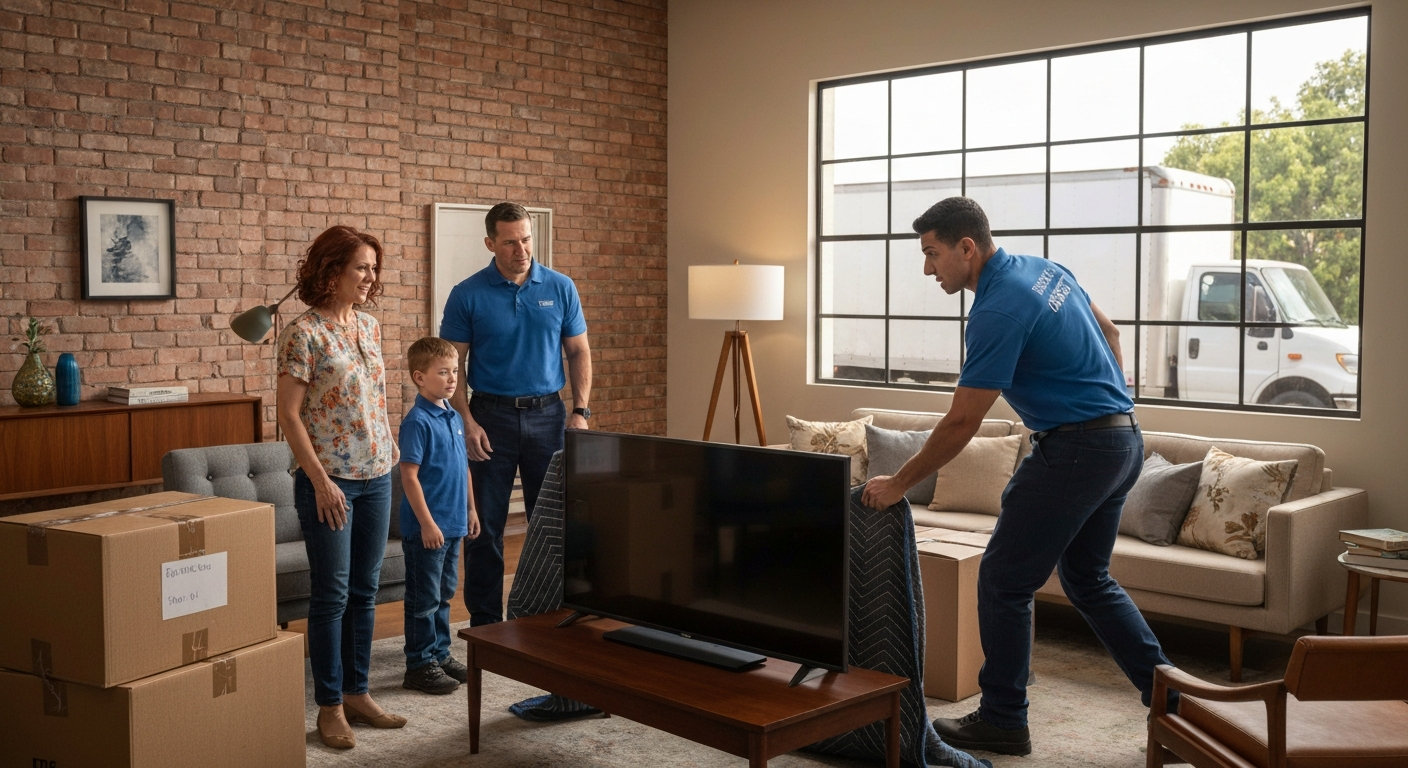
Packing is one of the biggest stress points in a PCS or long-distance move. Military families often have a shorter timeline and more complex logistics than civilians, especially when juggling school transitions and temporary lodging.
Companies that understand military moving LA usually offer multiple packing options so you can choose how much help you want.
| Packing Option | What It Includes | Best For |
|---|---|---|
| Full packing service | Movers pack everything: dishes, books, clothes, decor. | Short-notice PCS orders, busy families, back-to-back deployments. |
| Partial packing | Movers pack fragile or hard items; you pack the rest. | Families who can pack basics but want pros for kitchens/glass. |
| Packing of specialty items | Custom crating for art, antiques, or electronics. | High-value or irreplaceable pieces, awards, memorabilia. |
| Self-packing support | Boxes and materials delivered; tips and checklists. | Budget-conscious PPM moves with more DIY effort. |
For a smoother experience, some military families pair a full or partial packing service with professional furniture disassembly and assembly, especially for bunk beds, large sectionals, or baby cribs.
Accurate labeling and inventory make claims, reimbursements, and unpacking easier. Ask your mover how they handle:
Good documentation also helps if you’re combining a DoD-arranged shipment with a privately arranged one, so you know exactly which items are in each shipment for tracking and claims.
LA’s climate and layout add a few twists to normal packing advice:
Storage is extremely common during PCS moves from Los Angeles, especially when report dates don’t align with lease start dates or when families are waiting on base housing.
Military-focused movers usually offer several storage solutions:
| Storage Type | Typical Duration | When It’s Useful |
|---|---|---|
| Storage-in-transit (SIT) | 30–90 days, sometimes extendable depending on policy and contract. | Gap between leaving LA and receiving keys at new home/base housing. |
| Short-term local storage | 1–6 months | Temporary duty or waiting to decide whether to bring all items. |
| Long-term storage | 6+ months | Unaccompanied tours, overseas assignments, or deployments. |
| Split storage | Varies by shipment | Keeping some belongings in LA (e.g., home you’re renting out) while moving the rest. |
For some moves you may combine government-provided storage (through a DoD carrier) with private storage provided by a civilian mover. Clarify which items are covered by which company’s valuation and which policies.
If you want a single provider to manage packing, moving, and storage for a PPM or civilian shipment, you can look into integrated storage services such as those described on United Prime Van Lines’ storage page.
One of the most important questions is whether to store goods near your current duty station (LA area) or near your gaining duty station.
PCS moves involve multiple cost layers: what the government covers, what you pay out of pocket, and any potential reimbursement if you do a PPM. For civilian movers in Los Angeles, key cost drivers include distance, shipment size, access challenges, and chosen services.
Civilian long-distance movers (for PPM or supplemental moves) typically price based on:
Local or intrastate moves within California (for example, moving from LA to San Diego or up to the Central Coast) are often billed hourly rather than by weight or long-distance tariff.
The way your move is priced depends on whether it’s local, intrastate within California, or interstate/long-distance. For military families trying to align civilian costs with PPM reimbursement, understanding the pricing model upfront is crucial.
| Pricing Type | Where It’s Common | Pros & Cons |
|---|---|---|
| Hourly rate | Local moves within LA County; some shorter intrastate moves. | Simple to understand; final cost depends on actual time and traffic. |
| Flat rate | Some local or intrastate moves when scope is clear. | Predictable price; must ensure detailed scope to avoid change orders. |
| Weight-based or volume-based | Interstate and long-distance moving. | Standard in the industry; cost tied to shipment size and distance. |
| Hybrid pricing | Moves with extensive packing, shuttles, or storage. | Base transportation fee plus itemized access and service charges. |
If you’re planning a PPM, ask the mover to provide a detailed written estimate that you can use when discussing potential reimbursement with your transportation office. Clear breakdowns of weight, distance, and services make it easier to document costs.
Even good movers have legitimate extra charges in some situations. Key ones for LA military moves include:
To avoid surprises, ask for a walkthrough (virtual or in-person) before the estimate is finalized, and have your mover confirm any expected access surcharges in writing.
Understanding how estimates work can protect you from unexpected costs and help you document expenses for a PPM. Interstate movers must follow certain federal rules for written estimates, outlined by FMCSA.
Most long-distance movers provide one of three estimate types:
| Estimate Type | How Charges Are Calculated | Key Benefit |
|---|---|---|
| Non-binding | Final cost based on actual weight and services; estimate is a good-faith approximation. | Flexibility if your shipment size is uncertain. |
| Binding | Fixed price for listed items and services; changes require new agreement. | Cost certainty if your inventory is accurate. |
| Binding-not-to-exceed | Pay the lesser of actual cost or the estimate, with the estimate as a cap. | Protection from overestimation with an upper limit. |
When asking for estimates for a PPM, request that the mover clearly label which estimate type they are providing. This is especially important if you are comparing multiple quotes or aligning them with your government allowances.
For interstate moves, a legitimate written estimate should include:
FMCSA requires that interstate movers provide written estimates and that they attach them to the Bill of Lading before loading your goods. Source: FMCSA.
For a civilian or PPM move connected to your PCS, aim for at least 2–3 written estimates from reputable movers. This helps you:
Make sure each estimator sees the same inventory list and access conditions so you’re comparing like with like.
As soon as you have written orders—or at least a strong expectation of them—it’s smart to start gathering estimates. For summer PCS moves out of LA, good movers can book up weeks in advance. Request estimates:
There’s an important distinction between DoD approved movers Los Angeles (carriers that contract directly with the Department of Defense for government-arranged shipments) and civilian movers who serve military families for PPM or personal moves.
A DoD-approved mover is a company vetted and allowed by the Department of Defense to carry household goods under the Defense Personal Property Program. These carriers must meet specific standards for:
If your move is arranged directly through your installation’s transportation office, your household goods shipment is typically handled by a DoD-approved mover selected via the government’s system. You normally don’t contact them directly for pricing; the government contracts with them on your behalf.
Whether you are working with a DoD-approved carrier or hiring your own long-distance mover for a PPM, always verify licensing. For interstate moves, the mover should have:
For California intrastate moves (moves solely within the state), movers are regulated by the California Public Utilities Commission and previous state agencies overseeing household goods carriers. You can review intrastate mover information and consumer rights via the state’s household goods carrier resources. Source: California Public Utilities Commission.
Two separate concepts often get mixed up during moves:
For interstate moves, federal rules specify two main valuation options:
Details are outlined by FMCSA: FMCSA.
| Coverage Type | Typical Cost | What You Get |
|---|---|---|
| Released Value | Included, no extra charge | Very limited payout per pound; not full replacement. |
| Full Value Protection | Additional fee based on shipment value | Repair, replacement, or cash settlement up to declared value. |
| Third-party insurance | Separate policy | Additional protection beyond what the mover provides. |
| Government claims process (DoD shipment) | N/A – rules vary | Claims handled under DoD program rules; different process than civilian moves. |
Always review the valuation options and exclusions carefully in your estimate and Bill of Lading, especially for high-value items, awards, or professional gear.
One of the most stressful parts of a PCS or long-distance move is not knowing exactly when your shipment will arrive. That’s why understanding delivery windows—and building a realistic timeline—is essential for LA military families.
Every move is unique, but a common pattern for a long-distance move from LA looks like this:
Long-distance movers often cannot promise a specific day at the time of booking, but they should give you a pickup date (or range) and a delivery spread—for example, delivery between June 12 and June 19.
Delivery windows depend on:
| Move Type | Common Delivery Window | Notes |
|---|---|---|
| Short-haul interstate (e.g., LA to Phoenix) | 2–6 business days | May be quicker outside peak season. |
| Mid-distance (e.g., LA to Denver, San Antonio) | 4–10 business days | Depends on load size and route. |
| Cross-country (e.g., LA to VA or NC) | 7–21 business days | Larger spread in peak PCS months. |
| Moves with storage-in-transit | Flexible; tied to storage release date | Delivery arranged after storage is scheduled to end. |
Make sure the delivery window is written into your paperwork. For PCS timing, compare that spread to your report date and housing availability, and budget for temporary lodging if there’s a gap.
To keep the move aligned with your orders:

A structured checklist helps keep PCS and long-distance moves from LA under control—especially when juggling DoD requirements and LA-specific logistics.
For a typical PCS from Los Angeles, you’ll receive orders, meet with your installation’s transportation office, and decide whether to use a DoD-arranged carrier, a PPM, or a mix. If the government handles your shipment, they assign a DoD-approved mover to pack and move your household goods. If you choose a PPM or hybrid, you’ll also coordinate directly with a civilian mover for estimates, pick-up dates, and delivery windows.
Yes. For a PPM (DITY) move, you can hire any properly licensed mover you choose, rent a truck, or use containers. The DoD reimburses you based on your eligible weight allowance and the program’s reimbursement rules, not on what you actually spend. Many LA service members mix both approaches—letting the government move part of their goods while using a civilian mover for a more time-sensitive portion.
Look for written estimates that clearly state whether they are binding, non-binding, or binding-not-to-exceed; list all services (packing, shuttles, storage, valuation coverage); detail pickup and delivery windows; and show any potential extra fees. Make sure all movers are quoting the same inventory and access conditions so you can compare fairly.
If possible, start contacting movers 6–8 weeks before your target move date for summer PCS season. For off-peak months, 3–4 weeks can be enough. If you receive late-breaking orders, look for companies that specialize in fast-turnaround or last-minute moves and be prepared to be flexible on exact dates.
Transit time depends on your destination and route. A move from Los Angeles to nearby states like Arizona or Nevada may take 2–6 business days, while mid-distance routes like Colorado or Texas often run 4–10 days. Cross-country moves to the East Coast commonly fall within a 7–21 day delivery window. Always check your written estimate and Bill of Lading for the specific delivery spread promised for your shipment.
You can use government-provided storage through your DoD-arranged carrier, private storage offered by a civilian mover, or a combination. Options include storage-in-transit (short-term while you wait for housing), short-term local storage, and longer-term warehouse storage for deployments or overseas assignments. Some families also choose split storage to keep certain belongings in LA while taking others to their new duty station.
For interstate civilian moves, movers must offer at least Released Value Protection, which provides minimal reimbursement per pound at no extra charge. You can usually upgrade to Full Value Protection for an additional fee, which gives stronger coverage for repair or replacement, subject to terms. Government-arranged PCS shipments follow separate DoD rules and claims processes. It’s important to read your mover’s valuation options and keep documentation for high-value items.
Some movers offer more precise or “guaranteed” delivery options, often for an extra fee or under specific conditions. However, most long-distance shipments are scheduled within a delivery window rather than an exact day. If timing is critical for your PCS, discuss exclusive-use trucks, storage-in-transit, or other options with your mover and get any guarantees in writing.
That’s common in Los Angeles. Let your mover know as soon as possible. Professional movers can issue Certificates of Insurance listing your building as a certificate holder and will coordinate with property management to schedule freight elevators and loading docks. You’ll usually need to request this at least a few days before move day so paperwork and reservations are confirmed.
A DoD-approved mover is a company that has been vetted and authorized by the Department of Defense to handle household goods under government contracts. A regular mover may not have that status but can still be fully licensed and insured for civilian moves. Many military families use DoD-approved movers for their government-arranged shipment and also hire regular movers for PPM, supplemental, or personal moves.
First, decide which portion of your household goods will go via PPM and which via DoD shipment. Then get written estimates only for the PPM portion, including pickup and delivery windows that work with your PCS schedule. Share your report date with the mover and discuss storage or delivery timing if your new home won’t be ready right away. Keep all estimates, weight tickets, and receipts to submit for reimbursement.
If you receive short-notice orders, contact your transportation office immediately and reach out to movers experienced with last-minute relocations. Some companies specialize in urgent moves and can often accommodate tight timeframes, though date flexibility may be limited. You may need to prioritize essential items for an immediate shipment and handle less critical belongings via storage or a later move.
For California moves, the contact information is:
Military moving in Los Angeles is more than just getting your belongings from point A to point B. It’s about aligning PCS orders, family needs, LA’s unique building rules, and long-distance routes into a single, workable plan.
When you understand your PCS options, know the difference between DoD-approved movers and civilian providers, and take time to review estimates and delivery windows, you can take control of your move instead of letting it control you. Start early, ask detailed questions, and partner with movers who treat your timeline—and your service—with the respect it deserves.