
Planning a move in Miami and realizing you need storage too? Whether your new place isn’t ready, you’re downsizing, or you’re leaving town for a while, getting the right storage Miami solution can make your move much less stressful and much more organized.
Quick Navigation
Storage is often the missing piece in a smooth Miami move. With tight condo rules, limited parking, and a competitive rental market, your move-out and move-in dates rarely line up perfectly. Using professional storage Miami services lets you separate “move day stress” from “where do I put all this?”
Miami adds some unique twists:
Instead of rushing to cram everything into a not-quite-right apartment or garage, many Miami movers pair their local or long-distance move with short-term or long-term storage. Companies like United Prime Van Lines in Miami can pick up your items, store them securely, then deliver them when your home is truly ready.
The key is choosing the right type of storage for your timing, budget, and belongings.
Most people know about self-storage units, but when you’re already hiring professional movers, it often makes sense to use their warehouse or container-style storage. The main storage Miami options break down into a few categories.
Here’s a high-level comparison of typical storage options you’ll see in the Miami market.
| Storage Type | Best For | Key Pros & Cons |
|---|---|---|
| Full-service warehouse (mover-managed) | Moves with pickup, storage, and delivery handled by one company | Pros: Hands-off, secure, inventory-based. Cons: Limited direct access, must schedule visits. |
| Self-storage unit | DIY movers who need frequent access to items | Pros: You keep the key, flexible access. Cons: You handle transport, security and packing are on you. |
| Portable storage container | Flexible timelines, driveway/parking access | Pros: Load at your pace. Cons: May be tricky with Miami HOA/condo rules and limited parking. |
| Climate-controlled warehouse | High-value, sensitive, or long-term stored items | Pros: Temperature/humidity control. Cons: Higher monthly cost than standard storage. |
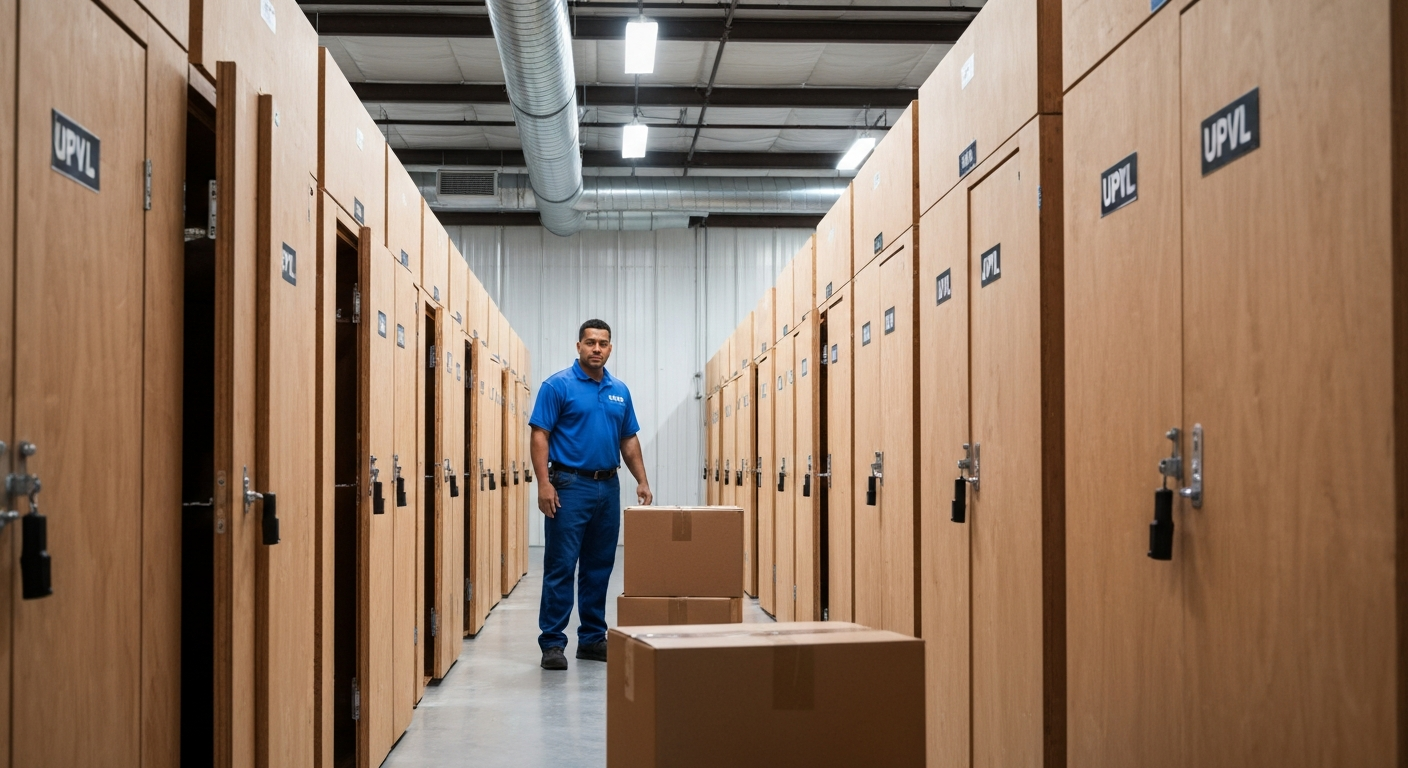
With a mover-managed warehouse, your furniture and boxes are typically loaded into large wooden or metal vaults, sealed, labeled with your name and reference number, and stored in a secure facility. When you’re ready for delivery, the vaults are pulled and loaded onto a truck for your final move-out.
This model works especially well if you’re planning a long-distance move using services like United Prime Van Lines long-distance moving, or you have delayed delivery between closing on one home and getting the keys to the next.
Ask yourself a few questions before choosing:
Short term storage Miami solutions usually cover anything from a few days to roughly three months. They’re perfect when the timing of your move is off by just a little, or when you need to stage your home for sale without giving up your favorite furniture forever.
For these situations, it’s often most efficient to have the same company handle pickup, storage, and final delivery. Movers can load everything once, store your items securely, then deliver to your final address when ready. That eliminates extra truck rentals, extra labor, and extra handling that can increase the chance of damage.
Short term storage is usually billed by:
Here’s a rough example of how short-term move + storage can be structured:
| Cost Component | How It’s Charged | What It Includes |
|---|---|---|
| Pickup labor & truck | Flat or hourly (local) / by weight & distance (long-distance) | Loading, padding, disassembly as needed |
| Initial storage fee | Per vault or per cubic foot | Receiving, inventorying, and storing your goods |
| Monthly storage | Monthly rate | Ongoing storage in a secure facility |
| Redelivery | Flat or hourly (local) / added to line-haul (interstate) | Bringing goods from warehouse to final address and unloading |
If you’re doing a simple local move in Miami, companies like United Prime Van Lines local moving services can often give you a bundled rate that covers pickup, up to 30 days of storage, and then local delivery.
Long term storage Miami arrangements are ideal for anything lasting more than three months. This could be for an overseas assignment, a long renovation, or when you’re leaving Florida for a while but want to keep certain belongings safe.
For long-term storage, security, climate control, and clear inventory become critical. You want to know exactly what you stored, that it’s protected from Miami’s humidity and pests, and that it can be delivered smoothly when you’re ready.
Think about these factors before committing to long term storage Miami:
Some customers combine long-term storage with delayed delivery for interstate moves. For example, you might move from Miami to New York, store non-essential items in Miami for a year, then have them shipped later if you decide to stay.
Climate controlled storage Miami facilities keep temperature and humidity within a tighter range than standard storage. In a city where summer heat and humidity can feel like a sauna, this isn’t a luxury – it’s often a necessity.
Climate-controlled storage typically maintains:
The goal is not “air-conditioned like your living room” but “stable conditions that protect belongings from extreme heat and moisture swings.” According to NOAA Miami forecast office, South Florida often experiences relative humidity over 70%, especially in the summer. That kind of moisture can quickly damage sensitive items.
Not everything requires climate control, but many common household items do much better in it, especially for long-term storage. Here’s a helpful breakdown:
| Item Type | Climate Control Recommended? | Why |
|---|---|---|
| Wood furniture, musical instruments | Yes | Protects against warping, cracking, and swelling from humidity changes. |
| Leather couches, chairs, and bags | Yes | Reduces risk of drying, cracking, and mold growth. |
| Electronics (TVs, computers, audio) | Yes | Moisture can corrode internal components and cause failure. |
| Clothing, textiles, mattresses | Strongly recommended | Helps prevent mildew, odors, and pests in humid Miami conditions. |
You may be able to store certain sturdy items (like metal tools or plastic patio furniture) in standard storage for short periods, but for anything valuable or sentimental, climate-controlled storage is a wise investment.
Choose climate controlled storage Miami options when:
Ask your moving company to specify, in writing, whether your goods will be in climate-controlled or standard warehouse space and where that facility is located.
Storage looks a little different depending on whether you’re moving within Miami or going state-to-state. Many customers mix moving and storage to handle delayed closings, temporary housing, or trial relocations.
For local Miami moves, storage is often used as a flexible buffer:
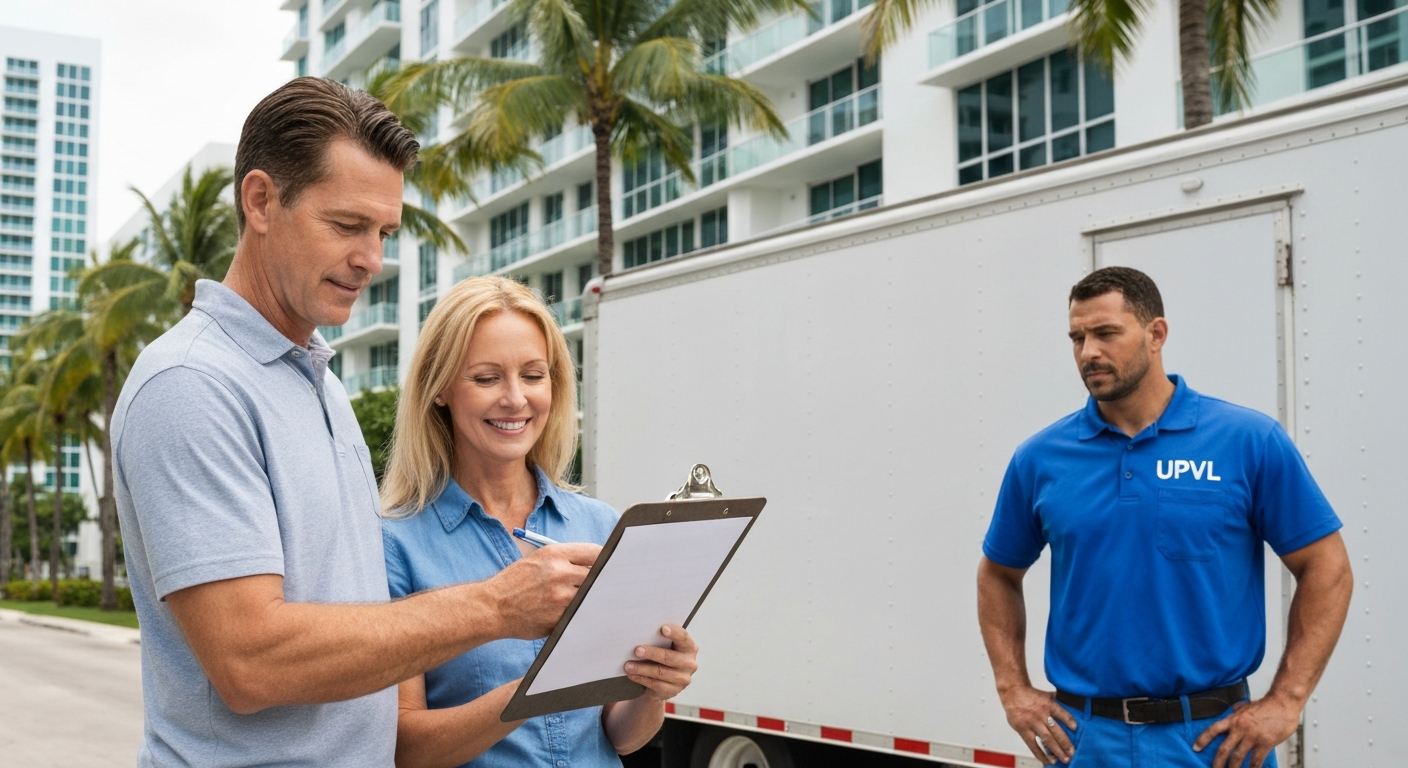
Because distance is short, you usually pay local moving rates (often hourly) plus storage fees. Companies such as United Prime Van Lines apartment moving can coordinate building rules, elevator reservations, and Certificates of Insurance (COIs) at both old and new addresses.
For interstate or cross-country moves, storage becomes more complex and also more valuable. You might have:
Long-distance moves involve different pricing and regulations. The Federal Motor Carrier Safety Administration (FMCSA) oversees interstate movers and sets rules for estimates and liability. Source: FMCSA.
Companies like United Prime Van Lines long-distance moving can provide both transportation and storage, which keeps your move under one coordinated contract.
Here are a few real-world style scenarios where storage plus long-distance moves are helpful:
| Route Example | Storage Location | Why Storage Helps |
|---|---|---|
| Miami to New York | Miami warehouse for 30–90 days | Seller closes early in Miami, NYC co-op board approval delays move-in. |
| Miami to Los Angeles | Miami origin storage | Customer tests West Coast job for 3 months before shipping non-essentials. |
| Miami to Orlando | Destination storage near Orlando | New build is under construction; storage used until certificate of occupancy. |
| International relocation from Miami | Miami long-term warehouse | Military or corporate move overseas with plans to return to Florida later. |
In each case, storage keeps you from rushing into an expensive or cramped rental just to house your furniture.
When you’re combining moving and storage, one of the most important concepts is your delivery window and how delayed delivery works.
A delivery window is the range of dates when your mover expects to deliver your shipment. For local moves with short-term storage, this might be a specific day or a narrow range. For long-distance moves, FMCSA allows a broader window depending on distance and route. Source: FMCSA Moving Checklist.
With delayed delivery, you essentially ask the mover to hold your goods in storage beyond the standard transit time. You’ll then confirm a later delivery date when you’re ready.
In a combined moving and storage setup:
You’ll typically pay for:
Always get the storage start date, monthly rate, and redelivery fees in writing on your estimate or order for service.
Climate and seasonal demand matter in Miami:
Packing for storage is different from packing for a same-day move. Heat, humidity, and time are your main enemies, especially in Miami. Even with climate controlled storage Miami facilities, you should think “long game” with your packing strategy.
When you’re storing items, especially for long term, professional packing becomes more valuable. Movers who offer full packing, like United Prime Van Lines full packing services, know how to wrap furniture, electronics, and fragile items so they can withstand months in storage.
Here’s a quick comparison:
| Packing Approach | Best For | Pros & Cons |
|---|---|---|
| DIY packing | Short-term storage or lower-value items | Pros: Saves money. Cons: Risk of under-packing, damage, and poor labeling. |
| Partial professional packing | Mixed budget, fragile items, artwork, electronics | Pros: Pros handle delicate items. Cons: You still pack basics. |
| Full professional packing | Large homes, long-term or interstate storage | Pros: Best protection, saves time. Cons: Higher upfront cost. |
| Custom crating | Fine art, antiques, high-value pieces | Pros: Maximum protection. Cons: Premium pricing. |
If you’re planning long-term climate controlled storage Miami for pianos, artwork, or antiques, consider specialized services like piano moving or art and antique moving.
Storage pricing in Miami depends on several variables: size, location, climate control, security, and whether your storage is part of a larger moving service. While exact numbers vary by provider and season, you can understand the main cost drivers and ranges.
These are general directional comparisons (not guaranteed quotes) to help you see how choices affect cost:
| Option | Typical Use | Relative Monthly Cost |
|---|---|---|
| Standard warehouse storage (mover-managed) | Bundled with move, limited access | $$ (often moderate, plus handling fees) |
| Climate-controlled warehouse | Long-term storage for furniture/electronics | $$$ (higher due to temperature & humidity control) |
| Self-storage non-climate | Short-term overflow, low-value items | $–$$ depending on size/location |
| Self-storage climate-controlled | Household goods in urban Miami neighborhoods | $$–$$$ depending on demand and area |
On top of monthly storage, factor in:
Understanding your estimate is critical so you don’t get surprised later. For interstate moves, FMCSA requires movers to explain whether your estimate is binding or non-binding. Source: FMCSA on binding estimates.
Storage charges can be handled a few ways:
Ask your mover to show clearly on the estimate:
For local Miami moves (typically within 50–100 miles), movers often charge:
Here’s a simplified comparison:
| Pricing Type | Used For | Pros & Cons |
|---|---|---|
| Hourly rate | Local pickup/delivery, packing | Pros: Pay for actual time. Cons: Harder to predict if elevators or traffic cause delays. |
| Flat move fee | Some local moves with known scope | Pros: Predictable cost. Cons: May require in-home estimate and strict inventory. |
| Monthly storage fee | Warehouse or self-storage | Pros: Easy to budget. Cons: Extra months add up if you delay decisions. |
| Per-service accessorials | Packing, special handling, COIs | Pros: Only pay for what you use. Cons: Important to review line items carefully. |
Request a detailed written estimate and ask your move coordinator to walk through each line, especially anything related to storage-in-transit and warehouse handling.
When you’re trusting a company to move and store your belongings, licensing and coverage are just as important as price. Miami has a mix of local movers, interstate carriers, and brokers, so it’s smart to understand the basics.
Two common areas get mixed up:
For interstate moves, FMCSA explains two main valuation options: Released Value and Full Value Protection. Source: FMCSA Moving Insurance.
| Option | What It Covers | Key Details |
|---|---|---|
| Released Value | Very basic compensation | Standard for interstate moves at no extra charge; liability is typically limited to $0.60 per pound per item. |
| Full Value Protection (FVP) | Repair, replace, or cash settlement | More comprehensive; mover is liable for the current market value of items, subject to deductible and policy terms. |
| Third-party insurance | Additional coverage | Separate policy you purchase from an insurer to supplement mover’s valuation. |
| Warehouse-specific protection | Coverage during storage | Some movers or storage companies offer additional protection for long-term storage. |
Ask your mover:
Miami’s skyline is full of condos and high-rises, which creates logistical challenges but also makes professional moving and storage especially helpful. Buildings in neighborhoods like Brickell, Downtown, Edgewater, and Miami Beach often share similar rules.
A COI is a document from the mover’s insurance company that proves the mover carries certain types and levels of insurance (like general liability and workers’ compensation). Many Miami buildings require a COI naming the condo association or landlord as “additionally insured” for the day of the move.
Before your move:
Most Miami high-rises:
These rules matter because they affect how long your move takes and whether an hourly estimate will be enough time. When storage is involved, your mover might be making multiple trips (home → warehouse, later warehouse → new home), so coordination is crucial.
Different Miami neighborhoods have their own quirks:
Using a mover that already has experience with your building and neighborhood can reduce surprises and help keep time (and therefore cost) under control, especially when your goods are going to or from storage.
To keep your Miami moving and storage experience organized, use a checklist that covers both planning and execution.
For customers who want a single provider from start to finish, including storage, you can explore integrated services like the United Prime Van Lines storage options, which connect to their local, long-distance, and specialty moving services.
Storage cost in Miami depends on size, type, and features like climate control. For a typical 1–2 bedroom apartment’s worth of goods in a mover-managed warehouse, you can expect a monthly fee based on how many storage vaults or how much cubic footage you use, plus charges for pickup and redelivery. Climate-controlled and long-term storage usually cost more per month but protect your furniture and electronics better.
For many belongings, yes. Miami’s heat and humidity can cause warping, mold, rust, and damage to electronics. Climate-controlled storage Miami options help maintain stable temperature and humidity, which is especially important for wood furniture, leather, clothing, art, documents, and electronics. For short-term storage of very sturdy items, standard storage may be fine, but for high-value or long-term storage, climate control is strongly recommended.
Short term storage Miami usually means a few days up to about three months and is often used for gaps between leases, closing delays, or short renovations. Long term storage Miami generally refers to anything over three months, sometimes lasting years. Long-term storage puts more emphasis on climate control, security, detailed inventory, and possibly enhanced valuation coverage to protect your belongings over time.
Access depends on the type of storage you choose. With self-storage, you typically have direct access during facility hours and keep your own key or code. With mover-managed warehouse storage, your items are sealed in vaults and not on public display; you usually need to schedule an appointment to access them, and there may be handling fees for opening vaults or pulling specific items. Always ask your mover how access works and whether there are any associated charges.
Your items may be covered by the same valuation option you chose for your move (such as Released Value or Full Value Protection) while in storage-in-transit, but policies vary. Basic Released Value offers very limited coverage, typically around $0.60 per pound per item for interstate moves. For more protection, consider Full Value Protection or a separate third-party insurance policy that specifically covers your goods during both transit and storage. Ask your mover to explain in writing what is and isn’t covered.
Yes. Many long-distance movers offer storage-in-transit at origin (Miami), at your destination, or both. Your shipment can be picked up in Miami, stored for weeks or months, and then shipped when your new home is ready. This is common for interstate moves with delayed closings, corporate relocations, or trial moves where you aren’t sure if you’ll stay permanently. Check how storage time and redelivery fees are listed on your estimate and bill of lading.
Most storage facilities and movers prohibit perishables, live plants, animals, hazardous materials (like paint, gas, and chemicals), and illegal items. In Miami’s climate, it’s also smart to avoid storing any damp or wet items, as well as open food, which can attract pests. Your mover or storage contract should provide a list of prohibited items; ask for this before packing.
Check for licensing and reviews. For interstate moves, verify the mover’s USDOT number and registration status at the FMCSA website. For moves within Florida, review consumer information from the Florida Attorney General and look up reviews on reputable platforms. Be cautious of companies that only give phone estimates, ask for large cash deposits, or refuse to provide their legal business name and address.
For Florida moves, the contact information is:
Choosing the right moving and storage Miami strategy can turn a chaotic transition into a carefully controlled process. The key decisions are whether you need short-term or long-term storage, which items require climate control, and whether it’s worth having a single professional team manage your move, storage, and final delivery.
By understanding storage types, costs, estimate structures, and Miami-specific building rules, you can plan ahead and avoid last-minute emergencies. When you’re ready, a full-service mover with warehouse storage, packing services, and long-distance capabilities can coordinate everything from your condo’s elevator schedule to the exact day your items leave storage and arrive at your new front door.