
Moving a piano in Miami is never just another move. Heavy weight, delicate parts, humidity, and tight stairwells turn even a short local move into a technical project. Choosing experienced piano movers in Miami with the right equipment, method, and valuation protection is the difference between a smooth relocation and an expensive repair.
Quick Navigation
Pianos are among the most complicated items to move safely. A typical upright weighs 300–600 pounds; a baby grand or grand can weigh 600–1,200 pounds or more. At the same time, the internal components—soundboard, strings, action, and pedals—are extremely sensitive to impact, tilt, and humidity.
With piano moving Miami residents face extra challenges:
Professional piano movers in Miami are trained to handle these conditions with specialized equipment, detailed planning, and valuation coverage that protects your investment.
For many households, a piano is both a major financial asset and a family heirloom. Treat its relocation like a specialty move, not a standard furniture job. That usually means choosing a mover that offers dedicated piano services alongside full residential moving, like those you’ll find through providers such as United Prime Van Lines in Miami.
The right approach depends heavily on whether you’re moving an upright or any type of grand. Each has different weight distribution, center of gravity, and disassembly needs.
Upright pianos—spinet, console, studio, or full upright—are common in Miami condos, schools, and houses. They’re tall and narrow, which makes them easier to navigate through hallways but trickier on stairs because they can tip if handled incorrectly.
Professional movers typically:
Even with upright pianos, experienced grand piano movers Miami customers call for larger instruments are often the same teams handling these smaller models, because they’re trained specifically on balance, leverage, and safe handling.
Grand pianos bring much more complexity. Longer cases, angled legs, and more delicate actions mean they must be partially disassembled. The weight is spread out over a large area and the center of gravity changes as pieces are removed.
For grand-length instruments, professionals usually:
The bigger the instrument (for example, a 7-foot grand in a Brickell high-rise), the more you need a crew that truly specializes in grand piano moving Miami-wide, not just general household moving.
Digital pianos, stage pianos, and hybrids can weigh far less, but they still need care. Keyboards may be sensitive to vibration, and stands or legs can be fragile.
Professional movers will:
Even if you can lift these yourself, using a mover for digital or hybrid pianos helps avoid accidental drops while navigating condo hallways or garage steps.
| Feature | Upright Piano | Grand / Baby Grand |
|---|---|---|
| Typical Weight | 300–600 lbs | 600–1,200+ lbs |
| Disassembly Needed | Minimal (bench only) | Legs, lyre, accessories removed |
| Equipment | Piano dolly, pads, straps | Skid board, dolly, ramps, pads, straps |
| Stair Complexity | Moderate | High, may require extra crew |
| Typical Crew Size | 2–3 movers | 3–4 movers |
One of the best proof points that you’re working with real piano movers in Miami is their equipment. Specialized tools let movers manage weight, protect delicate components, and navigate tricky Miami buildings safely.
Expect a reputable crew to arrive with:
Ask your mover what specific piano gear they bring to jobs. A company that moves many pianos will answer quickly and confidently, without vague descriptions.
Miami’s climate makes protective materials extra important. High humidity and sudden thunderstorms can expose a piano to moisture during moves.
Professional piano moving Miami companies may also try to minimize the time your instrument spends outside—backing the truck as close as possible to building entries and planning around weather when they can.
Inside the truck, your piano should never feel "loosely loaded." Proper setup usually includes:
A mover that also offers full residential services, such as local moving options, will often have well-equipped trucks that support safe piano transport alongside furniture and boxes.
| Equipment | Purpose | Why It Matters in Miami |
|---|---|---|
| Piano Skid Board | Supports grand piano on its side | Critical for tight high-rise hallways and elevators |
| Piano Dolly | Rolls piano across floors | Protects tile and hardwood in condos |
| Heavy Moving Pads | Cushion and protect finish | Prevents dings in narrow stairwells |
| Shrink-Wrap / Covers | Moisture and dust barrier | Helps during rain and high humidity |
| Ramps and Walk-Boards | Bridge steps and truck gap | Useful where loading docks are limited |
| Ratchet Straps | Secure piano in truck | Prevents shifting in Miami’s stop-and-go traffic |
Stairs and limited access points are where piano moving gets genuinely risky. One misstep can injure movers, damage the building, or crack the piano’s case. Experienced grand piano movers Miami residents trust will inspect access ahead of time or request photos and measurements.
Stairs introduce specific challenges:
For stairs, expect:
Never let a mover "slide" a piano up or down bare stairs. That can damage both the piano and the structure.
High-rise moves in Brickell, Edgewater, Downtown, or Sunny Isles often involve freight elevators and strict building rules.
Professional movers will:
Most Miami condo associations have clear moving policies—some limit moves to weekday hours or require advance booking. Ask your mover to coordinate a COI listing your building and management company as additional insured. This is standard practice for experienced crews.
Older neighborhoods like Little Havana or Miami Beach may have doors and hallways that predate modern building codes. Movers need a plan for tight entries:
Good movers will walk through the route with you before starting, explaining how each tight area will be managed and where they might need extra time or crew.
| Challenge | Risk | Typical Solution |
|---|---|---|
| Multiple Stair Flights | Injury, dropping instrument | Extra movers, harnesses, per-flight planning |
| Small Elevators | Piano won’t fit upright | Tip grand on skid, re-route via service areas |
| Tight Corners | Case and wall damage | Angle carefully, remove doors, protect corners |
| High-Rise Rules | Denied access or fines | Reserve elevator, provide COI, follow schedules |
| Rainy Weather | Water exposure | Weather covers, close truck parking, quick transfers |
Most piano moving Miami residents need is local—across town, into a new condo, or between a house and a studio. But some pianos travel much farther, especially for relocations to other states.
Local moves typically cover areas such as:
Local moves are often priced as a flat piano rate, sometimes plus access surcharges (stairs, long carries). You can often pair your piano relocation with a full apartment or house move, using services similar to apartment moving or house moves if you’re relocating everything at once.
If your piano is traveling from Miami to another state—say, Atlanta, New York City, or Los Angeles—the move becomes an interstate shipment.
Interstate movers must be registered with the Federal Motor Carrier Safety Administration (FMCSA). You can verify a mover’s USDOT number and complaint history through FMCSA’s Protect Your Move website.
For long-distance piano relocation from Miami, expect:
Actual delivery windows depend on your specific carrier and whether your shipment is part of a larger household move, but rough ranges might look like this:
| Route From Miami | Approximate Distance | Typical Delivery Window |
|---|---|---|
| Miami to Orlando / Tampa | 200–300 miles | 1–5 business days |
| Miami to Atlanta | 650–750 miles | 3–10 business days |
| Miami to New York City | 1,250–1,350 miles | 5–14 business days |
| Miami to Chicago | 1,350–1,450 miles | 5–15 business days |
| Miami to Los Angeles | 2,700–2,800 miles | 7–21 business days |
Always get the delivery window in writing on your estimate or order for service. For full interstate move details, many customers use providers that also offer long-distance moving so piano transport is integrated into the whole relocation instead of handled separately.
Customers often ask about Miami piano moving cost before anything else. For a local move, many companies charge a flat rate per piano plus access-related surcharges. For longer distances, piano transport may be priced by weight, complexity, and mileage or bundled into a household shipment.
Exact pricing varies by company, access, and distance, but you may see ranges like:
Always request a written quote and ask what is included:
Several predictable factors shape what you’ll pay.
| Cost Factor | How It Affects Price | Miami Example |
|---|---|---|
| Piano Type & Size | Larger and heavier means higher cost | 7-ft grand in Brickell vs. small console in Kendall |
| Distance | Longer drive time equals higher rate | Brickell to Miami Beach vs. Brickell to Boca Raton |
| Stairs & Access | More labor and risk adds surcharges | Three flights of stairs in Little Havana walk-up |
| Building Requirements | COI, elevator reservations add admin time | Luxury condo in Edgewater with strict rules |
| Scheduling | After-hours or urgent moves can cost more | Last-minute evening move before hurricane warning |
| Storage or Extra Services | Packing, storage, and special crating add cost | Storing piano for 2 months during remodel |
Stairs can add a noticeable surcharge because they require:
That surcharge is your evidence that the company is taking stair work seriously and staffing the job accordingly, not cutting corners.

Understanding how your move is priced helps you budget accurately and avoid surprises. For piano moving Miami companies may use flat-rate pricing for simple local moves and more formal estimate formats for long-distance relocations.
A flat-rate quote is common for local, single-piano moves, especially when:
Ask whether the flat rate is truly "all-in" or if there are separate line items for:
For long-distance or interstate moves that include your piano, you may see references to binding and non-binding estimates.
If your piano is part of a larger household move out of Miami, ask your mover what kind of estimate they’re offering and how your piano is listed on the inventory.
Some local movers price by the hour even for piano moves, especially when they’re moving the rest of the home as well. Others use a hybrid: hourly for the move, but an extra flat fee just for the piano due to risk and equipment needs.
| Pricing Type | Pros | Best For |
|---|---|---|
| Flat Piano Fee | Predictable cost, easy to compare | Simple local piano-only moves |
| Hourly Rate | Flexible if scope isn’t fully known | Full-home moves where piano is one item |
| Binding Estimate | Price certainty for long-distance | Interstate moves with fixed inventory |
| Non-Binding Estimate | Can be lower upfront | Variable weight or uncertain inventory |
If you’re booking a full move and not just the piano, consider using a mover that clearly lists your piano on the estimate and offers the specialty equipment described earlier. General hourly labor with no piano-specific tools is a red flag.
Pianos don’t go into cardboard boxes, but they absolutely need proper packing and pad-wrapping. In Miami, climate control and moisture protection are just as important as impact protection.
A quality crew will:
Benches should be separately wrapped and either padded on the truck or placed inside the cab with the crew when space is tight.
For grand pianos, pad-wrapping and packing are more involved:
Ask whether your mover includes all of this standard or charges extra. Good grand piano movers in Miami will see it as part of the core service.
Miami’s climate is humid year-round and prone to heavy rain, especially during hurricane season. While short-term humidity exposure during a move generally doesn’t ruin a piano, it can influence tuning stability.
Organizations like the National Oceanic and Atmospheric Administration (NOAA) and the National Hurricane Center highlight how quickly Miami weather can change. A prepared crew will check the forecast and may adjust timing slightly if a heavy storm is moving through.
For very high-value instruments, you may want:
These options cost more but can make sense for concert grands, antique uprights, or pianos with significant sentimental value.
During renovations, delayed closings, or long-distance relocations, you may need to store your piano. Storing a piano well is very different from just parking it in a garage.
Quality piano storage should include:
Ask if the mover’s storage is climate controlled and how they store large, delicate items. Some full-service movers offer secure warehouse storage similar to what you’d see with dedicated moving and storage solutions.
For a few days or weeks, standard climate-controlled storage is often adequate. For months or years, you’ll want to be more careful:
| Storage Type | Pros | Potential Drawbacks |
|---|---|---|
| Climate-Controlled Warehouse | Stable environment, safe for most pianos | Monthly fees, access by appointment |
| Standard Indoor Storage | Lower cost, some protection | May not control humidity as well |
| Garage / Self-Storage (Non-Climate) | Cheap and convenient | Not recommended in Miami heat and humidity |
| Climate-Controlled Self-Storage | 24/7 access, climate managed | You handle moving in/out; risk in transit |
| Specialized Piano Vault Storage | Designed for pianos and antiques | Highest cost, limited providers |
One of the most important proof points of a serious piano mover is how they handle valuation coverage. Understanding the difference between basic liability and true protection helps you decide what level of coverage is right for your piano.
When movers talk about "insurance" they often mean valuation coverage—an agreement about how much they’re responsible for if something is lost or damaged during your move.
Released Value is rarely enough for pianos. For realistic protection, strongly consider Full Value Protection or a third-party policy.
If you choose Full Value Protection, you’ll need to declare a value for your shipment or for specific high-value items. For pianos:
Make sure the declared value appears in writing on your paperwork. If your piano’s value is much higher than the rest of your belongings, ask whether it needs separate documentation.
Valuation coverage usually applies when damage is the mover’s fault, not when it comes from pre-existing issues or inherent vice (problems related to age or condition). Examples:
Read the fine print and ask your mover specific questions:
| Coverage Type | Typical Compensation | Best For |
|---|---|---|
| Released Value | ~$0.60/lb per article | Low-value items, customers accepting high risk |
| Full Value Protection | Repair, replace, or cash settlement | Most household goods and mid-value pianos |
| Third-Party Insurance | Policy-specific terms | High-value or antique pianos |
| Rider on Homeowner’s Policy | Depends on insurer | Supplemental coverage when available |
Protecting a piano properly often means combining good handling (equipment, trained crews, access planning) with appropriate valuation so you’re not exposed to a major loss if something does go wrong.
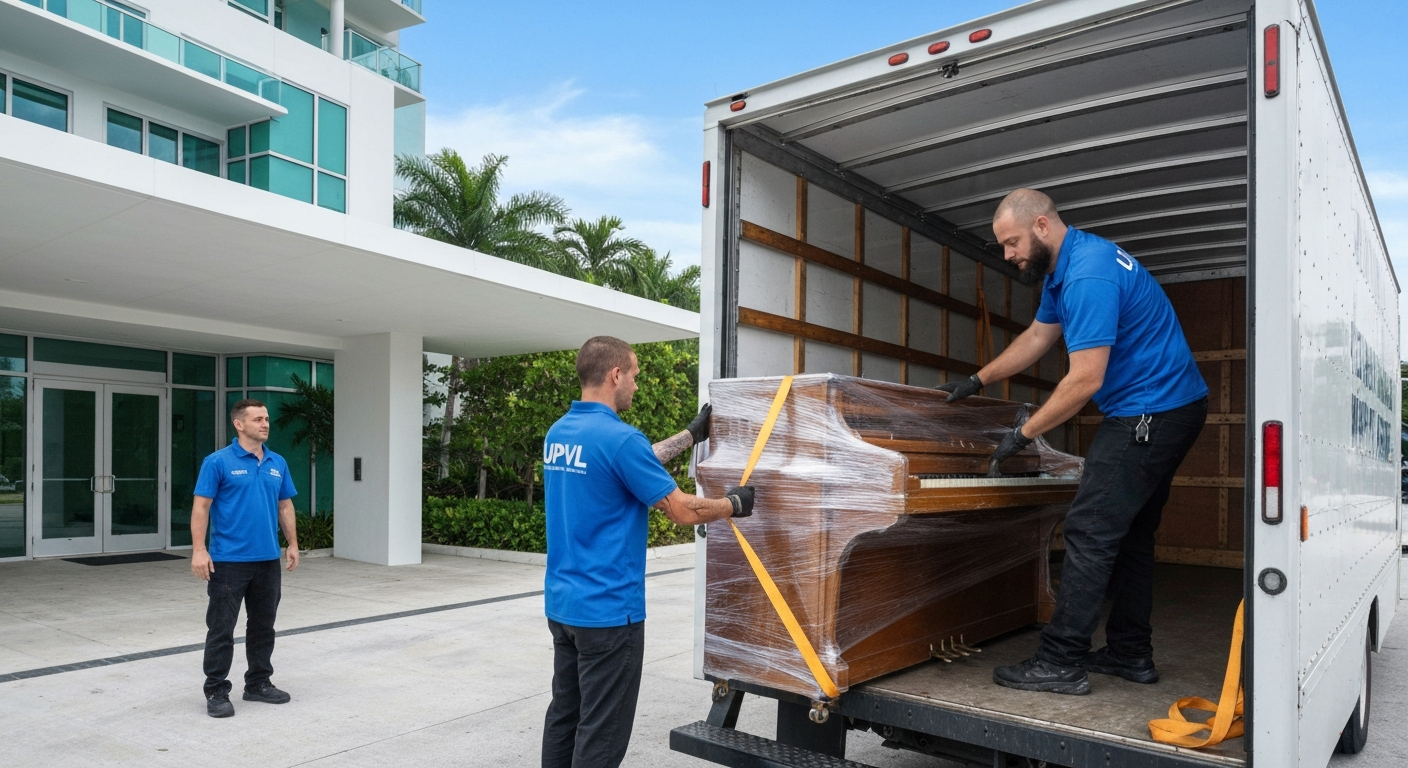
Because Miami has so many condos, co-ops, and managed communities, paperwork and building rules are a big part of any professional piano move.
Make sure any mover handling your piano is properly licensed:
Ask for the company’s full legal name, any DBAs, and licensing details. Be cautious of anyone unwilling to share this information.
Most mid-rise and high-rise buildings in Miami require a COI from movers. A COI is a document issued by the mover’s insurance company showing that they carry liability and workers’ compensation coverage. It may need to:
Professional piano movers in Miami handle COI requests frequently and can submit them directly to your building’s management office.
Miami condo associations often have detailed move rules, which may include:
Give your building’s rules to your mover early so they can schedule properly. If you’re combining your piano relocation with a full household move, consider companies that have experience with Miami high-rises, like those listed on regional pages such as Hallandale Beach moving services.
| Requirement | Who Provides It | When to Confirm |
|---|---|---|
| COI with Proper Limits | Moving company / insurer | At least 3–5 business days before move |
| Elevator Reservation | Resident via building management | When booking your move date |
| Loading Dock / Parking Slot | Building management or valet | 1–2 weeks ahead, reconfirm day before |
| Protection Requirements (Floors/Walls) | Building rules, mover supplies pads | Discuss during estimate |
| Move Hours & Noise Rules | Building management | Before setting final time with mover |
Use this checklist to prepare your Miami piano move step by step, from early planning through move day.
Miami piano moving cost depends on piano type, distance, stairs, and building rules. Many local upright moves run in the low hundreds, while grand piano moves cost more because they require disassembly and a larger crew. Stairs, tight access, and long carries can add surcharges. Always get a written quote that spells out what’s included and any potential extra fees.
Yes, most piano movers charge extra for stairs because they significantly increase labor, time, and risk. The fee may be per flight, per step range, or a flat stair surcharge based on difficulty. When requesting quotes, be clear about how many steps or flights your move involves so the mover can price it accurately and send the right-sized crew.
Your piano is covered by the mover’s valuation, but the level of protection depends on what you choose. Basic Released Value Protection only pays a small amount per pound, which is usually not enough for a piano. For better protection, ask about Full Value Protection or third-party insurance and be sure the declared value reflects your piano’s true worth. Confirm all coverage in writing on your move documents.
If you own a high-value or antique piano, it’s wise to go beyond basic mover’s liability. Many customers either purchase Full Value Protection with a high declared value or use a specialty insurer that covers fine instruments. Discuss your piano’s brand, age, and value with your mover and, if needed, a piano appraiser to decide the right coverage level.
Not every mover is prepared for pianos. Safe piano moving requires specific equipment (piano dollies, skid boards, pads), trained crews, and familiarity with Miami’s building rules. When you call, ask how often they move pianos and what gear they use. If the company can’t answer confidently or treats the piano like just another heavy item, choose a more specialized provider.
Grand piano movers in Miami usually remove the legs and pedal lyre, then place the piano body on a skid board and tip it on its side. This reduces the width and helps the instrument fit through narrow doors and into elevators. They also measure access points ahead of time and may temporarily remove doors or use alternate routes when necessary.
Moving doesn’t automatically ruin a piano’s tuning, but changes in temperature and humidity can cause the tuning to drift. Miami’s humid climate and any long-distance transit can contribute to this. Most technicians recommend letting the piano settle in your new home for 1–3 weeks before scheduling a tuning, and then keeping the room’s climate as stable as possible.
A simple local move for an upright piano—ground floor to ground floor and a short drive—might take 1.5 to 3 hours from arrival to completion. Grand pianos, high-rise access, multiple stops, and stairs can extend the timeline. When you book, ask the mover for an estimated on-site duration so you can plan building elevator reservations and parking accordingly.
Moving a piano yourself is risky. Even small uprights are extremely heavy and have a high center of gravity. Without the right dollies, pads, and experience, it’s easy to injure yourself, damage the piano, or cause costly building damage. For most Miami residents—especially those in condos or homes with stairs—using professional piano movers is far safer and often cheaper than repairing damage afterward.
For Florida moves, the contact information is:
Moving a piano in Miami is all about combining the right people, the right tools, and the right protections. Whether you own a compact upright in Little Havana or a concert grand in a Brickell high-rise, you need movers who understand specialized equipment, stair and elevator planning, valuation coverage, and local building rules.
Ask detailed questions about equipment, experience, stairs, and insurance. Demand clear, written pricing. And choose a mover that treats your piano as an irreplaceable instrument, not just another heavy object. With the right team, your piano will arrive safely, ready to be tuned and enjoyed in its new Miami home.